Category: General News

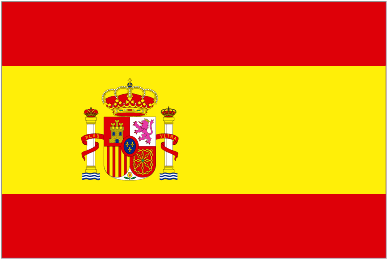
Spain: Making animals count in the Spanish elections.

Making animals count in the Spanish elections

19 July 2023

AnimaNaturalis

AnimaNaturalis, together with Equalia, FAADA and over 50 other Spanish animal protection organisations have launched a campaign to influence Spain’s political agenda and encourage citizens to vote in the national elections this Sunday 23rd July.

Following disappointing results for the leading Spanish Socialist party (PSOE) in the May local elections, Prime Minister Pedro Sánchez called snap elections for the end of July. The Popular Party (PP) under Alberto Núñez Feijóo have their eye on victory, but neither the PP nor PSOE are projected to win enough votes to govern on their own – with the conservatives likely needing the support of far-right party Vox, and the Socialists looking to left-wing group Sumar. 

Under AnimaNaturalis’ initiative, the new coalition of animal protection organisations in Spain have been working together to ensure that the main political parties include animal welfare commitments, such as explicit support for the end of cages in European livestock farming based on the “End the Cage Age” initiative.

The coalition prepared a decalogue of 17 asks for animals in the next term. A website launched earlier this month, AgendAnimal, includes a ranking of political parties according to their commitments to these asks.  

The ranking shows support for many of the asks by parties Sumar, PACMA, Junts and ERC. Closing fur farms received the most consensus (6 parties), and 5 parties commit to move towards the end of cetacean captivity.

The union of animal organisations is key to achieving our objectives and defending the rights and welfare of animals effectively. Together we are stronger in our fight for a world where all living creatures are treated with compassion and respect. We have always been clear about it, but at such a decisive moment for Spain as the one we are currently experiencing, we could not act otherwise.

Cristina Ibáñez García, Lawyer and Coordinator AnimaNaturalis International

See below the decalogue of asks for animals: 

Repeal Law 18/2013 for the regulation of bullfighting as cultural heritage

Develop the regulations of Law 7/2023 on the protection of animal rights and welfare

Include companion animals expressly excluded from Law 7/2023 

Reduce veterinary VAT for pets from the general rate of 21% of the reduced rate of 10%

Develop a clear labelling system for meat products and derivatives

Support the transition to a cage-free system 

Prohibit the slaughter of day-old chicks

Ban force-feeding ducks and geese to produce foie gras

Promote good aquaculture practices that prioritise animal welfare and sustainability 

Close fur farms

Apply and promote the protection of fauna in wind farms and power lines

Prohibit pigeon shooting

Promote R&D of alternative methods to animal experimentation

New regulations on zoos 

Moving towards the end of cetacean captivity

Build a state rescue centre for seizures of CITES species

Guarantee the continuity of the General Directorate for Animal Rights

Read more at source

AgendAnimal

Regards Mark

Denmark: Cruise line apologises after passengers witness dozens of pilot whales being slaughtered.

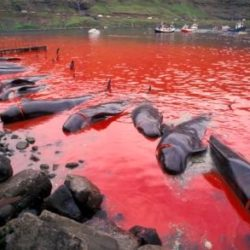
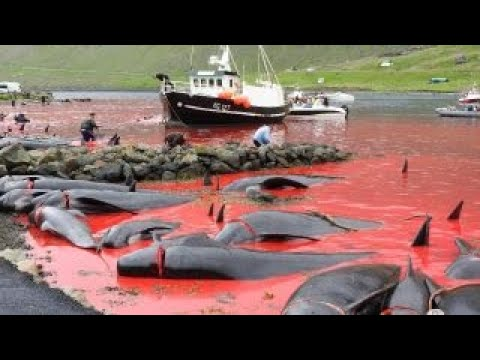
Cruise line apologises after passengers witness dozens of pilot whales being slaughtered

We have campaigned against this along with thousands of others for decades – at least the uninformed may know a bit more about the abuse that takes place every year.

Search Results for “faroe islands” – World Animals Voice

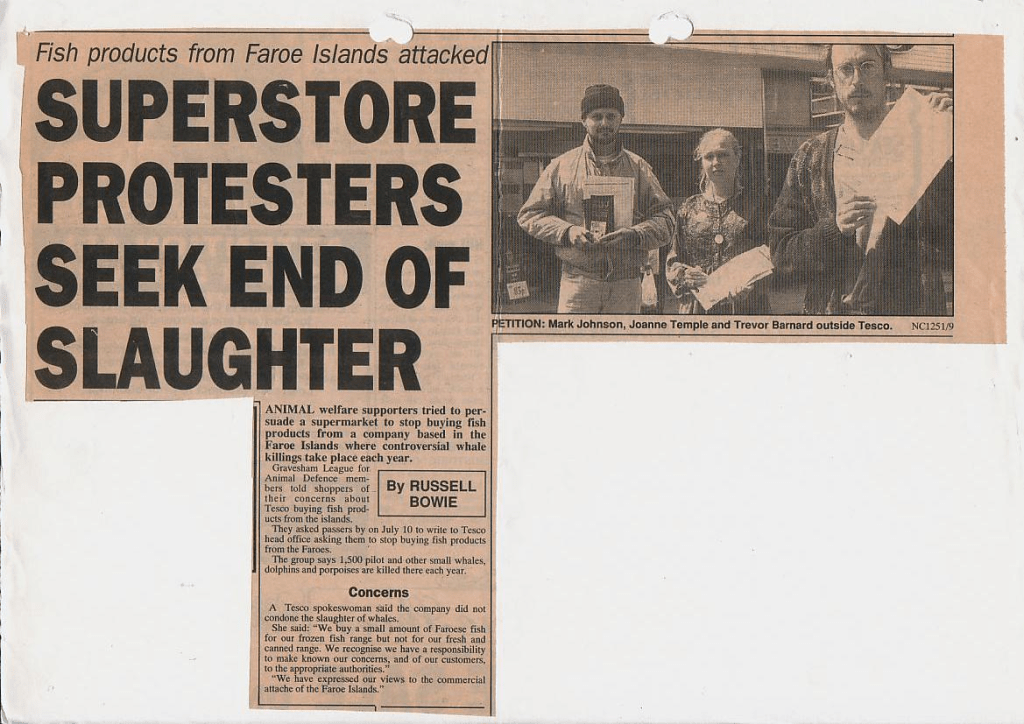
Myself, Joanne and Trev fight to get Faroese fish stopped in our local supermarket – when was this ? late 80’ s ? To see more pictures please click on https://serbiananimalsvoice.com/about-us/

Read the full story at:

Cruise line apologises after passengers witness dozens of pilot whales being slaughtered (msn.com)

Others have called on cruise ship companies to boycott the Faroe Islands in order to end the killing of whales in the area. “Cruise companies need to take a stand in support of ocean wildlife and remove the Faroe Islands from itineraries,” Rob Read, the chief operations officer at Captain Paul Watson Foundation UK, told Yahoo News Australia. “Their continued visits to the Faroe Islands inadvertently supports the abhorrent practice that is the Grindadráp.”

Regards Mark

England: Irish Calf Export Investigations – Additional. By Mark – 2010 Investigations and EU Report.

Re https://worldanimalsvoice.com/2023/07/16/ireland-milking-it-utterly-unacceptable-and-unlawful-irelands-mistreatment-of-male-calves/

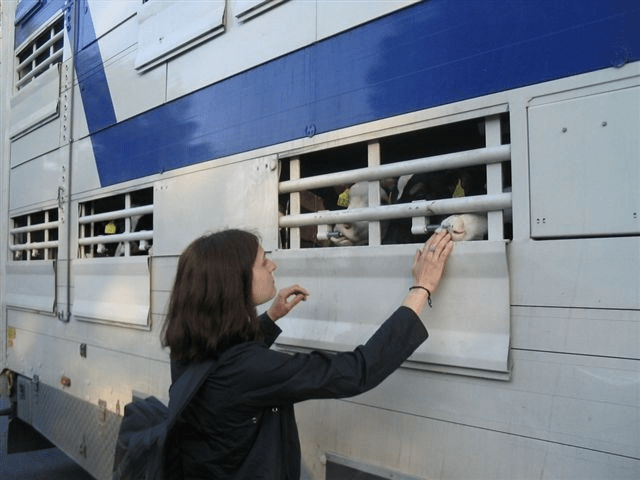
Back in 2010 I was the EU correspondent for a Kent based anti live animal export group, named KAALE; At that time I worked with Lesley, founder of ‘Eyes on Animals’ (Netherlands) – Eyes on Animals – Watching out for their Welfare, also PMAF (now Welfarm) in France  Welfarm – World Farm Animal Protection – Wikipedia, the free encyclopedia, also Animals Angels (Germany)  Stop Animal Transports! – ANIMALS‘ ANGELS (animals-angels.de) to produce a large report on the transportation of live dairy calves from Ireland into France (via Cherbourg).

You can read more about the report and the investigations at  About Us. | Serbian Animals Voice (SAV)

Scroll down until you come across the images of the calves and the transporters.

The report comprised several investigations into the Irish calf export business.  Here is a link to one of the investigation reports:

Microsoft Word – JH.04.03.2010_REPORT on NON-COMPLIANCE with RESTING TIMES in relation to CONTROL POST at F-HEAUVILLE.doc (wordpress.com)

Hundreds of copies of the report were printed and sent to MEP’s at he EU, with the hope it would make difference.

So for some of us, and you as campaigners, the new investigation footage shown at Ireland: Milking It – “Utterly unacceptable and unlawful”: Ireland’s mistreatment of male calves. – World Animals Voice  comes as no surprise at all.  The investigative work back in 2010 concentrated on a staging (control) post (stop, unload, feed calves) associated with an operator named Pignet. 

By pure coincidence, Lesley has additional Pignet control post abuse footage in the current EoA site – you can read more about it here – Violence against young calves at Pignet control post (eyesonanimals.com)

The fight for animal justice goes on – stop live animal transports !

Regards Mark

Ireland: Milking It – “Utterly unacceptable and unlawful”: Ireland’s mistreatment of male calves.

“Utterly unacceptable and unlawful”: Ireland’s mistreatment of male calves

14 July 2023

EFI

Investigation

A new documentary by Ireland’s RTÉ Investigates programme, ‘Milking It; Dairy’s Dirty Secret’ has exposed animal welfare breaches of male calves in Ireland, both on-farm and during live export to Europe.

Irish milk production has jumped 68% since the EU milk quota system was abolished in 2015. Ireland now produces just short of 9 billion litres of milk every year and 10% of the world’s infant formula. To meet this demand, approximately 1.5 million dairy calves are born in Ireland every year. While female calves are reared to become dairy cows, over half a million male calves born each year are considered a valueless by-product of the sector, as they neither produce milk nor fatten well for beef. Male calves therefore face a difficult fate: either killed at a few days old, or shipped to veal farms in Holland, Spain, Italy, and, more recently, to a growing market in Poland and Romania. 

The RTÉ documentary included investigation footage carried out by L214 and Eyes on Animals, assisted by our member organisation Ethical Farming Ireland, which covered the journey of calves transported from Ireland to France and the Netherlands.

Despite scientific evidence suggesting that these animals should not travel until 12 weeks old due to their undeveloped immune systems and incapacity to correctly use feeding devices, the industry continues to ignore this recommendation, and calves are exported at around 15 days old. Also, The European Food Safety Authority (EFSA) recommends a minimum age of 5 weeks for transport, emphasising the vulnerability of these animals during their early stages of life.

Furthermore, EU regulations clearly state that unweaned calves must be given water and, if necessary, fed after 9 hours of transport, when they should receive a rest period of at least 1 hour before being transported again. However, footage reveals that the calves are subjected to 30-hour journeys without milk or rest: a flagrant violation of EU law, and a general disregard for animal welfare.

Further footage taken by RTÉ told the same story of gruelling journeys for young calves that breach the EU Regulation on the transport of live animals. In addition, workers could be seen repeatedly kicking young calves, hitting them with sticks, and throwing them from trailers. . 

The documentary has caused political outcry, with the Irish Department of Agriculture confirming an investigation into the programme findings. Irish Agriculture Minister Charlie McConalogue called the practices uncovered in the documentary “utterly unacceptable, and in some instances unlawful”.

Irish Taoiseach (Prime Minister) Leo Varadkar described the footage as “repugnant”. Mr Varadkar said there would be “robust and timely” action against people found to have breached regulations in the footage, and that the reputation of the sector relied on compliance with the regulations in place.

The documentary proves once again that the existing animal welfare legislation does not go far enough to protect EU farmed animals at rearing, transport or slaughter. The European Commission has the power to improve the transport regulation this year, with the revision of the EU Animal Welfare legislation. In particular, they must:

Ban ‘unfit animals’ from being transported, including unweaned animals, for whom these journeys are even more difficult to bear

Place strict limitations on journey times

Ensure that the new rules are better enforced

Let’s be clear, there is no way to export calves humanely or in line with legislation because it is not possible to feed calves during transit. That is the simple truth. The dairy industry must find an alternative outlet for their calves, and keep them with the herd until weaned. If you don’t have the facilities to look after them then don’t breed them in the first place.

Caroline Rowley, Founder of Ethical Farming Ireland

Indeed, and as recommended during the documentary, the culling and mistreatment of “valueless” male calves should be avoided, which is currently possible by using sexed semen. The transport of farmed animals should be reduced, refined and replaced by meat and carcasses, semen and embryos as recommended by the FVE, WOAH and EFSA.

Read more at source

RTÉ Investigates

Regard Mark

I have more to say about Irish calf transport investigations which we have undertaken in the past; I will provide details and links in another post very soon.

UK: Testing On Live Animals Fell By 10% Last Year Data Suggests.

Testing on live animals fell by 10% last year, data suggests

The number of scientific procedures carried out on live animals last year fell by 10%, new data shows.

Across Great Britain some 2.76 million tests were carried out on animals in 2022 – down from 3.06 million – representing the lowest number since 2002.

Data from the Home Office shows that experimental procedures (1.51 million) fell by 12% and made up 55% of all procedures last year.

Read full article at:

Testing on live animals fell by 10% last year, data suggests (yahoo.com)

Regards Mark

India: Intoxicating a Donkey Video, and, Cheetah Reintroduction Raises Concerns. Click Links to Read.

Video of intoxicating a donkey goes viral; Rudraprayag police responds – Times of India (indiatimes.com)

India – Cheetah reintroduction raises concerns.

Cheetah: The world’s fastest cat is returning to India – BBC News

Seventh cheetah dies in India, raising concerns over reintroduction efforts | CNN

Regards Mark

RIP Phil: the Devil he may take ya !

CIWF England: Industrial animal farming can continue polluting as the European Parliament waters down emissions directive.

Industrial animal farming can continue polluting as the European Parliament waters down emissions directive

12 July 2023

CIWF

The European Parliament has voted to exclude emissions from industrial cattle farms from the Industrial Emissions Directive. The Parliament also voted for scrapping the Commission’s proposal for updated thresholds for pig and poultry farms. Thereby the proposal from the European Commission, that could reduce emissions from the largest polluters that keep animals in cramped conditions, is substantially weakened and puts the EU off track on its climate commitments.

The Industrial Emissions Directive controls emissions from the largest industrial installations in the EU, including a small number of the largest pig and poultry farms. Any installation controlled by the IED is forced to reduce emissions into air, water and soil and needs a permit to operate. With the European Commission proposal, the Directive would increase the coverage from 18% to 60% of emissions of ammonia from cattle, pigs and poultry, and extend the coverage from 3% to 43% of methane emissions. 

The Parliament voted for going back to the current insufficient thresholds of 750 Livestock Units that only cover farms with 40,000 poultry, 2,000 pigs and 750 sows or more, with cattle farms entirely excluded. This stands in stark contrast to the Commission’s proposal of 150 Livestock Units which would cover all large farms, including cattle as it is the main emitter. In numbers this would mean that farms with example 500 pigs, or 150 dairy cows, or 10,700 laying hens or 21,400 broiler chickens would be included while the Directive would not affect small and medium sized farms.

In addition, the result of the Parliament’s vote shows a declining ambition even below the current Industrial Emissions Directive by further reducing the obligations for the industrial poultry and pigs farms with 750 Livestock Units and that will be covered by the Directive.

Animal farming is responsible for 67% of EU ammonia emissions and more than 50% of EU methane emissions. Cattle farming is by far the biggest source of methane emissions from agriculture. Failure to reduce these emissions puts the EU on track to break its commitment under the Global Methane Pledge (pledging to reduce methane emissions by 30% by 2030) as well as failing on its Zero Pollution Action Plan. In order to reduce emissions it will be necessary to address more of the large livestock farms. In addition to the negative impact the intensification of animal farming has had on animals, a strong Industrial Emissions Directive would bring significant health and environmental benefits for citizens.

Overall, the Parliament’s vote points to an even lower climate ambition than the agreed position by the Council. Earlier in spring, the Environmental Ministers agreed to include cattle in the scope but increase the thresholds as compared to the Commission’s proposal. The revision of the Industrial Emissions Directive will now go to interinstitutional negotiations (trilogues) between the Council, Parliament and the Commission. The results of the negotiations can potentially mean that the IED will continue to exempt the majority of the largest polluters.

The debate around the Industrial Emissions Directive has pinpointed how EU animal farms have intensified during the last years, with detrimental impact on animal welfare and with the EU potentially failing to address their emissions if this is not rectified in trilogues. 

For more information, please see the briefing by Eurogroup for Animals’ members Compassion in World Farming and FOUR PAWS.

Regards Mark

UK (Scotland): Unbound the Greyhound: One Kind launches campaign to end dog racing in Scotland.

Unbound the Greyhound: One Kind launches campaign to end dog racing in Scotland

11 July 2023

OneKind

Greyhound racing in Scotland is on its last legs, with just one unlicensed track remaining. The dog racing industry is rife with welfare issues such as deaths, injuries and doping, and OneKind believe it has no place in a modern Scotland.

Together with 8 other animal protection organisations based across Scotland, England and Wales, OneKind is calling for an end to the cruel greyhound racing industry. This outdated form of entertainment causes a range of welfare issues for dogs:

Inadequate kennel conditions

Many greyhounds used by the racing industry are kept in kennels, in conditions which do not allow the dogs to thrive. In the worst instances, dogs can live in dank, dirty kennels, suffer from untreated wounds and injuries, receive inadequate veterinary care, and be shouted at or roughly treated. The dogs may also be constantly muzzled.

Doping

Greyhound Board of Great Britain’s records show that dogs in the racing industry have been doped with performance-enhancing drugs, including class A substances such as cocaine. Research has shown that the adverse effects of cocaine in dogs include neurological and muscular abnormalities, increased heart rate, convulsions/seizures, weakness, vomiting and lethargy.

Overbreeding

Thousands of puppies are bred to supply a racing pool across the UK. However, not all of these dogs will make the racing grade and thus some will be superfluous to the needs of the industry. Not all greyhounds will be passed to rehoming centres. Sadly, some may be killed instead.

It is also clear that the Scottish public do not support this cruel industry. One poll revealed that the majority of Scots (60%) want to see the Scottish Government take action to put an end to greyhound racing.

Action

Learn more about the campaign and sign the open letter 

to add your support (you do not need to be based in Scotland to sign).

Regards Mark