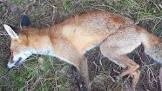
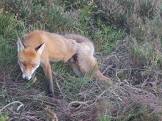
Make the use of free-running snares illegal for trapping wildlife
The Government should prohibit the sale, use and manufacture of free-running snares under the Wildlife and Countryside Act 1981, putting them in the same category as self-locking snares, which are already illegal.
We believe that people setting free-running snares cannot ensure animal welfare as required under the Animal Welfare Act 2006, that such snares cause unnecessary suffering to mammals, are indiscriminate and should be banned.
Currently 74,144 signatures
So lets get it past 100.000 for a debate in Parliament.
Government responded
This response was given on 13 January 2022
The Government recognises that some people consider snares to be an inhumane and unnecessary means of trapping wild animals and will launch a call for evidence on the use of snares.
At 100,000 signatures, this petition will be considered for debate in Parliament
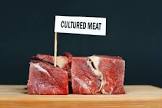
Cultivated meat isreal meat but more beneficial for public health
24 February 2022
In a series of 5 videos, we will address and debunk the most important myths surrounding cultivated meat. In today’s video we explain why cultivated meat is real meat and why it is beneficial for public health.
Yes, cultivated meat is real meat.
As long as cultivated meat has the same characteristics and nutritional value as conventional meat it is real meat.
The name ‘meat’ is culturally and individually determined. In the past, meat used to be rather a general term for simply food. And, even today, asking consumers living in the same region whether certain products are meat or not, would provide a variety of answers. A steak is definitely meat, but nuggets and hybrid products could be a matter of debate. Some people do not even consider chicken meat as true meat.
On the question about cultivated meat, the American Meat Science Association (AMSA) came to the following conclusion:
Ultimately to be considered meat, in vitro meat must be originally sourced from an animal cell, be inspected and considered safe for consumption, and be comparable in composition and sensory characteristics to meat derived naturally from animals. In particular, the essential amino and fatty acid composition, macro- and micronutrient content and processing functionality should meet or exceed those of conventional meat.’
Yes, cultivated meat is beneficial for public health.
The cultivated meat production process has a great advantage over livestock: it is performed under sterile and closed conditions, so the risk of pathogens is far less. This is important because of the concerns about antibiotic resistance and infectious diseases.
After all, current meat production is by far the largest consumer of antimicrobial agents.
Moreover, industrial farming is a breeding ground for pathogens and COVID-19 has made very clear to the wide world that zoonoses pose an existential risk.
Studies in other sectors show that in sterile and closed conditions, the incidence of contaminations via bacteria and fungi is very low. This aspect is also important considering foodborne illness. Due to the lack of enteric food pathogens, the risk for foodborne diseases is much lower and it potentially increases shelf lives and reduces spoilage (which means less food wasting).
A final advantage of cultivated meat concerning public health is the absence of trace chemicals. Pesticides, antibiotics, veterinary drugs, heavy metals, among others, are a matter of concern for conventional meat.
These residues are unlikely to appear in cultivated meat.
Eurogroup for Animals welcomes the Commission’s proposal aiming at further embedding sustainability into corporate governance. However, we call on the European Parliament and Member States to explicitly include animal welfare within the scope of the future legislation.
The Commission’s proposal lays down obligations only for big companies with more than 500 employees and a turnover of €150 million. The obligations and potential sanctions are about how the companies’ operations and value chains can have an “actual or potential human rights and environmental adverse impacts”.
The proposed mechanism would nevertheless apply to medium size companies (i.e. between 250 and 500 employees and more than €40 million worth of annual turnover) operating in high risk sectors. Interestingly, the high risk sectors, which are based on existing sectoral OECD due diligence guidance, cover among others “leather, […] agriculture, fisheries (including aquaculture), the manufacture of food products, and the wholesale trade of agricultural raw materials, live animals, food, and beverages”.
Eurogroup for Animals welcomes the recognition of the above animal-based sectors as high-risk for human rights and environmental concerns, and calls for the introduction of a comprehensive due diligence mechanism explicitly encompassing animal welfare.
Indeed, animal welfare is closely linked to environmental protection and human rights as suggested in the annex of the proposed legislation mentioning the violations to human rights (i.e. Annex part I A, point 18 and 19). For instance, highly industrialised and intensive farming systems have devastating effects on the welfare of farmed animals, but they also lead to high levels of water, air and ground pollution, to deforestation and biodiversity loss.
Poor animal welfare is also linked to systemic human rights abuses troubling the global animal agriculture industry, including the abuse of farm and meat industry workers, child labour, and human slavery within the commercial fishing industry.
The upcoming legislation should explicitly recognise that the health and wellbeing of humans are inseparable from those of animals and the planet. Improving animal welfare by helping to reduce the risk of food-borne diseases and zoonoses and to lessen the use of antibiotics in animal productions, would benefit the right to health, which is a fundamental part of our human rights as recognised by the WHO. Improved animal welfare is also a leverage to fight the violations of human rights in the animal agriculture industry, and is a key element to deliver on the EU Green Deal and the Farm to Fork strategy, which calls for an urgent need to “improve animal welfare to achieve a fair transition towards sustainable food systems.
Stephanie Ghislain, Trade and Animal Welfare Programme Leader, Eurogroup for Animals
Finally, including animal welfare in the scope of the future Corporate Sustainable Due Diligence legislation would be relevant and consistent with actual trends. Existing international standards already recommend companies faced with animal welfare risks to address them in their due diligence policy, and many companies – especially in the food and textile sectors – already include animal welfare in their due diligence efforts.
All eyes are now on the European Parliament and Member States to adopt a comprehensive Corporate Sustainability Due Diligence legislation responding to the high expectations of EU citizens and consumers.
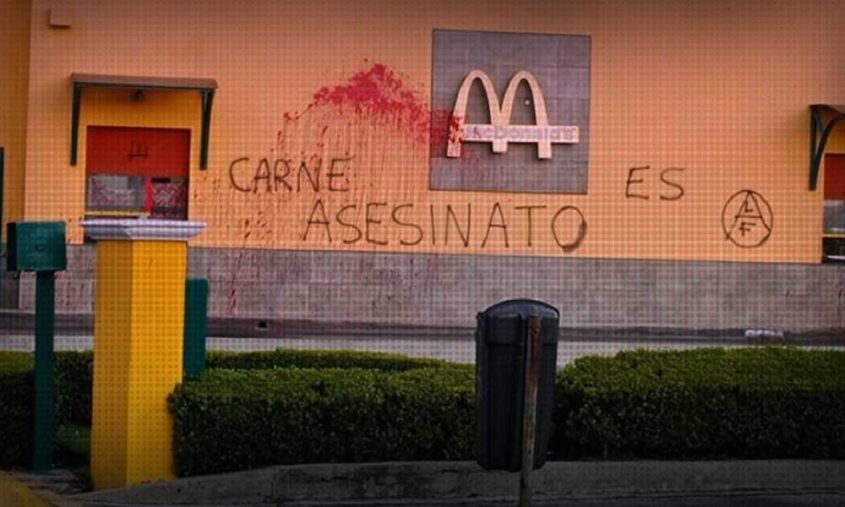
Claim of responsibility for the sabotage action against a McDonald’s restaurant in Barrio de San Antonio,Puebla, during the night of the 3rd of February 2022.
MEAT IS MURDER!
We claim responsibility for this action.
We oppose ourselves politically and morally against a system of intensive production that for long enough has exploited animal bodies, human and non-human, and that has oversaturated us with the death it produces, covering the stench with artificial aromas and bright colours, making us unable to choose or imagine an alternative that doesn’t involve exploitation and death.
We oppose them with direct action because it directly confronts the system, because it creates and strengthens complicity and because it brews political rage in more people, so they also start taking action.
This is not an isolated action.
We add to the hundreds of actions taken every year around the world with the aim to harm and threaten businesses that build their economic empires on death and suffering. Those actions also aim to liberate non-human persons enslaved and systematically tortured.
Those individuals, violently born in this world with the only purpose of being a consumer product, or entertainment, or work, are never recognised for the key role they’ve played in the evolution of the human society. For that reason we believe this violence against animals cannot be analysed or combated without understanding it as systemic violence.
The animal question is a social problem, deeply rooted to colonialism and capitalism, specially in countries contaminated by neoliberalism like Mexico is.
Since its inception, McDonald’s has been part of every imperialist war that the USA has taken part of around the world.
Its political, economic and cultural connections to the wars add to the pillage and exploitation of nature, humans and animals in all the territories oppressed by imperialism.
It has also contributed to the destruction of culture in most countries around the world, imposing and influencing towards a lifestyle of aggressive consumption.
For all those reasons we believe it is completely legitimate to attack and sabotage McDonald’s as an act of resistance; human and non-human alike.
And I mean…McDonald’s helped start this whole killing industry.
McDonald’s uses around 40,000 tons of beef every year for its burgers in Germany alone.
This meat comes from various slaughterhouses that work with devastating conditions.
The animals are mistreated there every day, up to 170 electric shocks in a few minutes, even in the face and anus.
Disused skin-and-bone cows are McDonald’s preferred burger meat.
Footage from 12 chicken farms owned by a McDonald’s supplier in Germany shows shocking footage of chickens deliberately bred to grow as big as possible as quickly as possible, suffering horrific leg injuries as a result.
Her legs are simply unable to support the weight of her oversized body.
In the US, where there are no federal laws regulating chicken farming, much of this cruelty to animals is not only standard, but legal.
Yet as one of the most recognized brands in the world, McDonald’s has the power to improve the lives of the hundreds of millions of chickens raised for its restaurants every year.
But McDonald’s hasn’t done anything for too long and remains indifferent to animal suffering.
We show solidarity with the courageous animal rights activists in Mexico and say thank you very much.
Despite the 2013 horse meat scandal, it is still not mandatory for operators and authorities to provide and control information on the origin of horse meat. As a result, to put it simply, there is no certainty on where your meat is coming from.
For the past 10 years, alongside BEUC, the European Consumer Organisation, we have been demanding mandatory country of origin labelling for horse meat regardless of its shape and form.
Today, the European Commission runs a public consultation on the revision of food information to consumers (FIC) Regulation and we call for the inclusion of horse meat within the scope of the regulation introducing mandatory Country of Origin Labelling (COOL).
In 2020, around 60 million horses were registered as livestock worldwide by the Food and Agriculture Organisation for the United Nations (FAO), and just over 5 million of them are slaughtered every year.
Below we present to you three reasons in favour of mandatory labelling requirements on horse meat.
Labelling to empower EU consumers
In 2013, the horse meat scandal exposed that numerous food in the EU sold as beef actually contained horse meat. Despite the public outcry, the situation has not changed as in 2021, Europol and Interpol investigations identified horse meat sold as veal. Mandatory COOL requirements would constraint industry stakeholders to give accurate information so that consumers can make informed decisions. Such requirements are already in place and indicate country of origin, raising and slaughter, for beef, swine, sheep, goats and poultry demonstrating the feasibility of the measure. Furthermore, investigations conducted by a consumers’ association show that origin-labelling provisions for these types of meat were implemented without unnecessary burdens on the meat supply chain and on national administrations.
Labelling to recognise production standards
Investigations conducted by animal welfare organisations have revealed shocking conditions and maltreatment of horses at assembly centres, during transport and at slaughterhouses in Argentina, Uruguay, USA and Canada. Some animals are kept in horrifying conditions in open-air feedlots, without any protection from the weather or veterinary care for six months until they can be slaughtered. The introduction of COOL requirements in the EU giving the possibility for EU citizens to choose local meat will incentivise horse meat industry operators to improve the living conditions of these horses so that they comply with EU animal welfare standards.
Labelling to enhance public health
Consumers build an association between the origin information of meat and a perceived level of food safety. Consumers also question the safety of their food and are particularly concerned about antibiotic residues and hormone levels in meat. Recent investigationshave revealed the presence of EU banned chemicals in horse meat samples such as diclofenac or thiabendazole. In addition, issues around traceability and horse passports, as well as number of horses slaughtered for meat and not registered as livestock raise a question of veterinary medicines in human consumption. These consumer concerns are therefore legitimate and it is essential to improve labelling and traceability of horse meat to ensure food safety for EU citizens.
What can you do?
You can reply to a European Commission public consultation on the food information to consumers Regulation until 7 March 2022. Raise your voice and demand the horse meat labelling.
*According to the French report, the argument of higher food prices due to traceability does not hold, since the impact on the price is minimal.; it represents only an additional cost of + 0.7% or only + 0.015 Euro for a tray of lasagna, for instance. Indeed, these increases are much smaller than the price differences usually observed between retail chains.
Animal activist Francis Métivier spent nearly a year flying drones across Canada to film how dog-sledding operators treat dogs when they don’t know they’re being watched.
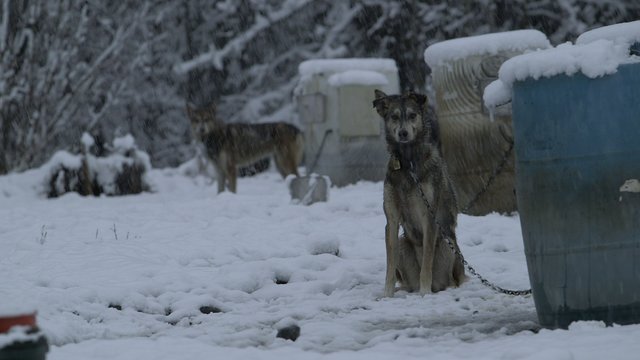
He found roughly 2,000 dogs tied to metal posts for most of the day—freezing, desperate for attention, and pacing so intensely that the ground under their paws was wearing away.
With this gripping footage along with a thorough investigation and many expert interviews, CTV W5’s Dogs in Distress paints an accurate and heartbreaking picture of what life is like for the intelligent and loyal dogs used for sledding.
Former Dog-Sled Insiders reveal extreme cruelty in ‘Dogs in Distress’.
Acting on a tip that she received from a former employee, the director of the groundbreaking documentary Sled Dogs, Fern Levitt, recounts the horror of finding a homemade gas chamber reportedly used to kill dogs along with a freezer full of dead puppies so still and small that they looked as though they were sleeping.
“Euthanasia” methods such as gas aren’t uncommon, and in many places, they’re legal (!!)
The dogs rarely get to run
There’s no such thing as a “sled dog.”
Dogs used for sledding are just like the ones we share our homes with: They love to run and play, enjoy attention and affection, and have physical limits to what they can endure. But they rarely get to engage in their favorite activity—running—even though they’re used for pulling sleds.
The Dogs in Distress reporter spoke with Chantal Dostaler, a former dog-sled tour operator of a now-defunct kennel, who revealed that during the summer off-season, dogs were given only one hour per month off their chain.
They spent every other day, all day, tethered to one spot, prevented from moving more than a few feet.
Most dogs used for sledding suffer in this way—chained, depressed, and neglected for days at a time.
Dostaler added that to save money, she was instructed to feed the dogs as little as possible, to hide sick dogs away from public view, and that when money was too tight to hire the biannual hit person to shoot “surplus” dogs, the operators had staff kill the dogs themselves.
The former employee explained that she took a dog named Hope, who had been sick for four days, outside and shot her in the back of the head point-blank. No one had told her how to euthanize a dog properly, and the killing “broke part of her spirit.”
“…took the gun, took the bullets, went to the yard. I brought Hope … I walked her down to the pit. And nobody had instructed me how to euthanize a dog with a gun, so I shot her in the back of the head point-blank. It definitely broke my heart, it broke part of my spirit …. Who am I, who am I to have euthanized a dog for my employer?” —Chantal Dostaler
How does ‘Dogs in Distress’ relate to “Dog-Sled Racing”?
As revealed by this investigative report along with the documentary Sled Dogsand PETA’s own investigation, all dog-sledding operations are cruel—whether they use dogs for tourism or racing or both.
Many dogs used for tourist sled rides are also forced to participate in races like the deadly Iditarod, during which more than 150 dogs have died.
This death toll doesn’t include dogs who were considered unsuitable for racing, became sick, or grew too weak to be of use to the industry and were killed—or those who died during the off-season while chained up outside, just as Dogs in Distress exposed.
And I mean…Thank you W5 for bringing the truth of the suffering of these dogs to the forefront for Canadians and the world at large.
It is very important to document the widespread exploitation and abuse of the animals in the commercial dog sledding industry because unfortunately very few people are aware of their suffering.
The dogs need all hands on deck and if we all take some action against this cruel multi-million dollar business, we can change the fate of these animals
Please share this video and continue to advocate for these worthy and forgotten beings who need us to share their story and fight for their liberation
A study requested by the International Trade (INTA) committee of the European Parliament analyses the trade aspects of the EU-Mercosur agreement and recognises that the animal welfare provisions foreseen in the agreement are weak. However, the study wrongly states that imports of animal products must comply with EU animal welfare standards.
Eurogroup for Animals welcomes the study published in November 2021 as far as it recognises that animal welfare “is closely linked to sustainable development” and that the current deal “gives rise to questions as to whether [it] fully responds to the EU’s strong stand on the issue of animal welfare as such and its potential trade implications”. As long stated by Eurogroup for Animals, the EU-Mercosur agreement is a bad deal for animals, nature and people.
However, the study misunderstands the requirements that imports of animal products need to comply with, and hence wrongly concludes that the conditional liberalisation for egg products included in the deal is “closing a gap” for imports of animal products.Indeed, the study argues that in the EU, “animal welfare standards are quite ambitious”, and that given the ongoing revision of the animal welfare legislation and the European Citizen Initiative “End The Cage Age”, these standards “are likely to be defined even more strictly in the future”. As a consequence, the study suggests trade implications “since exporters are often required to conform with EU legislation by way of a certificate on equivalence to be presented on importation (calves, pigs, slaughtering, transports)”. Furthermore, the study, while analysing the liberalisation of agri-food trade, wrongly states that “in general, all products need to fulfil animal welfare standards”.
This seems to be a confusion between animal welfare standards and general import standards. Imports of animal products, which are often produced under poor animal welfare standards,do not need to comply with EU-equivalent animal welfare standards (on farm practices or transport), except for those at the time of slaughter. And imports of live animals, which are low, need certification mainly on health issues. Import standards are for instance, veterinary controls and maximum residue levels (MRLs) for pesticides.
This misunderstanding possibly led the study to assume a “notable exception” for egg products that would not need to comply with animal welfare standards. This “notable exception” would be “addressed by the preferential scheme on eggs, as the EU attached a condition to its liberalisation offer in view of compliance with relevant EU standards”. However, the conditional liberalisation on shell eggs, far from “closing a gap”, is merely a step in the right direction with the first animal welfare-based condition in a trade agreement.
Eurogroup for Animals calls on the EU to uphold the objectives of the Farm to Fork Strategy, and to take the opportunity of the revision of the animal welfare legislation to include a trade aspect in the future EU legislation on animal welfare. In parallel, the EU could extend the conditional liberalisation of the trade in shelled eggs, and to agree on animal welfare and sustainability-based conditions required to access tariff-rate quotas or liberalisation in all animal products, including the respect of EU-equivalent animal welfare standards.
What is the ultimate justification for abusing animals?
How do people justify their horrible treatment of animals?
Preferably not at all, of course, and that’s a shame, because most people are familiar with the problem of meat consumption.
In 100 years, people will judge animal eaters with the same disgust we view slave owners today.
European Parliament backs retrogressive report, which lacks ambition for animal welfare and flies in the face of citizens’ wishes
On February 15, the European Parliament (EP) adopted the Implementation report on on-farm animal welfare with 496 votes in favour, 140 against and 51 abstentions.
Eurogroup for Animals, along with its members Compassion in World Farming and Four Paws, strongly opposed the adoption of the final report asking Members of the European parliament (MEPs) to adopt the alternative ENVI opinion instead.
Despite the use of “animal welfare” in its title, the adopted report focuses more on farmers’ economic interests rather than improving the conditions of animals in EU farming systems.
When the report was announced civil society had great hopes that the European Parliament would pay full attention to a fundamental issue, close to citizens hearts and EU policy makers, as reflected in the European Commission’s Farm-to-Fork Strategy and their commitment to revise animal welfare legislation, as well as in the Parliament’s own position to phase out the use of cages.
The final Resolution – the adopted form of the report – even goes as far as contradicting what was adopted in previous Parliamentary Resolutions, specifically:
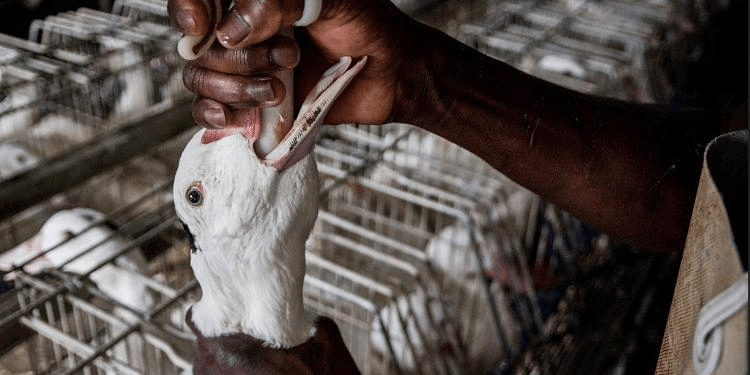
Foie gras, which involves force-feeding, is presented as respecting animal welfare criteria despite the fact thatthe EPrecognised the incompatibility of foie gras production and animal welfare in its recent resolution on the ECI “End the Cage Age”.
The report suggests focusing on more clarity rather than improving standards. This is not in line with the EP’s resolution on the Farm to Fork Strategy which considersit important to set higher legal standards for animal welfare.
The report erroneously claims that some measures believed to improve animal welfare may in fact be counterproductive and undermine other aspects of sustainability, namely health and safety on farm, as well as the the fight against antimicrobial resistance and efforts to reduce greenhouse gas emissions. This is diametrically opposed to the Parliament’s own Resolution on the Farm to Fork Strategy, which clearly states that a high level of animal welfare is important to sustainable development and has the potential to strengthen the economic and environmental sustainability of European farmers.
An implementation report is, unsurprisingly given its name, supposed to assess the implementation of current on-farm animal welfare rules. In this, the adopted Resolution from the EP fails in two respects: it neither addresses the problems with the current rules, nor does it focus on welfare of the animals themselves. Instead it preoccupies itself with the maintenance of a broken system that incentivises the worst kinds of farming for the environment, health and, most of all, for the animals.
MEPs have sent contradictory messages to an ambitious and progressive European Commission. Earlier in the term, they wanted better welfare, new systems of farming and a shift in-line with the Commission’s Green Deal. Yesterday they voted for something that is nothing other than a defence of the status quo. Whilst we commend those MEPs who fought for the far more ambitious opinion from the Parliament’s Environment committee, who stood up for the welfare of animals in-line with citizens’ wishes, the European Parliament has, as a whole, backed down to the narrow interests of big agriculture.
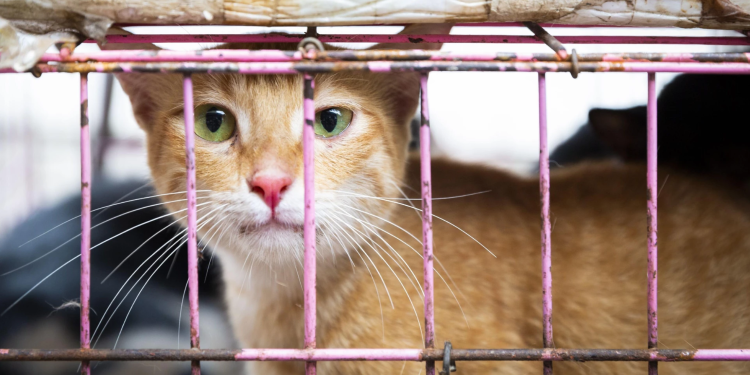
As investigated by Eurogroup for Animals’ member, Four Paws, every year over 10 million dogs and cats are killed for their meat in Southeast Asia, with Indonesia, Cambodia, Vietnam hosting the most robust dog meat trade in the region.
Animals of unknown health status are sourced to supply the trade from multiple locations. Traumatised, diseased, with depleted immune systems and without food and water they are transported in poor hygiene conditions, in many cases, for thousands of kilometres and cross-border, often mix with other species at marketplaces, slaughterhouses and restaurants. Why should it matter to the EU to bring this trade to an end?
MEP Petras Auštrevičius, is Chair of Companion Animals Working Group of the European Parliament Intergroup on Animal Welfare and Conservation.
Many people do not realise that while in the EU most cats and dogs are treated as companion animals, there are other parts of the world where cats and dogs would be qualified as farm animals. Would you be able to elaborate on that? Why is such meat imported and what are the countries that import it?
It is estimated that annually 10 million dogs and cats are killed for human consumption in Vietnam, Cambodia and Indonesia. The trade involves extreme animal cruelty during capture, transport, holding and slaughter with dogs and cats often stolen or forcefully taken from their owners. In Vietnam the trade kills approximately 5 million dogs and 1 million cats, in Cambodia 3 million dogs and an unknown number of cats, and in Indonesia 1 million dogs and hundreds of thousands of cats. The trade is also existent in Africa, although poor data on the topic are available. The meat is largely found as a delicacy, however, there is quite poor social support for continuation of this trade. A great majority of Vietnamese, Cambodian and Indonesian citizens do not see the future for the cat and dog meat trade. The speakers and participants agreed that now is the time for ASEAN countries to ban the cat and dog meat trade and enforce their legislation on animal movement and rabies eradication to protect the consumers and prevent future pandemics.
Looking at the immediate impact on animals, why is it a particularly cruel trade for the animals?
Animals of unknown health status are sourced to supply the trade from multiple locations. Traumatised, diseased, with depleted immune systems and without food and water they are transported in poor hygiene conditions, in many cases, for thousands of kilometres and cross-border, often mix with other species at marketplaces, slaughterhouses and restaurants.
Why does the dog and cat meat trade matter to Europe? What risks does this trade bring?
The cat and dog meat trade and consumption pose a significant human health risk and severe diseases like rabies, cholera and trichinellosis are associated with it. Moreover, the meat contains high levels of antibiotic residues leading to antimicrobial resistance. Finally, mutated canine influenza or canine coronavirus carry a potential of infecting and spreading to humans giving sufficient ground to future pandemics. While human health risks are largest in the source countries, EU citizens can be affected as well. Disease outbreaks and zoonoses can jeopardise European travellers in Southeast Asia. Mutated viruses can be imported through pets rescued from the meat trade. Therefore, the EU has a direct interest to stop the cat and dog meat trade. Nobody expected the outcomes of COVID-19, that is why we must not be complacent.
Are there regulations in place at EU level to address this situation? Have these been sufficient?
ASEAN Delegation outlined the need for the European Parliament to address this issue, as well as for the ASEAN Delegation to commit relevant ambassadors to change. There are certainly things the European Parliament has and will be calling for, however the initiative for any concrete action lies with the European Commission. As there is currently no exchange of data on the movement of cats and dogs, as well as no tracking of animals, even across the EU, it is quite easy to imagine the worst case scenario. In particular, with the increase of demand for cats and dogs, and trends across the foreign rescue animals which is concerning when the health status of the animals is not properly screened.
Is there a way that we can encourage the EU and Member States to improve their response and finally put an end to this trade?
Certainly, the EU and the Member States must raise awareness among their citizens. A ban on the trade and consumption of dog and cat meat and introduction of legislation, as regulation would not resolve the cruelty involved therein and alleviate all health risks are the way forward. Such bans exist in China, the Philippines, Taiwan, Singapore, Hong Kong, and Thailand.
Want to learn more about the dog and cat meat trade?


 Those individuals, violently born in this world with the only purpose of being a consumer product, or entertainment, or work, are never recognised for the key role they’ve played in the evolution of the human society. For that reason we believe this violence against animals cannot be analysed or combated without understanding it as systemic violence.
 Its political, economic and cultural connections to the wars add to the pillage and exploitation of nature, humans and animals in all the territories oppressed by imperialism.
 In the US, where there are no federal laws regulating chicken farming, much of this cruelty to animals is not only standard, but legal.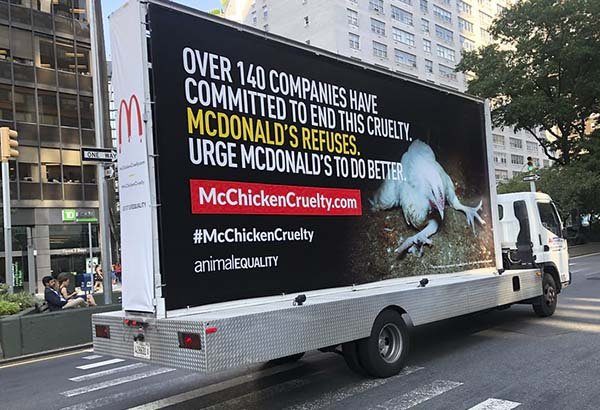


 The Dogs in Distress reporter spoke with Chantal Dostaler, a former dog-sled tour operator of a now-defunct kennel, who revealed that during the summer off-season, dogs were given only one hour per month off their chain.
 Dostaler added that to save money, she was instructed to feed the dogs as little as possible, to hide sick dogs away from public view, and that when money was too tight to hire the biannual hit person to shoot “surplus” dogs, the operators had staff kill the dogs themselves.
 This death toll doesn’t include dogs who were considered unsuitable for racing, became sick, or grew too weak to be of use to the industry and were killed—or those who died during the off-season while chained up outside, just as Dogs in Distress exposed.

 What is the ultimate justification for abusing animals?