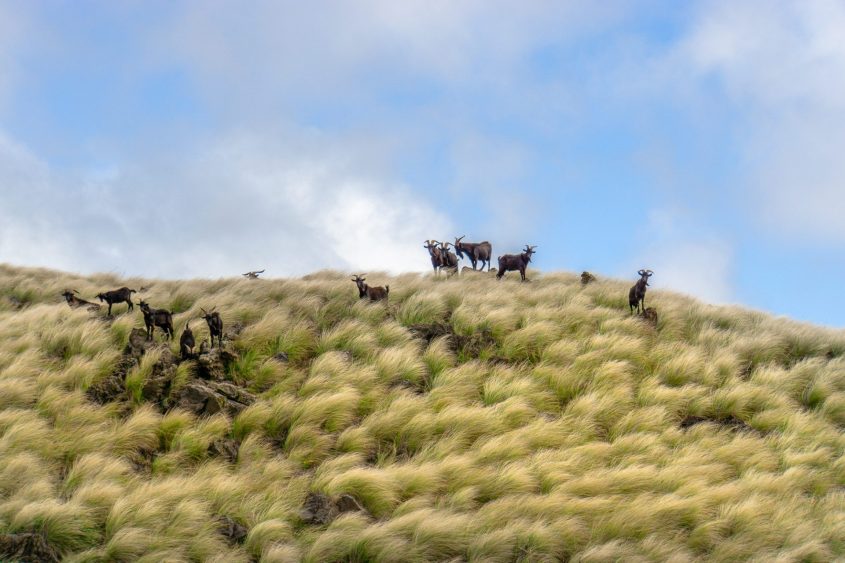
The DLNR’s Division of Forestry and Wildlife announced today that goats will be trapped and removed from the park and that it will “distribute these animals to permitted members of the public.”
The Department of Land and Natural Resources will hold a lottery to distribute live goats to be removed from the Puʻuhonua o Honaunau National Historical Park.
The park, on the west side of Hawaii island, is an important cultural and historical location that used to be a hub of political and religious activity, the department said.
The park is currently overrun by invasive goats, which will be removed to protect it.
To obtain live goats through the salvage project, held by DOFAW and Puʻuhonua o Honaunau National Historical Park, members of the public can apply for permits, which will be issued through a random lottery at the Kamuela DOFAW office on July 28.
The department will be distributing between 20 and 50 goats per permit and anticipates at least 700 goats to be removed from the park.
Permit applications will be free and available on the DOFAW website or at the Kamuela and Hilo DOFAW offices.
They must be received by the offices or postmarked by July 21 and can be delivered in person by appointment only.
Application instructions can be found online.
DOFAW will publish the results of the lottery online on the day after the drawing. The winners will be selected for 30-minute slots on the day of the distribution, during which they can enter the park to pick up the live goats.
Applicants must indicate how many animals they intend to receive, although cannot choose individual goats.
DOFAW said winners “will receive animals as they are sent down the chute.”
Lottery winners must have, at minimum, a 16-foot enclosed horse trailer equivalent to pick up the goats. Only one trailer is permitted per application, and trailers must be fully closed to ensure animals do not escape.
DOFAW may refuse to issue a permit if it deems a trailer to be insufficiently secure.
Puʻuhonua o Honaunau National Historical Park will close on August 11 to distribute the goats.
And I mean…What yoyo runs this agency? How does they expect to round up these goats?
The last time goats were eradicated, the National Guard used helicopters and machine guns to clear the goats off .
Quote: “Feral goats (Caprahircus) were a significant threat to the native habitat and endangered biota unique to the Makua Military Reservation (MMR) on the island of Oahu, Hawaii.
The Oahu Army Natural Resource Programme (OANRP) was tasked with the removal of these animals. OANRP staff then employed other techniques to complete the eradication, including Judas goats and aerial hunting. When the last goat was eradicated in July 2004, a total of 1565 goats had been destroyed using a combination of techniques” (Quote end)
New investigation by Essere Animali on a dairy farm producing milk for Grana Padano. The footage documents the treatment of calves, separated from their mothers at birth, isolated in small pens and brutally treated by farm workers.
The organisation Essere Animali today released a new video investigation documenting the conditions of calves on a dairy farm located in Lombardy, in the province of Bergamo.
The farm under investigation is a producer of Grana Padano cheese, the most widely consumed P.D.O. cheese in the world, with the cheese plant located next to the barns which house 2,700 animals, including cows and bulls, as well as some 300 calves.
The investigation documents the first weeks of the calves’ lives, from their birth to their confinement in small pens, casting a dark shadow over the conditions in which they are kept on dairy farms. The undercover investigation released by Essere Animali shows:
Calves being separated from their mother
Insults aimed at male calves
Housing in individual pens
Feeding of the calves, deprived of their mother’s milk
Rough behaviour by workers and alleged irregularities
For the production of milk, even that intended for products of “Italian excellence” such as Grana Padano, calves are raised in conditions of social deprivation and are subjected to stress and suffering. Change is possible, also in view of the growing number of European citizens demanding higher welfare standards for farm animals. For this reason, together with 77 NGOs all over the world, we are urging the European Commission to undertake a complete revision of the legislation on the protection of farm animals.
Simone Montuschi, President, Essere Animali
By disseminating this investigation, Essere Animali is relaunching the No Animal Left Behindcampaign, coordinated by Eurogroup For Animals, an organisation that brings together 77 NGOs for animal protection in 27 EU Member States, the United Kingdom, Switzerland, Serbia, Norway, Australia and the United States.
The organisations are calling on the European Commission, committed with the Farm to Fork strategy to make the European food system fairer, healthier and more environmentally friendly, to revise the legislation on the protection of farm animals, which is currently considered seriously inadequate to guarantee them a life free from unnecessary suffering.
One of the demands made to the Commission isthe application of farming conditions that would allow all farmed species to express their natural behaviours, including the intake of real food.
Allow contact between the calves and their mothers for at least the first eight weeks of age, during which the animals must be kept in a half-day contact system – at least – with suckling permitted.
Provide housing conditions and a diet that meet the behavioural and physiological needs of calves, who should be raised in groups with appropriate spaces and have access to outdoor areas.
This hard-hitting investigation provides a harsh wake-up call regarding the conditions in which calves are reared on dairy farms. However, we have a unique opportunity: by September, we can convince the European Commission to undertake a complete revision of the legislation on the protection of farm animals, and provide much better protection to calves and other species. It is incredible that the current legislation still permits the isolation and confinement of newly born animals: these are cruel and avoidable practices. We are asking for truly higher welfare standards which leave no animal behind.
Sadly, the director Richard Donner died on July 5, 2021.
If you’ve seen the blockbuster “Lethal Weapon 3″, you probably remember all the animal rights posters that caught the eye in the movie around the police station.
This was the work of Richard Donner, who was known for smuggling social messages into his films.
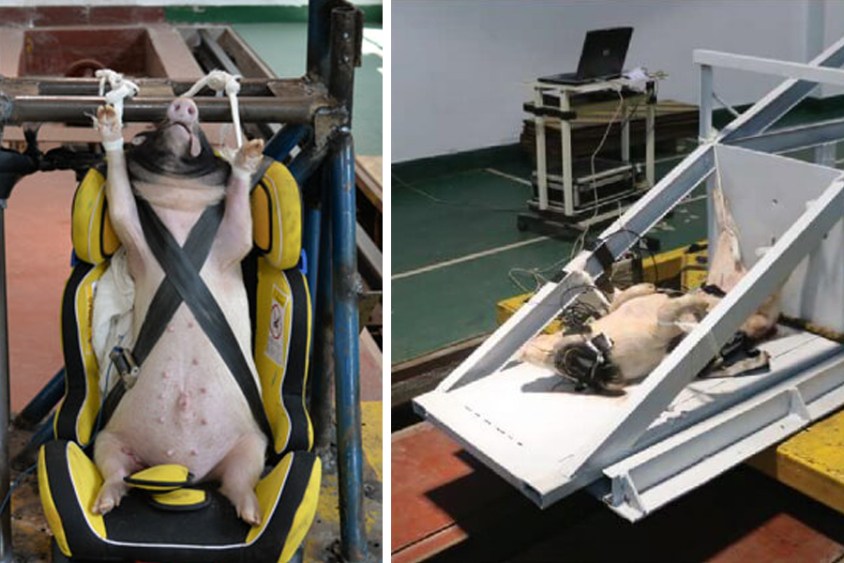
He aimed at the General Motors concern, which at that time still smashed pigs and ferrets in crash tests.
His action helped PETA USA put an end to these deadly experiments.
Richard Donner and his compassionate wife, Lauren Shuler Donner, received the Humanitary Award at PETA USA’s 25th Anniversary Gala, but most of all, he will be forever remembered for his calls to end marine mammal captivity.
His film “Free Willy” informed an entire generation about the life of animals in marine parks.
In this 1998 photo shows famed killer whale Keiko, at the Oregon Coast Aquarium, in Newport, Ore. Dr. Steven Brown of Newport, a veterinarian who cared for the killer whale Keiko, star of the “Free Willy” films of the 1990’s, has died at 62. (AP Photo/The Oregonian, Steven Nehl)
“The abduction of these majestic mammals from the wild for commercial purposes is obscene. (…) These terrible catches must absolutely become part of the past. “
(Richard Donner)
Donner appealed to SeaWorld to fund the creation of a coastal reserve so that the orcas in their parks can be retired. PETA is still driving this initiative forward.
If you are one of Donner’s millions of fans, please honor his legacy by doing something for the animals.
“Being in his circle was akin to hanging out with your favorite coach, smartest professor, fiercest motivator, most endearing friend, staunchest ally, and – of course — the greatest Goonie of all,” said Steven Spielberg, who wrote the story for Donner’s film, “The Goonies”. “He was all kid. All heart. All the time. I can’t believe he’s gone, but his husky, hearty laugh will stay with me always.”
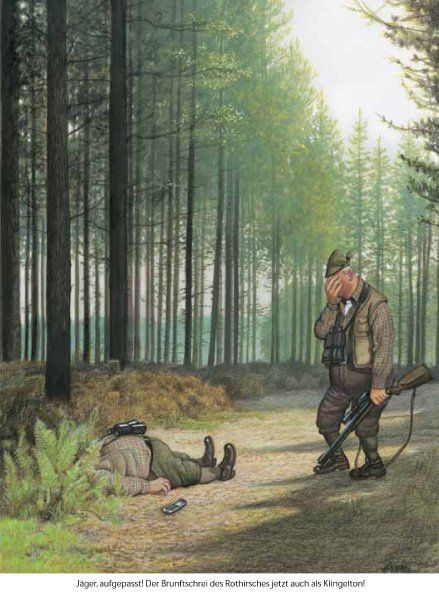
Two hunters are on the hunt in the forest, suddenly one of them collapses. He doesn’t seem to be breathing anymore.
The other calls out in panic from his cell phone to the emergency call and stuttered excitedly: “I think my friend is dead. What should I do now?”
Then the voice from the emergency number says: “Now calm down first, and then make sure that he’s actually dead. “
After a moment of silence, a shot sounds.
Back on the phone, the hunter asks: “Okay, now what?”
University of Hertfordshire psychologist Richard Wiseman had 40,000 submitted jokes rated by readers from around the world. “Jokes are a matter of taste,” he says, “but many people like this one particularly well. The situation of the two hunters got the best marks”.
Since then, this has been considered the funniest joke in the world.
And we can say… It would be nicer if that wasn’t a joke but everyday reality.
Performed 5 years in a row, would solve a lot of problems in one fell swoop.
Is the EU actually starting to listen to its voting citizens ?
On 23 June 2016 an EU referendum took place and the people of the United Kingdom (UK) voted to leave the European Union (EU).
The UK formally left the EU at the end of 31 January 2020, after being an EU member state since joining on 1st January 1973, along (at that date) with other nations Denmark and the Republic of Ireland.
Why did the UK vote ‘out’ – or ‘Brexit’ ? – a lot of UK citizens were seeing the EU and many (most) of its MEP politicians and Commissioners, as monolithic invertebrates who did little for the wishes and demands of the electorate; the requests of the ‘normal’ EU citizen, it was simple a case of the politicians riding the EU ‘gravy train’; often bettering themselves (in many ways), whilst dismissing the wishes of good European people with ‘yukspeak’ returns to their letters and e mails, asking them why this and that was not being addressed in the EU Parliament.
So, after years of basically very little worthy of mention from the EU, the vertebrate citizens of the UK said they had been given enough rubbish by the EU; and so they voted out, to leave, Brexit. People wanted their personal parliament back with regards rules and regulations, free to decide rather than be told to by the EU.
Personally I was one of them – an ‘outer’. It was not a simple question to ask yourself at tea time one day – do I stay or do I go ? type thing; I debated the issue with myself for months in advance; largely keeping my opinions to myself. There were reasons for this which only other animal campaigners probably understand.
As an animal activist, and having been to the EU in Brussels many times on animal issues; and authoring endless amounts of complaints, reports and investigations into animal suffering issues within the EU, I had over the years, simply been lied to, given false promises, and made to believe time and time again that there were all the regulations and rules in place by the EU masters which thus prevented the evidence I presented at the table from being ‘true’. In other words; the EU political system was basically calling me a liar, and the evidence which I personally presented, along with many other wonderful groups and people in the EU, was simply being dismissed and put into a file known as the ‘EU trash bin’.
As a person with decades of experience dealing with animal transport abuses along with many others; a voice had to be shouted and my opinion noted. Consequently, I voted out of the EU, monolithic, invertebrate, gravy club; and decided that ‘going it alone’ would be the only way for the UK to get back the legislation needed as required by the citizens of the UK. For example; for decades I had been attending demonstrations all over England asking for a ban on the live transport of animals. But, under EU rules, and this is still the case for other EU member states; they (member states) are not allowed to introduce their own national legislation to ban live animal transport. The EU says ‘No’, so no it is; despite overwhelming evidence from a multitude of EU animal welfare organisations showing the EU legislation, in the form of Reg. 1/2005 for the so called ‘protection of animals in transport’, simply was not working. It never has worked, it does not work now, and it never will work in the future. ‘Yukspeak’ to the EU citizen from Brussels; as I have said before.
So, I have been somewhat surprised and amazed to read over the last few weeks, that there is going to be progress in the form of bans on animal cages in the EU.
And the news this morning, 12/7/21; that the European Parliament, is answering to a call from cross party MEPs to clarify how the Commission is planning to deliver on its commitment to proactively reduce and replace the use of animals in EU laboratories
Finally, is the requests of the EU citizen; the ‘normal’ person; being listened to, and more importantly, acted on, by the hierarchy in the ivory tower known and EU Brussels ?
Is there a reason for this ? – are all the years of bullshit and non sensical returns from the EU starting to show them that there are dissident things brewing around Europe ? – is it finally a case of bullshit no longer; the common man now sees clearly through the smokescreen that we, as a EU Parliament and Commission(s), have hidden behind for decades ? – is the emperor starting to lose his clothes ?
The link (source) given at the end is very interesting reading:
Italy would be the most likely of the “Big Four” member states to consider exiting the European Union if Brexit proves to be beneficial to Britain, according to a Euronews-commissioned poll.
Data from the Redfield and Wilton Strategies survey found that nearly half of Italians would be likely to support their country leaving the EU if the UK and its economy are regarded to be in good health in five years.
In the event, France and Spain both showed moderate support for changing its relationship with the bloc, while Germany was the member state least likely of the four major players to consider leaving the Union.
The time came many years ago when the EU should have listened and acted to the wishes of its voting electorate. They failed big time; and only now are we witnessing this rash of new promises and proposals which should make life a bit better for suffering animals. The truth will be in the results and the realities.
On animal transport; as always, there is nothing in the way of real improvement. I read nothing about a ban on live animal long distance transport; instead, I am fed spoonful’s of ‘farm to fork strategies’ on how things are going to be so much better – or in other words; am kind of acceptance by the EU masters that the current system does not really work. Hmm; has this not been said by many for decades ? – why now does the sleeping monolith awaken ?
With the UK being out of Europe, it does not mean that we wipe our hands of EU animal issues; far from it. It does mean though that by getting out, we can set our own better standards in the UK as well as continuing the fight for animal rights with all of our wonderful friends in Europe.
Oh, and by the way; since the UK left the EU a little while ago; the UK government is now putting legislation through parliament which will BAN the export of live animals from British shores.
MEPs say now is the time for a comprehensive plan to end European animal experiments and transition to human-relevant science
8 July 2021
Press Release
Today in the European Parliament, answering to a call from cross party MEPs to clarify how the Commission is planning to deliver on its commitment to proactively reduce and replace the use of animals in EU laboratories, Commissioner Adina Ioana Vălean described the Commission’s actions. MEPs from all political groups unanimously agreed that progress in replacing the use of animals has been slow and more needs to be done.
Members of the European Parliament are calling for a coordinated action plan to move Europe towards more humane and human-relevant science without the use of animals in research, regulatory testing and education.
Cross party Members of the European Parliament have joined forces to request that the Commission sets up a high-level taskforce to work with Member States and relevant stakeholders in putting together an EU-wide plan to phase-out the use of animals in Europe’s laboratories.
An oral question to the Commission on this issue has been debated today and the Parliament will formally adopt its position in September.This has been a major objective of the Animals in Science working group of the Intergroup on the Welfare and Conservation of Animals.
Opinion polls show that ending animal experiments is a priority for EU citizens.
Nearly three quarters (72%) of European citizens agree that the EU should set binding targets and deadlines to phase out testing on animals.
The Members of the European Parliament’s comments:
Jytte Guteland, S&D“Today’s scientific landscape is not the same as 50 years ago. Today we have the knowledge and technology to plan for human-centred science, where animals are no longer the gold standard. But to get there, the Commission needs to set out a series of steps to reach concrete objectives that replace step by step the use of animals in specific areas.”
Tilly Metz, Greens“EU citizens have voiced their demand for non-animal science too many times, but EU investments are too slim and scattered to have an impact. The Commission needs to establish a high-level inter-service taskforce to work with member states and relevant stakeholders to draw up an EU-wide Action Plan that can drive an efficient phase-out of the use of animals for scientific purposes.”
Katalin Cseh, Renew“Animal tests are slow, inefficient and cause immense suffering. This has no place in 21st century science. The European Union has traditionally done better than the rest of the world, but even here, progress is too slow. We need a credible plan ‒ a plan with measures, targets and a binding, ambitious timeline. We need to promote and fund cruelty-free alternatives. This is what we are asking from the European Commission.”
Michal Wiezik, EPP “What we are asking from the Commission is to do more of what it already does, but in a coordinated manner and with concrete goals that can replace animals in specific scientific areas. Targeted funding, education and broad collaborations are key to making innovative advanced models and technologies the new normal.”
Anja Hazekamp, GUE/NGL“Scientific change, like any change we seek, needs a political strategy. The EU has strategies for climate change, gender equality, and even for research and innovation. But it does not yet address the scientific and ethical problems that have been dragged by animal experimentation for decades. An EU action plan to accelerate the transition to non-animal science can change that.”
Today’s debate has shown that despite the positive investments from the Commission on non-animal models, they are not usually linked to concrete objectives that can significantly reduce the use of animals and change the current scientific landscape.
A European Parliament resolution on a coordinated Union-level plan to facilitate the transition to animal-free innovation can lay out the strategic elements necessary to place the EU in the forefront of innovation, health and environmental and animal protection.
The “Have you met” is a monthly interview to raise awareness for our Member Organisations, their work, main battles and achievements for animals.
Let’s start this first edition with an interview of Guillermo Moreno, Equalia’s co-founder and Executive Director.
Tell us a bit more about Equalia and its main battles.
Equalia is a non-profit organisation dedicated to improving the living conditions of farmed animals with the lowest standards of animal welfare.
Our mission is to achieve agreements with companies, institutions and stakeholders that positively impact the greatest possible number of farmed animals.
Our vision is a world where intensive animal farming and intensive aquaculture makes way to food production models that respect sustainability and animal welfare.
We have 4 lines of action:
Awareness rising,
Effective animal advocacy (movement construction and capacity building),
Corporate outreach,
Political campaigning.
Our main battles this year include:
Mandatory CCTV in all Spanish Slaughterhouses,
Cage-Free Initiative,
Higher welfare standards for broilers within the European Chicken Commitment initiative,
We also cooperate closely with international coalitions, such as Aquatic Animal Alliance and Open Wing Alliance, in order to generate a global positive impact for farmed animals.
What about you Guillermo Moreno? Tell us a bit more about your role within Equalia.
I am the co-founder and current Executive Director of Equalia. I come from a social background, with almost 15 years of experience in the animal welfare movement. I am a psychologist and I put all my knowledge at the service of the organisation.
My role is to be at the service of the employees and to surround myself with employees, volunteers and advisors who have more knowledge than me and complement me.
When did Equalia join Eurogroup for Animals and why?
Equalia joined Eurogroup for Animals at the beginning of 2021 with the aim of creating collaborative synergies to give a voice to European proposals in Spain.
The political lobby of the Spanish agri-food system in Europe is very strong, therefore it was required to strengthen the presence of a Spanish group to create effective collaborative ecosystems between Europe and Spain.
One of our main achievement this year is the fact that after two and a half year of intensive campaigning, the Ministry of Consumer Affairs published earlier this year a draft Royal Decree that will oblige the ~700 Spanish slaughterhouses to install video surveillance cameras.
The Spanish Agency for Food Safety and Nutrition-AESAN (an autonomous body of the Spanish Government, attached to the Ministry of Consumer Affairs), has announced that the Royal Decree will be approved by the end of this year.
Spain will become the first EU country to approve the mandatory installation of CCTV in all slaughterhouses.
How can the public act for Equalia? (e.g. donation, sign campaigns, volunteering, ect.)
If, after learning about our work, anyone is interested in making a one-time donation or becoming a member of Equalia, it can be done here.
If any philanthropist or philanthropic entity is interested in making a donation, please contact our Fundraising Manager at joseramon.mallen@equaliaong.org.
Also, anybody can find skilled volunteering opportunities with us or other effective animal advocacy nonprofits in Animal Advocacy Careers’ Skilled Volunteering Boardhere
What is your life motto?
It comes from a great friend:
In a world as fragmented and individualistic as this one, where we also have endless responsibilities and live under constant stress that prevents us from even feeling, weaving authentic and deep relationships is almost like a miracle of life.”
British Columbia scientist says heat essentially cooked mussels: ‘The shore doesn’t usually crunch when you walk’
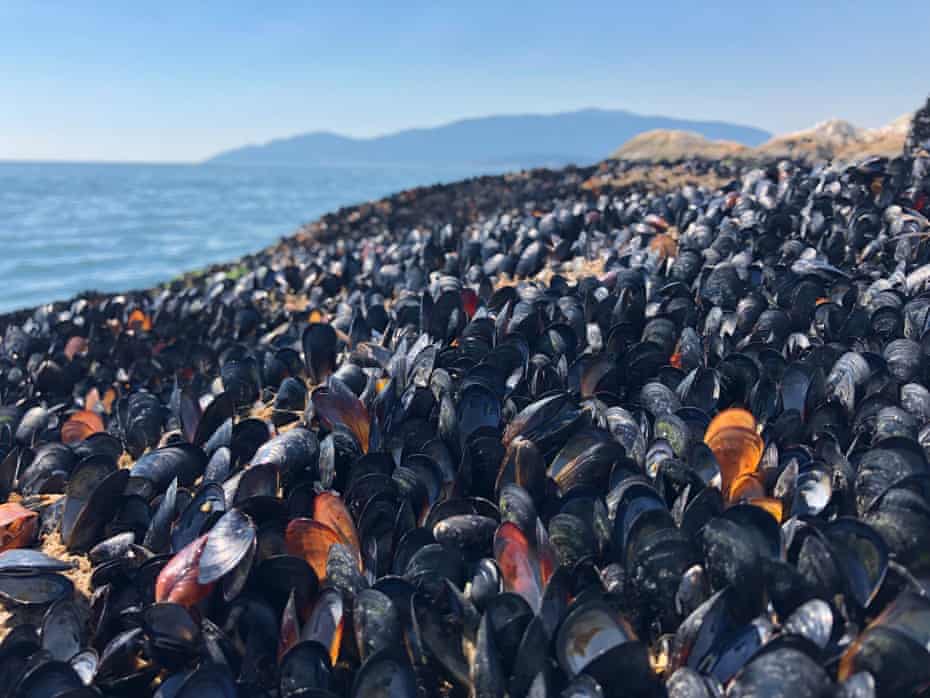
More than 1 billion marine animals along Canada’s Pacific coast are likely to have died from last week’s record heatwave, experts warn, highlighting the vulnerability of ecosystems unaccustomed to extreme temperatures.
The “heat dome” that settled over western Canada and the north-western US for five days pushed temperatures in communities along the coast to 40C (104F) – shattering longstanding records and offering little respite for days.
But experts fear it also had a devastating impact on marine life.
Christopher Harley, a marine biologist at the University of British Columbia, has calculated that more than a billion marine animals may have been killed by the unusual heat.
A walk along a Vancouver-area beach highlighted the magnitude of devastation brought on by the heatwave, he said.
“The shore doesn’t usually crunch when you walk on it. But there were so many empty mussel shells lying everywhere that you just couldn’t avoid stepping on dead animals while walking around,” he said.
Harley was struck by the smell of rotting mussels, many of which were in effect cooked by the abnormally warm water. Snails, sea stars and clams were decaying in the shallow water. “It was an overpowering, visceral experience,” he said.
While the air around Vancouver hovered around the high 30s (about 100F), Harley and a student used infrared cameras to record temperatures above 50C (122F) along the rocky shore.
“It was so hot when I was out with a student that we collected data for a little bit and then retreated to the shade and ate frozen grapes,” said Harley. “But of course, the mussels, sea stars and clams don’t have that option.”Mussels are hardy shellfish, tolerating temperatures into the high 30s. Barnacles are even sturdier, surviving the mid-40s (about 113F) for at least a few hours.
“But when the temperatures get above that, those are just unsurvivable conditions,” he said.
The mass death of shellfish would temporarily affect water quality because mussels and clams help filter the sea, Harley said, keeping it clear enough that sunlight reaches the eelgrass beds while also creating habitats for other species.
“A square meter of mussel bed could be home to several dozen or even one hundred species,” he said. The tightly bunched way mussels live also informed Harley’s calculation of the scope of the loss.
“You can fit thousands on to an area the size of a stove top. And there are hundreds of kilometres of rocky beach that are hospitable to mussels. Each time you scale up, the numbers just keep getting bigger and bigger. And that’s just mussels. A lot of sea life would have died.”
While mussels can regenerate over a period of two years, a number of starfish and clams live for decades, and they reproduce more slowly, so their recovery is probably going to take longer.
Harley has also received reports from colleagues of dead sea anemones, rock fish and oysters.
Experts have cautioned that the province needs to adapt to the reality that sudden and sustained heatwaves are likely to become more common as a result of climate change.
Another heatwave is expected to strike the western United States and south-western Canada in the coming week, highlighting the relentlessness of the dry summer heat.
“The nerdy ecologist part of me is excited to see what will happen in the coming years,” said Harley. “But most of the rest of me is kind of depressed by it. A lot of species are not going to be able to keep up with the pace of change. Ecosystems are going to change in ways that are really difficult to predict. We don’t know where the tipping points are.”
The t-shirts, hoodies, and tote bags are made with organic and recycled materials Credit: TOMORROW
Sustainable Fashion Brand Collaborates With Sea Shepherd For New Clothing Line
A new sustainable clothing line aims to raise awareness about ocean conservation
Social activism brand TOMORROW has joined forces with Sea Shepherd to release a collection of sustainable, vegan clothing. The range is an effort to raise awareness about ocean conservation.
The new line is TOMORROW’s latest foray into ‘activism you can wear’.
The brand teamed up with six artists to produce the line: B. Thom Stevenson, Ellen Rutt, Humberto Cruz (I SCREAM COLOUR), Kelly Knaga, Kit Agar, and Luca Bjørnsten.
The vegan range includes organic cotton t-shirts and hoodies, as well as tote bags made from recycled fabrics.TOMORROW plans to donate 50 percent of the line’s proceeds to the artists and Sea Shepherd.
The PETA-certified brand said in a press release: “The innovative campaign shines a light on the importance of ocean conservation and enabling real action to protect marine wildlife.”
“Sea Shepherd accomplishes these goals through public education, investigation, documentation and, where appropriate, help to enforce violations of international treaties, laws and conventions designated to protect the oceans.”
Sea Shepherd
Founded in 1977, Sea Shepherd targets issues like whaling, plastic pollution, and marine habitat destruction.
In 2019, the Liberian Ministry of Defense awarded Sea Shepherd the Distinguished Service Order. The order honored the non-profit for its ‘immense support and contribution in assisting the Liberian Coast Guard to fight against illegal, unreported and unregulated (IUU) fishing in Liberia’.It’s the highest military award that the ministry gives.
The year prior, Sea Shepherd helped arrest and seize the Damanzaihao – the world’s largest fish factory ship. The blacklisted vessel was capable of killing 547,000 tons of fish annually.
Find more information about the TOMORROW X Sea Shepherd range here.


 If you’ve seen the blockbuster “Lethal Weapon 3″, you probably remember all the animal rights posters that caught the eye in the movie around the police station.