Category: General News

USA: N.J. celebrities want ban on crates that confine pigs and calves. Christie vetoed it twice.

N.J. celebrities want ban on crates that confine pigs and calves. Christie vetoed it twice.

Updated May 10, 2021; Posted May 10, 2021

Seven years after similar efforts hit a wall under former Gov. Chris Christie, a group of 16 New Jersey celebrities are calling on state leaders to ban the farm practice of using gestation crates to confine pregnant pigs and veal crates to confine calves.

The celebrities — including Steven Van Zandt, Debbie Harry, Chelsea Handler, and Ethan Hawke — joined the Animal Legal Defense Fund in penning the open letter urging the state Legislature and Gov. Phil Murphy to enact a new bill that would criminalize the use of such crates in New Jersey, calling the practice “indefensible.”

“Gestation crates and veal crates are inherently cruel,” the celebrities wrote in the letter, according to a copy obtained by NJ Advance Media. “Both include severely restricting the animal’s movement, to the point of virtual immobilization, which leads to highly stressful conditions that induces physical and psychological illness — and great suffering.”

The celebrities are musician and actor Steven Van Zandt (a Middletown native), actress Maureen Van Zandt, actor Paul Wesley (of Marlboro), comedian Michael Ian Black (of Hillsborough), actress Taissa Farmiga (of Whitehouse Station), television host Daisy Fuentes (of Harrison), comedian Chelsea Handler (of Livingston), musician Debbie Harry (of Hawthorne), actor Ethan Hawke (of West Windsor), YouTube Grace Helbig (of Woodbury), television personality Alison Haislip (of Tewksbury), comedian Myq Kaplan (of Livingston), comedian Bill Maher (of River Vale), actress Cristin Milioti (of Cherry Hill), actress Christina Ricci (of Montclair), and musician Karen O (of Englewood).

Gestation crates are used to confine pigs and calves during pregnancy. Proponents say the crates prevent the animals from fighting each other. Opponents say they prevent the animals from turning around and fully extending their limbs.

“Coupled with increasing demand by consumers for increased compassion and transparency in how farmed animals are raised, now is the time for New Jersey to ban the crates,” Animal Legal Defense Fund Executive Director Stephen Wells said.

New Jersey’s bill (S3401), sponsored by Democrats, would make their use a crime and establish monetary fines. Ten other states, as well as Canada and the European Union, have banned gestation crates.

Christie, a Republican, vetoed measures banning pig gestation crates twice during his tenure as governor, first in 2013 and then in 2014.

Critics accused the then-governor of rejecting the bill because he was planning to run for president and didn’t want to upset pork producers in the key state of Iowa, where nearly one-third of the nation’s hogs are raised.

But it was also uncertain as to how much of an effect the measure would have had in New Jersey. The state is home to fewer than 10,000 pigs, and it’s unclear if any are kept in crates when pregnant.

Christie noted both the state Board of Agriculture and state Department fo Agriculture adopted humane standards in 1995 that cover the issue. He also accused sponsors of using the bill as a “political cudgel” against him.

“I will rely on our in-state experts rather than the partisan politicians who sponsor this bill,” Christie said at the time.

Both houses of the Democratic-controlled state Legislature would need to pass the new bill before Murphy, a Democrat, could decide whether to sign or veto it.

Former state Sen. Raymond Lesniak recently wrote an op-ed saying he had hope the measure would succeed this time now that Murphy is in charge.

“Help is on the way for the suffering pigs,” Lesniak, a Union County Democrat, wrote.

 

Pro-Palestinian protesters rally against Israeli strikes on Gaza — live  updates | News | DW | 15.05.2021

USA: Approximately 10,000 hogs killed in fire at Pillen Family Farms, Nebraska.

See the video here:

Approximately 10,000 hogs killed in fire at Pillen Family Farms – PLATTE VALLEY – NEWS CHANNEL NEBRASKA

Approximately 10,000 hogs killed in fire at Pillen Family Farms

A large fire near Albion has claimed the lives of approximately 10,000 hogs, according to the Petersburg Volunteer Fire Department.

ALBION, Neb. — A large fire near Albion has claimed the lives of approximately 10,000 hogs, according to the Petersburg Volunteer Fire Department.

The department was training late in Tuesday night when, at 3:14 a.m., a call from Pillen Family Farm came in: one of their barns near Albion was ablaze. 

“The bells started ringing, and by the time we got west of town … it was just a glowing ball out there,” said Doug Koch, a volunteer firefighter. 

The 20-pound hogs were trapped under the collapsed, burning building; none salvageable.

“I kept thinking, you would have thought at least one pig would come walking out, that at least one would have survived […] It was the most destructive for losing livestock I’ve ever seen that large,” said Petersburg Fire Chief Neil Baumgartner. 

They eventually stopped it by tearing through the building around 11 a.m., but they were later called back onto the scene throughout Wednesday to fend off flames.   

“It is dry so a spark could go a long way… the guys are drinking coffee today,” Baumgartner said. 

The cause is still under investigation, but Baumgartner said there had been construction on-site previously.

While the whole building was a loss, no people were injured. 

Pillen Family Farm has not commented on the issue yet to NCN. 

No human injuries were reported. The cause of the fire is currently under investigation.

The Animal Welfare Institute said Thursday morning that the Wednesday fire was the deadliest barn fire in Nebraska this year.

“While we are relieved no humans were injured, the extreme suffering and fear these animals must have endured as they were trapped in a burning building cannot be ignored,” said Allie Granger, farm animal policy associate for the Animal Welfare Institute. “Producers and the industry as a whole must take this problem seriously and start prioritizing fire prevention.”

The institute says nearly 5.3 million farm animals have perished in barn fires since 2013. Nebraska reported the most animal deaths from barn fires last year with approximately 400,000 dying in three fires.


Protests held around the country in support of Palestine

Germany: Police save duck family

Report from the Stuttgart police– Stuttgart

+++ 🦆 Duck good, everything is good – the duck family of ten has apparently got lost 👮‍♀👮‍♂ +++

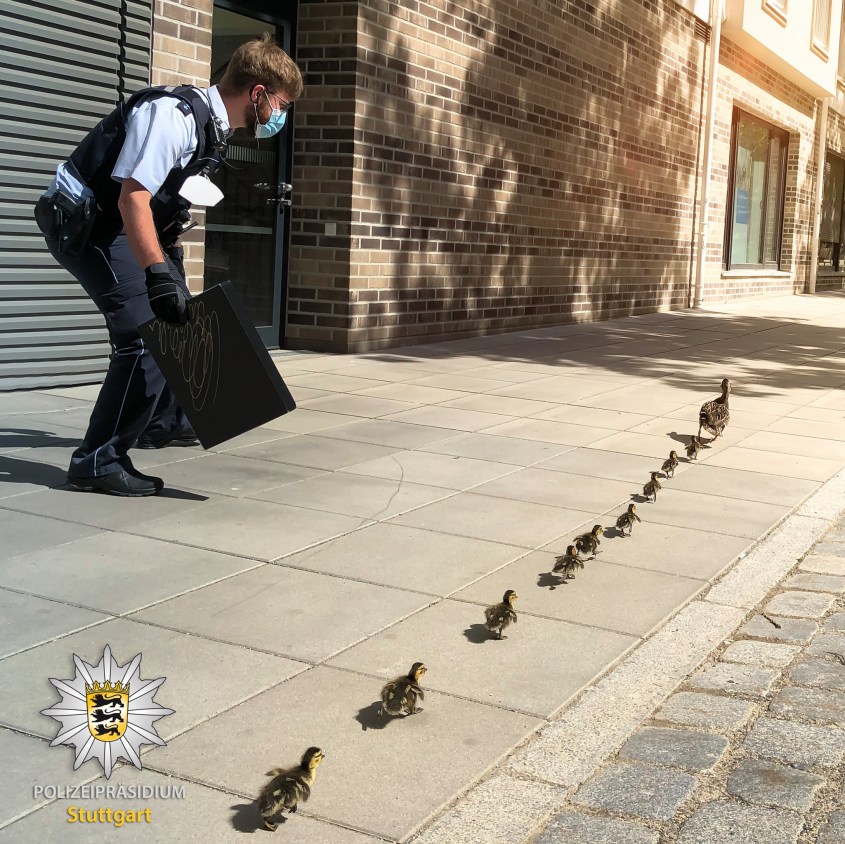
A mother duck with her nine little ducklings apparently got lost on Sunday afternoon in the jungle of houses in the west of Stuttgart.
To Papa Erpel’s delight, our colleagues were able to help.

🔹 What happened?
The mother duck probably lost her orientation on Mother’s Day excursion and was heading in the completely wrong direction. After the duck excitedly “spoke to” several passers-by, they finally notified the police at around 3:30 pm.

👉 Our colleagues managed to show the mother duck the right way to the lake of fire at home, whereupon the ten-headed duck pack set off on the sidewalk.
Due to the high number of waddling duck feet, our colleagues accompanied the extended family to their destination for safety.

💦 Papa Drake was waiting longingly for his family at the “Fire-lake” (Feuersee).

Reunited, after all the excitement, they all took a refreshing bath together.

Your #police #Stuttgart

And I mean..Many thanks to the sensitive people who informed the police and also thanks to the police! 🥰🥰🥰🥰🥰🥰🥰🥰🥰
Maybe that was their cutest outing of the year.

This world would be a lot more bearable if everyone did their job conscientiously and competently..

My best regards to all, Venus

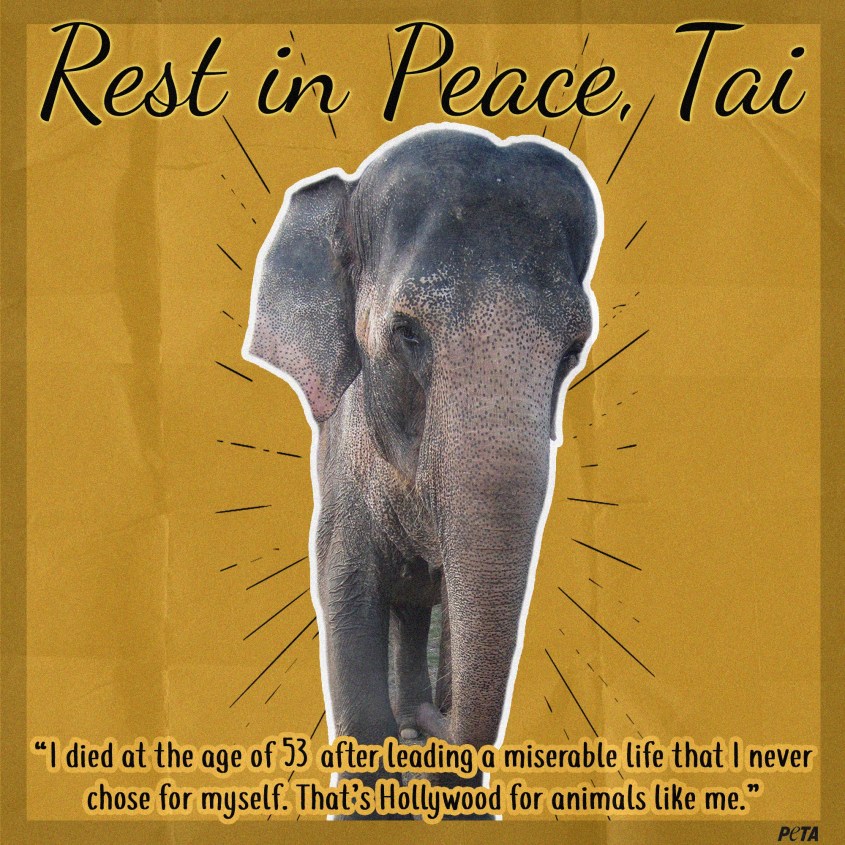
There was no Hollywood ending for Tai

💔 Her death comes after decades of abuse, confinement, and forced appearances in films and TV shows.

After being captured from her family as a calf, Tai was eventually sold to her abusive handlers at Have Trunk Will Travel.

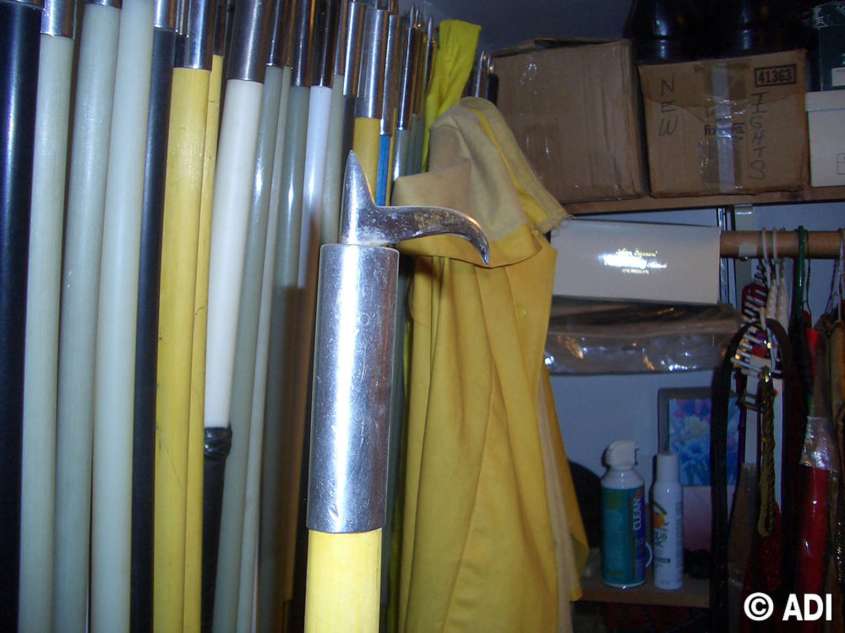
They beat her with bullhooks and used electric shocks to force her to perform. She was carted around the country to dozens of sets, including ‘Water for Elephants,’ ‘George of the Jungle’, and HBO’s Westworld.

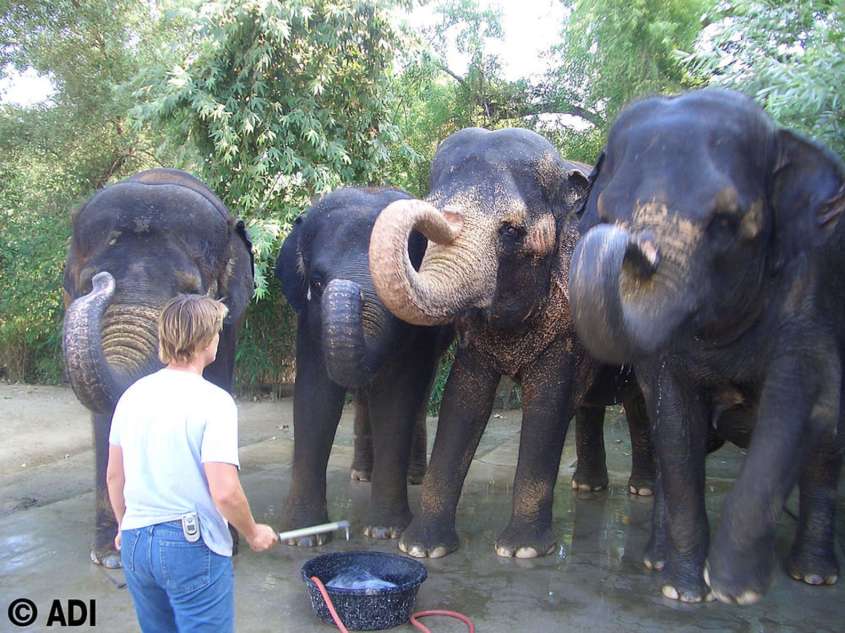
In 2005, an undercover investigator for Animal Defenders International (ADI) obtained damning footage of elephants being brutally trained by HTWT workers — the workers beat and prodded the elephants with bullhooks, and shocked them with stun guns, to get them to perform tricks.
In one section of the footage, one of the older female elephants, ( it was Tai who also performed in the recent episode of “Westworld”), cries out when she’s zapped with the stun gun on her sensitive skin.

CGI, animatronics, and so many more humane technologies exist—Hollywood must ban using real animals in film and TV!

The video also shows trainers repeatedly torturing and mocking the animals while teaching them choreographies and poses for the show.
The elephants look confused and scared. They are powerless at the mercy of the chains and bumps that are used to prepare them for their scenes in film or television.

A trainer is seen violently handling a baby elephant who is clearly scared and struggling.
The trainer mocks the elephant by using a metal hook to push it into sensitive areas of the body such as the trunk.
The elephant begins to cry and other elephants watching it do the same.

According to the comment in the video, the elephants are chained for up to twelve hours if not exercised. They will then have no way of moving or relaxing.

One of the elephants in the video is a female named Tai.
She was being prepared to appear in the aforementioned episode of the Westworld series. This means that she has been suffering from the conditions shown in the video for over ten years.

Torture tools for elephants

“Have Trunk Will Travel has exhibited some of the most vicious and sadistic treatment of elephants, including babies, that I have seen on film in my over 30 years as a wildlife behavioral biologist,” Toni Frohoff, an elephant biologist with In Defense of Animals (IDA), told “The Dodo”.

“There is no excuse or justification for abusing elephants like this, nor for mishandling a helpless baby’s sensitive trunk, as is shown.”

PETA (People for the Ethical Treatment of Animals) 

And I mean… when The Dodo approached HBO for comment, a spokesperson noted that “none of this video was shot during the production” and claimed the ADI footage “does not in any way reflect practices on our sets.”

“All of the animals featured on HBO series are treated with the utmost care and respect for their health, safety and well-being,” the HBO spokesperson told “The Dodo”.

“A certified animal safety representative from American Humane was present at all times during any animal action on the set of ‘Westworld.’
The AHA has confirmed that the animals were well-treated, and the production received the designation of ‘No Animals Were Harmed.’

A common trait of all unscrupulous animal exploiters is to deny video recordings, even though they clearly document reality. That is also the case with the slaughterhouse investigations.

And if all the tricks and lies don’t work, then the animal abusers speak of an absolute exception, or from an “inexperienced” employee.

The best way to stop performing animals for entertainment is to not endorse productions that use them. We can vote with our wallets by not attending circuses and other forms of entertainment.

And maybe making the names and addresses of the animal abusers public on the Internet, that could also help a lot

My best regards to all, Venus

Burkina Faso: Animal rights activists murdered

Report by Martin Bussmann- MEP

Irish animal rights activist Rory Young was murdered last week in Burkina Faso.

Irish citizen killed in Burkina Faso was working in anti-poaching operations

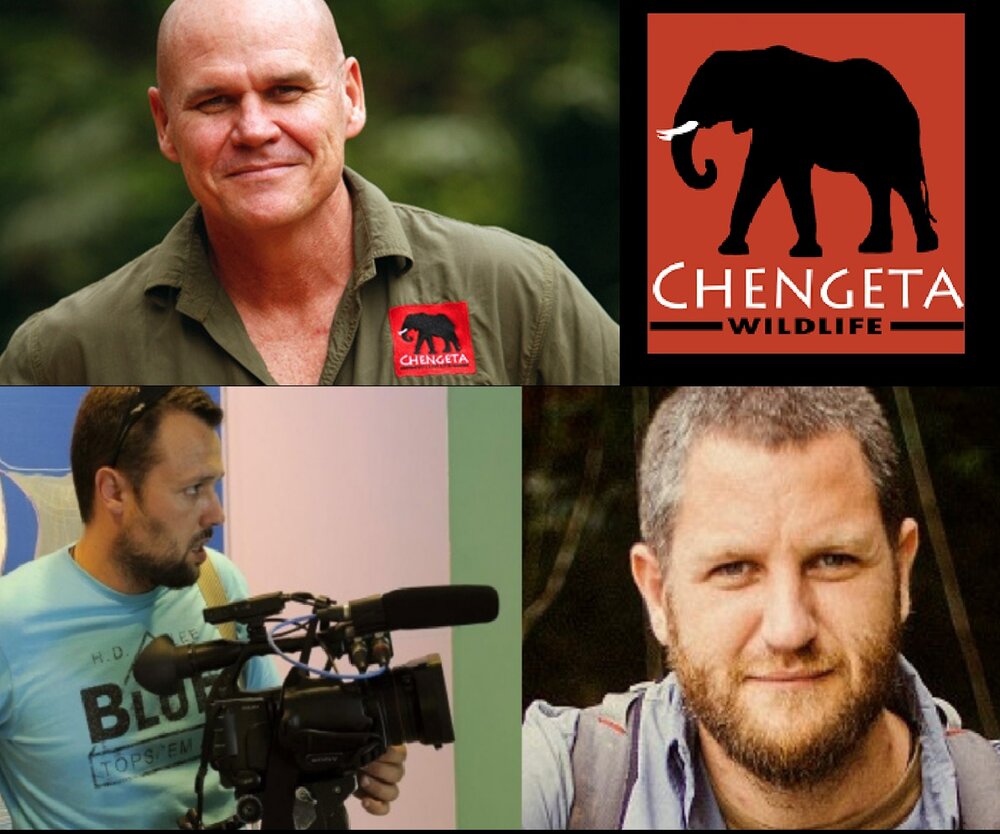
Rory was leading a wildlife protection patrol in Arly National Park, Burkina Faso on 26th April 2021 when they were attacked by terrorists which resulted in his death and that of two Spanish journalists, the 44-year-old David Beriáin, a reporter, and 47-year-old Roberto Fraile, a photographer, who were capturing his efforts to protect precious wildlife.

He was there with the two journalists, to make a documentary about the protection of the national parks.

5-2021 — Hot Topics: Sustainable Fashion, Elephants, Climate

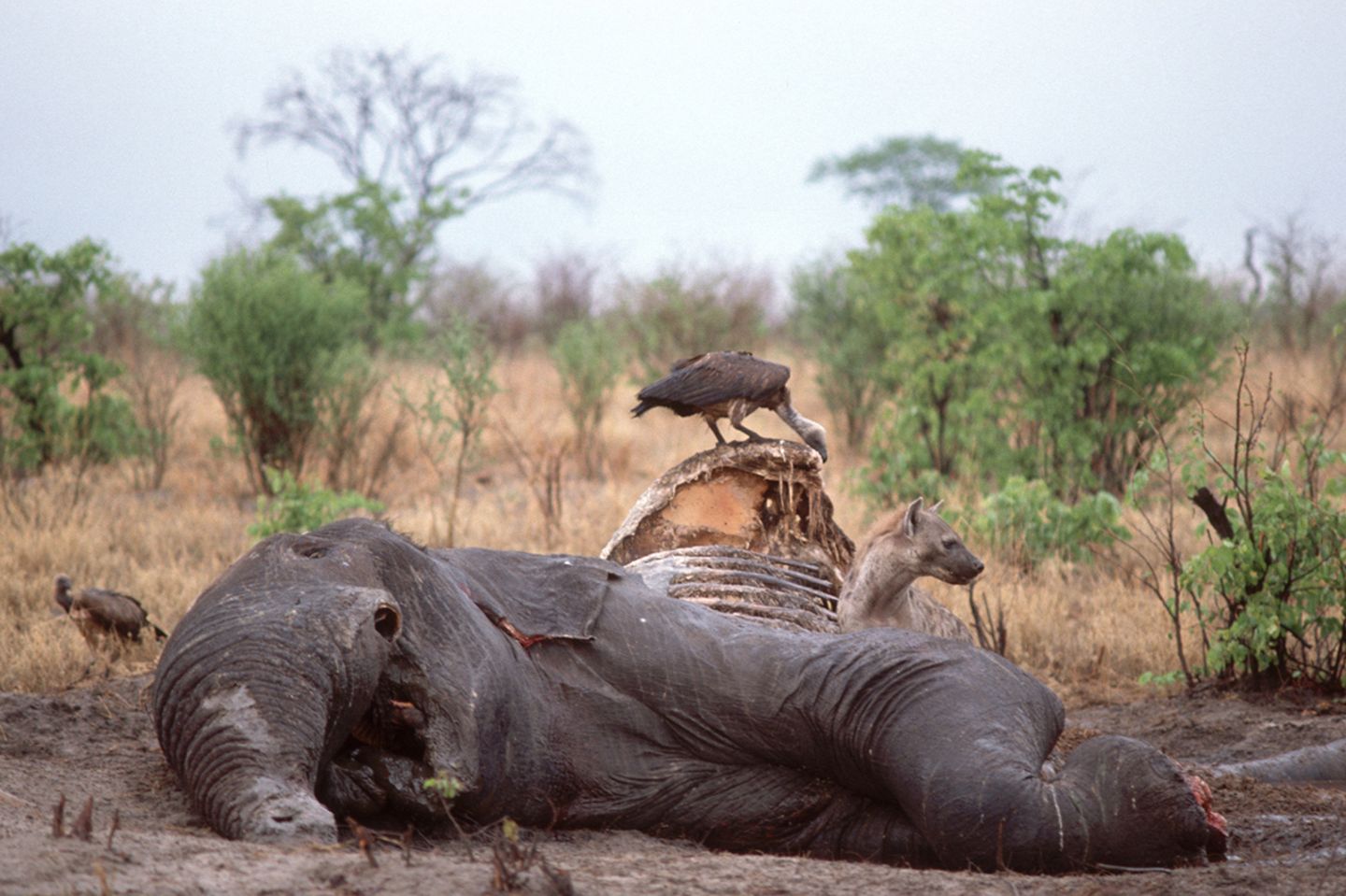
Poaching is a big problem in this country.
The convoy was ambushed, Rory Young kidnapped and then executed.
The perpetrators belong to a local terrorist group that makes a lot of money from poaching

Botswana: Gewilderter Afrikanischer Elefant

Again and again you read about the death of people who stand up for the climate, the environment, nature and animals.
Hundreds are killed every year, and more are killed every year.

In 2019, 212 official activists were killed, compared to at least 331 in 2020.
In 2018 there were 164 people who had to pay with their lives for their work.
So the murders have doubled in just two years. The increasing violence comes from those who make good money from destroying our planet.

Some murders are downright commissioned by corporations or even governments, which of course don’t want to get their hands dirty.

In Germany, too, the tone is getting rougher and the repression of progressive forces is increasing. Anyone who stands up for nature and animals in this country is constantly being attacked by the lobby organizations from industry and agriculture.

Animal rights activists who uncover crimes and thus prevent a lot of suffering are sometimes criminalized.
It is said that the activists are militant.
Those who themselves continuously use violence when it comes to animals accuse people who give animals a voice of being violent.

What nonsense! those who are actually prepared to use violence are on the other side.
Fortunately, there has not yet been a murder in Germany. Because when it comes to willingness to use violence, the international death statistics speak a clear language.
Let’s be on guard.

https://www.facebook.com/Tierschutzabgeordneter/

https://www.theguardian.com/world/2021/apr/27/spanish-journalists-irish-citizen-killed-by-jihadists-burkina-faso

And I mean…“No one has claimed responsibility for the attack on a road leading to the vast forested reserve of Pama. The government said it had not identified the assailants, whom it described as “terrorists”, it says in the IrishCentral newspaper

Some media suspect that the al-Qaeda organization is behind it, but what benefit would such an organization get from the kidnapping and murder of an animal rights activist and two journalists, who do a documentary about wildlife?

Of course, one could suspect that extremist groups are partially financed by kidnapping foreign nationals.
But in this case there was no ransom
There was kidnapping and murder.
And so acts only the mafia.
Or highly paid poachers who acted under the order to destroy the documentation.

By the way: Terrorists also include members of the government of a country who work closely with the poaching mafia out of private interests.
A common business model in Africa.

On the Chengeta Wildlife website, Young was described as...”Rory is an expert tracker with amazing knowledge, skills, and highly developed intuition to become one of the best in his field. He has dedicated his life to wildlife protection and he co-authored, “A Field Manual For Anti-Poaching Activities”, a guide that provides workable solutions to poaching”.

We are infinitely sad and angry about the death of the three men and especially of Rory.

My best regards to all, Venus

Sweden: Djurskyddet Sverige publishes their guide to help consumers to make animal welfare conscious choices.


Djurskyddet Sverige LOGO

Djurskyddet Sverige publishes their guide to help consumers to make animal welfare conscious choices

Djurskyddet Sverige, published their own consumer guide, Handla Djurschysst. It is intended for Swedish citizens who want to make animal welfare-conscious food purchasing decisions.

The majority of Sweden’s adult population consumes animal-derived products. However, animal welfare remains an important consideration for Swedish consumers when purchasing meat, eggs, or milk. Yet, it is not always clear what distinguishes the rules of one label from another when it comes to how the animals were treated. 

The goal of Handla Djurschysst is to help Swedish consumers make more animal welfare-conscious decisions, so Djurskyddet Sverige investigated labeling regulations to understand which animal welfare criteria each one covers. The guide also explains which standards are important for farm animals in terms of welfare, from the growing environment to the slaughter.

Read more at source

Djurskyddet Sverige : Consumer guide Handla Djurschysst

Sounds really positive for animal welfare

Regards Mark


EU: Fish welfare a high priority in EU’s new Aquaculture Strategy to 2030.

Fish welfare a high priority in EU’s new Aquaculture Strategy to 2030

Today, the European Commission published the Strategic Guidelines on Sustainable and Competitive Aquaculture, a document outlining the major priorities, work areas and initiatives on aquaculture for the next 7 years and setting the stage for a promising future for the welfare of farmed fish in the EU.

After continued advocacy by NGO stakeholders for better fish welfare in aquaculture, the European Commission finally took a major leap towards the better protection of fish welfare with the publication of the long awaited Strategic Guidelines on Sustainable and Competitive Aquaculture. These guidelines will steer policy initiatives  and the use of subsidies in the EU aquaculture sector for the period 2021 to 2030 and will be a reference point in global initiatives on sustainable aquaculture. They provide a common vision for the Commission, EU Member States and stakeholders for the further development of aquaculture in the EU as a sector which is both sustainable and competitive, and contributes to broader policy objectives, notably in the context of the European Green Deal.

While the previous guidelines from 2013 did not even contain the word ‘welfare’, the new guidelines have for the first time a dedicated section on animal welfare:

Fish Welfare
The stand-alone section on fish welfare includes the following objectives:

  • Support authorities, experts and stakeholders to develop together a code of good practice on fish welfare including farming, transport and slaughter.
  • Set common, validated, species-specific, and auditable fish-welfare indicators including farming, transport and slaughter.
  • Research and innovation especially into species-specific welfare parameters and nutritional needs.
  • Provide training to aquaculture producers and other operators.

Fish Welfare as an Enabler
Our calls for fish welfare improvements have also been taken up in other sections of the guidelines.

The role that welfare plays in improving fish health has been put at the heart of the fish health section, including the following objectives:

  • Map good husbandry practices, in particular environmental enrichment, and organise training on this.
  • Prevent the emergence of disease and parasites.
  • Focus research on supporting the natural defense mechanisms of the fish, especially the microbiome and the impact of stress on immune function.

The following objectives in the environment section are also focussed on and aligned with welfare improvements, in particular:

  • Encouraging diversification into new species especially non-fed and low-trophic species.
  • Encouraging diversification away from monoculture systems.
  • Encouraging new feeding systems to be respectful of ecosystems and biodiversity, while being appropriate for the health and welfare of the fish, and specifically limiting reliance on the use of fishmeal and fish oil.
  • Good husbandry practices are highlighted as the route to reducing the use of veterinary products and other polluting chemicals.

Promoting EU Aquaculture
The guidelines also set out the approach for the EU’s promotion of the EU’s aquaculture sector. There are promising priorities established for promotional and communication campaigns, as well as targeting technical support, including:

  • Promoting organic aquaculture
  • Development and promotion of new products especially from traditional systems.
  • Communication objectives are focussed on lower footprint products especially low-trophic species.
  • A separate strategy specifically to support the growth of algae production in the EU will follow.

Following the publication of these guidelines it is up to the EU Member States to update their national aquaculture plans to match the new ambition of the guidelines. It is now on the Commission, and on Member States and stakeholders to work towards these objectives and implement these initiatives in concrete and meaningful ways in the next years.

Regards Mark

EU: The unregulated exotic pet trade in the EU: a threat to health and biodiversity.


The unregulated exotic pet trade in the EU: a threat to health and biodiversity

https://www.eurogroupforanimals.org/news/unregulated-exotic-pet-trade-eu-threat-health-and-biodiversity

The unregulated exotic pet trade in the EU: a threat to health and biodiversity – 3rd June, 12:30-3:00pm CET – online event

Register to attend the event

The risks from wildlife exploitation and trade have become painfully clear this past year with the worldwide outbreak of the SARS-COV-2, the virus that causes COVID-19. While much of the public discussion around COVID-19 has focused on the potential role of illegal wildlife trade in spreading pathogens, the threats issuing from legal trade have largely been overlooked, when in fact they are at least three orders of magnitude larger than those of illegal trade. 

The unregulated exotic pet trade poses health risks to EU citizens that cannot be ignored. In recent years, the growing trend for exotic pet keeping has significantly increased the likelihood of spillover events in the EU, which may have a significant impact under the One Health approach.

Furthermore, the exotic pet trade has a devastating impact on biodiversity, both globally and within the EU. Wildlife populations decline by an average of 62% in areas where species are traded, pushing some closer to extinction. Exotic animal diseases can also be transmitted to native wild animals, with potentially dire consequences for their conservation. Exotic species can threaten native biodiversity if they escape or are released into the wild. The exotic pet trade has been identified as one of the main pathways for the introduction of invasive alien species in the EU by the Bern Convention and the Convention on Biological Diversity (CBD). 

Finally, the lack of appropriate legislation on exotic pets may result also in severe animal welfare problems. 

Bold action is needed across the EU to reduce the risks from the exotic pet trade, thereby fulfilling the commitments taken under the EU Green Deal and the 2030 Biodiversity Strategy, and showing global leadership to reverse the devastating impacts of human activities on nature and biodiversity.

This event, hosted by the Portuguese Presidency of the Council, and co organised by Eurogroup of Animals and AAP Animal Advocacy and Protection, seeks to raise awareness among European policy makers and to explore the opportunities for better regulation of the exotic pet trade in the EU. 

Draft agenda

Opening speech from Maria do Céu Antunes, Portuguese Minister of Agriculture

Video message from Ms Stella KYRIAKIDES, EU Commissioner for Health and Food Safety.

Presentations

  • How the harvesting of animals to supply the EU exotic pet trade threatens biodiversity  – (speaker to be confirmed)
  • Zoonotic risks associated with the trade and keeping of exotic pets in the EU  (including a virtual visit to AAP’s quarantine facility) – David van Gennep, Executive Director, AAP Animal Advocacy and Protection 
  • How the exotic pet trade leads to the introduction of invasive alien species into the EU –  Julie Lockwood, Chair and Professor in the Department of Ecology, Evolution, and Natural Resources, Rutgers University

Debate with Panelists moderated by Reineke Hameleers (CEO, Eurogroup for Animals)

  • Dr François Diaz, Chargé de mission Preparedness and Resilience Department,  OIE
  • Portuguese National Authority for Nature Conservation (ICNF), speaker tbi 
  • European Commission, Direction General for Health and Food Safety  (tbc) 
  • Elaine Toland,  Director, Animal Protection Agency
  • Marina Michaelidou-Kadi,  Senior Officer of Agriculture, Natural Resources and the Environment, Cyprus  

Closing remarks

Register to attend the event


Regards Mark