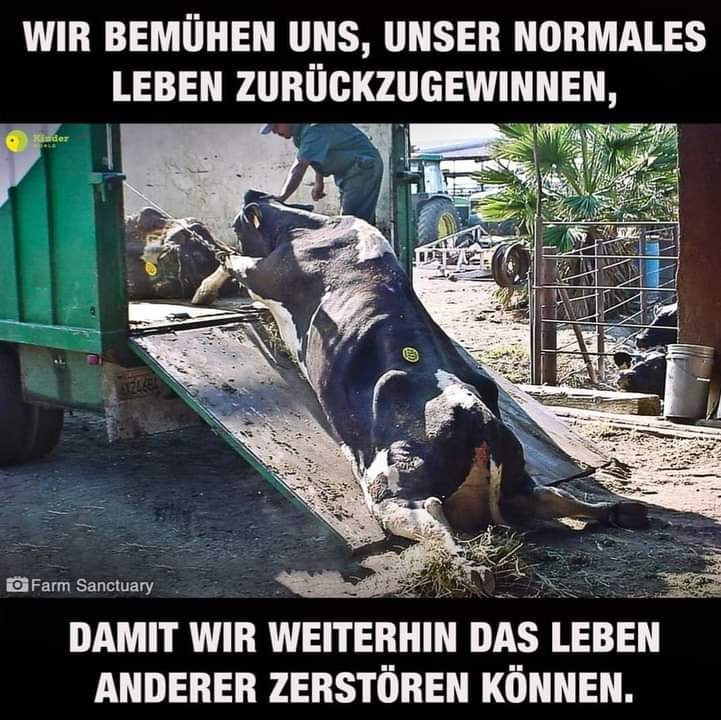
“we strive to regain our normal life
so that we can continue to destroy the lives of others”
….and worst of all, we firmly believe we have a right to it
regards and good night, Venus
“we strive to regain our normal life
so that we can continue to destroy the lives of others”
….and worst of all, we firmly believe we have a right to it
regards and good night, Venus
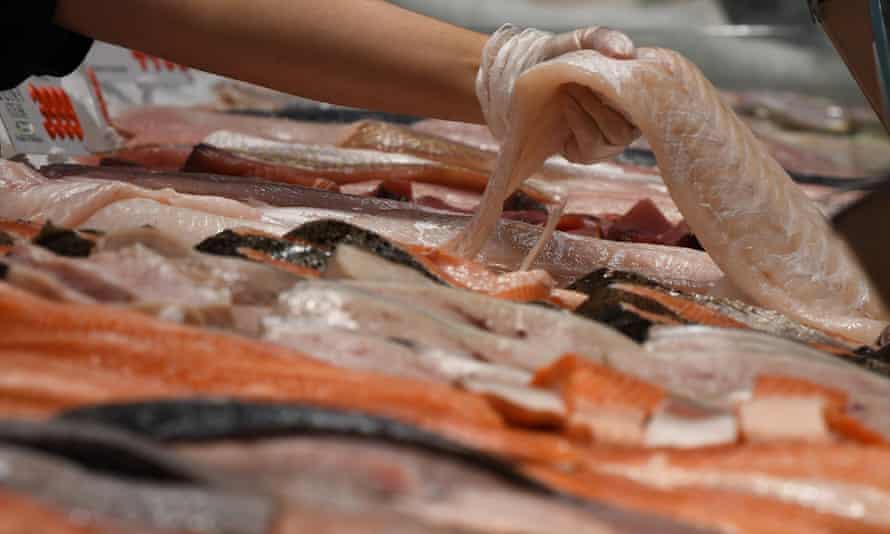
A new campaign highlights there is no legal obligation to label flake – a common term for shark meat – by species or where it’s from
Australian consumers will be encouraged not to purchase flake when they shop for seafood and to instead try sustainable alternatives in a new campaign that aims to put a spotlight on laws that permit the harvest of endangered sharks.
The Australian Marine Conservation Society (AMCS) is asking consumers to “give flake a break” because there is no legal obligation in Australia for retailers to label flake – a common term used for shark meat – by its species or where it’s from.
Guardian Australia reported last year that a loophole in Australia’s national environmental laws allows for the continued commercial harvest of endangered sharks such as the school shark or hammerhead, meaning their meat can be routinely sold in shops, restaurants or exported overseas.
Leonardo Guida, a shark scientist with the AMCS, said the organisation was launching its campaign to try to make consumers more aware of the need for shark conservation.
He said sustainable alternatives to flake included King George whiting, farmed barramundi, mullet, wild caught Australian salmon and luderick.
Research by the AMCS found there was an average $2 difference between these options and the cost of flake. In some cases the sustainable alternatives were cheaper.
“Australia legally permits the harvest of endangered sharks, which can end up on people’s plates and they wouldn’t even know it because it’s often called flake,” Guida said.
“There’s no legal requirement to call a shark for what it is.”
Guida said the system was broken “somewhere between the boat and the plate” because fishers routinely recorded what species they caught but by the time the meat ended up with a consumer that information could be lost or difficult to obtain.
Guida surveyed 10 fish and chips shops in each state and territory and found less than a third of the shark meat on sale referred to a specific species.
He said promisingly, however, at least 40% of retailers offered a sustainable alternative.
Consumers can use GoodFish, a website and app developed by AMCS, to research sustainable seafood options, or ask their fishmonger or retailer.
The loophole in Australia’s environment laws applies to certain marine species that are given a special status known as “conservation dependent” that allows for their continued commercial harvest.
Under the Environment Protection and Biodiversity Conservation Act, marine species that are listed as vulnerable, endangered or critically endangered are classified as “no take” species, meaning they cannot be sold or exported.
But the eight marine species listed as conservation dependent – including the blue warehou, eastern gemfish, the scalloped hammerhead and the school shark – do not receive this protection.
Marine conservationists have long argued for the removal of this category from Australia’s national environment laws where it applies to threatened species but its existence continues to fly beneath the radar of most seafood consumers.
During last year’s review of the EPBC Act, led by the former competition watchdog head Graeme Samuel, the AMCS called for the species listed as conservation dependent to be given the threatened status they were eligible for.
The Humane Society International is the main organisation in Australia that nominates species for a listing under national environmental laws. It put forward several of the marine animals that were ultimately listed as conservation dependent.
One of those was the scalloped hammerhead, which qualified for an endangered listing but was given a conservation dependent status in 2018 after a six-year effort by the HSI to have it listed for protection.
“What we ask is that species be put in their rightful category because species that are endangered or critically endangered should be listed as that and protected from commercial utilisation,” said Nicola Beynon, the HSI’s Australian head of campaigns.
Samuel’s interim report, handed down last July, found Australia’s environment was in unsustainable decline. The report made several recommendations, but none in relation to the conservation dependent category.
He delivered his final report to the Morrison government at the end of October last year but it has not yet been released. The government is required to release the report sometime in February.
A spokesperson for the environment minister, Sussan Ley, would not say when the government planned to release the report but it would be within the statutory timeframe.
The spokesman said sharks were listed as conservation dependent based on advice from the threatened species scientific committee.
“Species listed as conservation dependent are subject to a scientifically determined and annually reviewed rebuilding strategy,” the spokesperson said.
In a submission to the Samuel review last year, the scientific committee said the conservation dependent category needed urgent reform and this was partly because it masked the actual conservation status of species.

WAV Comment:
Please watch the video given in this post – you dont need to understand the language; the pictures say it all !
“Animal transports – cheap meat at any price?”
Austrian public broadcaster sheds light on live transport at prime time
18 January 2021
Four Paws
Cattle crammed into trucks, brutally loaded onto ships, slaughtered while fully conscious – disturbing images of animals being transported to the Middle East, including those of Austrian cattle in Lebanon, as well as interviews with Eurogroup for Animals’ members Four Paws and Animals International are featured in a new documentary which was broadcasted at prime time on Austrian television.
The documentary feature called “Animal transports – cheap meat at any price?” took a critical look at this much-discussed topic last Wednesday, 13 January 2021. The documentary looks at the crucial questions of how and why these animals from Austria are transported thousands of kilometres, also addressing the crux of why domestic calves are exported at all, while most of the veal for Austrian gastronomy is imported. In the past, these questions have triggered not only a public but also a political debate in Austria.
Every year about 45,000 calves are exported from Austria to countries such as Italy or Spain, while about 100,000 animals are imported to Austria to end up on the plates of local restaurants.
In Vienna, 60 per cent of the Wiener Schnitzel consists of imported veal. Most of it comes from the Netherlands and is produced under conditions that would not be permitted in Austria. This, however, is not comprehensible to the consumer as most menus are not transparent. A schnitzel from Austrian veal would cost 50 cents more, and 20 cents more for pork.
Read more at source
Hi all; here are a few petitions which need your support if possible – Thanks and regards – Mark:
Petition Link – Badly Injured Dog Reportedly Dragged Behind Speeding Car Deserves Justice – Animal Petitions

Target: Gizat Nurdauletov, Kazakhstan Prosecutor General
Goal: Give person who reportedly dragged dog behind moving car the toughest sentence punishable by law.
A dog was allegedly tied to the back of a car and forcibly dragged as its driver sped down the road. Kazakhstan police have not named the suspect involved. However, he was detained and is now being questioned by authorities. This person needs to be put behind bars for the maximum amount of time if it is found he committed this unthinkable act of animal cruelty.
Video footage appears to show the dog being dragged behind a moving car with a trail of blood following his injured body. A witness told police that they honked their horn until the driver finally stopped. After the witness asked the motorist why they were mistreating the animal, he allegedly picked up the dog and threw the animal inside his boot before leaving the scene.
The dog was swiftly taken to a veterinary clinic to receive treatment after the suspect was detained. The animal reportedly needs to take pain killers to sustain any quality of life. Sign this petition to demand the person allegedly responsible for this blatant act of animal cruelty be given the longest prison sentence possible.
PETITION LETTER:
Dear Prosecutor General Nurdauletov,
An unnamed suspect was recently detained for tying a dog to the back of his car and then speeding down the road, dragging the helpless animal behind him. He needs to be given the strictest sentence under the law if it is found he committed this horrific crime.
The alleged incident was captured on dash camera. The driver was allegedly going so fast that it would have been impossible for the animal to run behind the car. Instead, the poor dog was dragged and badly injured. Witnesses described a trail of blood left in his wake.
The dog fortunately lived and was treated for his injuries. However, the wounds were reportedly so bad that the dog will experience prolonged pain and suffering. We therefore demand you suggest the person allegedly responsible receive the most stringent sentence allowed by law if it is found he committed this heartless act of animal abuse.
Sincerely,
[Your Name Here]
Petition link – PETITION: Justice for Dolphin Beaten to Death With Axes and Sticks (ladyfreethinker.org)

PETITION TARGET: Minister of Environment, Forest and Climate Change Prakash Javadekar
India’s Ganges River turned red with blood as a group of attackers beat a critically endangered and protected Gangetic dolphin to death with wooden rods and an axe.
Disturbing video footage captured by a witness shows one of the men yelling, “Hit it now, hit it now” and the attackers then holding the dolphin’s head underwater until he drowned. A local official later found the dolphin floating dead, with multiple lacerations and other wounds to its body, The Guardian reported.
The highly threatened Gangetic dolphin population is now an estimated 1,800 or less, and they are moving alarmingly closer to extinction.
Police in Uttar Pradesh arrested three suspects in connection with this horrifying act of cruelty. Several others who may have been involved in the senseless killing are reportedly still free.
Anyone who assisted in bludgeoning and suffocating this defenseless dolphin must answer for their actions.
Sign this petition urging Environment Minister Prakash Javadekar to push authorities to thoroughly investigate this appalling crime, use all available resources to find and charge any yet-unidentified suspects, and prosecute all perpetrators to the fullest extent of the law.
Korean cat and dog meat
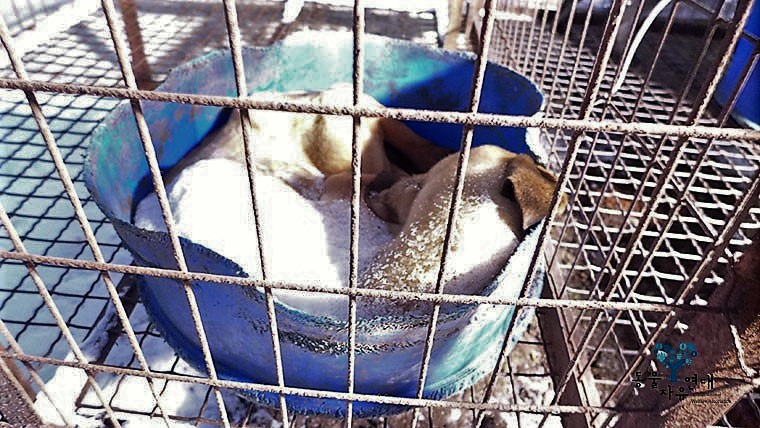
| Above Photo: Dogs are frozen to death in South Korea’s dog meat farms. Korea Animal Welfare Association(KAWA).. |
Despite the fact that dog and cat meat consumption is an everyday occurrence and is being carried out all over South Korea, it is NOT LEGAL in that country. Their Government does nothing to stop this illegal practice and they seem happy to ignore it; many Korean citizens are just as apathetic and must also be held accountable.
This is the 21st Century, and it is high time that all South Koreans, leaders and general public alike, stand up and take responsibility to enforce their own country’s laws. South Korea and South Koreans cannot continue to ignore these brutal and unethical trades, so let us campaign to urge each of South Korea’s cities to enforce their laws and to put an immediate end to these illegal dog and cat meat trades.
The e-People petition is the South Korean government’s official petition site and your petition will receive a response from the Korean government. Anyone from all countries can file a petition using the e-People petition. It’s quite simple to file e-People petitions, but you can find help on (1) how to file e-People petition and (2) how to check the status of your e-People petitions on our website.
Read the full newsletter with plenty of actions at:
Please click on the following link to see loads of other petitions which you can support; go to:

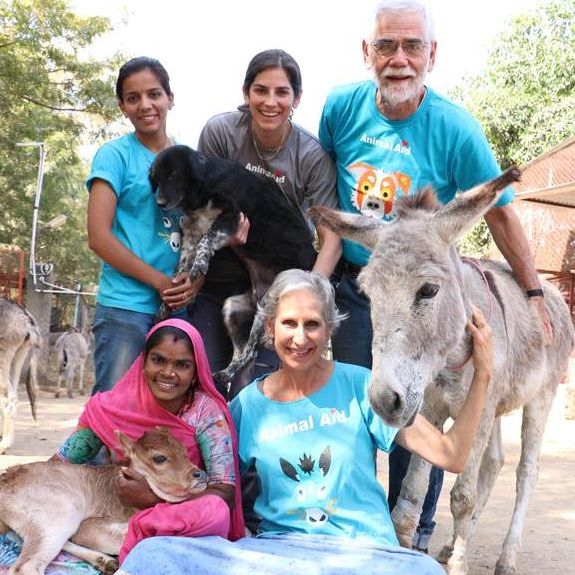
We are in regular contact with Erika at AAU; and are always amazed at the work that is done by the AAU crew to help suffering animals. Here are a few of the latest videos that have been sent to us. We wish them growing success, and may all their fantastic work continue – one day soon it will be across ALL India !
Regards Mark
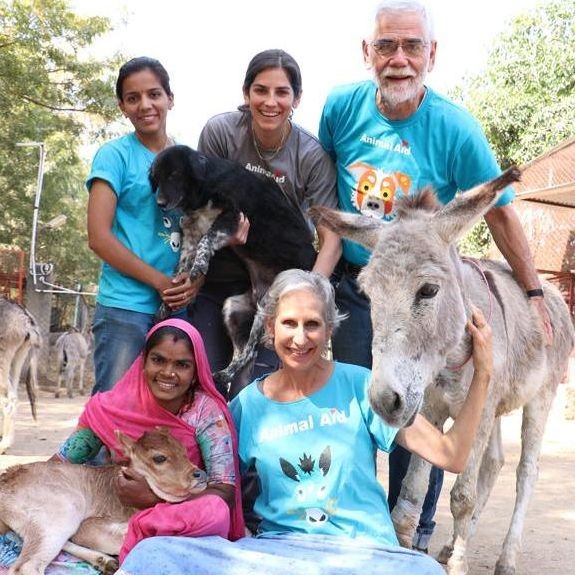
You’ve probably heard the song that goes, “What the world, needs now, is love sweet love”? It was written in the 1960s but it’s certainly still true. While the world battles the pandemic and plenty of political chaos, the animals here have, every moment, reminded us that the most enduring, stabilizing and beautiful fact is that love works. It supports, soothes, heals and energizes all of us.
No surprise that chickens, too, thrive with love, when it is expressed as a safe place, plentiful food, fresh air, and friends. Happy New Year from our rescued rooster Rockstar, who joins us all in thanking you for your love, sweet love, which the world needs now, and which you give us every day.
Butterfly’s eyes seem to speak as her healing begins.
Someone noticed a donkey in a field whosebone was exposed from a devastating friction wound, made worse by maggots. Our rescuers found that she flinched when approached, telling us that she didn’t trust people.During her first treatment, she lay perfectly still, her expression fearful and defeated.
Her eyes conveyed so much, it is hard to summarize in just a word. They held anguish, resignation, fatigue. But they also radiated kindness, announcing her profound sweetness. As soon as we eased her pain with medicine, stabilizing bandages and a splint, her glow of life brightened–you could just see it. Watch this girl, so inward and dejected at the start, unfurl her beautiful wings and beam with life as she heals.
We call her Butterfly. You’ll see why. Please donate
2020 was also a beautiful year!
Watch this short video about the GOOD you helped achieve
Every loving moment we shared with animals in 2020 refreshed our hearts and gave us so much strength. The animals awakened our humor, and filled us with energy to do our best each day. Even though the pandemic made it a difficult year, the animals and your extraordinary help through thick and thin, kept us going strong.
We’ll keep it going in 2021 with your help. Make a donation today!
A paralysed dog growled and barked, but patience brought the sweetest reward.
We don’t know what caused this sweetheart’s injury.His spine was hurt and he could not stand. His legs were limp, and someone had loosely tied them together; we don’t know why. It seemed he had a story to tell. At first, rigid with pain, he merely endured his initial assessment, but ate with so much relaxed enthusiasm that we named him Comfy.
Some time later, though, feeling a bit better, he let us know that perhaps we had named him “Comfy” too soon. He told us we were not welcome to touch him. He growled. He barked. And he kept it up for a while. We knew that without physiotherapy he might never walk again, but how could we manage it if he wouldn’t let us touch him?
Watch Comfy’s transition from paralysed and frustrated to becoming fully mobile, happy and finally…a comfy bundle of love.
Kindness changes outcomes.
| Spotlight on the team One of the gems in our midst is Deepak Nath. He joined the team as a care-giver a year ago and doesn’t pass by an animal without giving a cuddle. You know someone is incredibly special when on their days off from work they bring injured animals they’ve found to Animal Aid for treatment. | 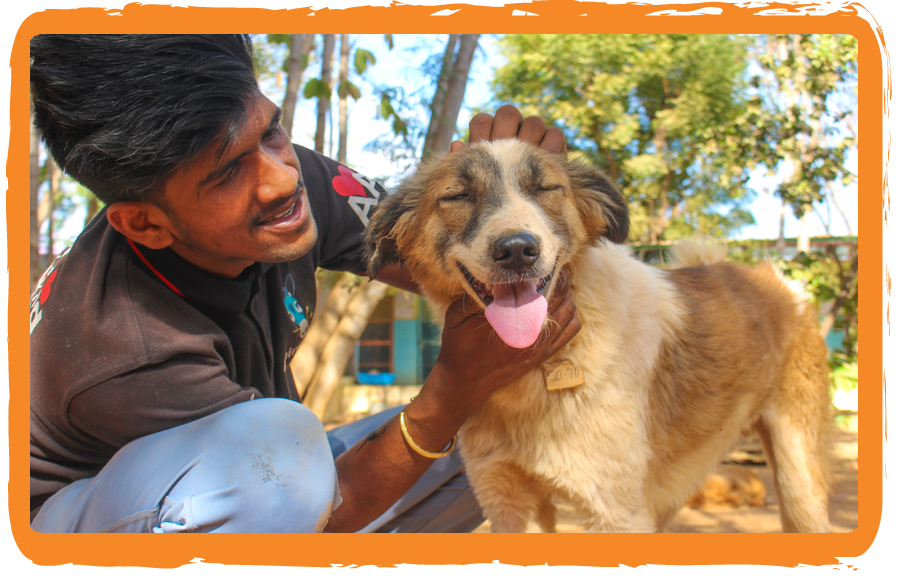 |
One of the gems in our midst is Deepak Nath. He joined the team as a care-giver a year ago and doesn’t pass by an animal without giving a cuddle. You know someone is incredibly special when on their days off from work they bring injured animals they’ve found to Animal Aid for treatment Most of the people we hire for the role of care-giver have never before worked with animals. While this can pose a challenge for us it also gives us hope when we see how people from all different backgrounds can take on animal protection as a way of life. Click here for latest positions from Emergency Call Attendant to Veterinary Doctor for residents of India. |

A man came this morning to check some internet.
I thought that his van was pretty cool; and I asked him if could take some photos.
Sure he said, ‘but it is dirty’ ! – ‘yes, I like my Cheetah also’.
So here they are:
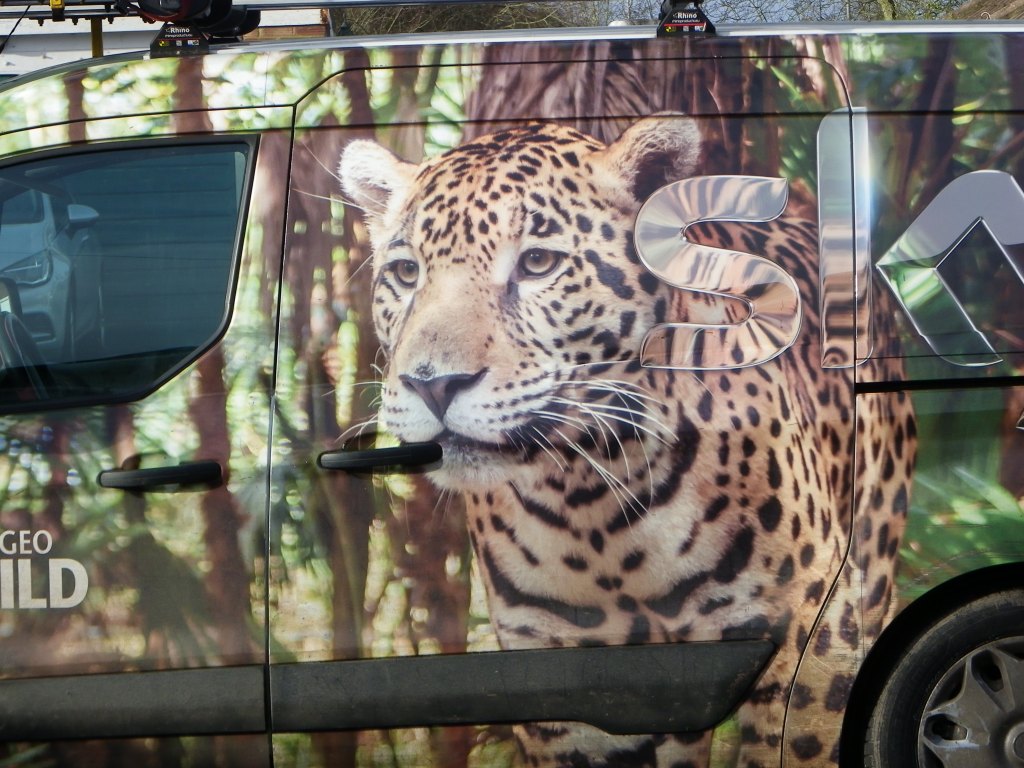


Nice !
Regards Mark

18/1/21
Update – UL Live Export Consultation.
Last night, 17/1, I completed and submitted to the UK government our responses regarding the proposed ban on live animal exports from the UK. Almost immediately I was informed that our submission had been accepted by the Ministry and would join others for the final review.
References:
UK: Live Exports (Ban) Consultation. – World Animals Voice
Our response, once completed, comprised of 41 written pages of written text; without any photos but with video footage and also links to past media coverage on specific issues.
I am not going to show our responses here on this site; as some of the data relates to specific investigative operations undertaken in the past, which we do not want to make them public. In the information provided to the government we have requested that our information be kept private and confidential; only to be reviewed by the government; and not openly presented to wider audiences as it could have been. Again, we have had confirmation of this request.
As you probably know by now; live animal transport is my major ‘hate’ in this animal abuse world. It has taken me personally 32 years of activism to get to the situation we are now at – and with stories from 32 years stored away (in my still functioning head I think ?) there is a lot of info to look back at and select as important. Saying that, the aim of the response to the government is to get a ban on live animal transport this year; and I feel confident / hopeful that in the end we will succeed. I know that several other personal contacts in the ‘animal rights world’ are also making submissions at this time; so hopefully we can look for change in the near future.
As a member state of the EU; and despite the vast majority wishes of most UK citizens for a ban to be introduced for many years; the British government was banned (by the EU) from introducing a ban on live animal exports. As the UK broke away from the EU completely at the end of last year (2020); it can now take back its own control and have its own laws on issues – and the potential ban on live transport is one of them.
This does not mean that we now forget the tens of thousands of animals in transport across the EU; and the fact that many of them are evading EU regulations to end up being ritually slaughtered (against EU legislation) in places such as Lebanon and Libya. We will continue to work as always with our EU friends to ensure that combined, we get the very best we can for the animals.
Review some of our past posts on the subject here – Search Results for “live animal transport” – World Animals Voice
I am now glad that task is completed and I can get onto to other things.
Regards Mark
Here are just a small selection of photos I have taken on this disgusting business over the years:
Below – exposing French calves being imported into the UK (a scam) to obtain compensation payouts by the UK government which should have only been made to British industry only ! – things turned real nasty after I took this photo; we caught them and they did not take kindly – but then few things in life are ever perfect !

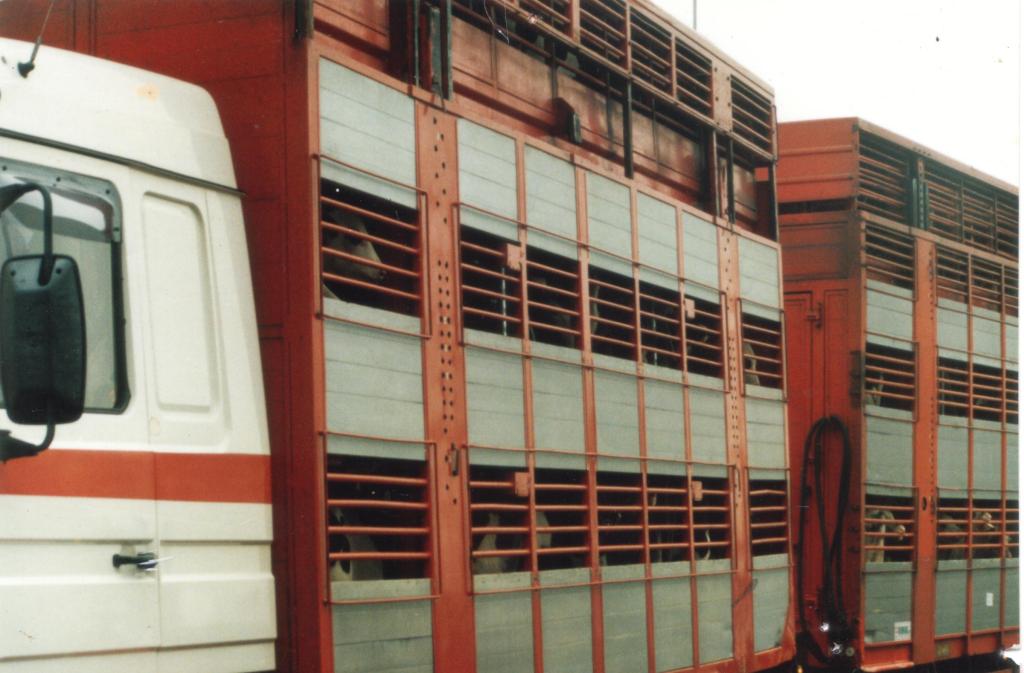
Above – British calves being exported by the Dutch to the ‘crate’ systems.
Below – Mrs ‘Plod’ makes sure I behave !


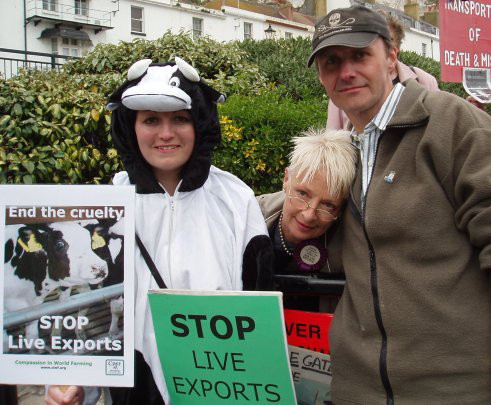
Above – Protesting against the calf trade with Ellie and Liza

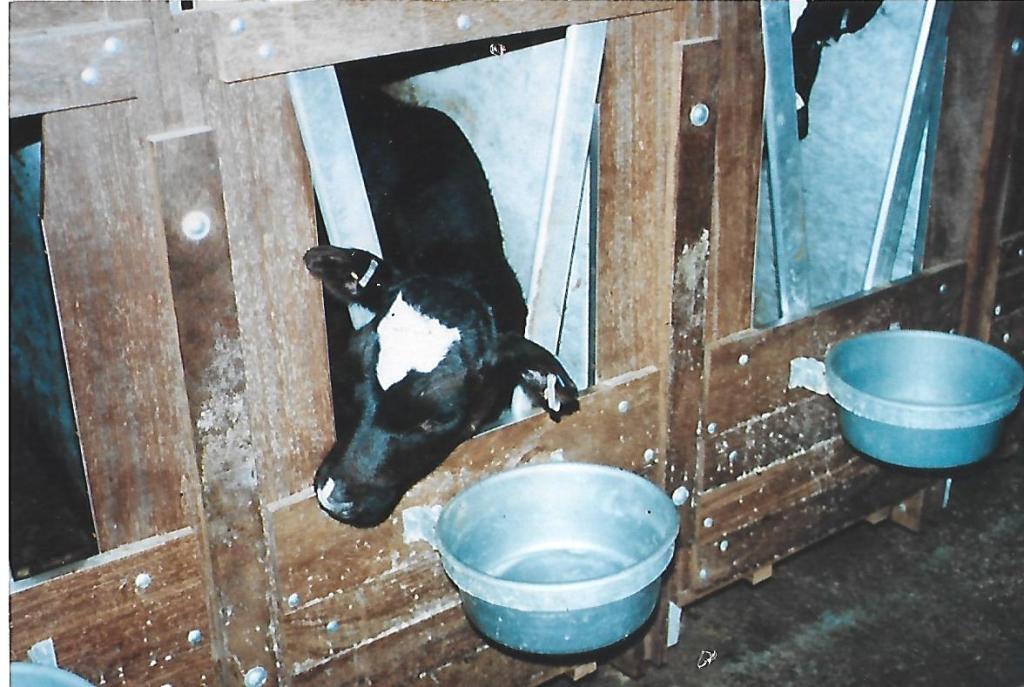
Above – and below – Crated calves in the EU
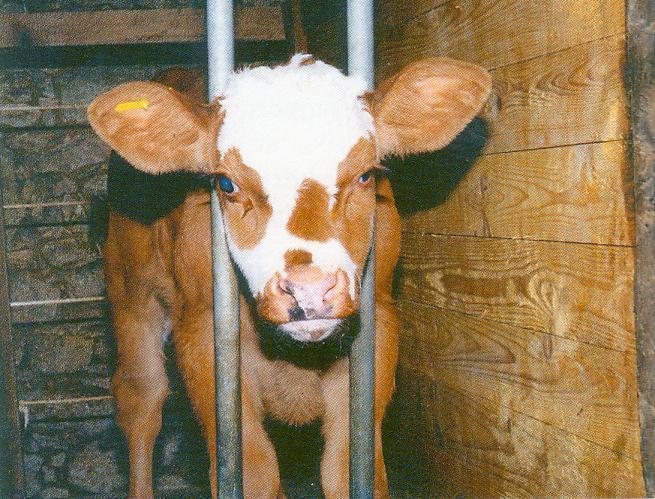
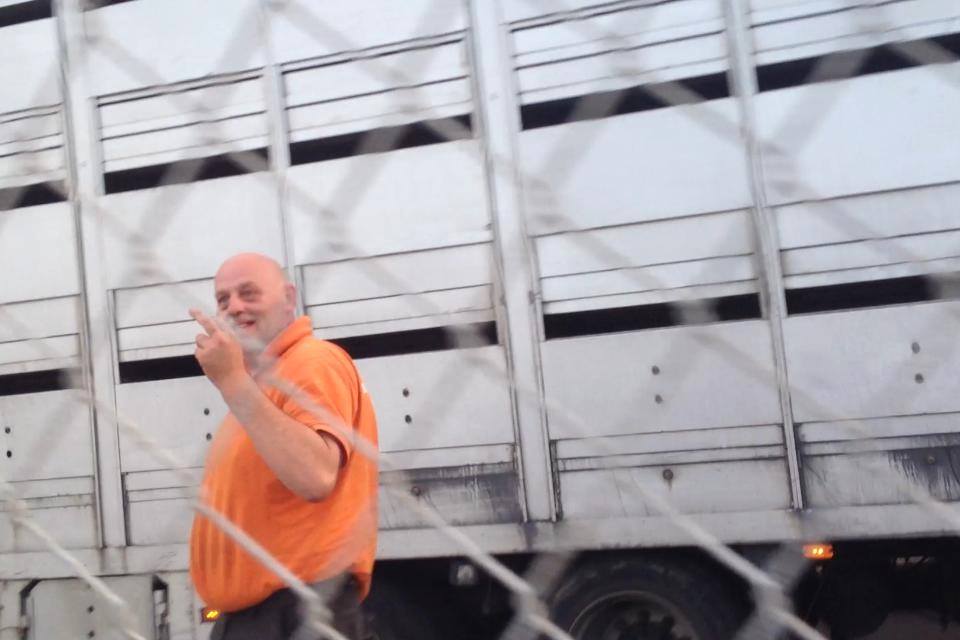
Above – A transporter driver sends us his best regards !
England: Another Terrible Loss – John Callaghan. – World Animals Voice
Below – great export mate ‘Mike’; now passed.


Above – You bet they are worth fighting for !


Fight for the better ways !
Regards Mark
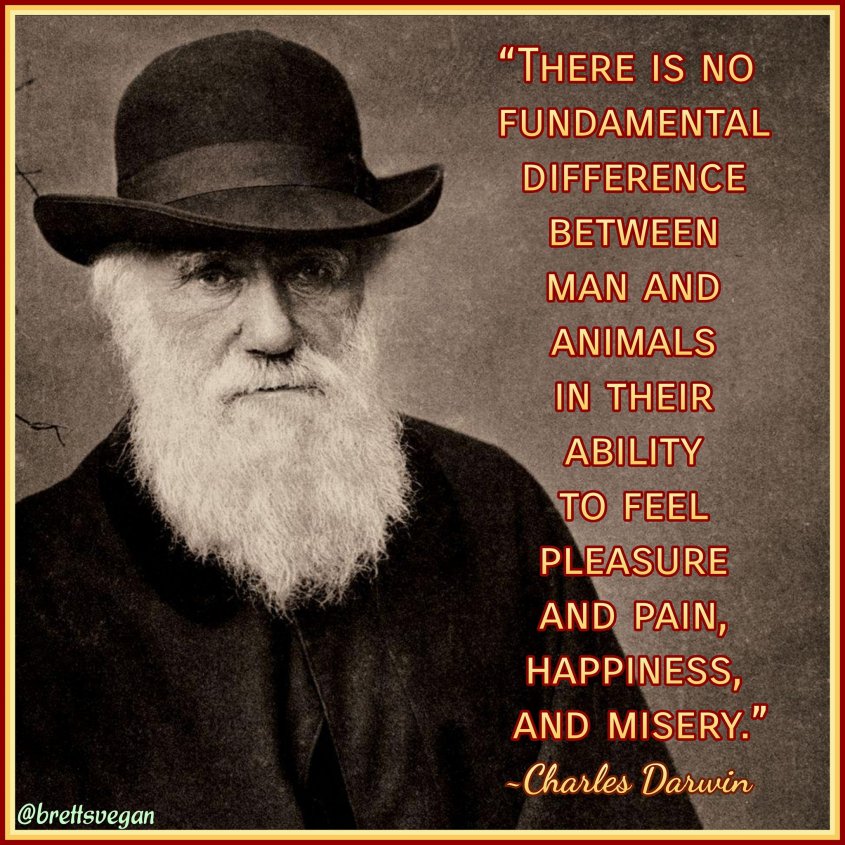
Basic rights for all feeling, thinking individuals.
Nobody may be disadvantaged or preferred because of their species.
regards and good night, Venus
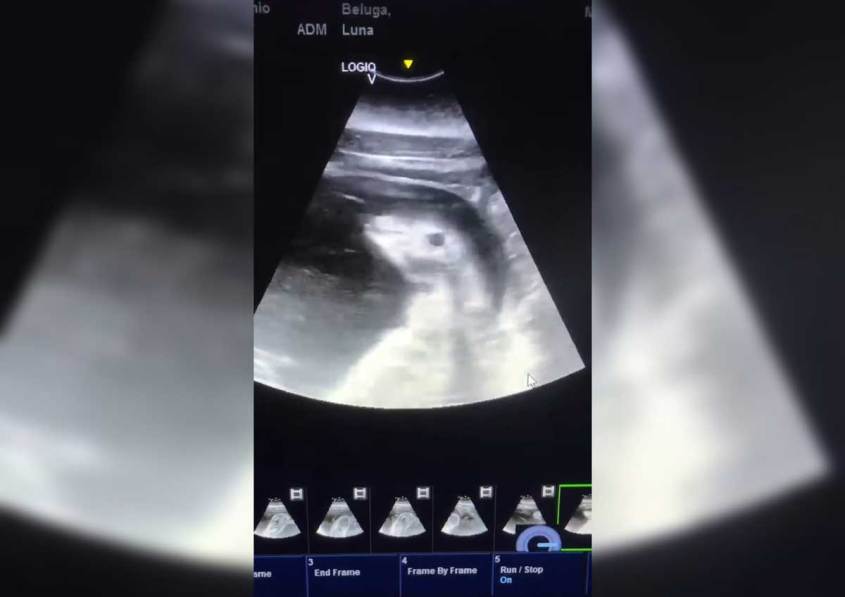
It’s the reminder no one needed: SeaWorld is beyond out of touch. The abusement park company took to social media on January 11 to flex its speciesist muscles, posting a sonogram depicting the unborn baby of Luna, a beluga whale who has been confined at SeaWorld San Antonio for more than two decades.
The publicity stunt is seemingly a vain attempt to attract new visitors to its park in Texas (where Luna resides in a cramped tank), making it clear that SeaWorld has forgotten (or perhaps just doesn’t care) that no one wants to buy tickets to a place that dooms newborns to a lifetime of exploitation.
Such cringe-worthy abuse is not new to Luna. In order for her to conceive her first calf, workers sexually abused her by forcibly impregnating her with the sperm of Nanuq.
Despite rejecting her calf, Alta (who was one of the first belugas conceived through artificial insemination), Luna gave birth to two more babies—and now she’s been impregnated again, possibly by forced insemination.
Torn away from his family and Canadian home waters when he was just 6 years old, Nanuq was held captive and then made to participate in an intensive, experimental artificial insemination program at SeaWorld: He was shipped around Canada and the U.S. repeatedly and removed from the water roughly 42 times so that workers could collect his sperm.
He fathered 13 babies (including one with Luna), but six died at birth or shortly thereafter. Nanuq died in 2015 while being treated by SeaWorld staff for an infection from a jaw injury that he had sustained while interacting with another animal.
SeaWorld continues to masturbate male dolphins forcibly and rape female dolphins by tearing them out of the water and sometimes drugging them so they can’t fight back while staff shove tubes filled with semen into their uteruses.
Some animals endure this process repeatedly, only for their babies to die or be shipped off to other SeaWorld parks.
SeaWorld Needs to Empty Its Tanks
When not ripped from their natural habitats or born into captivity at places like SeaWorld, beluga whales enjoy exploring thousands of miles of ocean every year.
They are social animals who communicate with each other using a language of clicks, whistles, and clangs. SeaWorld robs victims like Luna and Nanuq of the opportunity to do any of this, and now Luna’s baby, not even born yet, is doomed, too—unless SeaWorld acts, now and fast.
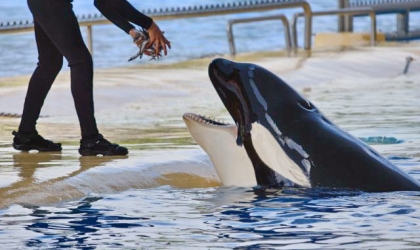
We and countless others have been urging it to empty its tanks for years.
Most recently, after the company ended its wretched orca-breeding program and its demeaning “dolphin surfing” shows (only after succumbing to successful PETA campaigns), we’ve increased our calls for the company to stop breeding other dolphins and whales.
SeaWorld failed Nanuq and so many others, but we hope it will now do the right thing and transfer Luna and her baby to a seaside sanctuary to live as close to a normal life as they can.
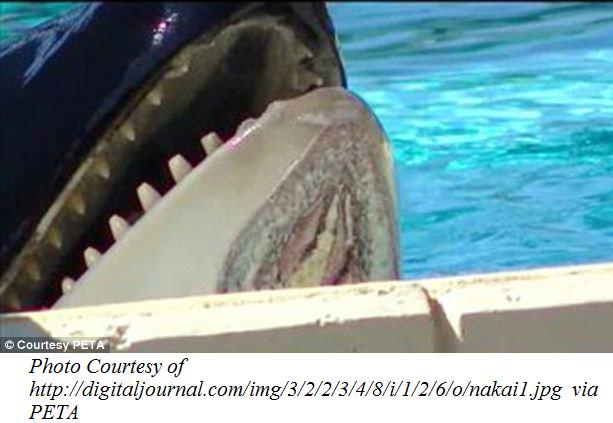
SeaWorld should take a page from SEA LIFE Trust and Whale and Dolphin Conservation’s book—in August, the pair proved to the world that seaside sanctuaries are a sure thing when Little Grey and Little White (two female beluga whales) were moved from a marine park in China and released into a seaside sanctuary in Klettsvik Bay in Iceland.
Now it’s time for SeaWorld to end its use of animals, stop breeding all dolphins and whales, and relocate them to seaside sanctuaries, where they could live in large areas of the ocean while still benefiting from human care for as long as they might need.
Please urge SeaWorld to establish a firm and rapid plan to end its use of animals, stop breeding all dolphins and whales, and relocate them to seaside sanctuaries.
Petition: https://support.peta.org/page/1943/action/1
And I mean…At least 166 orcas have been taken into captivity from the wild since 1961 (including Pascuala and Morgan).
– 129 of these orcas are now dead.
-At least 166 orcas have died in captivity, not including 30 miscarried or still-born calves.
-SeaWorld holds 20 orcas in its three parks in the United States.
At least forty-nine orcas have died at SeaWorld.
A growing catalogue of ‘accidents’, illnesses, failed pregnancies and premature deaths has helped to show up this industry for the cruel circus that it really is.
Orcas can live anywhere between 50 to 80 years, but in captivity, they are lucky if they can make it to twenty-five.
They are incredible fast swimmers, and get up to 48 km/h in the ocean, and will eat about five-hundred pounds of food a day. Females don’t start breeding until they are close to fifteen years old, and once they start breeding they might produce a new calf every 3 to 10 years, and gestation last 17 months.
Nature has intended them to live free, exempt from domination, but the human species, with its self-proclaimed fascist right to exploit other animals, has predetermined a pathetic fate for many of these animals.
The right to life, freedom, integrity and protection must be given to all species.
Only then is it a right and not a privilege of the ruler.
My best regards to all, Venus
It was a slaughterhouse visit on behalf of a customer that radically changed his life.
Top banker Philip Wollen (68) later describes this visit as the “most shocking experience of his life”.
That was almost 30 years ago – the Australian is now vegan and one of the most important animals and human rights activists.
That is why, on his 40th birthday, he decided to use all of his fortunes to make his contribution as an animal rights activist and philanthropist against crimes against animals, people, and the environment.
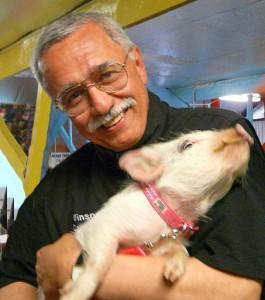
Together with his wife Trix, he founded the “Winsome Constance Kindness Trust”, which supports projects in five categories worldwide: children, animals, the environment, the terminally ill, and aspiring young people.
Among other things, the foundation supports schools, orphanages, clinics, nature reserves, castration programs for street animals, vegan mobile restaurants, and much more – meanwhile more than 500 projects in 40 countries.
Wollen is also known as a supporter of the international marine protection organization “Sea Shepard”.
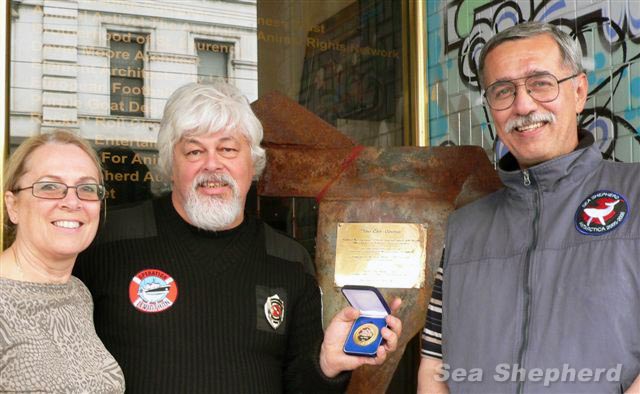
For his work against animal suffering, he received the Peter Singer Prize last year.
Philip Wollen describes the commitment to animal rights as the most important task in creating social justice since the abolition of slavery.
His engagement became known with the speech “Animals should be off the menu”, which he gave in 2012.
Here is his full speech in English with German subtitles:
In it, he addresses the effects of meat consumption:
“When I travel around the world, I see poor countries sell their grain to the West while their own children starve in their arms. And the West feeds this grain to its livestock. Just so we can have a steak?
Am I the only one who can see that this is a crime? Believe me, every piece of meat we eat is a slap in the tearful face of a hungry child.
When I took this child in the eye, how can I be silent?
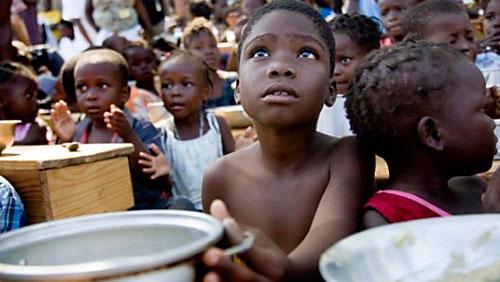 The earth can produce enough food to satisfy the needs of all people, but not the greed of all people. “
He wants to be a role model and encourage other people to work as activists towards a societal renunciation of meat and to stand up for a compassionate world in which all living beings are treated and protected with respect and courageously.
Regards and good night, Venus

