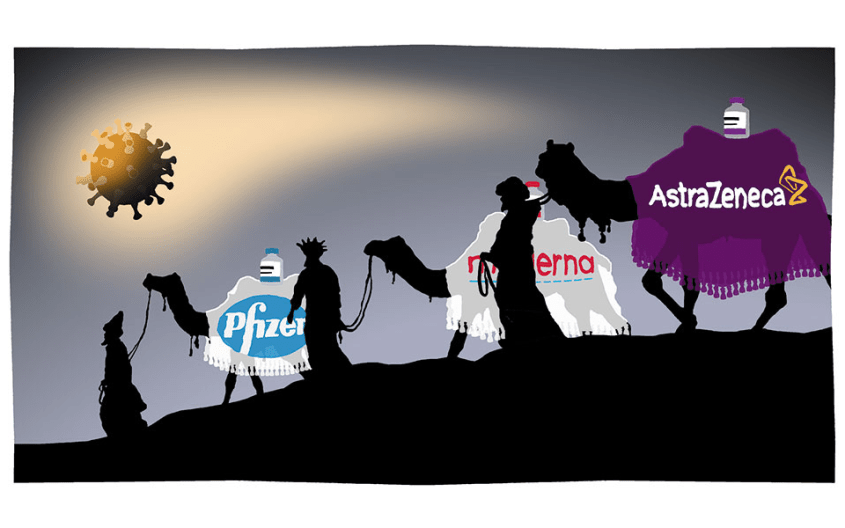
 Hantzopoulos-Greece
The three kings have to go into quarantine first.
We avoid contact with them and their gifts
Maybe they come from a risk area and anyway they come from more than two households.
Regards and good night, Venus
Hantzopoulos-Greece
The three kings have to go into quarantine first.
We avoid contact with them and their gifts
Maybe they come from a risk area and anyway they come from more than two households.
Regards and good night, Venus

Dear all
I am sending this out to folks who visit the site; some of whom who are involved with live animal transport in European organisations.
The UK government is looking at making legislation in law for a ban on live animal exports and transport issues such as stopping export for further fattening. We welcome this as it is a big issue here in England.
After lots of wrangling the last few days; I ended up back with CIWF hours later, and Meg has kindly mailed me today. It would appear (from the Defra guidelines) that anyone can answer; so I assume non UK contributions are also allowed to take part in the consultation.
The consultation is open until the end of January 2021 so there are still what, 6+ weeks to complete.
Regards Mark
Audience 12. Anyone may respond to the consultation.
Those who have an interest include: • Animal welfare organisations; • Breeding associations; • Farming unions; • Livestock and genetics businesses; • Livestock and poultry farmers, and horse owners; • Livestock, poultry and horse traders; • Livestock or animal vehicle manufacturers; • Local authorities (LAs); • Show, competition and race organisers; • Trade bodies; • Transport companies; and • The veterinary profession. 4 Responding to the consultation 13.
This consultation starts on 3 December 2020 and closes on 28 January 2021.
We would ask you to respond to the consultation questions using the online tool which can be found on Citizen Space at
However, responses could also be sent to Defra by email or post.
Please state: • Your name • Your email address • Your organisation


England: Gezer Butler – Bassist with ‘Black Sabbath’ – why I am a Vegan; campaigning for puppy mill dogs and the rest.
‘Black Sabbath’ were an English rock band formed in Birmingham in 1968 by guitarist Tony Iommi, drummer Bill Ward, bassist Geezer Butler and vocalist Ozzy Osbourne. They are often cited as pioneers of heavy metal music.

A massive, massive international following when they were a band in the past. They had many big hits including ‘Paranoid’:
Bass player Geezer Butler and drummer Bill Ward have been long time vegans; which people often find unusual. Geezer and his wife do a lot of campaigning to stop puppy mills; check out his video at: https://www.peta.org/videos/black-sabbaths-geezer-butler-is-a-vegan/
https://www.blabbermouth.net/news/geezer-butler-why-i-m-a-vegan/
BLACK SABBATH/HEAVEN & HELL bassist Geezer Butler has teamed up with peta2 — the world’s largest youth animal rights organization — to shoot a brand-new pro-vegetarian ad featuring Butler as he picks at his bass next to the tagline “I’m Geezer Butler, and I’m a vegan.”
“I used to eat meat when I was a little kid, but I didn’t know where it came from,” says Butler, who was born in Birmingham, England. “And one day, I cut this piece of meat open, and blood came out of it, and I asked me mother, ‘Where did this come from?’ and she said, ‘From animals,’ and that was it.”
In an exclusive interview with peta2, Butler talks about how he enjoys having friends over for dinner, serving them faux meat, and waiting for the compliments to start rolling in before telling his guests that they just ate a delicious vegan meal.
And his compassion for animals goes beyond the dinner table. Butler and his wife are very involved in the battle against puppy mills and the cat and dog overpopulation crisis. “There are so many dogs and cats and all kinds of animals [who] need homes,” he says. “You know, there’s no reason to go out and buy them from a pet shop when you can just get them from your local shelter.”
WAV Comment – Top Man !
🏴 BLOCKADE OF VANLOMMEL SLAUGHTERHOUSE (BELGIUM)/ WE DO NOT FIGHT FOR THE ADVENT OF VEGAN CAPITALISM BUT FOR THE LIBERATION OF ALL OPPRESSED INDIVIDUALS!
📷 Blockade of Vanlommel slaughterhouse on July 20, 2020 (on the visual, we read: « We don’t want to veganize the world, we want another world ! »)
Despite the repression against the activists, direct actions by autonomous and anarchists groups like blockades, liberations and sabotages must continue. The are various symbols and structures of the speciesist domination that can be targeted, it is a question of daring and putting into practice our ideas, complicities, knowledge, and ingenuity in terms of strategy.

This offensive perspective of the “269 Libération Animale” collective endorses anti-speciesism as a political struggle.
It is a struggle for animal liberation but more generally against all systems of domination. Praxis is inherent in this vision of anti-speciesism, – revolutionary – and built with the oppressed unlike many “animal rights’ associations” that shed light on humans and compassion.
We think that we cannot lead the anti-speciesist struggle without direct confrontations against the speciesist system itself and we do not consider the State and capitalism as allies in this struggle. Indeed, strategies involving them always lead to authoritarian measures that strengthen the control of the State on the lives of the animals like laws and decrees that reform the speciesist system instead of abolishing it.
This cooperation is fake, does not reflect our values, and is a complete betrayal of the animals.
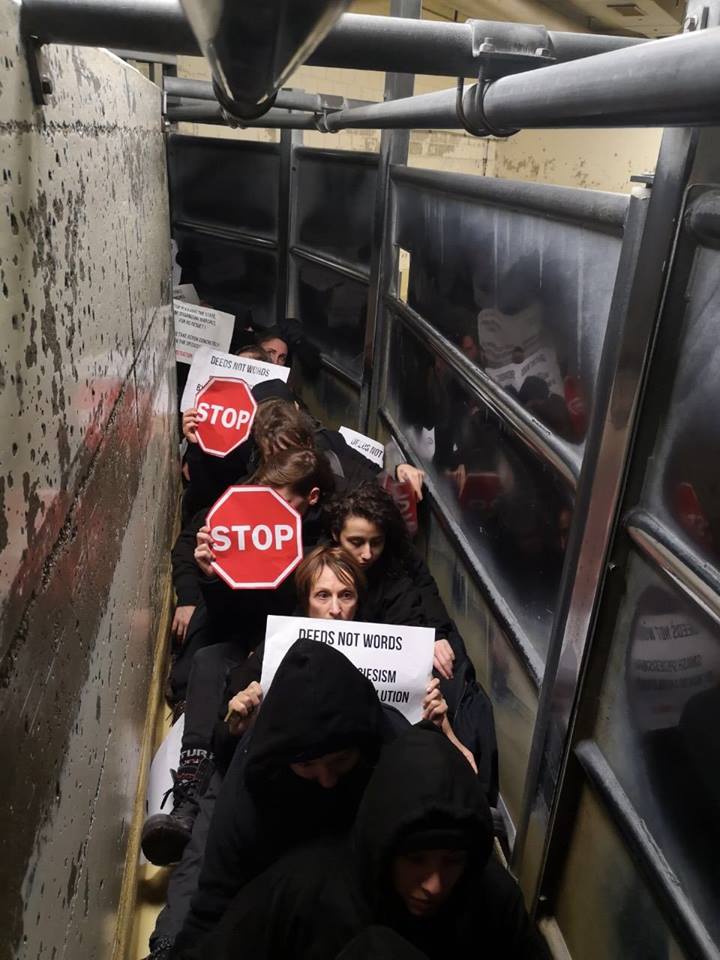
We want to use direct action in order to impact directly the speciesist system of domination and capitalist production tools. We do not aim to raise public awareness but to cause concrete impacts: economic damage, liberations, geographical activism with the creation of sanctuaries.
We refuse to collaborate with the institutional and capitalist power hoping to get little reforms that allow big associations to win members and followers but that abandon our comrades to their fate!
The whole system must be changed, not only a law article 🔥


A new report says 143 million mammals were affected in the 2019-20 blazes, one of the ‘worst wildlife disasters in modern history’
More than 61,000 koalas and almost 143 million other native mammals were likely in the path of the Australian bushfires of late 2019 and early 2020, according to a major assessment of the ecological toll of the “black summer” blazes.
The estimate from 10 researchers and scientists, contained in a report commissioned by environmental group WWF-Australia, recounts the devastating losses in habitats across the country.
Almost 3 billion animals, including 2.46 billion reptiles, were in the path of the flames, the report says – the same number the team calculated in an interim report, revealed in July by the Guardian.
Dermot O’Gorman, chief executive of WWF-Australia, says in a foreword that the report shows the fires were “one of the worst wildlife disasters in modern history”.
Prof Chris Dickman, a University of Sydney ecologist who helped guide the project, told the Guardian: “The numbers [of animals affected] are absolutely huge. It’s really a call to arms to try and do something because under climate change these fires will happen again.”
Some 181 million birds and 51 million frogs also lived in habitats inside the burned areas, which covered 12.6m hectares – an area almost the size of England.Among the 143 million mammals affected were one million wombats, 5 million kangaroos and wallabies, 5 million bats, 39 million possums and gliders and 50 million native mice and rats.
About 5½ million bettongs, bandicoots, quokkas and potoroos were also affected.
The team wrote that because of a lack of data and knowledge of how species might survive, as well as uncertainties with how fire interacted with other threats, they couldn’t be sure how many of the 3 billion animals died.
“Even if resident animals were not killed outright by fires and managed to escape, they will surely have experienced higher subsequent risk of death as a result of injuries or later stress and deprivation of key resources,” the report says.
An estimated 61,353 koalas were affected, and O’Gorman wrote: “That is a devastating number for a species that was already sliding towards extinction in eastern Australia. We cannot afford to lose koalas on our watch.”
Between 43,261 and 95,180 koalas had been affected, with a middle estimate of 61,353.
In November, environment minister Sussan Ley announced a national census of the marsupial to address “a serious lack of data about where populations actually are”.
In NSW, a parliamentary inquiry has found koalas would be extinct in the state by 2050 without action to save habitat.
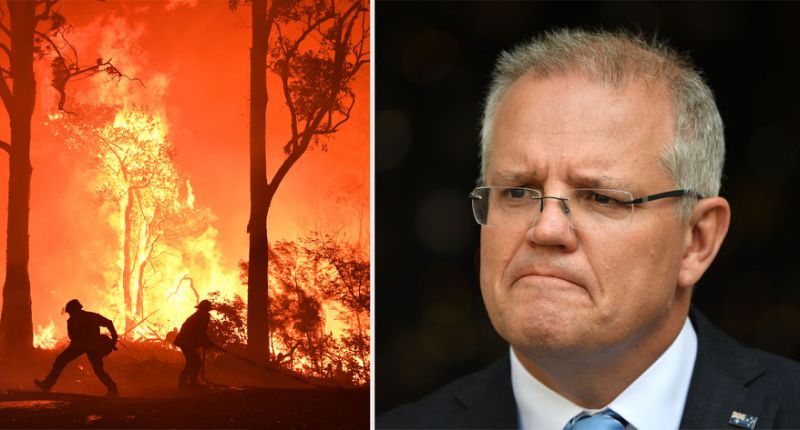
The WWF-Australia report says the fires affected as many as 14,736 koalas in the state.
Worst hit was Kangaroo Island in South Australia, where about 41,230 koalas were likely in the path of the fires that burned about half the island.
Dickman said the report was important because it documented impacts on Australian icons such as kangaroos and koalas alongside lesser-known, but unique and important wildlife.
“If you work in the forest environment then you know there’s a lot more animals living in these areas that don’t get the publicity – other fantastic charismatic animals like gliders that live alongside them and are being whittled away as well.”A range of techniques and sources were used to estimate the impacts on different species. Estimates for mammals were based on available data on the densities of species in different areas.
Reptile impacts were modelled and for birds, more than 100,000 surveys for BirdLife Australia were accessed. Some 67 frog species were mapped and their densities were estimated using previous research.
But large numbers of other species were likely to have been affected by the fires but were not included in the report.
The report says freshwater fish and crayfish are known to have been badly hit but could not be reliably estimated.
Authorities reported hundreds of thousands of fish dead after bushfire ash and mud washed into rivers.
The assessment also could not include arthropods – a group that includes insects, spiders and other bugs – but pointed to other research estimating trillions of these were likely affected.
The report includes 11 recommendations that call for better understanding of the impacts of bushfires, more research into species, where animals are, and better management of other threats.
“Alongside mortality caused by direct exposure to flames, smoke inhalation, heat, and sediment run-off, fire interacts with other stressors, exacerbating threats to the persistence of threatened species and ecosystems,” the report says.
“Three of the greatest threats to Australian flora, fauna, and ecosystems are altered fire regimes, invasive species, and land clearing; all threats that interact with and compound one another.”
Dickman, a fellow of the Australian Academy of Science, said: “A key step is to try and improve our monitoring of pretty much all the bioregions on the continent.
“We will be in a much better position to understand where populations are and we should then be in a better position to mitigate fires and floods and droughts.”
He said there were many animals that science knew little about, and as more extreme events affected species time could run out. “Windows progressively slam shut,” he said.
Dickman said just one example of the benefits of monitoring was that in the aftermath of the fires, the New South Wales government had dropped carrots and sweet potatoes into habitats of threatened brush-tailed rock wallabies.
That was only possible, he said, because the government knew where the wallabies lived.
Australia had a moral and ecological responsibility to save the animals, he said, because the vast majority of those affected existed nowhere else on Earth.

WAV Comment: So the human race never learns; as it is more superior to everything else and does not need to be told. Well we are telling in the following; check them all out.
We also ask; in reality, where are the WHO, the UN, etc? – with global crisis issues and the following where a new 84,000 sow facility begins in China; the origin of Corona; should they really be allowed to do this ? – and why no global action from the same with regard wet market operations globally – they should all have been closed down months ago. Buy money talks louder than anything we guess.
The mega farm is roughly 10 times the size of a typical breeding facility in the U.S, and has the ability to hold 84,000 sows and their offspring
Chinese hog producer Muyuan Foods has built the world’s largest multi-storey pig farm – despite fears of a new swine flu strain causing a ‘potential pandemic’.
The food giant’s mega farm is located near Nanyang and can hold around 84,000 sows and their offspring – with plans to produce more than two million pigs annually.
According to Reuters, this is roughly 10 times the size of a typical breeding facility in the U.S. In the first nine months of this year, Muyuan’s profits skyrocketed a staggering 1,413 percent.
Qin Jun, Muyuan’s vice general manager told the publication: “We have hit a very favorable period for development.
“Pig prices are very high, our profits are really good, and cash flow is really ample.”
Last year, it was reported that up to 200 million pigs could be culled or die from outbreaks of African swine fever that spread across the country.
The Ministry of Agriculture and Rural Affairs declared China’s hog herd had plummeted a staggering 41 percent in October compared to the year before.
This caused the price of pork to spike 110 percent – the highest level of inflation the industry has seen in eight years.
More recently, a new strain of swine flu discovered in China is said to have the ‘characteristics of viruses with the potential to cause a human pandemic’.
The strain has genes from a mix of pig, avian and human viruses and genes from the 2009 H1N1 flu pandemic virus.
According to Dr. Munoz, a member of the AAP Committee on Infectious Diseases, the findings should not be ‘taken lightly’.
“We shouldn’t let our guard down with influenza because there’s always going to be a possibility of new threats from emerging strains, and hopefully we can learn from our experience with COVID to be better prepared,” she added.
“This is also a reminder of why we need to be part of the global community and the WHO for sure.
China Builds World’s Largest Pig Farm 1 Year After Swine Flu Outbreaks (plantbasednews.org)
Read more:
Investigation Reveals Starving Pigs At ‘High Welfare’ Farm (plantbasednews.org)
A new strain of flu with the potential to become the next global pandemic has been identified in pigs in China.
Read more:
The report identifies seven trends driving the increasing emergence of zoonotic diseases – including a rise in intense and unsustainable farming
Read more:
UN Report Links Factory Farming To Increased Pandemic Risk (plantbasednews.org)

The following is a response from Juliet – founder and CEO at Viva! – an English animal welfare organisation; in response to an issue we recently reported on – the EU giving financial aid to help prop up the fading meat industry and to get people to be ‘Beefatarians’.
Here is the link to our post:
EU: Be A Man – Eat Beef. – World Animals Voice
Release date: November 25, 2020
The European Commission has given financial support to a campaign which aims to promote a “balanced diet without deficiencies” and to “strengthen the knowledge and competitiveness” of the European beef sector.
The European Commission has agreed to finance 80 per cent of the €4.5 million budget for the “Become a Beefatarian” campaign, meaning they are pumping €3.6 million into marketing beef in France, Germany, Belgium, Portugal and Spain. The campaign makes some outrageous claims about the beef industry, including highlighting their ‘respect for animal welfare standards, the environment and sustainability’.
The campaign goes on to claim that beef provides ‘quality proteins’ with no deficiencies. They state that beef production provides “pastures as a great carbon sink, soil fetilisation, effects against erosion and desertification, prevention of fires etc.”

In response, Juliet Gellatley, founder and director of Viva! said:
“This campaign is utterly delusional. It has been proven time and time again that red meat, such as beef, is linked to heart disease, diabetes, and cancer, due to its high level of saturated fats, cholesterol, and salt. In addition, it is packed with animal hormones, antibiotics, and a whole host of other unsavoury ingredients which our bodies simply aren’t designed to digest. The scientific evidence against red meat is backed by government bodies and leading agencies, such as the World Health Organization. Beef doesn’t contain anything of nutritional benefit that you can’t find in healthier foods. A wholefood plant-based diet, on the other hand, provides all the nutrients you need to lead a healthy, balanced lifestyle, without all the added hidden nasties.”
“The environmental aspects of this campaign are laughable. Animal farming is at the heart of the climate crisis. Beef farming in particular is causing mass deforestation as land is cleared for grazing and to grow animal feed, which in turn contributes to desertification. These crops could instead be fed to the human population, producing enough food to feed the entire world. The science is clear: vegan diets result in 76 per cent less land use and 50 per cent less greenhouse gas emissions.12 It is quite simply the most effective way to improve your health and save the planet.”
“This campaign is another example of biased, harmful marketing which is funded by the meat industry. We are disappointed in the European Commission for backing this campaign. It’s high time they paid attention to the latest scientific evidence and listened to consumer demand, by supporting plant-based food initiatives and encouraging the public to go vegan. Just think of the positive impact we could have on the planet with those financial resources!”
For more information about the environmental impact of meat, read Viva!’s Envirocidal report: https://viva.org.uk/materials/envirocidal/
ENDS information:
References:
For comments, interviews or more information please contact roisin@viva.org.uk
Tags: beef, Diabetes, Diets, Environment, Health, Heart Disease & Stroke, marketing, Meat, Obesity and Overweight, red meat, The Environment, Vegan
We all know them – the Instagram accounts that are all about animals. Dogs, cats, hedgehogs, and even foxes pose in front of the camera and get lots of likes for it.
At first glance, it doesn’t seem like much is wrong with the cute animal images.
But unfortunately, there is often animal suffering behind the photos.
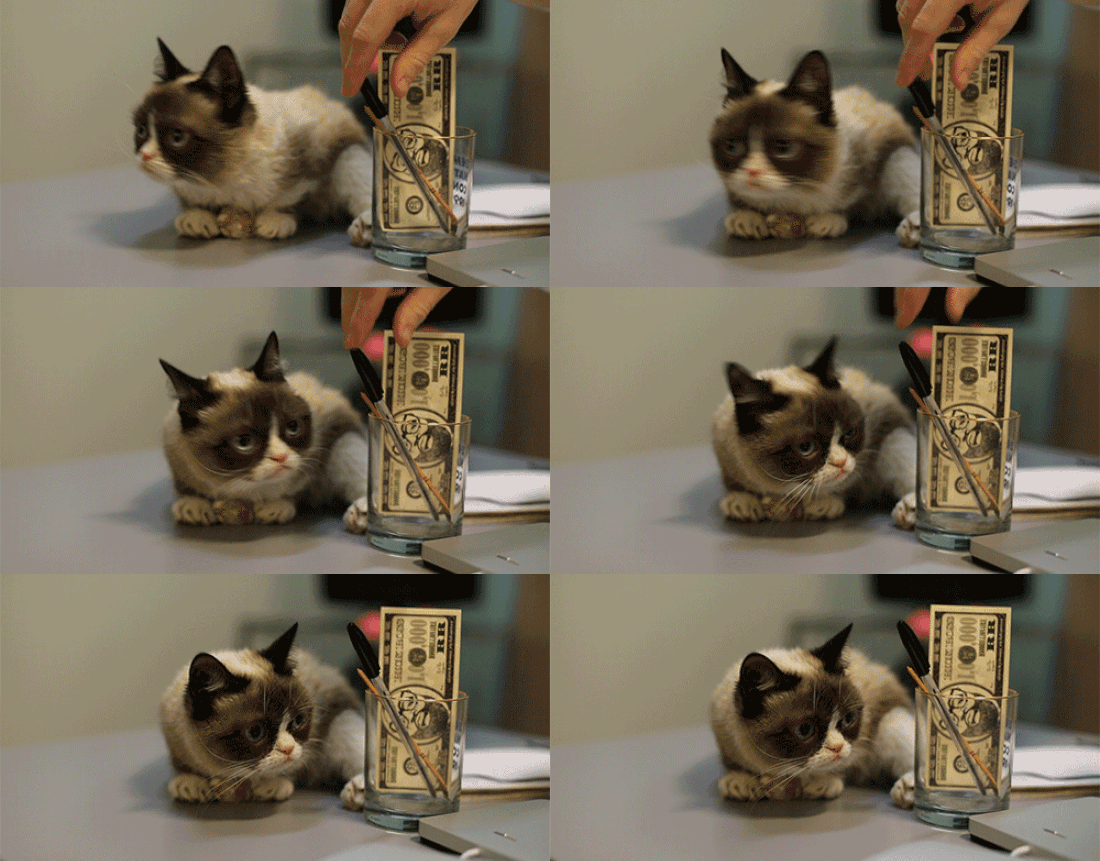
For many pet-fluence owners, it’s not just about sharing their animal roommates with the world, but also about making money with it.
They conclude advertising deals, for which the dog is placed next to food cans, the cat is put in a backpack or the hedgehog is placed next to a water bottle.
Social media like TikTok, YouTube, and Instagram don’t stop at pets either. Domestic and wild animals are increasingly being used as “pet-fluencers”.
The animal counterparts to influencers delight millions online – and turn over millions.
The other side of the coin: animal cruelty is often hidden behind success.
Some Instagramer earns so much money with it that they have become self-employed and photograph and post their animals full-time.

How are the animals really doing?
Actually, every animal lover should be aware that animals are not and do not want to be photo models.
With pet-fluence, no spontaneous snapshots are posted, but the animals are staged, draped, disguised, and even brought into dangerous situations for them.
For example, it scares a hedgehog to death if it is held next to a cat – its “predator” – for a photo. And all to amuse the followers and for profitable advertising deals.

WAV Comment: Denmark has made a 110% hash up of this right from the very start. A vote of no confidence in this woman sounds like a positive move. Does she shed tears for the 17 million Mink that have been murdered by her nations blood lust for a dying financial business ? – no; not for the mink but for the 6,000 fur farmers who are now being seen by the world for what they are.
UPDATE – 8/12/20 – this may be a good time to tell you, as we are on the subject of Danish mink; that we have still had NO reply from the Danish Ambassador in London re our letter of 12th November.
We are nearly a month on from when the letter was sent. What is wrong with them we ask ? – does the lack of reply from a Danish official overseas (in the UK – London) maybe tell us that they do not know what to say really ? – all we want is a reply to our letter, but they seem unable to even do that.

