Category: General News

England: From Viva! – Share Our Dramatic End Factory Farming Short Film – *Warning* – Disturbing Footage of Pig Suffering.

https://viva.org.uk/


Share our dramatic End Factory Farming short film

Mark, join our second action and help expose what’s happening behind the closed doors of one of Britain’s worst pig farms

We confronted the owner of this place, watch to see what he had to say for himself!

It’s vital to the pigs at Flat House Farm that we get our film seen by as many people as possible!! So please share our video far and wide. 

No matter whether you’re vegan, vegetarian, or a meat-eater, you are sure to agree that this cruelty has to end!

Shocked by those conditions? 

Send us a quote or, even better, a reaction video of your friends after they’ve watched our film! Ask them how it makes them feel to see this and what shocked them most. 

Thank you for helping Viva! to End Factory Farming Before It Ends Us with our huge week of action.

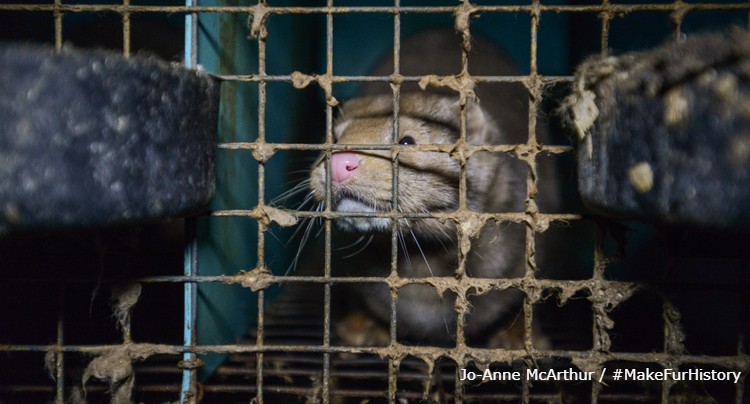
Culled minks with COVID-19 mutation literally ‘rise’ from their graves in Denmark.

Culled minks with COVID-19 mutation rise from their graves in Denmark

By Jan M. Olsen  The Associated Press

Some of the thousands of mink culled to minimize the risk of them re-transmitting the new coronavirus to humans have risen from their shallow graves in western Denmark after gases built up inside the bodies, Danish authorities said Thursday.

“The gases cause the animals to expand and in the worst cases, the mink get pushed out of the ground,” Jannike Elmegaard of the Danish Veterinary and Food Administration said. He said it affected “a few hundred” animals.

Members of Danish health authorities assisted by members of the Danish Armed Forces dispose of dead mink in a military area near Holstebro in Denmark, 09 November 2020 (issued 10 November 2020).

The mink are buried in trenches that are 2.5 metres (8.25 feet) deep and 3 metres (10 feet) wide. A first layer of about 1 metre of dead mink are then covered with chalk before another layer of animals is laid, covered again with chalk and then with dirt, Elmegaard told The Associated Press.

But because the soil where they are buried is sandy, some have re-emerged. “We assume it is the mink that were in the upper layer that pop up,” he added calling it “a natural process.”

“Had the earth been more clayish, then it would have been heavier and the mink would not have resurfaced,” he told the AP. The animals who resurface are reburied elsewhere, and authorities guard the site to keep away foxes and birds.

Members of Danish health authorities assisted by members of the Danish Armed Forces dispose dead mink in a military area near Holstebro in Denmark, 09 November 2020

Denmark culled thousands of mink in the northern part of the country after 11 people were sickened by a mutated version of the coronavirus that had been observed among the animals.

Earlier this month, the Social Democratic minority government got a majority in parliament to back its decision to cull all of Denmark’s roughly 15 million mink, including healthy ones outside the northern part of the country where infections have been found. The proposed law also bans mink farming until the end of 2021.

The government had announced the cull despite not having the right to order the killing of healthy animals, an embarrassing misstep that caused it to scramble to build political consensus for a new law.

The coronavirus evolves constantly as it replicates but, to date, none of the identified mutations has changed anything about COVID-19’s transmissibility or lethality.

Culled minks with COVID-19 mutation rise from their graves in Denmark – National | Globalnews.ca

Click here to see all of our past WAV posts on the Danish Mink cull:

Search Results for “denmark mink” – World Animals Voice

USA: Grubhub Orders For Meat Alternatives Have Skyrocketed 463% In 2020.


Grubhub Orders For Meat Alternatives Have Skyrocketed 463% In 2020

Grubhub’s annual ‘Year In Food’ report also shows the popularity of vegan-friendly products have increased by 13%

Grubhub Orders For Meat Alternatives Have Skyrocketed 463% In 2020 (plantbasednews.org)

Orders for meat alternatives have skyrocketed by 463 percent in 2020, according to Grubhub.

The figures come from the American delivery site’s annual Year In Food report, which ‘details the top trends of 2020’.

‘Most vegan-friendly State’

It also found that popularity for vegan-friendly products spiked by 13 percent, a slower increase than the year before where they were up by 27 percent. 

The most popular vegan orders were tofu spring rolls, which were 263 percent more popular this year than last, plant-based burgers which were 251 percent more popular, as well as Black Bean Tacos, Vegan chocolate cake, and Vegan ramen.

New York was listed as the most vegan-friendly state, followed by California, Oregon, Massachusetts, and Illinois. 

Vegan orders

In the UK, vegan delivery orders have also skyrocketed over the last year. 

Deliveroo recently announced its plant-based orders had spiked a staggering 115 percent from 2019 to 2020. 

In a statement sent to Plant Based News, commercial manager and vegan category lead at Deliveroo Elena Devis said: “It’s fantastic to see that Deliveroo customers are embracing the growing choices of vegan dishes available on the platform. 

“Year on year we’ve seen huge growth in demand for plant-based food. And it is our goal as a company to be the go-to platform for healthy and vegan options.”

Canada: COVID-19 outbreak declared at mink farm in B.C.’s Fraser Valley.

COVID-19 outbreak declared at mink farm in B.C.’s Fraser Valley

(1) COVID-19 outbreak declared at mink farm in B.C.’s Fraser Valley | Globalnews.ca

Health officials have declared a COVID-19 outbreak at a mink farm in B.C.’s Fraser Valley.

In a media release Sunday night, Fraser Health said eight people at the farm had tested positive, and that it was screening employees and contact tracing.

READ MORE: Culled minks with COVID-19 mutation rise from their graves in Denmark

Affected staff were self-isolating, it said.

The health authority did not identify the community or the farm.

A spokesperson for the health authority said “the information bulletin is all we have to share at this time,” when asked for more specific information.

The farm has been ordered to stop transporting animals, products and goods from the farm under the BC Animal Health Act, Fraser Health added.

WorkSafeBC is contacting other mink farms to discuss requirements under their COVID-19 safety plans, it said.


Australia: These animals suffer some of the worst cruelty inflicted by humans; Because they’re female.

These animals suffer some of the worst cruelty inflicted by humans. Because they’re female.

To animal industries, the ability to have babies is a valuable commodity. As a result, mothers of many species suffer physical and psychological stress that few of us can imagine.

Watch all the video footage at:

These animals suffer some of the worst cruelty inflicted by humans. Because they’re female. | Animals Australia

Rome: Ciao”Botticelle”!

PROGRESS! 🙌
Rome has banned horse-drawn carriages from city streets!
Horses forced to pull heavy carriages through traffic can get injured easily and die from exhaustion. They don’t belong on busy streets.
Horse-drawn carriages must be banned everywhere!

Rome, Italy- September 1, 2017: Carriage with a horse in Rome street at Italy

Horses will no longer be forced to negotiate busy roads while hauling heavy loads for human amusement in Rome, which has banned horse-drawn carriage rides from its streets.

In the future, they will only be allowed to drive in selected parks.
In addition, there will be a weather rule in the future to protect the animals.
The animals have to take breaks and finish work after seven hours.

Commenting on the ban, Rome’s mayor, Virginia Raggi, said, “You will never again see tired horses on the streets of the city during the hottest hours of the summer months because we have expressly forbidden it.”

A terrified horse on a busy street is dangerous, not romantic

With the ban, city authorities acknowledge that busy streets are no place for sensitive horses, who often get spooked in traffic, leading to many injuries to horses or humans – and sometimes even deaths.
In a split second, a horse can go from appearing calm and sedate to crashing blindly down the street in a panic.

Horses forced to pull carriages are often so debilitated they collapse, and some die in the street from exhaustion.

This is especially common in the scorching summer sun when animals can become overheated and dehydrated.
Before this ban, horses were forced to pull carriages through the streets of Rome in temperatures reaching heights of 40 degrees.

If the new rules are violated, which also provide for regular examinations by veterinarians, the coachmen face fines of up to 500 euros or the withdrawal of their license.
According to the newspaper “Corriere Della Sera,” there are still 21 coachmen in Rome with an official license.
As compensation, they should now be able to apply for a taxi license.

Don’t be taken for a ride

Horses are individuals with their own needs and desires who shouldn’t be exploited for tourism. These sensitive, social animals naturally live in herds – and being forced to haul carriages filled with humans is completely unnatural to them.

If you’re a tourist in need of transportation to explore a city, choose a human-powered pedicab, rent a bike from a bike-share service, or simply walk.

What you can do for horses

Rome joins other cities that have already banned horse-drawn carriage rides from the streets, such as Oxford, Barcelona, New Delhi, and Tel Aviv.

And cities such as London, Paris, and Toronto no longer issue licenses for horse-drawn tourist carriages.

Mallorca

On Mallorca, however, dozens of exhausted horses are still forced to pull carriages laden with tourists through the busy streets.

Please urge the mayors of Alcúdia, Palma, and Sant Llorenç des Cardassar to ban horse-drawn carriages and switch to using electric tourist vehicles instead: Please sign the Petition: https://secure.peta.org.uk/page/30696/action/1

https://www.peta.org.uk/blog/rome-bans-horse-drawn-carriage-rides-on-city-streets/

https://www.focus.de/panorama/historischer-meilenstein-rom-verbannt-pferdekutschen-von-den-strassen-und-erlaesst-generelles-verbot-bei-hitze_id_12728582.html

And I mean…The animal protection party “Progreso en Verde” has collected more than 120,000 signatures on the online portal change.org for the demand that carriages in the Mallorca metropolis should no longer be pulled by horses.

“After many years of struggle, everything is still the same today as it was before, “criticized Guillermo Amengual, chairman of the Animal Welfare Party
“Every year we have to watch the horses tire on the asphalt, and nobody does anything about it. And the few regulations that exist are simply ignored by the coachmen without any consequences for them.”
The animal rights activist also recalled that in 2016 two horses were killed after they collided with cars.

In Germany, it is not much different for carriage horses than in Mallorca. Even in Germany, carriage horses have no special legal protection because there is no corresponding statutory regulation.

Only minimum requirements are formulated, which are intended to serve the local official veterinarians as an orientation aid during controls.
The result: Only 4 to 8 checks take place annually so that not even every company is examined once a year.

What we have achieved so far is that from 30 degrees Celsius in the shade no more horse-drawn carriages will drive in the future.

That applies only to Berlin!
Horse-drawn carriages are now banned in the capital, but only in the Brandenburg Gate. A general ban in Berlin has not yet been enforced.

My best regards to all, Venus

USA: Trump’s misguided attack on wildlife, our ecosystems, and our planet – maybe that is why he will not be Mr President anymore !

Stand up for Wildlife: Help Save Gray Wolves from Trump’s Reckless Assault

President Trump’s U.S. Fish and Wildlife Service (FWS) just finalized its Rule to roll back vital Endangered Species Act (ESA) protections for gray wolves in the lower-48 states. Their disastrous plan will reverse years of recovery for this iconic species.

We are facing a biodiversity crisis of global proportions. The fate of humanity is intertwined with the fate of species and healthy ecosystems. Now is the time to restore species to the landscape — not dial back efforts for an iconic animal that was once nearly exterminated in the U.S.

Furthermore, the Fish and Wildlife Service must develop a national wolf management plan — a plan that incorporates Indigenous knowledge and perspective. The gray wolf holds immense cultural significance for Indigenous groups around the country and is considered sacred by some.

NRDC is doing everything in our power to stop Trump’s latest assault on wildlife — and we’ll take the fight to court if that’s what it takes to stop it — but in the meantime, we need NRDC activists to help create a massive public outcry by submitting letters of protest to Trump’s Fish and Wildlife Service.

Sign the petition protesting Trump’s misguided attack on wildlife, our ecosystems, and our planet — and help save gray wolves!

Stand up for Wildlife: Help Save Gray Wolves from Trump’s Reckless Assault

Above – ‘The President’

Click on this link to take action:

Help Save Gray Wolves | NRDC

The Loser

Coronavirus risk grows as animals move through wildlife trade.

Woman slaughtering rats at a market in Dong Thap, Vietnam (left), and vendor selling live rats in cages (right). Photo credit: WCS/Viet Nam (Huong, et al, 2020)
  • Woman slaughtering rats at a market in Dong Thap, Vietnam (left), and vendor selling live rats in cages (right). Photo credit: WCS/Viet Nam (Huong, et al, 2020)

Coronavirus risk grows as animals move through wildlife trade

Click on this link to see all the photos:

Coronavirus risk grows as animals move through wildlife trade (mongabay.com)

  • Animals consumed by people in Vietnam are increasingly likely to carry coronavirus as they move from the wild to markets to restaurants, a new study shows.
  • The animals with the highest rates of infection are most likely to come into contact with humans.
  • When animals are confined in crowded and stressful conditions, it makes it even easier for the virus to spread.

The COVID-19 pandemic has made it clear that when coronaviruses leap from wild animals to humans, the results can be devastating. A new study from Vietnam provides new insights about how this cross-species spread might happen.

Researchers showed for the first time that as animals move through the wildlife supply chain, from their natural habitats to marketplaces and ultimately to restaurants, they are more likely to become infected with coronaviruses, according to a report in PLOS OneAnd at each stage, people interact with these animals more intensively.

Coronaviruses are most notorious for causing human disease—including SARS, MERS, and COVID-19—but they are widespread in the animal kingdom. There are many different coronaviruses, and they can infect bats, rodents, birds, and domestic livestock like cattle and swine. Understanding where and how these viruses first make contact with humans is critical for preventing future pandemics.

To do this, the best place to start is at the wildlife-human interface: places where wild animals and humans are exposed to each other. A team of Vietnamese scientists, led by Nguyen Quynh Huong and Nguyen Thi Thanh Nga, along with Amanda Fine and Sarah Olson of the Wildlife Conservation Society (WCS) in New York, tested field rats for coronavirus at different points along the wildlife supply chain in Vietnam. They found that with each link in this chain, the percentage of infected animals increased by about 1.5 times.

This factor may not seem like much. However, it means the infection rates increased markedly: 20.7 percent of rats handled by wildlife traders, to 32 percent of rats in the markets, to 55.6 percent of rats in the restaurants.

“They did an amazing job at following the virus surveillance throughout the trade routes,” said senior field veterinarian Marc Valitutto of EcoHealth Alliance, who focuses on pandemic preparedness in Southeast Asia and China. Valitutto, who was not involved in the research, wasn’t aware of any other studies that traced infection rates along trade routes in as much detail.

The team also found that about 75 percent of bats on guano farms (constructed roosts where people collect and sell bat droppings for fertilizer) were infected with coronavirus. That was more than ten times the infection rate of 6.7 percent in naturally roosting bats.

The study demonstrated that the animals in closest contact with humans had the highest infection rates, said Fine. That’s critical to understanding how coronaviruses might infect villagers or city residents: The chance that a virus will transfer from wildlife to people is “directly increased by the number of contacts and the number of humans in that environment,” she said.

Further, when infected animals reach markets and restaurants, they are often housed in close quarters near many different kinds of animals. In such settings, coronaviruses can jump from species to species, said Olson. The team found direct evidence of this: rats and porcupines on a crowded wildlife farm carried coronaviruses from bats and birds.

That’s a noteworthy public health concern, according to Valitutto: Many coronaviruses that have caused major human outbreaks have jumped among a few different species before infecting people.

The authors noted a few caveats. For instance, cross-contamination between animals butchered in restaurants could have created some false positives tests—although such contamination is another way coronavirus could spread to human consumers, said Fine. Also, virus infections among animals are much higher during the wet season, but the team couldn’t sample every testing site during both wet and dry seasons.

Fine, Olson, and Valitutto all hope the sobering results of this study will help bring major changes to wildlife trade regulation in Vietnam and elsewhere to cut down on coronavirus transmissions.

“If this can’t change the status quo,” said Olson, “I don’t think anything can.”