Category: General News

EU: EC study find outs the livestock sector is responsible for 81-86% of the agricultural greenhouse gas emission.

https://www.eurogroupforanimals.org/news/ec-study-find-outs-livestock-sector-responsible-81-86-agricultural-greenhouse-gas-emission

EC study find outs the livestock sector is responsible for 81-86% of the agricultural greenhouse gas emission

October 2020

In mid October 2020, the European Commission published a report examining the environmental, economic and social consequences of EU livestock production and how this sector can contribute to sustainable agriculture.

While recognising the important economic role played by livestock production in the EU economy, the report stresses the significant environmental impacts associated with industrial animal production. Such impacts can affect biodiversity, human health, and the functioning of ecosystems.

In particular, by including in calculations the environmental impacts of the production, processing, and transport of feed, the report concludes that the livestock sector is responsible for 86-88% of the EU’s agricultural GHG emissions. Additionally, more than 80% of nitrogen of agricultural origin present in all EU aquatic environments is linked to livestock farming, and livestock farms are the main sources of ammonia.

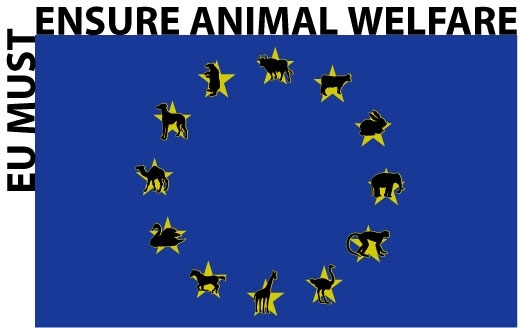
On animal welfare, the report recalls the results of the last special Eurobarometer on animal welfare showing that 94% of European citizens attach importance to animal welfare, with 82% agreeing that farm animals should be better protected. Three key areas need to be addressed to respond to citizens expectations, and namely the intensification of farming, transportation of animals and slaughter. 

The report notes that the specialisation and intensification of livestock farming systems has had negative implications for animal welfare, leading to stress and pain due to artificial living conditions in industrial type buildings, damage to animal integrity (e.g., painful husbandry procedures), separation from familiar conspecifics and unnatural levels of mixing. Citizens expect animals to be spared fear and anxiety and to be offered the possibility to experience positive emotions. Such an approach can also have positive knock-on effects on the reduction in the use of antimicrobials in farmed animals, which should be halved by 2030 compared to current levels according to the Farm to Fork strategy. 

Read more at source

Publications Office of the EU

Denmark: Inhumane Mink Killing Shocks Dyrenes Beskyttelse (Animal Protection Denmark).

Inhumane mink killing shocks Dyrenes Beskyttelse (Animal Protection Denmark)

13 November 2020

Dyrenes Beskyttelse

Dyrenes Beskyttelse reports the cruel killing of minks to police in Denmark, as shown in a viral video circulating social media. They call on authorities to ensure that minks are killed in a humane way.

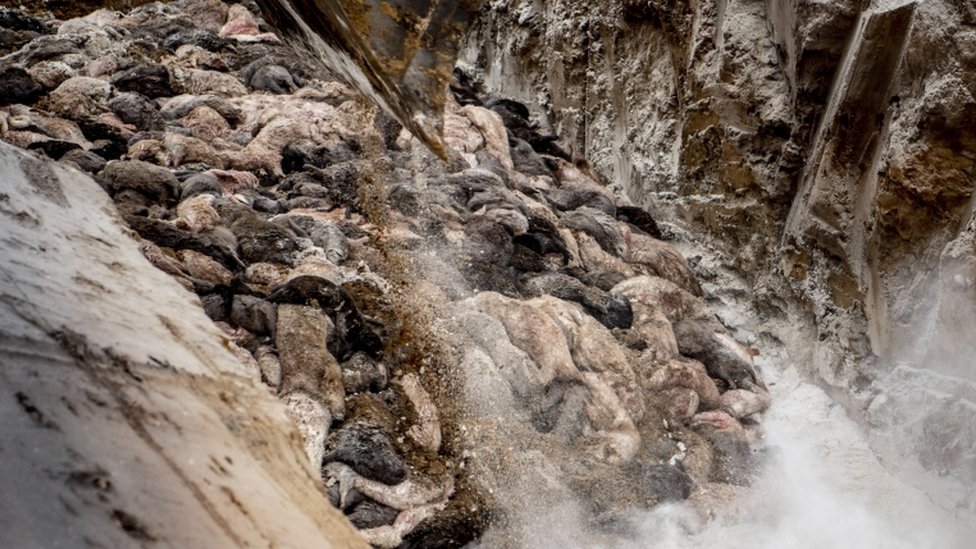
A video that circulated heavily on social media last week, shows how the Danish Veterinary and Food Administration’s employees fail in their attempt to kill minks.

Subsequently, they try to fix this by killing the minks with incorrect and brutal methods. The result is nothing less than animal cruelty. Eurogroup for Animals member Dyrenes Beskyttelse condemns the methods used, as they are in violation of the Animal Welfare Act, and has therefore reported the case to the police.

Yvonne Johansen, head of animal welfare at Dyrenes Beskyttelse, says: “The scenes we are witnessing here are completely unacceptable. It’s heart-breaking, and it simply cannot happen. The Animal Welfare Act states that anyone who wants to kill an animal must ensure that the animal is killed as quickly and as painlessly as possible. That’s not what I see here. I am deeply shaken”. She also emphasizes that despite the many killings that need to happen in Denmark now in a short time, consideration for the individual animal must never step into the background. “To the individual animal, it does not matter whether it is killed by corona or to become a fur coat. But it does matter how it happens, even when authorities are occupied with reaching the goal of the killings.”

The minks are killed by gassing, just as they normally would have been if the animals had been furred. But with the way this method works, it takes time to kill the minks and this cannot be rushed, Dyrenes Beskyttelse points out. “If you hurry through the process, you end up with mink that are not dead, as we see in the pictures.

The mink is an animal that naturally lives in and by water; it even has webbed feet. This also means that it is really good at holding its breath. Therefore, killing minks by gassing them is already problematic, and it only becomes more disconcerting by rushing the process” says Yvonne Johansen.

Since the circulation of the video, Dyrenes Beskyttelse received many inquiries from concerned citizens who also reported the video to the police. Dyrenes Beskyttelse is now contacting the Danish Veterinary and Food Administration to ensure that the rules on humane killing are complied with.

Read more at source

Dyrenes Beskyttelse

Check out all of our (WAV) posts on the Danish mink by visiting us at:

https://worldanimalsvoice.com/?s=denmark+mink

ADI urges WHO to cut animal tests to tackle COVID-19.

ADI = Animal Defenders International

https://www.ad-international.org/about_us/

ADI urges WHO to cut animal tests to tackle COVID-19

16 November 2020

An open letter, spearheaded by ADI, is calling for the use of non-animal research methods in the search for a vaccine for COVID-19. Although animal testing is not required, and often unreliable, it is still taking place globally.

Animal Defenders International (ADI), a member of Eurogroup for Animals, has prompted an open letter directed to the World Health Organisation concerning animal tests. The letter calls for advanced non-animal research methods to be prioritised in order to accelerate the discovery and use of effective vaccines and treatments for COVID-19, and has been signed by nearly 100 experts, academics, and other concerned parties. It states that “significant funding and precious time is being spent on animal research…. despite the known species differences which make the results from such data unreliable when translated to humans.”

Usually, vaccine research and development takes up to 15-20 years, but thanks to international collaboration, a vaccine for the SARS-COV-2 virus might be available as soon as next year. Animal research is a major part of this process. The International Coalition of Medicines Regulatory Authorities (ICMRA) has now stated that efficacy tests using animals are not required before proceeding to human clinical trials. Despite this, these tests are still taking place, even alongside clinical trials in some cases.

Safety testing on animals, however, is still required. For these tests, animals are typically force-fed or injected with a substance while restrained, and suffer debilitating, even fatal, side effects. In all this, animal testing remains an unreliable way to predict the effects of drugs in humans due to species differences. More than 90% of drugs that prove promising in animal trials fail in humans, either due to lack of effectiveness or safety concerns.  Even though this issue is widely recognized, laboratories around the world continue to use animals to test possible vaccines for COVID-19. Jan Creamer, ADI President, states: “There is an urgent need to tackle and treat COVID-19 and other human disease with better, faster science. To provide safer, more effective treatments to help people, we need to move away from unreliable animal research and use advanced scientific methods, more relevant to humans.”

Dr Aryan Tavakkoli MRCP FRACP, a respiratory physician, mentions that the respiratory systems of animals used for COVID-19 research are known to be different from ours physiologically, so it is only logical that human-based methods be prioritised and used for testing treatments and vaccines. He also claims that with incredibly sophisticated methods such as human lung models that are now available, it is vital that resources and time are directed toward these to find treatments and a vaccine for this life-threatening virus.

Besides the open letter, ADI has also launched a petition to cut animal testing in the search of a COVID-19 vaccine.

To help out, you can sign the petition here.

Read more at source

ADI

Why a COVID-19 vaccine could further imperil deep-sea sharks.

hammerhead shark – Google Search

BBC - Earth - Why do hammerhead sharks look like that?

Picture – BBC.

Shark liver oil helps make vaccines more effective, but increased demand for the substance could harm critically endangered species.

Trawling for prey at more than a thousand feet under the surface, the scalloped hammerhead shark relies on a special oil in its liver to survive the crushing pressures of the deep.

Shark liver oil, or squalene, is a fatty substance that provides vital buoyancy for this critically endangered species and many others. But it’s also a lifesaver for humans as a boosting agent in vaccines, called an adjuvant, that improves the immune system and makes vaccines more effective.

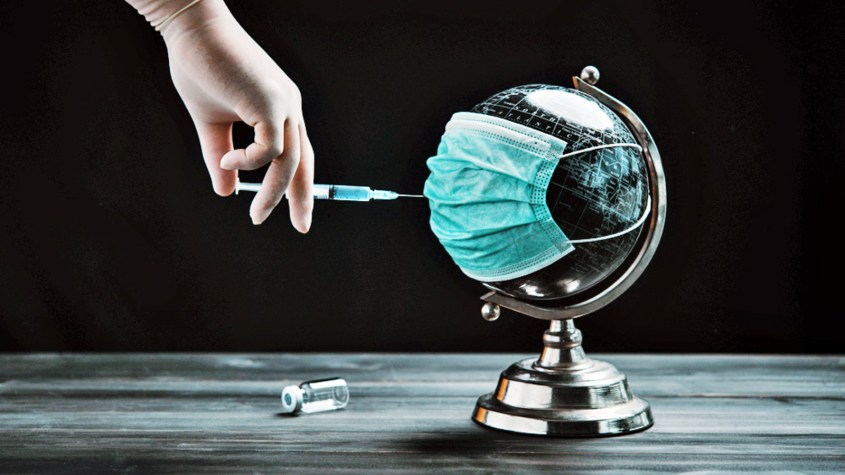
As the world’s pharmaceutical companies scramble to create a vaccine for COVID-19at least five of the 202 vaccine candidates rely on squalene sourced from wild-caught sharks.

Read more at source

National Geographic

.

New Zealand: Victory for Mother Pigs – Update From SAFE.

Kia ora Mark

Justice has been served.

    Our partners at the New Zealand Animal Law Association have been reviewing the High Court judgment and considering the impact such a landmark ruling will have. We have certainly won the biggest and most important challenge for mother pigs – however the battle for justice is not over yet.

When we received the judgment on Friday, we also heard that our opposition in this case – the Minister for Agriculture, Hon Damien O’Connor and the National Animal Welfare Advisory Committee (NAWAC) – would have 20 days to appeal the ruling.   The Code of Welfare for pigs must now be amended – this is a crucial piece of legislation that determines how pigs are treated. The amendment of the Code of Welfare cannot be rushed.

Lastly, as with battery cages, farrowing crates will likely be subject to a phaseout period to allow farmers to transition to new farming systems or to leave pig farming altogether. The phaseout of farrowing crates will not happen overnight.    

From the beginning of this campaign, we have promised not to give up on mother pigs, and we meant it – with your help we will keep the pressure on the Minister of Agriculture and NAWAC to amend the Code of Welfare and to implement a fair phaseout plan to end the use of farrowing crates for good.

Justice has been served, and we will be watching closely to make sure our Government follows through.
 
I will keep you updated as I receive more information.
 
Until then – for the pigs,  
Debra Ashton

Chief Executive Officer


USA: 16/11/20 – New York City Wet Markets / Covid – Still Blood In the Streets !!

16/11/20 – New York – Still Blood in the Streets !

NYC Wet Market Bloody Chicken Parts In Dumpster… Leaking Into Street!!!

Click here to see videos:

https://www.tmz.com/2020/11/16/nyc-wet-market-dumpster-leaking-blood-chicken-parts-coronavirus-covid-vaccine/

New York could really use the COVID vaccine Trump‘s threatening to withhold … the Big Apple’s still seeing unsanitary practices in wet markets, and it’s on video.

The latest gross-out spectacle was on full display in Queens, where folks with the animal rights nonprofit, NYCLASS, caught a glimpse of what’s still going on in our domestic one-stop-shop slaughterhouses and live animal factories.

In the gnarly footage, you see an unattended dumpster absolutely overflowing with trash bags, which appear to be packed to the gills with cut-up animal parts … you can see a severed chicken head in a bag at the top of the heap as the dumpster sits out in the open on a sidewalk.

Not only that … check out the blood leaking from the dumpster and flowing into the street, filling up cracks in the pavement like a mini river and puddling up.

We’re told the dumpster is outside the same wet market where a similar scene was filmed back in May, so it seems like nothing has changed.

NYC and the rest of the country are dealing with another COVID wave, so it’s pretty harrowing to see these unsanitary conditions still in practice.

It goes without saying, this is a massive public health risk 8 months into the pandemic.

We’ve seen several of these wet market operations from coast to coast, like this stomach-turning scene in California.

Trump likes to talk about red states and blue states … well remember, wet markets are also operating in ruby-red Texas.

Ya gotta wonder why these issues aren’t being talked about on a national level … this is supposedly how COVID got started in the first place, right? Seems most politicians don’t wanna get near this, for whatever reason. So, the question is, why?

NYCLASS executive director Edita Birnkrant says she constantly files complaints with regulators and contacts politicians and health officials, but nothing ever happens.

Bottom line … the vaccine can’t come soon enough.

Thanks to Corona, the end of the animal circus is coming soon?

Due to the current situation, the media report daily on “needy circus companies” asking for donations, and unfortunately, supermarkets also offer the circuses a suitable stage.

“Attention! The Betolli Circus cannot hold an event due to Covid-19. We ask for donations for humans and animals
Thank you”

There is nothing wrong with donating food to animals because they are the ones who really suffer.

But in the end, the circus companies, who can no longer take care of their supposedly “beloved animals”, are asked: Do not breed any more animals or hand them over to responsible hands would be a start.

The fact that keeping animals costs money and demands a lot of responsibility is nothing new. Income has stagnated for years because there are no visitors.

Corona is now being pushed forward to press on the tear glands and generate donations.
The media is full of such reports.

Circus Kaiser in particular, which has been advertising for many years with the slogan “the one with the many animals”, has made the headlines at the moment.

Every year at Christmas time and during the year, Circus Kaiser begs for donations and, above all, for food and emphasizes what extreme animal rights activists are and how well they keep their animals.

Now they blame Corona for the lack of food and supplies and people donate without questioning …

If you criticize you will be attacked because it is not “the poor family’s fault” that they have no food. The animals now eat what the farmers give for them.
But there are new cars and caravans in front of the circus tent and one wonders where the animal population is going?
We have no idea why everyone is supporting this circus right now.

In reality, donations support people who enrich themselves through animals

In fact, it is like this: if you can’t afford the animals, you can’t keep them.
Now would be the time to hand over the animals, instead, they still earn from the fact that the animals cannot be looked after.

Aktionsbündnis – Tiere gehören nicht zum CircusGermany

And I mean…The circus industry can’t get out of the whining: hardly a day goes by that the media doesn’t report on the “poor circus performers who live on the subsistence level”

“The coronavirus threatens to destroy the circus as we know it,” warned the European Circus Association (ECA) in March in an urgent appeal to the governments of the EU countries.

“Without government help,” it says, “the circus companies will not be able to compensate for the current losses and go on tour again.”

The Circus Association received a letter from Ursula von der Leyen, President of the EU Commission, in which the circus is described as a living part of the European cultural heritage with a centuries-old history and reference is made to EU aid funds worth billions from which these companies also helped could be.

We are of the same opinion as Ursula von der Leyen, but only for the circuses that work without animals and animal suffering

Our wish is that the performance restrictions will last a very long time and that the majority of the circus tours will continue to be canceled. Nobody needs animals in the circus, who wants to see humiliated and trained animals in the arena?

At least this year nothing is going on with bullied animals that are carted across Germany for completely unnecessary entertainment – including the Christmas performances.

Finally, after years of appearances in the ring, the animals will hopefully have a quiet Christmas party without cracking whips, dressage, and screaming spectators who support and pay for this torture.

My best regards to all, Venus

Philippines: Petition: BAN COCKFIGHTING AFTER COP BLEEDS TO DEATH FROM SPUR BLADE.

SIGN: Ban Cockfighting After Cop Bleeds to Death from Spur Blade

SIGN: BAN COCKFIGHTING AFTER COP BLEEDS TO DEATH FROM SPUR BLADE

Posted by Katie Valentine

PETITION TARGET: Republic of the Philippines Department of the Interior and Local Government

A local police officer lost his life after a razor-sharp metal spur slashed his femoral artery during an illegal cockfighting raid.He bled to death within minutes, according to the New York Times.

These spurs, known as ‘gaffs,’ are used by roosters in vicious one-on-one cockfighting death-matchesin the Philippines.

This gruesome tragedy highlights the inherently deadly nature of cockfighting, which forces roosters to wear dagger-like attachments and shred each other to pieces until one of them dies. If the terrified birds try to escape the enclosure, they’re shoved back into the fighting ring against their will.

Spectators place bets on the winners and watch as the birds stab and kill their opponents, gouging out eyes, breaking bones, and puncturing organs.

Cockfighting is legal in the Philippines. But certain events, including this cruel blood sport, are temporarily banned due to coronavirus-related fears.

It’s time for an end to cockfighting, which needlessly kills countless innocent birds and risks human health and safety.

Sign this petition urging the Department of the Interior and Local Government to issue a permanent, nationwide ban against cruel cockfighting events.


Petition Link:

Cheap supermarket chicken risking ‘catastrophic’ new pandemics, report warns.

Most chickens are bred to grow excessively rapidly, leaving them with low immunity

Report warns that supermarket chicken risk ‘catastrophic’ new pandemics

16 November 2020

Intensively reared chicken for meat from supermarkets including Tesco, Sainsbury and the Co-op is creating an ideal environment for new pandemic viruses to emerge, a report warns.

The “cocktail” of infections to which birds are subjected creates a near-perfect breeding ground for a disease outbreak of pandemic potential, according to the report by the non-profit organisation Open Cages.

The authors of the report warn that a new bird flu virus with “high transmissibility” would make COVID-19 appear mild claiming that supermarkets are primarily responsible for this “cruel and dangerous” system, because to keep prices low, they reportedly buy chicken from farms with overcrowded conditions that mean disease can spread easily.

They also allegedly use breeds engineered to grow unnaturally rapidly, known as “frankenchickens”, that are “practically unable to ward off infection when it strikes” because their immune systems are so weak.

Nearly a billion broiler (meat) chickens a year are reared in the UK, making it the country’s most-farmed land creature.

 ———————–

Cheap supermarket chicken risking ‘catastrophic’ new pandemics, report warns

Exclusive: Bird flu viruses more frequent than ever, and a highly infectious one ‘would make Covid-19 look mild’

https://www.independent.co.uk/news/uk/home-news/covid-chicken-supermarket-virus-pandemic-tesco-sainsbury-b1648358.html

Intensively reared chicken for meat from supermarkets including Tesco, Sainsbury and the Co-op is creating an ideal environment for new pandemic viruses to emerge, a report warns.

The “cocktail” of infections to which birds are subjected creates a near-perfect breeding ground for a disease outbreak of pandemic potential, according to the document.

Read more on page 2

Continue reading “Cheap supermarket chicken risking ‘catastrophic’ new pandemics, report warns.”