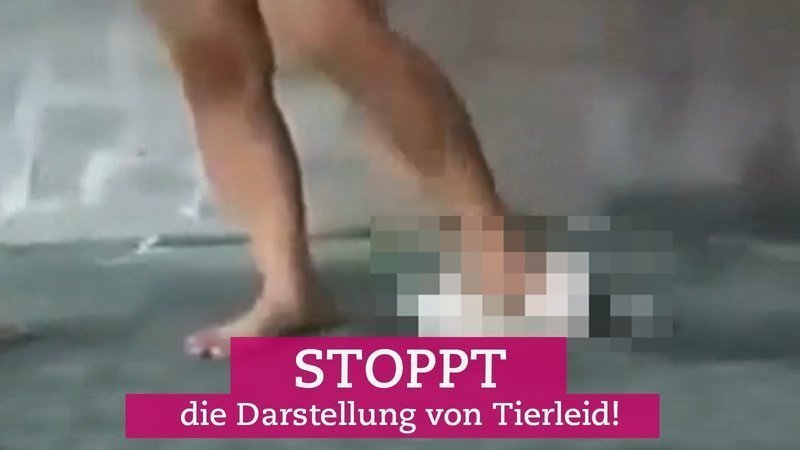
Videos under the title “Animal Crush” are circulating on the net that shows how live kittens, puppies, and other animals are mercilessly trampled to death.
This is just one example of the countless pieces of content that uncensored animal suffering on social media.
The World Animal Protection Society fears that such depictions normalize violence against animals and call on the operators of social networks to tighten their guidelines.
They are acts of extreme cruelty to animals, the mere thought of which is difficult to bear. But in the social networks, the recordings can be distributed almost without restriction in image and video format among millions of users worldwide:
Videos under the title “Animal Crush” document how living animals are trampled to death – insects, rabbits, kittens, and puppies.
– “That’s what I do with stray dogs that chase me,” writes a man under a video in which he throws a dog into a ravine.
-Three cats are drowned, filmed, and published under the title “Kittens Drown”.
– A picture of a dog with its muzzle taped with tape is posted with the words, “This will happen if you are not calm.”
-A video of a cat caught in a running microwave fighting for its life….
Images of bloody dog fights, videos of brutal abuse of animals …
…this has to be stopped!
But the social networks rarely do anything against the display of such animal suffering content.
In this way they normalize violence against animals and help society to get used to animal suffering – this could result in massive deterioration in global animal welfare.
In addition, social networks give users the opportunity to save and distribute the content – and even be encouraged to imitate the deeds.
Petition: We at the World Animal Protection Society are convinced that it is also the responsibility of social networks to promote respectful coexistence between animals and humans and not to offer a platform for animal suffering!
That is why we demand from the operators of the social networks: Stop the depiction of animal suffering!
It is imperative that the social networks comprehensively supplement their community standards with the subject of animal suffering, to which users must commit themselves by registering and creating a profile, and that they also check this consistently.
In the event of violations, you must ensure that no further distribution of the content – by others or by the creator – is possible.
Please, dear animal lovers, join us in fighting animal suffering.
Support our demand for the operators of the social networks with your signature!
And I mean…We must take this issue (and therefore this petition) very seriously.
The internet is full of such atrocities, but the operators hypocritically allow it, and by doing so, they support this perverse shit.
Enlightenment videos about Corona by doctors have been deleted from youtube en masse over the past few months, immediately.
Brutal police operations against black women also deleted, with the excuse “the Internet is against violence”.
However, the daily violence against animals remains on YouTube and Co. on the net. We must try to stop this dangerous anomaly.
McDonalds is known to most UK animal activists as ‘McShitty’. This is really because of what was dubbed the ‘Mc Libel Case’ many years ago.
It is a story which goes back decades but is still very prominent in the minds of older generation animal activists such as myself (Mark). I will try to summarise the issue as much as possible with big inputs from Wikipedia, a free encyclopedia site which I personally financially contribute to (to help them produce free data) each year.
Read all about it below. It was a huge ‘David and Goliath’ case; the big organisation (McDonalds) against animal / environmental activists Helen and David from London Greenpeace; which was not linked to the main Greenpeace organisation. McDonalds flew into London all their big legal personnel from the USA in an attempt to simply crush the minnows named Helen and David. The result was not quite as simple as McDonalds thought it would be.
And now in 2020; with the plight of the Amazon rainforest being destroyed and cattle farming in the area under vast scrutiny; you have to tell yourself that Helen and David were almost certainly correct with what they said all those years ago. Sadly; as with so many correct people and organisations who speak out; the ;big guns’ and their lobbyists immediately go into overdrive with their vast financial support to eliminate the little ‘Davids’ who so very often speak the real truth.
I can personally remember doing animal rights marches decades ago in ol London town; and the Met police always diverting the march away from any McDonalds because of what was going on with the McLibel case at the time.
Most (or probably all) of those who have a happy meal at McDonalds now do not have a clue about the past actions taken to shut up anyone speaking out about environmental destruction; and animal and human (low wage) abuses. We don’t forget; and despite how Mc dress up their foods as Vegan friendly and the rest; they will always, first and foremost, protect their financial interests and their name at any attempt.
Read below and decide for yourself;
Regards Mark.
Note – UK visitors may recognise a younger Kier Starmer in the video. He is now (2020) the leader of the Labour Party – the main UK opposition party to the current Conservative Party.
————————-
From our friends at Wikipedia, the free encyclopedia
McDonald’s Corporation v Steel & Morris [1997] EWHC QB 366, known as “the McLibel case”, was an English lawsuit for libel filed by McDonald’s Corporation against environmental activists Helen Steel and David Morris (often referred to as “The McLibel Two”) over a factsheet critical of the company. Each of two hearings in English courts found some of the leaflet’s contested claims to be libellous and others to be true.
The original case lasted nearly ten years which, according to the BBC, made it the longest-running libel case in English history.[1] McDonald’s announced it did not plan to collect the £40,000 it was awarded by the courts.[2] Following the decision, the European Court of Human Rights (ECHR) ruled in Steel & Morris v United Kingdom the pair had been denied a fair trial, in breach of Article 6 of the European Convention on Human Rights (right to a fair trial) and their conduct should have been protected by Article 10 of the Convention, which protects the right to freedom of expression. The court awarded a judgement of £57,000 against the UK government.[3] McDonald’s itself was not involved in, or a party to, this action, as applications to the ECHR are independent cases filed against the relevant state
Helen Steel and David Morris were two environmental activists of London Greenpeace, a small environmental campaigning group that existed between 1972 and 2001. In 1986, they co-authored a six-page leaflet titled “What’s wrong with McDonald’s: everything they don’t want you to know” of which they distributed “a few hundred copies” in Strand, London.[4][5]
The leaflet accused the company of paying low wages, of cruelty to animals used in its products and other malpractices.[6] The group were not affiliated with the larger Greenpeace International organisation, which they declined to join as they saw it as too “centralised and mainstream”.[7]
Libel charges
In 1990, McDonald’s brought libel proceedings against five London Greenpeace supporters, Paul Gravett, Andrew Clarke and Jonathan O’Farrell, as well as Steel and Morris, for distributing the sheet on the streets of London. This case followed past instances in which McDonald’s threatened to sue more than fifty organisations for libel, including Channel 4 television and several major publications. In all such cases, the media outlets settled and apologised.[8]
Under English defamation law, the defendant must show that each disparaging statement made is substantively true. This can be an expensive and time-consuming process. Gravett, Clarke and O’Farrell apologised as requested by McDonald’s, but Steel and Morris chose to defend the case.[9]
The two were denied Legal Aid, as was policy for libel cases, despite having limited income.[10] Thus, they had to represent themselves, though they received significant pro bono assistance, including from Keir Starmer. Steel and Morris called 180 witnesses, seeking to prove their assertions about food poisoning, unpaid overtime, misleading claims about how much McDonald’s recycled, and “corporate spies sent to infiltrate the ranks of London Greenpeace”.[11]
McDonald’s spent several million pounds, while Steel and Morris spent £30,000; this disparity in funds meant Steel and Morris were not able to call all the witnesses they wanted, especially witnesses from South America who were intended to support their claims about McDonald’s activities in that continent’s rainforests.[12]
In its libel allegation, McDonald’s asserted all claims in the pamphlet to be false.[13] They found it difficult to support this position despite the indirectness of some of the claims. The case eventually became a media circus. McDonald’s executives, including Ray Cesca, entered the witness box, enabling cross-examination by the defendants.[14]
In June 1995 McDonald’s offered to settle the case (which “was coming up to its [tenth] anniversary in court”[15]) by donating a large sum of money to a charity chosen by the two. They further specified they would drop the case if Steel and Morris agreed to “stop criticising McDonald’s”.[15] Steel and Morris secretly recorded the meeting, in which McDonald’s said the pair could criticise McDonald’s privately to friends but must cease talking to the media or distributing leaflets. Steel and Morris wrote a letter in response saying they would agree to the terms if McDonald’s ceased advertising its products and instead only recommended the restaurant privately to friends.[12]
Judgment
High Court
The case was adjudicated by the Hon. Mr. Justice Rodger Bell.[16] On 19 June 1997, Bell J delivered his more than 1,000-page judgment largely in favour of McDonald’s, finding the claims that McDonald’s was responsible for starvation and deforestation were false and libellous.[17] The ruling was summarized by a 45-page paper read in court.[18] Steel and Morris were found liable on several points, but the judge also found some of the points in the factsheet were true.[12] McDonald’s considered this a legal victory, though it was tempered by the judge’s endorsement of some of the allegations in the sheet. Specifically, Bell J ruled that McDonald’s endangered the health of their workers and customers by “misleading advertising”, that they “exploit children”, that they were “culpably responsible” in the infliction of unnecessary cruelty to animals, and they were “antipathetic”[19] to unionisation and paid their workers low wages.[20] Furthermore, although the decision awarded £60,000 to the company, McDonald’s legal costs were much greater, and the defendants lacked the funds to pay it. Steel and Morris immediately appealed against the decision.[21]
In 1998 a documentary film was made about the case, also titled McLibel. This was updated in 2005 after the verdict of the final appeal.
In September 1998, the pair sued the Metropolitan Police for disclosing confidential information to investigators hired by McDonald’s and received £10,000 and an apology for the alleged disclosure.
Court of Appeal
An appeal began on 12 January 1999 and lasted 23 court days, ending on 26 February.[22] The case was heard in Court 1 of the Court of Appeal in the Royal Courts of Justice. The case was adjudicated by Lord Justices Pill and May and Mr Justice Keene. The defendants represented themselves in court, assisted by first year law student Kalvin P. Chapman (King’s College London).
McDonald’s were represented by libel lawyer Richard Rampton QC,[23] and a junior barrister, Timothy Atkinson,[24] and Ms Pattie Brinley-Codd of Barlow, Lyde & Gilbert.[25] Steel and Morris filed a 63-point appeal. They had requested a time extension, but were denied. The verdict for the appeal was handed down on 31 March, in Court 1 at the Royal Courts of Justice.[26]
The judges ruled it was fair comment to say that McDonald’s employees worldwide “do badly in terms of pay and conditions”[27] and true “if one eats enough McDonald’s food, one’s diet may well become high in fat, etc., with the very real risk of heart disease”.
As a result of their further findings against the Corporation, the three Lord Justices reduced Mr Justice Bell’s award of £60,000 damages to McDonald’s by £20,000. The court ruled against the argument by Steel and Morris that multinational corporations should no longer be able to sue for libel over public interest issues. Steel and Morris announced their intention to appeal over these and other points to the House of Lords, and then take the UK government to the European Court of Human Rights if necessary.
In response to the verdict, David Pannick QC said in The Times: “The McLibel case has achieved what many lawyers thought impossible: to lower further the reputation of our law of defamation in the minds of all right thinking people.”[28]
Steel and Morris appealed to the Law Lords, arguing that their right to legal aid had been unjustly denied. When the Law Lords refused to accept the case, the pair formally retained solicitorMark Stephens[29] and barristerKeir Starmer QC (later Director of Public Prosecutions (England and Wales), Head of the Crown Prosecution Service and Leader of the Labour Party) to file a case with the European Court of Human Rights (ECHR), contesting the UK government’s policy that legal aid was not available in libel cases, and setting out a highly detailed case for what they believed to be the oppressive and unfair nature of UK libel laws in general, and in their case in particular.[30] In September 2004, this action was heard by the ECHR. Lawyers for Steel and Morris argued that the lack of legal aid had breached the pair’s right to freedom of expression and to a fair trial.
European Court of Human Rights
An anti-McDonald’s leafleting campaign in front of the McDonald’s restaurant in Leicester Square, London, during the European Social Forum season, 16-10-2004.
On 15 February 2005, the European Court of Human Rights ruled[31] that the original case had breached Article 6 (right to a fair trial) and Article 10 (right to freedom of expression) of the European Convention on Human Rights and ordered that the UK government pay Steel and Morris £57,000 in compensation.
In their ruling, the ECHR criticised the way in which UK laws had failed to protect the public right to criticise corporations whose business practices affect people’s lives and the environment (which violates Article 10); they also ruled that the trial was biased because of the defendants’ comparative lack of resources and what they believed were complex and oppressive UK libel laws
This has always been at the back of our minds with WAV – we attempt to tell the real truth and nothing but the truth regarding animal and environmental abuses. At the end of the day; different people have different opinions, and we respect that.
We will continue to be a world animals voice confident in the data we provide and with the past McLibel issue firmly entrenched in our minds.
PETITION TARGETS: U.S. House Speaker Nancy Pelosi and Senate Majority Leader Mitch McConnell
Throughout the United States, defenseless dogs and cats are slowly and painfully skinned alive, set aflame, and stabbed to death just to hear their agonizing screams in sickening ‘animal crush’ videos.
This isn’t the only torture innocent animals are forced to endure. Helpless dogs are pumped up on drugs and pitted against each other in battles to the near-death for dogfighting rings. Victims suffer deep puncture wounds, severe blood loss, mutilated faces, and broken bones.
Creating animal “crush” videos and dogfighting are federal crimes, and the U.S. Government must treat animal abuse with the severity it deserves. Newly-introduced bill H.R. 8052, or the Animal Cruelty Enforcement (ACE) Act, could help achieve this by creating an Animal Cruelty Crimes section within the Department of Justice to allow for vigorous enforcement of federal animal welfare laws.
Animal cruelty just became a federal crime in late 2019, with the passage of the Preventing Animal Cruelty and Torture (PACT) Act. Strong prosecution is now crucial to make this legislation succeed.
“Congress has made important strides to prevent animal cruelty recently,” said Rep. Buddy Carter-R. “Now we need to ensure the laws are enforced.”
Speak out today to help end animal abuse in the United States.
Sign this petition urging U.S. congressional leaders to support and pass the Animal Cruelty Enforcement Act to save dogs and all animals from torture and death.
WAV Comment – today, ‘World Animals Day’, we have been sent some disturbing images from a rubbish dump in Oluvil, Sri Lanka, which shows majestic elephants scavenging for something to eat because all their habitat has been destroyed; or they are not allowed into ‘their’ territory by the human race.
How sad is this to see what man has done to the planet and all the other creatures which are now dominated by him ?
On this day we must all strive to give animals more of a voice in the world; and most importantly; attempt to free them from the ravages of humankind who is quite simply, exploiting and destroying them.
Regards Mark.
Here are just a few links – you can get more by typing in ‘World Animals Day’ on Google search:
World Animal Day is the day set aside each year for raising the status of animals around the world in an effort to help improve their welfare.
A day when people, communities, organisations and countries unite as one, becoming a stronger force for animals, one with the power to make positive change. This World Animal Day we were thinking, what if we could make just one change for animals that really made a difference to their lives? What single thing could we do?
Is it even possible to make a single change and have an impact?
As long as people still kill animals, they will also wage wars.
As long as people eat animals, they will torture their innocent victims to death: by the hundreds of thousands in laboratories and mass breeding establishments, by the millions in the slaughterhouses of cities, by the myriads in the oceans.
Their bloodstream must no longer serve as food, their body no longer as raw material, their life no longer as food for us humans.
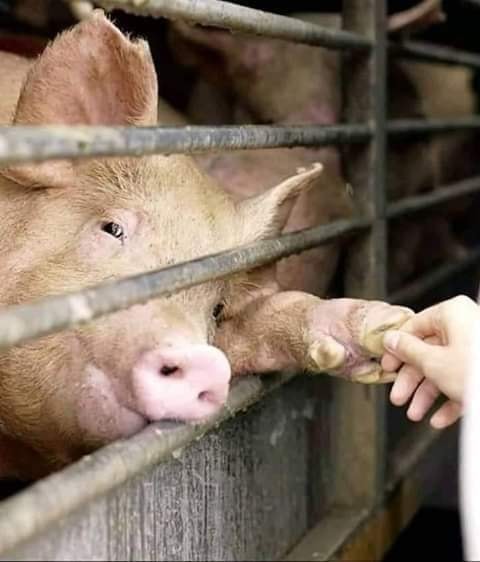
Chickens in dirty cages, pigs that are brought to the slaughterhouse in dark trucks, cats that are abandoned, laboratory animals that suffer from excruciating experiments and never a dear hand caresses them – what else should we say about the suffering of the animals, whatwe haven’t said yet?
For most people it is just one reason to buy the cat Bijou’s favorite food for the day, the pig with no name is still eaten at the restaurant.
Because this society divides animals into edible and inedible.
This year we want to dedicate this day to farm animals.
Where politics have failed the most in every country.
Agricultural crime is an institutionalized crime that systematically acts with impunity.
Governments and EU leaders are responsible for the misery of farm animals. Because they are the lobbyists of the agricultural mafia.
This system works like this everywhere.
Basically, the entire factory farming system violates the law. The suffering of farm animals must finally come to an end.
Despite 15 years of the national goal of animal welfare, the interaction between legislation, enforcement, and jurisdiction does not work in the case of animal welfare offenses.
It is therefore imperative to rethink: we have to fight more massively, smarter, and more directly for animal rights; our fight has to be organized politically, like the fight for human rights back then.
The goal must be the abolition of murders, captivity, and exploitation rather than reform of animal slavery.
Animals don’t need pity, they need rights.
We don’t have any nice words or hopeful pictures to post for the day.
Not even on this day.
We can only take this opportunity to repeat that we will continue to fight for the animals 365 days a year.
Hi,
I am at the California State Capitol right now and I just watched over a dozen of my friends get arrested for asking Governor Newsom to enact a moratorium on new factory farms and slaughterhouses.
Three activists are still on the balcony looking down to get an answer from the Governor. After months of delivering letters asking the Governor to take immediate action, we were forced to take action in their own hands.
Watch the video of activists being arrested and share the action to help us reach Governor Newsom.
Earlier this week, DxE activists chained themselves at the entrance of a massive pig slaughterhouse in California, blocking trucks from coming inside.
Armed security guards assaulted nonviolent activists on lockdown who stood in the way of pigs being slaughtered. Now, the government is ramping up their use of force and sending peaceful protesters to jail.
Instead of punishing nonviolent activists, Governor Newsom could lead the way. We’re calling on him to take the first step toward shutting down this dangerous industry and enshrining rights for all animals.
You can help by sharing today’s action!
Almira, DxE.
Direct Action Everywhere DxE is a global network of activists working to achieve animal liberation in one generation
And I mean…The system is afraid of 17 activists?
Why?
Why aren’t those arrested who steal children’s food in Africa and Asia for the flesh of rich countries?
The financial bandits who plunder and starve Africa, who assist in the murder of thousands of children every day, the murderous oligarchs who are responsible for the cruel factory farming?
Why aren’t they arrested?
Because they are the pillars of this system, it works with them.
This system couldn’t be more criminal, but governments only see the danger in 17 actors demonstrating for animal rights in front of the State Capitol!
Every citizen who passes in front of the Capitol and does not show solidarity, be it out of fear or conviction, should know that he is complicit in the misery of the world, that he is a collaborator with this fascist system, which in the future, not only animal rights activists but will arrest anyone who prevents it from carrying out its mass extermination of humans and animals.
Solidarity to the activists of DxE and we say respect and thank you
1.4 million signatures call the EU to act on farmed animal welfare
1 October 2020
CIWF
Press Release
Today, on World Day for Farmed Animals, the European Commission received the signatures collected across the EU by the End The Cage Age European Citizens’ Initiative (ECI): 1.4 million people are calling on the EU to put an end on the use of cages in animal farming.
End The Cage Age was launched in September 2018 by CIWF in partnership with Eurogroup for Animals, and promoted by 170 NGOs. It closed exactly one year later, having gained over 1.4 million signatures. The ECI easily exceeded the required threshold of 1 million signatures, with a total of 1,397,113 validated signatures across the EU. It also outstripped the minimum number of signatures threshold in 18 EU Member States. This makes the End the Cage Age the:
1st successful ECI on farmed animal welfare
3rd with the highest signature count
6th to succeed among 75 registered initiatives in the last eight years
Today’s hand-in of the End the Cage Age is the culmination of a great effort by 1.4 million European citizens who came together to call on the EU to end the cruelty of confining farmed animals in cages. The massive public backing for the Initiative confirms the overwhelming level of interest EU citizens have in animal welfare. Now, the EU Commission must listen and come forward with substantive legislative proposals to phase out the use of cages in EU animal farming.
Commented Reineke Hameleers, CEO at Eurogroup for Animals.
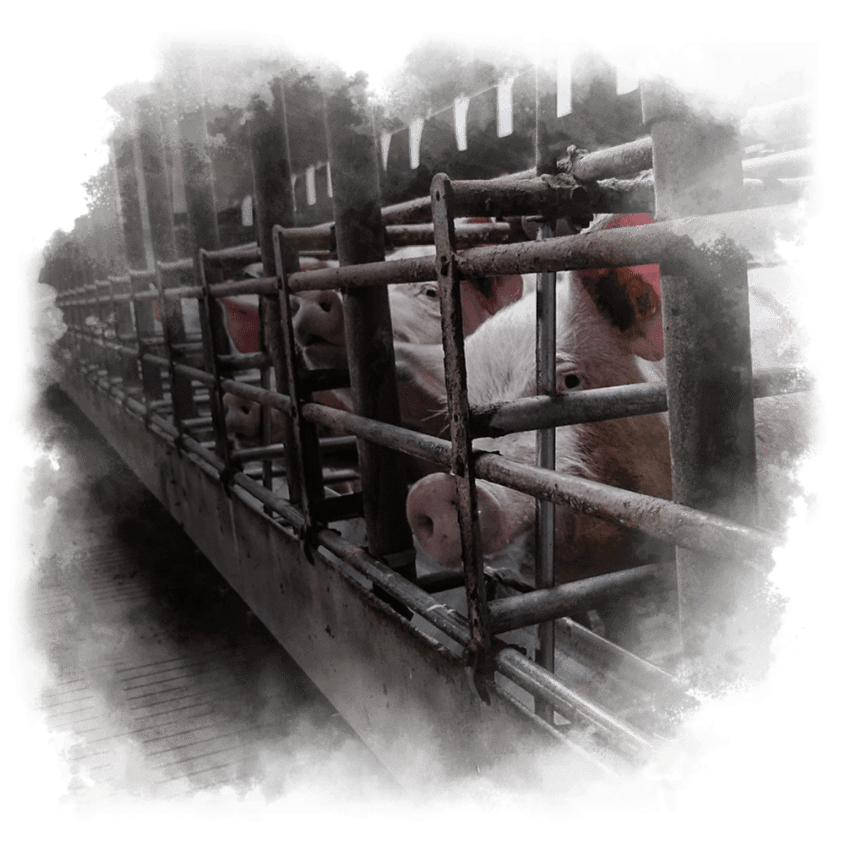
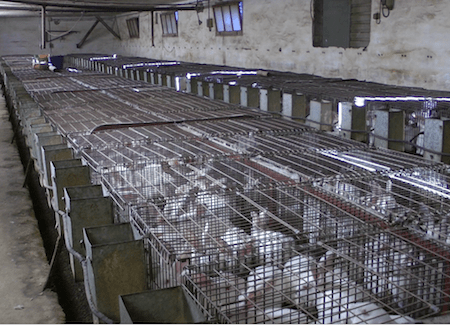
The aim of the End the Cage Age is to end the use of cages for farmed animals across the continent, where over 300 million pigs, hens, rabbits, ducks, quail and calves are imprisoned. Most cages are barren, cramped, and deny animals the space to move freely. Cages are cruel and completely unnecessary since alternatives are available.
Making history for farmed animals has been a collaborative effort, with Eurogroup for Animals joining forces with 170 NGOs from across Europe: environmental, consumer rights and animal protection groups formed a broad-based coalition to rally citizens from every corner of the continent.
Today, we crossed the finish line of the biggest political push in the farmed animal welfare history. We are extremely proud of this collaborative victory. Of all the terrible contraptions used to farm animals, cages are one of the worst. It is high time for the EU Commission to evolve past such cruelty and free farmed animals kept behind bars. A life in a cage is no life worth living.
WAV Comment: I have personally been involved with the Ireland / France live calf issue for many years.During 2010–I worked with Dutch investigator friends at ‘Eyes on Animals’ http://eyesonanimals.com/ , as well as with ‘Animals’ Angels’ (Germany) http://www.animals-angels.de/startseite,en_ORG.html and PMAF (France) http://www.pmaf.org/ to produce a 125 page official investigation report for the EU Legal Affairs team in Brussels, Members of the European Parliament (MEP’s) and UK Parliamentarians (MP’s) – a report which specifically investigated live animal (calves) transport between Ireland and France; the very issue here.
Read more about it; plus a copy of one of the investigation reports, at:
Circulate and sign the petition to ask Stella Line to stop the horrific conditions of transport of calves between Ireland and France.
Ireland is a major milk producer in the EU, which means that many calves are born by the country’s dairy cows. Every year, 100 000s of Ireland’s dairy calves are exported alive and unweaned (about three weeks old) to the European continent, via France for further fattening/veal production in countries such as the Netherlands, Belgium and Spain. The sea voyage often goes from Rosslare in Ireland to Cherbourg in France through the Swedish shipping company Stena Line.
The transport takes place with animal transport trucks and usually takes between 23-29 hours from loading to unloading. During this time, the calves receive no milk substitute, only drinking water. This is a violation of EU Animal Transport Regulation 1/2005, which states that non-weaned calves must be fed at least every 18 hours. The EU regulation’s feed interval in itself is very long, Swedish guidelines are that non-weaned calves should receive milk replacement at least every 8 hours.
The Swedish Animal Welfare Association (Svenska Djurskyddsföreningen) and our partners Eyes on Animals, Ethical Farming Ireland and L214 have since August 2019 repeatedly informed Stena Line that their sea transports of unweaned calves violate EU animal transport rules. We have urged the shipping company to stop accepting these trucks for animal welfare reasons, but Stena Line has chosen to continue the transports. The Irish authorities unfortunately do not seem interested in protecting the calves.
We who sign this petition now call on Stena Lina to stop all maritime transport of calves from Ireland to continental Europe, as long as the EU’s animal transport rules are not followed. We ourselves will boycott Stena Line’s ferries until the shipping company stops the calf transports.
This petition will be handed over to the management of Stena Line by the end of 2020.