Environment Secretary George Eustice said the government was “firmly committed” to tackling environmental “devastation” caused by single-use plastics.
Campaigners welcomed the move but said the items formed only a “fraction” of the plastic waste littering the environment.
Sion Elis Williams, of Friends of the Earth, said ministers “must also do more to challenge our throwaway culture by forcing a shift away from all single-use materials in favour of reusable alternatives”.
Tatiana Lujan, of environmental law charity ClientEarth said straws, cotton buds and stirrers were “some of the most pointless plastics out there” and the ban on them was “a no-brainer”.
But they remained “a tiny fraction” of single-use plastics, she said, adding that countries such as Ireland and France had “shown far more ambition” with targets on reusable packaging and deposit return schemes.
Mr Eustice said the government was “building plans” for a deposit return scheme to encourage recycling of single-use drinks containers.
The summit is supposed to have taken place on 30/9/20. We will produce more on this as post meeting facts are known.
The year 2020 was meant to be a super year for nature and biodiversity, according to the UN. But with swathes of the planet in lockdown, Covid-19 has highlighted the risk of humanity’s unstable relationship with nature, with repeated warnings linking the pandemic with the destruction of ecosystems and species.
On Wednesday, the world will gather to discuss the biodiversity crisis at a virtual summit in New York. The UN secretary general, António Guterres, Prince Charles and the Chinese president, Xi Jinping, will open proceedings. Here is what to look out for.
Will China step up?
Next year China will for the first time host major international talks on the environment – postponed from this year – at Cop15 in Kunming, where the international community will agree a Paris-style agreement for nature. The stakes are high: governments failed to meet any of the UN targets to slow biodiversity loss for the previous decade and the drum beat of warnings about the state of the planet’s health is growing louder. Now the world’s biggest greenhose gas emitter is tasked with using its growing might to corral 196 countries into agreeing a plan worthy of the crisis.
Q&A
What is biodiversity and why does it matter?
Biodiversity is the variety of life on Earth, in all its forms and all its interactions. “Without biodiversity, there is no future for humanity,” says Prof David Macdonald, at Oxford University. It is comprised of several levels, starting with genes, then individual species, then communities of creatures and finally entire ecosystems, such as forests or coral reefs, where life interplays with the physical environment.
Without plants there would be no oxygen and without bees to pollinate there would be no fruit or nuts. The services provided by ecosystems are estimated to be worth trillions of dollars – double the world’s GDP. Biodiversity loss in Europe alone is estimated to cost the continent about 3% of its GDP, or €450m (£400m) a year.
Changes to the climate are reversible, even if that takes centuries or millennia, and conservation efforts can work. But once species become extinct, there is no going back.
China’s modern record on the environment is poor. Rapid economic development and huge infrastructure projects such as the Belt and Road Initiative have come at a huge cost to nature, destroying precarious ecosystems and leaving many cities with severe air pollution. But Beijing is uniquely placed to influence countries eager to follow its development model but distrustful of the conservation-focus approach of some European nations whose wild areas largely disappeared with industrialisation.
“I think China is absolutely critical to the issue of both climate change and biodiversity and land degradation. We are not going to solve these problems without leadership from China,” says Sir Robert Watson, former chair of the Intergovernmental Science-Policy Platform on Biodiversity and Ecosystem Services (IPBES), which informs the UN biodiversity negotiations with the latest science.
Some privately suspect that President Xi will surprise world leaders with another major environmental commitment during his speech at the summit’s opening, just days after he ramped up China’s carbon commitments by pledging to achieve carbon neutrality by 2060.
“They’ve had some really bad examples of land degradation when they deforested the Yangtze basin. Now, as I understand it, they’ve done a fairly significant replanting of trees in the Yangtze basin because it was leading to extreme floods and dust bowls. They also, of course, have terrible air pollution in their cities. I’m somewhat optimistic that China wants to show it is an economic power and play a leadership role in the world,” Watson says.
“I would argue that governments around the world need to work closely with China and see if, collectively, we can move in the right direction.”
The absentees and the reluctant
Summit organisers have been overwhelmed with requests from world leaders to speak on Wednesday. The Indian prime minister, Narendra Modi, Turkish leader Recep Tayyip Erdoğan, South African prime minister Cyril Ramaphosa and Britain’s prime minister, Boris Johnson, are among dozens of leaders jostling to make statements at the oversubscribed event. But the talks will be marked by those who are not scheduled to speak.
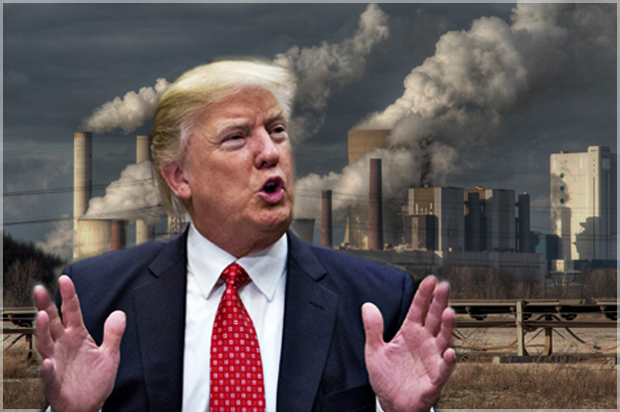
The US president, Donald Trump, will not appear and nobody from his administration is scheduled to address the event. Brazilian foreign minister Ernesto Araújo – who has previously dismissed the climate crisis as a Marxist plot – had been listed to represent his country in the place of president Jair Bolsonaro but the South American leader will now speak.
Russian president Vladimir Putin will not appear, sending the head of the ministry of natural resources, Dmitry Kobylkin, in his place.
All three men oversee vital life-sustaining ecosystems with global significance and Brazil has traditionally been a major player in UN environmental circles through its impressive diplomatic machine.
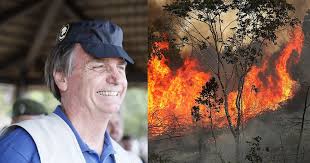
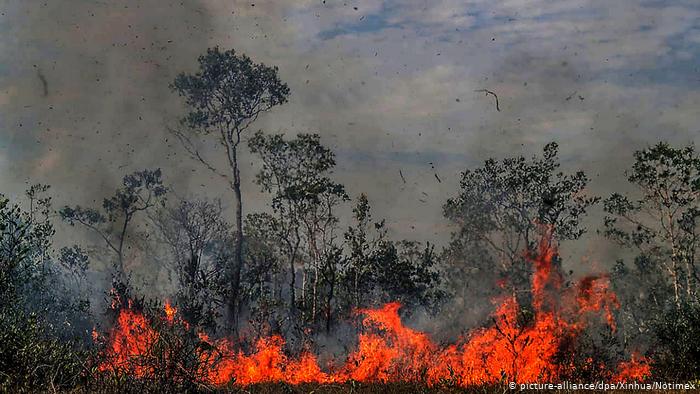
But under Bolsonaro, the Amazon rainforest continues to burn and many fear Brazil’s leader is steering his country towards environmental ruin. Last week the president hit back at the UN general assembly for a second year in a row about how the Amazon has been treated under his leadership, claiming Brazil was the target of a “brutal disinformation campaign”. While the US is not a party to the UN convention on biodiversity, Bolsonaro’s stance on the environment could have a major sway over the final Kunming agreement. Governments will listen to what Bolsonaro has to say with great interest.
One to watch
In between the world leaders, heads of state and royalty, indigenous youth activist Archana Soreng will also speak at the summit’s opening. The member of the Khadia tribe in India is part of the UN secretary general’s youth advisory group on climate change and will be a powerful voice for her generation.
Ambition to protect the planet
Before the coronavirus pandemic disrupted talks, Wednesday’s summit was meant to be the moment international leaders gave their input before negotiators headed to Kunming to thrash out a final agreement. While there is a danger that governments might ignore the environmental targets while grappling to rescue economies and save lives, there is cautious optimism that the opposite has happened.
“Look at the number of governments and states which have registered to make statements. That clearly by itself says something,” the UN’s biodiversity head, Elizabeth Maruma Mrema, told the Guardian. “Noticeable trends have emerged in this period of pandemic and in lockdowns. It has really brought up the voices of many actors we probably would not have seen or noticed.”
Despite the optimism, the ambition of the “Paris agreement for nature” will be reflected in the detail of measurable, targeted actions. As things stand, the draft Kunming agreement has headline targets of protecting 30% of the world’s land and sea by 2030, introducing controls on invasive species and reducing pollution from plastic waste and excess nutrients. Ahead of Wednesday’s summit, 64 leaders and the EU published an ambitious 10-point pledge that many privately hope will bounce other countries into being more ambitious. Watch out for how that translates into statements by countries such as Australia, China and India that did not sign the pledge.
Giving nature a financial value
Expressing nature’s value in financial terms has become a big focus of conservation efforts. With the cost of deforestation, pollution and species extinction absent from most economic models, calculating the economic contribution of ecosystem services that healthy forests, rivers and oceans provide to humanity has helped reframe the conservation debate.
Ahead of the talks, the insurance company Swiss Re calculated that more than half (55%) of global GDP, equal to $41.7tn, is dependent on high-functioning biodiversity and ecosystem services. But the research also found that major economies in south-east Asia, Europe and the US are exposed to ecosystem decline. The EU, Germany, Norway, Costa Rica and the UK are leading efforts to increase funding for nature. But to take meaningful action on the environment, many developing nations with high biodiversity – including Brazil and a number of African countries – want the creation of a global financial system that recognises their ecosystem services.
The UN’s co-chair on the Kunming process, Basile van Havre, who is tasked with combining all of the negotiating positions into a final agreement, said he understood their position.
“I think they’re putting on the table some concerns that need to be heard. There are commodities leaving Brazil and going to other places in the world, and they’re feeding economies in the other places. So, if I buy food items in the supermarket, how do we flow the money back to Brazil to support conservation? I totally understand the need of those local communities.”
While these issues will be sorted in the midnight negotiating hours in Kunming next year, watch for world leaders laying out their countries’ positions on ecosystem services on Wednesday.
The private sector and vested interests
Alongside governments, banks and private companies have announced commitments to protect nature ahead of Wednesday’s summit. HSBC, Allianz and Axa are among 26 financial institutions – representing more than €3tn in assets – calling on world leaders to reach an agreement to protect ecosystem function. Larry Fink, CEO of BlackRock, the world’s largest investor, will also take part in the leaders’ dialogue on harnessing science, technology and innovation for biodiversity.
But like the fossil fuel industry with climate talks, there could be significant pushback from major chemical and agricultural companies that might lose out through restrictions on fertiliser, farming practices and pollution through any agreement. Half a billion dollars of environmentally harmful government subsidies was highlighted as a key failure in the UN report on biodiversity targets.
“The landscape in the private sector is a bit different on nature and that’s one advantage we have,” Van Havre notes. “All that system of agri-food is very active and very worried because their bottom line depends on effective natural systems. They’re very engaged. They’ve learned from their climate change experience. So we’re not dragging them, they’re dragging us.
“It’s a very different world from the energy sector. We’re going to need to feed more people. So if anything, they have a bigger place in the world, it’s just a very different place.”
The summit as a focal point for campaigners
Ahead of the meeting, conservation groups and organisations have fired off a slew of press releases about biodiversity and their campaigning goals. Business leaders and philanthropists have announced increased funding for the preservation of nature alongside foreign ministers.
The Wildlife Trusts has launched a £30m fundraising appeal alongside the UK’s new commitment to protect 30% of land and sea by 2030. Most events have been based around the four-day Nature for Life events, with discussions on the sustainable development goals, business and nature, global ambition and local action.
• This article was amended on 30 September 2020 to reflect an update to the list of leaders expected to address the summit. A caption was also expanded, for avoidance of doubt, to make clear that the sheep photographed were sculptures.
WAV Comment – Morbihan is a department in Brittany, situated in the northwest of France.
New investigation in a cage rabbit farm in Morbihan
29 September 2020
L214
Today L214 presents new investigative images filmed at the end of August 2020 in a cage farm of more than 40,000 rabbits, located in Augan in the Morbihan.
Tomorrow, Thursday October 1, a bill from the Écologie Démocratie Solidarité (EDS) group aimed in particular at prohibiting cage farming will be discussed in the Economic Affairs Committee and voted on in the National Assembly on October 8. This survey concretely illustrates the situation of animals in intensive farming. MEPs will have to say whether or not they support this type of breeding.
The investigation shows terrible images of a large intensive rabbit farm located in the town of Augan, in Morbihan. More than 40,000 rabbits are locked there in small cages on a wire mesh floor. The breeding of nearly 3,000 breeding rabbits (6x more than the French average) who are artificially inseminated every one and a half months.
3 days before insemination, to optimize them, the rabbits are injected with the hormone PMSG, a hormone obtained from the placenta of pregnant mares. Each gives birth to about 9 young rabbits. More than 20,000 rabbits are thus engraved in each cycle.
According to fatality tracking documents, nearly 300 rabbits die at this farm every week.
The covered images of crowded and sick rabbits. Many pharmaceutical products are used routinely. Of all farm animals, rabbits are the animals most exposed to antibiotics.
The post ‘New investigation in a cage rabbit farm in Morbihan’ is modified from an article published by L214 Éthique & Animaux in their original language.
Shocking documentary reveals the cruel reality behind the export of horse meat from Argentina
29 September 2020
AWF
The film that seeks to put pressure on the Argentinian government to immediately ban equine slaughter and the export of horse meat, shows the work of the NGOs Fondation Franz Weber in Argentina, Tierschutzbund Zürich (TSB) in Switzerland and our member Animal Welfare Foundation (AWF) in Germany.
At present, Argentina exports 60% of the horse meat consumed in the world; however, its consumption within the country is prohibited and there are no specific places where horses are raised for this purpose. So where do the 200,000 horses that are slaughtered annually to produce the meat exported to the European Union come from?
Premiering globally today and produced by the multimedia company Posibl, the documentary “Cinco Corazones” narrates the true and cruel reality behind the lives of Argentinian horses, which suffer all kinds of abuse from their birth to the moment of their death.
Equine slaughter has been practiced in Argentina for more than 100 years. Despite the closure of some slaughterhouses that used to carry out these cruel practices, four plants are still EU-approved and export around 10,000 tons of horsemeat to Europe each year.
“Stolen horses, discarded sport horses, mentally and physically destroyed rodeo horses, worn-out blood mares and rubbish-collection horses are collected by dubious horse traders and sold on to slaughter“, says Sabrina Gurtner, project manager of AWF|TSB, who has been investigating the cruel production of horsemeat in South America since 2012. Their dignity is not even respected at the end of their lives, when these horses are slaughtered and transformed into meat, a product destined to enter the European market. “So far, the EU Commission has only stopped the import of horse meat from Mexico and Brazil. Import bans against Argentina and Uruguay must urgently follow”, Sabrina Gurtner calls upon the European Commission.
So far, the EU Commission has only stopped the import of horse meat from Mexico and Brazil. Import bans against Argentina and Uruguay must urgently follow.
Sabrina Gurtner, Project Manager of AWF|TSB
“In 2017, we began a deep investigation that lasted 3 years and revealed the extreme cruelty suffered by horses in Argentina. Cinco Corazones is a film that forces us not to be indifferent to their pain and to redouble our efforts so that these nefarious practices end. Argentinians deserve to know what happens to horses in their own country, and Europeans deserve to know the atrocities hidden in the meat they put on their plates and in their mouths. It is time to say enough and to allow this noble animal to live in a noble society too”, says Martin Parlato, CEO & Founder of Posibl. and Director of the film.
The film shows shocking images of the equine slaughter and of what happened in the “field of horror” in Ezeiza. It narrates about the theft of horses, the complicity of the authorities and the cruel business of blood farming for eCG production. As stated by the Argentinian actress and animal rights defender Liz Solari, who also provided the voice-over for the documentary: “Cinco Corazones is a documentary that awakens, disturbs and deeply shocks you. It is essential to see it”.
In turn, the film also shows the work of activists and various NGOs based in Europe and Argentina, who have worked for years to obtain a ban on equine slaughter for human consumption abroad.
“The horse today is the victim of all kinds of abuses based on the absolute denial of its natural ethology. Locked in pits, living in isolation, used for work, they end their lives most of the time bled to death in a slaughterhouse and their body in pieces displayed in the shelves of European supermarkets… There is nothing worthy in the deal that we give them. Abolishing equine slaughter would be a fundamental step to give back these animals what we took from them. And it would prevent hundreds of thefts of horses that are sold to slaughterhouses”, expressed Alejandra García, Director of the Equidad Santuario and Director of Franz Weber Argentina.
I have personally been involved with Live horse exports to Europe for slaughter; hidden under the guise of ‘going for riding’. We (Carla and I) presented all our investigative evidence to the UK government in London.
Above – Wonderful Carla
I still have all the data and the evidence of this corrupt system that the investigations unfolded; betrayed Britsh horses who were (allegedly) ‘exported for riding’ whilst actually were being exported for their meat and their obvious resulting deaths. It is hard to stand and witness these beutiful animals going through the ports when you know what will happen to them; despite the bullshit which is put out by government departments to the contrary.
… including a poem I wrote on the return of an investigation; something had to be written down for the beautiful horses that were being abused and betrayed; literally to their deaths !
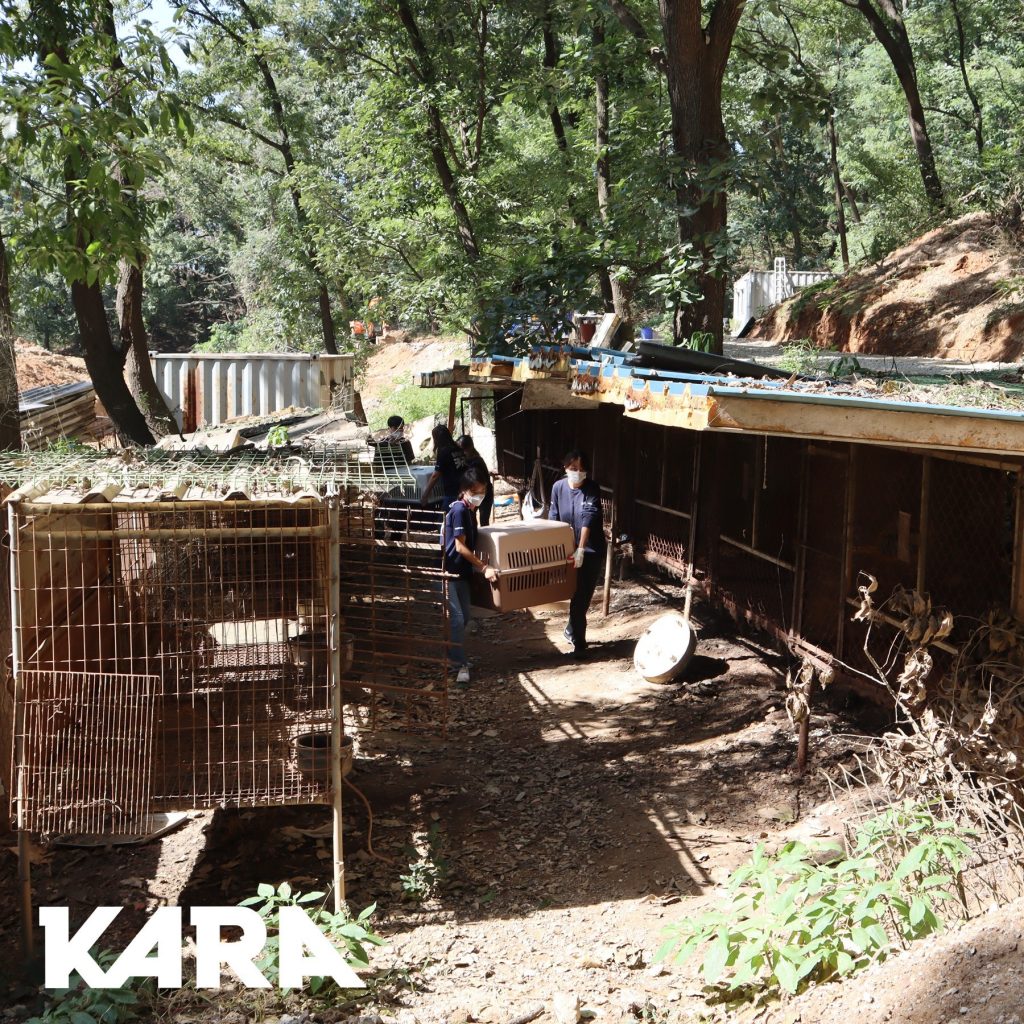
Odo-dong dog farm in Paju was operated by an illegal pig farmer who fed animals nauseating food wastes. This dog farm was not even identified by the city of Paju when the first African Swine Fever outbreak occurred last year in South Korea.
After inspecting the dog farm, KARA paid a visit to Paju City Hall and strongly protested the fact that the site, which was feeding animals with unknown food wastes, was becoming a serious quarantine problem. We also complained that leaving the dogs unattended obviously constituted animal abuse. Paju, however, responded that there was no abuse at the site and the dog farms were not subject to quarantine. Meanwhile, the dogs continued to disappear.
It was only when people, supporting KARA, began to file e-People petition complaints that the City of Paju began to take action. KARA was finally able to go to the site yesterday with a city official and get a waiver of ownership of the dogs, and at last rescue the remaining seven dogs.
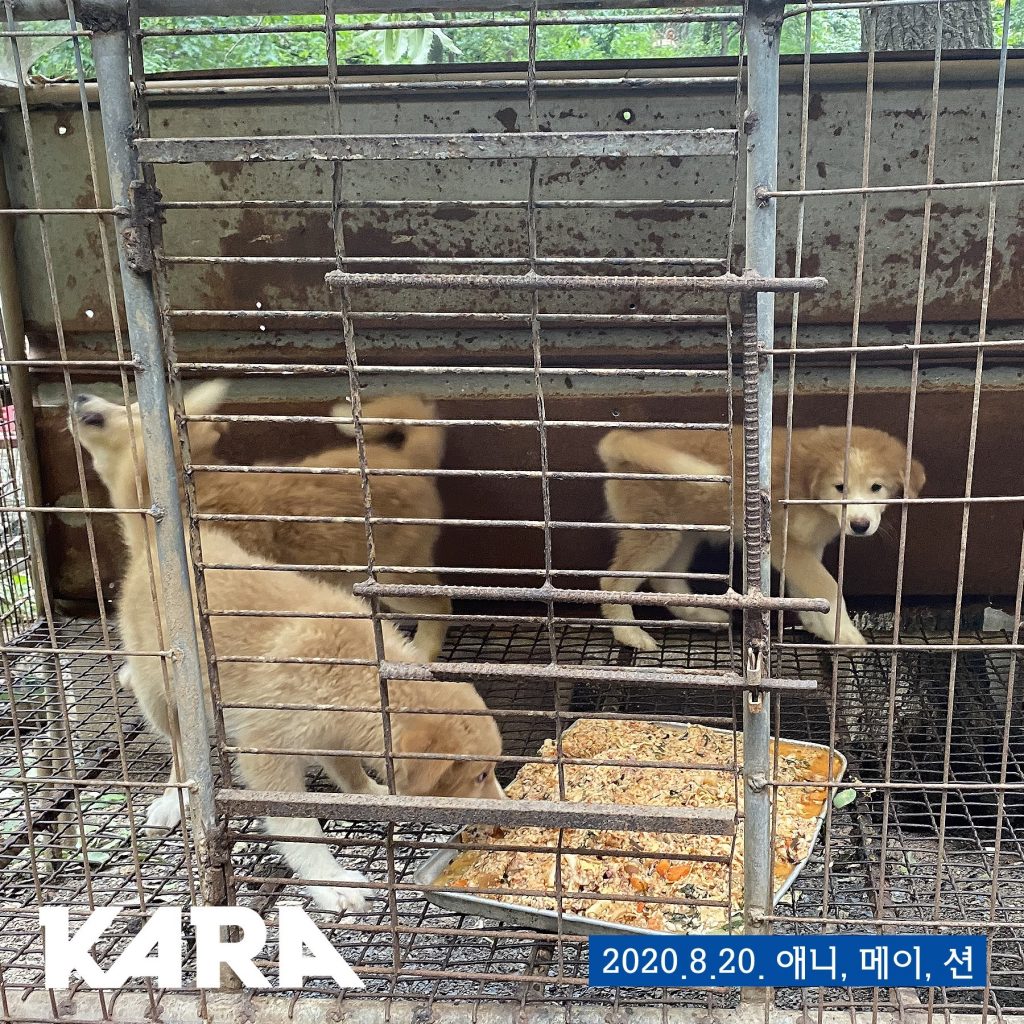
Three of the dogs rescued were siblings about 4 months old – brown haired Annie, May, and Sean. Each time we visited the dog farm in the past, these three young puppies had been left eating disgusting food waste, locked in a raised wire cage, without a sip of fresh water to be found.
Dark-haired Judy, Bonnie, and Hobbs also look like siblings. They are estimated to be between one and two years old.
Bobby, appearing to be about eight years old, is the oldest dog rescued yesterday. His teeth are severely worn, presumably because he had been biting on the iron bars of the cage for a very long time. How long had it been since Bobby had been dragged to that dog farm and locked in a cage biting at the iron bars until his teeth were worn down? The poor animal also had a wound on his leg, likely from the sharp wires sticking out all over the inside of the cage.
After their rescue, Annie, May, Sean, Judy, Bonnie, Hobbs, and Bobby were given baths and received medical care. They no longer have to eat rotten food waste. They don’t have to lick their wounds or gnaw at the iron bars of the cage.
Dozens of empty spaces were found at the rescue site. The owner himself admitted that before he was caught there had once been dozens of dogs on the farm, and that they had been sold as “dog meat.” The dog farm in Odo-dong has now been closed down.
And yet, there are still too many dog farms in Paju alone, and the city persists in responding passively. KARA will continue to speak out until the final demolition of the cages left at the Odo-dong site; until the fate of the missing dogs has been determined; and until the Paju administration reverses its passive attitude.
We’ll be back with more details on the seven rescued dogs. We ask for your support to provide for the futures of Annie, May, Sean, Judy, Bonnie, Hobbs, and Bobby, who have been saved thanks to the actions of many caring people.
KARA is an animal rights group that has received perfect scores in non-profit transparency evaluation and is fully committed to honest donation management through external accounting audits.
We now have a bit more clarity on what exactly is going to happen.
France to ban use of wild animals in circuses, marine parks
France’s environment minister has announced a gradual ban in the coming years on the use of wild animals in travelling circuses and on keeping dolphins and killer whales in captivity in marine parks
PARIS — France’s environment minister has announced a gradual ban on using wild animals in traveling circuses, on keeping dolphins and killer whales in captivity in marine parks and on raising mink on fur farms.
Barbara Pompili, France’s minister of ecological transition, said in a news conference Tuesday (29/9/20) that bears, tigers, lions, elephants and other wild animals won’t be allowed any more in travelling circuses “in the coming years.”
In addition, starting immediately, France’s three marine parks won’t be able to bring in nor breed dolphins and killer whales any more, she said.
“It is time to open a new era in our relationship with these (wild) animals,” she said, arguing that animal welfare is a priority.
Pompili said the measures will also bring an end to mink farming, where animals are raised for their fur, within the next five years.
The ban does not apply to wild animals in other permanent shows and in zoos.
Pompili did not set any precise date for the ban in travelling circuses, saying the process should start “as soon as possible.” She promised solutions will be found for each animal “on a case-by-case basis.”
The French government will implement an 8 million-euro ($9.2 million) package to help people working in circuses and marine parks find other jobs.
“That transition will be spread over several years, because it will change the lives of many people,” she said.
After decades of massive pressure from PETA and other activists, Nordstrom has just announced that it will stop selling fur and exotic skins!
PETA’s campaign urging Nordstrom to go fur-free started back in the 1980s—when we made it a major target for Fur-Free Friday. The company dropped fur from its own line in 2006 but continued to sell fur in clothing from other brands, including Canada Goose’s coyote fur–trimmed jackets. PETA supporters took tens of thousands of actions to urge Nordstrom to ban fur.
The company’s decision to drop exotic skins follows PETA investigations exposing the cruelty involved in every alligator-skin watch and snakeskin purse as well as a trend in which companies like Calvin Klein and Chanel have gone exotic skins–free.
If you’ve ever taken a stance against the cruel fur and exotic-skins industries, you’re a part of this victory—so thank you!
Please take a moment to thank Nordstrom and urge it to go even further—by eliminating wool, leather, and all other animal-derived materials.
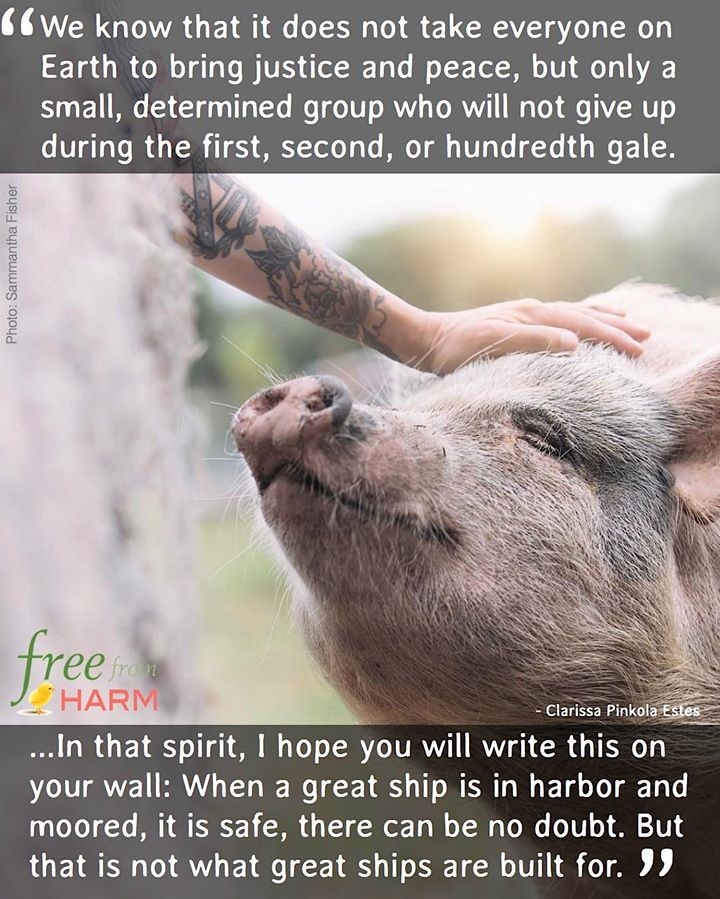
We will never end to fighting for animal rights, for the abolition of animal slavery!
We know: who fights can lose.
Who does not fight has already lost.