People Are Ditching Meat ‘More Rapidly Than Thought’ New Research Finds
‘Our research findings may come as a surprise to many…it identified a new class of casual consumer who are reducing their meat consumption much more rapidly than thought’
People across Europe are reducing their meat consumption ‘much more rapidly than thought’, according to new researchpublished by New Food Magazine.
Dutch firm ingredients firm Griffith Foods has undertaken a Pan Europeansurvey looking into consumer behaviour, polling around 4,000 people in the U.K, Germany, France, and the Netherlands.
The organization says the emerging flexitarian market – of people who actively want to reduce their meat intake and try alternative proteins – is larger than previously thought.
Demand for meat-free food
The survey found that consumers want more ‘adventurous’ vegan and veggie options made available – with different cuisines including Asian and Mediterranean on offer rather than just standard veggie burgers.
When it comes to meat alternatives, flexitarian shoppers are seeking products with a more meat-like texture than many of the options currently available.
‘Much more rapidly than thought’
“Our research findings may come as a surprise to many, especially as it identified a new class of casual consumer who are reducing their meat consumption much more rapidly than thought,” said Wim van Roekel, president, Griffith Foods, Europe & Africa, said. https://699ea66e9c4b36ecceec62001322af8f.safeframe.googlesyndication.com/safeframe/1-0-37/html/container.html “That has major implications for food retail manufacturers and producers, and their response to capture and cater to this newfound mass market.
29/9/20 – Breaking News from the Fur Free Alliance
WAV Comment – we have just had this news in and we want to immediately share it with you.
The transition period is stated as 5 years; but we know with experience from the Netherlands and Poland; we feel eventually it will be a very much shorter time – given Covid and the rest.
Even better; it seems that a ban on wild animals in circuses is also to be included in the legislation.
BIG Congrats to all the crew at the FFA – another victory to rid the world of barbaric fur farming.
FRANCE, 29 SEPTEMBER 2020 – In a historic move, this morning the French minister of Ecological Transition announced to prohibit fur production. The decision follows a recent expose from our French member One Voice of the hideous conditions on France’s last 4 remaining fur farms.
The ban on fur farming will go into force after a 5-year transitional period. Besides the prohibition of fur production, the announced measures also include a ban on wild animals in circuses.
Muriel Arnal, CEO of French animal protection organisation One Voice, says:
“What a hard fight… thanks to all our partners in the Fur Free Alliance for their help in the last moments. We finally have a ban. But it will take place in a very long time compared to the Netherlands. With only 4 remaining farms we expected a much stronger announcement. We will keep on fighting to close down these 4 farms before the deadline set by the ministry of Ecology.”
Last week Fur Free Alliance member organisations around the world urged the French government to take immediate action and shut down France’s last remaining fur farms.
Read our joint letter to French Minister Pomili here.
Recent investigations on French fur farms, recorded in 2017, 2019 and once again in 2020, revealed shocking examples of animal suffering, including mink with physical injuries kept in appalling conditions and displaying stereotypical behaviour. Some of them had injured eyes, missing teeth, missing tails, paralysed and necrotic legs, and skin diseases.
Together with OneVoice we call on the French government to speed up the transitional period and prohibit fur farming at the earliest opportunity.
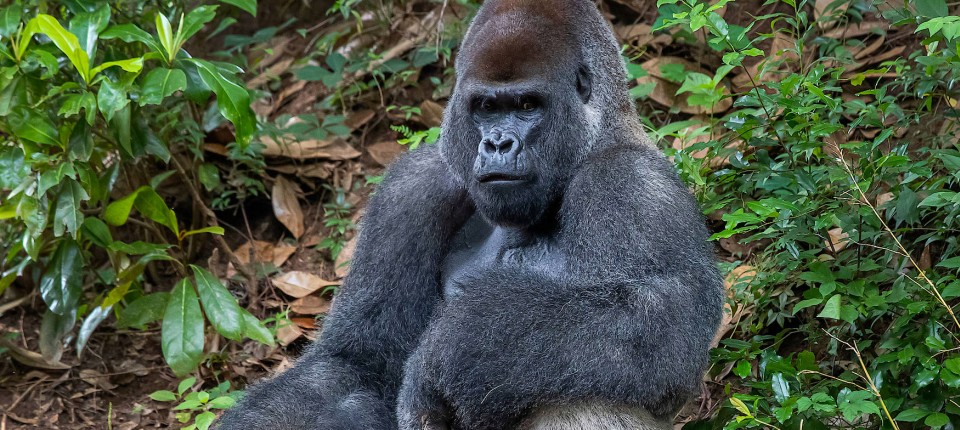
A male gorilla attacked and seriously injured a zookeeper at Madrid Zoo.
The 46-year-old suffered head trauma on Sunday, open fractures in both arms and various injuries to the torso said the zoo in the Spanish capital. The experienced employee is being treated in the hospital and her health is serious.
According to the information, the woman was suddenly surprised by the 29-year-old male gorilla “Malabo” in the morning during routine work in the enclosure.
The zoo team intervened quickly, removed the approximately 200 kilograms silverback from the victim, and immobilized the animal with an anesthetic arrow.
“Malabo” is very popular with the keepers of the zoo, said a zoo spokeswoman for the TV channel “La Sexta”.
As to the cause of the incident, the zoo announced that security doors had been left open and that everything indicated a human error.
We expect Malabo’s immediate release.
It was a human error indeed, the arrest of the innocent Malabo 29 years ago and his life imprisonment.
This mistake needs to be corrected.
The only innocent man is Malabo, the prisoner of the Madrid Zoo.
We show solidarity with him
Read more about our work here under the ‘Serbian Animal Voice’ label. After the exports were exposed, the Serbian government denied it all; and issued threats to all those involved with the expose. Serbian animal shelters were even threatened with closure !. We stuck our ground and in the end proved that the sheep exported to Isreal had originated with approval in Serbia. Read the following (SAV) links below for more. Note – we (WAV) still operate SAV in conjunction to WAV, which is now the prime site.
EP Animal Transport Committee meet for the first time
28 September 2020
The ANIT-Committee has not yet published a timetable for upcoming activities but among the important next steps to take will be the appointment of the rapporteur and the shadow rapporteurs of the investigation report.
Almost half of ANIT’s 30 Members and 25 substitutes are also Members of the EP Intergroup on the Welfare and Conservation of Animals which was a driving force in calling for its creation. The Committee of Inquiry was established by a very large majority during the EP’s plenary session in July 2020 upon a request presented by 181 MEPs to the Conference of Presidents (EP President and leaders of political groups in the House).
The Committee’s main objective will be to look into alleged violations in the application of European Union law governing live animal transport both within and outside the Union. For this, they can consult experts and stakeholders and invite them for public hearings or carry out themselves study trips (COVID-19 pandemic allowing) to see the situation on the ground. The results of the inquiries and assessments will be the basis for an investigation report which will be adopted at the end of ANIT’s one-year mandate. This report can be used as a source document for the urgently needed revision of Council Regulation (EC) No 1/2005 on the protection of animals during transport and related operations.
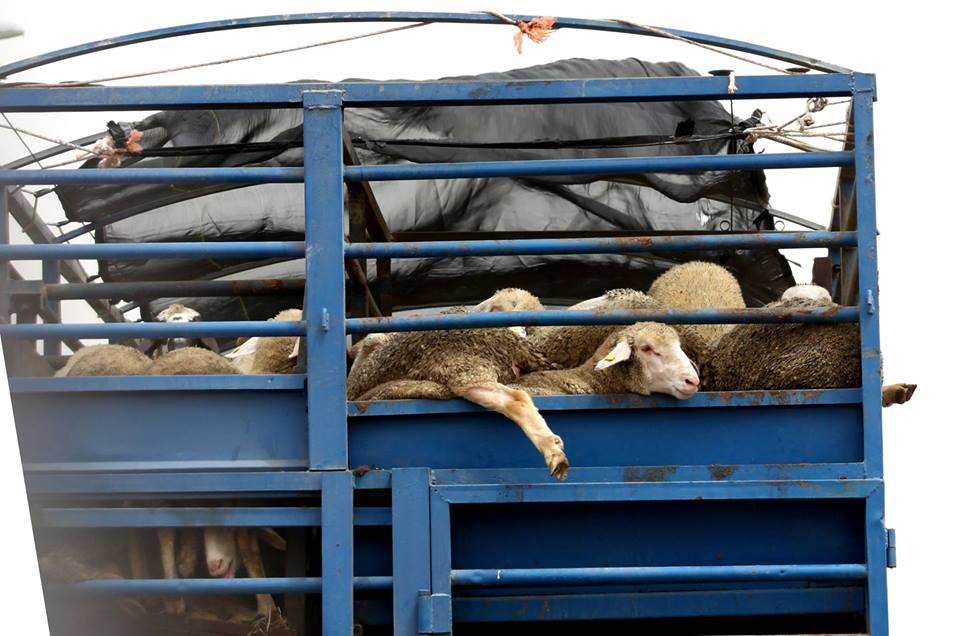
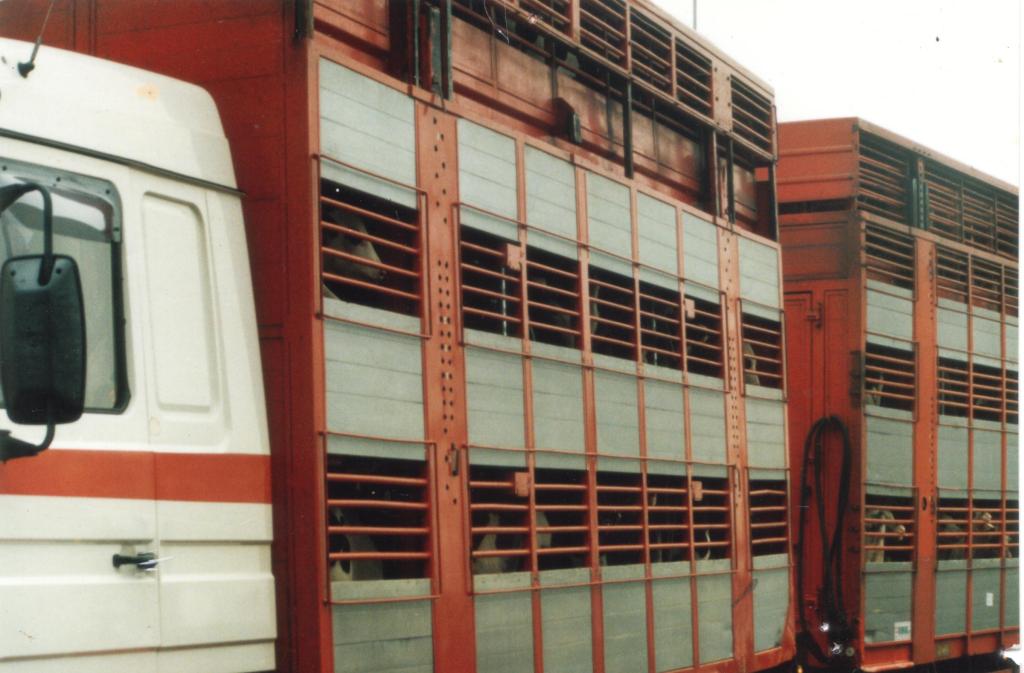
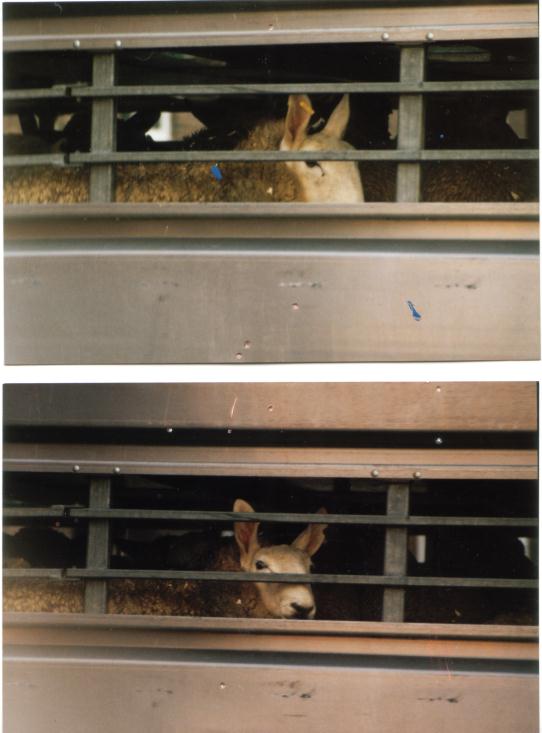
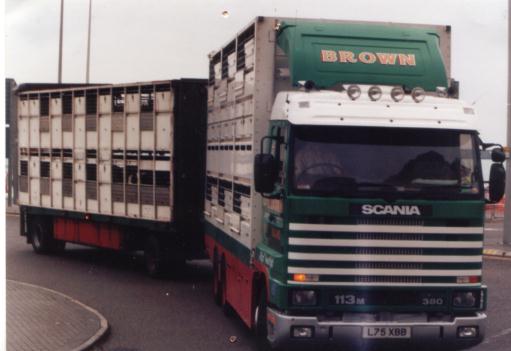
Photo – Sheep being exported – Mark
The ANIT-Committee has not yet published a timetable for upcoming activities but among the important next steps to take will be the appointment of the rapporteur and the shadow rapporteurs of the investigation report.
This report, drafted by Animal Welfare Intergroup Member Jørn Dohrmann MEP (ECR, DK), was adopted at the end of the last Parliamentary term. It specifically recommends in its article 22 that the “Parliament establishes a committee of inquiry on the welfare of animals during transport within and outside the EU as from the beginning of the next parliamentary term in order to properly investigate and monitor alleged contraventions and maladministration in the application of Council Regulation (EC) No 1/2005 on the protection of animals during transport. The current ANIT Committee is therefore also a consequence of this recommendation expressed by the EP during the former term.
Dogs and cats killed in Dubai for the Expo: LNDC writes to the Ambassador
28 September 2020
LNDC
Removing strays animals from the streets of Dubai to take them to the desert to die: this is the decision of the Government of the United Arab Emirates which sparked protests from local and global animal rights activists.
Next year the city of Dubai will host the Expo, postponed to the next year due to the pandemic. In view of this important event, the government of the United Arab Emirates has begun a real round-up of all stray animals in order to “clean up the streets”. The captured animals are transferred to facilities that however have problems of capacity and therefore leave the animals in excess in the desert to die of hunger and thirst. This is what some local activists have denounced in recent days, even launching a petition to try to stop this massacre.
“I wrote a letter to the Ambassador of the United Arab Emirates in Italy to express my indignation for this decision” says Piera Rosati – President of our Italian member LNDC Animal Protection. “The UAE has a serious stray problem and I have pointed out that this is not the correct way to handle it. Abandoning cats and dogs in the desert to make them die will certainly not give an image of an efficient and clean country as it is in their intentions, but only of incivility and cruelty. The only right way to combat stray dogs is to activate serious and concrete sterilization programs, to encourage adoptions and to educate the population”.
“Unfortunately, the practice of culling stray animals is also common to several European countries although it is carried out by euthanasia. In this, it must be said that – thanks to the battles carried out in recent decades by LNDC and other animal welfare associations – Italy is a model of ethics given that euthanasia is only allowed in cases in which animals are incurable or proven danger. In this regard, we launched a debate on this topic within the Eurogroup for Animals, an organization that brings together the main European protectionist associations, in the hope of being able to lead the Italian example throughout Europe and put an end to the unjustified killing of animals. company at least in our continent ”, concludes Rosati.
The only right way to combat stray dogs is to activate serious and concrete sterilization programs, to encourage adoptions and to educate the population.
Piera Rosati, President of LNDC Animal Protection
The post ‘Dogs and cats killed in Dubai for the Expo: LNDC writes to the Ambassador’ is modified from an article published by Lega Nazionale per la Difesa del Cane in their original language.
WAV Comment: we think this is UK only at present; but will no doubt expand globally; if any are left !
Meat-Free Giant Quorn Launches Vegan Pepperoni
The veggie brand says its latest product has a ‘delicious smokey flavor’ and is ‘perfect’ in wraps, sandwiches, and on pizza
SEP 27, 2020
Meat-free giant Quorn has added vegan pepperoni to its deli range.
The plant-based slices, which are free-from gluten and soy, are available in select Sainsbury’s stores across the U.K – retailing at £2.20 for a 100g pack.
‘Delicious smokey flavor’
According to Quorn, its vegan pepperoni is ‘perfect’ in wraps, sandwiches, and on pizza due to its ‘delicious smokey flavor’.
The brand did use to offer a vegetarian pepperoni which contained egg and cow’s milk – but it is now ‘unavailable’ on Sainsbury’s website.
A Mercy For Animals investigator went undercover at a U.S. egg factory and found live hens kept in tiny cages with decomposing birds, animals with open wounds, and chickens so calcium deficient they laid eggs without shells.
The investigator describes appalling conditions in dark, windowless sheds, which can be as long as a football field. Here, hundreds of thousands of chickens are forced to live for more than a year—nearly the entirety of their short lives. They are kept in cages so small that they cannot even spread their wings or move without stepping on other birds. In the United States, the vast majority of egg-laying hens are kept in tiny cages just like the ones in this video.
Hens like these have been bred to lay far more eggs than their wild ancestors ever would, laying one egg nearly every day. In fact, the average commercial egg-laying chicken in the United States lays 294 eggs a year, while their direct ancestors, the red junglefowl, lays just 10 to 15 a year.
Laying so many eggs depletes the hens’ bodies of calcium, needed to form eggshells. As a result, their bones often become brittle, and some birds have so little calcium left in their bodies they lay eggs without shells. The investigator said, “I witnessed many hens with broken bones or open wounds but saw none of them receive individual veterinary care.”
Many chickens do not survive the horrific conditions. Those who die are left to rot in the tiny cages, and live hens are forced to stand on or against the decomposing bodies.
At the end of their short lives, the birds are violently removed from their cages, carried upside down by their legs, and stuffed into cages for transport to slaughter. Chickens are sensitive, complex individuals capable of empathizing with their peers and creating strong friendships. Despite this, hens in factory farms are treated like unfeeling objects.
In addition to extreme neglect, disease prevention in the egg factory was not taken seriously. One of the most basic biosecurity measures in agriculture is to step through a tray of disinfectant before entering a building with live animals, yet the investigator “observed workers routinely bypassing the disinfectant tray.”
To make matters worse, the U.S. government recently announced it would stop requiring full-time government inspectors in plants that process egg products, meaning inspectors will visit a plant only once per shift. This decrease in oversight could pose serious risks to food safety.
The U.S. Department of Agriculture’s misleadingly named Wildlife Services program kills more than a million wild animals every year, typically at the request of Big Ag. Scattering public lands with cruel traps and indiscriminate poisons, the program targets carnivores like coyotes, bears, beavers, otters and foxes. Even rare species like grizzlies and wolves are caught in the crosshairs.
We’ve been working for years to shine a light on the feds’ wildlife-killing and have succeeded in gaining protections for wildlife in several states.
The presentation will feature our Carnivore Conservation Director Collette Adkins and Andrea Zaccardi, a senior attorney in our Northern Rockies office.
In addition to talking about Wildlife Services, we’ll discuss the latest news on grizzly bears and wolves, including the expected loss of wolf protections nationally and the importance of state-level wolf work if that does occur.
The hour-long webinar starts at 4 p.m. PT / 7 p.m. ET.
Adam Hollingsworth, Chicago’s so-called “Dreadhead Cowboy,” used a 20-year-old horse as a prop while staging a protest on the Dan Ryan Expressway during rush hour. The stunt, which went on for seven miles, left the senior horse so exhausted that she collapsed. Hollingsworth is facing felony animal cruelty charges because his horse, NuNu, was injured badly enough during the incident that it was initially believed that she would have to be euthanized.
This stunt is unacceptable and Hollingsworth needs to pay for the pain and suffering that he inflicted on this horse!
Please sign this petition asking for Adam Hollingsworth to receive the maximum sentence for his felony aggravated animal cruelty charge!
—————————————————-
Adam Hollingsworth chose to ride the 20-year-old horse, without oroper shoes, for seven agonizing miles on the expressway. By the time the publicity stunt was over, NuNu had collapsed on the pavement in utter exhaustion. Cook County Assistant State’s Attorney Kevin Deboni described the horse’s condition in a Fox 32 News piece, stating that she was, “overheated, dehydrated, bleeding from the hooves, and with eyes so dilated they resembled ‘cartoon eyes.'”
Cook County prosecutors equated what Hollingsworth did to NuNu to forcing an 80-year-old woman run a full marathon.
Hollingsworth could have chosen a humane way to protest. He could have walked the Expressway on his own feet, but instead, he put an ill-fitting saddle on an old horse who wasn’t fitted with proper shoes. Witnesses have stated that he whipped NuNu when she was too tired to go on, and he continued riding her until she fell to the ground in utter exhaustion.
Animal Care workers initially believed that the ailing horse would not survive, but she is still alive and has been moved to an Illinois horse farm where she is recovering from the incident. Though she is reported to be out of critical condition, it has been stated that she was injured badly enough that she can never be ridden again.
Hollingsworth’s behaviour is unacceptable. Please sign the petition asking for maximum punishment for the felony aggravated animal cruelty charge, and an order for Hollingsworth to be prohibited from owning horses!
Above – A sickly young woman sits covered up on a balcony; death (a ghostly skeleton clutching a scythe and an hourglass) is standing next to her; representing tuberculosis. Watercolour by R. Cooper, ca. 1912. Credit: Wellcome Collection
As always; the ‘Guardian’ (UK national press) produces some superb articles about animals and environmental issues.
The only way we can really reproduce the article on farm animal pandemics is to provide the link and then to let you click and read for yourself.