https://scarydairy.org.uk/

More great news from the USA – Mark.
Posted by Carly Day | May 5, 2019

Image Credit: Pixabay/Skeeze
The Minnesota House of Representatives has voted in support of a bill that would ban the cruel sport of recreational wolf hunting in the state.
Although the bill narrowly pushed through with a 66-65 vote, the victory was unexpected in this largely pro-wolf hunting region.
Representative Peter Fischer introduced the amendment to an environmental bill, stating that wolves are an important species for Native American tribes and should not be hunted for sport.
Since 2014, federal law has banned wolf hunting in Minnesota (and most other states). However, a recent proposal by the US Fish and Wildlife Service to delist gray wolves from the Endangered Species Act could change that. If wolves are delisted, each state would manage their own populations, and hunters could be allowed to needlessly slaughter these graceful animals as early as 2020.
Most areas of the United States classify gray wolves as endangered; however, Minnesota, which has an estimated gray wolf population of 2,650, lists them as threatened.
While gray wolf populations are gradually recovering, they are still only present in about five percent of their historic range, and conservationists say that it’s far too early to consider removing protections.
Although the bill still needs to progress through the Senate, it is a promising first step in ensuring one of the United States’ most iconic species continues to be protected from trophy hunters.

Dear Mark,
In most of the range where gray wolves once lived, played, and roamed, no one has heard a wolf howl in decades.
Once driven to the brink of extinction, only about 6,000 remain in the lower-48 states. Yet the Trump administration has proposed to strip wolves of their vital Endangered Species Act protections.
Gray wolves could once be found across the country — until the mid-20th century, when a massive government-sponsored program eradicated almost every gray wolf in the lower-48 states.
When the Endangered Species Act passed in the 1970s, the unmitigated slaughter of gray wolves ended, and the U.S. Fish and Wildlife Service was charged with their recovery.
Gray wolves could once be found across the country — until the mid-20th century, when a massive government-sponsored program eradicated almost every gray wolf in the lower-48 states.
When the Endangered Species Act passed in the 1970s, the unmitigated slaughter of gray wolves ended, and the U.S. Fish and Wildlife Service was charged with their recovery.
Although wolves have made progress in some areas, they are still missing from significant parts of their historical range. But instead of helping wolves fully recover, the Fish and Wildlife Service has been trying to cut them loose for the better part of a decade — and now, the Trump administration plans to let that happen.
It’s heartbreaking to think we might have saved the gray wolf from extinction just to wind up here. The Trump administration is doing the bare minimum for gray wolves before yanking away the critical protections they need to fully recover.
NRDC has fought in court to protect gray wolves before — and we’ve won. And we’re prepared to file suit again to give wolves the chance at recovery that they deserve.
But Mark, we’re currently embroiled in dozens of other active cases against the Trump administration, too — and we urgently need your help to ensure we can respond swiftly and forcefully as soon as protections for gray wolves are stripped away.
For the last few years, we’ve beat back a record number of threats against endangered species, from rusty patched bumble bees and giraffes to elephants and North Atlantic right whales. Responding to these mounting attacks requires unprecedented resources — but we can’t slow down. Not when so much is at stake.
Today, you can do twice as much to help make sure we stand strong, no matter what. Thank you for helping safeguard the earth — its animals, its plants, and its people.
Sincerely,
Dr. Sylvia Fallon
Senior Director for Wildlife, NRDC
I have given today to protect endangered species in the USA.
Can you do the same ?- please help.
Dear Mark,
Thank you for making a tax-deductible donation to support NRDC and our campaign to save endangered species from extinction. We have processed your donation, and the transaction information is below. We appreciate your generous gift at this critical time.
To do even more to protect wildlife, please encourage your family and friends to join you in supporting this critical campaign.
Sincerely,
NRDC
No goods or services were provided to the donor, and thereby the entire gift is 100% deductible for federal income tax purposes.
|
|
| By Rachel Krantz – May 8, 2019 |
In some hopeful news for farmed animals, Washington governor Jay Inslee signed a new law this week that will end all cage confinement of hens in the state by 2023.
This historic win is the strongest protection for farmed animals that any state legislature has passed to date. Banning the production and sale of eggs from hens in cages will benefit about 8 million hens each year once it takes effect.
While hens used for eggs in factory farms suffer immensely, cage confinement is particularly cruel. In cage facilities, each bird is forced to spend her life on floor space smaller than an iPad, leaving her without room to even spread her wings. Washington’s new law will address this torture by prohibiting cages and requiring more space per bird, as well as mandating that hens be given some opportunity to exhibit more natural behaviors, with perches and areas for nesting, scratching, and dustbathing.
The new law was passed in large part due to the advocacy of The Humane Society of the United States, which collaborated with both Democratic and Republican legislators and key stakeholders in the agricultural sector. It’s a hopeful sign and builds on the work that the HSUS and other groups, including Mercy For Animals, have done to pass ballot measures in California and Massachusetts banning the production and sale of products from animals kept in the cruelest confinement systems.
Hopefully, this victory in Washington is an indicator that more forward-thinking state legislatures will be open to passing similar laws.
If you’d like to be part of this progress, there are two simple but effective steps you can take right now. The first is to join Mercy For Animals’ Hen Heroes so you can receive easy call-to-action emails for all our campaigns, complete with links to tweet, sign petitions, or send emails. (I do the action every day—it literally takes less than a minute, but it never fails to make me feel a little more hopeful and productive for animals!)
The second is to join our campaign asking McDonald’s to agree to less inhumane welfare standards for chickens raised for meat in its supply chain. Sign the petition here, and find out how you can get more involved here. (If you join Hen Heroes, you’ll receive more ways to add your voice to this campaign.)

One giant leap for animal welfare.
H&M is taking a stand against the unethical animal practices still prevalent within the production of clothing.
According to a recent investigation conducted by PETA Asia, this brutality – in the name of fashion – has become even more evident.
From this investigation, a disturbing video has surfaced which appears to expose the cruel realities of cashmere production in China and Mongolia – the world’s two largest cashmere exporters (they supply 90 per cent of it).
The video – showcasing the violent makings of the cashmere jumper – seems to reveal the vile mistreatment of animals, showing goats screaming in pain as workers proceed to tear out their hair with sharp metal combs. More explicit footage appears to capture the inhumane practices within slaughterhouses, where the goats’ throats are slashed in front of the others, while those who are deemed unprofitable are hit in the head with a hammer.
Following PETA’s release of this research, fast-fashion giant H&M has announced that it will be boycotting conventional cashmere and will cease placing orders on the material by the end of 2020. On the brand’s site, you’ll find an outline of H&M’s 2030 goal, which promises ‘to only use sustainability-sourced materials’, with an immediate plan ‘to gradually phase out conventional cashmere’.
Just last year, ASOS updated its animal welfare policy, banning materials like fur, silk, mohair and also cashmere – a move prompted by a discussion with PETA.
It’s time for more fashion brands to follow suit.

A new PETA Asia investigation into the cashmere industry in China and Mongolia – the world’s top cashmere exporters – reveals extreme cruelty to and violent killing of cashmere goats.
The video exposé shows goats screaming in pain and fear as workers tear their hair out. Later, their throats are slit at abattoirs and they’re left to die in agony. Goats suffered on every farm in China and Mongolia visited by the eyewitnesses.
Together, China and Mongolia produce 90 per cent of the world’s cashmere.
Eyewitnesses saw workers hold down and step on frightened goats, bending their legs into unnatural positions as they tore out their hair using sharp metal combs.
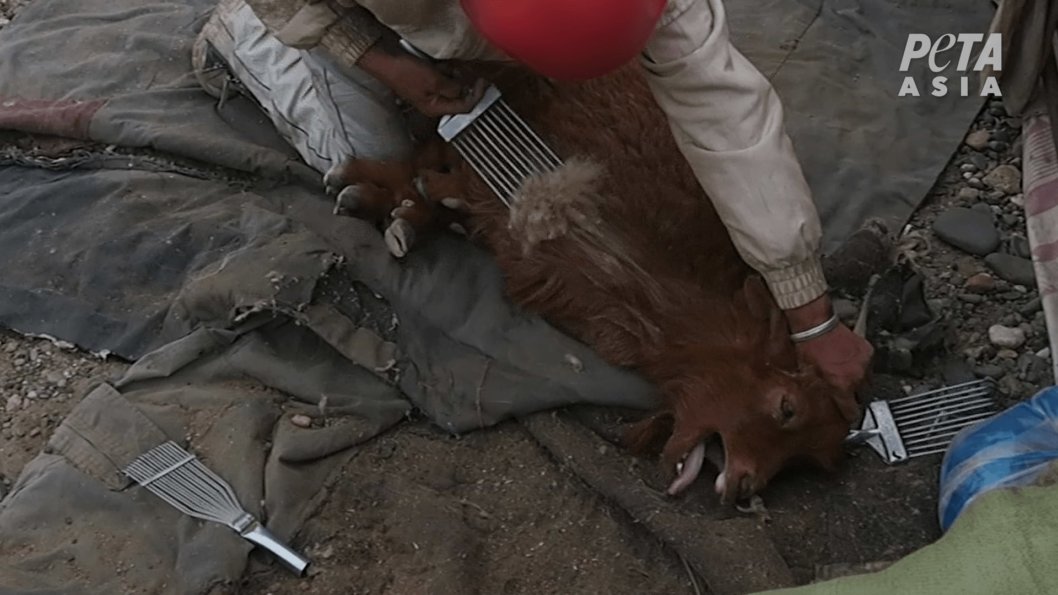
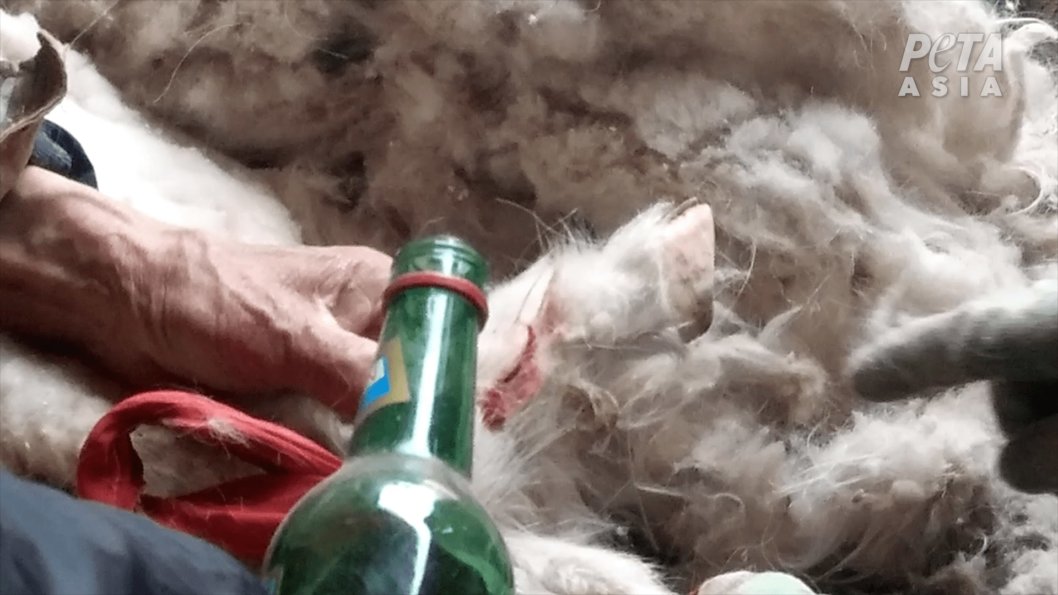
Goats left with bloody cuts from the hair-removal process received no pain relief or veterinary care. One worker simply poured rice wine into an animal’s wound.
Cashmere goats deemed no longer profitable endure slow, agonising deaths. At an abattoir in China, eyewitnesses saw workers hit animals in the head with a hammer in an attempt to stun them. In Mongolia, workers were seen dragging goats by one leg onto the abattoir floor before slitting their throats in full view of other goats. They were left to bleed out on the filthy kill floor, and some were seen still moving a full two minutes later.
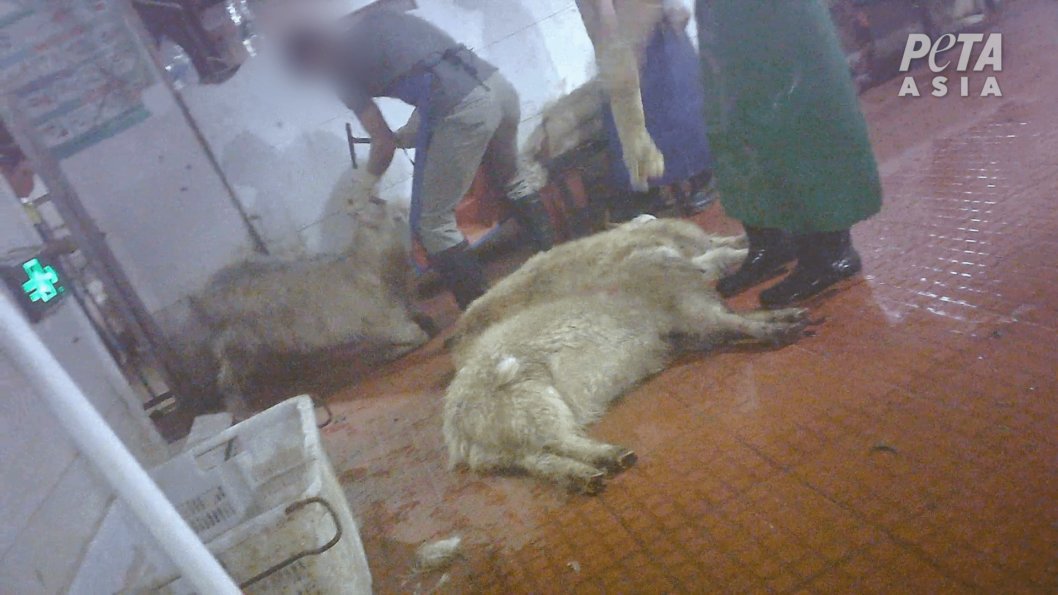
Their flesh is then sold as cheap meat.
Nearly all cashmere is produced in China and Mongolia, so if you buy a cashmere item, it probably came from goats who were abused in one of those countries.
One goat produces, on average, only 250 grams of hair that can be used for cashmere each year. This is so little that in order to produce just one cashmere jacket, the hair of six goats is required.
Cashmere also has the most destructive environmental impact of any animal-derived fibre. Because cashmere goats must consume 10 per cent of their body weight in food each day and they eat the roots of grasses, which prevents regrowth, the industry is a significant contributor to soil degradation followed by desertification.
Already, 65 per cent of Mongolia’s grasslands are degraded and 90 per cent of the country is in danger of desertification, which has resulted in some of the world’s worst dust storms on record and air pollution dense enough to reach North America.

https://www.bbc.co.uk/news/entertainment-arts-48268174
https://www.hellomagazine.com/film/2019051473029/martin-clunes-dropped-animal-charity-controversy/
England – this is a really sad story; for all involved.
British citizens especially will be so fully aware of the superb contribution Martin (and his famous ears) has made for the welfare of so many different animal species.
So really saddened today to see that Martin has been dropped by the Born Free Foundation (BFF) as their celebrity Patron. On several flights I remember watching Martin doing a fundraising video for BFF; asking fliers to give all the spare foreign change to a BFF collection which was being undertaken on the plane.
First and foremost, this guy is a massive ‘animal’ person – and I have always liked him for that.
So it has been sad to read that he has now been dropped by the BFF for taking an elephant ride whilst making a tv program in Nepal. Not something he would have done by choice, but was it required of him by the producers of the series ?
As a patron for BFF and an animal person; yes, there is no way he should have gone anywhere near taking an elephant ride. I personally do not support this kind of abuse for tv, the circus, whatever. At the time, Martin was an idiot and is now paying the price for that. The BFF organisation will also lose out on the massive publicity that Martin always gave them whenever he could. He was a real patron and I admired him for what he did.
There are no winners in this situation, but several losers. As an animal person, Martin did wrong big time by doing what he did in the making of this program. BFF have lost a dedicated patron and campaigner for their work. As for the elephant; I guess it will continue to be used to give rides to tourists as it has done in the past. There are no winners here at all; only losers all round. Martin should have known better – Fact; and it was an ideal opportunity (for him) to speak out about the use of elephants for tourist rides. Would that ‘speak out’ against the rides have been recorded and broadcast by the Tv makers ? – we will never know.
This ‘sacking’ by the BFF does send a clear message to anyone who becomes a patron of an animal welfare charity. As I say, all round losers and no winners in this situation. I wish Martin well and know he will continue to be an ‘animals voice’; despite this one off act of an idiot; which is very much unlike him.
Regards Mark.
These were not just the primeval forests that were destroyed for palm oil.
These were their houses.
Now they are homeless, delivered to the poachers and hunters,
delivered to hunger and misery..
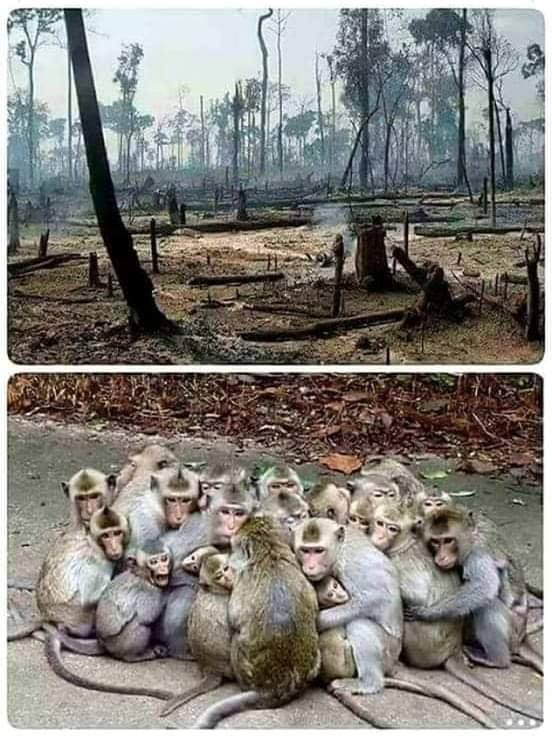
The demagogic electoral slogan for the EU elections has, as its main theme, family protection, minimum wages and affordable housing for all.
Politicians and political systems always prefer, and at best, the human species.
People have rights, all other species have NO rights.
Before the elections, is like after elections for the animals, nothing changes. Not in Europe, not in the whole world.
Anyone who places people in his political convictions before animals, he already makes propaganda against animals.
But we are for the animals.
We fight to stop losing their homes, their families, their existence, their freedom.
Maybe it’s utopia.
But it’s better than EUtopia.
My best regards to all, Venus

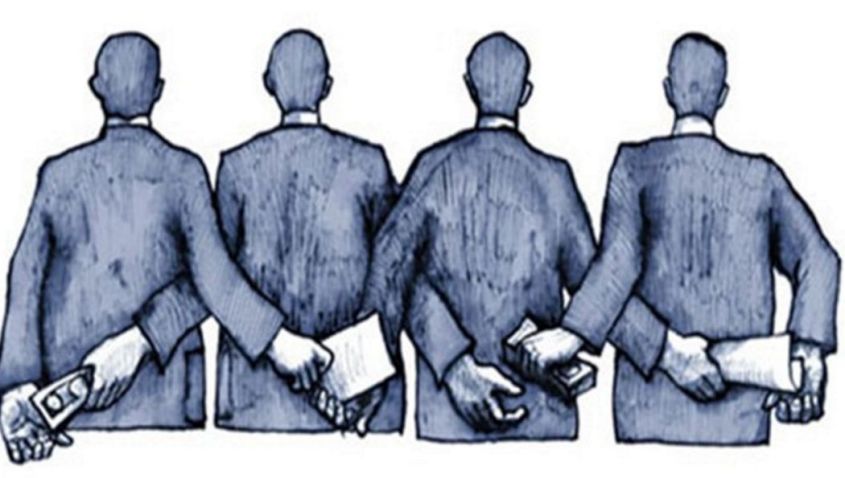
German pharmaceutical giant Bayer is hiring an outside law firm to review claims circulating in the French media that its seed firm, Monsanto, compiled illegal lists of influential journalists and lawmakers.
Bayer, who acquired the controversial agrochemical business last year, said on Sunday that the decision to commission the independent review came after its own internal investigation into the matter. It added that it understood the concerns raised over the week.
“This is not the way Bayer seeks dialogue with society and stakeholders. We apologize for this behavior,” the company said. However, it maintained that in the company’s eyes, there was nothing illicit about the way such lists were compiled.
The complaint that Monsanto had illegally compiled a dossier of influential journalists, media publications, and politicians was initially made by the French daily, “Le Monde”. The paper said one of its journalists was among 200 names on the dossier, who would then be targeted by Monsanto lobbyists in a bid to sway their views on glyphosate-based herbicides. A complaint was then made to French police under the charge that the list of personal information was made “by fraudulent, unfair or illicit means.”
The French investigation is the latest in a string of legal woes inherited by “Bayer”, who have seen their share value plummet by almost 40 percent since taking over Monsanto.
German pharmaceutical firm Bayer lost 6.8 percent on share value in trading Tuesday after a US jury awarded a couple from California $2.055 billion in punitive damages for failure to warn of cancer risks of its Roundup herbicide.
According to Monday’s ruling, Roundup weed killer was liable for causing cancer, while US agrochemical firm Monsanto, acquired by Bayer last June, failed to inform consumers about the potential risks. Glyphosate, the basic component in Roundup, was found to be the cause of non-Hodgkin lymphoma in both Alva and Alberta Pilliod.
The jury awarded $18 million in compensatory and $1 billion in punitive damages to Pilliod, while his wife will get another $37 million in compensatory and $1 billion in punitive damages. The couple has reportedly used the herbicide since the 1970s.
The case marks the third verdict delivered against Roundup since August 2018. Since acquiring Monsanto in a $63 billion deal, Bayer has inherited thausand of lawsuits over the weed killer. The corporation has repeatedly defended the controversial product, claiming that scientific evidence supports Monsanto’s position that glyphosate-based herbicides are not carcinogenic.
The 46-year-old Dewayne Johnson was the first to win the trial. He was diagnosed with end-stage lymphoma and has accused Monsanto of concealing the risks of his weed killer. The jury agreed.
Dewayne Johnson was the first cancer victim to take the company to court. The San Francisco groundskeeper was awarded $289 million, as the court ruled that the popular herbicide was responsible for his lymphoma. While the award was reduced to $78 million on appeal, it opened the floodgates for thousands of similar cases, and there are more than 11,200 such lawsuits currently pending against the German agrochemical conglomerate.
Bayer’s spokesman called the latest decision “excessive and unjustifiable,” saying that the company would appeal the verdict.
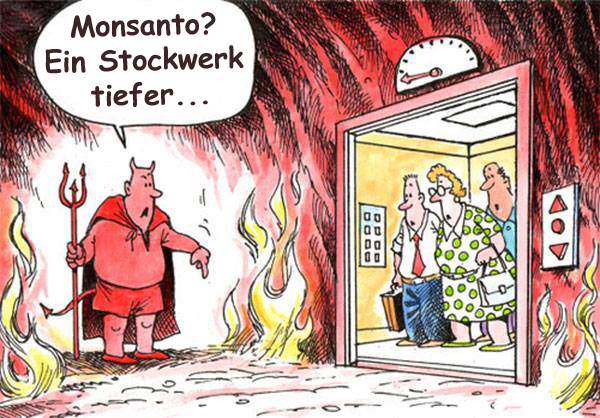
“Monsanto? One floor lower…”
https://www.rt.com/business/459296-bayer-stock-lowest-california-ruling/
My comment: Fuck you Monsanto !!!!! The only thing you have ever been able to give this planet is death, destruction, suffering for humans and animals.
I hope those who serve you will find a miserable death, and because it is so beautiful in hell, take away the corrupt politicians with you!
My best regards, Venus

Legislation will mean pet shops or commercial dealers can only sell animals they have bred
https://www.theguardian.com/world/2019/may/13/puppy-kitten-farming-banned-new-lucys-law
A law banning puppy and kitten farming, which campaigners hope will end the practice by some unscrupulous breeders of keeping animals constantly pregnant and often in dirty and cramped conditions, is to be laid by the government.
The change, expected to come into force in April 2020, will mean young cats and dogs can no longer be sold by a pet shop or commercial dealer unless they have bred them.
Would-be pet owners will need to deal directly with breeders or rehoming centres, though some campaigners have called for the law, to be laid on Monday, to go further and clamp down on the practices of animal sanctuaries.
The unethical practice of puppy and kitten farming is said to lead to the animals being taken from their mothers after only a few weeks, which puts them at risk of disease and behavioural issues.
The campaign has been backed by celebrities and charities including the RSPCA and Battersea Dogs and Cats Home.
The Downton Abbey actor Peter Egan, an animal rights campaigner who has promoted the law, called it “the most exciting change in animal welfare legislation for years”.
The legislation is being named after a Cavalier King Charles spaniel called Lucy, who died in 2016 after being forced to repeatedly give birth in terrible conditions on a Welsh puppy farm.

The environment secretary, Michael Gove, said he wanted to ensure no other animal suffers the same fate. He said the law would put an end to the early separation of puppies and kittens from their mothers.
“I would like to thank the tireless campaigners and animal lovers who have helped to bring about this positive change,” Gove said. “This is all part of our plan to make this country the best place in the world for the protection and care of animals.”
Marc Abraham, the founder of Pup Aid, which campaigned for the law change, said: “‘Lucy’s law’ is named after one of the sweetest, bravest dogs I’ve ever known, and is a fitting tribute to all the victims of the cruel third-party puppy trade, both past and present.”
The decision to ban commercial third-party sales was announced in December and follows years of campaigning. More than 95% of responses to the government’s public consultation expressed support for a ban.
The legislation will come into force on 6 April 2020, which the Department for Environment, Food and Rural Affairs said would give the pet industry and consumers time to prepare for the change.


“A live video camera from a slaughterhouse would be enough to make the whole world change its mind”
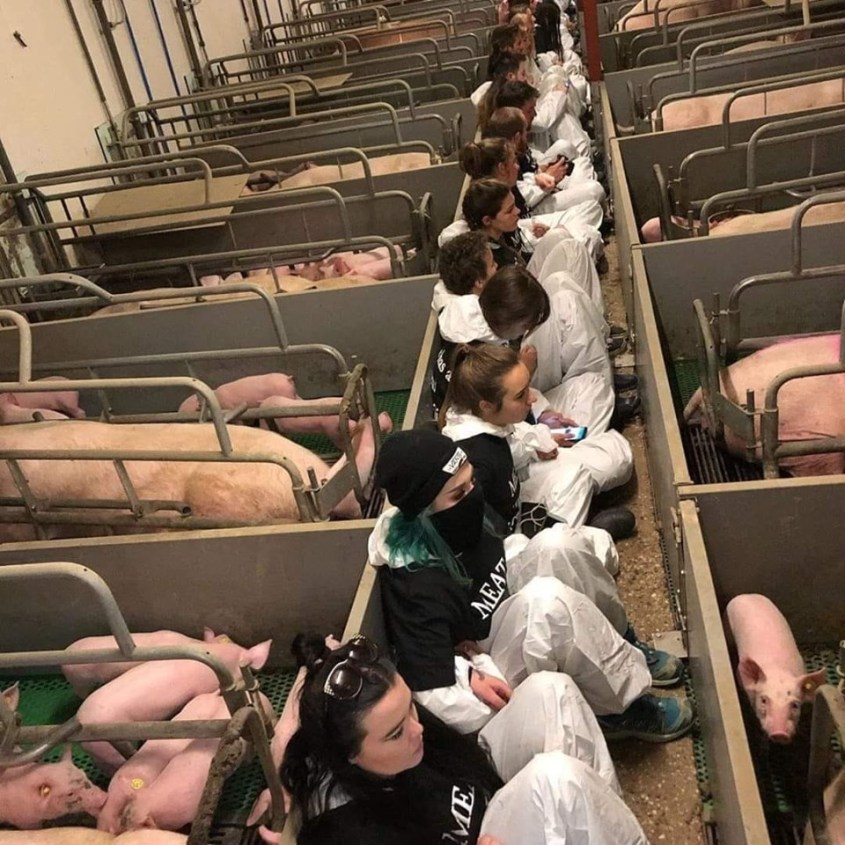
More than 200 activists have occupied a Dutch pig breeding facility for several hours – in peaceful protest against the painful breeding, keeping and killing of sentient beings.
Another 100 or more activists stayed outside the facility.
With video and photo shoots, the brave people document the suffering of the animals and publish the pictures on social media around the world – so that people can see under what torturous conditions the animals whose body parts they want to eat as a burger and Schnitzel, really had to live; how they suffered; how they had to lie in their own excrement, because there was no escape, how they were locked up, could not move.
This is the truth that hides the meat industry behind the windowless huge halls in front of consumers.
https://www.facebook.com/toni.dipianduni

We thank the brave activists for the action.
The animal rights movement has never been as active as it is now.
That’s why Germany’s Minister of the Environment, Julia Klöckner, wants to criminalize the activists who make secret documentation in slaughterhouses, laboratories, and animal farming.
We will continue to fight for the rights of animals on all levels.
Best regards, Venus
For the Waorani people, life begins in the forest (omere) and everything important in life has a song.
Here, at the edge of a waterfall near the village of Nemonpare, a group of Waorani sing about waimo epe, beautiful water, before traversing down the forested canyon to the base of the falls.


