Category: General News

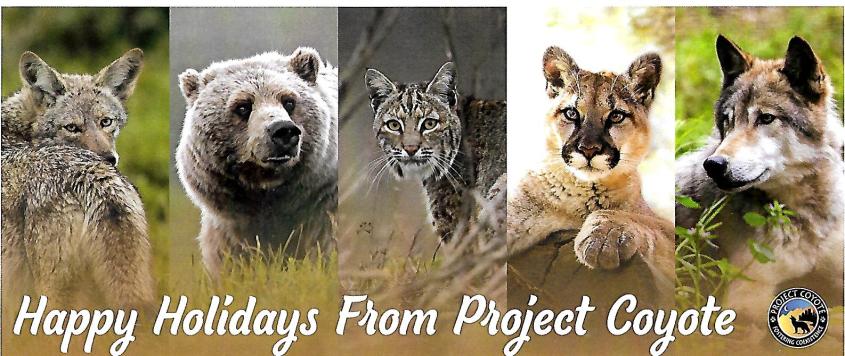
‘Happy Holidays’ From Our Friends at Project Coyote. Join Up and Win Bri’s Guitar !

Visit them at   http://www.projectcoyote.org/ 

Better still – join up and become part of the pack like us.

You could win Brian’s very special ‘red’ guitars – see below.


PC 1 Xmas

Own A Red Special Guitar from Queen’s Brian May

“You may know me as a founding member of the rock band Queen. As a devoted animal advocate who believes in standing up for the underdog—those species most maligned and misunderstood by society—I pledged my support to Camilla and her team many years ago, after I learned about the remarkable work Project Coyote is doing on a very lean budget to protect coyotes, wolves, bobcats, and other North American carnivores.

Now I’m proud and excited to invite you to support Project Coyote by participating in our holiday auction for a signed Brian May Red Special Guitar, which I hope will bring the winning bidder (or a very lucky giftee!) as much joy as it has brought me.”


Brian May
Founding Member & Lead Guitarist ~ Queen

Founder ~ Save Me Trust

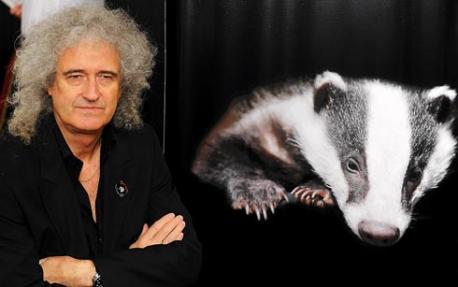
Brian May Badgers


Project Coyote Ambassador


http://www.projectcoyote.org/about/ambassadors/brian-may/


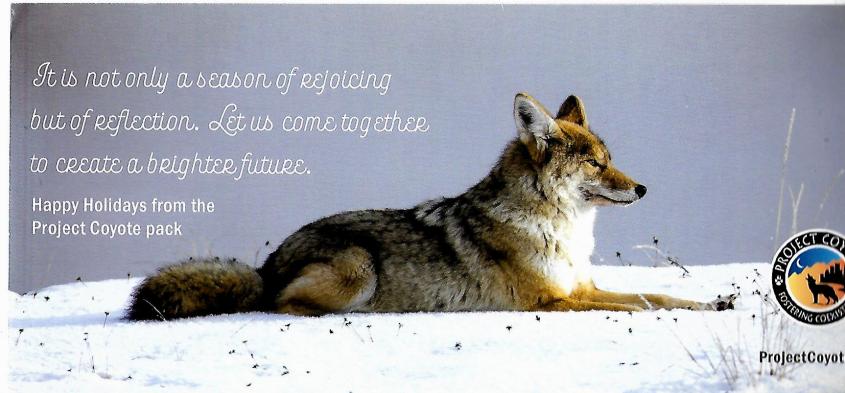
PC 2 Xmas

BM save me 2

England: Ban the Use of Farrowing Crates in the UK – The UK Government Responds Positively.

England


We have been fighting to get a ban on farrowing crates being used in UK farming practices.

We are happy with the response provided by DEFRA below; and although we all wish for quicker times, we accept that it does take time to phase out existing equipment.

We supported:

Ban the use of farrowing crates in the UK

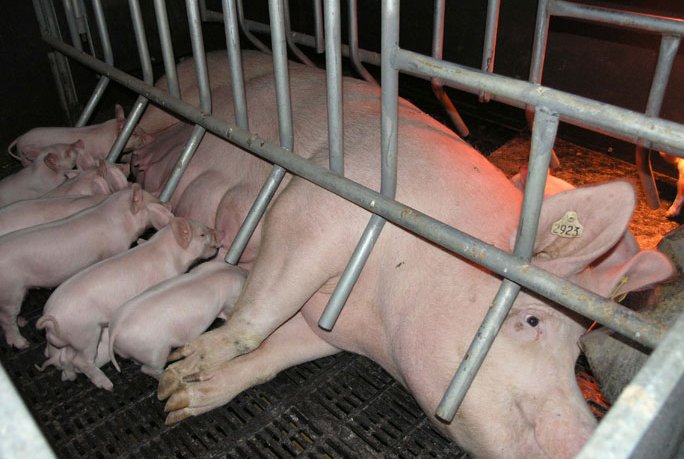
Farrowing crates, profoundly similar to sow crates which were banned in the UK in 1999, are long, narrow crates in which sows are contained during gestation. It’s still legal to use farrowing crates in spite of them having the same implications to animal welfare as the sow/gestation crates.

Pigs are intelligent, sentient beings and these crates deny their natural behaviours. This frustration can be displaced to damaging abnormal behaviours such as self-mutilation due to the intensive conditions. Farrowing crates severely restrict the sow’s movement and deny them the instinctual urge to build a nest, worsening their frustrations. Having been made illegal in Sweden, Norway and Switzerland, we should follow this route of progression to maintain our reputation for good animal welfare.

farro 1

————————————–

UK Government Ministry DEFRA (Department for Environment, Food and Rural Affairs) has responded to us with the following:


Dear Mark Johnson – Founder ‘World Animals Voice’,

The Government has responded to the petition you signed – “Ban the use of farrowing crates in the UK”.

Government responded:

The Government aims to make farrowing crates unnecessary. Alternative farrowing systems in indoor production are insufficiently advanced. Approximately 60% of UK sows are in farrowing crates.

The Government shares the public’s high regard for animal welfare and we are committed to being a world leader in the care and welfare of animals.

Comprehensive animal welfare laws already exist to protect livestock, including pigs. The Welfare of Farmed Animals (England) Regulation 2007 (WOFAR) equally protects the welfare of the sow, as well as her piglets. It permits the use of farrowing crates. The majority of sows are housed in farrowing crates from approximately five days before they are due to give birth, until their piglets are weaned at 28 days of age.

After this period, they must be moved back to loose/group housing accommodation in which they are free to turn round easily. Both nesting material for sows and the need to provide environmental enrichment materials for all pigs are a requirement in WOFAR. Comparable legislation exists in Wales, Scotland and Northern Ireland.

The Government’s aim is to reach a point where traditional farrowing crates in indoor production are a thing of the past and where any new system protects the welfare of the sow, as well as her piglets. Government funded research has been undertaken by Scotland’s Rural College and the University of Newcastle, to develop and test commercially viable farrowing systems which do not closely confine the sow but provide adequate protection to piglets. This research has shown that some such alternative systems seem promising in an experimental environment, but it remains the case that results need to be replicated consistently under commercial conditions, as piglet mortality is still too high. Research is continuing to develop the system to try to improve piglet survival further.

As part of the Government’s animal welfare reform programme, the statutory pig welfare code is being updated and enhanced to safeguard the welfare of pigs, in line with the most recent scientific and veterinary advice. Pig keepers are required by law to have access to and be familiar with the code.

Department for Environment, Food and Rural Affairs

UK Government and Parliament

Thousands of farm animals die in barn fires, and no one seems to care.


Thousands of farm animals die in barn fires, and no one seems to care 

When a barn catches fire, it can have disastrous consequences for the livestock trapped inside.

“The animals have no chance to escape. I mean, how do you evacuate 5,000 pigs or 60,000 chickens?” said Vicki Fecteau, the director of the Canadian Coalition for Farm Animals.

She said the immense scale of modern farming and the giant barns required mean the casualties are often enormous.

Fecteau spoke to Michael Enright, host of The Sunday Edition, about the coalition’s efforts to raise awareness about the toll barn fires take on the lives of animals.

Between January 2015 and October 2018, 610,000 farm animals died in barn fires in Canada.

Fecteau said society has a blind spot when it comes to the wellbeing of livestock.

For example, she said, there was international media coverage when 43 racehorses died in an Ontario barn fire in 2016.

“That very same week 50,000 ducks died in a fire in Quebec and that did not make the news at all. It may have made a local paper but, you know there was really no news about that at all.”

·         Lessons learned at Classy Lane Stables in wake of devastating barn fire

Fecteau said people are very responsive when companion animals — including horses — are hurt or killed, but not livestock.

Vicki Fecteau says the media rarely takes notice when livestock are killed in barn fires. (John Ulan/University of Alberta)

The problem is not just the size of modern barns, but their susceptibility to fires.

Ontario’s Agriculture Ministry reports that 40 per cent of barn fires in that province are related to electrical problems.

Fecteau said the environment in barns is very harsh on electrical systems, causing the equipment to deteriorate and malfunction.

“There are corrosive gases like ammonia […] and hydrogen sulphide from animal waste. They have high humidity levels. There’s a lot of dust.”

The coalition is now working with the government to try and increase the use of fire detection systems in barns in Canada.

Fecteau said installing fire systems is expensive for farmers, but they also lead to lower insurance premiums.


USA: The Dirty Water Rule and Seismic Airgun Blasting – Americans Must Take Action !


USA-Flagge

trump clean water 1

The “Dirty Water Rule.”

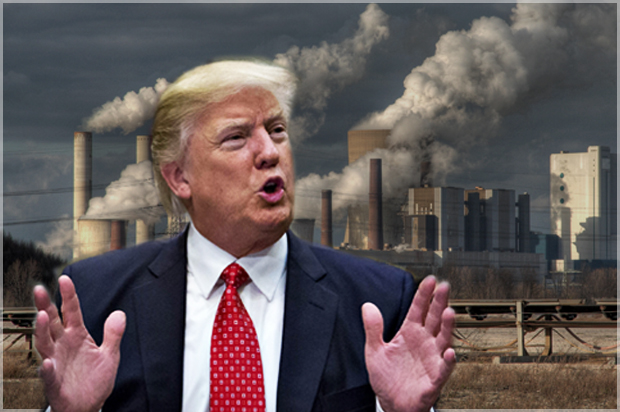
That’s what we call President Trump’s new move to give fossil fuel giants, factory farms, and other industrial polluters the green light to pollute thousands of vital rivers, lakes, and streams with no repercussions.

Trump’s EPA just released its disastrous plan to gut the protections of the Clean Water Act that help prevent the pollution of drinking water sources for millions of Americans. It makes no scientific, legal, public health, or fiscal sense.

NRDC is prepared to fight back at all costs to stop this senseless attack on clean water, our environment, and our health.

But right now we need your help to rally a massive public outcry.

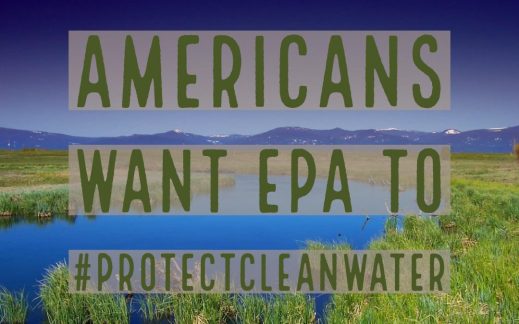
Tell the EPA to reject Trump’s disastrous Dirty Water Rule and protect our swimming and fishing spots and sources of drinking water for millions of Americans. Be one of the 100,000 activists we need to stand strong for clean water protections.

The Clean Water Act was designed to protect lakes, rivers, streams, and other waterways across the country, and hold polluters responsible if they violate its requirements.

Trump’s Dirty Water Rule will gut those critical protections, and threaten to contaminate our drinking water supplies and destroy important habitats for aquatic wildlife.

We’ve already seen enough devastating impacts from pollution and climate change on the nation’s water resources as of late: Outbreaks of harmful algae in Lake Erie that contaminated drinking water for thousands in Toledo, Ohio… losses in the Pacific salmon population in the Pacific Northwest… drought in California and across the west… and unprecedented toxic algae blooms in Florida, which have killed millions of fish, and other marine wildlife, and led to a state of emergency in the Sunshine State. Hobbling the Clean Water Act will only add to this list.

And while slashing safeguards for clean water will impact ALL Americans, low-income communities and communities of color could be hit the hardest — exacerbating inequality in communities that are already disproportionately impacted by polluted water.

We must stop this no-holds-barred attack on our clean water. Call on the EPA to reject Trump’s dangerous Dirty Water Rule immediately and help us reach our goal of 100,000 official public comments.

The Trump administration has been attacking clean water since Trump came into office, and NRDC has sued to protect it.

You can be sure that we’ll continue to fight this outrageous assault on clean water — in and out of court — and any Trump administration attack on our environment and health.

Will you join us today and demand that the EPA protect clean water for all?

Thank you for speaking out.

Sincerely,

Rhea Suh
President, NRDC

———————————————————

Mark,

The Trump administration has given the green light to oil and gas companies to use
seismic airgun blasting in the Atlantic Ocean, from New Jersey to Florida, to
search for fossil fuels in the sea floor. Seismic airgun testing involves
firing extremely loud and continuous blasts of compressed air–every few seconds, twenty four hours a day, for up to weeks or even months at a time–to determine whether oil and gas deposits are present.

The consequences of seismic airgun blasting could be devastating to marine wildlife.

Hundreds of thousands of ocean animals could be disturbed, maimed, or killed as a result of this shortsighted and potentially very deadly testing program. Marine
mammals like whales and dolphins are at a higher risk for harm since they rely
on hearing to communicate, reproduce, and find food.

The North Atlantic right whale,  migrates in the blast testing area.
This species is teetering on the brink of extinction with an estimated 400
individuals left in the wild.

Take action now and
tell Congress to protect the North Atlantic right whale and other marine mammals
by opposing the following legislation: SEA Act (HR 3133) and SECURE Act (HR 4239), and supporting legislation such as the Atlantic Seismic Airgun Protection Act (S. 1263/ HR 2158).

The impacts of expanding offshore drilling will be extremely
harmful to marine ecosystems.

Offshore drilling causes habitat destruction, ocean acidification, and oil spills,
resulting in immense loss of wildlife. Use of fossil fuels speed up climate
change and associated risks. We cannot let this administration open the door to
new offshore drilling when we have only twelve years to act against climate
change.

Email your members of Congress right now and tell them to oppose the potentially deadly seismic airgun blasting and stop the expansion of offshore drilling in the biologically rich waters of the Atlantic!

In solidarity,

Stepph Sharpe
Turtle Island Restoration Network

trump dirty money

Dirty Policy – Dirty Money.


liberty oh god

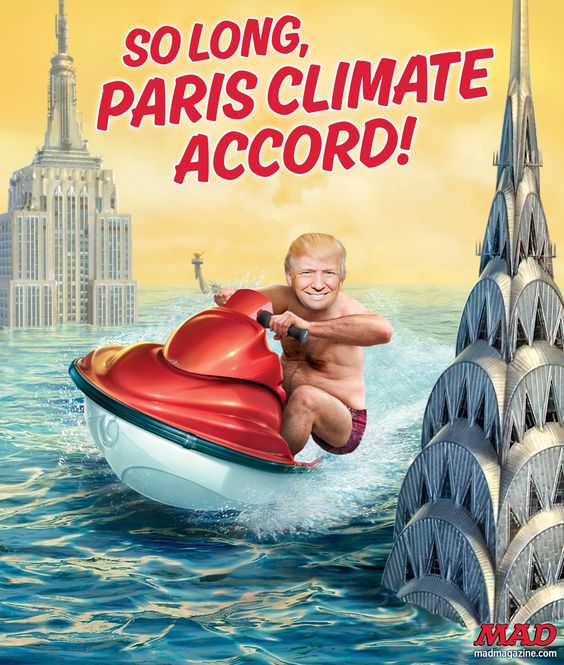
Global Warming Could Raise Ocean Levels By 28 Metres.

Related image


Full article – https://www.bbc.co.uk/news/science-environment-46517396

Nasa says it has detected the first signs of significant melting in a swathe of glaciers in East Antarctica.

If this trend continues, it has consequences for future sea levels.

There is enough ice in the drainage basins in this sector of Antarctica to raise the height of the global oceans by 28m – if it were all to melt out.


WAV Comment – A pity those in power who could do the right thing, don’t !! – hope he can swim, or maybe not.

big power plant

trump global sea level 1

EU: Before the Elections in 2019; the EU Wakes Up To the Reality That EU Animal Welfare Is Not Good. Yet More Talk Only; or Real Action This Time ?


zerissene EU-Flagge am Stock


 Talking of the EU; please check out our recent post re foie gras production in the EU:

https://worldanimalsvoice.com/2018/12/11/eu-82-of-eu-citizens-think-that-farm-animals-should-be-better-protected-mr-junker-always-the-no-black-sheep/


EU to review animal welfare strategy

By Peter Teffer

The European Commission is going to evaluate its animal welfare strategy, it has said in response to a report by the European Court of Auditors published on Wednesday (14 November).

The review of the strategy comes almost three years after the European Parliament asked for it.

The auditors said in their report that animal welfare in the EU has improved, but that member states were slow to implement recommendations from the commission.

One example of slow implementation was found in France.

In 2010, the EU commission had recommended that French inspectors use better equipment to check conditions of animals’ environment on farms and during transport.

According to French legal requirements already in place since 2000, inspectors were supposed to have specialised equipment to make measurements.

“The French authorities had not, however, procured all the required equipment by the time of our audit,” the auditors wrote.

“During our visit to a laying hens farm certified as free-range, where the presence of ammonia inside the building was evident, the French inspector did not have the necessary equipment to measure the level of gas concentration. The inspector noted in the inspection report that the related requirement had been met,” they added.

Following the auditors’ visit, French authorities told the EU commission in spring 2018 that they had bought measurement equipment.

“However, inspectors were only asked to use this on farms raising chickens for meat,” the report said.

Meanwhile, Romania had been told several times between 2009 and 2011 that it needed to have legal sanctions in place for those who broke EU animal welfare rules.

“At the time of our audit, the Romanian authorities had not yet approved the necessary changes in the legislation to apply such sanctions,” said the report.

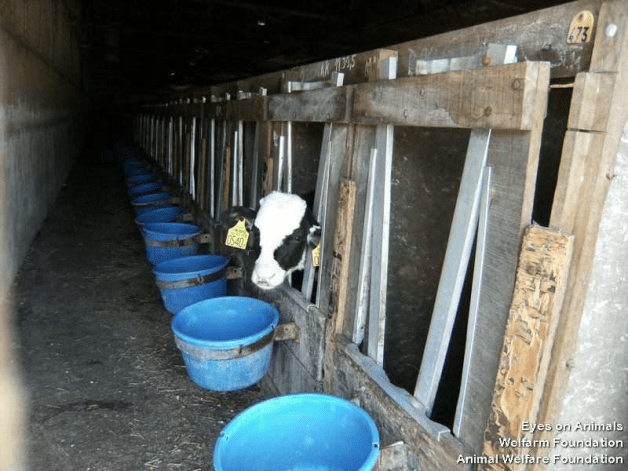
hungarian calf

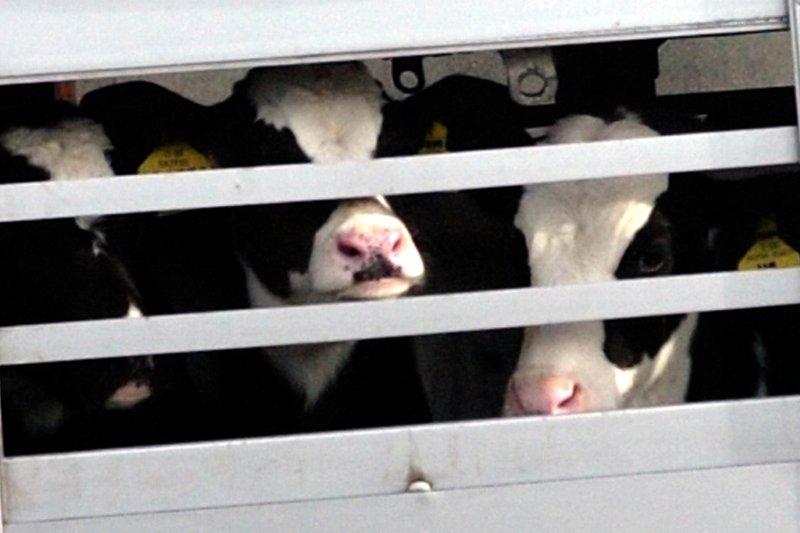
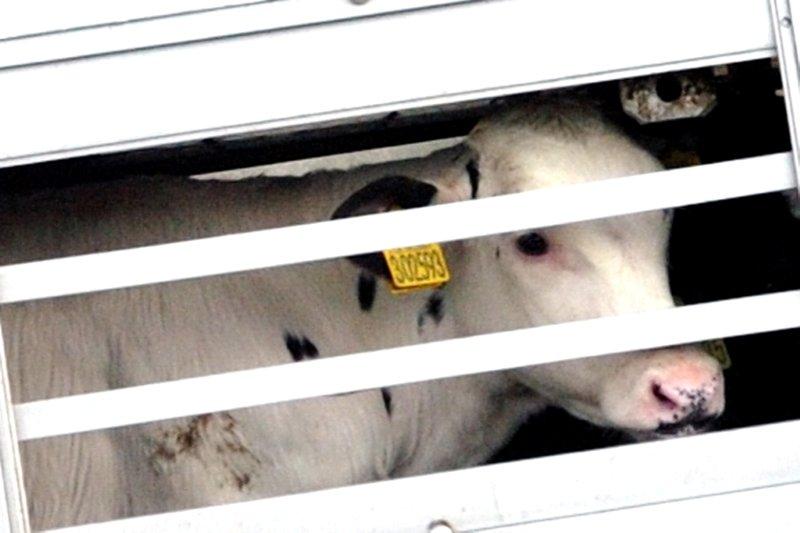
Above – A Calf peers out of a veal crate which should have been banned in the EU 6 years earlier !!

eu-flagge-zerrissen-pg

A review, finally

The EU’s animal welfare strategy was published in 2012, and was specifically designed for the period 2012-2015.

However, some of the proposed measures were delayed until after 2015, and the commission has not published a new strategy paper since.

On 26 November 2015, the European Parliament adopted a non-binding resolution urging the commission “to evaluate the existing strategy and to draw up a new and ambitious strategy for the protection and welfare of animals for the 2016-2020 period in order to build on the work of the previous strategy and ensure the continuation of a framework for delivering high animal welfare standards across the member states”.

In March 2016, a group of northern and western European ministers also called for new rules to improve animal welfare standards.

The European Court of Auditors said in a report out on Wednesday that the commission had not assessed if the strategy had achieved its goals.

“There are no baseline indicators or target indicators to measure how far the strategy objectives have been achieved and the commission had not yet evaluated the results of its actions as requested by the European parliament,” said the report.

In response, the commission acknowledged that, and said that it planned to perform an evaluation of the strategy.

“Its actions have not yet been evaluated since they were completed only by early 2018, and therefore, the impact of all actions has not yet materialised,” the commission said.

eu-flagge-zerrissen-pg

Improvements, but slowly

The report stated that there were “still some significant discrepancies between the animal welfare standards established in the EU legislation and the reality on the ground”.

They audited the situation in Germany, France, Italy, Poland, and Romania.

“The member states visited generally followed the European Commission’s recommendations, sometimes took a long time to address them,” auditor Janusz Wojchiechowski told journalists in a briefing on Tuesday.

He did not want to say whether the commission should introduce a new animal welfare strategy.

“This is not our role, to suggest or recommend to have a new strategy,” he noted.

The report stated that some of the measures announced in the 2012 strategy, like the publication of EU guidelines on the protection of animals during transport had been delayed by up to five years.

Below – Live exports of animals from the UK to France by Dutch convicted criminals !

Joline

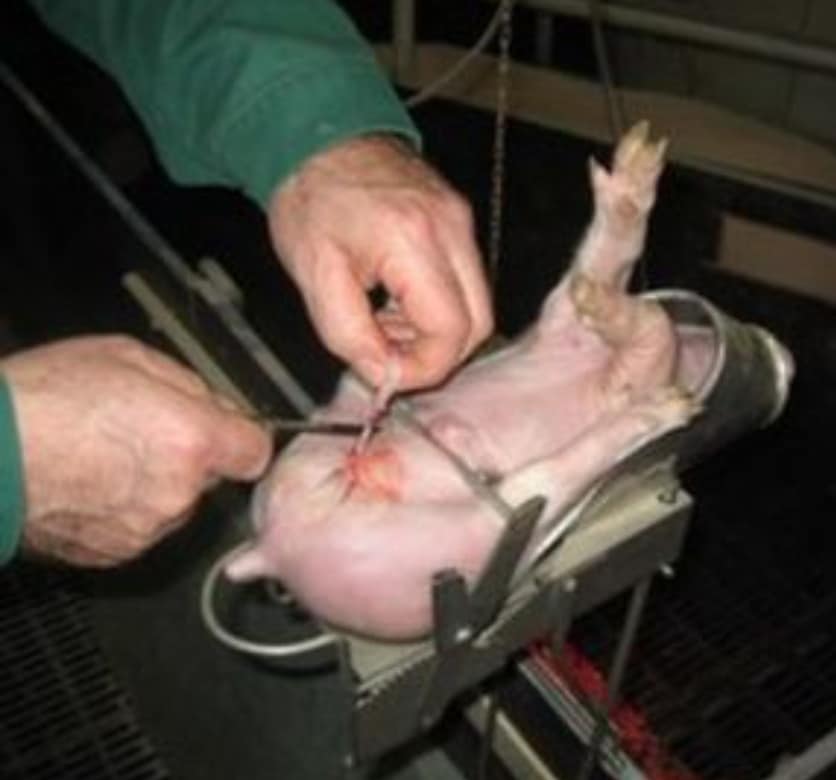
Kastration für Ferkel -Schritt 2_n

Above – Germany – A piglet is castrated without any veterinary involvement or use of medication.


“The guidelines on pig welfare and on the protection of animals at slaughter were also delayed due to lengthy discussions with stakeholders,” the report said.

“Most reports were based on external studies, which were sometimes delayed due to lack of staff at the commission to manage the procurement process and review draft content,” it continued.


eu-flagge-zerrissen-pg

Further reading of our posts relating to EU lack of involvement for EU animal welfare issues:

https://worldanimalsvoice.com/2018/12/08/give-us-today-our-daily-meat/

https://worldanimalsvoice.com/2018/12/06/pissing-in-the-rain/

https://worldanimalsvoice.com/2018/12/01/hungary-eu-more-evidence-to-show-why-the-eu-cannot-enforce-its-own-legislation-regarding-animals-and-their-welfare/

https://worldanimalsvoice.com/2018/11/27/england-dutchman-onderwater-exports-scottish-calves-from-ramsgate-plus-more-info/


junker

Junker – Mr all talk and do nothing.

EU: 82% of EU Citizens Think That Farm Animals Should Be Better Protected. Mr Junker – Always the ‘No’ Black Sheep !


zerissene EU-Flagge am Stock


foie 4

Help consumers take cruelty away from EU’s Xmas buffet


By Michel Vandenbosch and Reineke Hameleers

BRUSSELS, 10. Dec, 15:02

foie 5

Only five out of 28 EU member states continue to force-feed birds for the production of foie gras – a broadly-acknowledged cruel and inhumane practice.

An overwhelming majority of EU citizens expect the EU to offer better protection for farm animals and 23 EU countries no longer accept force-feeding.

On 26th November, 79 MEPs formally prompted the commission to take its responsibilities by engaging to take firm action on a topic so many EU citizens feel strongly about, and committing to a meeting with MEPs at short term.

In January such meeting was promised for “early this year”, but a date has never been fixed.

With Christmas approaching, retailers’ windows fill themselves with festive products including end-of-year high end ‘delicacies’ such as the fatty goose or duck liver foie gras.

Because of the tricky requirement of minimum liver weights introduced in EU legislation as recently as 1991 and contained in Regulation 543/2008, foie gras is systematically the result of ‘gavage’, or force-feeding.

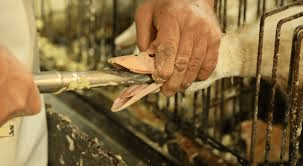
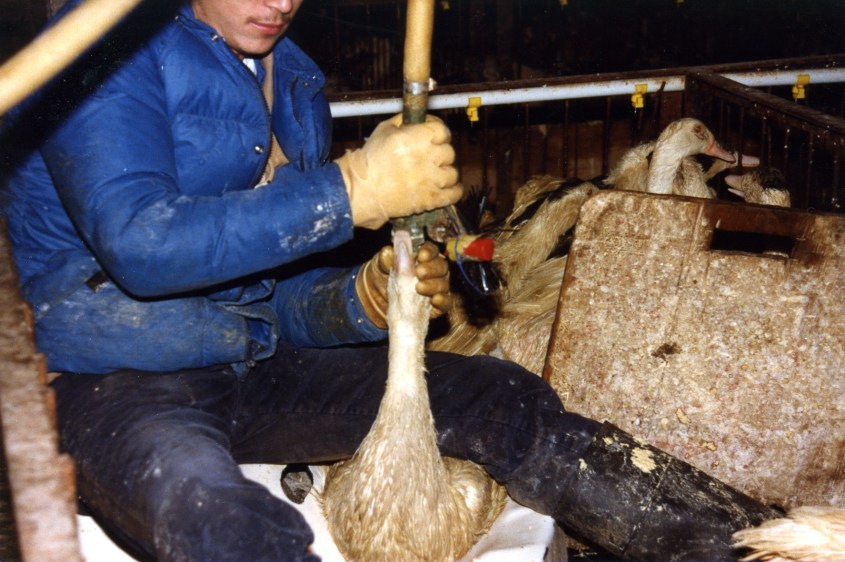
This means producers force tubes down geese’s and duck’ throats and pump the birds’ stomachs with more grain over the course of a couple of weeks than they would normally eat in a lifetime.

foie gras abuse

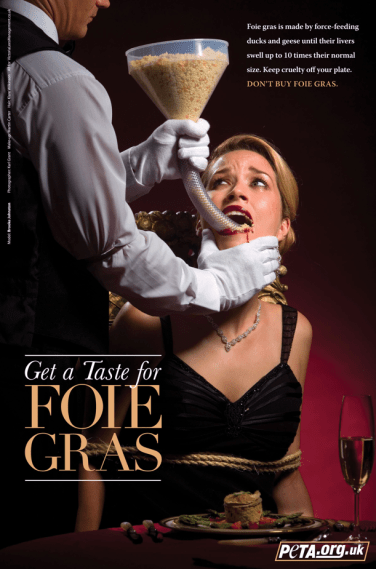
Extrapolated to our own body, this would equate to the ingestion of 20kg of spaghetti every single day by a human being.

 
foie gras human

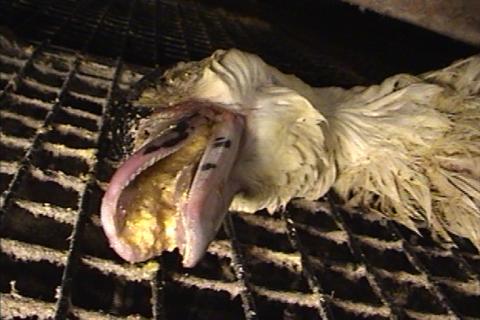
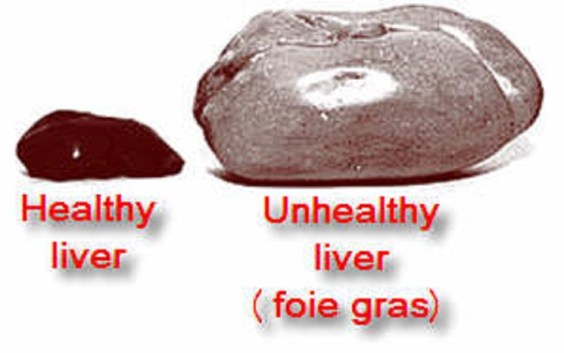
As a result, their liver pathologically grows up to 10 times bigger, with large deposits of fat.


liver-foie-gras-bigger

Incapable of moving or even breathing normally, the animals face constant pain and infections loom.

It is therefore no surprise that 23 EU member states have already banned this practice, which they rightly consider as animal abuse.

The 2016 special Eurobarometer on animal welfare showed that 94 percent of EU citizens think protecting the welfare of farmed animals is important and 82 percent think they should be better protected by the EU than they are now.

Interestingly, alternatives exist and are widely embedded across the EU member states where the practice was banned.

But for such alternatives to really root in the market, we now need to see some legislative change, which is what 79 MEP’s formally called for at the end of November through a written question to Commissioners Hogan and Andriukaitis in the European Parliament.

It is not the first time MEPs call on the Commission to act on this issue, however this question exceeds all previous actions by the quantity of parliamentarians it rallied and feasibility of its simple call to action.

This written question was promoted by a diverse group of MEPs: Marlene Mizzi (S&D, MT), Sirpa Pietikäinen (EPP, FI), Mark Demesmaeker (ECR, BE), Petras Auštrevičius (ALDE, LT), Pascal Durand (Greens, FR), and Anja Hazekamp (GUE, NL).

The EU has uncontested animal welfare laws, such as directive 58/98, applying to farming practices stating among others that “No animal shall be provided with food or liquid in a manner, nor shall such food or liquid contain any substance, which may cause unnecessary suffering or injury.”

This clearly rules out the acceptability of forced feeding.

Nevertheless, in open contradiction with such requirements, regulation 543/2008 imposes minimum weights on the livers of ducks and geese, which can be reached only by force-feeding the birds, in order to be allowed to market such products as foie gras.

Today, only five EU countries continue to allow force-feeding in foie gras production, namely France, Hungary, Bulgaria, Spain, and Belgium (Wallonia only).

79 Parliamentarians representing the seven main political groups and all 28 member states have demonstrated, in the second-most-signed parliamentary question of this term, that EU citizens no longer want pockets of tolerated animal cruelty to exist in the way farmed animals are reared for our food.

They have strongly made the case that the marketing regulation on foie gras is an unjustified barrier preventing products of higher morality to prosper and gradually allow consumers to create market opportunities for foie gras production without force-feeding, based on their preference and ethical values.

As long as the requirement of minimum liver weights is maintained, foie gras production is bound to produce huge animal suffering.

This is why, jointly with 79 MEPs, we call on commissioner Hogan and commissioner Andriukaitis, in reflection of today’s European public moral, article 13 TFEU and the will of the EU citizens, to support a simple, cost-free proposal – deleting the requirement of minimum liver weights contained in Regulation 543/2008 – that would empower consumers to drive change.

Michel Vandenbosch is president of Global Action in the Interest of Animals (GAIA) and Reineke Hameleers is director of Eurogroup for Animals

Disclaimer: This article is sponsored by a third party. All opinions in this article reflect the views of the author and not of EUobserver

Source – https://euobserver.com/stakeholders/143651 


WAV Comment

As we have often said and shown, the EU is NOT enforcing its own legislation.  

The ‘club’ that means nothing and wields no power.

Another reason why the UK wants to break free from this farce that is called the EU club – a club that wants to pretend that all is well whilst the animal abuse continues all day, every day.  People like Junker and Tusk should be ashamed of themselves; not place themselves on the high platforms that they do.

eu uk 4

eu-flagge-zerrissen-pg

junker

Mr Junker – Useless, like the rest of his club.

Long Distance Transport Of Calves – UK to Spain. Where EU Regulations Fail For Animal Protection.

Published on 24 Jun 2011

Many of these exported calves will be reared in conditions that would be illegal in the UK.

Sheep exported for slaughter often travel in cramped trucks, sometimes with failed water tanks and ventilation systems.

Some of these animals may die during their dreadful journey.

http://www.ciwf.org.uk/

USA: IMPORTANT – FDA Recalls Dog Food Brands Because of Vitamin D Toxicity Risks – SERIOUS !


USA-Flagge


Warning: FDA Recalls 9 Dog Food Brands for Vitamin D Toxicity Risk

The U.S. Food and Drug Administration has issued a recall of several dry dog foods that may contain toxic levels of vitamin D.


Below is a full list of recalled products:

·         Ahold Delhaize

Nature’s Promise Chicken & Brown Rice Dog Food

UPC 068826718472 – 14 lb. bag

All lot codes

UPC 068826718471 – 28 lb. bag

All lot codes

UPC 068826718473 – 4 lb. bag

All lot codes


Nature’s Place Real Country Chicken and Brown Rice Dog Food

UPC 72543998959 – 5 lb. bag

All lot codes

UPC 72543998960 – 15 lb. bag

All lot codes


·         Kroger (12/5/18)

Abound Chicken and Brown Rice Recipe Dog Food

UPC 11110-83556 – 4 lb. bag

All lot codes


·         King Soopers (12/5/18)

Abound Chicken and Brown Rice Recipe Dog Food

 UPC 11110-83556 – 4 lb. bag

All lot codes

UPC 11110-83573 – 14 lb. bag

All lot codes

UPC 11110-89076 – 24 lb. bag

All lot codes


·         ELM Pet Foods, Inc. (11/29/18)

 ELM Chicken and Chickpea Recipe

 UPC 0-70155-22507-8 – 3 lb. bag

D2 26 FEB 2019

TE1 30 APR 2019

TD1 5 SEP 2019

TD2 5 SEP 2019

UPC 0-70155-22513-9 – 28 lb. bag

TB3 6 APR 2019

TA1 2 JULY 2019

TI1 2 JULY 2019


ELM K9 Naturals Chicken Recipe

UPC 0-70155-22522-9 – 40 lb. bag

TB3 14 Sep 2019

TA2 22 Sep 2019

TB2 11 Oct 2019


·         ANF, Inc. (11/28/18)

ANF Lamb and Rice Dry Dog Food

UPC 9097231622 – 3 kg bag

Best by Nov 23 2019

UPC 9097203300 – 7.5 kg bag

Best by Nov 20 2019


·         Sunshine Mills, Inc. (11/27/18)

Evolve Chicken & Rice Puppy Dry Dog Food

UPC 0-73657-00862-0 – 14 lb. bag

UPC 0-73657-00863-7 – 28 lb. bag


 Sportsman’s Pride Large Breed Puppy Dry Dog Food

UPC 0-70155-10566-0 – 40 lb. bag

UPC 0-70155-10564-0 – 40 lb. bag


 Triumph Chicken & Rice Recipe Dry Dog Food

 UPC 0-73657-00873-6 – 3.5 lb. bag

UPC 0-73657-00874-3 – 16 lb. bag

UPC 0-73657-00875-0 – 30 lb. bag


·         Lidl (Orlando brand) (11/6/18)

Orlando Grain-Free Chicken & Chickpea Superfood Recipe Dog Food

Lidl product number 215662

TI1 3 Mar 2019TB2 21 Mar 2019

TB3 21 Mar 2019

TA2 19 Apr 2019

TB1 15 May 2019

TB2 15 May 2019


·         Natural Life Pet Products (11/2/18, expanded 11/9/18)

Chicken & Potato Dry Dog Food

UPC 0-12344-08175-1 – 17.5 lb. bag

§Best by dates range: December 4, 2019 through August 10, 2020


·         Nutrisca (11/2/18)

Chicken and Chickpea Dry Dog Food

UPC 8-84244-12495-7 – 4 lb. bag

UPC 8-84244-12795-8 – 15 lb. bag

UPC 8-84244-12895-5 – 28 lb. bag

Best by date range: February 25, 2020 through September 13, 2020

A copy of the warning and a list of the recalled dog foods is available here.

Recently, the FDA received numerous complaints about dogs suffering from vitamin D toxicity after consuming these dry dog foods. Further testing of dog food samples revealed dangerous and potentially lethal levels of vitamin D – in some cases, 70 times the normal amount. While vitamin D is beneficial for dogs in limited quantities, too much of it can be toxic, and can even result in kidney failure and death.

Symptoms of vitamin D poisoning include vomiting, appetite loss, increased thirst and/or urination, excessive drooling, and weight loss. If your dog is displaying these symptoms, seek veterinary help immediately.

Anyone who has been feeding any of the recalled varieties of food to their dog(s) is urged to immediately discontinue their use of the product and consult a veterinarian. The FDA is encouraging veterinarians to report cases of vitamin D toxicity in dogs through their online portal or by calling their local consumer complaint center. Pet owners can also use these resources to report suspected vitamin D toxicity.

Because the situation is developing, more recalls may be announced. The FDA’s website will be updated as more information becomes available.