
https://www.dailymail.co.uk/news/article-13865257/peta-investigation-horror-abuse-animals-cairo.html
Mark

20 September 2024
LAV
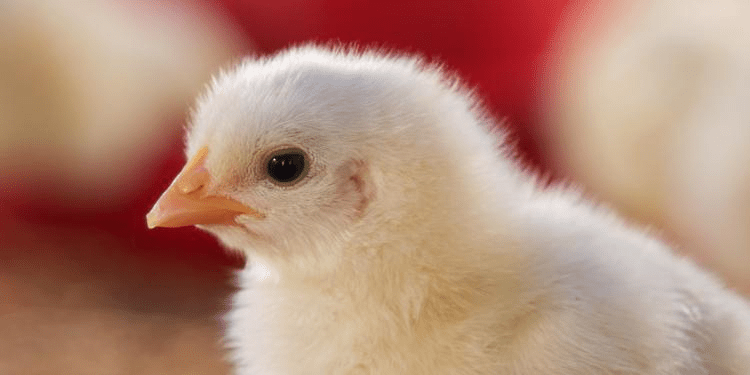
Considered a byproduct of the egg industry, over 35 million male chicks are killed every year in Italy. In 2021, Italy approved a law to ban male chick culling by the end of 2026. But slow progress is being made on making the ban a reality.
In order to ensure the ban can be enacted by 2026, the government must support the transition of companies towards the adoption of more animal-friendly practices, and correctly inform consumers.
However, the adoption of the decrees is still incomplete. The deadline for issuing the pending measures was set for 7 April 2024, but failure to implement the legislation risks continuing to encourage the slaughter of millions of chicks every year.
In the egg industry, male chicks are shredded alive or suffocated within the first 24 hours of birth, and without the use of stunning techniques.
Viable alternatives already exist, such as in-ovo sexing technologies that detect male eggs before they hatch. In France, where a ban on chick culling has been agreed in principle but not yet implemented, the additional cost to consumers is estimated at only one cent per box of six eggs.
Animal Equality, CIWF Italia, Essere Animali, Animal Law Italia and LAV wrote to the Ministries of Health and Agriculture asking them to adopt the decrees necessary to ensure the effectiveness of the ban.
They called for the adoption the envisaged decrees, in particular:
Over 110,000 Italian citizens supported a petition by Animal Equality calling for the ban. The associations stressed that society is ready to take this historic step for animal welfare, and politicians must do their part so as not to betray citizens’ trust.
Regards Mark


Carlota Saorsa / HIDDEN / We Animals
Carlota Saorsa / HIDDEN / We Animals
22 September 2024
The European Pharmacopoeia Commission took a historic step by removing the rabbit pyrogen test from the European Pharmacopoeia in favour of the use of non-animal methods. This decision will not only spare the lives of tens of thousands of rabbits in the EU every year, but will also better ensure the safety of medicines and vaccines.
This long-debated method, which raised ethical concerns and had limitations in accuracy and reproducibility, now belongs to the past.
Pyrogens are fever-inducing substances that can unintentionally contaminate injectable medicines, and their detection is crucial to ensure the safety of these products.
Developed in the early 1900’s, the rabbit pyrogen test was the predominant method for detecting pyrogens. It involves injecting the test substance intravenously into a vein of the rabbits’ ears and observing their reaction, mainly an increase in body temperature. These injections can be repeated until their ears are severely damaged and can no longer be used, or until they show a reaction. In all cases, rabbits are killed at the end.
The limitations of the rabbit pyrogen test are widely recognized, including limited sensitivity and reproducibility. Repeated injections can lead to the development of pyrogen tolerance, while the inherent stress of the test can also affect results.
Alternative non-animal methods with improved sensitivity and relevance have been available for more than 20 years.
Despite many years of efforts to promote the use of non-animal methods for both ethical and scientific reasons, the rabbit pyrogen test remained the standard for detecting pyrogens, resulting in the suffering and death of approximately 25,000 rabbits annually in the EU.
In June 2024, the European Pharmacopoeia Commission, a regulatory body responsible for overseeing the safety of medicines, adopted 57 revised texts in the European Pharmacopoeia. Drug developers will now be required to choose non-animal methods for assessing the pyrogenicity of their products. Among the available methods, the Monocyte Activation Test (MAT) has emerged as a highly reliable and accurate solution for pyrogen detection. This test is based on the response of human immune cells to pyrogens, offering greater sensitivity and reproducibility than the rabbit assay.
This decision marks a significant milestone in the transition away from animal-based testing methods. It is hoped that it will pave the way for the adoption of more innovative and reliable non-animal approaches across various scientific fields.
Regards Mark

300+ civil society groups urge EU to strengthen wolf protection, not weaken it

19 September 2024
The coalition is calling for a new proposal to downgrade the protection of wolves to be rejected, as well as for increased efforts to promote coexistence with large carnivores, and to safeguard decades of conservation success.
A large coalition of civil society and animal welfare organisations is calling on EU Member States to reject the European Commission’s proposal to downgrade wolf protection under the Bern Convention. Their status would be lowered from ‘strictly protected’ to ‘protected’, if the Member States approve the change.
It’s speculated that the change is politically motivated, whilst any change to conservation status of wolves should be justified by rigorous scientific data.
Peaceful coexistence with large carnivores is possible. Raising awareness amongst citizens is key, by providing science-based education on the ecological and socio-economic benefits of wolves. We can also strengthen preventive measures such as the use of fences and sheepdogs and make them more accessible to farmers.
Proper protection of wolves should also be enforced, ensuring that illegal wolf hunting is eradicated and the EU’s Habitats Directive is upheld. This would support efforts made for the recovery of wolf populations in the EU, allowing them their natural place in European ecosystems.
The EU’s inhabitants of rural areas have also highlighted their broad support to protecting wolves and large carnivores: in a recent survey among 10,000 Europeans in 10 Member States, 68% stated that wolves should be strictly protected and 72% agreed that they have a right to co-exist.
According to media reports, there has been a lot of political pressure on Member States to accept the European Commission’s unscientific and politically motivated proposal. Wolves must remain strictly protected – not just for the sake of the species and science, but for the health of our ecosystems and the credibility of the European Union. If the EU wants to be a trusted ally of nature and a global leader, we must set the right example now.
European Environmental Bureau
Regards Mark

17 September 2024
Press Release
The new Commission, announced today, will include a Commissioner dedicated to Animal Welfare, in a move very positively welcomed by animal protection NGOs. This will allow for better prioritisation of the topic, in line with the demands of EU citizens.
Animal welfare will be included in the title of the new Commissioner for Health and Animal Welfare, President Ursula von der Leyen announced today as she revealed the structure and nominees of the new College.
Hungary’s Olivér Várhelyi has been nominated to take this role, subject to his approval in the EP hearing in the next weeks.
It is welcome to see that the competence of Animal Welfare remains under DG SANTE, ensuring a One Health approach that acknowledges the interlink between animal welfare, public health and the environment.
The ask for a Commissioner dedicated to Animal Welfare aligns with the collective voice of 310,000 citizens and over 200 MEPs in the 2019-24 term of the Parliament, and already over 100 MEPs in the new one, in a years-long EU for Animals campaign, led by Eurogroup for Animals’ member GAIA. The new Commissioner will be crucial in ensuring the delivery of the promised revision of the outdated EU animal welfare legislation.
The work of the new Commissioner responsible for Animal Welfare will also greatly interlink with that of other Commissioners – including that of nominee for Agriculture and Food, Christophe Hansen, who is expected to “bring to life the report and recommendations of Strategic Dialogue on the future of EU agriculture”. The report explicitly recommends a revision of animal welfare legislation by 2026 as well as a transition to cage-free systems.
It will also include working closely with the Commissioners responsible for Fisheries, Trade and Environment, among others, to ensure ambitious EU legislation that ensures high animal welfare standards in all relevant areas.
It is great to see that finally, the new Commission is listening to the demands of citizens, who have continuously asked for better EU laws to protect animal welfare. The inclusion of Animal Welfare in the title will ensure that this topic remains a priority in all relevant discussions and we expect the revision of the animal welfare legislation to be the first file to be dealt with.
Reineke Hameleers, CEO, Eurogroup for Animals
Regards Mark

The bearskin hats worn by soldiers outside Buckingham Palace now cost more than £2,000 each, new figures show.
Animal rights activists trying to get real fur out of the bearskin caps worn by King’s Guards took aim at the cost of the ceremonial garb.
The price of the caps soared 30% in a year to more than £2,000 pounds apiece for the hats made of black bear fur, the Ministry of Defense said in response to a freedom of information request by People for the Ethical Treatment of Animals (PETA).
Peta anger over soaring cost of bearskin caps worn by King’s Guard outside Buckingham Palace

Regards Mark


12 September 2024
“Fact-finding” visits to fur farms in Poland are being conducted this week by auditors of the European Commission, as part of the process in which an EU-wide ban on such farms is being considered.
This visit by the Directorate-General for Health and Food Safety comes as a result of the European Citizens’ Initiative Fur Free Europe, in which 1.5 million European citizens called for a ban on fur farms and the sale of farmed fur products in the EU.
On fur farms, animals such as mink, foxes, chinchillas and racoon dogs are kept in tiny cages, hindered from displaying natural behaviour and killed solely for an unnecessary fashion product: fur.
Under no circumstances, can the welfare of animals on fur farms be protected and a ban should be the only way forward. As a highly polluting industry, fur farming and processing also pose serious threats to biodiversity and public health. 20 member states have already implemented total bans, partial bans or other legislative measures on fur farming, however the EU is still set to give its final decision on an EU-wide ban.
During the visit, the auditors will be primarily focusing on the public health and zoonotic disease risks posed by such farms, after several fur farms in Europe were affected by Covid-19 and avian influenza in recent years, including Poland. Besides evaluating the implementation of the One Health mechanism on Polish fur farms, the audits may also include an evaluation of the welfare of farmed animals.
Although the auditors’ visits from the European Commission are announced, I am confident that the evaluation of fur farms in Poland will be negative. The welfare of foxes and minks is shockingly poor and will not go unnoticed by the visitors. As for public health risks, this issue has been ignored by the fur industry and disregarded by the Ministry of Agriculture, so we also expect a negative assessment from the auditors.
Paweł Rawicki, President, Otwarte Klatki
Apart from the undeniable animal welfare issues inherent to fur farms, the fact-finding visits conducted by the European Commission to fur farms in certain Member States are highly relevant. The connection between fur farming and the spread of zoonotic diseases must not be overlooked, especially in the context of preventing future pandemics. Given the non-essential nature of fur products, and in line with the One Health approach — essential for anticipating, preventing, detecting, and controlling diseases that transmit between animals and humans — it is unlikely that proportionate justifications can be found to continue legitimising this industry in the EU.
Bethania Malmberg, Programme Officer Fur Animals, Eurogroup for Animals
With over 300 farms keeping 3.4 million animals, Poland is currently the largest fur producer in the EU. Earlier this year, a bill was presented by a Polish MP for a national ban, yet this is still set to be deliberated in Parliament.
Regards Mark

10 September 2024
Feedback from a public consultation on amendments to the live animal transport regulation has just been published. The results reveal that citizens are very concerned about how animals are treated in this sector.
Read the summary results of the public consultation here.
In 2023, the European Commission announced it would update the Transport Regulation as part of its full revision to the animal welfare legislation. Soon after, it published its initial proposal for the update, which it invited European citizens to feed back on through a public consultation.
The response level was very high. The public consultation, which was open for a period of over four months (between 8 December 2023 and 12 April 2024) gathered over 5,000 contributions for analysis.
Within this number, a lot of the key input came from Spain, Germany, France and Italy, highlighting significant public interest for this topic in these Member States.
The results showed citizens overwhelmingly support stricter regulations to protect animal welfare in this industry, including by:
Stakeholders from various fields, including agriculture, public authorities, and NGOs, also provided feedback on different areas of the proposal, such as its current scope and what it says about journey times and temperature controls. These results were mixed, with some differences of opinion arising between the groups. For instance, industry voices and farmers raised concerns about limiting journey times during transport, whereas NGOs posited that journey times should be reduced significantly, for the wellbeing of the animals subjected to them.
The transport proposal needs some changes to truly work for animal welfare
As the responses to the public consultation show, the current transport proposal should be further revised. Our white paper details several measures that can be used by policy-makers to draft the strongest policies possible in this area: addressing both the needs of the animals in this sector, as well as the concerns of European citizens who have voiced support for protecting their welfare.
It’s great to see that, yet again, the public is so engaged in the topic of live animal transport, and that European citizens in particular want to see more being done for animal welfare. This sector is very complex and causes suffering for millions of animals each year, both in the EU and beyond. The current transport proposal needs to be much stronger if it is really going to have an impact on the wellbeing of animals, and a lot of the conflicts of opinion expressed within the consultation could be addressed to a wider transition to a ‘meat and carcasses’ trade, in which no live animals would have to be subjected to these long and difficult journeys anymore.
Inês Grenho Ajuda, Farm Animals Programme Leader, Eurogroup for Animals
https://www.eurogroupforanimals.org/library/live-animal-transport-due-time-change-rules
Regards Mark



 World Animals Voice