

Regards Mark
Link: https://www.eurogroupforanimals.org/campaigns/no-animal-left-behind
The European Commission promised to deliver a full revision to the animal welfare legislation by October 2023, which would have affected the lives of billions of sentient beings across the EU.
The latest scientific evidence, along with various case studies and investigations on livestock farming, show the current legislation is not fit for purpose and does not go far enough to protect the welfare of Europe’s kept animals.
However, the European Commission has so far failed to deliver on its promise. Rather than publishing the whole revision, they only published the Transport Regulation in December 2023, leaving countless animals open to mistreatment and neglect for potentially years to come.
Continue reading via above link;
Mark


5 August 2024
Directive 2010/63/EU establishes common EU measures for the protection of animals used for scientific purposes, but the way the Directive is implemented differs between EU Member States. A new implementation report highlights this heterogeneity, particularly in areas where the Directive lacks specific, detailed provisions.
Member States are required to send information on the implementation of Directive 2010/63/EU to the European Commission every five years. Following the first report in 2019, the second report, covering the period 2018-2022, has just been published.
Education and training
The Directive requires appropriate education and training for staff carrying out procedures, caring for animals, killing animals and designing procedures and projects. However, implementation rests largely with Member States, which can decide independently how competence should be demonstrated.
Most Member States mentioned that they follow the EU Education and Training Framework document, but did not explicitly explain how competence should be demonstrated beyond having obtained the required education.
Project evaluation and authorisation
During project evaluation, applications must be carefully considered to ensure that animal use is justified, the principles of the 3Rs (replacement, reduction and refinement) are applied, and that the benefits are expected to outweigh the anticipated harms. 2 Member States use individuals to evaluate projects, whereas the others use a panel.
Around 15 000 projects involving the use of animals are authorised across the EU and Norway annually. The number of projects has remained reasonably constant throughout the five-year reporting period, and only around 4.5% of applications are rejected each year.
Competence of project evaluators is assured in different ways. However, it seems that there may be scope for improved training to ensure a consistent approach across the Member States. Many Member States discussed the required qualifications of project evaluators, but only Ireland mentioned expertise in the area of non-animal methods.
It is surprising that there was no explanation on how to achieve harmonisation when project evaluation is carried out by multiple competent authorities from some Member States.
Only one Member State confirmed that applicants are never involved in the project evaluation of their own work.
Animals bred and killed but not used in procedures
This category includes animals killed for their organs and/or tissues, animals used for breeding when they reach the end of their breeding life, animals which were ill and humanely killed before being used, and animals killed in order to protect the health and scientific integrity of the colony. They are not reported in the annual statistics.
In 2022, 9.5 million animals were bred and killed but not used in procedures. This means that there are more animals that fall into this category than the number of animals that are actually used in procedures. Mice, zebrafish and rats account for more than 90% of the animals reported.
Inspections
20 Member States complied with the requirement to inspect at least 1/3 of the user establishments each year. Greece, Croatia and Portugal appear not to have met this criterion for any of the years reported.
According to the Directive, an appropriate proportion of inspections must be carried out without a prior warning. Across the Union, around 1/3 of inspections were unannounced. However, the proportion of unannounced inspections varied between Member States from 0-100%. This suggests that different criteria are being applied to determine “an appropriate proportion.”
8 Member States performed no unannounced inspections which is the same number as in the first report. Cyprus and Portugal performed no unannounced inspections over the ten years covered by the two implementation reports.
18 Member States acknowledged that they did not meet the minimum requirements for inspection in any of the reporting years.
Penalties
Nearly 3/4 Member States reported infringements, and 21 Member States have used administrative actions. Infringements which were dealt with by administrative action were due to failings in animal welfare, staff, records, environment, and facilities.
Almost half of the Member States used legal actions, of which two-thirds were fines.
Structure of competent authorities
The Directive requires that the authorisation of establishments, inspections, project evaluation, project authorisation and retrospective assessment are performed by a competent authority. 7 Member States have only one competent authority for each of the five tasks (Denmark, Ireland, Cyprus, Malta, Portugal, Slovenia, Norway), while other Member States have very large numbers of competent authorities (for example, 112 in Spain; 245 in Italy, 328 in Poland and 573 in Germany).
It may be challenging to provide a consistent approach where there are multiple competent authorities responsible for the same individual tasks. Large numbers of competent authorities for any or all tasks increase the risk of inconsistencies.
Summary
The implementation reports are an opportunity to show how Member States have been working since the implementation of the Directive, understand where they encounter difficulties, but also highlight best practices so that they can learn from each other.
The lack of harmonisation across Member States continues to have a negative impact on the objective of creating a level playing field across the EU, but also, and importantly, on animal welfare.
Regards Mark

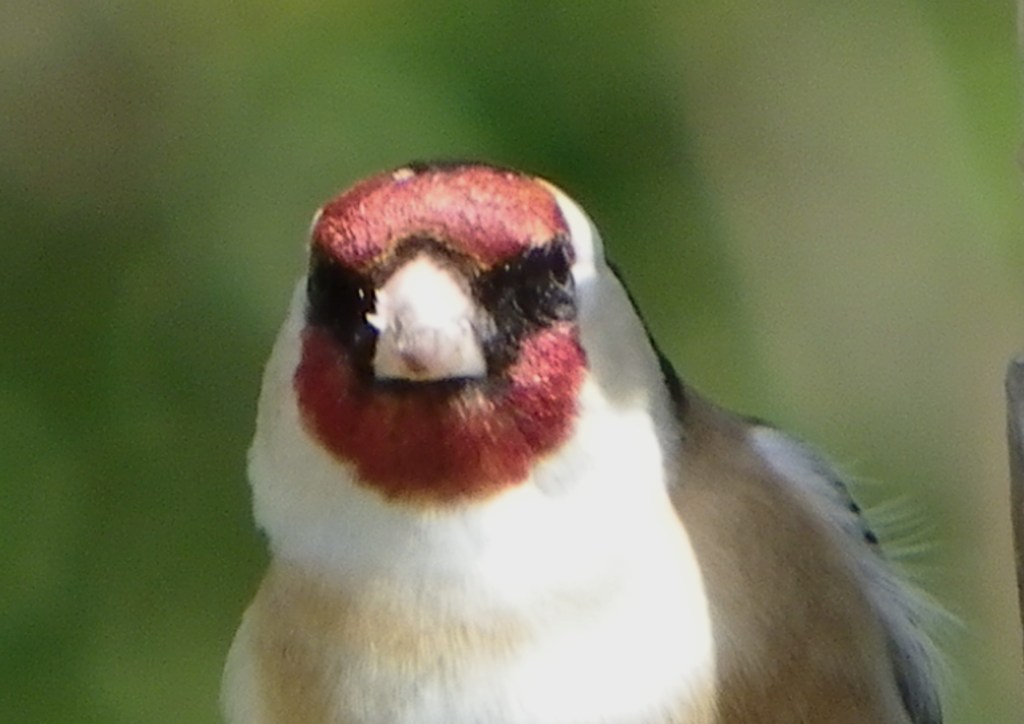
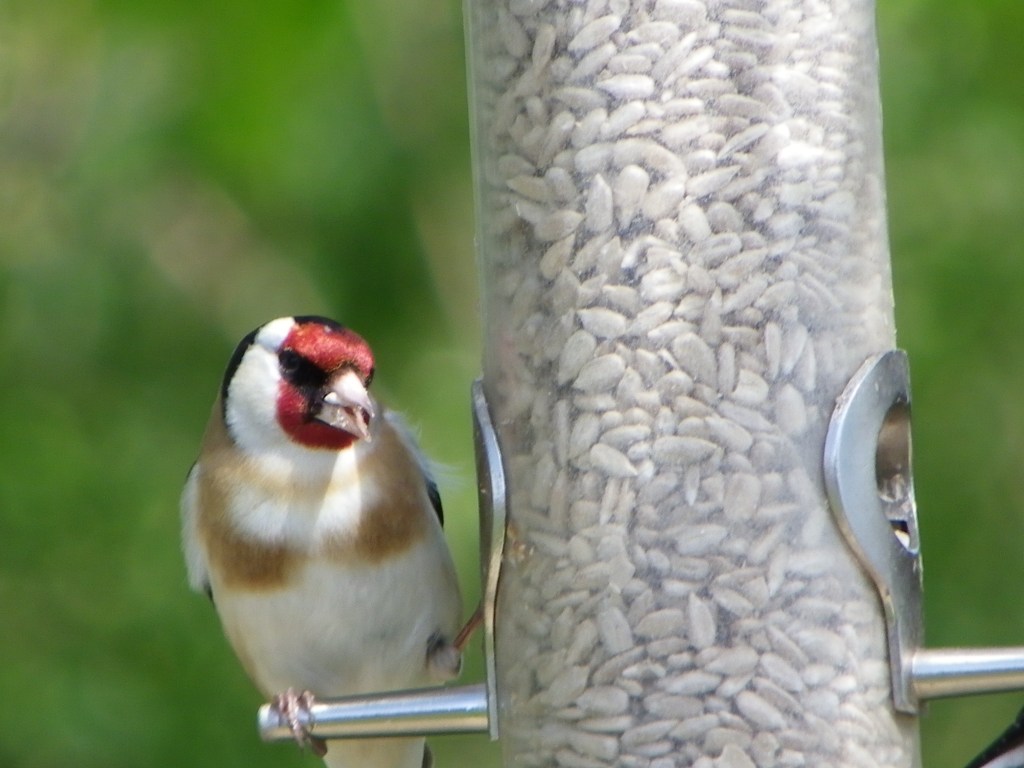
We get masses of the beautiful ‘Goldfinches’ visiting the garden each and all day.
Here are a few pictures I took in the the garden of these beautiful birds:
A flock of Goldfinch is called a ‘Charm’ – and charming they are for sure.

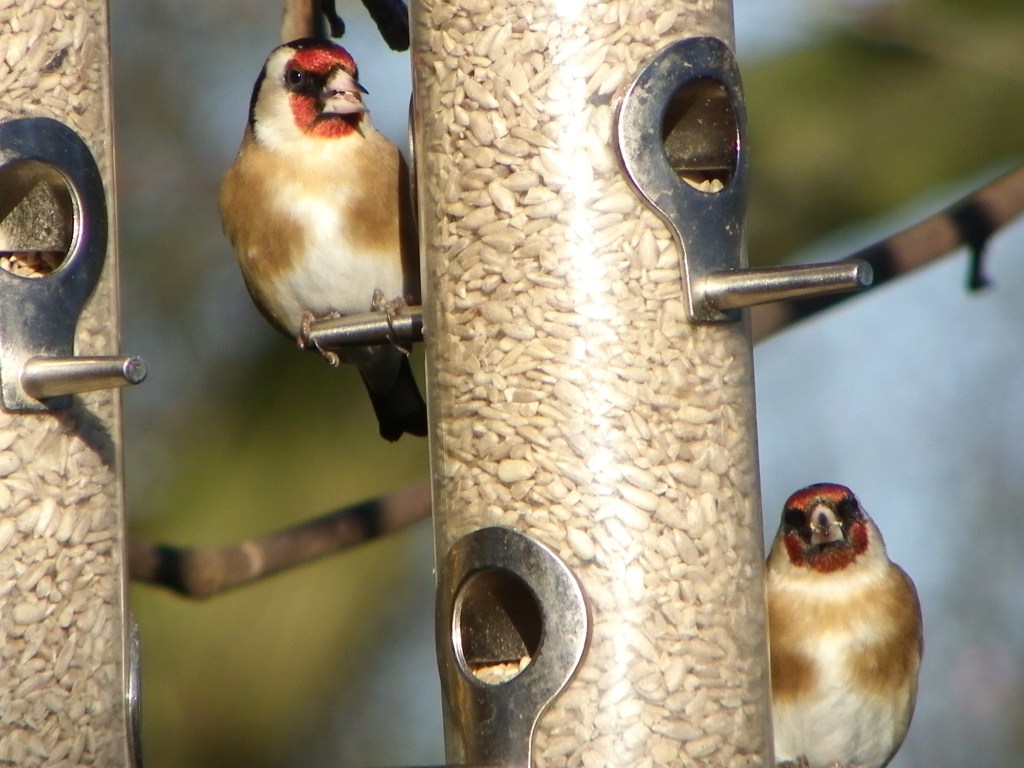

In the last week, (now start of August) there has been a massive drop in the birds visiting the feeders for the Sunflower Hearts – same on talking to my neighbour, Was getting concerned as a huge and very massive decline; (down from a flock of around 50 to virtually nothing in a week !) – more investigation needed. With the following video and other data researched, it ended up being ‘job sorted’ – no need to worry = phew ! see you beauties all again in the coming winter months.
Regards Mark


1 August 2024
WAP
The ban on commercial seal products on the EU market should remain, EU citizens say, as the European Commission conducts an evaluation of the legislation adopted in 2009.
In 1983, the EU prohibited the import of products from seal pups and in 2009 the legislation was complemented with a prohibition on the placing of all seal products from commercial hunting on the market, based on moral concerns on seals being killed with inhumane methods. This legislation, referred to as the EU Seal Regime, includes an exemption for products derived from traditional hunts from indigenous communities.
The regulation was put forward after a long battle, and came through after EU citizens became aware of the cruelty involved in obtaining seal products. The legislation was challenged under the World Trade Organisation (WTO), which confirmed, in a landmark decision, that animal welfare is a justifiable rationale for a trade restriction to protect public morals.
Since the legislation came into force, millions of seals have been spared a brutal and cruel death. Despite this, the EU is now, unexpectedly, running a fitness check, to assess whether this legislation should hold, with the risk of backtracking it.

A backtracking of this legislation would seriously undermine animal welfare and public morals since commercial hunting is extremely cruel and seals experience excruciating pain and slow deaths. Killing methods remain inhumane, involving the use of clubs and hakapik, and the shooting of seals from a distance resulting in severe injuries.
EU citizens continue to be against this practice. In a new survey conducted in 13 Member States, 80% of respondents said they support the EU ban on the trade of seal products derived from commercial hunting and 68% said it should not be weakened in any way. 80% also agree that the legislation remains important to protect ethical concerns of EU citizens and animal welfare.
A 2011 survey showed that 72% of citizens in 11 Member States supported the restriction on the trade in seal products, demonstrating growing support. It is therefore clear that EU citizens want this legislation to stay intact.
This survey clearly shows that the EU Seal Regime remains crucial to protect seals and address the concerns of Europeans. As demanded by its citizens, the EU should uphold efforts to protect the welfare of these animals on the continent and beyond, maintaining its leadership and driving positive change.

Léa Badoz, Wildlife Programme Officer, Eurogroup for Animals
In 2009, the EU banned the trade in commercial seal products in response to long-standing and serious public moral concerns about the welfare of seals being inhumanely slaughtered, primarily for their fur. These survey results clearly demonstrate that, since that time, EU citizens’ attitudes towards the cruel commercial sealing industry have not changed. It is vital that the EU Seal Regime is upheld.
Dr Joanna Swabi, Senior Director of Public Affairs, Humane Society International/Europe
This survey demonstrates that EU citizens are deeply concerned about the blatant and unnecessary cruelty inflicted in commercial seal hunts. Seals shouldn’t be treated as commodities for the sake of profit. They are of great significance to the wider ecosystem in which they live, and they deserve our protection. It is crucial that the EU Seal Regime is maintained.
Sanne Kuijpers, campaign manager Wildlife, World Animal Protection Netherlands
The survey shows that EU citizens are still very concerned about animal welfare. They are happy that seal products from commercial hunts are no longer sold on EU markets. The EU should stand up for the values of its citizens. The EU Seal Regime is a milestone that should be celebrated, not evaluated.
Barbara Slee, Senior Programme Manager – International Policy, the International Fund for Animal Welfare
Regards Mark
31 July 2024
Essere Animali
As heat waves surge throughout Europe, animals are vulnerable to extreme temperatures, especially when they are being transported by road and sea. A new investigation found animals forced to travel at temperatures above 45° without water and left under scorching sun in Italy, whilst another explored the issue of dead animals being tossed off of export vessels into the Mediterranean sea.
A recent investigation by Essere Animali, in which they monitored transport shipments of animals on highways in Italy, revealed some animals are being transported in trucks of internal temperatures reaching up to 48 degrees. Their photos and footage show pigs gasping for air and left without access to water. In one case, animals were left for long periods under the scorching sun with fans turned off in the truck, while drivers took their break.
Unfortunately, this is not an isolated case. The welfare of animals during transport continues to be poorly protected by European laws. According to regulations animals should be safeguarded against “extreme temperatures”, but there are no clear definitions, as well as no enforcement. Furthermore, national travel is exempt from this rule.
Essere Animali, together with Eurogroup for Animals, calls for the long distance transport of live animals to be banned, and that clear references are introduced for temperatures, taking into account humidity and the condition of animals.
Animals washed up on beaches
The demand for exports to third countries has risen sharply. The EU’s Member States export around three million animals by sea to distant countries, posing significant risks to animals with increased mortality rates.
Treated like unwanted waste, deceased animals are disposed of in the Mediterranean. Not only is this completely insensitive, but it increases pollution and also risk of shark attacks at numerous tourist hotspots on Mediterranean beaches.
In over 50 media-documented cases, dead and discarded animals from livestock vessels were washed ashore in France, Spain, Greece, Israel and Portugal among others.
A new film by Animal Welfare Foundation shows the extent of this issue, with a clear call to action: live animal transports to third countries are wrong in every respect and must be stopped.
egards Mark
29 July 2024
Long-awaited statistics on the use of animals for scientific purposes in the 27 EU Member States and Norway during 2021 and 2022 have been published. We dive into the figures to see how many animals were used, which species, and in which ways, to explore how the data can inform the transition away from animal use.
For the first time, a systematic trend analysis was included to make direct comparison with previous years data available in order to monitor the objectives of Directive 2010/63/EU.
2021 Statistics
In 2021, after three years of consecutive decrease, the total number of animals used for the first time increased significantly to 9.41 million. This is 18.5% higher than in 2020, and 6.6% higher compared to 2018.
This increase is mainly due to three research projects, two using salmon in Norway and one using larval form of sea bass in Spain, accounting for over 1.3 million animals. Part of the increase can also be attributed to projects that were either cancelled or postponed in 2020 due to COVID-19 lockdowns and carried out in 2021.
Positively, 13 Member States reduced the number of animals used for the first time in 2021 compared to 2020.
2022 Statistics
In 2022, the total number of animals used for the first time decreased to 8.39 million, 10.9% lower than 2021, and 5% lower than 2018.
This confirms the exceptional nature of the increase reported in 2021, and highlights a longer-term decreasing trend.
Species
In both years, mice continue to be the most used species, followed by fish, rats, domestic fowl and rabbits.
Fish saw a dramatic increase in use in 2021, whilst 2022 saw an increase in the proportion of reptiles used.
Disappointingly, the total number of non-human primates used for the first time increased. Most non-human primates were imported from Africa and Asia, shifting more prominently towards Africa after the Chinese export ban introduced in 2020. The percentage of those that came from self-sustaining colonies (from parents bred in captivity) increased from 58.8% in 2021 to 74.4% in 2022, a positive shift towards eliminating capture of wild primates for breeding purposes.
Genetic alteration
In 2022, 24.8% of animal uses were carried out on animals that were genetically altered, an increase of 4.3% compared to 2021. Of these, 17.5% were carrying a harmful phenotype. Zebrafish and mice continue to be the most genetically altered species.
In addition, 852,145 animals were used in 2022 for the creation and maintenance of genetically altered animal lines, an increase of 28.1% on 2021.
Severity of suffering
The proportion of ‘severe’ uses continues a downward trend since 2018, but this still represents 918,202 animals in 2021, and 784,048 animals in 2022.
However, it is worrisome that the proportion of ‘moderate’ uses has been increasing since 2019, reaching over 42% of uses in 2022.
Types of use
As in previous years, most animal uses were conducted for research purposes.
The number of uses of animals used for regulatory purposes continued to decrease by 6.2% in 2021, and 16.2% in 2022. This is mainly due to continuous reductions in animal uses related to legislations on medicinal products for human use and food legislation, amongst others. This can be attributed to combined efforts from EU regulators, including the EDQM and the European Commission and industry via EPAA, as well as changes in legislation. This includes the decision in 2021 to completely replace the rabbit pyrogen test within five years, and the replacement of the use of mouse bioassay for the purposes of shellfish toxin testing by the so-called Lawrence method.
Unfortunately, this trend is not reflected in other legislation, including medical devices legislation and industrial chemicals legislation, where the number of animals used to satisfy regulatory requirements has been increasing since 2018.
Routine production saw an increase of 1.5% in 2021 and 15.7% in 2022. This category includes monoclonal antibody production by the mouse ascites method, one of the most severe procedures. In 2022, only 3 Member States reported the use of the mouse ascites method, with France representing 99.5% of that, using 49,038 mice. Germany stopped the use of animals for this purpose in 2022. The Commission itself mentions in the 2022 report that the use of mouse ascites method which results in high severities and has alternative production methods available should be discontinued.
What do the statistics tell us?
The statistics indicate that policies to promote the development and use of non-animal technologies and approaches require a further push in order to significantly reduce animal experiments in Europe.
Although a positive trend is now seen in the replacement of a small number of methods, this took decades to achieve after the development of non-animal alternatives. Likewise, the mouse ascites method continues to be accepted in some EU countries despite its near ban in most Member States, and the existence of valid alternatives.
The upward trends in the use of some species like the ones belonging to groups of non-human primates are also worrying in an era where human-based methods have been thriving.
It will be important to take lessons from the social, economic, regulatory and technological factors that influenced the slow transitions that are now taking place, in order to plan more effective transitions moving forward.
Regards Mark

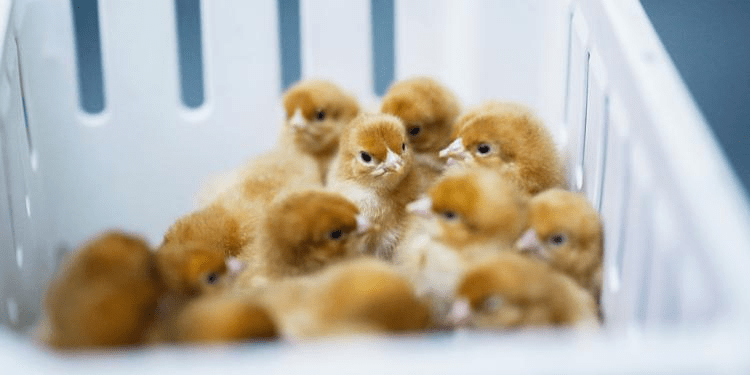
Male Chicks – A ‘Waste’ By Product Of The Egg Industry to the tune of 65,000 lives EVERY DAY.
26 July 2024
GAIA
Male chicks who cannot lay eggs are considered a waste product of the egg industry, condemned to a cruel death as soon as they hatch. In Belgium alone, 65,000 chicks are killed every day, adding up to 24 million per year.
The chicks are killed in shocking ways, such as being tossed into a macerating machine that crushes them, or being gassed to death en masse.
Only one in three Belgian consumers are aware of this practice, according to a research by GAIA, which is asking citizens to participate in an audio petition to call for an end to this practice.
The petition asks citizens to record themselves crowing like a rooster, in order to express their outcry at this cruel practice and call for more respectful treatment of chickens.
The recordings will be collated to create a powerful message for legislators.
Alternatives exist
In-ovo sexing allows producers to determine the sex of the chick in the egg before birth, allowing for sorting before the embryo becomes susceptible. This technique is already used in some Belgian hatcheries. Countries like Germany and France have already taken steps to abolish chick culling, moving to this technology instead.
The survey by GAIA shows that 82% of Belgians believe that supermarkets should only obtain their supplies from producers who do not cull chicks. It also indicates that 82% of Belgians are ready to pay 2 euro cents more for each egg from such a producer. In addition, more than half of Belgians are ready to change brands and turn to a more respectful supermarket, which would offer eggs without grinding or gassing.
Leave a call to save the chicks
The audio petition will pass through twelve major cities in Belgium, asking citizens to share their cry on social networks in order to raise awareness among those around them.
Supermarkets continue to sell eggs from chickens whose chicks are cruelly gassed or crushed alive after birth. However, there are effective technologies to prevent this massacre. It is therefore high time that they take their responsibilities, while responding to the wishes of the vast majority of Belgian consumers.
Sébastien De Jonge, Director of Operations, GAIA
Regards Mark
Click to read the article
Regards Mark

 World Animals Voice