Category: General News

Lets face it, hunters will kill anything regardless of the positives, because they lack the intelligence of reality – or they just lack intelligence !






https://www.brittany-ferries.co.uk/ferry-routes
Please use the following CIWF link to take protest action and get this trade stopped immediately.
Thanks and regards – Mark / Diana

Image (Pixabay)
And so it begins .. a young female of 9 months was found shot on February 15th, 2025 near the small town of Fiersbach, in the district of Altenkirchen. The autopsy performed confirmed death by pericardial tamponade due to a projectile.
Under the law this is illegal and a crime, and the Upper Nature Conservation Authority SGD Nord has filed a criminal complaint. As usual, this will lead nowhere – the, without a doubt, involved hunters and farmers are a tight-knit group who cover each others’ backs.
Interestingly, only 5 days later, on February 20th, the Rhineland-Nassau Farmers’ and Winegrowers’ Association and the interest group of hunting cooperatives and private hunting owners declared themselves successful with their motion to have the wolf included in the hunting law – meaning that it is henceforth to be regarded as a huntable species.
Together with the EU’s recent decision to weaken the protective status of the wolf this is bad news …
Also, it means, in our view, that one local party produced facts several days ahead of that decision by the state government and the Ministry for Climate Protection, Environment, Energy and Mobility Rhineland-Palatinate.
GERMAN ARTICLES

https://www.blick-aktuell.de/Berichte/Wolf-wird-ins-Jagdrecht-aufgenommen-619242.html?StoryId=625037

A difficult subject, one keeps hearing, that requires objective discussion. Does it? Like here, the German “Volkswagen Stiftung“, of all people, feeling the “topic deserved more visibility” (how very nicely put) .. whatever that means.
https://www.volkswagenstiftung.de/en/news/news/animal-testing-topic-deserves-more-visibility
https://www.volkswagenstiftung.de/en/news/news/experiments-animals-statement
(from the above publication)
… An open and honest discussion about the use of animals in research and, for example, a comparison with animal use in food production is only possible if everyone involved knows what an animal experiment entails, how much or how little the animals suffer in the process, and how the decision to undertake an animal experiment is reached. ..
Now, we have seen, here on this site, and elsewhere, what “animal USE” looks like – in all areas of such USE. And have come, collectively, to the conclusion that using animals, who are not able to lobby their own cause and interests in Human society, is wrong.
Time and again people think they must argue that objective discourse is necessary to decide how far one may go “using” beings for Human interests, who would never willingly submit to such use in the first place, if asked (o.k., with the advances in AI, man may in not too far a future be able to do exactly that: ask).
Personally, I am sick and tired of the rampant ABuse we see each day, seen by far too many as a “necesssary evil” visited upon the utterly helpless. There can NEVER be a justification of that – ever.
There can be no “objective discussion” of something that, by its very nature, is a “subjective issue”. An animal is not an object, but a subject – like a Human. How can personal feelings, and emotions not matter relating to the suffering of sentient beings?
No one would demand to discuss child abuse as an objective issue ..
(and again from the above publication)
And what does this debate currently look like? The discourse is strongly characterised by emotions,’ says Roman Stilling, speaker at the platform ‘Understanding animal experiments‘. The emotions raised around the debate arise primarily because people believe animal testing always means potentially inflicting pain, suffering and harm on an animal. ‘That’s the legal definition – otherwise it wouldn’t formally be animal testing.’ We shouldn’t forget, he adds, why experiments are carried out on animals: ‘It’s because we can’t do it on humans.’
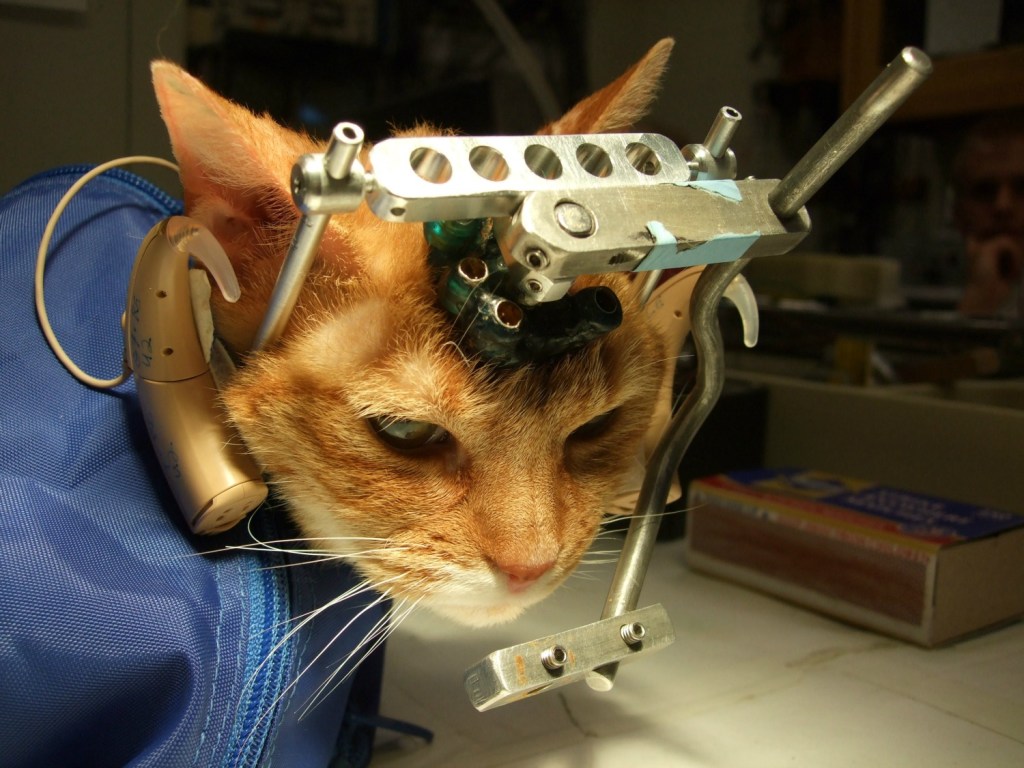
Quite, “because we can’t do it on Humans“. So off we go and find some poor non-Human sod who cannot stop us subjecting him/her to invasive, painful and ultimately fatal procedures.
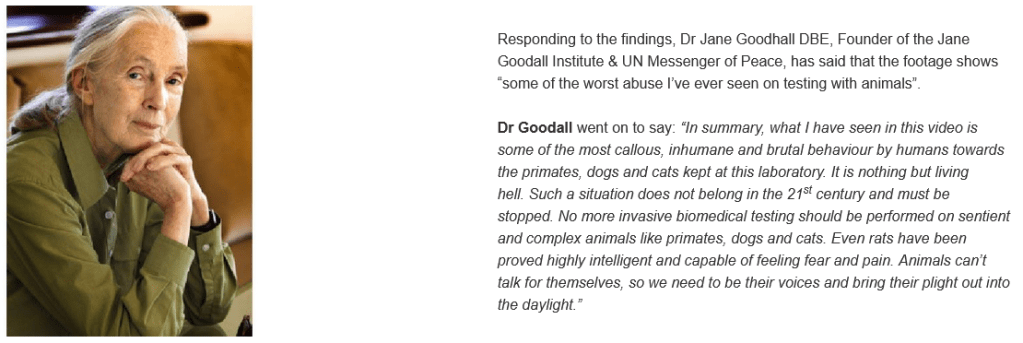
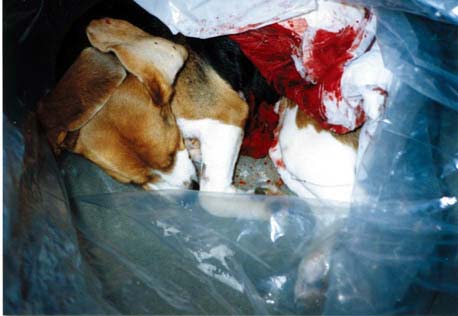
Like at LPT, Germany, ..
https://crueltyfreeinternational.org/toxicity-testing-lpt-germany

I own a book on the subject, titled “Slaughter of the Innocent”, by the Author Hans Ruesch. With 1978, not a recent publication, and hard to get these days, but as important and relevant today as it was then ..

(from GOOGLE books)
“SLAUGHTER” is the first book ever written which directly discusses the scientific arguments regarding the needless use of animals, as a part of medical progress. Mr. Ruesch spent countless years compiling this gut wrenching masterpiece. He successfully lifts the veil of secrecy which has always been an important part of research establishments & the medical community as well, giving the reader a peek at what REALLY goes on, after the laboratory doors are closed. His words reveal some of the worst atrocities anyone could possibly imagine. Without ignoring the ethical questions – “it’s just one of life’s necessary evils, isn’t it?” – The author gets right to the point advising the reader, “Somebody up there is lying to you.” With his creative style & excellent documentation, Mr. Ruesch washes away the excuses of doctor apologists for animal experimentation, with facts showing not only that animals aren’t needed for Medicine/Health to move forward, but the use of which often leads to detrimental & misleading findings, & catastrophic results. This wonderful yet disturbing volume is a must read for any person entering the field of medicine or the people already there.
There CAN NEVER BE a justification for Vivisection, in whatever form, for whatever reason, wherever.



Mahatma Gandhi quotes:
“Vivisection is the blackest of all the black crimes”.
“I hold that the more helpless a creature, the more entitled it is to protection by man from the cruelty of man,’ and I abhor vivisection with my whole soul. All the scientific discoveries stained with innocent blood I count as of no consequence.”

