Translation of above text: An excerpt from a biased article in late 2016 about the adequacy of the conditions in the live transports (since then, countless horrors have been documented, all of which turn out to be adequate):
“The issue of animal cruelty is very important to the Ministry of Agriculture and to me personally,” Uri Ariel clarified. “We decided to conduct a surprise inspection of a shipment of calves arriving in Israel, in order to see the reality up close. The conditions on the ship were adequate.”
According to him, the professionals in veterinary services are doing a sacred job to reduce harm to animals, “We are constantly examining new ways to see what else can be done to reduce harm to animals imported into Israel.”
“Animal cruelty is a well-known prohibition in Judaism, an example of which is the rule ‘You shall not muzzle an ox,’ which was already written in the Torah thousands of years ago. Judaism taught humanity not to harm animals, and we as a country see this as a moral and professional obligation,” emphasized the Minister of Agriculture.
Thanks to many reports we received in these days, we are aware disturbing videos and images showing scenes of violence against animals are circulating on internet. The suspect, a Bulgarian woman, was arrested on charges of money laundering, criminal conspiracy, and cruelty towards animals.
What the girl is accused of is unbelievable. You can watch scenes of animals tortured and killed, mutilated and abused for hours, subjected to unimaginable pain for profit. It is thought that it’a about fetishistic practice known as “crush fetish,” where individuals derive sexual pleasure from witnessing the crushing of living beings. These acts were filmed and distributed on a fee on platforms like Telegram.
In one instance, the perpetrators, woman with another guy, rented a space in Sofia, where they filmed themselves committing these acts. The footage reveals them forcing animals into distressing positions, including tying cats to leashes and running them over with vehicles.
The explicit nature of these viral animal cruelty videos has caused immense indignation among animal welfare communities and the general public. For this reason in Bulgaria there are protests since the last Friday in every city and, perhaps there will be many more.
OIPA in the face of this horror could not remain silent. Yesterday we sent the Bulgarian Minister of Justice Mr. Georgi Georgiev a letter calling for greater protections for animals and increased penalties for those guilty of mistreatment.
Below, the text of our email.
Dear Minister of Justice of Bulgaria Mr. Georgi Georgiev Milan, 20th March 2025, Minister of Justice of Bulgaria Mr. Georgi Georgiev, We would like to express our concern about the case involving Gabriela Sashova e Krasimir Georgiev (Габриела Сашова и Красимир Георгиев). We are aware Mrs. Sashova was arrested on charges of money laundering, criminal conspiracy, and cruelty towards animals. It is claimed that this couple tortured innocent victims for years and recorded the scenes to then sell them on the internet. Our Organization, active internationally with longstanding experience in the field, wants to highlight how cruelty towards animals is indicative of social danger. For this reason, many countries have intervened on a legal level, by introducing new crimes against animals or by increasing sentences. As Bulgarian citizens have communicated to our Organization there is the need for Bulgaria to support this fight to legally defend animals in response to increasing cultural awareness for this issue. Finally, we would like to remind you that Bulgaria subscribed to the European Convention for pets’ rights therefore showing interest in animals’ wellbeing. We look forward to seeing a fast legal response in terms of punishment and prevention. We offer our support for any additional activities and initiatives your country will undertake. Best regards
****************************
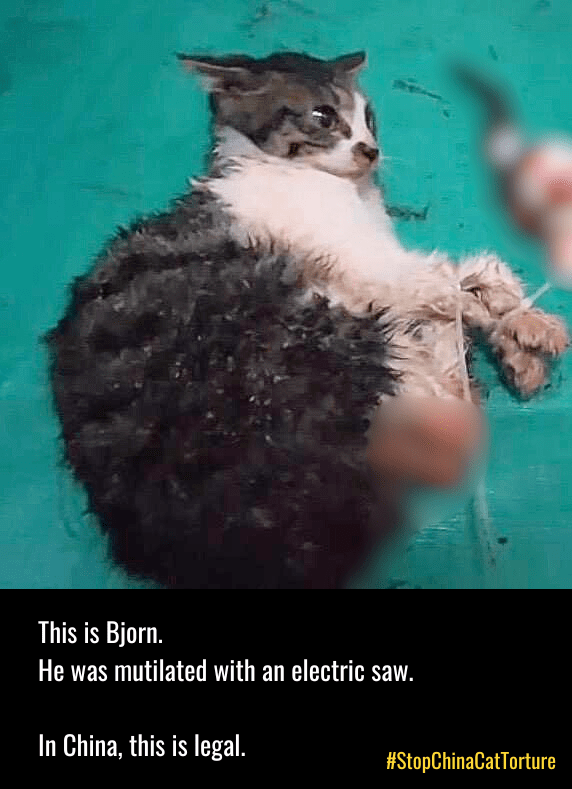
Now, we feel we must add a comment of our own to this .. So-called “crush videos” are directly linked to the “cat torture rings” originating in China. We have mentioned this on the site previously:
It was, as we’ve already said, only a matter of time until this would spread, and “copycats” (an unfortunate term given the victims) in other countries would follow suit. Individual cases in the US have been known for some time, Europe less so. Alas, no longer …
With the curse of social media allowing worldwide access to this crap, to underage “consumers” also. This is indeed the only handle there is in China against this – the involvement of minors, which is illegal. As to the animal victims, there exists no legislation to protect them.
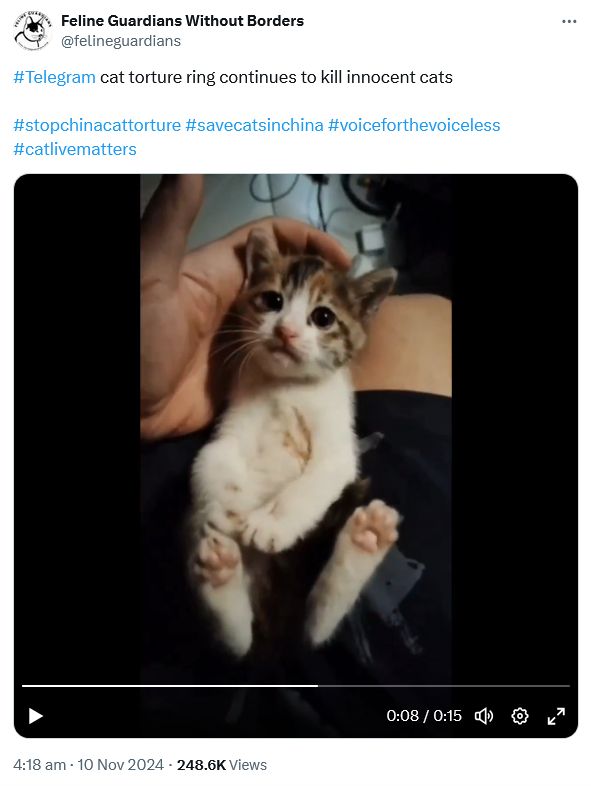
For me personally seeing this below is quite enough. This little chap is trembling with fear, likely because he/she has seen what was done to his/her siblings. Without a doubt tortured to death like so many others, although FG (Feline Guardians) has not released details. For those of us who have seen the worst, there is no need …
Source: Feline Guardians
Make no mistake: There can be NO place for this sort of thing, not in China, nor anywhere else. As already declared elsewhere on the site: An Eye for An Eye.
Dear President Mr. Abdelmadjid Tebboune, Prime Minister of Algeria Mr. Nadir Larbaoui and President of The National Economic Social and Environmental Council Mrs. Rabéa Kharfi,
With this letter, we appeal to your kind attention and compassion expressing our deep concern and indignation about how stray animals are treated in your country.
We sincerely demand to consider our proposal of employing humane and not cruel methods for managing and monitoring the population of stray dogs and cats in Algeria, as well as implementing national laws and local regulations on the issue to avoid cruelty and abuse on animals.
Now is the right time to make a great change and you can be the driver of that change by banning the terrible practise of “Galoufa” – القالوفة”. It is time to listen to the plead of all your citizens who are asking to end this brutal and insane mass slaughter of sentient beings. We are now living in the 21st century and not in the 19th century, when Galoufa was firstly introduced. A compassionate approach to deal with the strays’ overpopulation exists and may be easily implemented. Animal welfare organizations, like OIPA, hope that the Algerian government will adapt to a now widespread international culture that respects animals through the adoption of bloodless and modern methods in the fight against stray animals, resulting in positive international media prominence.
We hopes that Algeria will incorporate into its legislation the principles of Brambell’s internationally recognised Five Freedoms of Animals, namely: freedom from hunger/thirst; right to a suitable environment; freedom from disease; right to exhibit normal behavioural characteristics; and freedom from fear.
If you decide to make Algeria a compassionate country for animals, many of your citizens will thank you and trust you.
ALBANY, N.Y. (NEWS10) — Two people involved in a harsh animal cruelty case were arraigned in Albany City Court Friday morning. Both Christopher Maxwell, 32, from the Bronx, and Latisha Ellis, 32, from Albany, pleaded not guilty to animal cruelty charges. The courtroom was filled with animal rights advocates, who arrived at the hearing early to stand in support of the dog that died.
The pair allegedly tortured and killed their one-year old female pit bull in a parking lot in the area of 4th Avenue and Franklin Street in February. Investigators said the two left the dog Inside a crate at a home for several days with no food or water. Police said Maxwell and Ellis then took the dog, while still inside the crate, to the parking lot, poured lighter fluid over her, and set her on fire.
The pair came to court both wearing face masks, which, to one activist, Jeanette McLean, shows their guilt.
“They know they did this,” McLean said. “They hid themselves behind masks to come to court. Yes, they did walk right through us this morning and tried to get us to not know who they were.”
Before the hearing, the crowd held signs calling for change.
“Unfortunately, the justice system isn’t strong enough for the dogs, McLean said. “That’s really what it comes down to, animals, dogs in general. We need stricter laws for people who do animal cruelty. They hurt a poor, defenseless animal. She had no choice but to burn.”
The prosecutor told the judge a grand jury is expected to meet next Friday regarding the case, which could result in an upgrade in charges.
Petition demands maximum penalties in Albany dog killing
Kumi Tucker WNYT Updated: March 25, 2025 – 5:51 PM Published: March 12, 2025 – 11:54 PM
Ring camera video shows a man dragging a covered crate near Fourth Avenue and Franklin Street in Albany last month, then walking casually away, with the crate in flames.
Albany police say they found a one-year-old female pitbull dead inside.
“When I first saw the video I cried,” said Sidney Scacchetti, vice president of the animal group Bark, Brew & Tattoo. “I could not stop thinking about that poor baby that was stuck in that crate and had to unfortunately go out of this world like that. I could not help but think about my own pitbull at home and how sweet, beautiful, and joyful, and the unconditional love that they give. I can’t fathom how somebody can take a soul like that.”
Police say 34-year-old Christopher Maxwell of the Bronx left the crated dog at home for several days without food or water before heading to the parking lot, pouring lighter fluid, and setting the crate and the dog on fire.
“We’re looking for the full penalty for this man,” said Monica Willette, founder and event coordinator of Bark, Brew & Tattoo. “I think that we had the perfect opportunity as a country to make Michael Vick a prime example of why we don’t treat animals this way. And instead we gave him a slap on the wrist and public community service.”
Bark, Brew & Tattoo raises money and awareness for bully breeds. It fights the negative stigma attached to those dogs. The group began a petition demanding Maxwell be held accountable to the fullest extent.
Animal advocates say things like pitbull rings still exist.
“I think we like to turn a blind eye to it, but it’s something that we definitely need to wake up and realize that it’s still happening in our area,” said Willette.
Maxwell is charged with aggravated cruelty to animals, arson and criminal mischief.
“When I first saw the video, I did cry to think about how this animal was brought into a public space, confined, and then lit on fire. I can’t imagine a worse way of having to suffer and die,” said Bark, Brew & Tattoo President Amanda Wolf. “There are a lot of reasons a person doesn’t want to have an animal. There are a lot of resources available to people that want to surrender their animals and this should never be a solution to that problem.”
Maxwell is scheduled to appear in Albany City Court on March 21.
Albany, New York – In the early morning hours of February 23, Christopher Maxwell,34, dragged his year-old puppy to a church parking lot in a cage. He doused the pup and cage with an accelerant and set it on fire – killing the confined young dog in one of the most horrific ways possible.
According to the Albany Police, before setting his pup on fire, he had starved her for days – leaving her crated without food or water.
In a news release, the authorities said:
Upon further investigation by our Special Operations Unit, it was discovered that Maxwell, the dog’s owner had left the dog inside a crate in his residence for several days without food or water. Upon Maxwell’s return, he took the dog, still in the crate, to a parking lot in the area of Fourth Avenue and Franklin Street, poured lighter fluid over the crate and the dog, and set it on fire.
The video captures the horrifying moments before and after the pup is set on fire.
Animal Victory wants to ensure that Christopher Maxwell faces the maximum consequences for his abhorrent actions. Please add your name to the petition and help us get justice for the young dog who suffered a horrific death at Maxwell’s hands.
Update 3/25/2025: Animal Victory sent petition to the DA.
Update 3/25/2025: This case has now been moved to the Albany County Criminal Court. It is very high profile and the case number will be changing. It is our understanding that the Grand Jury is in session this week – Wednesday, Thursday, and Friday. The D.A. will be presenting the case to the Grand Jury (they are unsure which date specifically).
It’s been a while since our last post on the issue. And sadly nothing much has changed. The most recent information we have seen shows more abuse yet, and the struggle continues unabated.
What use is it to show it here? Well, all of us, we included, need to remind ourselves every so often that while our attention is elsewhere – and naturally, as you see on the site, there are many animal issues to deal with – this goes on. And on. And we all need to see it, to remember … and to act.
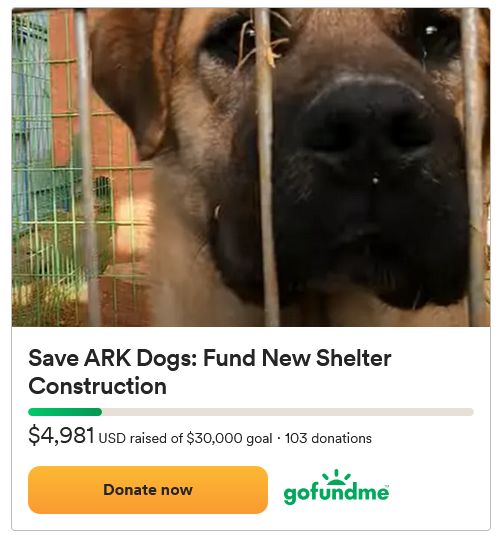
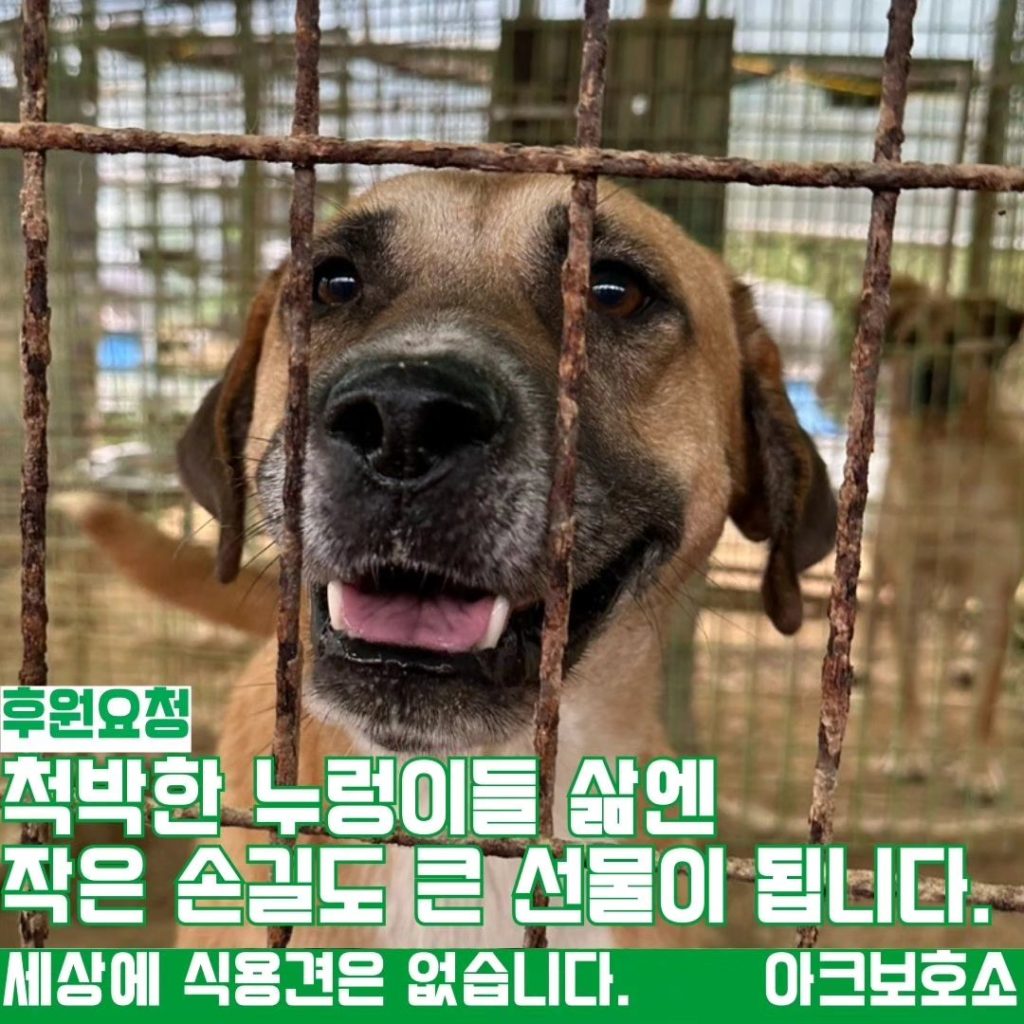
A New Home for Hope: Help Us Relocate Our Dog Shelter
For years, our shelter has been a safe haven for rescued dogs, giving them love, care, and a second chance. But now, Incheon has ordered us to leave, and time is running out. Click HERE to learn more.
ARK dogs have suffered so much. Many were trapped in tiny floating cages, starving and abused, waiting for a cruel fate – death. They never knew kindness—only fear and pain. We saved them, gave them warmth and care, and helped them start new lives. Now, they need a safe place to heal.
Our current facility is unsafe—overcrowded and falling apart. We found the perfect new location with more space and better conditions, but it comes at a high cost.
We need your help. Your donation will secure the new shelter, improve kennels, cover veterinary care, and transport our dogs safely. Every dollar counts.
By supporting us, you become a hero for these dogs. Whether donating or sharing our story, your help changes lives. These dogs deserve a future filled with love. Could you help us make this dream a reality? Please donate today and give them the home they’ve been waiting for.
Note from KoreanDogs.org: To donate to Animal Rights Korea (ARK) Shelter, the best option is to contribute directly to them. However, we have set up a GoFundMe page for those who prefer an alternative where you can donate and share with your friends and family. Rest assured, 100% of the funds raised on GoFundMe will be donated to ARK Shelter. (South Korea is not on the list of Countries supported on GoFundMe, so KoreanDogs.org is raising money for ARK instead.) GoFundMe Link: https://gofund.me/dc86edd4
Photo: A small gesture can make a huge difference in the lives of these dogs. No dog should be treated as food. ARK Shelter.
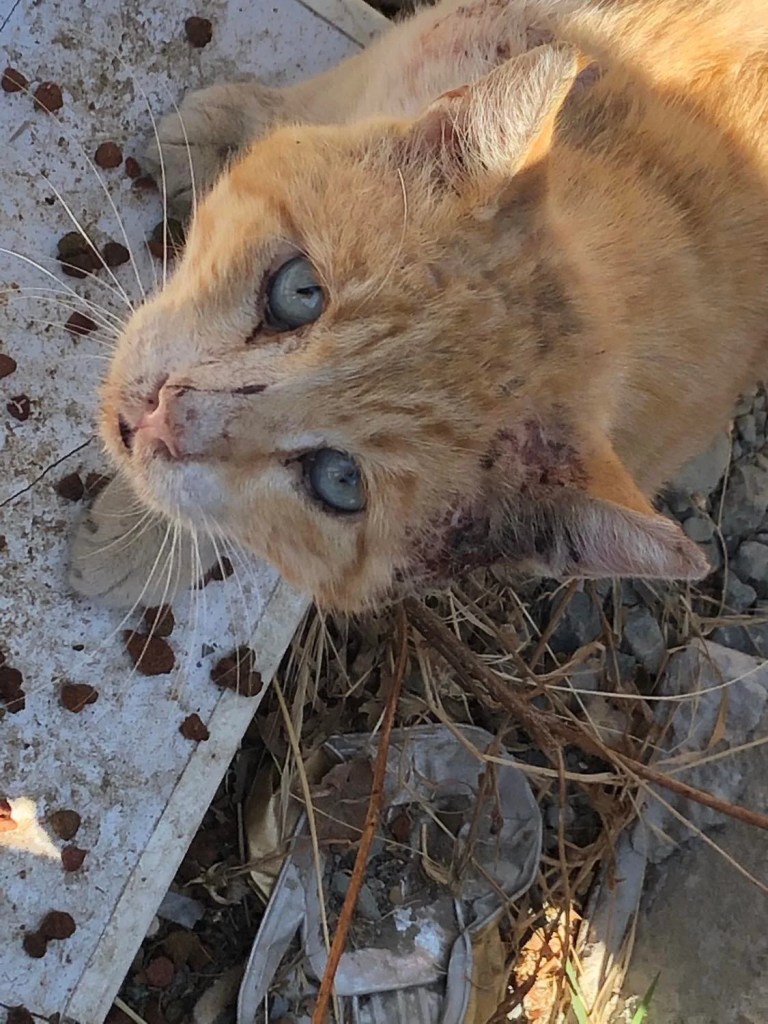
CatNation works tirelessly every day to secure the well being of thousands of felines across the island nation.
CatNation cares for thousands of cats on a daily basis. Some of the daily actions thay undertake include:
Feeding cats once a day in many parts of town.
Fostering abandoned kittens and injured/sick cats.
Medical care and rehabilitation of injured and sick animals.
Spaying and Neutering to exercise population control.
CATNATION PROJECT:
Catnation’s project is amazing: a multi-purpose space that will promote animal welfare and benefit the local community. It will be called Cat Park and includes: ✅ Recreational areas for children and adults ✅ A playground and a café ✅ Educational and awareness spaces
This is a holistic and sustainable solution that will not only drastically improve the lives of stray cats but also contribute to local economic and tourism growth.
Another big goal is 5,000 spay/neuter procedures per year. Catnation aims to perform 300,000 fewer stray cats in just five years!
CATNATION NEEDS:
Iphigenia and other association’s member found the perfect piece of farmland, measuring 51,381 m², which they have the opportunity to purchase. However, the cost is €350,000, and sadly, they have not the necessary funds. Their needs are: