Category: General News

EU: 300+ civil society groups urge EU to strengthen wolf protection, not weaken it.

300+ civil society groups urge EU to strengthen wolf protection, not weaken it

19 September 2024

The coalition is calling for a new proposal to downgrade the protection of wolves to be rejected, as well as for increased efforts to promote coexistence with large carnivores, and to safeguard decades of conservation success.

A large coalition of civil society and animal welfare organisations is calling on EU Member States to reject the European Commission’s proposal to downgrade wolf protection under the Bern Convention. Their status would be lowered from ‘strictly protected’ to ‘protected’, if the Member States approve the change.

It’s speculated that the change is politically motivated, whilst any change to conservation status of wolves should be justified by rigorous scientific data.

Peaceful coexistence with large carnivores is possible. Raising awareness amongst citizens is key, by providing science-based education on the ecological and socio-economic benefits of wolves. We can also strengthen preventive measures such as the use of fences and sheepdogs and make them more accessible to farmers.

Proper protection of wolves should also be enforced, ensuring that illegal wolf hunting is eradicated and the EU’s Habitats Directive is upheld. This would support efforts made for the recovery of wolf populations in the EU, allowing them their natural place in European ecosystems. 

The EU’s inhabitants of rural areas have also highlighted their broad support to protecting wolves and large carnivores: in a recent survey among 10,000 Europeans in 10 Member States, 68% stated that wolves should be strictly protected and 72% agreed that they have a right to co-exist.

According to media reports, there has been a lot of political pressure on Member States to accept the European Commission’s unscientific and politically motivated proposal. Wolves must remain strictly protected – not just for the sake of the species and science, but for the health of our ecosystems and the credibility of the European Union. If the EU wants to be a trusted ally of nature and a global leader, we must set the right example now.

European Environmental Bureau

Regards Mark

EU: Big victory for animals: Animal welfare included in new Commissioner’s title.

17 September 2024

Press Release

The new Commission, announced today, will include a Commissioner dedicated to Animal Welfare, in a move very positively welcomed by animal protection NGOs. This will allow for better prioritisation of the topic, in line with the demands of EU citizens.

Animal welfare will be included in the title of the new Commissioner for Health and Animal Welfare, President Ursula von der Leyen announced today as she revealed the structure and nominees of the new College. 

Hungary’s Olivér Várhelyi has been nominated to take this role, subject to his approval in the EP hearing in the next weeks. 

It is welcome to see that the competence of Animal Welfare remains under DG SANTE, ensuring a One Health approach that acknowledges the interlink between animal welfare, public health and the environment.

The ask for a Commissioner dedicated to Animal Welfare aligns with the collective voice of 310,000 citizens and over 200 MEPs in the 2019-24 term of the Parliament, and already over 100 MEPs in the new one, in a years-long EU for Animals campaign, led by Eurogroup for Animals’ member GAIA. The new Commissioner will be crucial in ensuring the delivery of the promised revision of the outdated EU animal welfare legislation. 

The work of the new Commissioner responsible for Animal Welfare will also greatly interlink with that of other Commissioners – including that of nominee for Agriculture and Food, Christophe Hansen, who is expected to “bring to life the report and recommendations of Strategic Dialogue on the future of EU agriculture. The report explicitly recommends a revision of animal welfare legislation by 2026 as well as a transition to cage-free systems.

It will also include working closely with the Commissioners responsible for Fisheries, Trade and Environment, among others, to ensure ambitious EU legislation that ensures high animal welfare standards in all relevant areas.

It is great to see that finally, the new Commission is listening to the demands of citizens, who have continuously asked for better EU laws to protect animal welfare. The inclusion of Animal Welfare in the title will ensure that this topic remains a priority in all relevant discussions and we expect the revision of the animal welfare legislation to be the first file to be dealt with.

Reineke Hameleers, CEO, Eurogroup for Animals

Regards Mark

UK: Campaigned By The AR Movement For Years – Bearskin Hats Worn By Soldiers Now Cost Over £2,000 Each. One Bear Dies For Each Hat – Disgusting; Whist Under The New Labour Government, Pensioners Now Have Their Winter Fuel Allowance CUT – More Disgusting. Heat Or Hat, What Is More Important ?

The bearskin hats worn by soldiers outside Buckingham Palace now cost more than £2,000 each, new figures show.

Animal rights activists trying to get real fur out of the bearskin caps worn by King’s Guards took aim at the cost of the ceremonial garb.

The price of the caps soared 30% in a year to more than £2,000 pounds apiece for the hats made of black bear fur, the Ministry of Defense said in response to a freedom of information request by People for the Ethical Treatment of Animals (PETA).

https://www.msn.com/en-gb/news/uknews/buckingham-palace-guard-s-bearskin-caps-under-fire-as-price-revealed/ar-AA1qsCTQ?ocid=BingNewsVerp

https://www.msn.com/en-gb/news/uknews/kings-guards-bearskin-caps-could-go-due-to-animal-rights-pressure/ar-AA1qrO7b?ocid=BingNewsVerp

Peta anger over soaring cost of bearskin caps worn by King’s Guard outside Buckingham Palace

https://www.msn.com/en-gb/news/uknews/peta-anger-over-soaring-cost-of-bearskin-caps-worn-by-kings-guard-outside-buckingham-palace/ar-AA1qrxQt?ocid=BingNewsVerp

Regards Mark

(EU) Poland: Polish fur farms visited by European Commission auditors.

12 September 2024

“Fact-finding” visits to fur farms in Poland are being conducted this week by auditors of the European Commission, as part of the process in which an EU-wide ban on such farms is being considered.

This visit by the Directorate-General for Health and Food Safety comes as a result of the European Citizens’ Initiative Fur Free Europe, in which 1.5 million European citizens called for a ban on fur farms and the sale of farmed fur products in the EU.

On fur farms, animals such as mink, foxes, chinchillas and racoon dogs are kept in tiny cages, hindered from displaying natural behaviour and killed solely for an unnecessary fashion product: fur. 

Under no circumstances, can the welfare of animals on fur farms be protected and a ban should be the only way forward. As a highly polluting industry, fur farming and processing also pose serious threats to biodiversity and public health. 20 member states have already implemented total bans, partial bans or other legislative measures on fur farming, however the EU is still set to give its final decision on an EU-wide ban.

During the visit, the auditors will be primarily focusing on the public health and zoonotic disease risks posed by such farms, after several fur farms in Europe were affected by Covid-19 and avian influenza in recent years, including Poland. Besides evaluating the implementation of the One Health mechanism on Polish fur farms,  the audits may also include an evaluation of the welfare of farmed animals.

Although the auditors’ visits from the European Commission are announced, I am confident that the evaluation of fur farms in Poland will be negative. The welfare of foxes and minks is shockingly poor and will not go unnoticed by the visitors. As for public health risks, this issue has been ignored by the fur industry and disregarded by the Ministry of Agriculture, so we also expect a negative assessment from the auditors.

Paweł Rawicki, President, Otwarte Klatki

Apart from the undeniable animal welfare issues inherent to fur farms, the fact-finding visits conducted by the European Commission to fur farms in certain Member States are highly relevant. The connection between fur farming and the spread of zoonotic diseases must not be overlooked, especially in the context of preventing future pandemics. Given the non-essential nature of fur products, and in line with the One Health approach — essential for anticipating, preventing, detecting, and controlling diseases that transmit between animals and humans — it is unlikely that proportionate justifications can be found to continue legitimising this industry in the EU.

Bethania Malmberg, Programme Officer Fur Animals, Eurogroup for Animals

With over 300 farms keeping 3.4 million animals, Poland is currently the largest fur producer in the EU. Earlier this year, a bill was presented by a Polish MP for a national ban, yet this is still set to be deliberated in Parliament.

Regards Mark

EU: Public consultation on animal transport: citizens overwhelmingly want better policies.

10 September 2024

Feedback from a public consultation on amendments to the live animal transport regulation has just been published. The results reveal that citizens are very concerned about how animals are treated in this sector.

Read the summary results of the public consultation here.

In 2023, the European Commission announced it would update the Transport Regulation as part of its full revision to the animal welfare legislation. Soon after, it published its initial proposal for the update, which it invited European citizens to feed back on through a public consultation. 

The response level was very high. The public consultation, which was open for a period of over four months (between 8 December 2023 and 12 April 2024) gathered over 5,000 contributions for analysis. 

Within this number, a lot of the key input came from Spain, Germany, France and Italy, highlighting significant public interest for this topic in these Member States.

The results showed citizens overwhelmingly support stricter regulations to protect animal welfare in this industry, including by:

  • Banning certain types of transport and exports. Including banning long-distance and sea transport, and the export of live animals to third countries;
  • Improving transport conditions. Calling for adequate space, ventilation, food and water, as well as for reduced transport times;
  • Protecting vulnerable animals. Calling to ban the transport of unweaned and vulnerable animals, along with enforcing strict temperature controls;
  • Supporting stricter weather protection. Incorporating recommendations for stricter measures to safeguard animals from extreme weather;
  • Condemning harmful methods. Opposing the use of electric prods;
  • Addressing transition periods. Issues were raised about the length of transition periods to implement new welfare rules;
  • Helping poultry and rabbits. With suggestions to further limit transport times for these animals, based on their specific needs and natures;
  • Possibly transitioning to a different type of trade entirely. There is widespread support for shifting to the transport of meat and carcasses instead of live animals, which is viewed as a more humane alternative that could significantly reduce suffering.

Stakeholders from various fields, including agriculture, public authorities, and NGOs, also provided feedback on different areas of the proposal, such as its current scope and what it says about journey times and temperature controls. These results were mixed, with some differences of opinion arising between the groups. For instance, industry voices and farmers raised concerns about limiting journey times during transport, whereas NGOs posited that journey times should be reduced significantly, for the wellbeing of the animals subjected to them.

The transport proposal needs some changes to truly work for animal welfare

As the responses to the public consultation show, the current transport proposal should be further revised. Our white paper details several measures that can be used by policy-makers to draft the strongest policies possible in this area: addressing both the needs of the animals in this sector, as well as the concerns of European citizens who have voiced support for protecting their welfare.

It’s great to see that, yet again, the public is so engaged in the topic of live animal transport, and that European citizens in particular want to see more being done for animal welfare. This sector is very complex and causes suffering for millions of animals each year, both in the EU and beyond. The current transport proposal needs to be much stronger if it is really going to have an impact on the wellbeing of animals, and a lot of the conflicts of opinion expressed within the consultation could be addressed to a wider transition to a ‘meat and carcasses’ trade, in which no live animals would have to be subjected to these long and difficult journeys anymore.

Inês Grenho Ajuda, Farm Animals Programme Leader, Eurogroup for Animals

https://www.eurogroupforanimals.org/library/live-animal-transport-due-time-change-rules

Regards Mark

USA: Alarming development as bird flu may be spreading among people in US

Aperson in Missouri has become the first American to be diagnosed with H5N1 bird flu without coming into contact with animals, in a potentially worrying development.

They are the 14th person to become infected in the US since the strain hit livestock earlier this year – but the first not to have been directly exposed to an infected bird or cow.

It is still unclear how the Missourian was infected, but experts have been warning for months against drinking raw milk because of fears the virus can spread to people via this route.

More – https://www.msn.com/en-gb/health/health-news/alarming-development-as-bird-flu-may-be-spreading-among-people-in-us/ar-AA1q8umO?ocid=msedgdhp&pc=DCTS&cvid=afee0104e2c54efb95404ec9dd2f891b&ei=24

Mark

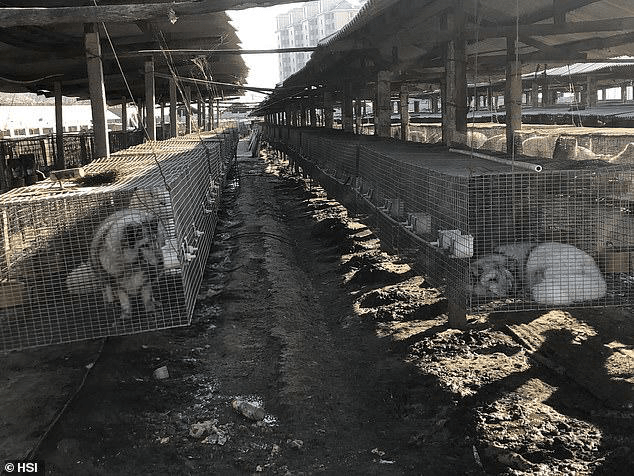
China: Research Shows This Utterly Cruel / Barbaric Nations Massive Fur Farms Are Responsible For 125 Virus Species, Including 36 That Are New and 39 That Could Cross The Species Barrier And Spill Over To Infect Humans.

Here we go again – World, get prepared for another lockdown.  The Utterly Cruel Chinese Are At It Yet Again. 

Researchers scoured for viruses in the lungs, intestines and other tissues of 461 individual fur animals that were found dead due to disease across China. They identified 125 virus species, including 36 that were novel and 39 at potentially-high risk of crossing the species barrier, including spilling over to infect humans. 

Raccoon dogs and mink, valued for their soft pelts, carried the highest number of potentially dangerous viruses, according to the research, published Wednesday in the journal Nature.

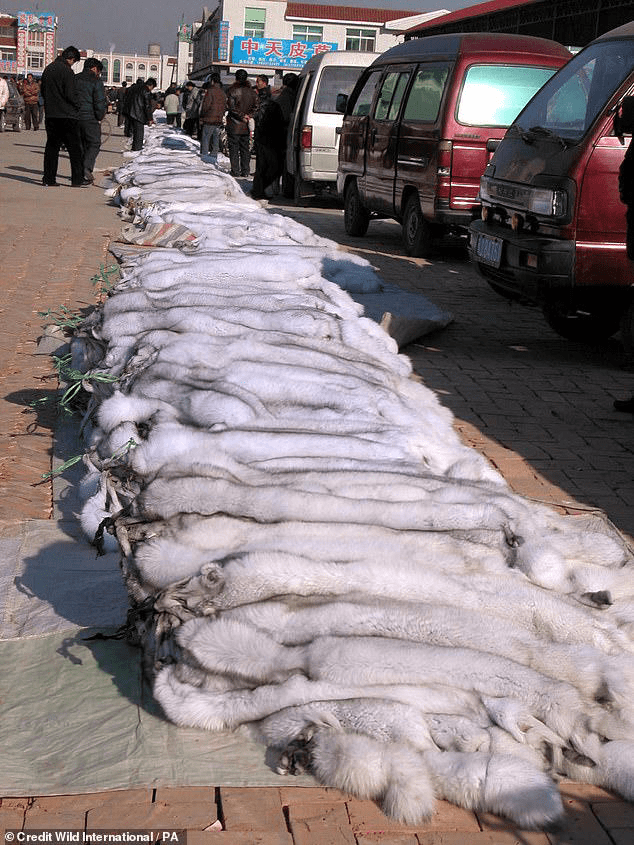
China dominates the trade, accounting for over 80% of global fur production, with pelts from around 27 million animals turned into high-end garments in 2021.

Notably, 19 potentially high-risk viruses were detected in the northeastern province of Shandong, which contains many fur animal farms. The findings revealed potential virus transmission between farmed animals and wild animals, and from humans to farmed animals, indicating that fur farming represents an important transmission hub for viruses that risk causing disease in people.

Lots More Reading About This:

Dozens of new viruses are emerging from Chinese fur farms (msn.com)

China Fur Farms Harbor Deadly Viruses: Study Uncovers MERS-Related Virus and High-Risk Influenza Strains, Sparking Pandemic Fears (ibtimes.sg)

 Pandemic Fears as Dozens of ‘High Risk’ Viruses Found in China’s Fur Farms (msn.com)

Virus Risk: 125 Found in China’s Fur Farms, 39 Pose High Threat to Humans | NewsTrack English 1 (newstracklive.com)

Fears fresh pandemic outbreak could spark in China’s fur farms (msn.com)

Potential Outbreak-Causing Viruses Found in China’s Fur Animals – BNN Bloomberg

Viruses detected in China’s fur farm animals, including seven types of coronaviruses (alarabiya.net)

Regards Mark