Category: General News

Cat Torture Groups – Update

Dear all,
we apologize for being quiet on the issue in the recent 3 months. This is not due to there not being any reportable news, but due to private health-related issues of our own, which has caused us, and me, to withdraw for a while. There was certainly no holiday involved …

So there is news, some good and some bad.

Please view the accompanying video on FB – we cannot upload it here:

https://www.facebook.com/reel/1259624518750079

USA: Rutgers professor on leave following accusations of animal abuse in former lab.

This image has an empty alt attribute; its file name is unst0001.gif

A professor was placed on leave — prohibiting him from conducting research or teaching — days after he started his new job at Rutgers University, university officials said.

Xiaobing Zhang, an associate professor at Rutgers New Jersey Medical School in Newark, was put on leave Sept. 14, shortly after the university received a letter from an animal rights group saying he was barred from his previous research lab at Florida State University following accusations involving the mistreatment of animals.

https://www.nj.com/education/2024/09/rutgers-professor-accused-of-animal-abuse-in-florida-state-lab-placed-on-leave.html

See also: https://nj1015.com/xiao-zhang-suspension-rutgers-medical/

Mark

EU: Bad news: Member States propose to downgrade the protection status of the wolf, against science and public opinion.

Bad news: Member States propose to downgrade the protection status of the wolf, against science and public opinion

25 September 2024

Press Release

Wolves are likely to no longer be strictly protected as the Council of the European Union has adopted the proposal by the European Commission (EC) to request a downgrade of their protection status under the Bern Convention. This move seriously jeopardises the conservation efforts of the past decade and prioritises politics over science and data, while sending a dramatic message on the future of co-existence.

In December 2023, the EC published a proposal to downgrade the strict protection of wolves at international level, in a move that has been considered widely political. Now that Member States have voted in favour of a downgrade, the proposal must be endorsed formally at ministerial level, in time for the request to be presented and voted upon at the next Standing Committee meeting of the Bern Convention in December. If adopted, this could be translated in the EU under the Habitats Directive, giving flexibility to Member States to authorise the unnecessary culling of these majestic animals.

In the past decade, the EU has invested significant resources towards the recovery of wolves, resulting in an increase of 25% in population. Yet, populations have not yet reached a favourable conservation status and the proposal to downgrade their protection seriously jeopardises conservation efforts. 

Hundreds of civil society organisations have urged the EU to strengthen the protection of wolves, not reduce it, as wolves are apex predators vital in ecosystem stability, and in the current global biodiversity crisis, their role cannot be compromised. The protection of wolves is also supported by the general public as 68% of inhabitants of rural areas state that the wolf should remain strictly protected. Over 300,000 citizens have also called for wolves to remain strictly protected.

The EU has funded innovative projects across Europe that have proven co-existence is possible and attacks on livestocks can be significantly reduced with preventive measures. The EC admitted, in its in-depth analysis, that culling is not a solution to protect farmed animals from depredation contrary to coexistence measures. It is therefore alarming to see that the EU, instead of further promoting and supporting such efforts, has opted to downgrade the protection status, giving way to unnecessary suffering.

Wolves are our allies, not our enemies and it is crucial to protect them. Member States are dangerously failing their mission to protect wild animals and our shared ecosystem. This is a very outrageous move and shows that Member States are ignoring their citizens’ calls and science. Facilitating culling sends a dramatic message on the future of conservation and coexistence. We urge the other parties to the Bern Convention to reject this proposal and protect wild animals in the EU and beyond and continue to champion biodiversity protection at the global level.

Léa Badoz, Wildlife Programme Officer, Eurogroup for Animals.

Regards Mark

Italy: Italy makes slow progress on male chick culling ban.

20 September 2024

LAV

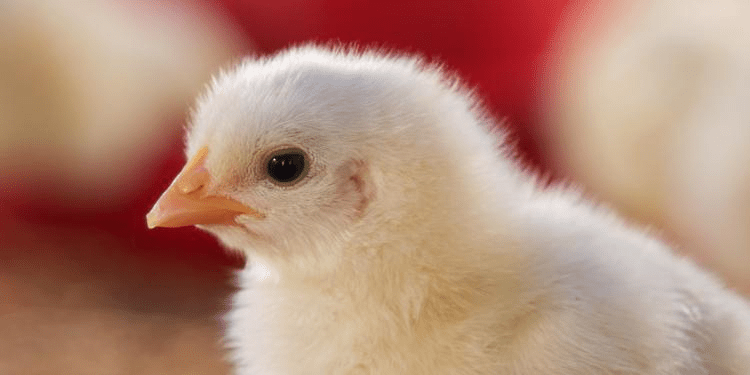
Considered a byproduct of the egg industry, over 35 million male chicks are killed every year in Italy. In 2021, Italy approved a law to ban male chick culling by the end of 2026. But slow progress is being made on making the ban a reality.

In order to ensure the ban can be enacted by 2026, the government must support the transition of companies towards the adoption of more animal-friendly practices, and correctly inform consumers.

However, the adoption of the decrees is still incomplete. The deadline for issuing the pending measures was set for 7 April 2024, but failure to implement the legislation risks continuing to encourage the slaughter of millions of chicks every year. 

In the egg industry, male chicks are shredded alive or suffocated within the first 24 hours of birth, and without the use of stunning techniques.

Viable alternatives already exist, such as in-ovo sexing technologies that detect male eggs before they hatch. In France, where a ban on chick culling has been agreed in principle but not yet implemented, the additional cost to consumers is estimated at only one cent per box of six eggs.

Animal Equality, CIWF Italia, Essere Animali, Animal Law Italia and LAV wrote to the Ministries of Health and Agriculture asking them to adopt the decrees necessary to ensure the effectiveness of the ban. 

They called for the adoption the envisaged decrees, in particular: 

  • The labelling of eggs treated with in-ovo sexing technologies; 
  • The promotion and development of technologies for in-ovo sexing;
  • The definition of criteria for managing chicks born by mistake within the egg industry.

Over 110,000 Italian citizens supported a petition by Animal Equality calling for the ban. The associations stressed that society is ready to take this historic step for animal welfare, and politicians must do their part so as not to betray citizens’ trust.

Regards Mark

EU: End of the rabbit pyrogen test in the European Pharmacopoeia.

Carlota Saorsa / HIDDEN / We Animals

Carlota Saorsa / HIDDEN / We Animals

22 September 2024

The European Pharmacopoeia Commission took a historic step by removing the rabbit pyrogen test from the European Pharmacopoeia in favour of the use of non-animal methods. This decision will not only spare the lives of tens of thousands of rabbits in the EU every year, but will also better ensure the safety of medicines and vaccines.

This long-debated method, which raised ethical concerns and had limitations in accuracy and reproducibility, now belongs to the past. 

Pyrogens are fever-inducing substances that can unintentionally contaminate injectable medicines, and their detection is crucial to ensure the safety of these products.

Developed in the early 1900’s, the rabbit pyrogen test was the predominant method for detecting pyrogens. It involves injecting the test substance intravenously into a vein of the rabbits’ ears and observing their reaction, mainly an increase in body temperature. These injections can be repeated until their ears are severely damaged and can no longer be used, or until they show a reaction. In all cases, rabbits are killed at the end.

The limitations of the rabbit pyrogen test are widely recognized, including limited sensitivity and reproducibility. Repeated injections can lead to the development of pyrogen tolerance, while the inherent stress of the test can also affect results.

Alternative non-animal methods with improved sensitivity and relevance have been available for more than 20 years.

Despite many years of efforts to promote the use of non-animal methods for both ethical and scientific reasons, the rabbit pyrogen test remained the standard for detecting pyrogens, resulting in the suffering and death of approximately 25,000 rabbits annually in the EU.

In June 2024, the European Pharmacopoeia Commission, a regulatory body responsible for overseeing the safety of medicines, adopted 57 revised texts in the European Pharmacopoeia. Drug developers will now be required to choose non-animal methods for assessing the pyrogenicity of their products. Among the available methods, the Monocyte Activation Test (MAT) has emerged as a highly reliable and accurate solution for pyrogen detection. This test is based on the response of human immune cells to pyrogens, offering greater sensitivity and reproducibility than the rabbit assay.

This decision marks a significant milestone in the transition away from animal-based testing methods. It is hoped that it will pave the way for the adoption of more innovative and reliable non-animal approaches across various scientific fields.

Regards Mark