In plenary today, Members of the European Parliament urged the European Commission (EC) to come forward with the outstanding legislative proposals on animal welfare, the future of which remains uncertain. They stressed that the delay is putting the credibility of European institutions in question, as citizens’ demands remain unanswered.
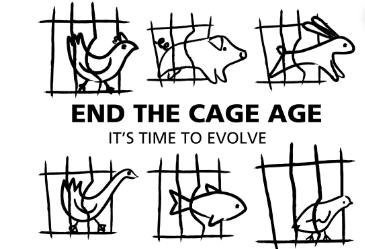
The EC had committed to publish four animal welfare proposals by the end of 2023, but backtracked from this promise by only publishing an unambitious Transport Regulation, and not putting forward the promised Kept Animals, Slaughter and Labelling regulations. The proposals were also set to include phasing out cages by 2027, in reply to the End the Cage Age ECI in which 1.4 million citizens asked for a transition to cage-free systems.
During the plenary today, a record number of MEPs (41) intervened in the oral question tabled by Neils Fuglsang (S&D, DK). 30 MEPs stressed that while the EC continues to delay action, millions of animals continue to suffer in horrible conditions across all stages of their lives; from farm to transport to slaughter. They criticised the EC for doing “very little”for animal welfare in the past legislative term, and questioned the democratic aspect of ECIs if policymakers do not react to the demands of the citizens. “You are letting down 3 million citizens,” many reiterated, making reference to the End the Cage Age and Fur Free Europe ECIs – both of which remain pending action by the EC.
They urged the EC to come forward with a concrete timeline and answer to the demands of millions of EU citizens.
Elisa Ferreira, Commissioner for Cohesion and Reforms, while admitting that more needs to be done for resilient food systems, said that work on these legislative files is “still ongoing”, and the EC “is analysing the best course of action”. She did not make any commitments on timeline.
In the run-up to the European Elections, Eurogroup for Animals has launched the Vote for Animals campaign which encourages candidate MEPs to take a pledge for animals, while informing citizens about the importance of these elections for progress on animal welfare.
The EC broke its promise on presenting the animal welfare legislation package. And while we wait for a clear timeline, millions of animals continue to live in cages, male chicks continue to be gassed at a day old, while chickens are bred to grow so fast their bodies cannot keep up. These animals deserve a legislative proposal, but there is none. We call on the EC to present a concrete timeline.
MEP Neils Fuglsang (S&D).
What has happened to the promised legislation?
What about the ban on cages?
We have been fighting for years.
How long will these animals have to wait? Not a day longer.
MEP Anja Hazekamp (The Left)
Not answering to the demands of ECIs would threaten the credibility of EU institutions – the animal welfare legislation should be a priority in the next mandate. We are disappointed – we need to see changes.
MEP Tilly Metz (Greens/efa)
The ECI is an excellent tool to improve democracy, but it only works if those who make the law react to what the citizens want. 1.4 million citizens asked for a ban on cages – more than four years have passed and 300 million animals continue to spend their lives in terrible conditions.
Diana, over recent weeks we have explored every legal possibility to help the animals on the Bahijah, only to have to accept that their fate rested with the live export regulator in Australia – the Federal Department of Agriculture.
So it’s with a heavy heart that I tell you that, inconceivably, the regulator is allowing the animals to be re-loaded so the ship can once again embark for Israel.
As you know, the decision to grant the exporter an export permit rather than keep the animals in Australia condemns them to another month at sea – and is nothing less than sanctioned animal cruelty.
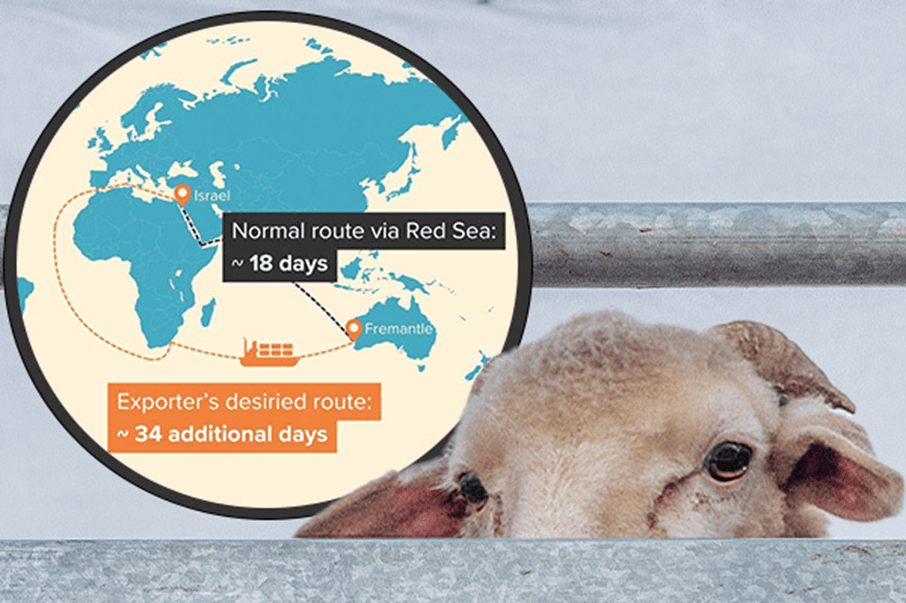
This map shows the extended route the sheep and cattle will be forced to travel over the next 30+ days – just so they can be killed for their meat in Israel.
This has been like watching a horror movie, Diana. First, the decision to send a shipment of live animals into a conflict zone, then they head for South Africa, and then to not offload them immediately when they returned to Australia – allowing them instead to languish for days in the middle of a Western Australian heatwave.
It has been a true ‘tragedy of errors’ – human errors – and yet, once again, it is the animals who will suffer the consequences.
Our commitment to you Diana, has always been that we will leave no stone unturned when it comes to protecting animals. And I promise you, we haven’t.
Over recent weeks we’ve been part of a monumental collaborative effort, spanning Australia, South Africa and Israel.
We have been communicating in the strongest of terms with the live export regulator – highlighting to them their strong grounds to reject the export permit application.
Yet, they have chosen to approve it – adhering to processes that were not written with the interests of animals at heart.
As you know, this trade has been littered with animal welfare disasters. On each occasion we have honoured these animals by being their voice with our politicians, and that is what we must do again.
That re-loading and shipping these animals once again to Israel was the live export industry’s preferred option, when more humane alternatives exist, presents further evidence as to why this ruthless trade must end.
Their ‘animal welfare’ claims have been brutally and completely exposed as PR spin.
Right now, we are calling on our Australian supporters to ensure every politician here understands the weight of community anguish at this injustice.
We also wanted to thank you Diana, for supporting our efforts from overseas to ensure that the story of the animals on the Bahijah is one of the very final pages of the tragic story that is live animal export.
To mark the RSPCA’s 200 year anniversary, we interview Chris Sherwood, the organisation’s Chief Executive. He tells us about the RSPCA’s unwavering commitment to animal welfare since 1824.
Tell us a bit about the RSPCA and its main battles?
There’s so much to say!
This year is our 200th anniversary – that’s two centuries we’ve been changing laws, attitudes and behaviours towards animals. More than 400 animal welfare laws have passed since we were founded in 1824, and we have literally changed the way we all think, feel and act towards animals.
We’ve fought for animals in homes, laboratories, farms, and the wild, and of course, we’ve rescued, rehabilitated and rehomed countless numbers, while always showing them all the compassion they deserve.
Our landmark anniversary is an amazing time to reflect on all that – and just how much society has changed for animals over the past two centuries. Indeed, I’m so proud that the RSPCA has been at the forefront of many of those changes – from stopping bear baiting and cockfighting shortly after our formation, to championing a Protection of Animals Act in 1911; and campaigning for laws like the Hunting Act 2004 and Animal Welfare Act 2006. But our influence has not just been legislatively. From setting up the RSPCA Fund for Sick & Wounded Horses during the First World War, to responding to the East Coast Flood of the 1950s – and so much more – we’ve been there. Into the 1970s, and the RSPCA Reform Group helped us develop a comprehensive animal welfare policy platform – further shaping how society – all of us – treat and think about animals.
Yet, there is still so much to do. Animals are arguably facing the biggest challenges of our history, through climate change, industrial farming, loss of habitat, the cost of living and the effects of the pandemic. Unless we put animal welfare on the mainstream agenda as one of the most pressing causes of our time, we risk animals lives getting worse, not better.
But we know that we can’t do this alone – we need as many people to join us as possible. So to mark our 200th anniversary this year we launched our million strong movement – we want a million people to join us in our 200th year and beyond, whether that is volunteering, giving their voice to animals or fundraising for us.
In which countries is the RSPCA present?
The RSPCA works in England and Wales – with dedicated staff and a proud network of branches operating in every single community of both nations. But as the world’s first animal charity, we sparked a global movement that spread around the world – so we’re also proud to have links with the animal welfare movement in all corners of the globe.
We have a dedicated international team who take our experiences and expertise of animal welfare in England and Wales all around the world – and have helped inspire and influence change right across Europe, Africa and Asia. We are also proud to be active members of Eurogroup for Animals, and a founding partner of the World Federation for Animals.
From humble beginnings at the Old Slaughter’s Coffee House in Central London in the early 19th century, it’s amazing to think what the RSPCA has gone on to achieve.Image What about you? Tell us a bit more about your role within the RSPCA and why you joined.
It’s been an enormous privilege to serve as the RSPCA’s chief executive since August 2018 – I could not be prouder to lead this fantastic charity for the past nearly six years.
My background is probably not typical of many chief executives – I was the first person in my family to get GCSEs, let alone an A level or undergraduate degree.
Before joining the RSPCA, I spent time as director of innovation and development at leading disability charity Scope, before working in policy and external affairs at Relate – the UK’s leading family and relationships charity – where I was later chief executive.
I’d always wanted to work in the voluntary sector because of my passion for creating a good society – inspired by where I grew up, in a former steel down battling with the social and economic effects of deindustrialisation. For me, a good society is one which is kind, inclusive and compassionate, and where everyone has the opportunity to thrive, not just survive – a better world in which we all take responsibility for our individual and collective impact on each other, on animals and on the planet.
Since becoming CEO at the RSPCA, we’ve of course endured a global pandemic, the ongoing cost of living crisis, and the continued, mounting threat of serious climate change – to name but a few of the challenges at the top of my in-tray, so it has certainly been an incredibly busy and challenging five and a half years.
I am inspired every day by the work of our diverse, dedicated teams – from our frontline officers, to our animal centres, call handlers, science experts, campaigners and so many others; all dedicating themselves to making our world a better one for the animals we share our lives with.
And I think we’ve been making a real difference, from continuing to deliver frontline animal rescue services throughout Covid-19, to supporting people through these difficult economic times, with, among other things, a pet food bank scheme, which delivered 1.5 million meals to needy pets last year. We’ve secured tougher sentences for animal abusers (my proudest moment as CEO) while animal sentience has been recognised in law and we are on the cusp of seeing live exports banned, something we have been campaigning against for more than 50 years.
In 2021, we launched a new strategy Together for Animal Welfare, which set ambitious targets to cut animal neglect in half, see more than half of UK farmed animals reared to RSPCA standards, and secure a UN declaration for animals. It’s ambitious, and we need as many people as possible to support us, and to support the animal welfare cause if we are going to continue to change animals’ lives now and in the future.
We know the RSPCA can’t fix every problem animals face by ourselves – and our response is so much stronger when we work together. But that’s why I see 2024 – our 200th anniversary – as the start of a new chapter in a remarkable story of helping animals; and a chance to transform again how we work together, everyone for every animal, to meet the challenges of the years, decades and centuries to come.https://www.youtube.com/embed/PkyLdSEHVDs?autoplay=0&start=0&rel=0&enablejsapi=1&origin=https%3A%2F%2Fwww.eurogroupforanimals.orgWhen did the RSPCA join Eurogroup for Animals and why?
We’re the OG! We’ve been involved since the very beginning – some 44 years ago, in 1980!
In fact, the RSPCA founded Eurogroup for Animals – because we know that the animal welfare sector is stronger when it works together and speaks with a united voice. Over more than four decades, we’ve worked closely with our partners and are proud of the campaign successes it has secured for animal welfare.
It’s really important to pay tribute here to our outgoing president Dr Richard Ryder; Eurogroup for Animals was very much his vision; and also to our former director general Peter Davies – who did inspiring work as president.
Since the UK left the European Union, our membership has remained vital as we negotiate the Brexit transition. The European Union remains the UK’s largest market for imports and exports. The UK also left the EU, but not Europe, and we know animal welfare transcends national borders. The ongoing war in Ukraine has highlighted the need for collaboration, and the RSPCA worked with and through Eurogroup for Animals as part of our response to helping animals there.
What are RSPCA’s main campaigning achievements in 2023?
2023 was a really busy year for our campaigns; we saw an incredible 200,000 people sign petitions, write to the UK and Welsh Governments, contact their elected representatives and get their voice heard. We know animal issues are responsible for filling many politicians’ mail bags – and we make no apology for that!
But it was a turbulent year in British politics. We are leading up to an election which polls suggest could lead to a change of UK Government for the first time in 14 years.
And there were challenges, and frustrations, for animal welfare policy. The UK Government sadly dropped its flagship Kept Animals Bill, which was a tough pill to swallow, and we had to mobilise very quickly to ensure lots of very hard work and policy commitments were not lost altogether. We also saw the UK involved with new free trade agreements that failed to include measures to ensure imports met the UK’s higher animal standards. At one point, the list of broken promises from the UK Government for animals was as high as 15 – but fortunately the tide could be turning in favour of animals again.
We’ve seen the fruits of our campaigning continue in recent weeks and months; with restrictions on the keeping of primates as pets, a ban on the live export of animals and new rules around pet theft back on the agenda. In Wales, we successfully campaigned for the UK’s first ban on the use of snares, while glue traps were outlawed too – offering a real lifeline for wild animals. The UK Government also committed to a consultation on mandatory food labelling, which could give millions of people more information than ever before about where the food they eat comes from.Image How can the public act for the RSPCA?
There’s so many ways our supporters can get involved – and help animals.
None of our work for animals would be possible without our amazing supporters and volunteers. We have approximately 16,000 members, and last year more than 7,000 volunteers supported our work. We’re lucky that many people choose to support us – but this year, we want to go even further by inspiring a million-strong movement to come together for animal welfare.
From transporting injured wildlife to rescue centres, to signing and sharing petitions, going into schools and chatting to kids about animals, or taking on a fundraiser for us, there are endless opportunities for people all over England and Wales to help us create a better world for every animal.
And it’s thanks to our kind donors that we can keep our work going. Last year, rates of animal abandonment reached a three-year high, and we’ve seen unprecedented demand on many of our services due to the cost of living crisis. A few pounds really can make all the difference and help keep our rescuers on the road.
Words to live by?
Anyone who follows me on X will know I regularly tweet about cake (carrot cake being my favourite!); so I subscribe to the adage “a party without cake is just a meeting”!
I’m also always inspired by Margaret Mead’s quote – “Never doubt that a small group of thoughtful, committed, citizens can change the world. Indeed, it is the only thing that ever has”. It really highlights the power of people. Indeed, many charities start by a group of people coming together who aren’t happy with something in society and want to see it change; that is the story of the RSPCA and from those humble beginnings – a global movement sparked.
And it’s perhaps a bit of a cliche in the animal welfare world now – but it’s always hard to look beyond Mahatma Gandhi’s great quote – “The greatness of a nation and its moral progress can be judged by the way its animals are treated”. As the RSPCA turns 200, we can be proud of the moral progress we’ve seen in this country – but there’s still so much more work for us all to do.
The modernised EU-Chile Free Trade Agreement, approved by the European Parliament today, includes commitments to animal welfare such as the recognition of animal sentience, the phase-out of antibiotics used as growth promoters, and language on animal welfare cooperation.
While these provisions are welcomed, the negative impacts of unconditional trade liberalisation should not be ignored: The EU and Chile should maximise the language on animal welfare cooperation within the agreement to ensure significant progress for the well-being of animals.
In 2002, when the EU and Chile concluded their first trade agreement, they added, for the first time ever, provisions on animal welfare cooperation. Yet, it was followed by increased intensification in the Chilean livestock and aquaculture sectors due to increased trade opportunities. There is a high risk that this modernised deal will fuel this trend as it grants further market access for Chilean animal products by increasing quotas for poultry, pork, sheep and beef without any animal welfare condition. Such a condition could have contributed to enhancing animal welfare standards in Chile, especially considering that Chilean producers believe that the trade deal would generate greater certainty for investments aimed at exports to the EU.
The FTA does include a chapter on sustainable food systems with provisions on animal welfare cooperation, despite being non-commital. Future EU-Chile cooperation on animal welfare, as like-minded partners, must focus on concrete initiatives such as the phase-out of cages for pigs and poultry, along with lower stocking densities for poultry. Other areas include animal transport, the use of anaesthesia for mutilations and joint action plans to phase out antibiotic use in animal production.
It is disappointing that the new EU approach to Trade and Sustainable Development (TSD) chapters will not yet apply to this trade agreement. The review process of the TSD Chapter should contain detailed language on the link between animal welfare and sustainable development, wildlife conservation and trafficking, and the importance of ensuring aquaculture welfare. In terms of enforcement, the EU and Chile should create clear roadmaps, identify priority issues, and include last-resort sanctions.
In November 2021, Chilean President Gabriel Boric signed an Animalist Commitment with Veg Foundation during his campaign. The document includes 10 points to improve the lives of animals raised for consumption.
Unfortunately after two years of government, very little progress has been made in fulfilling this commitment, since only one of the 10 points has been worked on. We call on President Boric to keep his word and improve the lives of millions of animals in Chile, by implementing these points in both trade agreements and national law. This FTA could have bolstered national efforts similar to the impact of the first EU-Chile trade agreement, which led to the adoption of Chilean animal welfare law in 2009
Ignacia Uribe, Founder and CEO, Veg Foundation.
Until the EU has animal welfare-based import requirements, the EU should negotiate ambitious animal welfare conditions with all trading partners, and replicate the approach it followed in the EU-New Zealand trade agreement. The EU should not let its trade agenda freeze the path toward higher welfare food systems. Embracing animal welfare conditions in some FTAs while omitting them in others would certainly be incoherent,
Reineke Hameleers, CEO, Eurogroup for Animals.
Eurogroup for Animals and the Chilean-based organisation Veg Foundation regret that the modernisation of this trade agreement fails to guarantee that EU-Chile trade does not have a detrimental impact on animals, and encourage the effective transition towards sustainable food systems in which animals’ well-being is promoted and respected.
Survey shows EU consumers want better animal welfare laws
28 February 2024
Almost 9/10 consumers responded that they support better animal welfare laws for animals raised for consumption, and believe that the EU should act to update legislation to offer them protection.
In a new survey by BEUC, which aimed to analyse consumer’s attitudes on animal welfare, 6/10 consumers said that they have a low level of knowledge on animal welfare practices and 3/4r want a better labelling system for animal-derived products. Consumers expressed that they have a low trust in animal welfare claims by companies and 84% would react negatively to welfare-washing.
7/10 respondents expressed the need for the cost of transition to be equitably shared, and that the EU must provide funds to farmers to implement higher standards.
A large majority, 78%, agreed that imports of animal products should be subject to the same welfare rules as those produced in the EU. This has been supported by another report by Vrije Universiteit Brussel and BEUC, which concluded that EU trade policy is not sufficiently coherent with the Green Deal, and consumers must be treated fairly through import requirements, and through better labelling that allows them to make an informed choice.
With 9 in 10 consumers supporting new laws for better animal welfare, our survey confirms that the way we treat animals raised for food matters to people. It is high time the EU Commission delivered on its promises to revise EU laws on farm animal welfare
Monique Goyens, Director General, BEUC.
This survey spans Belgium, Germany, Hungary, Italy, the Netherlands, Portugal, Spain and Sweden. 1,000 respondents per country were surveyed in November 2023.
WAV Comment – EU citizens are not the ignorant ones; it is those in the Commission who fail to take note !
In what’s believed to be a first in relation to farmed animals, a court has given animal welfare advocates the green light to privately prosecute a live-horse exporter in Manitoba.
“We have so few laws on the books to protect these horses,” said Kaitlyn Mitchell, director of legal advocacy with the non-profit group Animal Justice.
“The least that we can do is to make sure that what few laws we do have are actually enforced. Otherwise, what good are they?”
The case involves an air shipment of live horses in December 2022 from Winnipeg to Japan. The Korean Air cargo plane was supposed to stop in Anchorage, Alaska, for refueling and a crew change, but there was a blizzard, so they had to find an alternate route.
That, combined with delays in Winnipeg, meant the shipment exceeded the 28-hour maximum time live horses can be transported without food, water and rest.
Several organizations — Animal Justice, the Winnipeg Humane Society, the Canadian Horse Defence Coalition and Manitoba Animal Save — filed a complaint with the Canadian Food Inspection Agency, which acknowledged the breach and confirmed three horses had fallen during the transport, but said there would be no penalty.
“We urged them [CFIA] to take enforcement action, and we were incredibly disappointed when they didn’t,” Mitchell said.
“Once we realized that the CFIA was not going to take action, then we made the decision to commence this private prosecution.”
The group argued three different laws were violated and proposed three separate charges.
After a hearing in Winnipeg Tuesday, a Manitoba provincial court judge allowed a charge to be laid against Carolyle Farms — a live-horse exporter located in Swan River, Man. — under a section of Canada’s Health of Animals Regulations, which require a contingency plan to respond to unforeseen delays that could result in the suffering of an animal.
But the Crown stayed a proposed charge under the regulations for exceeding the maximum time limit for a transport, because it said the CFIA was part of those discussions. It also stayed a proposed charge for causing distress to animals, citing jurisdictional concerns.
“Where did these horses collapse? Was it somewhere over the ocean? We just don’t know. So that’s frustrating,” Mitchell said, adding the case is a rare example of a private prosecution — in which a private individual, rather than public authorities, is permitted by the court to lay a charge for an alleged offence.
“I vividly recall that cold winter night one year ago,” said Manitoba Animal Save organizer Danae Tonge, who documented the 2022 shipment.
“I am relieved that the court allowed this charge to be laid and look forward to the next steps in this case.”
Farm owner defends decision
Lyle Lumax, the owner of Carolyle Farms, said Tuesday that a phone call from CBC News was the first he’d heard of the court action.
He defended the decision to carry on with the December 2022 flight, even though it would exceed the legal time limit.
Lumax, who says he understands and loves horses, said the contingency plan is always to bring the horses back to the farm, but that 10-hour round trip puts even more strain on them.
“I can’t exactly remember, but it was something like we were three hours over the 28 hours,” he said.
“And everybody involved decided that was far less risky to the horses then putting them back on the trucks, driving back to the farm, loading them and putting them back into the plane and into the crates again.”
CBC has also asked the Canadian Food Inspection Agency for comment.
Canada is among the leading exporters of live horses, mostly Clydesdales and Percherons, bred specifically for human consumption — an industry worth tens of millions of dollars a year.
Raw horse meat sushi is considered a delicacy in Japan. The horses exported sell for up to $9,000 each, Lumax said. The horses are fattened up in Japan before being slaughtered, according to the CFIA.
Mitchell estimates nearly 4,000 horses have been exported from Calgary, Edmonton and Winnipeg in the last year.
In a 2021 mandate letter, Prime Minister Justin Trudeau told his agriculture minister to work toward ending exports of live horses for slaughter. Advocates and activists have circulated petitions and put pressure on the federal Liberals to follow through.
A private member’s bill before Parliament now would prohibits exporting live horses from Canada by air for slaughter.
Mitchell said she will testify before an agricultural committee in Ottawa on Thursday.
The National Council for the Society for the Prevention of Cruelty for Animals (NSPCA) has called for a complete ban of livestock exports via sea following the discovery of the abhorrent condition in which animals were kept on the Al Kuwait, which docked in Cape Town last week to load feed on its way from Brazil to Iraq.
Cattle on board the Al Kuwait ship, which docked in Cape Town last week. Photo: The National Council of SPCA
According to the NSPCA, the stench that came from the ship and raised concerns from members of the public was indicative of the awful conditions the animals, which had been on the sea for two-and-a half weeks up until then, had to endure due to a build-up of faeces and ammonia.
The NSPCA discovered diseased, injured and dead cattle among the 19 000 cattle aboard, and had to euthanise eight cows because of their poor condition. Treatment was given to the other animals to prevent further mortalities.
The NSPCA stated that the incident served as a stark reminder that the live export of animals by sea was a gruesome and outdated practice and underscored the urgent need for legislative reform and heightened global awareness to end this cruelty.
The Red Meat Producers Organisation of South Africa (RPO) clarified in a statement that the ship belonged to the international company Al Mawashi and that the current situation had nothing to do with the South African industry or Al Mawashi South Africa, which arranges and coordinates South African exports.
The NSPCA since 2019 had been in and out of court fighting for a live sheep export ban from South Africa, but it lost its case against Al Mawashi South Africa in 2021, with the exports allowed to continue subject to certain conditions.
Dr Frikkie Maré, CEO of the RPO, told Farmer’s Weekly that the RPO was concerned about the welfare of the animals on the ship, and recognised the rights of animals as noted in the Constitution of South Africa: “As primary producers, our animals are our pride. It grieves us to see animals receive poor treatment.”
Maré said that the industry was concerned about the possible influence the situation might have on the biosecurity of South Africa, with people moving on and off the ship and the possibility of dead animals being offloaded, especially because the Western Cape does not really have the capacity to handle livestock.
“As a country that is already struggling to regain its animal health status from the World Organisation for Animal Health, we cannot afford more breaches of our biosecurity.”
With the renewed call for a complete ban of live animal exports via sea, Maré pointed out that South Africa needed this alternative market to grow the industry, which in turn would contribute to rural development, poverty alleviation and job creation.
“We export both live animals and carcasses. We cannot move away from live animal exports as this is what the import markets desire, usually for religious reasons.”
He pointed out that government in collaboration with the industry had drawn up a protocol for live exports, with more than 300 inputs by industry taken up in the protocol to ensure that exports were done responsibly. Work is currently underway to turn the protocol into legislation.
Since the only livestock export harbour in South Africa is in East London, the Eastern Cape RPO has established a livestock export forum, which together with the SPCA and other institutions, ensures that exports from South Africa take place according to this protocol.
He added that live exports from South Africa by ship had a good record, with mortalities on board being lower than mortalities in domestic feedlots.
Dr Ivan Meyer, the Western Cape Minister of Agriculture, in response to the incident made submissions to the ad hoc Committee on the Powers Bill in the Western Cape Provincial Parliament for the inclusion of veterinary services in the bill.
He explained that the Western Cape Powers Bill called for the Western Cape Government to gain greater control over the management of the port and trade.
If approved, the Western Cape Powers Bill will allow the Western Cape Government to intervene in similar situations and safeguard animal and public health, defend animal welfare and advance biosecurity.
In the interim, he said, the department would continue to support the relevant authorities in addressing concerns related to veterinary care, public health, and biosecurity.
Europe’s 340 million pets are unlikely to swing this year’s European elections, though with cats, one can never be sure. Jennifer Baker looks at Europe’s animal-related policy dynamics and how they could influence June’s electoral mix.
2024 is a bumper year for elections around the globe. In Europe, the cost of living, energy, environment, and migration are among the top concerns of voters at a national level. With the European Parliament, voting intentions can be a little different, allowing for broader areas of concern where local party-political questions tend to be less dominant. This means issues such as animal welfare can come to the fore.
According to the European Pet Food Industry Federation (FEDIAF), European households boasted 340 million pets in 2022 – including 127 million cats and 104 million dogs – across more than 90 million homes, so it would seem we are a continent of animal lovers, and yet animal welfare is not an issue that is routinely seen as a vote winner in national politics.
Dr Joanna Swabe, senior director of public affairs for Humane Society International/Europe, explained: “Animal welfare is one of those rare issues that is neither left nor right. Across the political spectrum and irrespective of nationality, you’ll always find politicians who care about the plight of animals. It is certainly not the exclusive domain of the Greens and the Left.”
Swade remarked that over the years she’s even encountered very conservative right-wing MEPs for whom animal welfare is paramount.
In the European Parliament, the Intergroup on the Welfare and Conservation of Animals brings together more than 90 MEPs to work together to advance animal welfare and conservation in EU policy making.
Recent issues under discussion include a proposal for a regulation on the welfare of dogs and cats and their traceability, protection of wolves in the EU, the use of animals in science and a new proposal for a regulation on the protection of animals during transport.
The intergroup also advocates for Cage-Free Farming and a Fur-Free Europe, while highlighting the importance of Animal Welfare Labelling.
Catalysts for change
“MEPs can serve as catalysts to push for better animal welfare legislation,” explained Danish S&D MEP, Niels Fuglsang.
Fuglsang is one of many European Parliament candidates in the upcoming elections to have signed the Eurogroup for Animals’ “Vote for Animals” pledge: a commitment to push the European Commission to put forward ambitious legislation in areas critical to animal welfare.
Some of the legislative proposals are obvious, such as fur labelling in the revision of EU textiles Regulation. Others are more indirect. For example, the European Green Deal sets out the ambition to reach zero pollution for a toxic-free environment. The so-called REACH revision could be an opportunity to promote non-animal testing.
Landmark opportunity
And it’s not only animals’ rights groups that support better legal protection for our furry friends. Cefic, the voice of the chemical industry in Europe, described the REACH revision as a “landmark opportunity to accelerate development, validation and regulatory acceptance of human-relevant, animal-free approaches to assess safety of chemicals.”
“By making every effort to identify where animal-based testing can reliably be replaced by non-animal methodologies and reflect latest advances in science, we will create a triple win for the industry, regulators, and animal welfare. This requires a paradigm shift in safety assessment towards Next Generation safety assessment, similar to moves seen in the area of cosmetics or pharmaceuticals,” said the organisation.
The EU Pharmaceutical Package currently under co-decision could also encourage new technologies to reduce testing on live animals.
One national outlier where animal – specifically bird – welfare and safety is a hot button issue is Malta. During the last European elections in 2019, Malta’s powerful pro-hunting lobby, FKNK, urged its supporters not to abstain, but to vote for its preferred candidates.
Cannot ignore agriculture
In Malta it is the hunting lobby that pressures political parties. Elsewhere in Europe the influential farming lobby holds sway. The protests of recent weeks have shown candidates that they cannot afford to ignore the rural, agricultural vote.
The Humane Society International/Europe’s manifesto, which aims to encourage policymakers to take a more ethical stance on animal welfare, has farm animals top of its agenda.
Swabe pointed out that many politicians are happy to loudly trumpet their support for legislative action to end the illegal puppy trade but are conspicuously quiet when it comes to pigs and poultry kept on Europe’s farms.
“We are told the Commission is currently assessing whether the transition to cage-free farming is sustainable for the agricultural sector and that further consultations on, amongst other things, the costs and length of transition periods are needed,” said Swabe.
She added that for the millions of laying hens still confined to enriched battery cages, and millions of pigs who continue to languish in individual sow stalls for a significant proportion of their gestation, “ […] what is truly unsustainable is this failure to take decisive action to provide them with housing systems that meet their welfare needs.”
We’ve just been informed that Australia’s live export regulator has rejected the application to re-export thousands of sheep and cattle trapped on the MV Bahijah after a month at sea.
As you know, 16,000 cattle and sheep have been languishing inside the live export ship after it was forced to turn back to Western Australia due to increasing conflict in the Red Sea.
The live export industry expressed its intention to re-export the animals, forcing them to endure an even longer and more gruelling route around Africa.
Tonight, the Federal Department of Agriculture has announced that it will not approve the application, citing the failure to meet animal welfare and importing country requirements.
Our immediate feeling is one of immense relief. The complexity of the work we’ve done behind the scenes Mark may not have made headlines, but it gave the regulator reason to reject the export permit application.
I am also so very grateful to our legal team who worked day and night to find avenues to prevent these animals from facing 60-plus days at sea. And our thanks also to our colleague groups, both here and abroad, who have so exceptionally represented these animals.
It is important to note though that we do not see this as a ‘win’ but instead, a reprieve.
It’s unclear what will happen to the animals now, as this situation is unprecedented. One possibility is that the exporter will unload the animals, rest them and in weeks to come, re-apply for another export permit, meaning these animals may still face further export.
I know you’ll agree that the thousands of surviving sheep and cattle who remain inside the MV Bahijah have endured enough — they should never have to set foot on a ship again.
For now, we take a breath — and we work on next steps. Stay tuned, and as always, thank you for making our work on behalf of animals possible.
Vote for Animals: placing animal welfare at the heart of the EU Elections.
1 February 2024
Press Release
The Vote for Animals campaign, launched by Eurogroup for Animals, aims to place animal welfare at the core of the upcoming EU Elections. The campaign encourages candidate MEPs to take a pledge for the animals, while informing citizens about the importance of these elections for progress on animal welfare in the EU, helping them to choose candidates that share their values and encouraging them to vote.
Candidate MEPs are being encouraged to sign a pledge stating a clear commitment to work to improve animal welfare if they are elected to the European Parliament (EP). The pledge, composed of ten asks, addresses live animal transport, imports of animal-based products, welfare of aquatic species, non-animal science and the conservation of wild animals, among others.
By taking the pledge, candidates commit to represent EU citizens’ demands for better animal welfare legislation. European citizens have been very vocal in demanding the EU to do better for animals. Six of ten successful European Citizens Initiatives are related to animal welfare, of which 1.5 million citizens have asked for a Fur Free Europe, and 1.4 million asked for a transition to cage-free systems. The last Eurobarometer, showed that over nine in ten Europeans believe that it is important to protect the welfare of farmed animals, while an overwhelming majority expressed the importance of better protection of kept animals during their entire lifetime.
Elected MEPs have the competence to drive animal welfare issues forward, by working to ensure it remains a priority on the EU agenda, being vocal on issues that need addressing, and voting in the interest of animals. During the current term, a significant number of MEPs have brought to light critical issues including the delay in the publication of the animal welfare legislation, the horrific nature of live animal transport and fur farming.
Elected representatives also have the opportunity to join the Intergroup on the Welfare and Conservation of Animals, which provides a cross-party platform for MEPs to discuss and exchange views on animal welfare issues and to initiate and promote related initiatives in the EP.
TheVote for Animals campaign page is translated in all official EU languages, and citizens are encouraged to send a message to their representatives, asking them to sign the pledge.
MEPs can serve as catalysts to push for better animal welfare legislation. The Vote for Animals pledge is our commitment to do our utmost to make sure the European Commission comes forward with ambitious legislation on critical issues that need much attention. If I am given the trust by the public, I promise to continue to place these issues at the core of my work, representing the demands of citizens to do more in this aspect. I encourage other candidate MEPs to take the pledge.
Niels Fuglsang, MEP (S&D, DK)
With so many EU citizens asking for more action on animal welfare, the European Parliament must be representative of these interests, to drive forward much-needed progress. This campaign provides both citizens and MEPs the opportunity to shape an institution that keeps animals at the core of their work.










 World Animals Voice