Category: Live Transport

UK: Election Looming – So MPs Attempt to Revive Animal Welfare Measures – Anyone With Any Sense Would !!

MPs attempt to revive animal welfare measures – BBC News

Animal-loving backbench MPs are trying to breathe new life into welfare legislation quietly dropped by the government last year.

Plans to ban trophy hunting imports, live animal exports and crack down on puppy smuggling were included in the 2019 Conservative election manifesto.

Three MPs are now attempting to get some of these policies into law.

Labour’s John Spellar has launched a Private Members Bill (PMB) to ban hunting trophies.

Two Tory MPs – Selaine Saxby and Anna Firth – have launched separate PMBs to ban live animal exports and make pet abduction a criminal offence.

These two measures were originally included in the Kept Animals Bill, which was dropped by the government over fears it could be used to force a vote on hunting – a deeply divisive issue in the Conservative Party.

On Wednesday, Ms Saxby tabled a PMB to restrict the import of dogs, cats and ferrets to crack down on pet trade.

The RPSCA thanked Ms Saxby for “rescuing” the plans, which they say are crucial for ending puppy farming – where dogs often kept in terrible conditions which would be illegal in the UK, and used to breed multiple litters.

David Bowles, head of public affairs at the RSPCA, said: “Buying an imported puppy leaves new owners open to the very real risk that they are supporting cruel overseas puppy farming.

“We are delighted that Selaine Saxby’s Bill will give the UK government another opportunity to support an end to this cruel trade.”

Ms Firth introduced a PMB to specifically criminalise abducting cats, dogs, and other common pets.

PMBs rarely become law without the support of government, as they do not get the same amount of time dedicated to government businesses.The government has been under pressure to dedicate government time to fresh legislation to fulfil a manifesto commitment to ban the import of hunting trophies into Great Britain.

Every year, hunters from the UK travel abroad, often to southern Africa, and pay thousands of pounds to legally shoot animals, such as lions and elephants.

Under current rules, with the right paperwork, they can then bring trophies, such as stuffed heads or horns, back to the UK.

The measures had been expected in government legislation but ministers instead backed a PMB from Conservative MP Henry Smith during the last parliamentary session.

It passed the Commons comfortably, but ran out of time as its face opposition in the House of Lords.

Time for PMBs are allocated by a lottery – 20 MPs are randomly chosen for a chance to debate their bill on one of seven Fridays set aside for this purpose.

The top seven MPs get priority for these debating slots.

Julie Elliott, Labour MP for Sunderland Central, won the top spot in the ballot, giving her first priority. Her PMB seeks to level the banking sector’s competitive field by modernising rules that currently restrict building societies’ lending abilities.

Regards Mark

You bet they are under pressure ! – we will continue to make this an issue right up until election day – about 1 year max away.

The government has been under pressure to dedicate government time to fresh legislation to fulfil a manifesto commitment to ban the import of hunting trophies into Great Britain.

EU: Opinion – Leaked transport regulation draft fails the animals for “business as usual” – By Reineke Hameleers – Eurogroup for Animals.

From Mark – there is a lot to absorb here from Reineke – I started to underline and bold main points; but almost ended by doing everything !! – thus I stopped. Bad news all round whatever, but what else would you expect from the EU ? – Regards Mark

Photo – PMAF (France)

1 December 2023

Opinion

Written by Reineke Hameleers

A revised Regulation on live animal transport, possibly together with rules on cat and dog breeding, is the only piece of updated legislation that will be put forward in this political term. This is at a time when we, and millions of European Citizens, fully expected the European Commission to deliver on its firm commitment to revise all animal welfare rules.

It is, therefore, all the more striking that the leaked Commission’s legislative proposal on the transport of animals is even less ambitious than we could have imagined.

The general tone is that ‘animal welfare is a common good, but business is business and as few obstacles as possible must be put in its way. Perhaps the most evident proof is that the extremely controversial live exports to non-EU countries are here to stay, albeit with more restrictions, most notably on the vessels that can be authorised for sea consignments. There is even an explicit recognition that this is a lucrative sector and that someone else would profit from it if the EU decided to withdraw. 

The draft Regulation appears to ignore the European Court of Justice Ruling (C-424/13) establishing that animals must be protected according to EU legislation until their final destination, within or outside the EU territory. According to the new draft rules, the operators who should be reporting any animal welfare problems are the same people in charge of the animals during the journey. The same people who are profiting from the business. We can only imagine how eager these operators will be to report their own violations to the competent authorities.

For the rest, the alignment with the recommendations of the latest scientific opinions commissioned to the European Food Safety Authority (EFSA) is inconsistent, and some of the requests of the Animal Transport Committee of the European Parliament (ANIT) have been disregarded. True, the leaked draft includes some positive elements, among which the most important are the proposed lower maximum journey times for most species, updated space allowances, compulsory real-time traceability of all road journeys, and the minimum age of five weeks for transporting unweaned calves. But, as is often the case, the devil is in the details, and those details are concerning. 

To start with a striking example, unweaned animals (calves, lambs, foals, etc.) are recognised as vulnerable but, thanks to a derogation, can still be transported for two consecutive 9h periods with a 1h period of rest in between (so 19h in total) if the trucks are equipped with specific feeding devices – whose effectiveness the Commission intends to “verify”. As if this weren’t enough, when the journey of unweaned calves is roll-on, roll-off (RORO, meaning that the trucks are partially transported by sea), the time spent at sea is not included in the total journey calculations – as if hunger, dehydration, and exhaustion in unweaned animals (and indeed, in all animals) were not time-dependent. This provision, which is so damaging it beggars belief, to all effects legitimises the Irish dairy calf export trade, which in 2022 involved 153.000 calves (for 2023, the numbers have already increased by 30,000 animals). Dairy calves are sent on 18h RORO crossings to be further transported to fattening or slaughter to international destinations. The current requirement to rest the animals for 12 hours after a long RORO crossing apparently disappeared from the new draft Regulation. Another favour to the industry in plain sight. There is also no real consideration for end-of-production (ie, cull) or pregnant animals, two additional vulnerable categories. 

Only animals that are fit for transport should start a journey. However, although fitness for transport is a prerequisite before an animal can be loaded (and it should be guaranteed for the entire journey), the proposal does not provide any concrete and species-specific ways to assess this fitness. EFSA had proposed a series of animal-based indicators in its last scientific opinions: for instance, severely lame poultry or poultry with open wounds/prolapses, broken legs or wings should not be transported. Similarly, severely lame cattle or cattle with pneumonia should be considered unfit for transport. The operators cannot make informed decisions without clear and species-specific indicators of reasons for excluding a vulnerable animal from starting a journey. The draft Regulation only mandates the use of (yet-to-be-defined) indicators at the destination, but this is insufficient to protect animal welfare for the whole journey. 

Other shortcomings concern the allowed minimum and maximum temperatures for transporting animals. Again, looking at the most recent EFSA recommendations, the proposed ranges of temperatures, particularly the maximum allowed ambient temperatures (30 degrees) for transports during the daytime, are inadequate to guarantee animal welfare. For farmed animals there is no mention of minimum and maximum allowed temperatures inside the trucks or containers, nor does the draft mention compulsory monitoring systems for microclimate inside the vehicles (again, ignoring EFSA’s recommendations). 

All the while, contingency plans, while mandatory, are not described in any detail, posing another hazard to animal welfare in case of traffic disruptions, extreme weather conditions, accidents, disease outbreaks, etc. Throughout the text of the new draft, there is a strong emphasis on the responsibility of organisers, drivers/transporters and staff at the final destination for the welfare of the animals in their care. This is also present in the current Regulation, and it begs the question of why commercial operators should denounce themselves to the competent authorities if their failure to enforce the Regulation leads to animal welfare problems.

Is it all doom and gloom, then? This proposal does have some progressive elements, particularly concerning the real-time traceability of each live animal consignment (which would become compulsory) and the recording of relevant data for enforcement purposes. Additionally, we welcome the proposal that ships flying “black flags” (severely sub-standard), which at the moment constitute 55% of the EU-approved livestock transport fleet, would no longer be allowed to operate. Only ships flying a white or grey flag (good or average performance) would be able to obtain the relevant authorisation certificates. The Commission intends to exercise more control over live animal transport data, but how the data will be used is still unknown, also because they will not be publicly available. The scope is extended to aquatic animals and recognises the most important aspects for their welfare, however, a delegated act will be required to introduce measurable and species-specific requirements, or there will be no impact on aquatic animals from the text in this draft. 

When it comes to companion animals (cats and dogs) the draft presents new species-specific criteria but some provisions are generic and vague. While it’s good to see that the minimum age has been set at 15 weeks, it’s astonishing that there is still no maximum journey time. This means that cats and dogs, even pregnant ones, can be transported for days and days, and the only requirement is to feed them “at least every 24 hours”. 

For animals transported for “scientific purposes”, the details remain again vague. There are limitations: only a proportion of these animals would benefit from such protection. The animals used in projects authorised under Directive 2010/63/EU would remain unprotected. Animals that are transported by air, as non-human primates that are imported to EU laboratories, and vulnerable animals, as for example certain genetically altered animals, and animals that have undergone surgery also seem to miss protection under this proposal.

Will animal welfare be substantially improved should this draft become legislation? From our analysis, the answer is no. 

Regards Mark
UK: Live Animal Exports Ban Latest News – The Final Stages Now Hopefully.

UK Live Export Update

Ther 14th June this year (2023) was the Ban Live Exports International Awareness Day.You can see some of our past awareness day posts by clicking here – Search Results for “ban live export awareness day” – World Animals Voice

This year, 120 NGO’s from 31 nations took part in the day of action; encouraging their supporters to raise awareness, gather support and push for legislative changes that improve the welfare of animals in transport and to also ban live exports.

Across Europe, citizens sent 464,586 digital postcards to EU Ministers urging them to support change.

In the UK – In May this year the UK government reneged on its manifesto promise to deliver a live exports ban; when it dropped the ‘Kept Animals Bill’.  In July, there was a funeral themed photo stunt outside of Parliament, urging the UK Government not to allow its promise to ban the trade to go to the grave !

In September, Dame Joanna Lumley submitted over 95,000 signatures regarding the same to No. 10 Downing Street, calling for the Prime Minister to show true leadership for animals by banning live exports.  In October, CIWF helped organise an ‘MP Walk In’ session in Parliament, briefing MP’s on the issue.

Then suddenly, few weeks ago, campaigners warmly welcomed during the State Opening of Parliament by HRH King Charles, which outlines all the work to be undertaken by government in the next Parliamentary session, a new Animal Welfare (Livestock Exports) Bill which will ban the live export of cattle, sheep, goats, pigs and horses for both slaughter and further fattening from Britain.

This is a huge step forward towards ending this disgusting trade from the UK; especially as it has now been detailed in the State Opening for passing into legislation in this next parliamentary session.  Now the Government must listen to its people (as they work for us !) and deliver the ban on the archaic practice of transporting live animals on long and arduous journeys overseas for both slaughter and fattening once and for all.  In the past and more recently, we have all seen a series of broken promises by the Government on this issue; so the latest session news is most welcome.  The Bill must now be passed as a matter of urgency; and with a General Election at most 1 year away, the government knows it will get a big no vote at the ballot box if it fails its citizens again.

Regards Mark
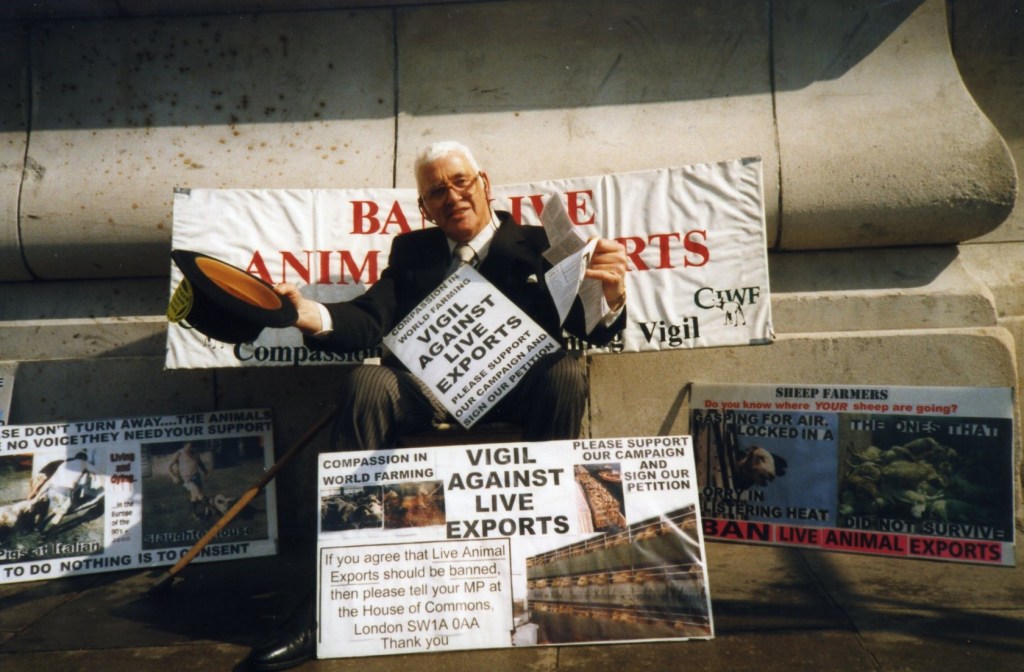
Personally, I have campaigned and investigated live animal exports from the UK for the last 35+ years.  You can read and see a lot more about it by visiting  About Us. | Serbian Animals Voice (SAV)

England: True horror of EU live animal transport masked in official records - CIWF Report.

True horror of EU live animal transport masked in official records 

28 November 2023

CIWF

My bold, underline etc – Mark.

Press Release

Shocking new report reveals suffering endured by around 44 million farmed animals a year – including unweaned calves and lambs – on horrific journeys lasting up to three weeks. Inadequate and misleading official records are masking the true horror and scale of the EU’s long-distance trade in farmed animals, a shocking new report released today by international NGOs Eurogroup for Animals and Compassion in World Farming reveals. 

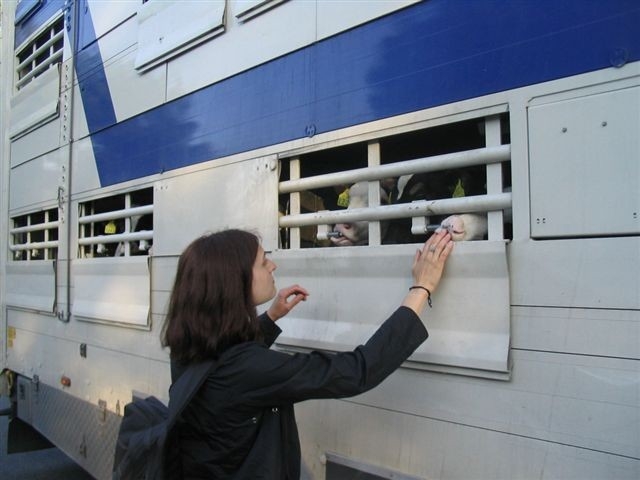
Photo – Mark

The new report  A data dump of suffering: the EU’s long-distance trade in farm animals exposed  analyses a cache of previously unpublished EU records relating to the long-distance transportation of 180,000 consignments of farmed animals within and from the EU during a 19-month period from October 2021 to April this year. It reveals disturbing details of the extent and nature of suffering endured by around 44 million farmed cattle, sheep, pigs and other animals transported annually.

Key insights from the report include:   

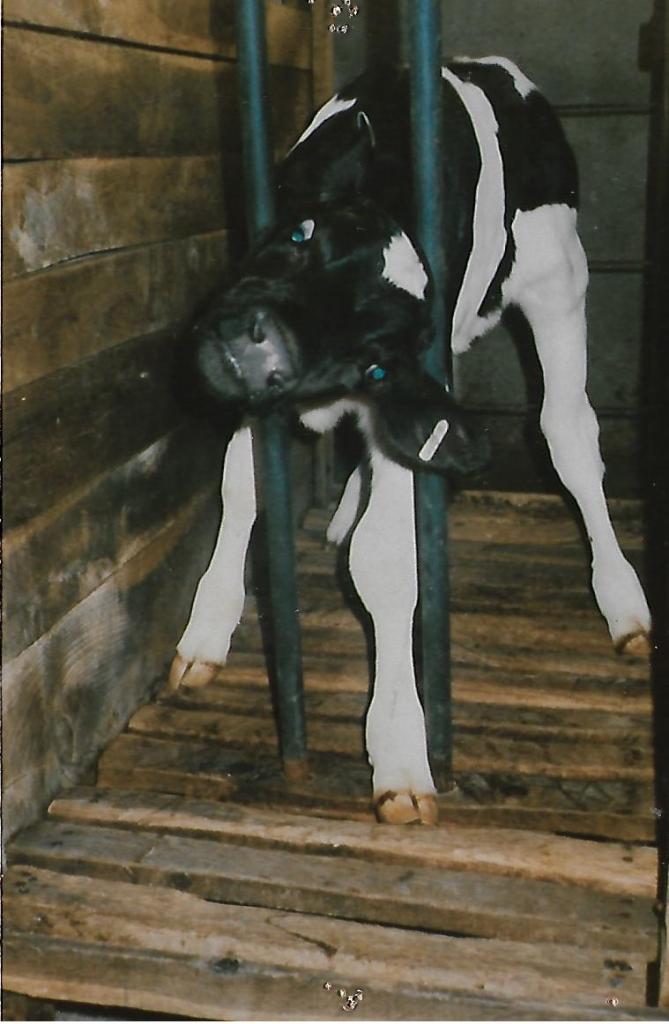
Over 370,000 unweaned calves were taken from their mothers shortly after birth and deprived of nutrition during long journeys – many as young as just two weeks old. 300,000 unweaned lambs are also imported by Italy alone each year, enduring long journeys without adequate feed.   

Thousands of sheep and cattle are exported from the EU by road to Kazakhstan, Uzbekistan, Kyrgyzstan, Azerbaijan, Armenia and Georgia in journeys lasting up to three weeks.   

Anti Live Export March – Dover, England. Photo – Mark

France, the Netherlands and Denmark have exported thousands of pigs to extremely distant countries including Brazil, Vietnam, Thailand, and Nigeria. By exporting breeding sows that have been genetically selected for very large litters, the EU is seeding its inhumane factory farming model in other parts of the world.  

Millions of cattle and sheep a year endure long, stressful sea journeys to the Middle East and Africa for slaughter or fattening. Vessels are often in very poor condition and animals suffer greatly during these journeys from heat stress, noxious gases, motion stress and starvation and there are no effective legal protections.   

In 2022, the EU exported around 30,000 pregnant heifers, mainly to central and western Asia, such as Uzbekistan and Kazakhstan, where journeys are up to 6,000 km and can take up to three weeks.  

Above – CIWF Tour for farmed animals in the Netherlands – photo Mark

An estimated 54,000 tonnes of live fish, equal to tens of millions of individual animals, were transported between EU Member States in 2019. Fish often endure routine starvation, overcrowding, and physical injury to scales and fins resulting from handling when loading and unloading during transport.    

The report shows that the EU’s journey records were incomplete, often inaccurate and vastly underestimate the sheer extent of the length and duration of many journeys. Around 60% of journeys are shown as starting at assembly centres but animals may have been transported from the farm of origin for many hours prior to this without any requirement for this to be logged. Many transporters practise ‘assembly centre hopping’, avoiding the requirement for animals to be given 24 hours mid-journey rest before resuming their journey.  

This release comes just days before the expected publication of the European Commission’s proposal on animal transport on 6 December. However, the Commission has failed to publish the other proposals it committed to present as part of a more comprehensive revision of the animal welfare legislation, including the ban on caged animal farming, which was expected by September 2023.   

The two animal protection NGOs are calling on the EU to ban the export of live animals from the EU to non-EU countries, to switch to a trade in meat and carcasses only, and to introduce tougher rules to protect the welfare of animals on journeys within the EU. 

This call for greater protection for farmed animals’ welfare during transportation is supported by the majority of European citizens. The 2023 Special Eurobarometer found that eight out of ten Europeans think the travel time for the commercial transport of live animals within or from the EU should be limited1 and an overwhelming nine out of ten people believe it’s important to protect the welfare of farmed animals.  

The transnational nature of live exports makes it especially challenging to protect the welfare of animals, and this is why we ask for a ban on live exports to non-EU countries. A replacement with meat and carcass exports does not only benefit the animals but has huge economic and environmental benefits. Better measures to protect unweaned and pregnant animals must be put forward, while the misuse of assembly centres needs to be urgently addressed. The immense scale of suffering highlighted by this investigation cannot be ignored – the European Commission must come forward with a more ambitious Regulation.

Reineke Hameleers, CEO, Eurogroup for Animals

Our new report reveals some deeply troubling issues, not least that the official data is incomplete, inaccurate and vastly underestimates the scale of – and the animal suffering caused by – the EU’s long-distance trade in live farmed animals. Although we knew that millions of animals were enduring cruel and unnecessary journeys in the name of profit, this report shows that the situation is far worse than we had feared. The EU must address this as a matter of urgency by banning the live export of farmed animals to non-EU countries and introducing tough new rules to protect their welfare during transportation between and within EU Member States.

Peter Stevenson, Chief Policy Advisor, Compassion in World Farming

Regards Mark
I have had the pleasure of knowing and working with Phil, Peter and all the CIWF crew for decades.

Below – On Tour with CIWF in the Netherlands.

CIWF Campaigner of the year 2003.

Czech Republic: Live Transport News and Links.

WAV Comment – have had this through today (22/11) from our campaigner friends at the Society for Animals in the Czech Republic, EU.  stoptransport.cz – For a Better World for Animals and Stopping Cruel Transports

I have made no changes to the text, or added any further additions; the translation is via the system, so this is directly as supplied.   With the above web link, there is an ability to translate if you wish.

Regards Mark
——————————————————

Dear friends,

the institutions of the European Union are also busy because of the animal inhabitants of the member states.

At the beginning of October, we informed you that the European Commission is forgetting about the promises of changes to the regulations to improve the conditions of kept and transported animals.

Following our joint European action, the Commission said it would submit amendments to the Regulation on the Protection of Animals during Transport later this year – petitions

Later this week, we expect an important breakthrough regarding other missed regulations. Whether it will be good or bad for the animals, we will write to you.

Specifically, these are proposals for regulations on the labelling of animal foodstuffs according to the methods of animal husbandry, changes on the slaughter of animals and on the methods of animal husbandry (so-called farm animals). The last one reflects on the successful European citizens’ initiatives End the Cage Age and Fur Free Europe.

On behalf of the Society for Animals

Judit Laura, Adéla, Michala

UK: Hopefully More Good News – An Official UK Ban On Live Animal Exports / Transport.

https://www.ciwf.org.uk/news/2023/11/bill-to-ban-live-exports-welcomed

Above Photos – Mark.

WAV Live exports links:

https://worldanimalsvoice.com/?s=live+animal+exports

https://worldanimalsvoice.com/2023/01/30/england-1-2-23-remembering-jill-a-brief-insight-the-live-exports-battles-of-se-england-to-be-a-voice-for-the-voiceless/

and dear friend John:

After years of campaigning by many animal welfare organizations, the announcement of a ban on live exports is a significant moment in the history of the animal welfare movement in the United Kingdom.

Above – more fighting at the EU, Brussels, Belgium.

The Animal Welfare (Livestock Exports) Bill will prevent the horrendous shipment of calves and other farmed animals for days or even weeks on unsuitable transport vessels that have seen dreadful accidents in the past with thousands of animals dying.

Unweaned calves that were sent from the UK to Spain for fattening suffered from injury, stress, and exhaustion. Global animal welfare organization FOUR PAWS said that it would fortify its efforts to advocate in next year’s EU elections, where a revision of Animal Welfare legislation is more than overdue.

“The last few years have seen too many fatal accidents with farmed animals being transported alive with countless documented infringements against existing legislation that are not prosecuted. The suffering the animals have to endure due to excessive temperatures in cargo, nonexistent veterinary care, and a constant shortage of water and feed is unimaginable,” said Corinna Reinisch, Program Lead Farm Animal Welfare at FOUR PAWS.

“Therefore, this milestone announcement in the UK shines a light on the upcoming proposals for transport that the European Commission has announced for December of this year. Eventually, the EU Parliament and the Council of the EU have to take those proposals, which raise the significance of live animal transport forward in the upcoming EU elections in 2024,” continued Reinisch. “This strong signal shall be the door opener for an urgently needed improvement for billions of farmed animals that are transported outside the EU to third countries every year. FOUR PAWS keeps advocating for animal welfare worldwide.”

Every year, millions of cows, pigs, birds, and sheep are exported from the EU to non-EU countries. This year alone, there have been several fatal accidents with animals being transported. After a three-month ordeal through the Mediterranean Sea, around 1,600 young bulls were killed in Spain after the transport ship Elbeik was not allowed to enter the Middle East due to feared bluetongue cases among the bulls on board. Almost 900 young bulls from the transport vessel Karim Allah experienced the same fate some weeks earlier, and only recently, 14 sheep died after the Phoenix III was stuck off the Italian coast due to bad weather conditions.

Link:

King Charles Announces Ban On The Live Export Of Animals For Slaughter In The UK In New Legislation – World Animal News

Regards Mark
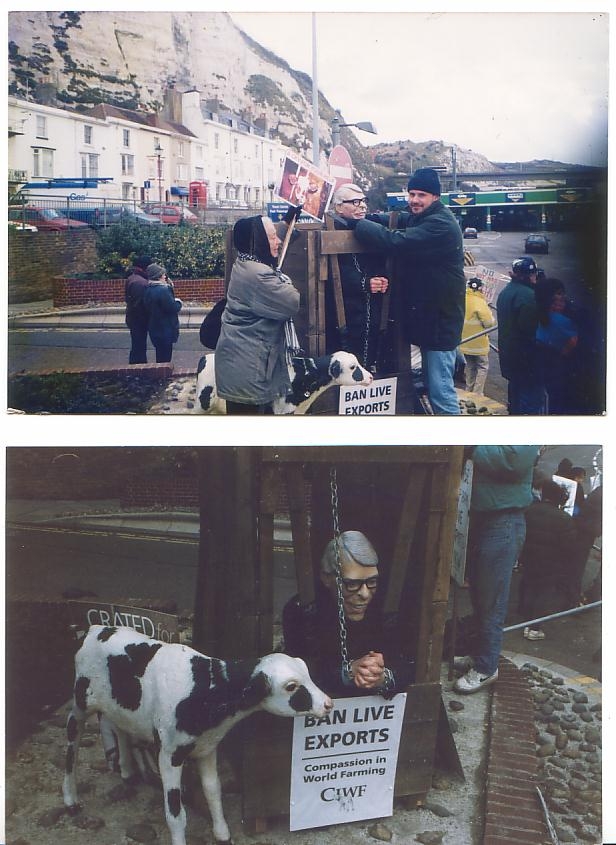
Words from the recent past:

I (Mark) have fought the export of live animal exports from the UK (via English ports) for around 35+ years.  A ‘been there; done it; got the T shirt’ type of scenario.  Over those 30 or so years the ‘fight’ has taken me into Europe investigating the trade; to the EU no good hierarchy in Brussels; and to many ports around England which, to their regret, got involved with the live export trade.

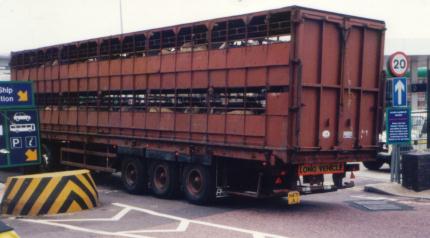
We have experienced the countless, wet; windy; cold and tearful nights at the docks; bearing witness to all the suffering – the noise of the calves having travelled from all over the UK; the smells of days old urine on the transporter floors; and the sights of helpless animals (pigs, sheep, calves and horses) through the slats on their way to meet barbaric deaths in the far corners of Europe and beyond.  Yes, despite Ministry promises; horses were exported to Europe under the guise of going for riding; when in fact they were going for slaughter.  How can I say this ? – one way or another I got the paperwork (export certificates) and we trailed the transporters into Europe.  The Ministry said one thing; and we had the evidence for another.  See more on it all at:

About Us. | Serbian Animals Voice (SAV)

The corruption of the system bummed me off enough; that one night; after witnessing the horses going out through an English port; I had to get something down to show what an utter sham it was – hence:

Microsoft Word – EXH6.doc (wordpress.com)

Sometimes you worked alone; for me also, sometimes with a female campaigner; sometimes more; and I cannot even start to count all the wonderful folk that have shared this journey of compassion with me – folks who; if you need it; would give you the shirt off their back to help you out. 

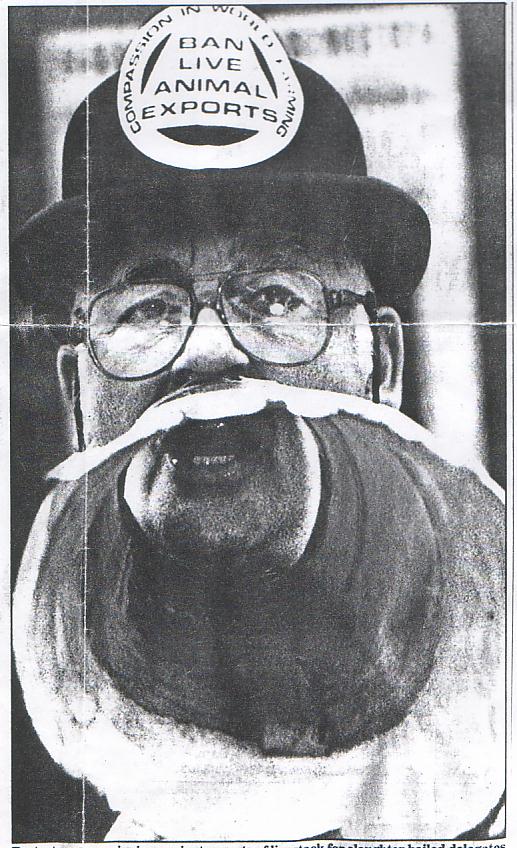
I lost a wonderful campaigner friend; Mike Tucker; see his photo – from London, a few years ago.  He was a stalwart in the fight for the ban on live animal exports.  Sadly he passed before this great news has broken today.  It would have been his dream to know that this issue has now reached UK government for action; with the very real prospect of a positive result soon.  Like me; the fight got deep into his veins; and the tenacity to be a voice for the suffering animals stayed with him until his final minute.  You don’t forget people like him.

I can remember meeting up with him many times in Ol’ London town over the years to fight this bloody, barbaric trade in sentient beings.  Despite his disability from an accident many years earlier, Mike would always dress ‘dapper’ in suit and bowler hat; and would take his bucket of water and a mop to wash the steps of the Agriculture Ministry (responsible for authorising the exports); telling them to ‘clean up’ their act and stop the trade regarding live animal transport.

The EU, for what little it is worth; has a policy of ‘member states’ never being allowed to stop the trade.  With the UK sensibly voting to leave a few years ago; and our relationship with the EU hopefully coming to an end this month in 2020; the UK, as an independent nation, can now take the action to stop the live export trade; re the action starting in Parliament tomorrow (3/12/20).  Things will not change overnight; we know that; but the UK government; unlike the EU; is listening to its citizens; and hopefully in the near future, will introduce legislation to stop the trade.  If other member states of the EU cannot go independent and enforce their own nation legislation; then it is a sad state of affairs; especially as so many citizens of the EU (who’s wishes are ignored) wish to see the business / trade stopped for good.

Mark

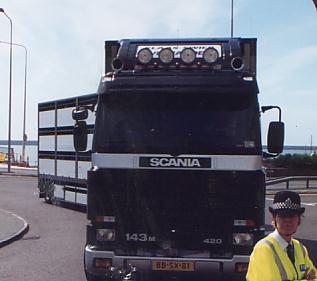
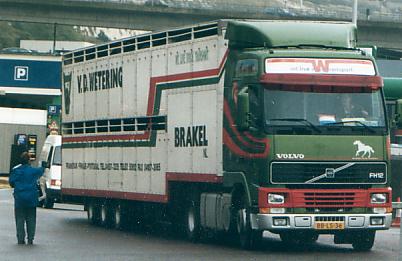
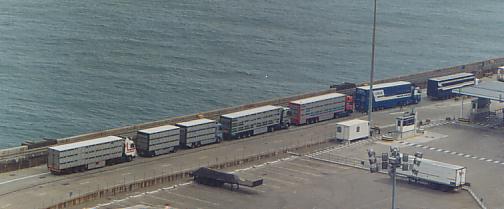
Above – Livestock transporters wait at Dover harbour.

Fighting in Dover and Brussels, Belgium

Above – in all the cruelty, we had some fun nights as well- you have to !!

EU / South America: Serious shortcomings revealed by audit of horse meat production in South America for EU market.

6 November 2023

AWF

The European Commission carried out an audit of facilities in Argentina and Uruguay that produce horse meat for the EU market, in order to monitor the implementation and enforcement of EU legislation in the areas of food safety and animal health and welfare. The results reveal serious concerns regarding traceability and animal health.

Whilst the audits took place in November 2022, the results have just only just been released. 

In Uruguay, concerns were raised regarding the robustness of the identification and traceability system. There is no traceability on whether horses have been administered veterinary medical treatments that may compromise their health and that should prevent them entering the food chain. 

Unidentified horses from Brazil were also found to enter the food chain in Uruguay, which is in conflict with the fact that horse meat imports from Brazil were suspended in 2017 due to food safety concerns.

In Argentina, shortcomings in horse identification and traceability, as well as the reliability of supporting documentation, were raised. Guarantees concerning compliance with EU medical treatments requirements are currently based on owners’ sworn declarations, which the audit found to be insufficiently reliable or false.

The last audit took place in 2018, where similar shortcomings were found.

During such audits, EU Regulation 1099/2009 on the protection of animals at the time of killing has been confirmed to be systematically breached. However the latest audit reported finding few animal welfare problems. Facilities are informed in advance of the dates that inspectors will visit.

Animal Welfare Foundation believes that pre-warning facilities of upcoming audits allows them to manipulate results and conceal poor conditions which compromise animal welfare.

We call for respect for EU equivalent animal welfare standards in exporting countries, not only for slaughter but also for transport and assembly centres. 

Access to the European market should be conditioned on compliance with traceability and food safety standards, including veterinary drug use, equivalent to those applied in the EU.

Since compliance with EU Regulations, particularly EU Regulation 1099/2009 cannot be guaranteed, horse meat imports should be immediately suspended from Uruguay and Argentina. 

Regards Mark
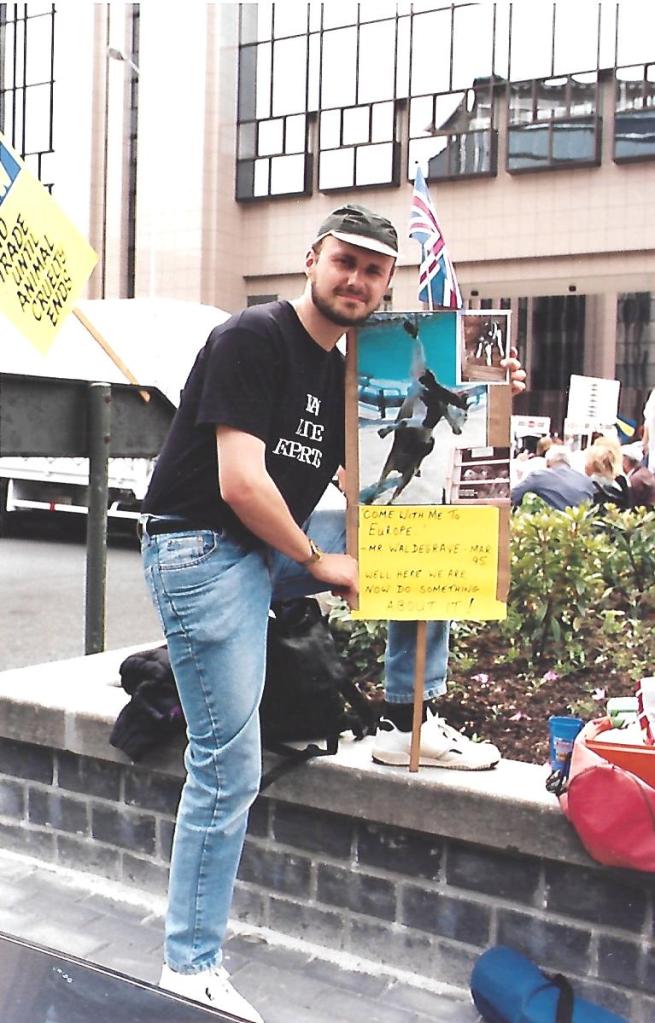
England: Note Date – London, Viva ! COP Demo On 25/11/23.

Dear Mark,

Viva! is demanding that the Government includes a shift to plant-based diets in their climate commitments. Take action with us ahead of COP28 by joining our London demonstration on the 25 November 2023.  

COP is a key point in the environment calendar, marking the annual United Nations Climate Change Conference where world leaders come together to discuss the supposed ‘solutions’ to tackling the climate crisis and its impacts. Demand for meat, dairy, fish and eggs is the number one driver of wildlife loss, is fuelling the climate crisis, and threatening humanity’s own existence. Yet given the devastating impact it has on the planet, there is no mention of dietary change in the UK Government’s environment and climate strategy. 

Our leaders are governing the death of humanity. Without a healthy planet, we have no future.  We need to take a stand against climate inaction, and we need you to join us this 25 November.  
Join Viva!’s demonstration at Parliament Square 
Where: Parliament Square, London When: 25 November 2023, 11am to 2pm

We’ll be bringing lots of placards to explain why we need to include the impacts of meat and dairy in environmental commitments. There will be plenty to hand around if you need one or bring your own!  This is a collaborative event where we will be joined by other groups to amplify this unified message. We will have speeches throughout the day. 

Our action on Parliament Square is just the beginning – we want to support you in taking action in your local area.  

COP28 will be a key event in the environment calendar, with rallies and demos across the country; allowing people to have their voices heard about the need for climate action now.  

COP28 is being held 30 November to 12 December 2023. Take action in your local area as part of a local COP28 rally or hold your own event or stall. 

At Viva! we will be updating our website regularly with details of national events. However, if there isn’t one already set up near you, why not hold your own outreach event or demo instead? Keep us updated on your climate action plans.

Click here to order your free climate demo pack –  https://viva.org.uk/planet/campaigns/cop28/?mc_cid=b61cb0cfc9&mc_eid=f1cc978ae5#pack

Regards Viva and Mark

China: The Dark Trade of Cat Meat in China: A Tale of Profit, Animal Rights, and Food Safety.

In the bustling city of Zhangjiagang, eastern China, a grim discovery was made. Police rescued around 1,000 cats from a truck, believed to be transporting them to a slaughterhouse. Local animal rights activists alerted the authorities to this horrifying practice, leading to the rescue of these innocent creatures. The rescued cats were transported to a nearby animal shelter, offering them a temporary safe haven. But the question remained: how could this happen?

The Dark Trade of Cat Meat in China: A Tale of Profit, Animal Rights, and Food Safety© Provided by BNN Breaking

Read in full at:  The Dark Trade of Cat Meat in China: A Tale of Profit, Animal Rights, and Food Safety (msn.com)

Regards Mark
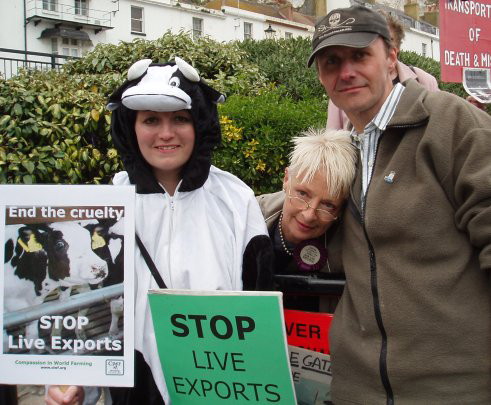
EU / Australia: Last chance to embed animal welfare in the EU-Australia trade agreement.

25 October 2023

As negotiations for a free trade agreement (FTA) between the EU and Australia enter the final stage, Eurogroup for Animals, Australian Alliance for Animals and Animals Australia urge the two sides to include ambitious provisions on animal welfare in the agreement.

Improving animal welfare is strongly linked with the pursuit of sustainable food systems. However, current trade policies appear to be exacerbating rather than mitigating the adverse consequences of intensive livestock farming. This is the case with Australian beef exports, where 96% of exports to the EU originate from animals held in grain-fed feedlots; yarded areas that adversely impact animal health and welfare by causing respiratory and digestive issues, and contribute to increased water, soil and air pollution in Australia.

According to the EU’s own impact assessment, a trade agreement with Australia that grants expanded market access for Australian beef without attaching any animal welfare conditions would further incentivise beef production predominantly in feedlots. This would undermine the EU’s ongoing sustainable food systems transition. It is crucial for both parties to establish conditions for preferential tariffs on beef that originates from grass-fed systems, explicitly excluding beef produced within commercial feedlots, as the EU did with New Zealand.

Above – Conditions For Exported Australian Sheep.

Australia’s current rules on transporting live animals over long distances are minimal and virtually unenforceable, allowing animals to travel for up to 48 hours without food or water. Introducing a condition related to the protection of animals during transport in trade preferences related to ruminant meat would thus also have a positive impact. 

This trade agreement is also an opportunity to set up strong cooperation mechanisms to tackle other topics such as the lack of use of pain relief during procedures like sheep mulesing in Australia. 

Above — Mulesing.

It will be important to also use such a platform to share best practices and combine efforts to phase out live animal exports, especially since Australia has committed to phasing out its live sheep export trade and the EU is currently revising its legislation on the protection of animals during transport. 

The EU and Australia together represent 473 million citizens, many of whom believe more should be done to improve the life of farm and wild animals. According to a 2018 report, 9 out 10 Australians are concerned about the welfare of farmed animals, and nearly as much want a reform to address this.

In Europe, animal welfare is a great ethical concern. Seven out of the ten successful European Citizens Initiatives (ECI) have been dedicated to animal welfare issues. The recent support for the ECI End the Cage Age paves the way for both sides to cooperate as Australia has pledged to phase out the production of battery eggs by 2036.

We also urge the EU and Australia to address the large-scale, inhumane killing of kangaroos for commercial use. The EU is the main market for Australian kangaroo meat and leather, an industry which raises concerns about animal welfare, conservation and public health. Both parties must consider prohibiting the trade of kangaroo-based products primarily on ethical grounds. The EU and Australia both have a responsibility to solve this; in a recent survey, 67% of Australians stated that other countries should have a responsibility not to drive the commercial killing of kangaroos.

It is possible to strike a balance between economic interests and our shared commitment to ensuring the welfare of animals. We call upon political leaders of the EU and Australia to stand firm on their commitment to develop and safeguard high animal welfare standards.

Regards Mark