Category: Live Transport

England: Note Date – London, Viva ! COP Demo On 25/11/23.

Dear Mark,

Viva! is demanding that the Government includes a shift to plant-based diets in their climate commitments. Take action with us ahead of COP28 by joining our London demonstration on the 25 November 2023.  

COP is a key point in the environment calendar, marking the annual United Nations Climate Change Conference where world leaders come together to discuss the supposed ‘solutions’ to tackling the climate crisis and its impacts. Demand for meat, dairy, fish and eggs is the number one driver of wildlife loss, is fuelling the climate crisis, and threatening humanity’s own existence. Yet given the devastating impact it has on the planet, there is no mention of dietary change in the UK Government’s environment and climate strategy. 

Our leaders are governing the death of humanity. Without a healthy planet, we have no future.  We need to take a stand against climate inaction, and we need you to join us this 25 November.  
Join Viva!’s demonstration at Parliament Square 
Where: Parliament Square, London When: 25 November 2023, 11am to 2pm

We’ll be bringing lots of placards to explain why we need to include the impacts of meat and dairy in environmental commitments. There will be plenty to hand around if you need one or bring your own!  This is a collaborative event where we will be joined by other groups to amplify this unified message. We will have speeches throughout the day. 

Our action on Parliament Square is just the beginning – we want to support you in taking action in your local area.  

COP28 will be a key event in the environment calendar, with rallies and demos across the country; allowing people to have their voices heard about the need for climate action now.  

COP28 is being held 30 November to 12 December 2023. Take action in your local area as part of a local COP28 rally or hold your own event or stall. 

At Viva! we will be updating our website regularly with details of national events. However, if there isn’t one already set up near you, why not hold your own outreach event or demo instead? Keep us updated on your climate action plans.

Click here to order your free climate demo pack –  https://viva.org.uk/planet/campaigns/cop28/?mc_cid=b61cb0cfc9&mc_eid=f1cc978ae5#pack

Regards Viva and Mark

China: The Dark Trade of Cat Meat in China: A Tale of Profit, Animal Rights, and Food Safety.

In the bustling city of Zhangjiagang, eastern China, a grim discovery was made. Police rescued around 1,000 cats from a truck, believed to be transporting them to a slaughterhouse. Local animal rights activists alerted the authorities to this horrifying practice, leading to the rescue of these innocent creatures. The rescued cats were transported to a nearby animal shelter, offering them a temporary safe haven. But the question remained: how could this happen?

The Dark Trade of Cat Meat in China: A Tale of Profit, Animal Rights, and Food Safety© Provided by BNN Breaking

Read in full at:  The Dark Trade of Cat Meat in China: A Tale of Profit, Animal Rights, and Food Safety (msn.com)

Regards Mark

EU / Australia: Last chance to embed animal welfare in the EU-Australia trade agreement.

25 October 2023

As negotiations for a free trade agreement (FTA) between the EU and Australia enter the final stage, Eurogroup for Animals, Australian Alliance for Animals and Animals Australia urge the two sides to include ambitious provisions on animal welfare in the agreement.

Improving animal welfare is strongly linked with the pursuit of sustainable food systems. However, current trade policies appear to be exacerbating rather than mitigating the adverse consequences of intensive livestock farming. This is the case with Australian beef exports, where 96% of exports to the EU originate from animals held in grain-fed feedlots; yarded areas that adversely impact animal health and welfare by causing respiratory and digestive issues, and contribute to increased water, soil and air pollution in Australia.

According to the EU’s own impact assessment, a trade agreement with Australia that grants expanded market access for Australian beef without attaching any animal welfare conditions would further incentivise beef production predominantly in feedlots. This would undermine the EU’s ongoing sustainable food systems transition. It is crucial for both parties to establish conditions for preferential tariffs on beef that originates from grass-fed systems, explicitly excluding beef produced within commercial feedlots, as the EU did with New Zealand.

Above – Conditions For Exported Australian Sheep.

Australia’s current rules on transporting live animals over long distances are minimal and virtually unenforceable, allowing animals to travel for up to 48 hours without food or water. Introducing a condition related to the protection of animals during transport in trade preferences related to ruminant meat would thus also have a positive impact. 

This trade agreement is also an opportunity to set up strong cooperation mechanisms to tackle other topics such as the lack of use of pain relief during procedures like sheep mulesing in Australia. 

Above — Mulesing.

It will be important to also use such a platform to share best practices and combine efforts to phase out live animal exports, especially since Australia has committed to phasing out its live sheep export trade and the EU is currently revising its legislation on the protection of animals during transport. 

The EU and Australia together represent 473 million citizens, many of whom believe more should be done to improve the life of farm and wild animals. According to a 2018 report, 9 out 10 Australians are concerned about the welfare of farmed animals, and nearly as much want a reform to address this.

In Europe, animal welfare is a great ethical concern. Seven out of the ten successful European Citizens Initiatives (ECI) have been dedicated to animal welfare issues. The recent support for the ECI End the Cage Age paves the way for both sides to cooperate as Australia has pledged to phase out the production of battery eggs by 2036.

We also urge the EU and Australia to address the large-scale, inhumane killing of kangaroos for commercial use. The EU is the main market for Australian kangaroo meat and leather, an industry which raises concerns about animal welfare, conservation and public health. Both parties must consider prohibiting the trade of kangaroo-based products primarily on ethical grounds. The EU and Australia both have a responsibility to solve this; in a recent survey, 67% of Australians stated that other countries should have a responsibility not to drive the commercial killing of kangaroos.

It is possible to strike a balance between economic interests and our shared commitment to ensuring the welfare of animals. We call upon political leaders of the EU and Australia to stand firm on their commitment to develop and safeguard high animal welfare standards.

Regards Mark

EU: The rules of the game: will the views of EU citizens make the Commission finally deliver the new animal welfare legislation?

23 October 2023

WAV Comment – In addition to making things a lot better, lets have EU wide legislation that gives stray (homeless) dogs and cats much more rights – they are homeless; not wild !

  • I could show you dozens more photos I have on file re EU strays, but I dont want photos, I want legislation.
  • Pack EU Commissioners in a livestock transporter for 2 days, urinating over each other – then see how quickly EU animal transport rules will change !

Opinion

Written by Reineke Hameleers

The past few weeks have been among the hardest in my position as the CEO of Eurogroup for Animals but also, in some respects, the most surreal. In the ten years I have proudly spent leading this organisation, I experienced many political hurdles. Together with my team and our member organisations, we went through long years of lobbying and campaigning that were met with political inaction on the part of the European Commission.

After hitting the rubber wall so many times, we were thrilled by the prospect of new and updated animal welfare legislation, which the European Commission promised to deliver in line with the aims of the EU Green Deal and in the wake of our incredibly successful citizens’ mobilisations. It was refreshing for us to finally collect all the science, prepare our concrete asks, and talk about change for billions of kept animals. 

This week it became clear that, at least for this political term, the European Commission does not intend to deliver all of the promised and much-needed reforms of animal welfare legislation. There are reasons why this is happening and I won’t analyse them in detail here. All I can say is that none of them holds water in a healthy democracy because this backtracking represents a betrayal of the trust millions of European citizens had put in the European Commission to take action for farmed animals. 

Today, the disconnect between civil society and European politics has become even more evident. For one, the plenary debate at the European Parliament in Strasbourg on the European Citizens’ Initiative “Fur Free Europe” demonstrated that there is incredible cross-party parliamentary support for a ban on fur farming. Secondly, the results of the latest special Eurobarometer on animal welfare, only just published, show once again and without a shadow of a doubt that European citizens deeply care for farmed (and domestic) animals and want their policymakers to act.  We know, however, that the pressure from the industrial agriculture lobby is immense and that the stakes are high due to the impending European elections in 2024. 

We had anticipated that any attempt at passing legislation to reform animal farming would encounter fierce opposition from our opponents. I do not think we were wearing rosy glasses. After engaging for years with all stakeholders in countless meetings and occasions, and with all the scientific and field evidence on our side, we thought there were solid bases on which to build a revised farmed animal welfare legislation. 

But then the pandemic hit, then war, causing international instability and an ongoing economic crisis. The promises of a greener, more sustainable food and farming system and good lives for animals became controversial in light of the events. As elections approach, one must be “realistic”. What was promised to millions does not count anymore when there’s a re-election on the line. These are the rules of the game. 

Now that European citizens have spoken again, loud and clear, directly and through their elected representatives, what will the European Commission do? I believe the European Commission still can (and should) do the decent thing and put forward all the planned legislative proposals on animal welfare. When it does, we will be there to ensure that the new laws really make a difference in the lives of billions of non-human animals. 

Regards Mark

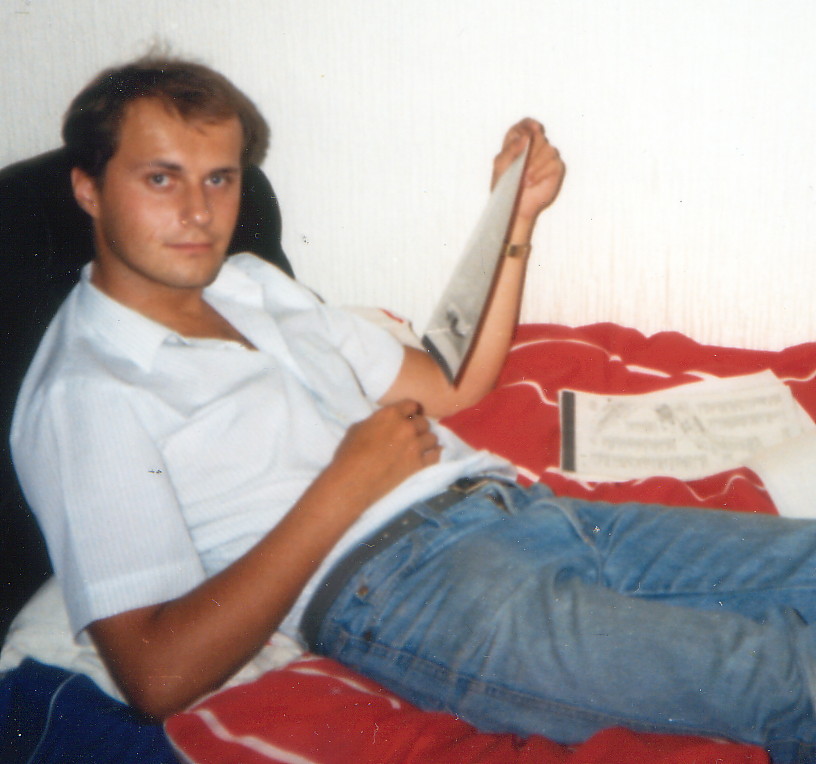
Younger days planning something ! – probably involving live animal exports.

EU: Wake Up Commission ! – The Figures Are Here – Special Eurobarometer on animal welfare: EU citizens give strong impetus to deliver all animal welfare legislation.

19 October 2023

Press Release

A new barometer on animal welfare shows an overwhelming majority of European citizens who demand better EU legislation that truly protects animals, with over nine in ten Europeans stating that it is important to protect the welfare of farmed animals, and an absolute majority deeming it very important. More than eight in ten Europeans believe that farmed animals in their countries should be better protected than they are now. These results should prompt the European Commission to follow through on its commitment to deliver all the proposals to revise the EU animal welfare legislation as promised.

The much awaited special Eurobarometer on Attitudes of Europeans towards Animal Welfare has finally been published today. The poll surveyed 26,376 citizens across all member states between 2 and 26 March 2023, and acts as an official tool that is used to advise the EU institutions when drafting reports and legislations.

The results confirmed the strong support from EU citizens towards animal welfare, confirming the previous survey from 2016, which had also sent a very strong message for the EU to better protect animals. 

Highlights from the survey:

Over 90% of Europeans consider that farming and breeding practices should meet basic ethical requirements, while two-thirds of respondents said that they would like to have more information on the conditions in which farmed animals are raised.

Nearly six in ten Europeans (57%) said that fur farms should be banned in Europe, in line with the 1.5 million citizens who made this call in the successful Fur Free Europe ECI 

Over nine in ten Europeans believe that farmed animals should have enough space to be able to move around, lie down and stand up, with 89% saying that animals should not be kept in individual cages, supporting the call by 1.4 million citizens who asked for a ban on cages. Currently in the EU, over 300 million farmed animals spend their lives confined in cages, which cause them immense suffering.

Nearly nine in ten Europeans (88%) said that it is important to improve the welfare of animals in slaughterhouses. 

89% of Europeans favoured a ban on mutilations, a practice that is still very common in the EU, despite the pain it causes. 

Three quarters of respondents found the practice of killing male chicks after birth to be unacceptable. In addition, eight in ten Europeans believe that ensuring sufficient skills and training in people handling animals is important.

On the issue of live animal transport, which the EC is expected to propose a revision on, 83% of respondents think that the travel time for the transport (for ‘commercial purposes’) of live animals within or from the EU should be limited.

When it comes to food imports from non-EU countries, over eight in ten Europeans (84%) believe that the current animal welfare situation should change, either by imposing import requirements or a very strict labelling system. 

60% of the respondents indicated that they would be willing to pay more for products sourced from animal welfare-friendly farming systems, despite the survey being carried out during high inflation periods.

74% believe that the welfare of companion animals should be better protected, and over eight in ten respondents said that good welfare conditions for horses, cats and dogs bred for commercial purposes is important.

These results come at a time when the European Commission comes under fire for failing to uphold its commitment to deliver the full proposals to revise the EU animal welfare legislation, and backtracking from its promises as part of the Farm to Fork Strategy.

The support of EU citizens for better animal welfare is enormous, with this Eurobarometer once again they made a clear call for better protection for animals on all fronts. We urge the European Commission to listen to this loud and clear message and come forward with a solid commitment and timeline for the Kept Animals and Slaughter Regulations

Reineke Hameleers, CEO, Eurogroup for Animals

Regards Mark

EU: They Never Were Worth Anything ! – Big Talk But … – Democratic failure: European Commission backtracks on its commitments for animals in work programme.

Democratic failure: European Commission backtracks on its commitments for animals in work programme

16 October 2023

Note – WAV have included bold text, colour and underline as necessary.

Press Release

The European Commission has failed to deliver on its commitment to better protect billions of animals, despite clear calls by citizens demanding better legislation.

A leaked 2024 work programme, set to be presented in the European Parliament plenary tomorrow, shows that the Commission is backtracking on its promise to EU citizens and only committing to publish one of the four promised regulation proposals by the end of the current term, failing to uphold its democratic responsibility to answer to European Citizens’ Initiatives.

In 2020, the European Commission (EC) committed to revise the animal welfare legislation as part of the Farm to Fork Strategy, but with the current political term coming to a close, according to the leaked work programme, the EC has now failed to include all the proposals, committing only to delivering one of the four promised regulations (Transport Regulation), set to be published in December. 

This leaves behind the Kept Animals, Slaughter and Labelling Regulations. Particularly worrying is the absence of a clear timeline for the Kept Animals Regulation (KAR) through which the EC was expected to deliver on its commitment to transition to cage-free systems, an ask by 1.4 million citizens in the End the Cage Age ECI.

With these regulations failing to be mentioned in the work programme, it is now highly likely that they would be handed over to the next Commission, leaving millions of animals unprotected for years to come, and the future of the proposals hanging in the balance. It also ignores the clear democratic call reflected in the European Citizens’ Initiatives, in which citizens have asked the EU to do more for animals.

Another important file missing in the document is the Legislative Framework for Sustainable Food Systems (FSFS) which was also expected by the end of 2023. Postponing this Farm-to-Fork flagship will hinder much needed food system transformation and fail aligning agricultural and food policies with the EU’s sustainability and climate change objectives.

In addition to its Farm to Fork Strategy, the much anticipated revision of the REACH regulation under the Chemicals Strategy for Sustainability is also notably absent from the programme. The cornerstone regulation has long been discussed as a centrepiece of the EU Green Deal towards the goal of achieving a toxic free environment and a key element to help further promote a chemical strategy which advances in more concrete terms the phase out of animal testing for regulatory purposes. 

We are extremely dismayed that the EC did not have the political will to commit to its promise, turning its back on citizens and science. Decades in the making, we had numerous dialogues, impact assessments and scientific opinions. Petitions, ECIs and the 2016 special Eurobarometer clearly show that European Citizens want more for the animals, and yet, big business continues to have the leading hand. We will not give up but keep pushing for the EC to commit on a clear timeline for the other Proposals. The time is now. We simply will not accept any more delays.

Reineke Hameleers, CEO, Eurogroup for Animals

Last week, animal protection organisations, MEPs and advocates gathered in front of the Berlaymont and publicly called on President von der Leyen to publish the promised full proposals for a revised animal welfare legislation. MEPs called the EC’s failure to deliver the proposals a ‘“democratic failure”.

Renowned ethologist and conservationist, UN Messenger of Peace and founder of the Jane Goodall Institute, Dr Jane Goodall, PhD also joined the call and asked EC President Ursula von der Leyen to meet with her to discuss the issue.

Polish elections: which parties defend animal welfare?

Polish elections: which parties defend animal welfare?

13 October 2023

Otwarte

For the first time, Polish organisations Albert Schweitzer Foundation, Otwarte Klatki, Green REV Institute and Compassion in World Farming Poland joined forces on a pre-election campaign to encourage citizens to vote for animals in the national elections taking place on 15 October.

On their campaign website, the organisations demand protection of animals used for the production of meat, milk, eggs, and clothing. They oppose industrial farming that negatively affects the well-being of people, animals and the environment, and they support transforming the food system to a sustainable and plant-based one.

According to their ranking of Polish political parties, the Razem (Together), Zieloni (Greens) and Nowa Lewica (New Left) parties are the leading parties for animal welfare issues in Poland. The ruling nationalist Prawo i Sprawiedliwość (Law and Justice) party is vying for an unprecedented third term in office, but is not projected to gain a majority in the parliament. The main opposition party Platforma Obywatelska (Civic Platform), led by former European Council president Donald Tusk, would also need support from a coalition. Civic Platform ranks 6th for animal welfare, and is likely to join up with other more animal welfare-friendly parties. Prawo i Sprawiedliwość ranks 8th with a final score below zero, and would seek a coalition with Konfederacja (Confederation), who rank bottom in the animal welfare chart. 

Every year, over a billion chickens are killed in our country. We produce the most poultry meat for slaughter in the entire EU. We want to inform voters interested in the fate of farm animals about the views and plans of political parties regarding the protection of their rights. We want to create pressure on politicians to take urgent actions to improve the welfare of farm animals.

Grzegorz Stachacz, Director, Albert Schweitzer Foundation

The campaign has reached major media, with coverage on TVN24, the largest online news service in Poland, ONET, and FAKTY TVN

The ranking is based on party positions for welfare demands including phasing out cages for laying hens, pigs, calves, rabbits and quails, banning fur farming and the slaughter of day-old chicks. On transport, the organisations call for a ban on the export of live animals and a maximum transport duration of 8 hours for live cattle, pigs, sheep and goats. For poultry and rabbits, the transport duration should be limited to 4 hours.

The ranking also covers party positions on creating an Ombudsman position on animal protection, and transitioning to a sustainable food system.

Regards Mark

EU: Ursula von der Leyen urged to uphold democracy and deliver full proposals for the animals.

Ursula von der Leyen urged to uphold democracy and deliver full proposals for the animals

11 October 2023

Press Release

Animal protection organisations, MEPs and advocates gathered in front of the Berlaymont and publicly called on President von der Leyen to publish the promised full proposals for a revised animal welfare legislation.

In 2020, the European Commission (EC) committed to revise the animal welfare legislation as part of the Farm to Fork Strategy, but with only months before the end of the political term, the EC has announced that it will only publish one of the four promised proposals (Transport Regulation), leaving millions of animals unprotected and citizens’ calls ignored.  

With the current legislation not having been revised for over two decades, several research studies, including EFSA’s latest opinions, have highlighted that the existing regulations are outdated and insufficient to protect the welfare of animals in Europe. This calls for the urgent need to revise the Kept Animals and Slaughter regulations, yet the EC has failed to provide a timeline.

Among the promised proposals, the EC is expected to reveal its action plan to phase out cages, in response to 1.4 million citizens who have called for their ban in the End the Cage Age ECI.

MEPs Tilly Metz (Greens/EFA, LU), Anja Hazekamp (The Left, NL), Niels Fuglsang (S&D, DK), Michal Wiezik (Renew Europe, SK), Thomas Waitz (Greens/EFA, AT), Manuela Ripa (Greens/EfA, DE), Petras Auštrevičius (Renew Europe, LT), Francisco Guerreiro (Greens/EFA, PT), Caroline Roose (Greens/EFA, FR), Martin Hojsík (Renew Europe, SK) and Martin Buschmann (NA, DE), joined the gathering and publicly called on the EC to deliver the full proposal, as promised.

Millions of citizens are waiting for the European Commission to deliver on these promises and it is in the interest of the credibility of our European institutions not to let them down.

Tilly Metz, MEP

The call was supported by renowned ethologist and conservationist, UN Messenger of Peace and founder of the Jane Goodall Institute, Dr Jane Goodall, PhD:

Every year, 300 million sentient animals are caged, confined in industrial farms across the EU. These systems are outdated and cause immense suffering to animals who are able to feel frustration, fear and pain. Unfortunately, it seems that the powerful agribusiness lobby has been opposing these desperately needed reforms, because for them, the wellbeing of animals is not important. It seems that President von der Leyen has listened to big business, rather than the millions of EU citizens who support the promised ban on cages.

Dr. Jane Goodall

She publicly asked President von der Leyen to meet with her and discuss the issue.

In the past weeks, over 600 scientists,  over 100 MEPs and up to 50,000 citizens have called on the EC President to address Europeans’ demands and deliver the proposals.

This commission publicly committed to improve animal welfare. Yet now, at a pivotal moment, we are faced with ambiguity. We don’t need dialogue anymore, we do not need any more economic assessments, and we will not settle for tokens. We are long past those stages. Animal welfare is close to the heart of millions of citizens who now hold this Commission fully accountable for the commitment made to improve the lives of billions of animals in Europe. The time is now, as promised. Revising the animal welfare legislation is the right thing to do.

Reineke Hameleeers, CEO, Eurogroup for Animals

On Thursday 12th October, the European Parliament is set to host a debate on another successful ECI, Fur Free Europe, which calls for the ban of fur farming and the placement of fur products on the European market. The farming ban should also be included in the revised Kept Animals Regulation, answering the call of 1.5 million citizens.

Regards Mark

England: Hope !

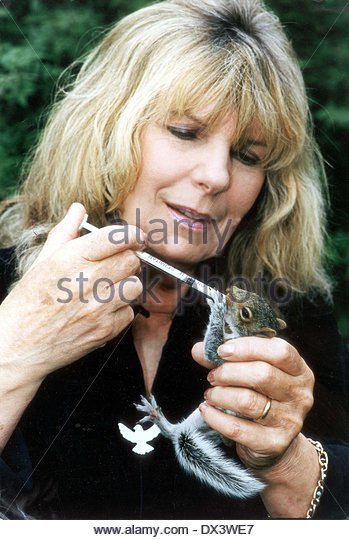
Years ago I was the investigator for Carla’s charity; and we were both devoted to stopping live animal transport.  I did a lot of investigation work into British hoses being exported for the meat trade; though their official paperwork; approved by Defra, was saying that they were being exported to mainland Europe for ‘Riding’.  Time, and a lot of work at the docks, combined with visiting horse sales markets gave us the proof we needed. I still have all the information in several files; information which took ages to gather, collate and write about ready for presentation.

Carla and I met with the Minister in London one day to present them with our investigation evidence.  Around the same time farmers dumped many dozens of baby calves at Carlas, expecting her to have them destroyed because of sheer numbers involved and the money needed to raise them – they wanted to be able to say that the veggie animal rights activist had killed calves.  NO WAY !

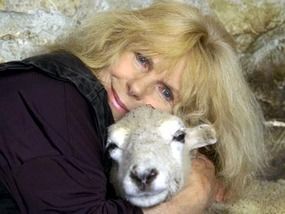
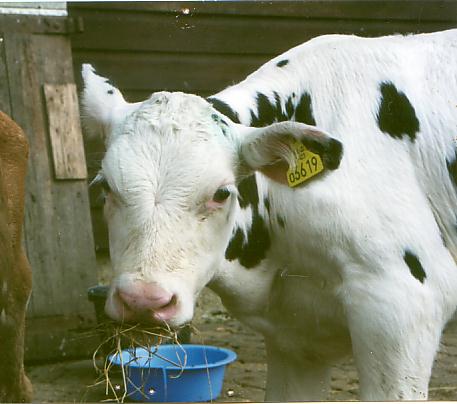
Carla kept every calf and raised them all into beautiful adult cattle.  One day, when they were still young, Carla asked me to name one of the calves.  I decided to call him ‘Hope’, as I hoped for a future free of live animal exports, and my own personal hope that there was a future with more hope and compassion for innocent beings.

Here is a photo of ‘Hope’

Above – ‘Hope’

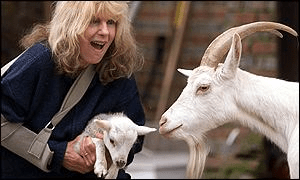
Here my favorite photo of wonderful Carla:

Live export unfortunately still continues all these years later; but many of us gather evidence and footage which is presented to he powers that be – with a simple message ‘stop it’.  It will happen and I think and hope soon, in the near future,

I came across this video, and noted that this suffering dog was also named ‘Hope’ by the wonderful people that took him in and literally changed every aspect of his being; from mere existence and survival on the street to one of a loved and very cared for dog.  It is a video which tells a story which has not yet finished.  Every credit to all involved; especially the girl who saw him suffering on the street, and who initially took time off work to help and feed this sentient.

Enjoy he video; a story of ‘Hope’

Regards Mark

About Us. | Serbian Animals Voice (SAV)

In the past, Mark worked with television comedy scriptwriter Carla Lane for many years; and had the position of being the investigator for her animal charity (Animaline) throughout the years of the horse export investigations.  Through undercover investigation work, port monitoring, visits to UK horse markets, and trails into Europe, it was shown that British horses were being exported from the UK whilst being declared as ‘going for riding’ to Europe.  In reality, the animals were being exported to Europe for their meat.  What was declared on the export licenses was a complete and utter lie to get around the complexities of exporting  sentient animals for one thing when they were actually going to their deaths !

After all the investigative work was completed and documented, which involved a lot of work, Carla and Mark teamed up in London one day and made formal presentations to the UK Government Ministry – DEFRA (previously  MAFF) about all the investigation work.
To this day, Mark will never forget what was witnessed in the investigations into beautiful, live horses being exported from the UK to Europe as a scam for the meat trade under the guise of ‘riding horses’.  This, combined with live farm animal export work over the last 27 years or so has meant that the export of live farm animals is a top ‘hate’ and will always be campaigned against – be it in the UK, Europe, Australia, South America, North Africa, Anywhere !

In the early hours of one morning, after investigating yet another consignment of UK horses being exported to the EU; declared as ‘going for riding’ but really destined for the meat trade; Mark returned home and decided that he just had to get something down on paper to express what he had experienced so many times, with the real knowledge (and proof) of what was happening to these beautiful animals despite what the (false) paperwork declarations said.  Gorgeous Jo was at home and supportive as always.  Unable to just go to bed and sleep for what was left of that night; something had to be recorded as a simple memory of what ‘official’ wrongs had been experienced so many times during these horses journey.

Mark penned the following to sum his immense anger and feelings of the scam events through an official government Ministry that allowed 14+ beautiful horses to be exported to Europe each week for meat; whilst passing and stamping the paperwork to say that they were ‘going for riding’.

The poem was called:

EXH6 – For Beautiful Horses Betrayed By The System

EXH6

‘EXH6’ is the official export license which is required for horse exports from the UK.

Mark says – ” eventually some time very late that night Jo and I climbed into bed; but despite being with her, my thoughts very much remained with those innocent animals – I was asking myself questions like: where were they now ?; what were they experiencing ?; were they suffering ? – and how was this being allowed to happen when Jo and I could easily see the wrongs on the paperwork, why cannot the Ministry officials !”

To all the guys at CIWF undercover investigations unit – we had some great times and we had very sad depressing times; Steve and I felt the bad arm of the law a few times; but in the end the evidence was gathered. You want to beat the shit out of these animal abusers, but evidence gathering and biting your tongue is more important.

https://www.youtube.com/results?search_query=ciwf+investigator

For John:

Photo – Val C.