

Touching tributes to animal heroes at Coventry purple poppy service
PETS and their owners gathered in the War Memorial Park peace garden on Remembrance Sunday to honour the animals that served during all conflicts.
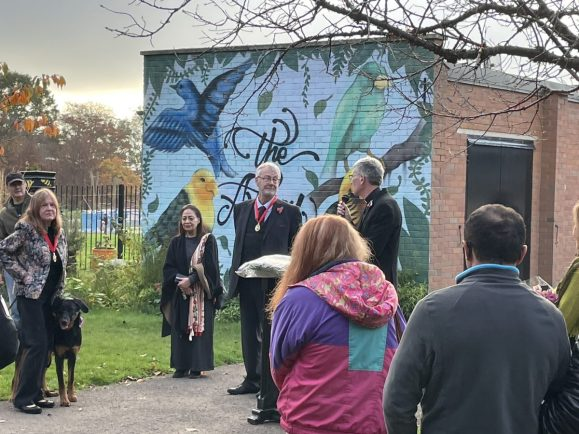
Pet owners and animal rights and welfare groups gathered in the peace garden for the short service, which was led by Coun John McNicholas alongside his wife June.
During his address, Coun McNicholas spoke about the need to honour the ‘faithful animals who served side-by-side with the Armed Forces’, something he feels isn’t done enough.
He also stressed the positive impact animals can have on people’s mental health.
“I have always been a huge advocate of animal rights, and whether it be dogs, horses or other kinds I think they should be remembered for their service, animals are loyal, loving and brave.”
Coventry Central Hall Rev Stephen Willey then gave a brief speech before leading the service in prayer.
He spoke of humans and animals being a part of the ‘marvellous creation of god’ and of the value of the ‘unconditional love’ animals give to owners.

Dr June McNicholas read a poem looking at war from a serving dog’s perspective, accompanied by her new pet dog Stella.
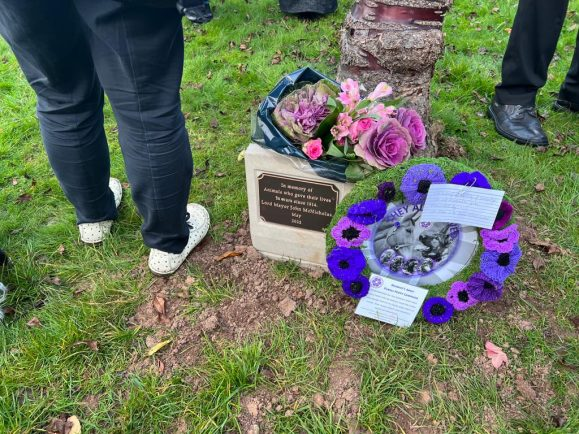
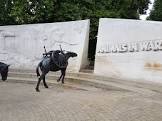
And the service ended with the laying of a purple poppy wreath alongside a plaque in memory of all animals who gave their lives in wars since 1914.
The purple poppy was introduced in 2006 by the charity Animal Aid, which felt animals who died in wars, mostly horses and dogs, should not be forgotten.
The appeal has since been adopted by the Murphy’s Army charity, which has since raised thousands of pounds for causes including K9 Heroes, The Horse Trust and Fireside K9.
Coun McNicholas laid the city’s first purple poppies as Lord Mayor last year and said he will be making this an annual service.
He said: “My wife and I have always been keen to promote the beneficial roles animals can play whether as therapy, assistance animals or those that support our armed services.
“Few Remembrance services recognise the bravery of those animals who endanger or sacrifice their own lives to protect their human colleagues.
“I’m looking forward to next year when we will continue our support for the ceremony”.
Regards Mark
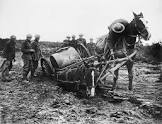
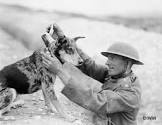
Associated animals in war links:
Search Results for “animals in war” – World Animals Voice

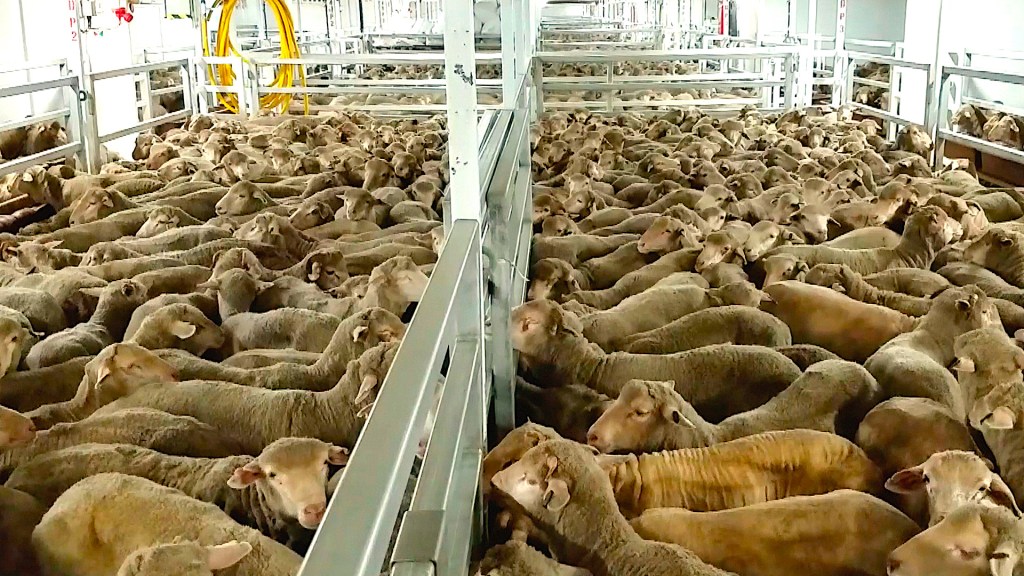
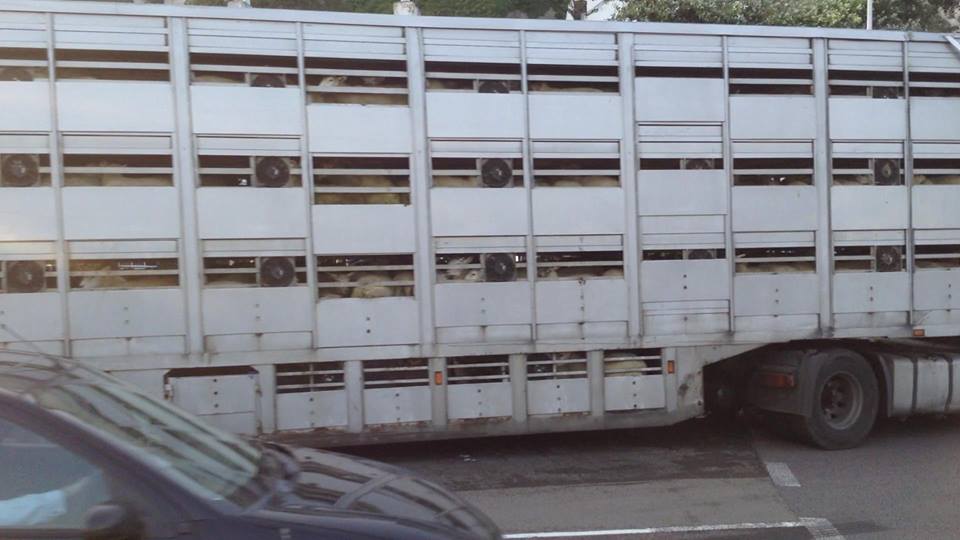
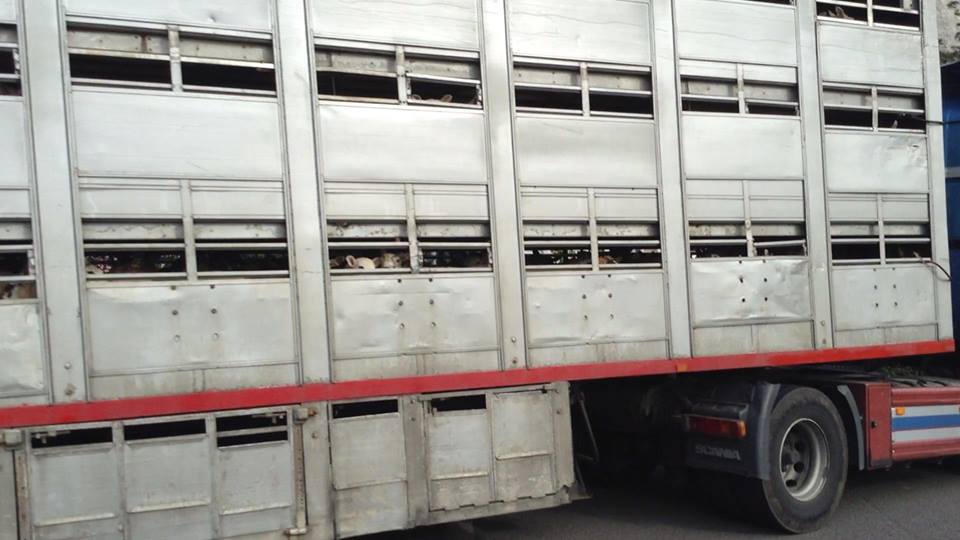
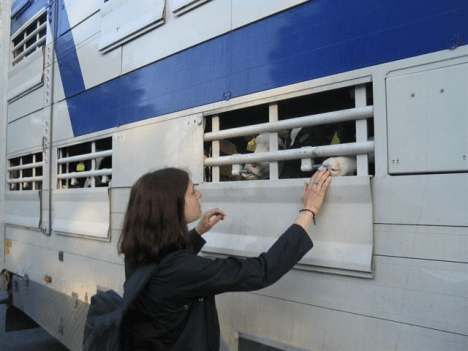
Coventry (England) has a very proud tradition of animal rights – and it was during live export protests that our wonderful Jill was murdered by the savage calf export trade:


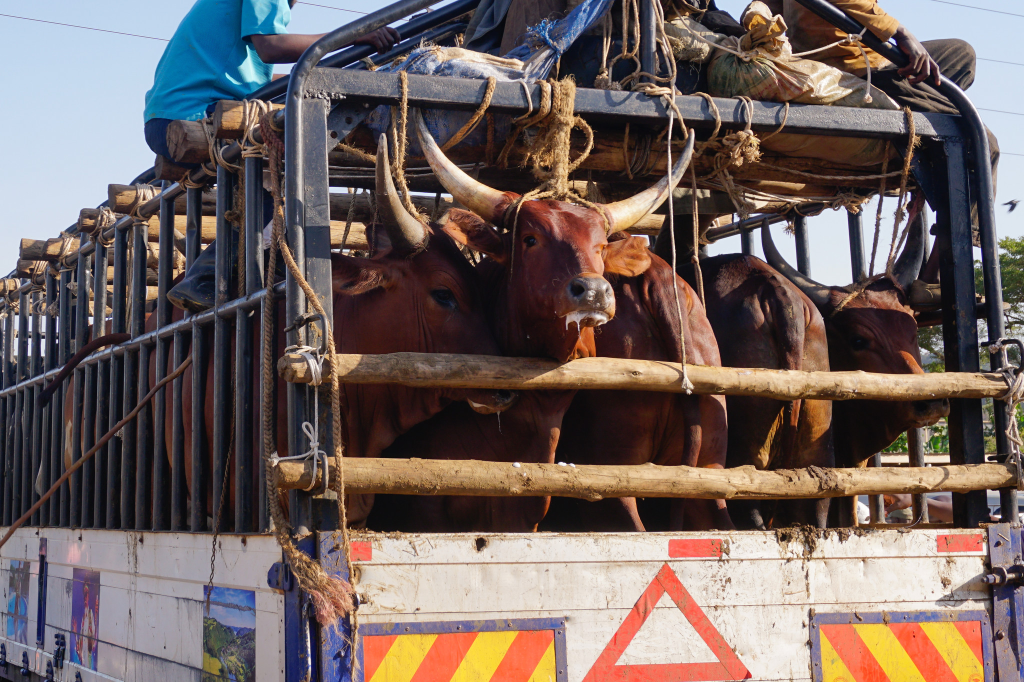
Above – A truck with tightly packed cattle arrives at the unloading yard of Kampala City Abattoir. Animal rights advocates want the government to enforce laws that require humane treatment of animals during transportation.
All photos – EDNA NAMARA, GPJ UGANDA
KAMPALA, UGANDA — As soon as the truck pulls up, Joseph Lubwama jumps out and starts unloading 24 tightly packed cattle he has brought to Kampala City Abattoir. He begins by untangling a web of ropes used to tie the cattle’s long horns to the rails of the truck bed to keep them still. They have been on a 250-kilometer (155-mile) journey from Kiruhura, a rural district in southern Uganda. One by one, the cattle step out of the truck. They look tired.
“For the animals to travel that long tied to one position by the horns and tail, it is uncomfortable,” says Lubwama, as he begins to herd them off the truck.
What seemed like genuine concern vanishes when Gaju, a bull with the majestic horns typical of the Ankole breed, wobbles, falls in the middle of the truck bed and can’t get up.
“Get up, Gaju! Go, go, go, Gaju, go,” Lubwama shouts as he kicks the animal and mercilessly strikes it with a cane.
When Gaju doesn’t budge, Lubwama finds support on the frames of the truck’s cargo cage and kicks the animal hard using both legs with his heavy gumboots. The apparent pain forces Gaju to gather strength, stand up and stagger out of the truck.
Kampala’s steady population growth over the last three decades has created high demand for beef. But the city doesn’t permit raising cattle within its limits, meaning that people like Lubwama have to bring in cattle from ranches hundreds of kilometers from the city’s abattoirs. But the inhumane way cattle are transported has led to a debate between animal rights activists and veterinarians who are calling for government intervention, and cattle dealers who contend that they would lose money if the current laws were enforced.
Since 1992, the capital city has averaged an annual population growth rate of at least 5%, raising the number of residents from around 830,000 to more than 3.6 million in 2022, according to data from the United Nations World Urbanization Prospects. The average Ugandan consumes about 9 kilograms (20 pounds) of beef a year, with Kampala district accounting for the largest portion, 7% of the country’s annual production of 185,709 metric tons, according to a report by the Food and Agriculture Organization of the United Nations.
David Kakooza, a veterinarian’s assistant who keeps records of the overcrowded trucks of cattle arriving daily at the abattoir, says he doesn’t feel good seeing animals arrive so fatigued. He wishes the government could enforce existing laws and regulations that are supposed to ensure animals are not tortured during transportation.
“Animals have rights, too,” Kakooza says as he inspects a truck carrying 21 head of cattle.
Standing orders of the Uganda National Bureau of Standards stipulate that trucks “shall have enough space for the comfort of slaughter animals during transit, cattle placed crosswise on a lorry shall allow 50 cm to 60 cm of the truck length for each animal.” Transportation of animals for slaughter “shall be carried out in a way that minimizes stress, pain and suffering,” according to the guidelines. There is also the Animals (Prevention of Cruelty) Act, which states that any person who “cruelly beats, kicks, ill-treats, overrides, overdrives, overloads, tortures or infuriates any animal” is guilty of the crime of cruelty.
Siraj Katangawuzi, the imam of Nansana parish, says he wants to see these laws and regulations strictly enforced to ensure that animals are transported without suffering. He says one simple change the government could make is to require the use of timber instead of ropes to prevent cattle from falling during transportation. The government should also educate Ugandans on the importance of being kind to animals and revoke the licenses of those who refuse to follow the law.
“Ugandans need to realize that everything that breathes has feelings,” Katangawuzi says. “It is impossible for humans to travel all that distance without changing position, but cows, too, have feelings, so they should not be tied so mercilessly.”
Dr. Dickson Tayebwa, an animal welfare advocate and veterinarian who lectures at Makerere University, says existing laws are not enforced because “big men” — powerful government officials who own extensive cattle ranches and many of the trucks that transport animals to Kampala’s abattoirs — dominate the meat industry.
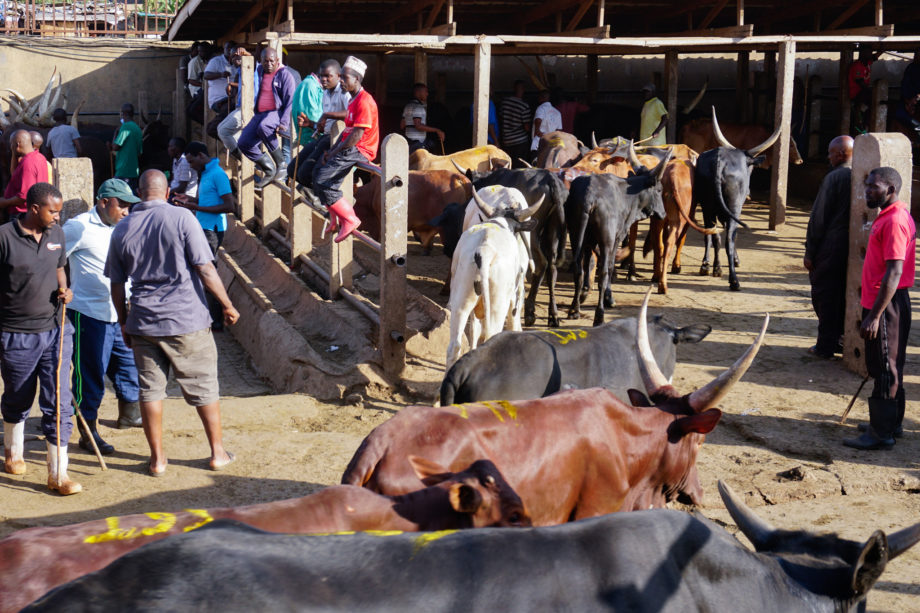
Above – Cattle dealers and herdsmen watch as a load of cattle is led to a resting area at the Kampala City Abattoir. Kampala’s growing demand for meat means cattle must be transported from far away, raising concerns about animal cruelty.
“Their trucks have papers indicating that they are special,” Tayebwa says. “So, the officers manning roadblocks cannot say anything, even when it’s clear that laws are being broken.”
An officer at the Ministry of Agriculture, Animal Industry and Fisheries, who wants to remain anonymous for fear of retaliation, acknowledges that the presence of powerful people in the industry makes government regulation difficult.
“They are untouchable,” the officer says.
David Kasura Kyomukama, the permanent secretary at the ministry, says he cannot comment on the issue of top government officials impeding the enforcement of laws. But he says the ministry is trying to convince people in the industry that obeying the laws and regulations would be in their best interest.
“Animals are animals, so they can’t be treated like people, but they can be treated well on the journey so that we get money out of them,” Kyomukama says. “If you treat animals in a way that stresses them, you won’t get their full worth, as some might lose weight, or even die.”
Kyomukama says the ministry plans to set up abattoirs in regions across the country so that animals are slaughtered closer to where they are raised and their meat transported to Kampala and other urban centers. He doesn’t say when that might happen.
Dr. Hannington Katumba, a Kampala city council veterinarian, agrees that treating cattle well would benefit the beef industry and consumers because healthy cows produce high-quality meat. He explains that when a cow is reacting to high levels of stress, its body excretes lactic acid, which increases acidity and makes meat fail to settle.
“That is the ugly meat we sometimes see in stalls. It looks beaten,” Katumba says.
The fact that Ugandan culture doesn’t generally value animal welfare has made ending cruelty against animals more difficult. Samuel Bwanakweri, a herder from western Uganda who has been in cattle trade and transportation for 21 years, laughs when asked why animals are treated so cruelly during transportation to the abattoirs.
“What is all the fuss about? They are heading to the slaughterhouse,” he says matter-of-factly. “Isn’t it ironic to feel pity for an animal you are going to kill?”
Bwanakweri says that he spends a lot of money to transport the cattle from as far away as 320 kilometers (almost 200 miles) to the abattoirs and that following the regulations would not make economic sense. To break even, he says he needs to get 23 cows on each truck because he must hire four handlers at 100,000 Ugandan shillings ($26) each. He also pays the truck owner and the bank that gives him business loans.
Although he’s not as dismissive as Bwanakweri about animal welfare, Bonny Katambula, a committee member of Kampala City Abattoir, agrees that if the current laws and regulations were to be strictly enforced, many dealers would be out of business. He says the ideal number for the large trucks should be 20 cows.
“A man cannot hire a truck for 1 million shillings [$260], drive it upcountry for cattle and return with only 10 cows,” he says. “That defeats the economic purpose.”

Above – Workers inside Kampala City Abattoir weigh and cut meat to buyers’ specifications.
Lubwama says his goal is to work his way up in the beef industry. As a cattle handler, he earns 100,000 shillings ($26) for each of the three trips he makes weekly. He is working hard to save money and be able to have one of his own cows on the truck.
“My dream is to slowly build my business and be able to fill a truck with my cattle,” he says as he leads Gaju and several cows to the yard for fodder, water and rest.
After 12 hours, he will herd Gaju to the slaughterhouse, where the bull’s journey will end. The meat will be processed, and the health inspector will stamp it to certify that it has been checked for disease and deemed healthy for human consumption. Lubwama will head back to Kiruhura and load the truck with more cattle for his next trip to Kampala to help quell the city’s hunger for beef.
Edna Namara is a Global Press Journal reporter based in Kampala, Uganda.
Regards Mark
Brutal Journey to Slaughterhouse Ignites Beef with Animal Rights Activists (globalpressjournal.com)

5 November 2022
In what spells as positive news for millions of farm animals, the Federal Ministry of Food and Agriculture has declared it will restrict the export of various species used for breeding to third countries from Germany.
What are Germany’s new export rules?
From July 1 2023, German veterinary certificates for the export of cattle, sheep and goats used for breeding to several countries outside the EU will be withdrawn, a recent press release from BMEL states.
This is not the first time Germany has tightened up their export rules to support higher animal welfare, having already withdrawn certificates for animals used for fattening and slaughter purposes to third countries. However, by extending these restrictions to breeding animals, too, the country is taking an even stronger stand against the issues of international animal trade and the cruelties that livestock faces in this system: sending a powerful message about the importance of good welfare at every stage of an animal’s life.
Germany has made the first move… now, over to the EU
Germany has set a compelling precedent at national level… but if we are to address live exports globally, it’s important that the rest of the EU takes the initiative to radically change the rules of this trade.
This is something that Germany’s Federal Minister, Cem Özdemir, understands well. Commenting on their recent decision, he stated “we urgently need better common rules in Europe” to make sure that national restrictions such as theirs “are not circumvented” and undermined. For instance, despite Germany’s new law, suppliers could technically export animals to other countries in the EU to then be re-exported to third countries: taking advantage of a problematic loophole that an EU-wide law could close.
Eurogroup for Animals are campaigning for the EU to ban the transport of live animals outside its borders entirely, and eventually revolutionise the trade to end their live export completely. In the interim, we’re also asking policymakers to devise stricter species-specific requirements for transport as well.
What do Members think of Germany’s new export restrictions?
Several of our member organisations have been concerned with the consequences of live animal exports for years. Germany’s news thus comes as a victory, though it’s clear there’s much more to do.
Animals International has worked tirelessly to expose the conditions animals face while being exported outside of Europe – including, specifically, from Germany, with their investigations into German exports tracing back as far as 2017.
“We want to see the EC listening to the fresh wave that Germany has started, by installing an EU wide ban on live exports,” Director Gabriel Paun states. He adds that despite this, the recent restrictions come as “news worth celebrating” that heeds “the call of millions of compassionate EU citizens who want an end to this cruel and ruthless trade”.
Deutscher Tierschutzbund has also vocalised their support for this change via Twitter, but are conscious of the further developments that are needed. “This is not about the end of transport, and so we still demand that the German ministry bans exports completely from Germany to countries outside of Europe,” states Frigga Wirths, their Specialist for Transport, Slaughter and Cattle.
Four Paws International is of a similar mind, and have campaigned extensively for change within the live animal export trade in Europe. Livestock Expert Ina Mueller-Arnke commented that “the BMEL withdrawing the bilateral veterinary certificates is a good first step, but insufficient, as it is not equivalent to an export ban.” She adds that, to seal lasting change, “we need to prohibit live animal exports at the European level, including to all third countries.”
The Animal Welfare Foundation is strongly against the long-distance transport of animals across Europe, as well as exports from Europe to third countries. Iris Baumgärtner, their Vice Chair, told us “we expect a national export ban of German animals from our Green Minister of Agriculture”, though their most recent restrictions are “the fastest measure to send a clear signal to the EU Commission.” That being said, they’re concerned that this move “will hardly reduce exports. For this reason, we need a national export ban with better enforcement options for the authorities to stop indirect transports.”
Ultimately, the message is clear: while this restriction is a win for several farm animals in Germany, to make it a win for all animals, we need the EU to step up and create EU-wide legislation to seriously improve the export trade. We hope to see it rise to the challenge.
Regards Mark

3 November 2022
On the 19th of October 2022, the European Parliament and the Council adopted the Digital Services Act (DSA), a precious tool to tackle the illegal online trade. But what does it mean concretely for the animals victim of this trade?
What is the DSA?
The Digital Services Act (DSA), along with the Digital Markets Act (DMA), are new legislation that aim to better regulate online services to ensure a safer digital environment. In this context, the DSA contributes to tackling the dissemination of illegal and harmful content on online platforms and clarifies the liability and accountability of these platforms.
How is it relevant for animals?
The large majority of cats and dogs and exotic wild animals destined for the pet market (from cross-border illegal trade), are sold online and their lucrative trade is booming. This situation has serious consequences on the welfare of animals bred and sold to fuel this trade.
The Illegal Pet Trade: Game Over
During transport, many welfare issues arise such as risk of dehydration and heat stress, lack of enough space to be able to stand/lay down, high potential for spreading of infectious diseases among the transported animals and beyond, and a higher likelihood of pregnant dogs & cats transported too close to their estimated due dates to name but a few.
During transport, many welfare issues arise such as risk of dehydration and heat stress, lack of enough space to be able to stand/lay down, high potential for spreading of infectious diseases among the transported animals and beyond, and a higher likelihood of pregnant dogs & cats transported too close to their estimated due dates to name but a few.
In relation to breeding practices, cosmetic and convenience surgeries vastly performed outside the EU, resulting in severe pain and impairing of social communication (through tail docking, ear cropping, debarking, declawing,…), lack of socialisation resulting in extreme fearful and anxious animals, lack of genetic variation as a consequence of inbreeding leading to poor health and unfitness to carry a normal life.
In addition, it represents a high risk for the health of European consumers due to the potential introduction of parasites and diseases such as rabies.
Acknowledging this situation, the DSA’s recitals refer to animals twice. Illegal sale of live animals is expressly mentioned in the list of illegal content (recital 12), and Very Large Online Platforms (VLOPs) must assess risks related to the dissemination of illegal content, including illegally traded animals (recital 80).
Although recitals are not legally binding and aim to contextualise the legislation, they give strong indications on the objectives of the text and clarify that the trade of animals falls within the scope of the legislation.
What are the obligations of online platforms?
Very Large Online Platforms (VLOPs) must strengthen checks to prove that the information provided by sellers is reliable and accurate. In particular, they must “make reasonable efforts to randomly check in any official, freely accessible and machine-readable online database or online interface whether the products or services offered have been identified as illegal”.
It is uncertain at this stage what such checks entail in relation to animals but we will continue to work with the European Commission and Member States to ensure that they are appropriately and efficiently conducted. With regards to companion animals, such controls should ideally aim to verify that only dogs and cats that are microchipped, registered and offered by their owner, or registered breeder, can be sold online.
VLOPs must also assess and mitigate systemic risks (including dissemination of illegally traded animals content) each year, implement “effective mitigation measures”, including moderation processes and advertising and recommendations systems/algorithms and be subject to annual independent audits.
It is important to note that these obligations only apply to VLOPs: platforms with more than 45 million active users in the EU. The text indeed exempts Small and Medium Enterprises (SMEs) from these provisions. This means that smaller online platforms where a lot of animals are traded remain out of the scope of these obligations and traders can potentially simply move to smaller platforms to get around these rules. It also remains unclear whether content published on closed groups, that require the intervention of a human to access, are concerned by these provisions.
However, all online marketplaces must annually publicise reports on content moderation, in particular the number of orders received from Member States’ authorities. Courts and competent authorities (administrative, including law enforcement) of the Member States may indeed issue orders to marketplaces if they identify illegal content. Such orders must detail the reasons why the content is suspected to be illegal. The scope of orders is in principle limited to the Member State in which it was issued. However, it is possible for the authorities to communicate the information to other Member States.
What are the obligations of Member States?
Member States must appoint an authority that will act as the Digital Services Coordinator and will be in charge of overseeing the enforcement of the regulation. Among other things, the Coordinator is in charge of designating trusted flaggers, who are entities that will be able to identify illegal content and inform online platforms through “notice and action” mechanisms. Trusted flaggers should demonstrate that they have expertise to conduct this mission in a diligent, accurate and objective manner and be independent from online platforms but it remains to be seen if NGOs comply with such requirements. These trusted flaggers should also publish reports of their notices. It is expected that this information, coupled with reports from online platforms and independent audits, will help inform the status and trends of illegal animal trade on VLOPs.
It is also worth noting that a platform will be set up by the European Commission so that all Digital Services Coordinators can exchange information, which is especially relevant for cross-border investigations.
What can Animal protection organisations do?
Although it remains uncertain whether Animal Welfare Organisations (AWOs) can be trusted flaggers, as specified above, there are a number of actions that can be undertaken. First, AWOs can investigate to identify illegal sales advertisements of animals and:
Report the content to the platform;
Transfer the information to competent authorities, including the national Digital Services Coordinator.
Based on this information, the services provider will be able to remove the content or/and the authorities will be able to issue orders to such providers so that the content can be removed.
It is also important to raise awareness of national authorities on the possibility to maximise the efficiency of controls, especially for VLOPs for which checks are mandatory, thanks to microchips and identification of cats and dogs.
Eurogroup for Animals will continue to exchange with the European Commission to clarify implementation mechanisms of the DSA with regards to the illegal animal trade. We will also monitor and communicate on reports published by platforms, as well as audits.
In addition, it is worth mentioning that the European Commission is currently conducting a Coordinated Control Plan on the illegal pet trade until the beginning of 2023. In this context, AWOs can report illegal pet trade cases to national fraud units or the Health and Food Safety Department by email at SANTE-food-fraud@ec.europa.eu.
When will the DSA be applicable in Member States?
The DSA will enter into force on 16 November and will be directly applicable in Member States from February 2024.
Regards Mark

Hi Mark,
Great news! The Animal Welfare Amendment Bill to ban live export recently passed its third and final reading in Parliament in Aotearoa (New Zealand)!
Exporting cows, sheep, and other animals from New Zealand by sea will finally stop on 30 April 2023.
Australian cows and sheep are transported thousands of kilometres in filthy and dangerous conditions. They’re forced to endure the journey in all weather extremes, standing in their own waste, causing distress, injuries, and disease.
Now New Zealand has taken a stand against this cruelty, all eyes are on Australia to follow suit.
Mark, thank you for previously urging officials to end this trade in Australia using our action alert. Will you take action again to urge recently appointed federal Minister for Agriculture, Fisheries and Forestry Murray Watt to implement a ban immediately?
Thanks for all you do for cows, pigs, sheep, and other animals.
Sincerely,
Laura WJ
PETA
TAKE ACTION:
Demand an End to ALL Live Export – NOW! | PETA Australia
Regards Mark

As many of you know, live animal transport is my No 1 hate; I am currently waiting for a response from the DIT when we ask who is right, who is wrong ? – no response yet; do they know the answer themselves or are they confused ?
Read more:
Gearing up for a continued campaign; currently preparing documentation to ask why suddenly a ban on live exports is to trashed by Liz Truss, despite a huge consultation earlier this year which showed massive support for a ban by the British public and welfare organisations !
Regards Mark.
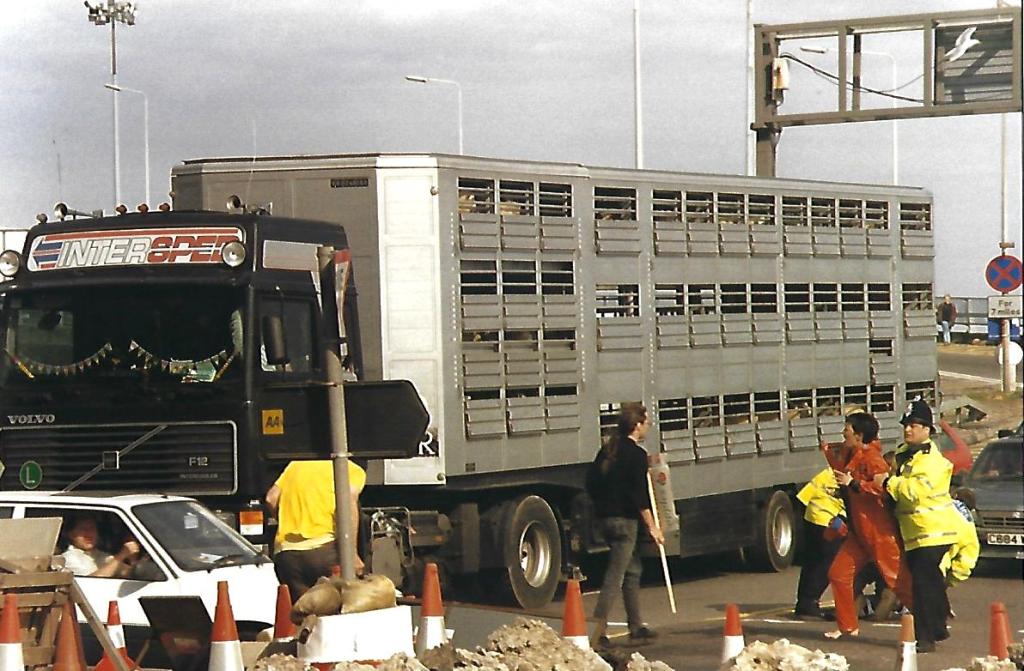

Read more about my export work at:

Regards Mark.


WAV Comment – it is political chaos here; Liz Truss the new (but probably not for long) Prime Minster has taken many actions to oppose both the Conservative manifesto – which should outline the Party aims; with regards animal welfare and environmental issues. We have reported on a lot of this over the past few weeks, and you can see our posts by scrolling back down through the site.
I say political chaos as the Conservatives are currently in government. Labour are n opposition. Due to the actions of Truss since she took the helm of the Conservatives just a few weeks ago; the Conservatives are being led (by Labour) by a massive 33%+ in opinion polls. Everything currently looks as if Labour will form the government at the next election.
Funeral rather than a celebration:
We (WAV) are not associated with any UK political party; but we are a voice for improvements in animal welfare and the environment. These are just 2 issues where Truss has kicked us, long time and evidence providing campaigners, with a good boot in the teeth. So now she is starting to witness pay back time.
Here are a couple of articles which outline the current differences between the parties:
Liz Truss is set to scrap proposed bans on importing fur and foie gras to the UK, according to a Tory insider, sparking outrage from animal lovers.

The new prime minister will also reportedly ditch a ban on live animal exports in her first weeks in office.
The decisions will be a massive blow to campaigners who have spent decades lobbying for the reforms to spare animals from suffering.
Production of both fur and foie gras is considered so cruel that they are already banned in the UK.
All four measures were promised in the party’s animal-welfare action plan, announced last year to wide acclaim.
And curbs on live exports were promised in the Conservatives’ election manifesto, together with an end to hunting trophy imports.
But a senior Conservative told Politico: “Banning things seems very socialist. Informing people is the way to go.”
In February this year, right-wing cabinet members including Jacob Rees-Mogg intervened to block the Animals Abroad Bill, which contained the curbs on fur, foie gras, hunting trophies, and adverts for foreign theme parks that cause animal suffering.
The Kept Animals Bill, which banned live exports and keeping primates as pets and tackled puppy smuggling, could also be dropped. It had been due to be debated on Monday, which became the day of the Queen’s funeral, and no new date has been given.
A ban on cruel exports of live animals for slaughter and fattening had been hailed as a benefit of Brexit.
It would be a huge let-down, not only for those who work for these campaigns daily but also for millions of animals
Lorraine Platt
The government says it is still looking at the fur and foie gras bans, but the source said the measures would not go ahead under Ms Truss, who appointed Mr Rees-Mogg as business secretary and promoted Mark Spencer, understood to have been another of those blocking the Animals Abroad Bill.
However, MP Scott Mann, who has spoken out in favour of a ban on live exports, has been promoted to environment minister.
Last week, Ms Truss sacked Zac Goldsmith as animal-welfare minister after he introduced reforms including an ivory sales ban and higher jail terms for cruelty. He also wanted to crack down on religious slaughter without stunning.
“A lot of his causes were very worthy, but you can be worthy when you’re the son of a billionaire,” the MP said in a bizarre comment. Lord Goldsmith’s father was financier James Goldsmith.
Lorraine Platt, co-founder of the Conservative Animal Welfare Foundation, told The Independent she was bitterly disappointed by news the bans would be dropped.
“It would be a huge let-down, not only for those who work for these campaigns daily but also for the millions of animals involved,” she said.
“Banning live exports and hunting trophies were manifesto commitments, and some people vote on manifesto commitments at elections.”
She said the foundation had often heard reports the measures could be scrapped or watered down.
Sir Roger Gale, patron of the foundation, condemned the “let them choose” argument as “a little spurious” and perverse when the UK has bans on producing fur and foie gras.
He told Times Radio he was concerned about the direction of travel of animal welfare under the new government, and millions of votes including in red-wall seats would be lost to the Tories if they reneged on animal welfare.
Foie gras production involves force-feeding ducks and geese with pipes pushed into their throats to fatten their livers.
Fur farms have been exposed as leaving animals suffering infected, bloody wounds, spreading disease and literally driving animals mad from confinement.
Claire Bass, executive director of Humane Society International/UK, said it was surprising and perplexing that senior Conservatives wanted to row back on the popular measures in last year’s animal welfare action plan.
“Animals matter to voters, and people will not be content with oft-recycled rhetoric about being a ‘world leader in animal welfare’ if it’s not accompanied by meaningful action,” she said.
“Banning fur imports is not un-Conservative, it’s simply the right thing to do in line with the British public’s moral compass.”
Under Boris Johnson, the government said it wanted to consider compulsory animal-welfare labelling on food and promised to consult on proposals next year.
The Department for Environment, Food and Rural Affairs (Defra) ran a 12-week consultation last year on new labelling standards for produce now that EU regulations no longer apply.
It also ran a consultation on banning fur imports, but has not released the results.
Ministers had at one stage said they would press ahead with the hunting trophy imports ban, but that pledge appears also to have been dropped.
Instead, they are backing a private members’ bill by backbencher Henry Smith that bans hunting trophy imports – body parts of wild animals killed by paying hunters. Mr Smith has called such hunting barbaric.
On foie gras, Defra said it was considering any further steps that could be taken, “building on the opportunities presented” by Brexit, and was still gathering information.
“The government has made clear that the production of force-fed foie gras raises serious welfare concerns,” a spokesman added.
On fur, the department said: “We are continuing to build our evidence base on the fur sector, which will be used to inform any future action on the fur trade.”
It also said the Kept Animals Bill would continue its passage through Parliament.
The Independent has also asked the office of the new Defra secretary, Ranil Jayawardena, to confirm whether the proposals will go ahead.
Source:
Liz Truss ‘to scrap proposed bans on fur and foie gras imports’ (msn.com)
… and then on the other hand we have this from Labour; currently 33%+ leading in the opinion polls.
Labour would ban imports of foie gras and hunting trophies “very early” after winning power, Shadow Environment Secretary Jim McMahon has said.
Animal welfare campaigners were outraged earlier this month when Liz Truss junked a Conservative commitment to outlaw the controversial pâté.
Nature and farming groups are also dismayed that the new administration has paused post-Brexit subsidies that incentivised agriculture without saying what will replace them.
Speaking to i at the Labour Party conference in Liverpool, Mr McMahon could hardly contain his glee at the furious backlash to a threatened rolling-back of environmental protections. He says the Tories are taking their rural heartlands for granted – and will suffer the electoral consequences.
But he acknowledged that he will come under immediate pressure to make good on a host of long-standing promises cherished by Labour supporters to improve animal welfare, of which import bans on foie gras and hunting trophies are the most high-profile.
i revealed last year that Jacob Rees-Mogg, now the Business Secretary, was leading efforts to shelve the proposed ban on foie gras and last week it emerged that it had been scrapped entirely.
To produce foie gras – which translates as “fatty liver” – male ducks and geese are force fed grain and fat three or four times a day in a process known as “gavage.” The forced feeding causes the birds’ livers to swell to up to 10 times their normal size.
Asked when a Labour government would bring in the bans, Mr McMahon said: “There will be a lot to do in that first Queen’s Speech but there will be an expectation on Labour to set our stall on animal welfare very early that I am working hard to achieve.”
He added that he was exploring whether the bans could be implemented without passing new laws to free up Commons time for other high-priority legislation, saying: “It’s about the art of the possible.”
Mr McMahon said the bans are the “easier stuff” and added: “The question for us and the current Government is how do you marry higher animal welfare standards with new international trade deals.”
Ms Truss, when she was International Trade Secretary, won a Cabinet battle to force through a new trade deal with Australia despite worries it exposed British farmers to competition from producers with lower standards. Mr McMahon said the party was considering banning any future such deals and would double down on efforts to make the UK a world leader in ethical and green food.
He said he was astonished that the new Environment Secretary, Ranil Jayawardena, paused plans for post-Brexit farm subsidies, the Environment Land Management Scheme, without saying what comes next – leaving the National Farmers Union and green groups united in fury.
“I know Ranil reasonably well,” Mr McMahon said. “I’m staggered that he’s been missing in action. He should have been on the phone to the big groups like the NFU and Wildlife Trust. It’s just a matter of respect. Even if the intention isn’t to throw it all out but to pause, reflect and rebuild there’s going to be a breakdown in trust.”
The former Oldham council leader admitted his current job was not necessarily an obvious fit: “The only greenery I saw as a kid were the weeds growing through the cracks in the pavement.”
Unsurprisingly for a politician he showered praise on farmers and fishermen as “grafters” who are the best of British – but also said he wants to make townies care more about the county by bringing it into urban areas.
“Of course I am going to fight for the shires and coastal communities who have some of the most beautiful parts of the country on their doorstep,” Mr McMahon said. “But you can’t just pitch up in somewhere like Oldham and say, ‘It’s your responsibility to tackle the climate change emergency,’ when what’s their own environment like? It’s grey and it’s depressing and there’s no access to safe green spaces. There’s a huge opportunity there for Labour to fill in the gap.”
Source:
Everyone makes promises if it means them getting elected. We read of what will be done in party manifesto’s; only then to be treated as we are now by the Conservatives – how things change !
Whatever happens and regardless of all the promises and manifesto statements, we will continue to hold ALL those in politics to account for both the animals and the environment. Recent events have shown us that in reality, you never believe a bloody word; as they all come up with excuses (after they have been elected) for not doing this and not doing that.
British politics is currently having one of its biggest changes for decades – and for the animals who have been betrayed by the Tories, we say ‘bring it on’. We want and demand progressive change after all these years of campaigning and evidence providing; often at great risk to some individuals.
We fought hard to get the foie gras and fur ban issues to the top of the pile; the government is attempting to wipe the issues off the board overnight. That is why we have a wry smirk on our faces as we now see truss and the Conservatives who betrayed us attempting, but failing, to clamber out of the deep filth pit that she and they have put themselves into.
An interesting time; but we will fight for the animals whatever;
Regards Mark

22/9/22
In relation to my recent letter asking who in UK government is right and who is wrong – you can read the letter here; England: Who In Government Is Right, and Who Is Wrong ? – We Write For Clarification (Maybe). Or Are They Confused Just Like Us ? – World Animals Voice
I need to draw your attention to what statements (in my view) contradict each other:
Quote from the DIT
“the government has made it clear in its manifesto that in all our trade negotiations, we will not compromise on our high environmental protection, animal welfare and food standards”.
Or
Liz Truss has refused to enshrine animal welfare in trade deals;
Wanting to know what is right or wrong relating to government policy; I have now been sent a reply from my own MP stating that on my behalf, he has now written to the Department for International Trade (DIT) asking for ‘policy statements’ to be given and if ‘anything has changed’ – ie a very recent conversion to the Liz Truss view. Or, do the commitments expressed in their original (DIT) letter ‘remain intact’. ? – yes, that’s what I want to know !

So; a little progress of sorts but I am still not being given the final government approach now of dealing with international free trade agreements (FTA). I now wait to be forwarded the response from the DIT to see, as I originally asked, who is right, and who is wrong.
I will publish their (DIT) response when it is provided to me. In the meantime, I sit twiddling my thumbs and other bits waiting to get ‘a government policy statement’. Depending on how this is worded (change or no change) will then set the agenda for future actions by WAV on the issue.
Once I have had a response about this, I have further questions lined up regarding several things – the live transport of live animals from the UK being one. Here again, Truss appears to be changing the goalposts and giving the AR movement a good kick in the teeth for the years of campaigning it has taken to get this stopped. Read here the great article from Jane who really sums up the situation and attitudes:
The government had a consultation on banning live animal exports and it was clear from the results that the majority of people wanted the trade banned:
Check it all out here – Search Results for “live export consultation” – World Animals Voice
We are used to long drawn out campaigns, and we are used to false promises and being shit on by governments on a host of issues relating to animal welfare and the environment. Our movement has tenacity on its side; the government changes and relies on the votes of citizens to remain in power, or not !
I am a big badger fan, so badger culling will be another issue being prepared for future letters.
Personally, I have battled the disgusting live export trade for 35+ years; done undercover trails especially relating to British horses going into Europe for meat, and I sure as hell am not going to stop now. There are too many animals in this sordid trade that require us to be a voice for them. So we will, however long it takes.
Regards Mark
“In the past, Mark worked with television comedy scriptwriter Carla Lane for many years; and had the position of being the investigator for her animal charity (Animaline) throughout the years of the horse export investigations. Through undercover investigation work, port monitoring, visits to UK horse markets, and trails into Europe, it was shown that British horses were being exported from the UK whilst being declared as ‘going for riding’ to Europe. In reality, the animals were being exported to Europe for their meat. What was declared on the export licenses was a complete and utter lie to get around the complexities of exporting sentient animals for one thing when they were actually going to their deaths !
After all the investigative work was completed and documented, which involved a lot of work, Carla and Mark teamed up in London one day and made formal presentations to the UK Government Ministry – DEFRA (previously MAFF) about all the investigation work”.

35+ years of live export tenacity – I do know a little about live exports and hopefully can argue in defence of those who cannot speak.


Fight the fight ! – be yourself no matter what they say.
Regards Mark


A few of my other bits of work:

Prime minister’s senior farm adviser an ex-campaigner for GetUp who called for end to ‘cruel’ live animal exports
Prime Minister Anthony Albanese’s chief adviser on agriculture policy previously condemned mainstream animal farming as “inherently cruel” and campaigned to end live exports.
Skye Laris, a senior policy adviser to the prime minister, is a former GetUp campaigner who worked with Animals Australia and the RSPCA calling for a ban to live exports.
According to Ms Laris’s LinkedIn, she has been a senior environment, agriculture, industry, and employment policy adviser in parliament since June 2019, working in the prime minister’s office as a senior adviser since May.
“Animal cruelty is a day-to-day part of farming practices,” she wrote for website Mamma Mia in 2016.
“The uncomfortable truth is that whether it’s live exports or long-haul domestic transportation on trucks without food and water, or the killing of calves in the dairy industry, or factory farming pigs, or chooks living in space the size of an A4 piece of paper … it’s improved over the years, but mainstream animal farming is inherently cruel.
“From paddock to plate, there is almost always a part of an animal’s journey that wouldn’t stack up if we as consumers were prepared to know what had really happened.”
Ms Laris previously worked in the office of then-agriculture minister Tony Burke, whom she later married.
Ms Laris used the Mamma Mia piece to criticise conventional farming practices across the livestock, egg, dairy and pork industries, after vision released by Animals Australia showed what appeared to be Australian cattle being mistreated at a Vietnamese meatworks.
“I don’t think addressing animal welfare it’s as simple as banning live exports [sic],” Ms Laris wrote.
“If we’re upset by live exports we really ought to be looking at what happens here at home too.”
The prime minister’s office would not comment on Ms Laris’s appointment, or whether she still holds these opinions.
In May, Labor made a pre-election commitment to ban live sheep exports.
It was criticised by farm groups when, during the election campaign, its plan to end the $92 million a year live sheep trade was first announced publicly by an animal rights group.
The government has said it won’t ban live cattle exports, and the live sheep ban won’t be introduced in this term of parliament.
Agriculture Minister Murray Watt said any decision relating to live animal exports was the responsibility of ministers, not advisers.
“I’ve only just heard about these reports myself,” Senator Watt told the ABC when asked about Ms Laris’s opinion piece.
“But the important thing here is that the people who make these decisions ultimately around live exports or anything else are the elected ministers like myself. I generally don’t get into issues about what different staff do, staff generally are pretty off limits in politics, and it’s more about ministers.
“I’ve certainly never expressed any views like that one way or another on the issue and I’ll be certainly taking what I think will be a responsible approach on matters involving live exports.
“I’ve had some very productive conversations with all players, whether it be members of the industry [or] activist groups, the approach that we’re taking to all issues as a government is that everyone gets a say, but then we make the decisions as the elected government.”
In 2020, a senior Department of Foreign Affairs and Trade bureaucrat, Julie Delforce, who is also the mother of a well-known animal rights activist, resigned following an investigation into her links to the animal activist website Aussie Farms.
Ms Laris did not respond to the ABC’s written request for comment.
Regards Mark

 World Animals Voice