Troopers Law and Dexters Law now signed – which protect dogs and other pets.

Troopers Law and Dexters Law now signed – which protect dogs and other pets.
Save Ralph – A short film with Taika Waititi
Introducing Ralph, the spokes-bunny of Humane Society International’s global campaign to ban animal testing for cosmetics. #SaveRalph is a powerful stop-motion animation short film featuring an all-star multinational cast including Taika Waititi, Ricky Gervais, Zac Efron, Olivia Munn, Pom Klementieff, Tricia Helfer and more.
“Save Ralph” is a powerful stop-motion animation short film featuring Oscar winner Taika Waititi as the voice of Ralph, who is being interviewed for a documentary as he goes through his daily routine as a “tester” in a lab. “I’m a tester. My daddy was a tester, my mom, my brothers, my sisters, my kids. All testers,” he tells a documentary filmmaker voiced by actor and animal advocate Ricky Gervais. Ralph tells his interviewer that he is “doing it for the humans,” so long as “just one human can have the illusion of a safer lipstick or deodorant,” regardless of his own personal suffering.
….
https://apnews.com/article/morocco-stray-dogs-neuter-rabies-fifa-d8452e6aa0005e0cd71462ab7daf9bf5

Updated 9:04 AM CEST, May 18, 2025
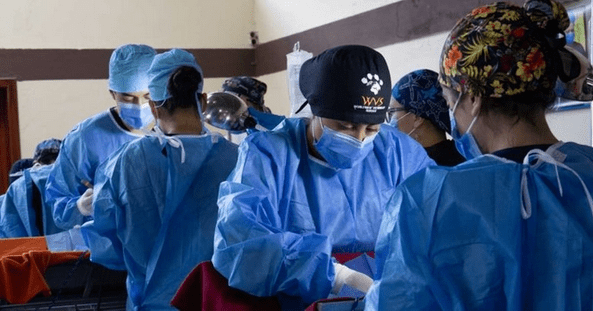
EL AARJATE, Morocco (AP) — A mutt with a blue tag clipped to her ear whimpers as she’s lifted from a cage and carried to a surgery table for a spay and a rabies vaccine, two critical steps before she’s released back onto the streets of Morocco’s capital.
The “Beldi,” as Moroccan street dogs are called, is among the hundreds taken from Rabat to a dog pound in a nearby forest. As part of an expanded “Trap, Neuter, Vaccinate and Return” program, dogs like her are examined, treated and ultimately released with tags that make clear they pose no danger.
“We have a problem: That’s stray dogs. So we have to solve it, but in a way that respects animals,” said Mohamed Roudani, the director of the Public Health and Green Spaces Department in Morocco’s Interior Ministry.

Morocco adopted “Trap, Neuter, Vaccinate and Return,” or TVNR, in 2019. One facility has opened in Rabat and more are set to be launched in at least 14 other cities, aligning Morocco with recommendations from the World Organization for Animal Health. The government has spent roughly $23 million over the past five years on animal control centers and programs.
Roudani said Morocco’s updated approach balanced public safety, health and animal well-being. Local officials, he added, were eager to expand TVNR centers throughout the country.
Though population estimates are challenging, based on samples of marked and tagged stray dogs, Moroccan officials believe they number between 1.2 to 1.5 million. Some neighborhoods welcome and care for them collectively. However, others decry their presence as a scourge and note that more than 100,000 Moroccans have needed rabies vaccinations after attacks.
A draft law is in the works that would require owners to vaccinate pets and impose penalties for animal abuse.

On a visit organized for journalists to a TNVR center in El Aarjate, enclosures for dogs appear spacious and orderly, with clean floors and the scent of disinfectant. Food and water bowls are refreshed regularly by staff who move between spaces, offering gentle words and careful handling. Some staff members say they grow so attached to the dogs that they miss them when they’re released to make space to treat incoming strays.
Veterinarians and doctors working for the Association for the Protection of Animals and Nature care for between 400 and 500 stray dogs from Rabat and surrounding cities. Dogs that veterinarians deem unhealthy or aggressive are euthanized using sodium pentobarbital, while the rest are released, unable to spread disease or reproduce.
Youssef Lhor, a doctor and veterinarian, said that aggressive methods to cull dogs didn’t effectively make communities safer from rabies or aggression. He said it made more sense to to try to have people coexist with dogs safely, noting that more than 200 had been released after treatment from the Rabat-area center.
“Slaughtering dogs leads to nothing. This TNVR strategy is not a miracle solution, but it is an element that will add to everything else we’re doing,” he said, referring to “Treat, Neuter, Vaccinate, Return.”
It’s designed to gradually reduce the stray dog population while minimizing the need for euthanasia.
It’s a program that Morocco is eager to showcase after animal rights groups accused it of ramping up efforts to cull street dogs after being named co-host of the 2030 FIFA World Cup last year.

Animal rights groups routinely use large sporting events to draw attention to their cause and similarly targeted Russia in the lead-up to the 2018 FIFA World Cup there.
Citing unnamed sources and videos it said were shot in Morocco, the International Animal Welfare and Protection Coalition claimed in January that Morocco was exterminating 3 million dogs, particularly around cities where stadiums are being built. The allegations, reported widely by international media lacking a presence in Morocco, triggered anti-FIFA protests as far away as Ahmedabad, India.
“These dogs are being shot in the street, often in front of children, or dragged away with wire nooses to die slow, agonizing deaths,” Ian Ward, the coalition’s chairman, said in a statement.
Moroccan officials vehemently deny the claims, say they’re implementing the very programs that activists propose, including TNVR. They rebuff the idea that any policy is related to the World Cup. Still, critics see their efforts as publicity stunts and are skeptical such programs are as widespread as officials claim.
Instances of mistreatment and euthanasia by gunshot have been reported in local media but Moroccan officials say, despite international attention, they’re isolated incidents and don’t reflect on-the-ground reality nationwide.
**************
https://www.thepetitionsite.com/704/461/921/?z00m=33472142

In Morocco, a groundbreaking approach to managing stray dogs has proven successful and humane. The government implemented the “Trap, Neuter, Vaccinate, and Return” (TNVR) program in 2019, investing $23 million in animal control centers and offering a better, more compassionate alternative to culling. Through TNVR, stray dogs are neutered, vaccinated, and returned to their territories, reducing the population while ensuring the health and safety of both the animals and the people in the community.
This news comes at a time when Turkey is still using its brutal approach to managing its stray dog population. The country has legalized the culling of stray dogs, raising serious concerns about animal cruelty. Research shows culling creates more problems and suffering, whereas programs like Morocco’s TNVR provide a safer, more sustainable solution.
Sign the petition to urge Turkey to follow Morocco and implement a TNVR program to solve its stray dog problem!
Morocco’s program has shown amazing results, with the stray dog population decreasing in a way that promotes animal welfare, public safety, and disease control. Now, local dog populations are monitored and kept healthy, without the need for cruel and deadly methods.
The evidence is clear – culling does not solve the problem of stray animals. It only perpetuates suffering and creates new issues, as the void left by killed animals is quickly filled by others.
By adopting Morocco’s model, Turkey can provide a humane solution for stray animals while improving the safety and health of its citizens. Let’s urge the Turkish government to follow Morocco’s lead and implement a comprehensive program that prioritizes the well-being of both people and animals.
Sign the petition to demand Turkey end the culling of stray dogs and adopt a humane solution for animal control!

Copyright Animal Heroes
Published on 09/03/2025 – 10:04 GMT+1•Updated 10/03/2025 – 10:08 GMT+1
A Dutch charity faces huge challenges in the occupied territories, as it fundraises to care for dogs, cats and donkeys.
The first emergency clinic for injured animals is due to open in the Palestinian city of Jenin later this month.
Israeli attacks on the occupied West Bank city have left hundreds of homes destroyed, leaving countless animals without food, shelter or medical care.
Netherlands-based charity Animal Heroes is facing many literal roadblocks and obstructions to launching a clinic in the conflict zone. But since 7 October 2023, the small team has proven its determination to alleviate animal suffering in Gaza and the West Bank, and support local people looking after animals.
These ‘heroes’ include 36-year-old Maryam Hassan Barq, nicknamed “the cat lady of Gaza” for her steadfast support of 65 cats. And 25-year-old A’aed Mahmoud Abu Nejem, a veterinary doctor running the charity’s pop-up clinic in Gaza, who was injured in an airstrike hours before the ceasefire took effect 19 January. Despite his injuries, he resumed his work last week.
We spoke to Animal Heroes founder Esther Kef, who returned from a visit to the West Bank in February, to hear about the challenges of providing animal aid in the Palestinian territories.
The fate of people and animals in the West Bank is inextricably linked.
“The situation for animals is horrible because since 7 October, many people are without jobs because they live off tourism and construction,” explains Kef.
Financial desperation is stoking tension in communities, she says, which triggers increased violence against animals. “What we’re seeing is like 10, 20 animals being completely kicked into pieces by people just for no reason, just to express violence,” she says.
Animal Heroes supports Bethlehem Shelter, the only registered animal charity in the West Bank, founded by another passionate animal lover, Diana Babish. But over the course of three visits since November 2023, Kef has seen conditions deteriorate.

Esther Kef, founder of Animal Heroes, says thousands of animals are in a dire situation in the West Bank.
Animal Heroes
Designed for 100 animals, the basic shelter is now holding around 200 dogs. Outdoor fences had to be shut after Babish realised that people were coming at night to hurt and poison them.
“People have seen a lot of violence,” Kef speculates. “And when the tension increases, if violence is all you know, it’s not too hard to think that then also the violence increases.”
The number of animals being hit on roads has also tripled, according to vets funded by Animal Heroes.
“On a positive note, [the vet] says that for the first time […] younger people now are starting to bring in the animals left on the street that have been hit,” Kef says.
Her charity has also partnered with Bethlehem University and the Ministry of Education to start an awareness programme for children to teach them about animal welfare. They spoke at two schools during their recent visit, working up from the importance of bees to the mistreatment of dogs.
There are an estimated 2,000 stray dogs in Jenin, but no single organisation dedicated to their care.
A revered animal protector in the community, Babish gets calls every day from people in Jenin saying they have found an injured cat or dog. She tends to send a taxi to take the animal to a facility in Nablus, typically an hour’s drive away.
But with increased roadblocks in the West Bank due to Israel’s so-called military expansion, the journey can now take half a day.
To save more lives where they are being jeopardised, the animal protectors have acquired – for free – space in an old house four kilometres from the centre of Jenin. Two young vets have volunteered to run the clinic, under the supervision of acclaimed British vet Jenny McKay.
It cost €5,000 for the equipment to set up the practice. With their ambitions to treat around 150 animals a month from across the West Bank, medical care is expected to add €3,500 a month to the charity’s bills.
Animal Heroes is appealing for donations to help cover the supply of antibiotics and other first aid, and secure more advanced equipment including an X-ray machine.
What happens once the animals have been treated? It’s a troubling question in a conflict zone.
Previously, Babish was skilled at sending her dogs across the world, says Kef. “Diana is the type of person you don’t say no to.” But with fewer and costlier flights from Tel Aviv, and no flight volunteers to accompany the animals out, adoptions ground to a halt.
The Bethlehem Shelter is prioritising puppies and vulnerable dogs that need to recover after treatments. Babish continues to use her network to get animals fostered in Israel, via Israeli animal aid organisations.
“The problem is,” Kef adds, “what happens if the IDF turns Jenin into a second Gaza, where no one goes in and nobody gets to go out? If that’s the case, then obviously the roads are completely blocked, and the animals will need to be just left freely back on the street again.”
Animal Heroes is looking into renting a shelter, in preparation for this worst case scenario.

A’aed, Animal Heroes’ lead vet in Gaza, was hit by an airstrike in a crowded marketplace hours before the ceasefire, suffering injuries to both legs, his eye and his hand.
Animal Heroes
When we speak on 28 February, Kef is eagerly anticipating the arrival of a truckload of aid into Gaza, as part of the Animals in Gaza Alliance with the UK’s Safe Haven for Donkeys and Finland’s Animal Aid without Borders.
But on 2 March, Israel again blocked the entry of all humanitarian aid into the heavily-bombed territory, meaning that trucks containing medicine and food are still stuck at the Egyptian border.
“The impact is profound, because there is hardly any medicine in Gaza for animals, and yet so many animals are in desperate need of them,” Kef writes. “Every day this shipment is delayed, the suffering of donkeys and horses is prolonged.”
As well as operating a pop-up clinic, Animal Heroes funds people taking care of animals. Among the most remarkable of these is Maryam Hassan Barq, who refused to abandon 65 rescue cats when the IDF order came to evacuate her home in northern Gaza.
“I consider them like my children,” Maryam said during an interview with Animal Heroes in November, at a time when she was suffering from starvation and dehydration. “I am fully aware that I might die at any moment for staying in the north, but from the beginning of the war, I took the decision that we either live together or we die together.”
“There is no other place for them and I cannot transfer them anywhere else in these dangerous conditions due to their number, and there’s no safe place to go to anyway,” she explained. “Our life feels like a nightmare, to say the least, but we live on. I know it sounds crazy.”
A dozen cats died before the ceasefire emerged in January. Afterwards, Maryam was able to buy vegetables for herself for the first time in months, and chicken for the cats – which need protein. With the crossing closed again, she is again concerned for their lives.
“People like Diana, like Maryam, they’re very humble people,” says Kef. “They just care about helping animals and they even risk their own lives to do so. So that’s what inspires me to do this every day.”
Esther was inspired to found Animal Heroes in 2023 after meeting similarly dedicated people in need of animal aid assistance in Ukraine. The lean organisation has since grown from three to 25 volunteers.
Animal Heroes is fundraising to support its medical response team in Gaza here. Its new fundraiser, to help injured animals in the West Bank – including through the new emergency clinic – has recently launched here.
** DONATION LINK **
Collection of seven shorts due out in 2025 tells story of conflict from perspective of animals

The occupying Russian soldiers paid little attention to the elderly woman shuffling through the farmland surrounding the villages outside Kyiv, taking her goat to pasture. But she was focused closely on them. After locating their positions, she headed back home with the goat, and later called her grandson, a soldier in the Ukrainian army, to give the coordinates.
The story is one of seven episodes, based on real events from the first year of Russia’s full-scale invasion but lightly fictionalised, that make up a feature film about the war in Ukraine, due out later this year. All seven of the shorts have one thing in common: they tell the story of the conflict from the perspective of animals.
Continue reading …..

Producer Oleh Kokhan during filming. Photograph: Sota
(Google Translation)
https://www.bbc.com/serbian/lat/srbija-69125393
21 jun 2024

Reuters
Born on the street, abandoned, thrown out and forgotten, in recent years dogs, apart from state shelters, find refuge in private shelters, which are established by associations for the care and assistance of animals.
“We have a registered shelter, but our animals are mostly with volunteers who take care of them.”
“We believe that it is too demanding, but also dysfunctional, that few people take care of a large number of dogs,” explains Marija Cvijetićanin, founder of the Ventura Association for Help and Care of Animals, for the BBC in Serbian.
There are currently 126 registered dog shelters in Serbia, while the exact number of illegal ones is unknown.
Control of space, equipment, record keeping and preservation of animal welfare in a registered shelter is controlled by a veterinary inspector, according to the written response of the Ministry of Agriculture, Veterinary and Water Management to the BBC in Serbian.
According to the letter of the law, local self-government is obliged to build shelters for dogs, but individuals can also open shelters independently, Marijana Vučinić from the Faculty of Veterinary Medicine in Belgrade told the BBC in Serbian.
But even that does not solve society’s negligence towards animals, she warns.
“Supposedly, there are a large number of societies that love dogs, as well as people who want to help animals, but this creates a new problem, because it seems that now anyone can have a shelter without meeting the basic requirements,” says Vučinić.
Several dozen dogs died recently in Veliki Gradište, near Požarevac, in one of the private shelters.
Criminal proceedings were initiated against the owner, while one of the workers was arrested.
Shelters should be used only for the physical removal of dogs from the streets that sometimes attack people and other animals, injure them, but also obstruct traffic, explains Vučinić.
“Some dogs are better off going to shelters because they have a better chance of being adopted,” she says.
This, however, will not reduce the reproduction of dogs, nor solve the problem of irresponsible ownership, he warns.
A shelter can be established by a natural or legal person, and the shelter will be entered in the Register of the Veterinary Administration if it meets the required conditions for the protection of animal welfare, according to the written response of the competent ministry.
The space must be functional, the entrance under constant surveillance, and the shelter separated and surrounded by a fence, are just some of the prescribed conditions.
This process is too simple, believes Vanja Bajović, professor of criminal law at the Faculty of Law in Belgrade.
“Submitting a request to the Veterinary Administration and paying a fee of 1,840 dinars is often enough to start a dog shelter.
“Entry in the register is often done without prior control of the veterinary inspection – before making a decision, the veterinary inspector does not even check whether the facility meets the requirements for a shelter, so anyone can register it very easily, cheaply and quickly,” warns Bajović.

Reuters
Violation of legal provisions is “an offense for which physical persons can be fined from five to 50 thousand dinars, and legal ones from 100,000 to one million dinars”, says Vanja Bajović.
And the work of unregistered shelters is sanctioned by a fine and a decision to ban work.
“Determining the cause of the animal’s death determines the further action of the veterinary organization and the veterinary inspection and determines the procedure of the prosecution and other state authorities,” the Veterinary Administration says.
The Veterinary Inspection controls registered shelters, both on the basis of application and random inspection, explains Bajović.
“However, they are illegal ‘under the radar.’
“No one checks whether the shelter meets the prescribed conditions, so it is not surprising that a total of 126 state and private shelters are officially registered in Serbia, while in fact there are many more,” she warns.
The conditions regulation is “rather paradoxical” and “does not contain any punitive provisions at all.”
“This means that just running an unregistered shelter is not punishable and no one actually controls them, bearing in mind that they are mostly located on private properties,” Bajović points out.
Watch the video about the abandoned dogs of Kragujevac:

“Who looks after the abandoned dogs of Kragujevac”
Video on Page
Marija Cvijetićanin from Ventura also thinks that it is not enough to have good will and love for animals.
“Boxes of a certain size are needed in which the dogs can move normally, but also be arranged so that they do not disturb each other.
“There should also be a veterinary clinic in the area of the shelter so that the animal can be helped more easily if it gets sick or injured,” he believes.
She warns that “it is not enough to bring dogs from the street into one room without a clear structure to work on”.
“They often spread infectious diseases, because there is no separate contaminated and clean space”.
Animals should be separated according to age, sex, temperature and species, as well as health, according to the work of the group of veterinarians who care for dogs in shelters in America, Standards in shelters for abandoned animals, published in 2010.
“The point is to give the adopters the certainty that the animal they are adopting is healthy, vaccinated and free of parasites, and therefore ready for a normal life in the family,” concludes Cvijetićanin.
Palić Zoo: A place where confiscated and injured wild animals find a new home
According to professor Vučinić, life in a shelter for dogs that used to roam freely until then can be a challenge.
“They come to a completely new space and there they are in contact with other dogs and people, and because of the change in environment, their immune status further declines,” she says.

TOMS KALNINS/EPA-EFE/REX/Shutterstock
Dogs from shelters and shelters often come to Zoran Lončar’s veterinary clinic infected with infectious diseases.
“They are generally not vaccinated, and as they often all stay together, diseases spread easily and are difficult to control,” Lončar explains to the BBC in Serbian.
Because of life on the street and the traffic accidents they experienced, they often have back, head or limb injuries.
“There are also old fractures, so bone modeling operations are performed.”
“However, as these types of interventions are quite expensive, and shelters and shelters operate with limited funds, many animals are not helped,” he says.
Shelters make sense “only if it is a short-term stay” because “a dog is a social animal and should live with people”, Vučinić believes.
“If you stay in shelters all your life, they become like prisons.”
“This is how their role is rendered meaningless and they quickly grow into centers where dogs accumulate, live in packs and their basic needs, such as having enough food and water, cease to be recognized,” warns Vučinić.
With ever more natural disasters occurring thought ought to be given to other Animals, and how to protect and rescue them – when often, sadly, only Human lives seem to matter. This is, in our view, an impossible situation, and all of us are tasked to change it, with our own behaviour, going forward towards a world where equal consideration is given to all.
*************
************
A book worth reading on the Issue:
https://www.amazon.com/Filling-Ark-Welfare-Disasters-Animals/dp/B09N9YTTMF

When disasters strike, people are not the only victims. Hurricane Katrina raised public attention about how disasters affect dogs, cats, and other animals considered members of the human family. In this short but powerful book, now available in paperback, noted sociologist Leslie Irvine goes beyond Katrina to examine how oil spills, fires, and other calamities affect various animal populations―on factory farms, in research facilities, and in the wild.
In a new preface, Irvine surveys the state of animal welfare in disasters since the first edition. Filling the Ark argues that humans cause most of the risks faced by animals and urges for better decisions about the treatment of animals in disasters. Furthermore, it makes a broad appeal for the ethical necessity of better planning to keep animals out of jeopardy. Irvine not only offers policy recommendations and practical advice for evacuating animals, she also makes a strong case for rethinking our use of animals, suggesting ways to create more secure conditions.
Published: 7 Jun 2025

They don’t yell or protest. They don’t hold signs or march. But in Singapore, a chorus of concern is rising on their behalf. From living rooms to parliament, the country is facing hard questions about the way animals are seen, protected and valued.
In February, a 32-year-old Singaporean man was sentenced to 14 months in jail for abusing five community cats – a spree of violence that culminated in the horrific act of throwing two of them from high-rise public housing blocks in Ang Mo Kio.
Just three months later, in May, a 20-year-old man pleaded guilty to sexually abusing a neighbour’s cat in Bukit Panjang, an act captured on surveillance cameras.
These disturbing events, along with other recent high-profile cases, have triggered widespread public outrage and prompted a national reckoning over animal welfare. Campaigners warn that not only are abuse cases becoming more extreme, but they are also exposing gaps in Singapore’s animal protection laws – and underlining the need for a cultural shift in how animals are treated.
Animal cruelty reports reached a 12-year high last year, according to figures released in January by the Society for the Prevention of Cruelty to Animals (SPCA). The surge has galvanised Singaporeans, with some signing petitions and others submitting proposals to parliamentary representatives, demanding reforms and tougher enforcement.
Authorities have acknowledged the public concern. A legislative review is under way, examining the penalties for animal cruelty and the extent of current animal welfare laws.
Under current legislation, those convicted of animal cruelty in Singapore can face up to 18 months in jail, a fine of up to S$15,000 (US$11,700), or both. Repeat offenders risk three years’ imprisonment or a fine of up to S$30,000.
The Animals and Birds Act – the main legal framework governing animal protection – has been under review since at least 2022, according to a statement from the Animal and Veterinary Service on Friday. The act was last amended in 2014, and authorities say future revisions will incorporate feedback from stakeholder consultations held this year.
From 2017 to 2020, around 1,200 cases of alleged animal cruelty were investigated annually, according to Singapore broadcaster CNA. Between 2017 and 2021, 40 people were fined and 23 jailed for related offences.
In Jalan Besar, newly elected Member of Parliament Shawn Loh said many constituents had approached him with suggestions to strengthen animal protections in the wake of recent incidents.
Suggestions included stricter penalties for abusers, a registry barring convicted lawbreakers from pet ownership and improved community vigilance, Loh told This Week in Asia.

Shawn Loh, the newly elected member of parliament for Jalan Besar multi-seat constituency. Photo: Shawn Loh
“We therefore decided to hold an engagement session to hear all these views, so that I may appropriately engage the relevant agencies and effectively advocate for change,” he said, adding that the coming session had already reached full registration.
“Following our own discussions [with residents] at Jalan Besar GRC, I hope to put together a balanced list of practical recommendations for the government’s consideration and effectively advocate for change on behalf of our residents,” Loh added.
Fellow MP Lee Hui Ying, representing the Nee Soon Group Representation Constituency, made a similar call for stronger laws and enforcement – and better protection for animals – following a visit to the Springleaf Gardens estate on Tuesday following the death of a disembowelled cat.
Momentum is growing elsewhere as well. On May 31, Young PAP, the youth wing of the ruling People’s Action Party, hosted a focus group to discuss stronger animal cruelty laws.
“Cruelty is rising. Protection must keep pace,” the group wrote in a social media post about the event. “We must act now – let’s make animal cruelty a serious crime.”
Several online petitions have echoed that call. One petition, seeking harsher penalties, has garnered more than 12,000 signatures.
“Convicted animal abusers often receive punishment which can only be described as no more than a slap on the wrist,” said Dr Ryan Leong, co-founder of Pets Avenue Veterinary Clinic and Referrals.
“Such punishment will never deter the next person who is about to commit a similar crime.”
Shelby Doshi, 40, a former cat rescuer, said Singapore’s sophisticated surveillance infrastructure should make it easy to identify perpetrators – but that same urgency is lacking when the victims are animals.

Stray cats that were rounded up amid a government-run euthanasia programme in Singapore in 2003. Photo: AP
A person abusing someone in public in Singapore would likely be identified within a day with the help of video surveillance, she said. “Yet, when a similar or more drastic act happens to a community cat, the effort to apprehend [someone] is sorely lacking, simply because they are not viewed as important.”
“As a first-world country, we certainly can and should do better.”
Shef*, an adoption counsellor at Action for Singapore Dogs – a non-profit organisation focused on stray and abandoned dogs – said law enforcement agencies needed to be given “more teeth” to intervene when animals were in danger.
“Even if we see something, all we can do is tell the family we really need the dog back. But if the family says no, there’s only so much we can do as a non-profit,” said the 38-year-old, referring to cases of neglect involving adopted pets.
Public outrage tends to spike whenever a high-profile case of animal cruelty emerges, said Aarthi Sankar, executive director of the SPCA.
“They may urge the SPCA to intensify pressure on the authorities to implement stricter penalties and tighter enforcement of animal welfare laws, both of which the SPCA has been actively lobbying the government on,” she told This Week in Asia.

Sankar added that any legal reform must acknowledge not only the financial burden of animal abuse, but also the lasting trauma inflicted on sentient beings.
“They [animals] may physically recover from the abuse, but any traumatic experience will likely shape how they go on to perceive the world and their interactions with humans,” she said.
Kalai Vanan Balakrishnan, chief executive of Singapore’s Animal Concerns Research and Education Society (Acres), cautioned that legislative change alone would not be enough to stop abuse.
“I’ve been working here 15 years and I’ve seen multiple incidents where there is a high-profile case and uproar on social media. Then that dies down. Then it happens again,” Balakrishnan told This Week in Asia.
“There needs to be a push to get to the root of the problem. And it should involve a multi-agency effort.”
Such collaboration would allow organisations like Acres to share legal expertise and advocate for tougher penalties, he said.

Two feral cats sit in front of a house in Singapore. Experts say cultivating compassion about animals’ pain can help reduce animal cruelty cases.
Photo: Shutterstock
He also pointed to deeply ingrained misconceptions about animal sentience – some still believe that certain species, like snakes, do not feel pain. A 2023 case in which men were filmed killing a python with a cleaver highlighted this ignorance.
“If from a young age, we cultivate compassion in children so that they know animals do feel pain and they’re sentient beings, as they grow up, I think we will see less of such cases,” he said.
That view is shared by Dr Genevieve Zhang, a veterinarian at Pets Avenue Veterinary Clinic, who said long-term change would require a cultural shift rooted in empathy.
When more people openly share stories about the emotional bonds they form with pets, non-owners may better understand animals’ capacity to feel and connect, she said.
“They need to understand animals have feelings as well and are lives we need to protect, given that humans can easily overpower them,” Zhang said.
*Full name withheld at interviewee’s request
https://www.thepost.co.nz/nz-news/360712152/fed-animal-rescue-team-wants-spca-do-their-job
June 7, 2025

Yvonne Packer and her husband Chris are overwhelmed with rescues at their animal charity in South Auckland.
LAWRENCE SMITH / Sunday Star-Times
nday Star-Times
The pair behind a small South Auckland animal charity are frustrated with abuse from the public, and say the SPCA needs to be doing more to help with a surge in roaming animals. Stewart Sowman-Lund reports.
unday Star-Times
The pair behind a small South Auckland animal charity are frustrated with abuse from the public, and say the SPCA needs to be doing more to help with a surge in roaming animals. Stewart Sowman-Lund reports.
The calls can come at any time of the day or night.
Whether it be a dog on the loose, a litter of unhoused kittens, or (on one occasion) some goats – Yvonne Packer will answer the phone.
But after two decades running the South Auckland Animal Rescue, at least half of that time as a registered charity, Yvonne and her husband Chris are growing increasingly frustrated by the level of abuse directed at them by disgruntled members of the public, and want the SPCA to start “doing their job”.
“It’s shocking,” says Yvonne of Auckland’s problem with roaming dogs.
“The amount of phone calls we get daily, and messages daily, asking us to take dogs because people can’t take them to their rentals, or they’re moving, or they’re going overseas, or somebody’s died, or it’s had puppies because they haven’t de-sexed.”

Yvonne Packer says Auckland’s roaming dog problem is out of control.
LAWRENCE SMITH / Sunday Star-Times
South Auckland Animal Rescue is just one of a number of smaller outfits dealing with a growing problem. As Yvonne explains, anyone can start a rescue centre and you don’t have to be a registered charity.
The Sunday Star-Times has previously looked at Auckland’s out-of-control problem with roaming dogs and spent time with the team dealing with it on the frontline, the council’s animal management squad. They described how things got worse during Covid-19, as people stuck indoors decided they wanted a pet only to realise after lockdown lifted it was too much.
Yvonne agrees, and says there has been a boom in roaming animals, welfare issues and attacks since the pandemic. This week, a pair of dogs were seized in Glen Innes after eight cats were killed. Roaming dogs killed two of Yvonne’s cats during a spate of attacks last year.
As The Post reported, there were close to 600 dog attacks on people and animals in Auckland in 2024. A clampdown on unregistered dogs saw 5500 infringement notices issued earlier this year.
The surge in welfare issues and roaming animals has also resulted in more abuse directed at Yvonne and her small team of volunteers. People have dumped animals on her doorstep, or yelled at her down the phone. On another occasion, a dog was left tied up to her front gate. The police have even delivered animals to her house.
People think that since Yvonne and Chris run an animal rescue service, they can take in an unlimited number. What they might not realise is that their charity is run from a South Auckland home and relies on fosters willing to take in animals and get them ready for a new life.
“We can only do what we can do, and each rescue is doing their best,” says Yvonne.
Last month, a post was made on South Auckland Animal Rescue’s Facebook page that put it bluntly.
“The abuse being thrown at us is unbelievable,” the post read. “We are not the SPCA and receive no government funding like they do.”
It continued: “To get abuse hurled … threats made because people can’t or won’t take accountability for their own pets is getting beyond a joke.”
Yvonne says it was a volunteer that made the post, but with her consent. It was a bad day, she confesses, but the message needed to be heard.
While some rescues “take and take and take”, adds Chris, that’s not always possible for them – or the right thing to do for the animals.

Yvonne and Chris Packer want the SPCA to step up and help.
LAWRENCE SMITH / Sunday Star-Times
“They’re just too full that they end up being an animal hoarder rather than a rescue. And the animals aren’t being helped,” he says.
“And we get abused because we don’t take animals – because if we can’t look after them, the dogs are no better off.”
Yvonne says she’s “disgruntled” with the SPCA and that the charity – which she describes as “the big name” in animal rescue – needs to “up their game”.
“You know, the amount of calls we get, ‘Oh, we rung the SPCA, they won’t help us.’ [Or] ‘We’ve rung the SPCA, they’re closed’,” says Yvonne.
“They’re just a corporate business now, gaining the revenue. But what are they doing with it? Because we’re doing their job.”

An impounded puppy rescued from a property in Wiri during a Sunday Star-Times outing in March.
Stewart Sowman-Lund / Sunday Star-Times
In a statement, the SPCA’s general manager of animal services, Dr Corey Regnerus-Kell, rejects that criticism, telling the Star-Times that SPCA centres around the country are “fully funded” by donations, including through adoption fees, pet insurance and the network of op-shops.
An additional funding agreement covers approximately 80% of the operational costs for the SPCA Inspectorate Service.
Yvonne says if it’s a matter of resources, then the SPCA needs to get more staff on the ground and in the community.
“They have to pick up … they need to go back to the way they used to be, and actually do their job.”
But Regnerus-Kell says the SPCA does not have any powers under the Dog Control Act.
“As such, while roaming and stray dogs in communities are overtly managed by councils, SPCA support the proactive measures of providing community desexing opportunities as a reduced or free service for dogs to address the population issues,” he says.
Yvonne would like to see the SPCA share funding with smaller players. Providers like her charity are desperate for extra help.
At the moment, she has between 40 and 60 animals fostered out, and she’s always on the lookout for more people willing to take on an animal, short-term, so it can be rehomed.
“They might do a few [ads] on the TV with that grey kitten,” says Yvonne of the SPCA. “That cat must be just about dead by now. I mean, seriously, it’s been on there for years. ‘Sylvie, the cat. We feed it on Purina’ – yeah, have they not had any more cats since?”

Yvonne Packer says people need to take responsibility for their pets, and can’t rely on rescue centres for help.
LAWRENCE SMITH / Sunday Star-Times
Regnerus-Kell says the SPCA does not provide any financial support to other animal welfare groups for operational needs, but offers access to funding to support desexing initiatives.
“We have now pulled this process back in-house, and charitable status will no longer be a requirement. We will restart the SPCA Desexing Grant process later this year.”
A new partnership with Auckland Council will help provide free desexing services in communities across the supercity. “We hope to develop more relationships like this with councils going forward,” says Regnerus-Kell.
Yvonne’s charity entirely relies on public donations, but even that’s not enough. She admits she regularly has to dip into her own pockets to keep the service afloat.
day Star-Times
Regnerus-Kell says the SPCA does not provide any financial support to other animal welfare groups for operational needs, but offers access to funding to support desexing initiatives.
“We have now pulled this process back in-house, and charitable status will no longer be a requirement. We will restart the SPCA Desexing Grant process later this year.”
A new partnership with Auckland Council will help provide free desexing services in communities across the supercity. “We hope to develop more relationships like this with councils going forward,” says Regnerus-Kell.
Yvonne’s charity entirely relies on public donations, but even that’s not enough. She admits she regularly has to dip into her own pockets to keep the service afloat.
“Our average vet bill a month is between $9,000 and 12,000,” she says.
No dog will leave the South Auckland Animal Rescue without being desexed, registered, microchipped and vaccinated – something she believes not all rescues are consistent with. It all adds up.
“We cover all their costs, vet bills, worming, flea treatment, anything they need,” she says.
“We’ve just had 11 pups desexed on Sunday, we had one go in yesterday. Last week, there were four that went in. So we’ve done a heap in this last sort of week. And that’s not cheap.”
And they go the extra mile. At the moment, she’s spending most nights on the North Shore helping to track down a dog that’s been on the run for six weeks.
Her message is simple, and it’s not just a call for more money. It’s to pet owners.
“Take responsibility for the animals that you have in your care,” she says.
“If you cannot afford to feed them, give them medical care, get them desexed: don’t get them. Get a stuffed toy.”