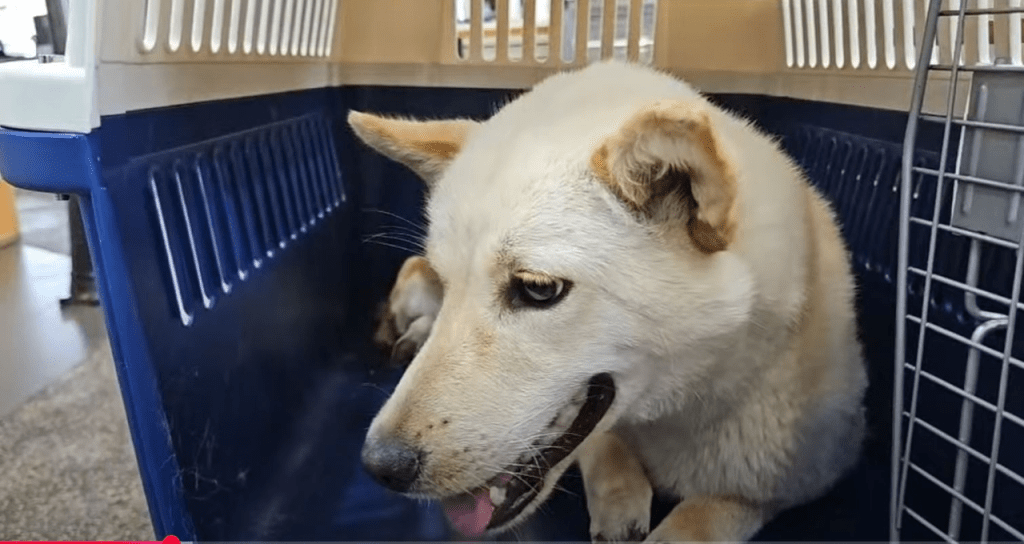
Two-month-old Doberman puppy was found abandoned in a park with infections caused by ear cropping
Updated: 11:51am, 17 Jun 2025


Two-month-old Doberman puppy was found abandoned in a park with infections caused by ear cropping
Updated: 11:51am, 17 Jun 2025


16 Jun 2025
MP proposes new legislation to licence rescue centres in a move supported by a major animal charity.

New legislation has been proposed which could lead to the introduction of a formal licensing regime for animal rescue centres in England and Wales.
The move has also been backed by a leading welfare group while tens of thousands of people have separately signed an online petition calling for licensing and regulation.
The Animal Shelters (Licensing) Bill was introduced to Parliament by the Conservative MP Richard Holden last week.
He said recent cases, including one in his own Essex constituency where dozens of dogs were found dead, had shocked the public and “exposed a dangerous gap in the law”.
He added: “The Bill will bring rescue and rehoming centres under the same statutory framework that already applies to kennels and breeders, closing the loophole that leaves animals unprotected.
“Mandatory licensing will drive up welfare standards, weed out rogue operators and give the public confidence that every organisation caring for dogs is properly equipped and held to account.”
A 25-year-old man is currently in custody on animal welfare and fraud charges following the discovery of 37 dead dogs at premises in Billericay in May.
A second man remains on bail, while a 25-year-old woman was arrested earlier this month. The remains of four more animals were found following a new search of the site.
Mr Holden said he had worked with both Dogs Trust and the RSPCA in developing his Private Members’ Bill.
Dogs Trust chief executive Owen Sharp said: “Good intentions aren’t enough. We need laws in place to make sure all rescue dogs are safe, cared for, and treated with the respect they deserve.
“Without proper oversight, these organisations cannot guarantee that they are operating in the best interests of the animals in their care.”
More than 50,000 people have also signed an online petition, launched prior to the Essex case, which demands licensing and regulation of rescue centres.
In its response, Defra said it would outline more details of its “overarching approach” to animal welfare in due course, but stressed that rescue groups must meet existing legal requirements.
https://news.nokilladvocacycenter.org/p/court-prohibits-shelter-from-dumping
A judge has once again determined that public ‘shelters’ will violate laws that protect animals if left unchallenged.


In a victory for animals and those who care about them, a California Court issued a permanent injunction prohibiting the San Diego Humane Society from refusing to provide shelter and care to kittens and lost cats and instead abandoning them on the street.
While the ruling supports the legality of community cat programs, including for feral cats, it requires shelters to comply with state laws regarding abandonment and animal care.
In a bid to recast the Court’s ruling against it, the San Diego Humane Society claimed victory in the case — a claim echoed by apologists for “shelter” malfeasance — even though the Court ruled gainst SDHS and prohibited them from making any changes to the program that would reduce protections for kittens and for adult cats who are social with people.
CBS originally wrote an article regurgitating SDHS’s false claim of winning:

They quickly removed the article when presented with the truth:

CBS subsequently reported that “A judge found the Humane Society’s Community Cat Program violated state law…” In fact, it wasn’t a community program; it was a program that turned its back on kittens and lost or abandoned friendly cats.
What the ruling means:
California “shelters,” like SDHS, are guilty of abandonment if they release, rather than admit, friendly cats with indications of ownership.
These include:
The Court also ruled that kittens under 12 weeks old and social kittens aged 12 weeks to six months must be admitted into the shelter. It imposed a permanent injunction prohibiting SDHS from instituting changes that would reduce protections for cats and kittens.
The ruling prohibiting release does not apply to feral cats, sterilized cats found with ear tips, or friendly adult cats who do not exhibit any of the above criteria.
It wasn’t a complete victory. For example, “shelters” still have some discretion to determine which kittens must be admitted. They can also continue to kill them after admission, something that many California “shelters” do.
We need to continue insisting on — and passing laws that mandate — No-Kill policies.
The case is Pet Assistance Foundation, et al. v. San Diego Humane Society, Case No. 37-2021-00007375-CU-MC-CTL. The ruling can be found here.
Together, we will create a future where every animal is respected and cherished, and every individual life is protected and revered.
Set to open in 2026, the shelter will provide safe refuge for up to 150 animals during disasters, including goats, cows, pigs and dogs

Date: March 14, 2025
WAYANAD, Kerala—A pioneering emergency evacuation shelter designed to evacuate animals prior to disasters like floods and landslides, is set to be established in Kottathara panchayat in Wayanad district, Kerala. Situated in a region prone to multiple hazards including annual floods, cyclones and landslides, this commitment marks a significant step forward in disaster preparedness for animals in India. The collaborative project will bring together the Kerala State Disaster Management Authority, the Wayanad District Disaster Management Authority, Kottathara Grama Panchayat and Humane World for Animals India (formerly called Humane Society International India) to make India’s first such shelter for animals.
The shelter, set to begin operating in 2026, will have the capacity to accommodate up to 150 animals such as goats, cows, pigs, dogs and cats. The single-story structure is expected to include dedicated space for a veterinary clinic and a quarantine area, along with storage and equipment rooms. The shelter is intended to serve as a model for similar facilities across the country.
Praveen Suresh, disaster preparedness and response team manager at Humane World for Animals India, said: “This is an historic moment for Kerala and India from both an animal welfare and disaster preparedness point of view. It is especially significant for Wayanad district with its growing need for a dedicated facility to evacuate and care for animals during disasters like floods and landslides. While the shelter will provide immediate medical care and relief, it will also serve as a long-term resource to support animal welfare in the community. We are grateful to the Government of Kerala and the State Disaster Management Department for approving this important initiative. This animal shelter highlights the power of collaboration between multiple agencies to safeguard animals and their communities and to strengthen disaster management efforts in India.”
Over the last seven years, Humane World for Animals India has gained a notable presence in Kerala through its disaster preparedness, response and relief efforts. During the 2024 Wayanad landslides, the organization’s rescue team aided over 180 animals. Along with partner organizations, Humane World for Animals India is working to make Wayanad a disaster-resilient district for both humans and animals. Among other activities, the organization is conducting capacity building programs for the community through outreach to schools and self-help groups like Kudumbashree. Once constructed, the shelter will serve as a hub for efforts to safeguard animals and the families who depend on them during disasters and a catalyst for continued commitment to build community resilience in the face of future emergencies that put humans and animals at risk.
Please also refer to ..
13.06.2025

RSPCA rescue animal, Spotty, is one of hundreds of pets under the Darwin shelter’s care. (ABC News: Jayden O’Neill)

Bernadette Relos and husband, Nathan Calverley, are self-described animal lovers who live in a bustling house in Darwin’s outskirts suburb of Berrimah.
They have two cats and a one-year-old puppy, which they recently adopted from a shelter.
The South Australian couple who moved to the Top End for work said their “fur babies” brought chaos and destruction, but much-needed colour to their lives.
“They bring life to the household … you can be lonely, and one of the cats will jump on you, and then you’re not lonely anymore,” Mr Calverley said.

“You could walk in the front door, and everyone doesn’t say a word, but the dog will come running … and start licking you and saying hello.”
Ms Relos said they decided to adopt because they wanted pets that would grow up with their young family.
But as some are choosing to bring furry friends into their forever homes, animal shelters are seeing the opposite.
Charles Giliam, the Northern Territory’s RSPCA operations manager, said there had been an increasing number of surrendered pets due to people experiencing financial difficulties.
He said most pets being dropped on shelter doorsteps were mixed breeds, weighing around 20 to 30 kilograms, with backyard breeding worsening the situation.

“[People] bring pets to us that are often in need of veterinary treatment … and say, ‘We just don’t have the money’,” he said.
The RSPCA estimates most dog owners spend an average of $25,000 on their pet during its lifetime, while cat owners spend $21,000 on average.
The charity says that within the first year of cat ownership, people could face up to $3,500 of expenses on food, desexing, grooming, bedding, toys and treats.

Mr Giliam said the influx of surrendered pets was creating significant challenges for shelters.
“We probably got about 15 to 20 people on our waiting list who are wanting to surrender … but we are chock-a-block full,” he said.
RSPCA national data showed around 81,000 pets were surrendered in the 2023/2024 financial year, with only 27,000 finding new homes.

David Neilson, a volunteer at the Darwin RSPCA shelter, said the increasing demand was leaving some volunteers “overwhelmed”.
“There are so many volunteers that are here through the week to walk the dogs and sit with the cats and we are not getting through everything … it makes it difficult,” he said.
While many in the rescue sector are worried about the growing crisis, there are also concerns the NT’s animal rights laws are ineffective.
Unlike most other Australian jurisdictions, the NT does not have a formal dog breeder licensing scheme, however breeders are still expected to meet standards of care under the Animal Protection Act.
Melissa Purick, a licensed dachshund breeder, said it was “frustrating” to see people buy pets from unlicensed backyard breeders without considering the animal’s welfare.

“I would like to see that stopped to start with, where you can’t sell puppies at the markets or the side of the road,” she said.
Hannah Bohlin, an animal advocate, believes growing use of social media is glamorising pet ownership without highlighting its challenges.
She said if people adopted pets that were incompatible with their lifestyle, cost of living could become a “scapegoat” to surrender animals that were no longer valued.

She wants the NT to look at what other states and countries are doing to manage pet breeding and ownership.
“I would like to see a discussion around the possibility of introducing some kind of licence system [to own a pet],” she said.
“Some European countries do operate this kind of system to get a dog in the first place.”
The NT’s Agriculture and Fisheries Department, which oversees animal welfare, said a review of the Animal Protection Act was currently underway.
“The NT government takes animal welfare seriously and is committed to strengthening animal welfare laws,” a department spokesperson said.
https://www.independent.co.uk/news/uk/crime/monzo-court-trial-daniel-anjorin-b2769732.html
Monzo said he ‘received guidance and communication’ in his head that the cat ‘was being used against me by negative forces’
Friday 13 June 2025

Marcus Arduini Monzo with a samurai sword that was shown to the jury in his trail at the Old Bailey (Metropolitan Police/PA) (PA Media)
An alleged sword attacker tried to cook and eat his pet cat, but claimed to have no memory of killing a schoolboy during a rampage in London.
Prosecutors say Marcus Arduini Monzo, 37, skinned and deboned his cat Wizard before launching a 20-minute spree of violence in Hainault, east London, while allegedly under the influence of cannabis on 30 April last year.
Monzo is accused of murdering 14-year-old Daniel Anjorin, as well as mowing down pedestrian Donato Iwule with a van and attacking two police officers and a couple in their home on April 30.
At the Old Bailey on Friday, Monzo cried as he said he did not intend to harm anybody.
In the days before the attacks, Monzo said he “received guidance and communication” in his head that the cat “was being used against me by negative forces”. He told jurors he took his pet cat to a park to get rid of it.
He said the cat returned to his Newham flat on the morning of the rampage, and that he strangled it despite claiming he did not want to.
Asked why it was skinned, he told jurors: “After I strangled him he (the communication) was telling me that the cat had taken energy from me and to replenish and get the energy back I had to eat the cat.”
Monzo said he tried to cook it, but became “panicked and rushed”, believing an event “like an Armageddon” was happening.
Continue reading …
***************
Clearly a nut, the guy. But again, the link between violence towards Animals and Humans .. as if more proof were needed.
Please refer to ..
Thu 12 Jun 2025 16.07 CEST

An IDF soldier and dog on patrol in Hebron. Photograph: Hazem Bader/AFP/Getty Images
Military dogs involved in attacks on Palestinian civilians – including children – are likely to have been exported from European countries, investigation finds
Warning: readers may find some of the details in this piece distressing
It was only seconds after soldiers entered the Hashash family’s home in the Balata refugee camp in the West Bank that the dog attack began. As military raids rolled out across her neighbourhood one morning in February 2023, Amani Hashash says she took her four children into a bedroom. When she heard Israeli military coming into their home she called out that they were inside and posed no threat.
Moments later the bedroom door was opened and a large, unmuzzled dog launched itself into the room, plunging its teeth into her three-year-old son, Ibrahim, who was asleep in her lap.
Continue reading …

Israeli soldiers from the Oketz canine unit at a training base in southern Israel. Photograph: Jack Guez/AFP/Getty Images
**************
Comment of our own:
So typical of Humans to turn “man’s best friend” into a killing machine. The dogs, as it says here, have no understanding of what they are made to do – and are as much victims as those they are set upon.
Disgusting …