“Thugs do not suffer any sanctions, even when a report is filed, there is no reaction from the authorities and that is the problem.”

Photo: Reuters
((Disclaimer: The translations are mostly done through AI translator and might not be 100% accurate.))
28.09.2024
The text contains disturbing details
A man from East Sarajevo shot a dog, then dragged it wounded along the street with a tractor, a pensioner from the village of Stajkovce, in the south of Serbia, beat a mare with a hammer and a pole, a six-year-old boy from Niš threw a kitten and ran over it with a scooter, a man from Leskov tortured a poisonous snake – these are just some of the creepy headlines lately that disturb people in the Balkans.
Some of the adult perpetrators are prosecuted or convicted, but as a rule, the punishments are mild or none, and that is why there are more and more cases like this, says Milica Ranković from the Feniks Animal Protection Association.
“People who have these kinds of mental problems are increasingly relaxed, because they see that there is no adequate punishment.
“Thugs don’t suffer any sanctions, even when a report is filed, there is no reaction from the authorities and that’s where the problem lies,” Ranković told the BBC.
And when there is a reaction, it is slow, and punishments are often conditional or just a warning, he adds.
The situation is similar in Bosnia and Herzegovina, where because of the case from East Sarajevo, although the suspect was detained, protests were organized in Sarajevo and Banja Luka, demanding tougher sentences.
“There is enough violence against the weak, against women, children, animals… Enough!
“Monsters move freely among us, today it was a dog, and tomorrow it will be someone’s child,” said Mila Šarić, employed at the Veterinary Institute of the Republika Srpska, one of the two entities of Bosnia and Herzegovina. transmissions H1.
What motivates people to be violent towards animals?
–Analysis by Marija Branković, professor at the Faculty of Media and Communications, Singidunum University*
Science today understands animals as sentient beings, which absolutely have the capacity to experience pain, fear and many other emotions.
Because of all this, violence against animals should alarm us as much as violence against people.
Based on psychological research, we know that there are complex explanations for violent behavior, it is impossible to attribute it to just one cause.
At the basic level, there are differences in people’s capacities for empathy, so we are talking about the expression of certain personality traits, which we call “dark traits” – psychopathy, narcissism, Machiavellianism and sadism – which are associated with a tendency to aggressive and antisocial forms of behavior.
Research conducted in Serbia shows that these four personality traits are clearly related to a negative attitude towards animals.
However, this should not be understood as something that will necessarily manifest itself, because it always depends on whether this behavior is encouraged or punished in the environment.
Furthermore, we know for sure that aggressive and violent behavior is learned by model and not only in the family, but social beliefs and norms are also very important, therefore, the general climate in society.
And we live in a so-called post-conflict society.
These are societies of fear, in which people live with a sense of threat, insecurity, and mistrust, which all make fertile ground for violence.
Moreover, violence is justified and applied in the public and political sphere, especially towards dissenters, which means that at the highest and most visible level of society you have clear models of violent behavior.
It is not an exaggeration to say that violence is promoted and even rewarded, and it is certainly punished insufficiently and unsystematically.
* Marija Branković is Frpsychologist and research associate at the Institute for Philosophy and Social Theory and author of the book Psychology of humans and (other) animals
What penalties are threatened?
Bosnia and Herzegovina: The laws in the two entities differ – Republika Srpska (RS) i Federation of Bosnia and Herzegovina. Anyone who severely abuses an animal or destroys animal habitats in a wider area will be fined or imprisoned for up to six months in the Federation of Bosnia and Herzegovina, and up to two years in the RS. For more serious forms, when a material benefit has been obtained or a protected species has suffered, the prison sentence can be up to one year in the Federation, and up to five years in the RS.
Montenegro: Anyone who kills, injures or tortures an animal in violation of the regulations will be fined or imprisoned up to one year, and in the case of protected species, imprisonment from six months to five years.
Croatia: Whoever kills an animal without a justified reason or abuses it more severely, causes it unnecessary pain or exposes it to unnecessary suffering, will be punished with a fine imprisonment for up to two years or in more severe cases up to three years. In Croatia, the criminal offense of abandoning animals was recently introduced, which carries a penalty of up to one year.
North Macedonia: Torturing and killing animals is punishable by a fine and a sentence of up to six months in prison, and carelessness is also punished – if the animal is left without food and water, it can be obtained three months in prison.
Serbia: Abuse and torture of animals is punishable by a fine or a prison sentence of up to two years, writes in Criminal law, and for more severe forms up to three years and a higher fine. It is a criminal offense to organize animal fights and bet on them out of self-interest, for which the prison sentence is from six months to three years. Rulebook exact punishments for abuse of animals are also prescribed, for example, for a brown bear it is one million dinars, for a griffon vulture or a black eagle 500.000, for a wolf or lynx 300.000, for an otter 250.000, up to certain types of snails or frogs where the penalty is 1.200 dinars.
Associations are looking for a register of abusers
Legislation is completely fine in Serbia, but the problem is that it is not enforced, Milica Ranković points out.
“The same problem is in the entire Balkans,” she adds.
At the beginning of September, for the second time, the Feniks Association, together with ten other animal protection organizations from all over Serbia, sent an official letter to the competent ministries with a proposal to create a database on abusers and killers of animals.
They also request that systematic work be done on education and prevention of such cases from the earliest age – through creating empathy, but also to encourage reporting.
The state representatives were approached for the first time last year after the May tragedies, when the neighbors of Uroš Blažić, accused of mass murder in the villages of Dubona and Malo Orašje, claimed that mistreated animals.
However, the authorities never responded.
“It is devastating for our society, because it shows that it is not interested in dealing with violence.
“All associations from all over Serbia have the same experiences, we are all aware that such a database is necessary, the problems are the same and nothing has changed,” says Ranković.
Whether the introduction of such a register is being considered at all and what it would look like, the BBC did not receive an answer from either the Ministry of Justice or the Ministry of the Interior.
TOMS KALNINS/EPA-EFE/REX/Shutterstock
A worldwide problem
In the past decades, there were many monstrous cases that filled the columns of the domestic black chronicle.
From Kerusha Mila, whose paws were cut off, to a video of a cat being doused with gasoline and burned alive, to individuals who kill dogs with a knife, sometimes petting them beforehand, and that’s how it is in the world.
The shocking number of cruelty to animals, which are found daily in the media or on social networks, are only the tip of the iceberg, because most are never reported, according to the website of the American association. Humane society.
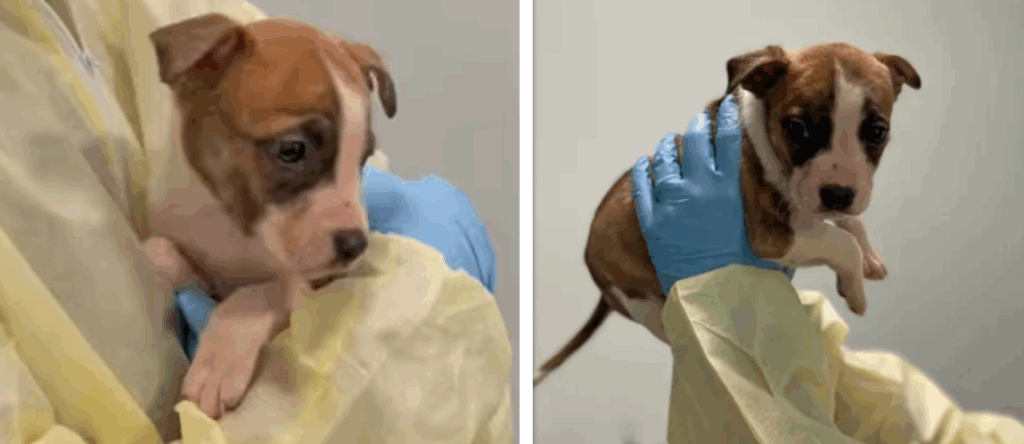
Puppies, cats, horses and domestic animals are the most common targets.
According to their data, animal abusers are more often men under the age of 30, and sick collecting of animals, which is more often done by women over 60, is also considered abuse.
Cruelty to animals is strongly related to other crimes.
People who mistreat animals are five times more likely to be violent towards people, according to an American study by Northwestern University in Massachusetts.
Behavioral profiles of criminals by the US Federal Bureau of Investigation (FBI) regularly show that many serial killers and rapists tortured animals as children, writes the British association Peta.