Tasering and killing a dog? These people working for Animals Services???
Category: Stray Animals
Sunday, May 11th. The week is over.
This has to stop!
Please write to/call the above contacts. They full well know what they are doing, and the social media backlash directed at them has been blocked (by them) on FB.
VICTORY: San Antonio agrees to stop hiding comments on government-run animal shelter’s Facebook page

From a report done after a site visit in 2022 – there were numerous issues even then:
Dog euthanasia area
Pre-euthanasia holding kennels.
The incinerator is situated next to a series of euthanasia holding kennels. Though I did not get to observe the entire euthanasia process, what I observed and learned from numerous staff members is that the dogs are driven in a Kubota or walked on a catch pole to the euthanasia holding kennels and once all are gathered for euthanasia, they are walked through the door into the euthanasia area
where they are euthanised and then disposed of in the incinerator. I heard from multiple staff members that the dogs express anxiety and fear behaviours once in the pre-euthanasia kennels due to the smell of death from the euthanasia room that is just a few feet from the kennels.
Euthanasia room and process.
The euthanasia room itself was clean, though it did smell like dead bodies, likely from the cooler where some bodies are stored. The dogs are lifted onto a metal table and euthanized. When I asked a euthanasia supervisor why they are lifted up onto a table rather than the staff getting on the floor with them, he stated it’s hard for the staff to bend over that much so it’s easier on their bodies to euthanise them on the table. The table was steel with nothing on top of it.
Previous Post
.. every single rescue is worth it. Look at her. She’s so precious. Saved, despite her health issues, from the Houston/TX (kill) shelter.
And again, the random (ab)use of the word “Euthanasia” ..
.. for the mass murder of animals, basically worldwide, has become fashionable, and implies to uneducated readers that you’re actually doing the poor creatures a favour.
That may be so, in VERY few cases, like Mark said with Turkey, “Dogs that are in pain, terminally ill or pose a heath risk would be euthanised“, but it is certainly not applicable to the young, and/or healthy. Done away with because they are considered surplus, unwanted etc.
Next thing we’ll hear is that animals are no longer slaughtered, but “euthanised”.
Let’s be clear here: if you kill a human, even with the best intention in the world (terminally ill, extreme suffering, etc.) and call it “Euthanasia” – you are a murderer. End of.
Language is so important. Racism/Speciesim/the subjugation of women – it all started with the language. And when it comes to animals, the abuse (of language) clearly knows no bounds. But we’ll cover that in a separate post. Soon.

Turkeys top court rejected a law on Wednesday to annul a contentious law which would remove millions of stray dogs from the streets.
Click here to see what Japan is doing – https://worldanimalsvoice.com/2025/05/09/jp-cruelty-of-the-tokyo-euthanasia-centre-for-stray-dogs-where-animals-suffer-for-fifteen-minutes-before-they-die-from-suffocation-in-canine-gas-chamber/
Critics are saying that the new legislation could lead to mass killings of the animals.
The main Opposition Party had sought to overturn legislation enacted last year, arguing the it violated animal rights and the right to life.
However, the Constitutional Court have ruled the legislation is legally valid and thus it can continue to be implemented.

Turkey has stated that it will put stray dogs up for adoption.
Dozens of activists gathered near the Constitutional Court to press the court to repeal the law. They held up posters which read ‘cancel the blood ridden law’; as well as shouting anti government slogans.
It is estimated by the government that around 4 MILLION STRAY dogs roam Turkish cities and the countryside.
Whilst many of the dogs are harmless, the government moved to tighten legislation on stray animals, following incidents of dog attacks, including some cases involving children.
The law requires municipalities to round up stray dogs and relocate them to shelters where they would be vaccinated, neutered and spayed before making them available for adoption.
Dogs that are in pain, terminally ill or pose a heath risk would be euthanised,
Animal lovers, strongly oppose the ruling, dubbing it the ‘massacre law’, as they fear it will lead to widespread culling or with dogs ending up in disease ridden, overcrowded shelters’.
They have also raised concerns about how financially strapped municipalities will secure the additional funding required to construct the additional shelters.
It is feared that rather than allocating resources to care for the stray dogs; some municipalities will resort to immediate euthanisation on the pretext of ‘illness’. This is something that we at WAV would fully agree with; where does the shelter funding suddenly appear from to provide ‘care’ to an additional 4 MILLION dogs ?
We at WAV fully agree with the activist campaigners that very many healthy dogs will end up being immediately destroyed rather than municipalities providing for their wellbeing. We at WAV do have a little experience on the issue of stray dogs and cats; in 2005 we established SAV in Serbia, the Balkans, to fight the government regarding their abuses of stray / street dogs and cats – have a look –
The latest court actions can only put additional pressure on authorities to enforce these hazy, misguided laws.
The Ankara Bar Association, an organisation for lawyers, claims that since its implementation, ‘hundreds of animals have died due to this law, which does not serve the public interest’.
Last year the very respected HSI criticised Turkeys approach to stray dog management.
While this article is a few years old, there has been no change to this practice.
WARNING: GRAPHIC CONTENT
- Tokyo politician released photographs from inside an ‘euthanasia centre’
- Images show the procedure is anything but humane as dogs are gassed
- Lawmaker hopes to highlight Japan’s stray policy and encourage debate
Published: 16:53 BST, 25 November 2015 | Updated: 21:41 BST, 25 November 2015
The streets of Tokyo may be free of prowling dogs since its zero-stray policy came into effect but the laws come at a heavy price as one politician has revealed.
Ayaka Shiomura, a lawmaker in the Tokyo Metropolitan Assembly, recently went to visit an euthanasia centre in Japan and shown that the ‘dream box’ used to euthanise the country’s strays are anything but humane.
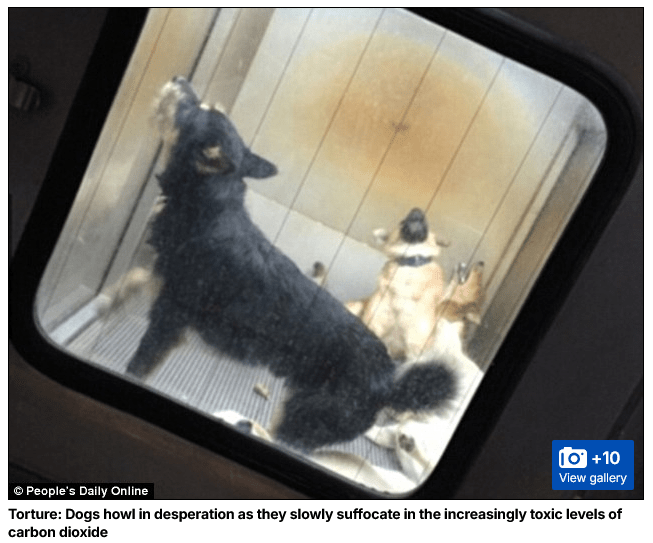
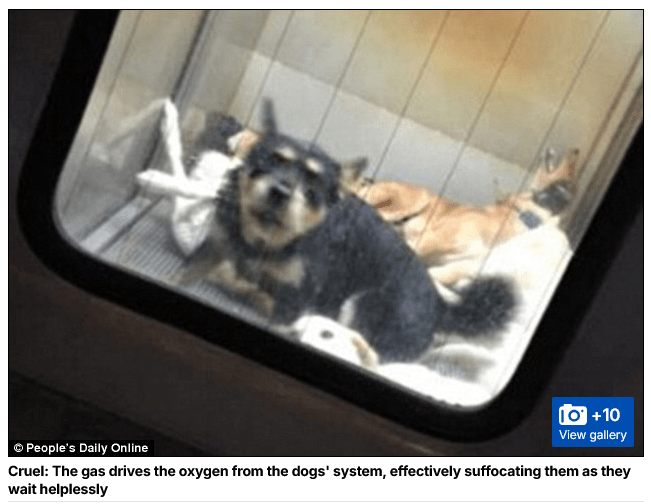
The excruciating procedure involves putting strays into a gas chamber where they are slowly suffocated with carbon dioxide and the whole process can last as long as 15 minutes, reported People’s Daily Online.

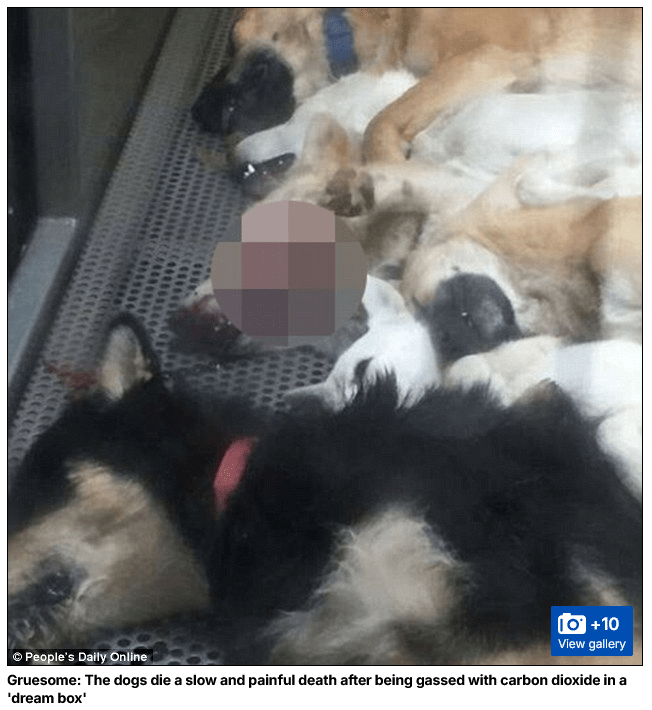

Ayaka Shiomura went to visit an unnamed facility, thought to be in Tokyo where the lawmaker is based, and posted about her experience on her website last month.
Euthanasia facilities like it are part of a zero-stray policy, which stipulates that all unclaimed cats and dogs must be euthanised in a set period of time according to Rocket News 24.
Shiomura explained in her introduction that any animals brought to the facility remains at the shelter for anywhere between three to seven days, depending on local policy.
After that time, if the animal is unclaimed, it will be disposed of.
During Shiomura’s visit, 10 dogs were to be euthanised. Of those, some were thought to be pets as they still had collars on.
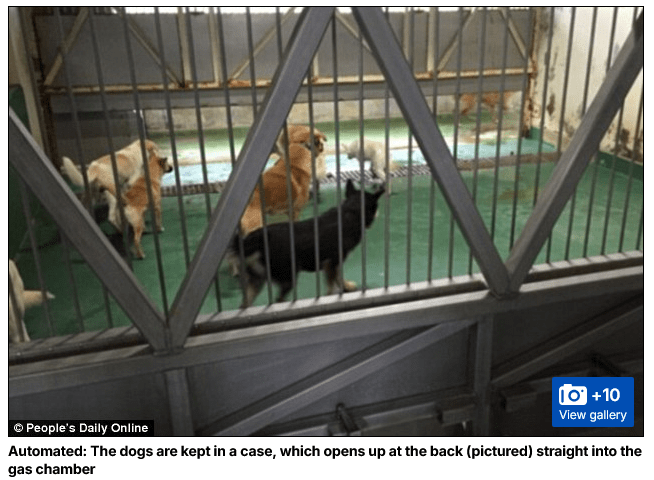
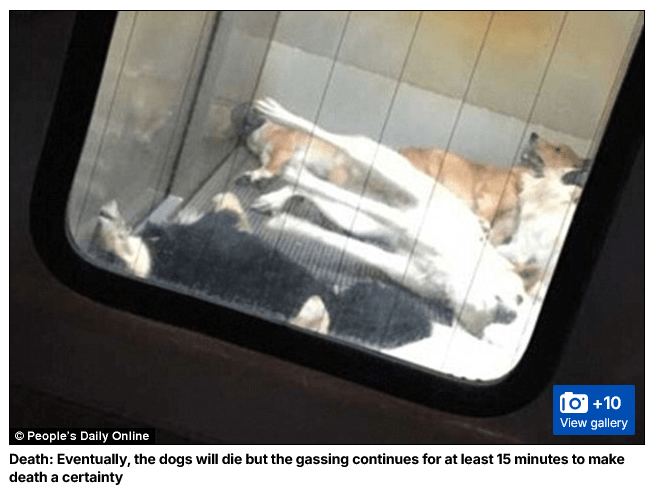
The dogs were kept in a cage, which has a back door leading straight into the ‘dream box’ – a romantic name that had little to do with the stark reality of the gas chamber.
The staff at the facility never have to touch the animals as they generally wander in on their own accord.
Once inside, the chamber is locked down and a button is pressed to disperse carbon dioxide into the chamber.
Elisa Allen, Associate Director at PETA, told MailOnline: ‘Death by carbon dioxide or carbon monoxide can be extremely distressing and painful.
‘Cats often slam themselves against their cages, desperately trying to escape. Dogs howl, cry and claw at the metal walls of the chambers while they’re slowly poisoned.’
The cramped gas chamber is equipped with a glass window, which allows the operator to check the procedure is complete.
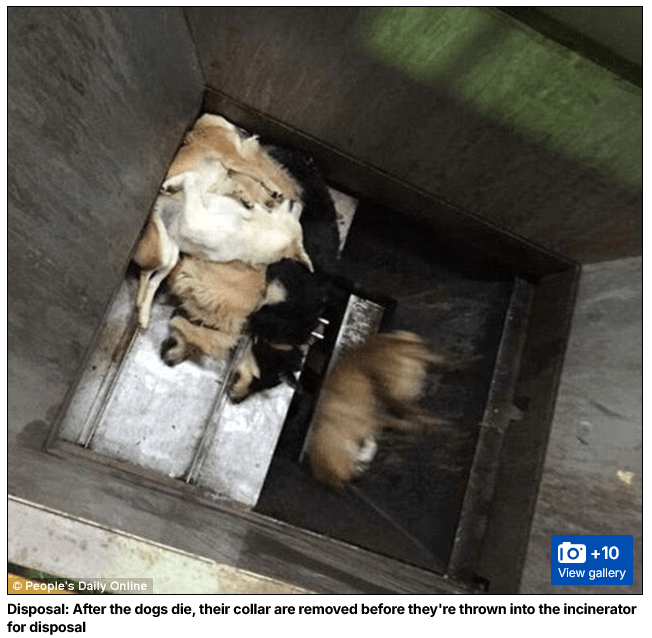

Through this window, Shiomura captured the final moments of the dogs’ gruesome death through suffocation.
Shiomura described that the dogs were ‘trembling’ before the procedure but this soon became ‘panting’ and eventually ‘collapsing’.
The chamber is gassed for 15 minutes to ensure the dogs are completely dead.
Finally, their remains are dumped into an incinerator to be disposed of.
According to news site TouTiao, Shiomura debated over whether to publish the post but felt that she needed to highlight the issue of animal culling.
She explained that in Japan, there’s around 170,000 stray dogs and cats that are euthanised in this way but the procedure is far from kind.
Shiomura hopes that more people in Japan would consider the consequences of buying a pet before making the purchase.

There are more humane ways to euthanise animals.
Elisa Allen informed MailOnline: ‘Animal shelters around the world condemn the use of such gases, choosing instead euthanasia (‘mercy killing’) by intravenous injection of sodium pentobarbital in the case of dogs, cats and animals of similar size, sometimes using other humane methods for smaller or larger animals.
‘When properly performed by caring, well-trained people – one who holds and comforts the animal and another who carefully injects the solution intravenously – euthanasia provides a painless, peaceful release.’
*******************
Source Link:
The Tokyo ‘euthanasia centre’ for stray dogs
https://www.esdaw.eu/the-tokyo-euthanasia-centre-for-stray-dogs.html
It can be ignored, or at least pushed aside, until one sees faces. Actual faces. We often deal with issues here that involve hundreds, thousands, of individuals – like live export, say – but when you finally look someone in the eye, it gets really difficult.
In the US, many shelters are still kill shelters, with a massive turnover, and with animals often just having a few days, before they are killed. I say killed, because the term “euthanasia” is far too widely used these days for all and sundry. Like the shooting of these 700 koalas in Australia (article on site). In my personal view, so-called euthanasia, certainly of young/healthy individuals without “need” (as in cutting short unbearable suffering), is murder.
Many shelters in the US also still “euthanise” by heart-stick and gassing. I’ve seen both, and believe me, you don’t want to know. When whole litters are places in a metal box, with expectant faces (is this a game??) and wagging tails, and the lid is closed, the gas turned on .. you’ll never again forget the screams .. as I cannot.
So, the “shelter” at San Antonio, TX, is but one of many, who daily kill. It serves as an example, and currently I am seeing the “Euthanasia Capacity List” several times every day, being updated every 15 mins. (!!).

Link to official lists of animals needing placement:
https://www.sa.gov/Directory/Departments/ACS/Placement-Surrender/Urgent#section-7
Instagram page presenting the most urgent individuals in immediate danger of being killed:
https://www.instagram.com/sanantoniourgentsadoptables/
Facebook ..
https://www.facebook.com/sanantoniourgentsandadoptables
It is especially hard to see with the puppies …


or those with “issues” due to abuse or neglience ..


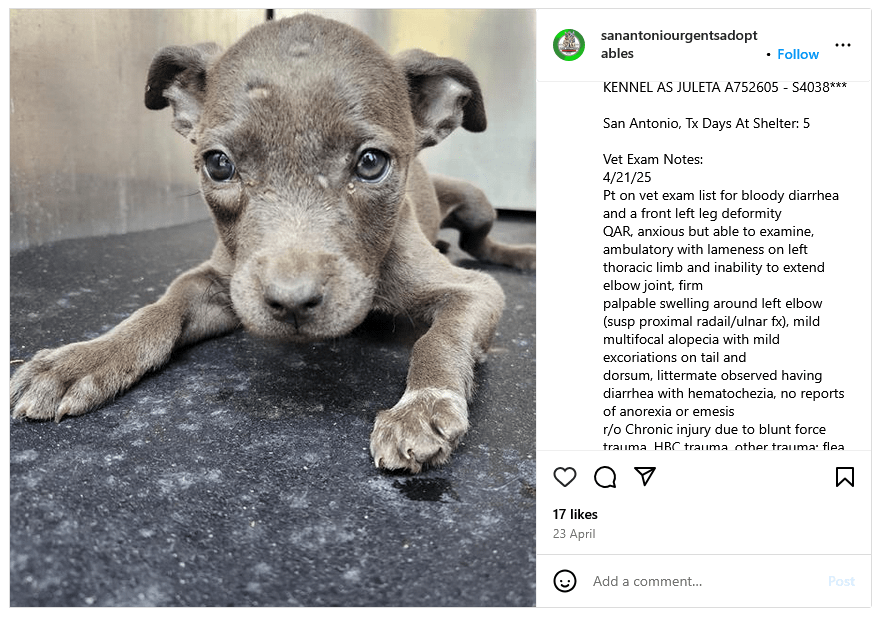
Anyone able to help here, please share, adopt …

******************
Please also visit ..
https://nokilladvocacycenter.org/

8 May 2025

Several of Parliament’s most active and committed supporters of animal welfare, from across the political spectrum, joined us in the House of Commons to learn how a number of outdated and unnecessary animal tests could be ended immediately, through our RAT (Replace Animal Tests) List.
In a productive roundtable discussion, the MPs were shown how six animal tests – which use approximately 80,000 animals every year – are still conducted in the UK despite the availability of appropriate non-animal replacements. The detailed and well-informed session covered what the six tests on animals involve, the barriers to progress, and practical steps for securing an end to the unacceptable practise of testing on animals where replacements are available.
Those present included Steve Race, a member of the Science, Innovation and Technology Committee; Alex Mayer, who played a leading role in our petition to the United Nations for a global ban on animal testing for cosmetics, in partnership with The Body Shop, which received eight million signatures to become the largest animal-related petition in history; and Irene Campbell, who Chairs the All Party Parliamentary Group on Phasing Out Animal Experiments in Medical Research, and led the recent debate on banning testing on dogs.
In recent years, the development of non-animal methods has increased significantly, and they can now replace, wholly or in part, a number of tests on animals across several product sectors.
However, our experience has been that actually replacing tests on animals takes much longer than it should. We have seen how non-animal methods available for assessing skin irritation, skin sensitisation and batch safety have taken years to be adopted and we know that tests on animals are still being conducted to provide this information. This is unacceptable.
In many cases, the problem lies with a lack of clarity from, and enforcement by, regulatory authorities, as well as the absence of a joined-up approach for acceptance of non-animal methods around the world. Since non-animal tests can be cheaper, faster and more accurate than the tests on animals they replace, it is in the interests of animal welfare and good science to speed up their acceptance and to expand their use.
Overcoming these remaining hurdles, so that these tests on animals can finally be fully replaced, is a matter of urgency.
The six tests we discussed were for the assessment of skin irritation, skin sensitisation and eye irritation; routine batch testing of veterinary vaccines; potency testing of Botox samples; and the production of antibodies.
Botox batch testing involves injecting Botulinum toxin into the abdomens of mice. Over three days they become increasingly paralysed, and if left the mice given the higher-level dose will slowly suffocate to death. Approximately half of the mice die during the test and all survivors are killed at the end of the test. Nearly 50,000 of these tests were carried out in the UK in 2023, despite the world’s major Botox manufacturers developing an alternative cell-based test.
For antibody production, animals – including mice, rabbits, sheep, and goats – are used as ‘factories’ to generate large numbers of antibodies. An injection stimulates the animal’s immune system to produce specific types of antibodies – but this often causes harmful side effects before their blood is taken to harvest the antibodies. Animals are killed when they are no longer useful. Phage display technology – awarded the 2018 Nobel Prize in Chemistry and endorsed in 2020 by the EU Reference Laboratory for alternatives to animal testing – can be used to produce a wide range of antibodies that are of higher quality, more stable, more relevant and more reproducible than the antibodies produced in animals. They are also much faster and cheaper to produce.
See the full RAT (Replace Animal Tests) List on our website.
Our Head of Public Affairs, Dylan Underhill, said: “People may assume that tests on animals which have non-animal replacements available are no longer conducted, or at least rarely – but the reality is that such tests can continue, and even increase long after the adoption of suitable alternative methods. It was great to see MPs engaging with the issues and statistics behind our RAT List – politicians can play a vital role in overcoming the problems which prevent the adoption of new non-animal tests. This isn’t just about science, it’s about political will too. With the government working on its manifesto commitment to phase-out animal testing, ending these six tests represents a significant but easily-achieved first step towards that aim.”
Published: May 05, 2025 at 02:30 PM Author: PENNY EIMS

Santa Ana, CA – On April 23, Santa Ana Police executed a search warrant at the home of Alejandro Acosta Oliveros in the 2300 block of W. Wilshire Avenue. The 45-year-old man found himself facing felony animal cruelty charges for abducting and killing what police say are “a lot” of cats in the area.
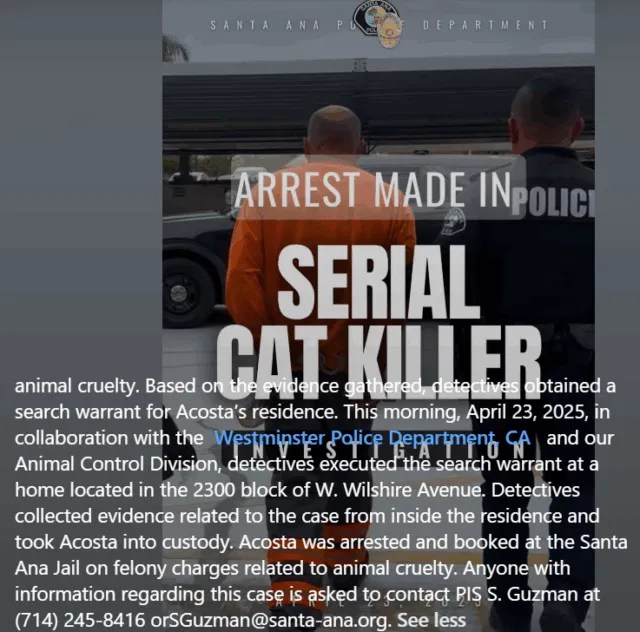
Via Santa Ana Police Department
Though Oliveros had “evidence” of killing cats inside his home, AND he confessed to slaying felines, he was released from custody shortly after being apprehended.

People living in the area where Oliveros abducted and killed cats are outraged that this CONFESSED cat killer is once again on the loose after posting bail. There are even reports from an area cat rescue that Oliveros has ALREADY killed another cat after being released from custody.
Residents had been reporting the cruel incidents to the authorities for weeks with victimized families sharing their horror stories on various social media outlets, including the Nextdoor neighborhood platform.
Families said Oliveros lured cats and then tortured and killed them in various ways. One person said, “Hello! I’m near El Salvador Park, and my neighbor’s cat was killed by a man who injected it with some sort of substance.” Another person said they found their cat hanging from a tree. People who witnessed Oliveros committing crimes say he lured cats with food, then stepped on them when they got close to him.
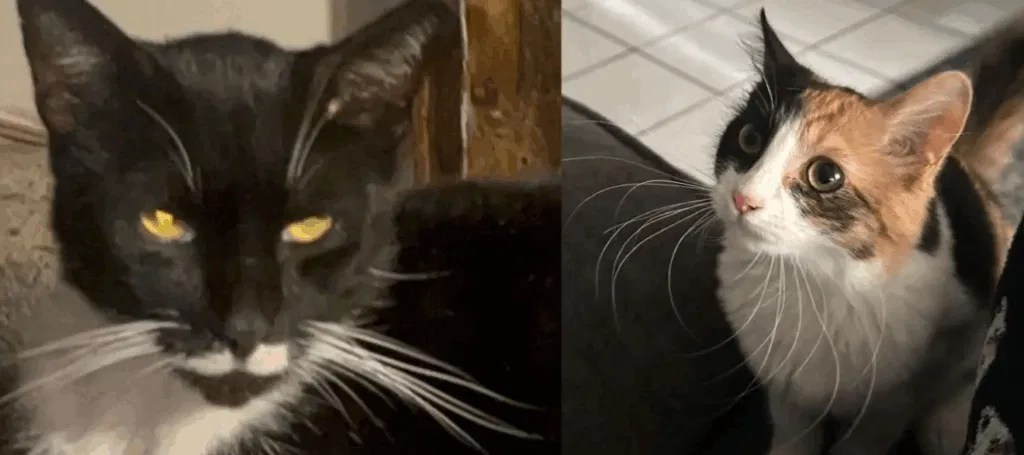
Cats slain/screengrab via Fox 11 News
This man is clearly a danger to cats in the area, and a danger to society as a whole. Animal Victory needs your support to show court officials that the prosecution of this man MUST be taken seriously. The District Attorney’s Office has told Animal Victory that a case number has not yet been assigned, but we will be working to ensure that this does not fall through the cracks. Please add your name to the petition today!
Target: Orange County District Attorney’s Office
WHY THIS PETITION MATTERS:
We, the undersigned, demand Alejandro Acosta Oliveros be held accountable for his cruel actions, resulting in the deaths of more than a dozen innocent cats. We collectively insist that this man NOT receive a plea deal – he is a dangerous individual who MUST be brought to justice.
Research has consistently shown a strong link between animal cruelty and human violence. Individuals who commit such heinous acts against animals often pose a threat to society as a whole, as animal abuse is frequently a precursor to other violent crimes. Failing to hold this man accountable not only denies justice for the suffering and death he caused but also endangers the community at large. It is imperative that we send a clear message that such cruelty will not be tolerated.
Individuals are presumed innocent until found guilty in a court of law. Animal Victory relies upon the authorities and the court system to determine guilt or innocence.
Note: Statement released from the Santa Ana Police about Oliveros’ release from jail, “The suspect in the recent animal cruelty investigation was arrested last week and he later posted bail. We recognize the strong emotions this case has generated and ask the public to please allow the judicial process to take its course.
PLEASE SIGN ON PAGE

https://www.thedodo.com/monastery-adopts-friar-dog-2303203254.html
Published on March 6, 2017 at 5:14 PM
Little Dog Is Welcomed As Monastery’s Cutest New Friar
“All of the brothers love him very much.”
In Catholic tradition, St. Francis of Assisi is the patron saint of animals — so perhaps it’s only fitting that one of the newest followers to join his order is quite literally a dog.

The Franciscan monastery of Cochabamba, Bolivia, recently announced that a furry pup, named Carmelo, had joined its sacred fold, where he quickly distinguished himself as its cutest member.
In honor of his new position, the dog even earned a more formal title: Friar Bigotón (that’s Spanish for “mustache”).
He also got a tiny Franciscan habit to wear around his new home.

Prior to being adopted, Friar Bigotón lived as a stray. But now, as the monastery’s resident pet, things couldn’t be better.
“His life is all about playing and running,” Jorge Fernandez, a fellow friar, told The Dodo. “Here, all of the brothers love him very much. He is a creature of God.”
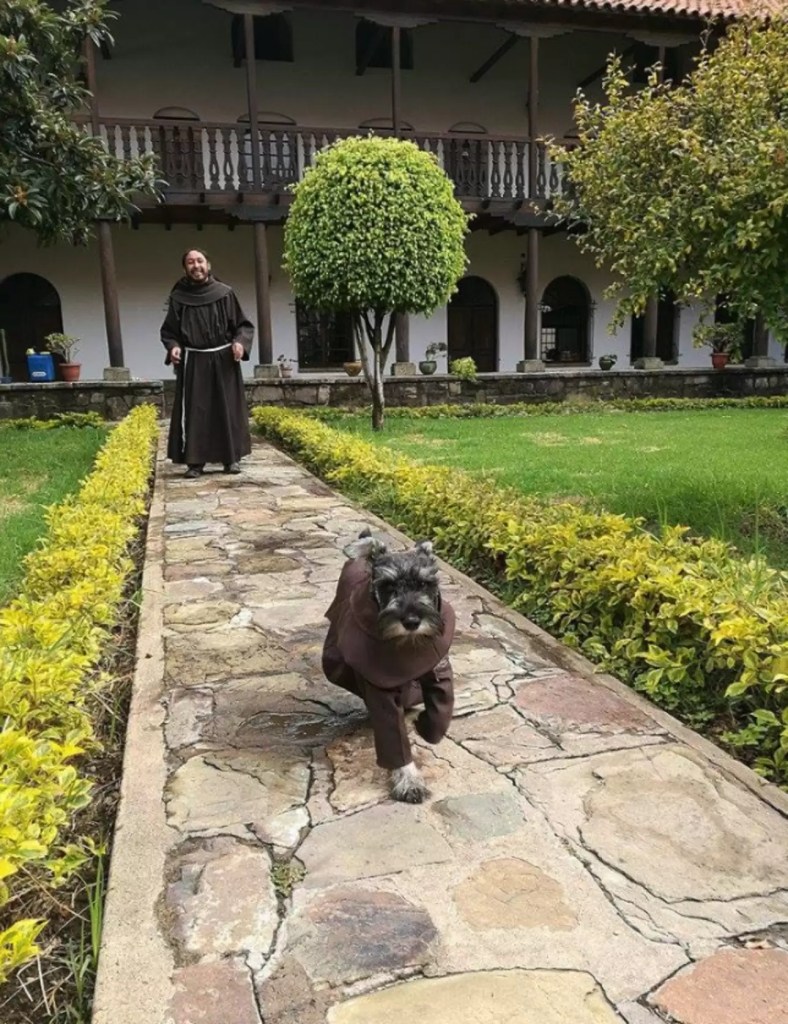

Apparently, running and playing aren’t the dog’s only duties.
“[Here’s] Brother Carmelo preaching to the fish,” wrote Franciscan Kasper Mariusz Kaproń, who first posted these adorable photos online.
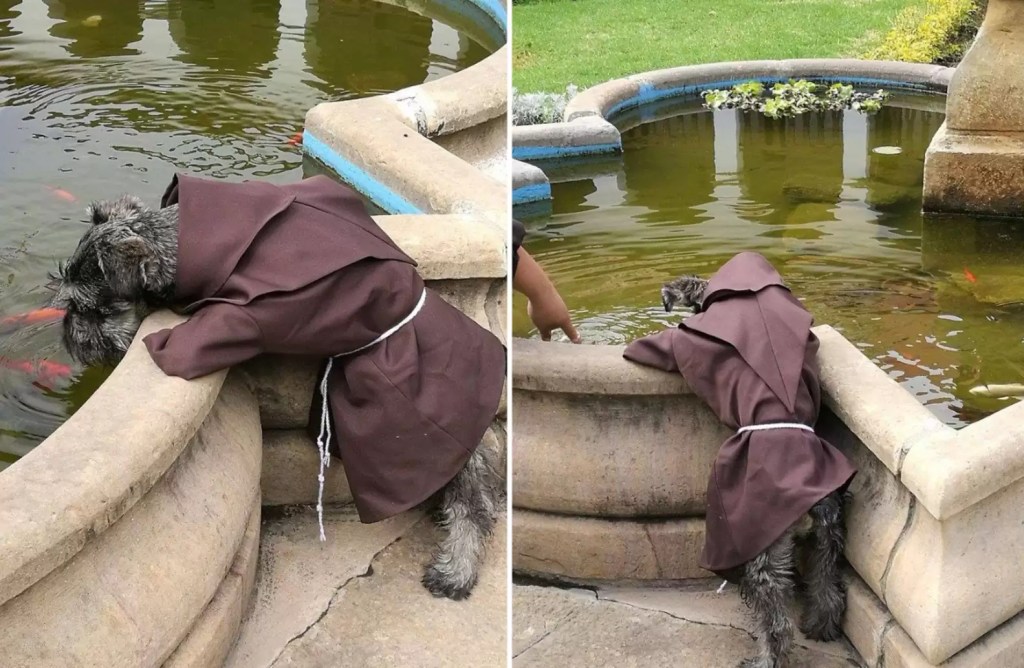
Most importantly, though, Friar Bigotón’s biggest role is in helping other pups like him.
Carmelo’s adoption was made possible by a local animal rescue group, Proyecto Narices Frías (Cold Nose Project), which hopes his story will serve as an inspiration for more monasteries to open their doors to needy pets.

Image credits: Kasper Mariusz Kaproń Ofm
“If only all the churches of our country adopt a dog and care for him like Friar Bigotón,” the group wrote in a post on Facebook, “we are sure that the parishioners would follow his example.”
(The Franciscan Order, founded by S. Francis of Assisi, to this day, takes a keen interest in environmental issues – attends the COP Climate Change Conferences – and animal welfare, in accordance with the teachings of their founder)

 World Animals Voice