Category: Stray Animals

EU: Bad news: Member States propose to downgrade the protection status of the wolf, against science and public opinion.

Bad news: Member States propose to downgrade the protection status of the wolf, against science and public opinion

25 September 2024

Press Release

Wolves are likely to no longer be strictly protected as the Council of the European Union has adopted the proposal by the European Commission (EC) to request a downgrade of their protection status under the Bern Convention. This move seriously jeopardises the conservation efforts of the past decade and prioritises politics over science and data, while sending a dramatic message on the future of co-existence.

In December 2023, the EC published a proposal to downgrade the strict protection of wolves at international level, in a move that has been considered widely political. Now that Member States have voted in favour of a downgrade, the proposal must be endorsed formally at ministerial level, in time for the request to be presented and voted upon at the next Standing Committee meeting of the Bern Convention in December. If adopted, this could be translated in the EU under the Habitats Directive, giving flexibility to Member States to authorise the unnecessary culling of these majestic animals.

In the past decade, the EU has invested significant resources towards the recovery of wolves, resulting in an increase of 25% in population. Yet, populations have not yet reached a favourable conservation status and the proposal to downgrade their protection seriously jeopardises conservation efforts. 

Hundreds of civil society organisations have urged the EU to strengthen the protection of wolves, not reduce it, as wolves are apex predators vital in ecosystem stability, and in the current global biodiversity crisis, their role cannot be compromised. The protection of wolves is also supported by the general public as 68% of inhabitants of rural areas state that the wolf should remain strictly protected. Over 300,000 citizens have also called for wolves to remain strictly protected.

The EU has funded innovative projects across Europe that have proven co-existence is possible and attacks on livestocks can be significantly reduced with preventive measures. The EC admitted, in its in-depth analysis, that culling is not a solution to protect farmed animals from depredation contrary to coexistence measures. It is therefore alarming to see that the EU, instead of further promoting and supporting such efforts, has opted to downgrade the protection status, giving way to unnecessary suffering.

Wolves are our allies, not our enemies and it is crucial to protect them. Member States are dangerously failing their mission to protect wild animals and our shared ecosystem. This is a very outrageous move and shows that Member States are ignoring their citizens’ calls and science. Facilitating culling sends a dramatic message on the future of conservation and coexistence. We urge the other parties to the Bern Convention to reject this proposal and protect wild animals in the EU and beyond and continue to champion biodiversity protection at the global level.

Léa Badoz, Wildlife Programme Officer, Eurogroup for Animals.

Regards Mark

EU: 300+ civil society groups urge EU to strengthen wolf protection, not weaken it.

300+ civil society groups urge EU to strengthen wolf protection, not weaken it

19 September 2024

The coalition is calling for a new proposal to downgrade the protection of wolves to be rejected, as well as for increased efforts to promote coexistence with large carnivores, and to safeguard decades of conservation success.

A large coalition of civil society and animal welfare organisations is calling on EU Member States to reject the European Commission’s proposal to downgrade wolf protection under the Bern Convention. Their status would be lowered from ‘strictly protected’ to ‘protected’, if the Member States approve the change.

It’s speculated that the change is politically motivated, whilst any change to conservation status of wolves should be justified by rigorous scientific data.

Peaceful coexistence with large carnivores is possible. Raising awareness amongst citizens is key, by providing science-based education on the ecological and socio-economic benefits of wolves. We can also strengthen preventive measures such as the use of fences and sheepdogs and make them more accessible to farmers.

Proper protection of wolves should also be enforced, ensuring that illegal wolf hunting is eradicated and the EU’s Habitats Directive is upheld. This would support efforts made for the recovery of wolf populations in the EU, allowing them their natural place in European ecosystems. 

The EU’s inhabitants of rural areas have also highlighted their broad support to protecting wolves and large carnivores: in a recent survey among 10,000 Europeans in 10 Member States, 68% stated that wolves should be strictly protected and 72% agreed that they have a right to co-exist.

According to media reports, there has been a lot of political pressure on Member States to accept the European Commission’s unscientific and politically motivated proposal. Wolves must remain strictly protected – not just for the sake of the species and science, but for the health of our ecosystems and the credibility of the European Union. If the EU wants to be a trusted ally of nature and a global leader, we must set the right example now.

European Environmental Bureau

Regards Mark

England: My Mate ‘Wonkybeak’ !

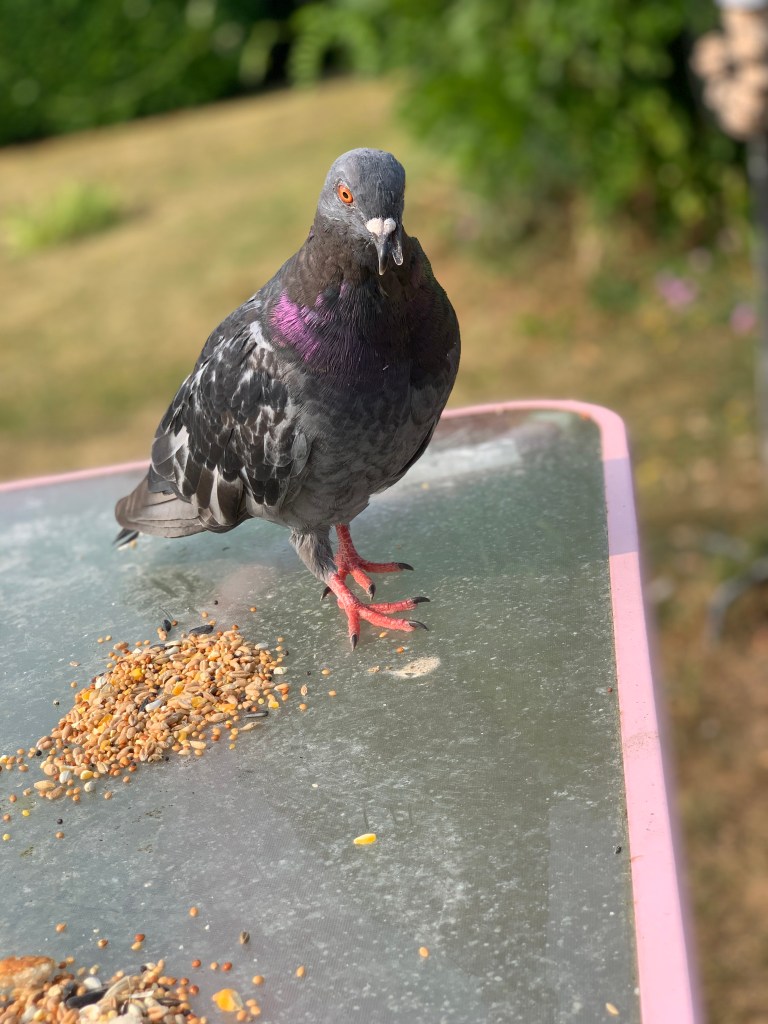
Hi all; sorry we have been having problems, but hopefully now resolved. Things may start to return to normal. I feed all the pigeons who come into my garden – why not ?- they like fresh food just as we do; and ‘that flying rats’ thing ? – no, I don’t think so. Wild birds, beautiful coloured birds simply in need of something to eat.

I took this in the garden today; this is my good friend ‘wonkybeak’; (obviously an incident from his past)
but he is fine and eats like a horse; often down before I can get the lid off the food tub ! – you see the real beauty of all the feathers and the colours when you get close up, as I do here. He and many others are welcome and always will be.

Above – ‘my mate ‘Wonkybeak’

Regards Mark

I am an Englishman; and probably biassed ? – YES, but Led Zepp; live, you cannot beat. London O2 – Led Zeppelin perform ‘Kashmir’ live at the Ahmet Ertegun tribute concert at London’s O2 Arena from the concert film ‘Celebration Day’

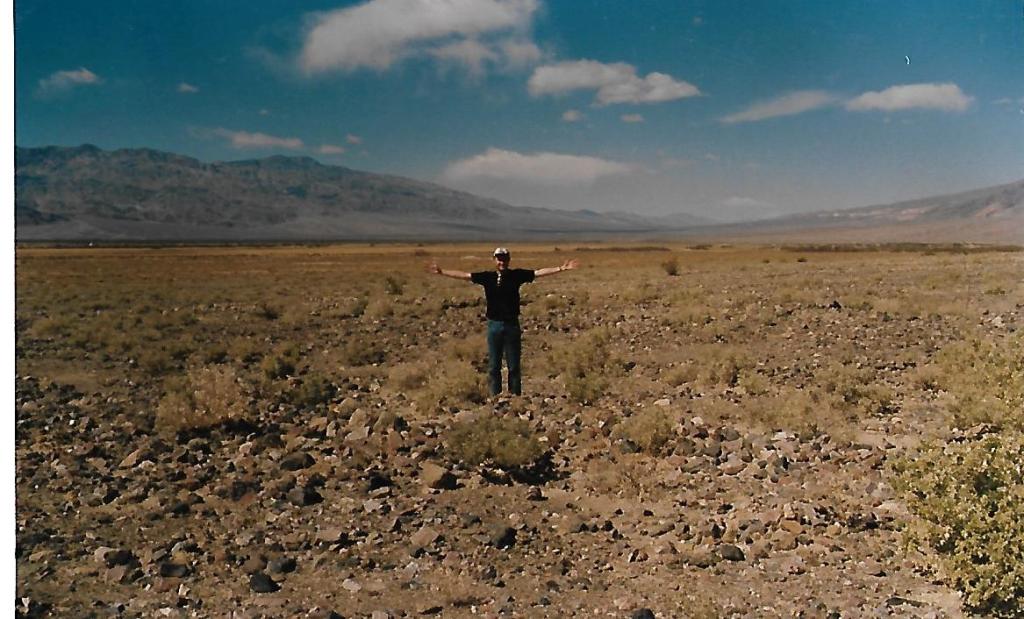
About 30 years ago; maybe more; I was up around Northern Arizona (USA); it was around 2pm and I stopped in a parking lot to get a sandwich. There was big snow on the way, the sky was the coulour of dark pewter. I got my sarnie and went back to the car to eat it. Inside I turned the car radio on. …. and, Led Zepp ‘Kashmir’. A real moment for me which I still remember to this day; everything kind of came together for a few minutes there and then – ‘Kashmir’ – my favorite Zepp track ever !; Arizona; snow laden pewter sky; freedom.

Society for Animals working hard to ban pyrotechnics and regulate fireworks in the Czech Republic.

15 July 2024

Společnost pro zvířata

Society for Animals, recently co-organised a workshop in the Czech Parliament about the dangers associated with pyrotechnics and fireworks, and the harm they can cause to pets and wild animals. Progress on some national legislative proposals in this area is also due soon, hopefully leading to much stricter regulations on fireworks in the near future.

On March 6 2024, several specialists and Members of the Parliament, including Marek Výborný (the Czech Minister of Agriculture) and Petr Hladík (the Czech Minister of the Environment) discussed the issue of pyrotechnics and their effects on domestic and wild animals at the Czech Parliament. 

A representative from Society for Animals, Judit Laura Krásná, gave a presentation on the serious problems fireworks and pyrotechnics can cause, including their negative consequences for people and animals, and their threats to safety. 

90% of respondents to a survey commissioned by the Ministry of the Environment agreed fireworks should be better regulated, while several attendees at the workshop, including Society for Animals and air quality experts, agreed they should be banned entirely. 

This discussion was complemented by a petition, produced by Society for Animals and handed over to the Czech MPs’ petition committee in April, to stop the sale of fireworks. Present MPs also agreed that pyrotechnics for entertainment should be regulated, and some categories banned.

Legislative proposals to regulate fireworks in the Czech Republic have been submitted

Since last year and in collaboration with lawyers, Society for Animals submitted some legislative proposals regarding the use of fireworks and pyrotechnics in the Czech Republic.

Supporting its goal, the NGO met several times with the Minister of the Environment, as well as relevant parties such as firemen, sanitation stations, and air pollution specialists, showing the broad range of impacts originating from this issue. It also commissioned a professional measurement of noise and vibration during a huge fireworks display during a summer event in Brno. Learn more here.

The legislative proposals include to:

End the sale and use of outdoor fireworks within categories F2 and F3 for the general public (only professionally-qualified people could continue to use them, under specific circumstances);

Significantly restrict the use of fireworks within the specific contexts in which they are still allowed, including by establishing protective distances of 1000-2000 metres and with a ban on using them near watercourses, lakes, dams, ponds, and wetlands.

Over 50 NGOs in the Czech Republic signed Society for Animals’ open letter to the Czech government supporting its legislative proposals – and such changes have been proven possible. In Ireland, for example, category F2 and F3 fireworks are fully forbidden to be used by the public, and those that do can face significant fines, or even be criminally charged.

The proposals are now ready to be negotiated in the Czech Parliament. Watch this space.

Pyrotechnics can cause great distress to animals 

The effects of fireworks and pyrotechnics on animals can be severe. 

Wild animals generally panic and try to escape the sounds, which often result in injuries or even death, either from exhaustion or from colliding into objects – including moving vehicles.

Due to the high stress levels fireworks can cause, pregnant animals can lose their unborn babies, and domestic animals can run away from their homes. There are even occasions where explosions can hit animals directly, especially birds, bats, and insects. 

It’s clear that the unregulated use of fireworks and pyrotechnics are not aligned with animal welfare. We applaud the work of our member, Society for Animals, for their work in this area, and hope legislative progress soon follows suit.

Mark

Turkey: Rescue street dogs, or euthanise them? Turks split over its strays.

Under the shade of a leafy green apricot tree on a scorching summer afternoon, Gokcen Yildiz scoops up a squirming ball of light-brown fur.

It licks her all over the face and she breaks out in giggles.

But laughter gives way to a more serious tone as she points to the dog’s back legs, which are missing paws. A sign, she says, of the abuse some of Turkey’s street dogs are subjected to.

Ms Yildiz is a secondary school physics teacher by day, street-dog advocate by night. The canine she’s holding is one of 160 she’s collected on the property where she lives on the outskirts of Turkey’s capital city, Ankara.

Her dogs are a small fraction of the estimated four million that make up the country’s street-dog population.

It’s a problem that has fiercely divided public opinion: are stray dogs a neighbourhood fixture to be looked after and loved?

CoUnder the shade of a leafy green apricot tree on a scorching summer afternoon, Gokcen Yildiz scoops up a squirming ball of light-brown fur.

It licks her all over the face and she breaks out in giggles.

But laughter gives way to a more serious tone as she points to the dog’s back legs, which are missing paws. A sign, she says, of the abuse some of Turkey’s street dogs are subjected to.

Ms Yildiz is a secondary school physics teacher by day, street-dog advocate by night. The canine she’s holding is one of 160 she’s collected on the property where she lives on the outskirts of Turkey’s capital city, Ankara.

Her dogs are a small fraction of the estimated four million that make up the country’s street-dog population.

It’s a problem that has fiercely divided public opinion: are stray dogs a neighbourhood fixture to be looked after and loved?

Continue reading at Turkey’s stray dogs face euthanasia under possible government bill – BBC News

And more on thisTürkiye proposes new bill to control street dogs as UK issues travel warning of ‘aggressive’ packs (msn.com)

Regards Mark