An IDF soldier and dog on patrol in Hebron. Photograph: Hazem Bader/AFP/Getty Images
Military dogs involved in attacks on Palestinian civilians – including children – are likely to have been exported from European countries, investigation finds
Warning: readers may find some of the details in this piece distressing
It was only seconds after soldiers entered the Hashash family’s home in the Balata refugee camp in the West Bank that the dog attack began. As military raids rolled out across her neighbourhood one morning in February 2023, Amani Hashash says she took her four children into a bedroom. When she heard Israeli military coming into their home she called out that they were inside and posed no threat.
Moments later the bedroom door was opened and a large, unmuzzled dog launched itself into the room, plunging its teeth into her three-year-old son, Ibrahim, who was asleep in her lap.
Continue reading …
Israeli soldiers from the Oketz canine unit at a training base in southern Israel. Photograph: Jack Guez/AFP/Getty Images
**************
Comment of our own:
So typical of Humans to turn “man’s best friend” into a killing machine. The dogs, as it says here, have no understanding of what they are made to do – and are as much victims as those they are set upon. Disgusting …
Coalition (AWC) has raised concerns over the outdated legal framework governing animal cruelty offences in Sri Lanka, calling for swift legislative reforms to better protect animals.
According to Charuka Wickremesekera, an executive member of the AWC, the country’s current penalties for animal cruelty offences remain based on the Animal Cruelty Act of 1907, enforced through the Cruelty to Animals Ordinance. Under this ordinance, individuals found guilty of most animal cruelty offences can be fined up to 100 rupees, imprisoned for up to three months, or both. In cases involving the killing of an animal in an unnecessarily cruel manner, the maximum imprisonment term extends to six months.
Wickremesekera said that while the Sri Lanka Police continue to make efforts to tackle animal cruelty cases, the absence of robust, modern laws hinders their ability to impose adequate punishments and raise public awareness through legal action.
“It’s time to improve the legal system and protect animals better,” Wickremesekera said.
He also highlighted the growing role of social media in raising public consciousness about animal welfare issues. The sharing of videos exposing acts of animal abuse has not only discouraged such behaviour but also empowered the public to report incidents more readily.
“People now think several times before harming animals after seeing these videos online,” he said. “In the past, there may have been many cases of animal cruelty, but there were no proper organizations where people could complain. Now, many animal welfare groups receive a large number of complaints from the public.”
The AWC believes that alongside stronger laws, public engagement and awareness will play a critical role in eradicating animal cruelty in the country.
One of 500 abandoned dogs at AID – SHIN in Mijas, ready for adoption. Credit: EWN
being of pets across the country but has ended up, in the eyes of many, worsening an already bad situation. Since its introduction, animal abandonment has only increased, and animal rights are worse than ever.
Local management challenges, lack of consultation with professionals, and a perceived ideological bent: with more than 30 million pets in Spain, it was inevitable that a one-size-fits-all approach wasn’t going to work for everyone. One in three households owns at least one companion animal, and not everyone can afford the changes. In Spain, an estimated 6 million pets remain unregistered, posing potential public health risks. In 2023, 285,000 dogs and cats were abandoned, highlighting the need for stricter regulations. But at what financial cost?
The new law sets standards for pet ownership and treatment, including a ban on leaving pets alone for more than 72 hours (24 hours for dogs) and prohibiting their habitual confinement in spaces like terraces, balconies, storage rooms, or vehicles. Sales of dogs, cats, and ferrets are now restricted to authorised, licensed breeders, excluding some intermediaries and private individuals.
Breeds classified as potentially dangerous, such as Rottweilers, remain subject to strict handling rules, including licences, short leashes, and muzzles. Notably, exemptions exist for working animals, like the Spanish Legion’s goat, which can still parade on October 12, or mules and oxen in living nativity scenes, unless their owners register them as pets in the new mandatory pet registry.
Despite its intentions, the law faces hurdles that hurt. Councils are tasked with collecting stray and abandoned animals and providing 24-hour veterinary services, but many lack the funds and resources to comply. As well, local governments must manage feral cat colonies, requiring trained volunteers or staff to capture, vaccinate, deworm, sterilise, and return the cats – a costly mandate that many areas struggle to meet.
If a pet owner now wants help, they have to go to a vet. For many who already owned a pet from before the introduction of the law, vet prices are not an option. According to Fabienne Paques of AID – SHIN, an animal rescue in the Malaga Region with 500 abandoned dogs and 150 cats, ‘A dog needs a chip, and it needs a rabies shot. Before you could go to a hardware shop for that. Now, it costs a lot to go to a vet. Before it was €20, and now it’s €80. To get some dogs castrated or sterilised (as per the new law), it can cost up to €500. The new law considered pets things, items, not animals.’ The shelter has recently had an inordinate amount of pets abandoned at their gates. ‘People don’t know what to do with them. The new law brought a lot of negativity. They say it’s not true, but it’s an absolute disaster.’
Dilemma under new animal rights law of what to do with existing pets?
A few kilometres away in the Miralmonte urbanisation, neighbours are up in arms about one of their neighbours who has several macaws and dogs which appear to be breeding amongst themselves. According to the neighbours, the animals make a terrible noise, and their droppings are attracting rats. The owner at the centre of the situation used to have a pet shop in nearby Coín but has been stopped from selling animals from the store she inherited from her parents. So, now, unable to afford to put them down, she keeps the animals at home. She cannot sell the animals by law, and the local police are reluctant to do anything as they can see both sides of the argument.
Critics of the law, including Professor Christian Gortázar, argue the law lacks scientific grounding and was driven by ideological motives, potentially threatening livestock industries by overly humanising pets. They also claim that there in no provision for pet owners with less resources to cope with the new rules.
José Luis López-Schümmer, president of the Artemisan Foundation, notes the law’s inconsistency with European legislation, which excludes wildlife from welfare regulations. The law also exempts animals raised for food, scientific experiments, bullfighting, or hunting, countering claims that it severely impacts the economy.
A year and a half after its enactment, the law’s limited consensus, even among its proposing parties, and incomplete framework have hindered its full application. Its true long-term impact – positive or negative – remains to be seen, as further data and regulatory clarity are needed to assess this polarising legislation. What is certain, in 2025, is that the situation with the welfare of animals is nowhere near being improved.
Now, unable to buy a dog from a pet shop, ACE – SHIN have a broad selection just looking for a home. Check out their website as they can arrange adoptions in may countries around Europe.
Charity Worldwide Veterinary Service launches Global Veterinary Challenge Award with BVA to allow scholars to design bold and impactful international projects.
£100,000 award scheme to encourage students to devise big, bold and impactful international animal welfare projects was launched today (12 June).
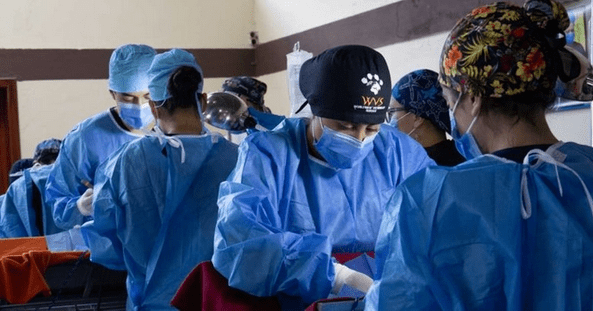
WVS-organised sterilisation campaign in the Andes, Ecuador.
UK veterinary charity Worldwide Veterinary Service (WVS) and the BVA joined forces to launch the Global Veterinary Challenge Award.
As part of the scheme, launched as part of BVA Live in Birmingham, students will be encouraged and empowered to design a project that champions an international animal welfare issue, and win the cash to help its launch.
Solutions
Students are being encouraged to develop an innovative, sustainable solution to a pressing global animal welfare issue close to their hearts.
The Global Veterinary Challenge Panel will judge the entries, with the winning project allocated funding up to £100,000 and the successful team or individuals working alongside WVS to bring it to life.
To apply, students must submit a proposal for any species that champions a welfare need in an effective, scalable and sustainable way and any location worldwide.
Work together’
Chief executive and founder of WVS, Luke Gamble, said: “The profession is most powerful when we work together as team. Most of us have causes we care about and sometimes it is incredibly hard to find a way to champion them. This challenge solves that.
“The winning idea will not only have funding, but full support to drive forward a project that will make an impactful difference. I couldn’t be more excited to see what comes in – remember, anyone can do easy – applicants need to think bold and big.”
And BVA president Elizabeth Mullineaux said: “At the BVA, our members care passionately about supporting and enhancing animal welfare and for many, myself included, it’s what propelled us to join this fantastic profession.”
‘Outstanding opportunity’
She added: “The WVS Global Challenge Award represents an outstanding opportunity for vet students to dive straight in and deliver real world welfare change for animals across the globe, all before they’ve even graduated.
“We’re looking forward to seeing the project ideas as they come in and the incredible impact this award will have, for both animals but also the students taking part.”
The council has now approved an ambitious renovation project / Photo by Design Wala on Unsplash
The municipality of Cuevas del Almanzora continues its trailblazing approach to animal welfare, announcing a comprehensive transformation of its temporary dog shelter that promises to set new standards across Almería province.
Following their ground-breaking achievement as the first town in the Levante Almeriense region to establish a dedicated dog beach, the forward-thinking council has now approved an ambitious renovation project that will revolutionise conditions for abandoned canines awaiting new homes.
The extensive upgrade programme centres around creating a more humane and efficient environment through innovative infrastructure improvements. Key enhancements include the installation of automated water dispensers ensuring round-the-clock access to fresh, clean water – a crucial advancement for animal welfare standards.
The project encompasses a complete overhaul of flooring systems designed to simplify cleaning protocols and maintain optimal hygiene levels. Additionally, a state-of-the-art sandwich-panel roofing system will provide superior thermal insulation whilst incorporating an integrated rainwater collection system through strategic guttering placement.
Perhaps most significantly, the facility will feature an appealing outdoor recreational area complete with artificial grass, offering dogs essential space for exercise and social interaction – factors proven to improve adoption prospects.
Councillor María del Mar Rico, responsible for animal welfare initiatives, emphasised the council’s unwavering dedication to providing exceptional care standards. “These improvements reflect our commitment to treating every animal with dignity whilst facilitating successful rehoming,” she stated.
The transformation reinforces Cuevas del Almanzora’s position as a progressive leader in regional animal welfare policy.
********
An example, we hope, which will inspire other regions and municipalities in Spain to follow suit.
Atmore, Alabama – A Chihuahua puppy in Alabama suffered a cruel, senseless death in a truly incomprehensible and horrifying way. According to the authorities, 44-year-old James Williamson was arguing with a family member when he decided to put the pup into a hot oven because he was angry that the little dog was barking.
Williamson put a chair in front of the oven door to ensure that the trapped puppy could not escape the deadly heat inside. Neighbors reported hearing “harrowing” cries from the puppy as his little body baked in the oven.
Representative image
Atmore Police Sergeant Darrell McMann responded to Williamson’s residence and found the body of the burned puppy in the driveway. The scene was so shocking that McMann had to take a moment to compose himself, telling Fox 10,“When I got there, I was just at a loss for words you know I really was just stood there and looked at the dog for a little bit and had to get myself together.”
The despicable act of cruelty resulted in a Class 3 Felony charge of aggravated animal cruelty. Sgt. McMann said, “I think in cases like this, they should be strengthened. Because I don’t think being a class c felony fits what he did. That pretty much describes what he did: horrible and inhumane.”
If you agree and want to see James Williamson held accountable for this atrocious crime, please add your name to the petition today! We will fight to put this man away for as long as legally possible, and demand that he be prohibited from owning or residing with animals in the future.
Target: Escambia County D.A. Stephen M. Billy
WHY THIS PETITION MATTERS:
We, the undersigned, demand that James Williamson be held accountable for killing this innocent puppy is such a cruel, painful manner. This man’s cruel actions must be met with the harshest consequences to ensure that he can never inflict such horror on an animal again. This man handled his annoyance with a puppy in a truly barbaric way; we do not want to see a paltry slap-on-the-wrist for James Williamson, we want significant prison time, the maximum fine, and a lifetime ban on owning or residing with animals.
Research has consistently shown a strong link between animal cruelty and human violence. Individuals who commit such heinous acts against animals often pose a threat to society as a whole, as animal abuse is frequently a precursor to other violent crimes. Failing to hold this man accountable not only denies justice for the innocent puppy who suffered an excruciating death but also endangers the community at large. We must send a clear message that such cruelty will not be tolerated.
Individuals are presumed innocent until found guilty in a court of law. Animal Victory relies upon the authorities and the court system to determine guilt or innocence.
Note: Williamson was booked into the Escambia County Detention Center on a $15,000 bond.
Intensive livestock farms such as those found across the US are spreading across the continent, according to new data
There has been a rise in large intensive poultry units across Europe, which are a key driver of river pollution. Photograph: John Eveson FLPA/FLPA/Shutterstock
American-style intensive livestock farms are spreading across Europe, with new data revealing more than 24,000 megafarms across the continent.
In the UK alone, there are now 1,824 industrial-scale pig and poultry farms, according to the data obtained by AGtivist that relates to 2023.
The countries with the largest number of intensive poultry farm units are France, UK, Germany, Italy and Poland in that order. For poultry farming alone, the UK ranks as having the second-highest number of intensive farms at 1,553, behind France with 2,342.
Exclusive: World-first footage exposed of birds past their egg-laying days being suffocated for supermarket meat
Monday 09 June 2025 17:26 BST
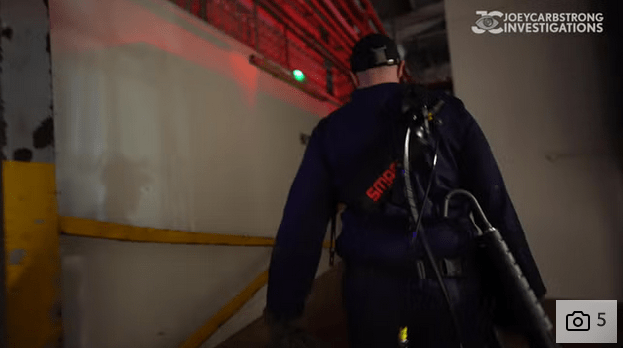
Secretly recorded footage reveals hens apparently writhing in distress and desperately trying to escape as they are suffocated to death to provide meat for supermarkets including Tesco.
In what’s thought to be the first-ever video of its kind, the birds are seen twisting their necks as they are killed with carbon dioxide. They are also heard gasping for breath and emitting high-pitched shrieks.
The recording – which activists say was made at an abattoir endorsed by RSPCA Assured – shows hens being lowered into the gas chamber and dying over the course of several minutes.
Hens were filmed apparently trying to escape from the crates before flopping back in; at times their eyes were open and they were calling (Joey Carbstrong)
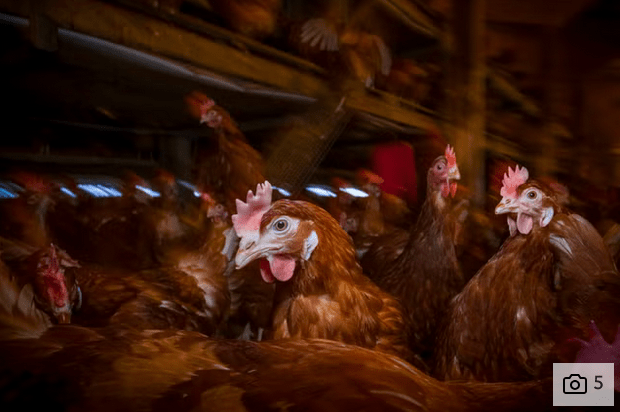
Critics said the scenes laid bare the “horrors” behind egg production in the UK, including the fate of even free-range and organic hens.Hens whose egg production has declined are dubbed “spent”, before they are killed and their carcasses are packaged for meat.
Animal-lovers have for years objected to the gassing of pigs with carbon dioxide, warning the animals “burn from the inside out” and suffer immensely in the last minutes of their lives.
Last year 99 per cent of “spent” hens were stunned and slaughtered with CO2; and 77 per cent of meat chickens were killed this way, according to government figures.
In recent years carbon dioxide as a slaughter method has gradually replaced electrical water bath stunning, which raised concerns over the inconsistency of stuns.
Activist Joey Carbstrong said the footage highlighted the discrepancy between images of egg production and the reality (Joey Carbstrong)
The footage, taken with hidden cameras, shows hens – female chickens used for laying eggs – twisting in distress as they die, and some birds apparently trying to escape.
The floor of the gas chamber was littered with dead birds that had jumped out of the crates, according to activist, filmmaker and vegan advocate Joey Carbstrong, who installed the cameras.
Mr Carbstrong and other activists say they shot the video at an abattoir in West Yorkshire run by HCF Poultry. The company denies it was shot at its premises.
HCF supplies Cranswick Foods, one of the UK’s largest meat producers, which processes the hens into chicken-meat products widely sold in Britain.
There is no suggestion of wrongdoing by either Cranswick or the abattoir as using CO2 is an entirely lawful way to slaughter chickens. However, Mr Carbstrong said the video exposed “the callous treatment of free-range hens when they are no longer profitable”.
“This footage dismantles the industry’s carefully curated image of ‘happy hens’ and reveals the horrifying truth of how these sensitive birds are discarded,” he said.
The footage included a paper label with HCF’s name and address on it (Joey Carbstrong)
“The public are being misled by labelling and have a right to know the reality behind what they are buying.”
Mr Carbstrong added: “Egg-laying hens have been genetically manipulated to produce around 300 eggs per year – far beyond the 10 to 15 eggs naturally laid by their ancestor, the red junglefowl.
“This excessive egg production takes a severe toll on their bodies in multiple ways. Regardless of whether they are free-range, barn-kept or caged, most hens are crammed by the tens of thousands into filthy sheds, where disease runs rampant and cannibalism of dead and dying birds is widespread.
“After just 18 months of relentless exploitation, they are forced to experience a terrifying and agonising death, before being processed into food products.”
Around 35 million “spent” hens a year are killed for their meat, figures show. HCF can process 10,500 birds per hour, according to a document from 2018, the latest available.
Even free-range hens are put into gas chambers, activists say (Getty/iStock)
Jenny L Mace, an associate lecturer in animal welfare at the University of Winchester, wrote in a report on the footage that the most concerning findings were the high-pitched shrieks, gasping, collisions with equipment, and chickens falling against one another and out of the crates.
“Without use of a significantly less aversive gas or gas mixture, it is difficult to see how this method equates to a viable (high-welfare) replacement to the former slaughter method of shackling chickens upside down and stunning in a water bath, and a humane death,” she wrote.
She said CO2 caused respiratory distress, adding that describing it as an anaesthetic “may be misleading” because of the distress inhaling it causes.
“There is no suggestion of this case being a ‘bad apple’; this is standard practice and in accordance with legislation,” she wrote.
Egg-laying hens have been genetically manipulated to produce around 300 eggs a year, Joey Carbstrong said (Getty/iStock)
Andrew Opie, of the British Retail Consortium, said on behalf of Tesco and other supermarkets:“Our members know how important animal welfare is to their customers and take their responsibilities to animal welfare very seriously to ensure that expected standards are being met.”
RSPCA Assured said the birds in the footage were already unconscious and were not in pain.
A spokesperson said the footage was deeply upsetting but that carbon dioxide was permitted under RSPCA welfare standards, adding: “However, RSPCA standards set requirements that go above the law to ensure a more humane process.
“Due to their physiology, when birds lose consciousness their brains no longer have control over their bodies, which can cause involuntary movements as seen in the footage. This can be incredibly difficult to watch but the birds are actually unconscious when this happens, and are not experiencing pain.”
Cranswick Foods did not respond to a request to comment.












 World Animals Voice