Category: Uncategorized

22/3/21 Is ‘World Water Day’ – Prepare to Enter the ‘Dead Zone’; How Intensive Livestock Production Fuels Water Pollution Around the Globe.

WAV Comment – Today, 22nd March 2021, is the United Nations ‘World Water Day’.  Philip is a personal friend and fellow campaigner, CEO of Compassion In World Farming (England) who we have worked with for around 30 years.  Here he describes entering the ‘Dead Zone’.

Philip Lymbery | Water and Welfare

Today, 22nd March 2021, is the United Nations World Water Day. It’s about raising awareness of the value of water and the importance of protecting this vital resource on which we all depend.

For me World Water Day brings back memories of my investigations in the USA whilst writing Dead Zone: Where the Wild Things Were, where I witnessed for myself how intensive livestock production fuels water pollution around the globe.

I had travelled about 15 miles out in the Gulf of Mexico and was looking at something resembling a construction site. All around me were oil rigs. I’d heard a lot about this place in the middle of nowhere from the media. A place out at sea where nothing lives. Called the ‘dead zone’. An expanse of water so polluted that nearly all the oxygen has gone. A liquid symbol of what happens when efforts to prevent, mitigate or contain environmental damage fail and the water represents worst-case scenario; the marine ‘end of days’. The gathering body of oxygen-depleted – hypoxic – water forms a barrier to life, killing just about everything that can’t flee.

My plan had been to see the dead zone for myself – and not from the comfort of a boat. So snorkel fixed, I slipped into the water. At surface level the pea-green sea looked nothing out of the ordinary. As I peered into the gloom below, I could see fish and the water around me looked very much alive. Had there been some mistake? I ducked down again and held my breath this time, swimming down. Now things began to grow clearer – or rather not. A few metres beneath the surface, everything changed. The water was cooler, saltier and far more murky. I could see very little and without diving kit, I could go no further. I wouldn’t reach the dead zone myself, for it was far, far below, coating the bottom half of the water in a suffocating blanket.

Sadly, the dead zone in the Gulf of Mexico is not unique – they exist all over the world but among biologists, marine scientists and conservationists, it is among the most notorious. It now boasts the world’s second-largest area of oxygen-depleted water (the Baltic is the biggest). It’s a squalid claim to fame. The zone emerges every year, without fail, from February to October, stretching all the way from the shores of Louisiana to the upper Texan coast.

And the main culprit? Fertiliser.

According to the National Oceanic and Atmospheric Administration (NOAA) the source of the problem is the ‘flowing green oceans’ of corn in the Midwest of America. It is an area of intensive corn and soybean production, where large amounts of nitrogen from fertiliser and manure are applied to the soils every year. Excess nitrate is washed into rivers and streams and ends up in the Gulf. One would think the corn and soya would be feeding the world, but you’d be wrong, it’s feeding factory farmed animals. The problems in the Gulf are squarely linked to the food on our plates.

The reality of all this was brought home to me when I took to the air in a tiny Cessna plane. I was expecting various warehouses with impressive pallet-stacks of fertiliser bags, but we flew over a small town of sprawling industry, one of many perched on the banks of the Mississippi and to my horror, they were all fertiliser factories. But the term ‘fertiliser factory’ entirely failed to convey the sheer scale of this hidden part of the industrial farming jigsaw.

Dead zones are emerging around the world. Industrial agriculture systems, with their high dependence on artificial fertilisers and chemicals, are a major source of pollution of our precious water. Quite simply our hunger for ‘cheap’ meat from animals fed on cheap corn grown on chemical-laced fields is poisoning and driving out precious species and damaging ecosystems on land, rivers and sea. But it’s not too late to reverse the situation – a reduction in meat, dairy and egg consumption especially from factory farms, can reduce the water impact of our diets and greatly improve the welfare of farm animals.

This is why we need to seize the opportunity of this year’s United Nations Food Systems Summit to move toward a global agreement to end factory farming. To reset our food system towards regenerative, restorative, nature-friendly ways of producing food. The UN summit presents an incredible opportunity to focus this debate in one place and form the catalyst for change on a global basis.

Please join us and become a food systems hero.

Thank you.

Note: For more information and to watch the video ‘The Downstream Disaster’ from the Dead Zone series of films, please click here 

Spain: Human Meat for Sale During Animal Rights Protest in Barcelona.

Humans covered in blood on white trays sold as meat, photo: Reuters/Nacho Doce

Human meat for sale during animal rights protest in Barcelona

Animals rights campaigners organised a “humans sold as meat” protest in Barcelona on Saturday. Naked protesters were covered in fake blood, lying on white trays under plastic sheeting, replicating animal meat for sale. 

On the plastic sheeting, there were “Human Meat” stickers with a barcode and price on them, just like you would find meat in the supermarket.

“We are fighting against the suffering of animals,” Cristina Ibañez from the Spanish animal welfare organization AnimaNaturalis told Reuters. “For their right to life, they want to live the way this person who is walking wants to live, or just like I want to live.”

“That’s why it’s not fair, and it’s nutritionally unnecessary that we continue to exploit and kill animals just to satisfy our appetite,” Ibañez said.

The protest was staged outside the famous ‘La Boqueria’ market, which has several meat vendors. “You can live without eating meat, and it’s very important to do this because animals suffer a lot throughout the meat production process,” one of the protestors, Andrea, said.

The demonstration was on the same day as MeatOut Day, an event on the first day of spring to promote a vegan lifestyle, originally started in the United States in 1985 to question the consumption of animal products worldwide.

“MeatOut was designed to remind us of animal agriculture’s devastating impact to the animals, our health, and the environment,” they say on their website.

“Theologians have long debated whether there is life after death. For animals on factory farms, there is no life before death.”

Human meat for sale during animal rights protest in Barcelona (theanimalreader.com)

India: 21/3/21 – Latest Super Rescues and Recoveries From ‘Animal Aid Unlimited’.

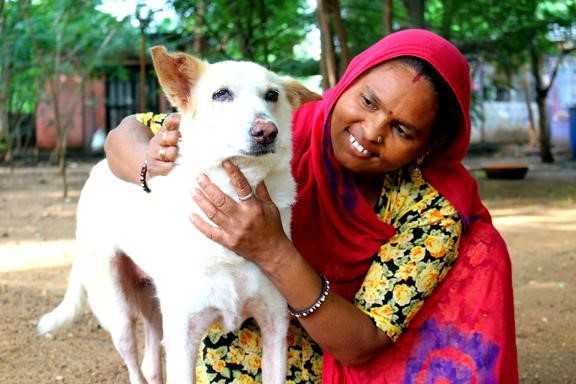
WAV Comment:  Here is the latest videos from friends Erika and Jim who founded ‘Animal Aid Unlimited’ in India.  I enjoyed watching all the rescues and recoveries; but especially enjoyed the story of Nellie Bell, who was ridden with severe mange and infected wounds; but who after the wonderful work by the AAU team, was transformed into a beautiful little dog which you can see at the end of the video.

Enjoy – sad starts but as always, happy endings.

Regards Mark

Baby stuck in her birth canal but Apricot was rescued in time for emergency C-section

We don’t know how long the little expired body was stuck in this mother’s birth canal,but we were so glad someone saw this crisis and called us to rescue her in time to save the mother’s life and her babies inside. Once back in our hospital, our medical team assessed that she would not be able to deliver the remaining puppies normally and needed an emergency C-section.

We named her Apricot, and when her youngsters were a little older, we returned the family to their beautiful neighborhood.

Please donate.to save a life with emergency surgery.

Rescue of Little Maharana trapped in a sewer.

Animal Aid Unlimited on Instagram: “A young calf was trapped deep inside an underground sewer. The debris and filth floating in the water made this rescue particularly…”

A young abandoned boy calf was trappeddeep inside an underground sewer. Thedebris and filth floating in the water made this rescue particularly difficult. Using a headlamp, our rescuer had to wade through the dirty water and then lift the calf into a position where he could bring him back to the opening, where many waiting hands of passers-by were ready to help hoist him, weakened and waterlogged, up and out of the sewer. We brought him back to Animal Aid to give brave Little Maharana plenty of rest, good food and love.

Please donate for the most difficult rescues.

Transforming the spirit of Nellie Bell, who almost scratched herself to death.

This dear girl was literally falling apart, suffering from advanced mange and a wound she had probably caused by scratching.The wound on her back had become infested with maggots.

All her strength had been spent just to stay alive as long as she had.She didn’t even react during her first treatment and this made saving her all the more incredible. It wasn’t just her body that was restored. It washer being and her self that seemed to heal at the same time.

You might find yourself saying, “This just cannot be the same dog!” But look deep into her eyes, and you’ll see who was hiding there all the time.

To give life and joy to animals who had lost all hope, please donate.

Pumba gets a new home!

Pumba’s new family is giving him a loving home, lots of space, peace and beauty.We found in his new family a beautiful commitment to nurture this most innocent boy.

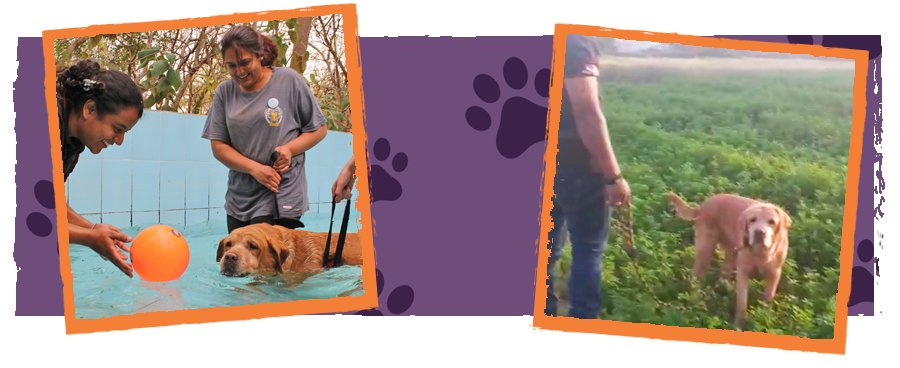
We rescued Pumba a year ago after he was abandoned by his owner, morbidly overweight and unable to walk. It took months of care, physio, exercise, coaxing and love to get him back on his feet, but was it ever worth it.

Click here to watch Pumba’s recovery video.

With a poignant tear of joy, we’re so happy to share his gorgeous spirit with people who will love him as we do.

Woof, wonnnnh, moooo and WOW!

Sponsor an Angel today!

Living with sanctuary sweethearts whose permanent home is Animal Aid makes bonds strong between the animals and their caregivers, both staff and volunteers. Some of our animal family were rescued from abuse. Others had been in life-threatening accidents.

Each sanctuary animal is part of the soul of Animal Aidand your support makes it possible to give them life-long shelter and care.

(20+) Watch | Facebook

Please click here to sponsor a sweetheart today:

Sponsor an animal | Support a special needs animal | Animal Aid Unlimited

USA: Petition – Teen Faces Federal Charges For Creating Horrific ‘Crush’ Videos Of Tortured Cats And Dogs – Animal Victory. Please Sign for Maximum Punishment.

WAV Comment – Crush videos are just the worst; kittens and puppies having stiletto heels dug into the eye sockets by bent, sadistic scum like this who want to get more ‘likes’.  They are mentally sick humans; and when caught need to feel the full impact of the law.  Please sign the petition now.

Teen Faces Federal Charges For Creating Horrific ‘Crush’ Videos Of Tortured Cats And Dogs

An Indiana teen is facing federal charges for making and distributing animal crush videos. The authorities arrested Krystal Cherika Scott, 19, of Kokomo, Ind., for Making and Distributing Animal Crush Videos, in violation of Title 18, United States Code, Section 48 (the Preventing Animal Cruelty and Torture Act).  

Scott brutalized innocent animals in unimaginable ways. A press release from the United States Department of Justice’s Southern District of Indiana Attorney’s Office states that Scott posted images and videos of herself torturing and graphically killing cats and dogs by hanging, skinning and other means. 

Scott could be sentenced to seven years in prison and may face up to $250,000 in fines. Please help us as we fight for the maximum punishment – Scott must be put behind bars for as long as possible for her sadistic crimes! 

Petition link : If the first link does not work, try the second – WAV.

Teen Faces Federal Charges For Creating Horrific ‘Crush’ Videos Of Tortured Cats And Dogs – Animal Victory

Teen Faces Federal Charges For Creating Horrific ‘Crush’ Videos Of Tortured Cats And Dogs – Animal Victory

Innocent puppies and kittens were brutally tortured and Scott posted their suffering to social media platforms. Images of the dead animals were posted to Instagram and Tik-Tok as recently as July 8.

FBI investigators found animal parts and skulls at Scott’s residence “that were consistent with the size of cats and dogs.” They also seized a cell phone from Scott which was used to create the videos which were posted on social media. Investigators determined that Scott obtained the animals by responding to online ads from people who were trying to give away their unwanted pets.

Scott’s behavior is abhorrent and dangerous. Special Agent in Charge Paul Keenan, FBI Indianapolis, stated:

“Animal abusers have total power over that animal and, if someone is willing to be that cruel to an animal, evidence suggests they may target vulnerable humans as well.”

Krystal Cherika Scott must pay for the torture and pain she inflicted on the innocent animals who wound up in her possession.

Please sign the petition, which will be presented to Assistant United States Attorney Tiffany Preston. This horrific abuse cannot and will not be tolerated!

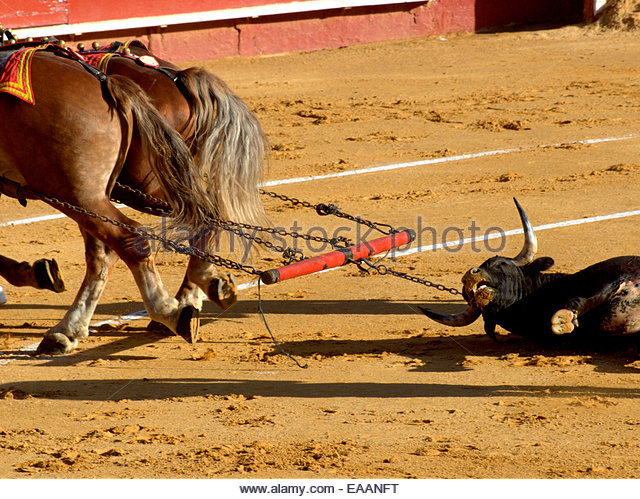
Spain: As matadors return to the ring amid Covid restrictions, campaigners say it is time bullfighting was outlawed.

As matadors return to the ring amid Covid restrictions, campaigners say it is time bullfighting was outlawed

Seen as an art by admirers in Spain, bullfighting has met with fierce criticism in recent years from an emboldened animal rights lobby which has been supported by left-wing parties

As matadors return to the ring amid Covid restrictions, campaigners say it is time bullfighting was outlawed (inews.co.uk)

When Diego Urdiales put on the gold traje de luces (suit of lights) and bright pink stockings for the first time in over a year, he had mixed emotions. “I was scared, yes. I had been thinking about the fight for weeks. There is a responsibility to the public, to the bull,” the matador said the day after coming face-to-face with half-tonne bulls. 

“The situation is complicated right now with Covid-19. It was good to return to la corrida, of course, but I had a mixture of feelings as I had been away from the ring for so long.”

Urdiales did not disappoint his fans and killed his first bull, named Elegante, with ease. Covid-19 restrictions meant only 20 per cent of the normal crowd could watch the victory at the ring at Ubrique, in southern Spain on Sunday.

As bullfighting makes a tentative return with smaller crowds, questions remain – even among supporters – about the future of what Spaniards call la fiesta nacional.

Seen as an art by admirers in Spain, bullfighting has met with fierce criticism in recent years from an emboldened animal rights lobby which has been supported by left-wing parties.

Now after the pandemic has banished the crowds and pushed the industry onto the ropes, matadors, breeders and promoters are staging a fight-back.

“There are more young people at the bullfights than ever before,” insists Urdiales, who is considered one of the best matadors in Spain by admirers.

The slow decline of a spectacle lionised by the likes of Pablo Picasso and Ernest Hemingway is illustrated in the number of bullfights held in Spain over the past decade. In 2012, there were 1,997 fights but this figure fell to 1,425 by 2019, according to Spain’s ministry of culture.

Ruben Amon, a journalist and author of End of the Fiesta, a book about bullfighting, says the art has been badly misunderstood. “It is under an ideological, cultural and political threat,” he says. “Ideological because bullfighting is linked to the political right. Cultural because they will always find ways to get rid of it by saying it is not civilised. Lastly, political because a progressive government seeks ways to rid Spain of the second most popular mass spectacle.”

Amon, an aficionado all his life who also wrote a biography of Plácido Domingo, contends that rearing bulls on huge farms is far kinder to the animals than factory farming of chicken or pigs.

“There are only 2,500 bulls killed every year but there are tens of thousands of pigs or chicken slaughtered,” he said. Another misunderstanding, he claims, is that bullfighting is a man’s world, from which women are excluded.

“It is a masculine world but not a macho world,” he says. Some 245 women work in an industry which employs about 15,000 people, according to government figures.

Amon also suggests there are gay bullfighters who are scared to emerge from the closet. “I know gay bullfighters but they do not want to go public, just like in basketball or football. It is still not easy for homosexuals to come out.”

José Zaldivar is under no illusion about the true nature of bullfighting.

The vet has been campaigning to end what he calls torture. In his office in Madrid, he has a veritable arsenal used by the matador to do battle with the bull, from the sword which ends its life to the banderillas which are punctured into the animal’s back to weaken it.

“In Spain, our law protects animals from cruelty except those which are used in public spectacles like bullfighting,” Zaldivar tells i. “There is no doubt in my mind that the bull is subjected to stress, pain and injuries which I would call torture.”

Zaldivar, who is president of the Association of Veterinarians for the Abolition of Bullfighting, holds out little hope that the spectacle will end in Spain unless its status as part of the cultural heritage is withdrawn.

In 2013, the then conservative government passed a law which established the cultural character of bullfighting as “indisputable”.

This meant in 2016, a ban on bullfighting in Catalonia was annulled by the Constitutional Court, which ruled it undermined the state law on cultural heritage. It meant regional governments could regulate but not ban bullfights.

An attempt to hold bloodless bullfights in Majorca was overruled by the court which said the animals must die or the true nature of the bullfights would be lost.

Torture is Not Culture, an animal rights group, claims that the bloody spectacle could not survive without grants from the European Union Common Agricultural Policy which, they claim, amounted to €130m last year.

However, if the economic damage inflicted by the Covid-19 pandemic has not signed the death knell for bullfighting, some within the industry believe growing indifference may deliver the estocada – the death blow in bullfighting parlance.

Antonio Lorca, the bullfighting critic of El País newspaper, said that bullfighting will recover after the pandemic, but it will never be the same again.

“The biggest problem is the younger generation has so many other things to be interested in,” Lorca told i. “My own daughter is not interested in bulls. She prefers films and music. I think it will become something for a minority and for tourists.”
UK / Nigeria: Undercover investigation by UK television shows that Nigerian wet markets operate as normal; and that this is another Covid pandemic waiting to happen. Disturbing Footage.

Nigeria:  Undercover investigation by UK television shows that wet markets operate as normal; and that this is another Covid pandemic waiting to happen. Disturbing footage, as are all wet markets that involve live animals.


https://www.itv.com/news/2021-03-16/its-going-to-happen-again-fears-wet-markets-could-lead-to-another-deadly-disease

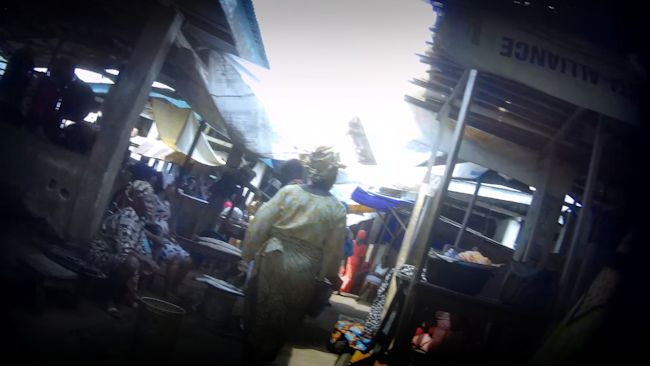
ITV News (UK) has secretly filmed in Oluwo Fish Market, a wet market just outside Lagos, Nigeria’s largest city.

‘It’s going to happen again’: Fears wet markets could lead to another deadly disease

  • Video report by ITV News Correspondent Lucy Watson

Inside the market, ITV News

Oluwo Fish Market teems with life. It is a wet market just outside Lagos, Nigeria’s largest city.

ITV News secretly filmed there – a place awash with animals – alive and dead. Scientists believe wet markets are a breeding ground for disease, a high risk environment, from where the next pandemic could emerge.

The very concept of a “wet market” means the presence of blood and bodily fluids.

It is a marketplace selling fresh meat and fish, as opposed to a “dry market” that sells durable products.

Not all wet markets sell live animals. Not all of them trade in wild and exotic animals, but some do, and some of those have been linked to outbreaks of zoonotic diseases, where an infection crosses the species barrier from animal to human. Exhibit A. Covid-19. The pandemic that allegedly originated at the Huanan Seafood Wholesale Market in Wuhan, China.

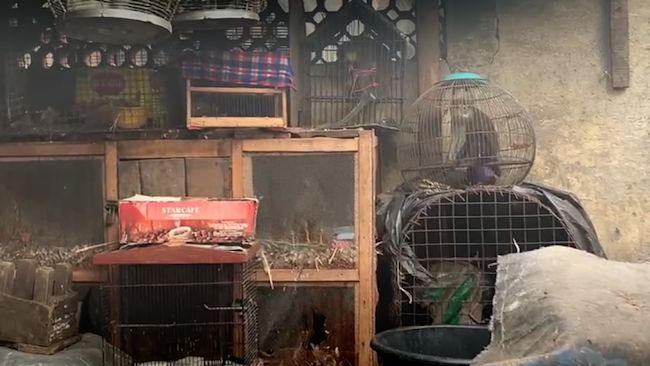
Video obtained by both ITV News and the charity WildAtLife shows live crocodiles having their scales removed, pangolins being kicked and abused and dogs boiled alive.

Chinedu Mogbu has rescued many animals from the wet market, ITV News.
Chinedu Mogbu has rescued many animals from the wet market.Credit: ITV News

Multiple primates were seen imprisoned in cages, the heads of others were for sale. It was difficult to watch when a baby baboon, trapped inside a birdcage, reached out to the camera grasping for freedom, as a decapitated monkey was sold next to him.

One woman reached into a brown sack and pulled out a pangolin. This species is the most trafficked animal in the world. We could buy it there for less than ten pounds.

The pangolin is a species that has been linked to the COVID-19 outbreak in China. Their scales are of high value in Asia for medicines.


The abuse of animals and the health risks for humans at this market were plain to see. It’s what the conservation group WildAtLife want to expose. Chinedu Mogbu works for them, and has rescued umpteen exotic species from there in recent months.

He said: “Nigeria doesn’t have strong laws to protect its wildlife.

Wet market animal cages
There are fears another zoonotic illness could develop at a wet market.Credit: ITV News

“Anyone can go into the forest, take a pangolin and sell it on the street. The law enforcers are not even aware of the importance or the laws that protect these animals.”

We did notice the presence of Asian buyers at this African market.

Any illicit, international trade would undoubtedly increase the risk of spreading disease around the globe, but Nigerian officials say they are doing enough to prevent that.

Joseph Attah from the Customs Service refused to answer more than one question on the matter though.

This was all he would say: “We have been making a lot of seizures about that, we have been seizing them and we will continue to seize them anytime we see them.”

We know, that despite our allegations, the wet market in Epe continues to thrive. Scientists are concerned that such places pose an unnecessary and high risk.

“Every single animal at a wet market is likely to have an infection,” Malcolm Bennett from the University of Nottingham told me. He is Professor of Zoonotic and Emerging Diseases.

“That general concept of bringing lots of animals and people together, and doing lots of things to them in the same place is a high risk thing to do. It’s not just a biodiversity of animals, it’s a biodiversity of disease. Some of which will spread to us.“

He said unflinchingly, “It is going to happen again.”

There is a high security lab at the university where they are analysing the affects of COVID-19 on cells.

Bringing together animals and people that don’t usually mix increases the risk of new infections, so wet markets are ideal places for cross species transmission and disease amplification.

Other viruses we know of that started out as zoonotic diseases are SARS, MERS, Ebola, even HIV.

Stopping the development of such viruses is impossible, instead we need to mitigate the risks.

In many peoples’ eyes what happens at some wet markets is unhygienic, tortuous and brutal, but in African and Asian nations it isn’t simply a case of shutting them down. There are more issues at play. They have a critical role in social interaction and for different cultures. The Deputy Director of the National Zoo, Aminu Muhammad Beli, explained.

“We cannot close the wet markets because there are certain animals that have cultural attributes to certain tribal groups. We have to devise a way of sustaining the industry,” he said.

His words are perhaps difficult to stomach when you see carcasses lying in the hot sun and live animals being butchered. Regulation and surveillance must increase though, else harmful pathogens will breed.

We just can’t predict where or how destructive they will be.

Regards Mark

Comment – I watched the investigation on UK news yesterday (16/3) – and was informed that some of the UK team rescued some of the animals and released them back into the wild where they belong. Well done ITN.

USA: A ‘Dishonest Attack’ By Vegan Activists. Actually, The Fishing Industry Lid Has Been Removed To Expose The Truth, And They Dont Like It.

This is a global abuse – not confined to just a few nations.

WAV Comment – So this is ‘propaganda’ (according to the NFI, is it ?

For decades, the fishing industry has globally plundered the seas and oceans, not just catching, but depleting the worlds oceans of its fish stocks; getting away with it all.  Now someone has come along and has been brave enough to expose it all; for what it is, the lid has been removed from the fishing industry, and they don’t like it.

Please have a look at the following and decide for yourself – reality or propaganda ?

Regards Mark

BREAKING: Leaked Documents From Fishing Industry Expose Plan To Attack Seaspiracy Netflix Release

Seaspiracy seeks to uncover ‘alarming global corruption’ – and is already facing backlash from the fishing industry before it’s reached screens, the leaked document revealed

A US seafood industry body is launching a campaign in response to the discoveries it labels ‘vegan propaganda’ showcased in the upcoming documentary, Seaspiracy – despite the fact the film is yet to be released.

It was revealed in a leaked document sent to Plant Based News.

Protecting the seafood industry

The National Fisheries Institute (NFI) is a trade group that represents the US seafood industry, and actively encourages people to eat marine life. Moreover, it claims to be committed to ‘sustainable’ fishing and ‘responsible aquaculture’.

In addition, the NFI says it works to ensure both the media and consumers ‘have the facts about seafood’.

The letter brands the documentary, soon to be screened on Netflix, a ‘dishonest attack’. This is in anticipation of its discoveries and claims it ‘disingenuously’ targets the fishing industry – despite not viewing it.

Seaspiracy branded a ‘dishonest attack’

NFI said: “But hijacking a lifestyle while disingenuously targeting an industry that provides billions of healthy meals and employs 1.7 million Americans is an unacceptable and dishonest attack.”

As a result, the organization is planning retaliation in order to protect the industry, the leaked private document confirms. The media strategy will ‘combat inaccuracies’ and ‘highlight Netflix’s lack of oversight when it comes to the presentation of facts’, it continues.

As a result, it is ‘reaching out’ to restaurant and retail customers in the seafood sector to arm them with ‘friendly talking points’ once the film debuts on March 24.

Letter to Netflix

It goes on to state that the NFI expects Seaspiracy to be an ‘unabashedly vegan activist production’ similar to that of hit Cowspiracy and What The Health?, as Kip Andersen produced all three.

Additionally, the NFI reached out to Netflix, accusing it of promoting ‘propaganda over facts’.

In a letter, it told the streaming service that both Cowspiracy and What The Health? contained a ‘litany of hyperbole’ over fears Seaspiracy will be similar.

The letter voiced grievances to Netflix’s Co-CEO, claiming the documentary is ‘masquerading’ as facts about seafood.

It reads: “The producers of this film are vegan activists… Veganism is a fine choice for some – but my heavens, they do miss out on the complete array of seafood options like enormous King Crab, buttery Maine lobster, succulent Iceland cod, and omega-rich Alaska salmon.”

In a separate press release, the NFI claims it called on Netflix to create a ‘propaganda’ tab on its website for ‘films based on exaggeration, fabrications and conspiracy theories’.

Plant Based News approached the NFI to comment. “We consider the film vegan propaganda and we’d like Netflix to start a whole new tab for just this type of content,” the organization said in response.

The NFI claims seafood industry workers’ welfare is ‘vital’.

It added: “Mistreatment of workers at any place in the seafood value chain should be exposed. And regulators, policymakers and law enforcement should engage where needed right away.”

This is despite the Seaspiracy documentary trailer showing snippets of a different picture. One clip includes the quote: ‘When the ships are in the ocean, they can throw you overboard’.

Yet the NFI continued to label Seaspiracy as propaganda.

“A documentary is designed to accurately and objectively document facts. That’s not the goal of this film. The producers set out to make a movie that promotes veganism.

“There’s nothing wrong with that at all, but audiences should know these filmmakers have an agenda. And that is to convince viewers not to eat animal protein,” the NFI added.

Defending animal agriculture

The NFI alerted the Animal Agriculture Alliance (AAA), an organization that claims to connect a range of figures in the industry, including farmers, and encouraging its members to eat meat.

On its website, it accuses animal rights advocates of ‘misleading consumers’ – in response to undercover footage obtained from farms.

AAA agreed to ‘push back publicly against Seaspiracy‘, the leaked document states.

WATCH THE TRAILER HERE – Click on the link below:

Seaspiracy trailer

Seaspiracy seeks to uncover ‘alarming global corruption’ and its trailer has already garnered hundreds of thousands of views on social media.

China zoo ‘tries to pass dog off as wolf’.

The dog passed off as a wolf

China zoo ‘tries to pass dog off as wolf’

A zoo in central China has raised eyebrows this week after it was caught seemingly trying to pass off a dog as a wolf.

Social media footage appeared on Tuesday showing a visitor to the Xiangwushan Zoo in Xianning, Hubei province, visiting the zoo’s wolf enclosure.

He filmed an animal that looked like a Rottweiler lying on its side in a cage, and said to the animal: “Woof! Are you a wolf?” in a short video that has since gone viral.

It has led to a lot of jokes online, but has also sparked debate about whether zoos are necessary in a post-Covid era, with many voicing concern about their maintenance.

Wolf had ‘died of old age’

Mr Xu, who filmed the footage, told Beijing News that he had asked staff at the park why there was a dog in the wolf’s cage. He said he was told that there had been a wolf, but that it had “died of old age”.

An employee confirmed this to local media, and said that the dog, which had been raised as a watchdog by the park, was only being kept there temporarily.

But as the Shine.cn news website notes, he did also hint that the zoo had been financially struggling, saying it “didn’t have enough visitors to keep the zoo up and running well”.

The park, which charges 15 yuan ($2.30; £1.70) and also keeps lions and tigers, has now been told by the local forestry bureau to remove the sign leading to the enclosure.

‘At least get a husky’

The incident has sparked a lot of discussion online. Many users on the popular Sina Weibo microblog say that it has given them a good laugh, although others say that they are “shocked” and that it actually makes them “a little sad”.

“At least get a husky,” one Weibo user says, noting that the breed would at least look more similar to a wolf. Their post received more than 6,000 likes.

Many users said they were relieved just to learn that the dog was not the wolf’s dinner.

Some are talking about their own experiences as kids of visiting “poorly run” zoos, saying that reality never quite meets up to expectation.

There have been a number of well-publicised instances of zoos providing poor substitutes for wild animals.

In 2019, similar video footage showed a domestic dog in a wolf enclosure at the Jiufengshan Forest Park in the nearby city of Wuhan.

In 2017, a zoo in southern Guangxi promised penguins at its site, but visitors arrived to find inflatable ones.

In 2013, a Tibetan mastiff was passed off as an African cat at a zoo in Henan.

There have also been multiple cases overseas of donkeys being painted to look like zebras.

‘Struggling to survive’

Although it has bemused many, this incident has also led others to voice concerns about the continued operation of such zoos.

While they are beneficial to local tourism, the Global Times newspaper notes that many zoos, especially smaller ones, “are struggling to survive nowadays”, especially in the wake of the pandemic. There are users voicing fears that this could lead to animals being neglected. In January, a popular zoo in the eastern city of Nanjing asked the public for donations, revealing that it had not been able to pay its employees’ salaries as a direct result of the Covid-19 pandemic.

Xianning’s local economy suffered significantly last year, as Hubei province felt the brunt of China’s Covid-19 outbreak. The city is not far from Wuhan, the original Covid-19 epicentre, and was one of many cities in Hubei that went into strict lockdown between January and March 2020.

Calls to be ‘gradually phased out’

Animal rights activists have been repeatedly critical of China’s zoos over the years. The South China Morning Post noted in 2017 that stories have perpetuated about poor conditions and the maltreatment of animals at Chinese zoos.

Animal protection laws are somewhat limited in China, but they have gradually been stepped up over the last year, as Covid-19 has led to crackdowns on activities where the hunting, trading or eating of wild animals could lead to disease.

But many in China have also been increasingly discussing how their own experiences of confinement during 2020 have led to them questioning whether zoos need to be “gradually phased out” and replaced by conservation or safari zones.

This was especially apparent last April, when footage circulated online showing a “depressed” tiger walking in circles around a cage at a zoo in Beijing.

Users took to Weibo to talk about how they now felt they had “been there” themselves, and some urged the return of wild animals to the “mountains and grasslands”.

https://www.bbc.co.uk/news/world-asia-china-56299849

Regards Mark

Vietnam: Urgent Rescue – Kept in a basement: Free Xuan and Mo from a life in darkness – Please Give Right Now !

http://view.e.four-paws.org/?qs=3fb049710088fa2e8ee4f42a981a0ac610aa5b138814ba6390aad972fd57f2d9f59a90c7e569e3894ddda44ca8b68062b6ae07ac95eca0de383ba6058299af8f451c4b73403b36683e6cbfaf68446301a880e1e983c9f6a0

WAV Comment : We need to help Four Paws get these bears out of their hell hole asap.

Click on the links to see the very disturbing images.

Your donation will help activate this quicker – please give; Thanks.

Support the rescue – Rescue bile bears Xuan and Mo (four-paws.org)

Free Xuan and Mo from a life in darkness Dear Mark, We are still in shock. Never have we seen more cruel bear keeping conditions. 

Since they were cubs, Xuan and Mo have been kept in a windowless basement of a shop. No light, no fresh air, nothing but the rusty bars of their tiny barren cages. They are so desperate to get out.  


A life in darkness 

Some days ago, we visited the bears to talk to the owner and see if there is any possibility of us rescuing them. To take pictures, the room had to be illuminated with flashlights to see the cages and the animals at all. It was hard to breathe because the air reeked of faeces.  

The only time Xuan and Mo get to see light is when their owner comes to feed them or worse: puncture their gallbladder with a needle, a painful procedure to extract their bile. This bile was then used for medicinal purposes by the family of the owner.  

Kept in a basement: Free Xuan and Mo from a life in darkness

A life in darkness

No light, no ventilation or fresh air, nothing but the rusty bars of tiny barren cages. Kept in a windowless and wet basement since they were cubs, bears Xuan and Mo have suffered unimaginably.

The only time they get to see light is when their owner comes to feed them or worse: puncture their gallbladder with a needle, a painful procedure to extract their bile. This bile was used for medicinal purposes by the family of the owner. For years these bears have known nothing but pain and abuse. Without our help, Xuan and Mo will go through this cruelness until the end of their life.

Our team is still shocked by what they discovered in Son La Province, Vietnam. These keeping conditions are one of the worst we’ve ever seen. We have to get them out as soon as possible. Will you join this mission and support their rescue?

Support the rescue – Rescue bile bears Xuan and Mo (four-paws.org)

They deserve so much more in life

At our BEAR SANCTUARY Ninh Binh, they could get all the care and time they need to recover from the horrors they have endured. There, they could discover for the first time what a species-appropriate life for bears can look like. But we can’t rescue them without you.

The fate of Xuan and Mo depends on your donation. Will you help us to rescue them?

Images © Hoang Le | FOUR PAWS

From wherever you are reading this, you can join their rescue mission now. With your support, we will bring them to our BEAR SANCTUARY Ninh Binh and give them the life they deserve.  

Helping them will only take 3 minutes – can they count on you? 

Kind regards,

The FOUR PAWS team


PS: For years these bears have known nothing but pain and abuse. Without our help, Xuan and Mo will go through this cruelness until the end of their life. Please join this mission and help us to get them out of this dark basement!  

Support the rescue – click here: Rescue bile bears Xuan and Mo (four-paws.org)

Please donate now for this critical rescue;

Thanks

Mark