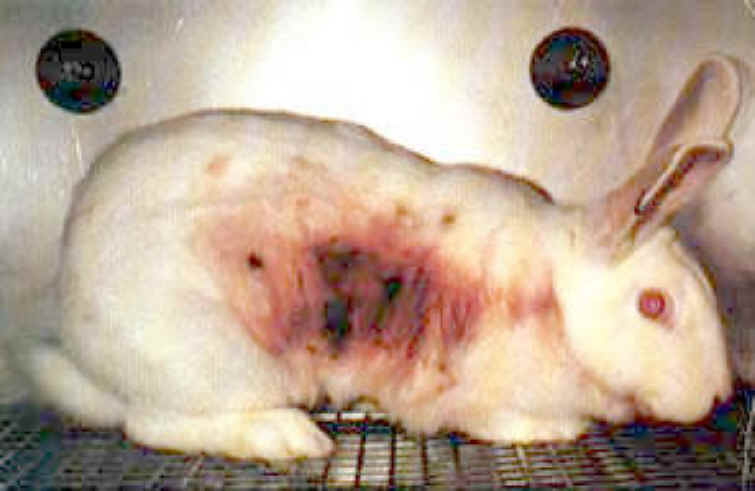
Category: Vivisection

UK: Cruelty Free International urge new Labour government to honour manifesto pledge to phase out animal testing.

We have a new government in the UK now.

Cruelty Free International

Animal protection NGO, Cruelty Free International, is calling on the UK’s new Labour government to honour its manifesto pledge to “partner with scientists, industry, and civil society as we work towards the phasing out of animal testing”.

This commitment must lead to the end of the use of animals in UK laboratories, through the development of a roadmap with clear targets, milestones and actions, led by a new minister to co-ordinate plans across all departments.

The government must also provide further detail to expand on earlier commitments by senior members of the Labour Party that included a board of experts to be established in the first year and tasked with drafting a plan to phase out the use of dogs, minipigs and rabbits in testing, including medical testing.

Cruelty Free International stands ready to offer its expertise to ensure these policies are delivered in an ambitious but achievable way.

The organisation’s ‘Pledge Cruelty Free’ campaign in the build-up to the General Election asked all parliamentary candidates to make a commitment to put the 1998 ban on testing cosmetics on animals, covering ingredients used either primarily or exclusively in cosmetics, into law; make our homes safer by modernising the system for testing the chemicals that go into the products we use every day, such as food, clothes, household cleaning, furniture, electronic goods, paints and dyes, and removing animals from those tests; and ask that the government create a plan to phase-out animal testing forever, with a minister dedicated to delivering this target across all government departments.

Home Office statistics show that there were over 2.76 million uses of animals in laboratories in Great Britain in 2022. Ten per cent of those are tests required by regulators to assess the safety or effectiveness of chemicals, medicines and other products.

Cruelty Free International Head of Public Affairs, Dylan Underhill, said: “Sir Kier Starmer and his new government must honour their manifesto pledge to phase-out animal testing, and reflect both the views of the public and the strength of feeling that there is on this issue. With such a strong majority they can and must be bold to reflect the promise of change on which Labour built their campaign. Animal testing is simply not good science, yet inexplicably continues as the default method for testing the safety of products. We know that, as a country, we can do so much better in our protection of the millions of animals that suffer and die in laboratories every year.

“Their commitment must lead to the end of the use of animals in UK laboratories, through the development of a roadmap with clear targets, milestones and actions, led by a new minister to co-ordinate plans across all departments. The government must provide further detail on commitments that included a board of experts to be established in the first year and tasked with drafting a plan to phase out the use of dogs, minipigs and rabbits in testing, including medical testing. Cruelty Free International stands ready to offer its expertise to ensure these policies are delivered in an ambitious but achievable way.

“We know that there is so much for a new government to do in its first few days and weeks in office, but this is long overdue and cannot be forgotten or delayed any longer. The government must develop a roadmap with clear targets and milestones to phase out the use of all animals in experiments as soon as possible. We stand ready to offer our expertise in service of this ambition.

“A greater increase in funding, in line with the levels for similar ground-breaking technologies in the UK, needs to be accompanied by innovative incentives to encourage scientists and industry to move away from the current use of animals. Non-animal testing methods, in many cases, have already proven themselves to be faster, cheaper and more accurate than animal testing.

“Animal testing touches our lives in many ways that most of us don’t appreciate, from cosmetics and household products to clothes, furniture, plastics, electronic and white goods, paints, dyes, and food – all these things can be associated with animal testing on their way to our homes. We need Labour to take bold steps forward – without this, we will be condemned to a never-ending cycle of small reductions rather than the transformative step forward which is needed to meet the aspirations of the public.”

Regards Mark

England: 18 ‘Animal Rising’ Activists Charged For Entry At Animal Testing Centre – 20 Beagle Pups Removed, 18 Never Recovered And Returned To Death Facility.

https://www.dailymail.co.uk/news/article-13580329/Animal-Rising-activists-charged-burglary-break-animal-testing-beagle-puppies.html

Animal Rising claims MBR Acres of holding ‘bleeding licences’ which allow them to bleed healthy dogs to death to harvest their blood and organs

Regards Mark

USA: Massive $35,000,000 Fine Hits Dog Breeding Giant for Animal Neglect and Environmental Harm.

In a landmark decision, the Department of Justice and Environmental Protection Agency have imposed a hefty $35 million penalty on a company for serious violations of animal welfare and environmental laws. This fine marks the largest in history under the Animal Welfare Act, highlighting a significant step towards stricter compliance and respect for animal rights and environmental safety.

Animal Breeding: A Harrowing Discovery at Virginia Dog Breeding Facility

The fine stems from a distressing situation uncovered in 2022 at a Virginia-based dog breeding facility operated by Envigo Global Services. The facility, which bred dogs primarily for research purposes, was found severely lacking in meeting the humane standards required by law. Over 4,000 beagles were living in deplorable conditions, prompting a forced surrender by the Department of Justice.

Continue reading https://www.msn.com/en-us/news/us/massive-35-000-000-fine-hits-dog-breeding-giant-for-animal-neglect-and-environmental-harm/ar-BB1nLecW?ocid=BingNewsSearch

Mark

USA: Animal Rights Group Files Complaint Against Eastern Virginia Medical School Citing Abuse In Baboon Research.

As part of research, pregnant baboons were given varying combinations of estrogen and an estrogen inhibitor, and their fetuses were delivered via C-section at different stages of pregnancy, according to documents provided to The Virginian-Pilot. The placenta and fetal tissue were collected for study, according to the protocol objective for the experiment submitted by EVMS to the school’s Institutional Animal Care and Use Committee.

A total of 156 baboons were requested for the experiment over three years. Death of the mother, the fetus or both were accepted outcomes of the study as described in the documents.

Read the full article at  Animal rights group files complaint against Eastern Virginia Medical School citing abuse in baboon research (msn.com)

Animal Sentience Included In Belgian Constitution.

3 May 2024

GAIA

After years of campaigning, the sentience of animals is now officially recognised in the Constitution of Belgium. The Constitution takes precedence in the hierarchy of Belgian legal norms, and now includes a reference to ensure the protection and well-being of animals.

After a lively debate in a plenary session of the Chamber of Representatives, including concerns raised by the agriculture sector, a critical two-thirds majority was ultimately reached to approve the addition.

Belgium is now the 6th EU Member State to include animals in its Constitution, following Italy, Germany, Luxembourg, Slovenia and Austria. Other nations have also acted to enshrine constitutional animal sentience, including Switzerland, Egypt, Brazil and India. 

The following passage has now been officially added to Article 7 of the country’s Constitution:

In the exercise of their respective powers, the Federal State, the Communities and the Regions ensure the protection and well-being of animals as sentient beings.

GAIA, supported by the large majority (86%) of Belgians, has been campaigning for years to include animals in the Constitution. The organisation is delighted that animal welfare is now recognised as a fundamental value in Belgian society

Animal sentience is also enshrined in law at EU level, as Article 13 of the Treaty on the Functioning of the European Union mandates EU Member States to consider animal welfare as a significant commitment. Animals are recognised as sentient beings, acknowledging their capacity to experience pain and suffering, and emphasising the moral duty to treat them with care and respect. 

As well as sending a strong message about the commitment of Belgium to protect animal welfare, the inclusion should also have a direct impact as regulations made by federal and regional parliaments, as well as local authorities, must comply with the Constitution. It could also have the impacy of strengthening enforcement of animal welfare laws.

This is a historic victory for GAIA and all those who defend animals’ interests. Only 30 years ago, such a breakthrough was simply unthinkable. Today, animal welfare is becoming a constitutional value in its own right, joining other fundamental principles. This recognition reflects a major change in society and highlights the growing importance of animal protection in our country. It is this kind of progress that GAIA has been fighting for since it was founded.

Michel Vandenbosch, President, GAIA

On World Lab Animal Day (24th April); A Call for Coordinated and Concrete Policies to Advance NON-Animal Science.

Today, 24th April, is the World Day for Lab Animals.

24 April 2024

Every year on 24 April, World Day for Animals in Laboratories serves as a stark reminder of the millions of animals used in scientific research around the globe. At present, we are faced with a critical decision: whether to perpetuate existing policies that neither incentivise the development and uptake of innovative non-animal technologies nor lead to significant reductions in the number of animals used for scientific purposes, or to implement coordinated and concrete policies and mechanisms that empower stakeholders to embrace non-animal technologies.

In response to growing calls from Members of the European Parliament, EU agencies, citizens, academia and industry for a transition towards more biologically-relevant non-animal approaches, the European Commission took action in 2023. It committed to develop a roadmap to phase out the use of animals for chemical safety assessment, and to explore the possibility of a European Research Area (ERA) action to accelerate the development, validation and uptake of non-animal approaches in biomedical research and testing of pharmaceuticals.

These two initiatives represent significant opportunities to establish the necessary policies and mechanisms at EU level to accelerate the transition to non-animal science. The roadmap will serve as a framework for coordinating concrete actions  to move away from animal testing in the context of the EU chemicals legislation. In doing so, it will set a precedent for other policy areas that still rely on the use of animals. 

An ERA action has the potential to foster increased collaboration and coordination between Member States, and to identify specific areas where animal use can be avoided and where investments should be directed to advance non-animal technologies. It can also improve access to essential infrastructure for non-animal research, and facilitate the development of harmonised education and training programmes. This will ensure that students, educators, researchers and regulators are equipped with the necessary knowledge and skills to effectively advance innovative non-animal approaches to address scientific challenges. 

Eurogroup for Animals and its member organisations call on all stakeholders, including policy makers, scientists, industry, regulators and funders, to join forces to develop and implement forward-looking policies and mechanisms in order to move towards a future where humans, animals and the environment are better protected.

Today, we also take the opportunity to shine a spotlight on the recent achievements of several of our member organisations in advancing human-based science:

  • LAV is currently involved in legal proceedings against a contract research organisation in Italy which carries out tests on animals, including dogs and non-human primates. Following complaints from LAV, the Italian authorities carried out an inspection which revealed numerous irregularities. As a result, the former director and veterinarian were charged with mistreatment and unnecessary killing. The authorities seized all the dogs and non-human primates
  • Doctors Against Animal Experiments (DAAE) engaged with 800 political decision-makers to request the correct transposition of Directive 2010/63/EU on the protection of animals used for scientific purposes into German law. Furthermore, DAAE granted two Herbert Stiller Research Prizes to advance animal-free research. 
  • The RSPCA ran an event with the European Federation of Pharmaceutical Industries and Associations (EFPIA) to discuss steps that the industry is taking to avoid, replace and reduce animal use, and opportunities for further progress. The RSPCA also launched their AWERB Directory, collating key resources to help institutional Animal Welfare (and Ethical Review) Bodies effectively challenge whether and how animals are used in research and testing. Furthermore, the RSPCA organised its third annual Focus on Fish event to share knowledge and ideas for reducing the suffering and improving the welfare of fishes used in science, as well as their fifth international meeting promoting practical approaches for avoiding and reducing ‘severe’ suffering
  • GAIA contacted the Brussels and Walloon Ministers for Animal Welfare to encourage the establishment and implementation of an action plan to replace and reduce animal testing, similar to the Flemish Action Plan, in their respective regions. In its response, the Brussels Minister announced that a five-year strategy to reduce animal experimentation will be included in the Brussels Animal Welfare Code. 
  • Djurens Rätt submitted 27,847 signatures to urge the Swedish government to reinstate dedicated funding for the Swedish 3R Centre.
  • Humanimal Trust published an updated edition of Humanimal, a children’s book focusing on the similarities between humans and animals. Moreover, Humanimal Trust also launched the First Global Creative Awards for children and young minds in order to captivate a broad audience with the concept of One Medicine via creative media, as well as online One Medicine Webinar series showcasing where collaboration between human and veterinary medical professionals can deliver better health for all species.
  • Menschen für Tierrechte (People for Animal Rights Germany, PARG) joined forces with the Berlin Greens to make “Animal-free Research Methods Development” a mandatory component of all relevant undergraduate courses offered at universities in Berlin. In addition, PARG also published an extensive University Guide that provides comprehensive information for studying life science subjects without the use of animals. PARG’s initiative “Exit from Animal Testing. NOW!” lead a government action plan and a commitment of two million euros for the development of a strategy aimed at reducing animal testing.
  • Animalfree Research launched a petition calling on the Swiss Parliament and the Federal Council to make a binding commitment and establish a concrete plan to gradually phase out harmful animal experiments, and take measures to systematically evaluate the benefits of state-funded research involving animal experiments and publish these results on a regular basis. Furthermore, Animalfree Research organised a forum on advancing personalised medicine with animal-free research.

See also:

Italy: The Biggest Seizure and Rescue of Animals From a Laboratory in Italy’s History.

22 April 2024

LAV

25 animals, including dogs and primates, were rescued from a research facility in Verona where serious mistreatment of animals was discovered. The facility, which carries out animal testing on behalf of international pharmaceutical companies, is being charged with the neglect and unlawful killing of animals including beagles, marmosets and macaques.

The Court of Verona has brought forward charges against officials of the multinational pharmaceutical research company Aptuit, for the mistreatment and unnecessary killing of animals in the facility. The veterinarian and the company’s former president have been included in the register of suspects.

The prosecutors asserted that the company failed to comply with even the minimum criteria of animal management required by law, resulting in serious physical and psychological damage to the animals.  These charges can lead to a fine of  up to 30 000 € and imprisonment of up to 18 months.

Within this laboratory, thousands of dogs and monkeys were subject to injections, withdrawals and toxicity tests that lead to agonising deaths in deplorable conditions. The animals lacked fundamental necessities such as kennels, left on cold tile floors with no sunlight.

Due to the ongoing legal case, full details about the mistreatment are yet to be released.

A report released by LAV three years ago highlighted a shipment of several beagles to the Aptuit Company, which led to national demonstrations and demands for an official inspection. Following continuous pressure, 25 animals were rescued and appointed to LAV’s care after the Public Prosecutor’s Office ordered an inspection of the facility.

The 7 beagles are now cared for by competent staff in veterinary clinics. The primates, 7 macaques and 11 marmosets, have found refuge at the Animanatura Wild Sanctuary Rescue Centre in Semproniano, who are rehabilitating over 50 primates rescued from laboratories, aiding their recovery from years of physical and psychological trauma.

This seizure of animals from a laboratory represents the largest of its kind in Italy.

If these very serious irregularities were found in what is considered ‘excellence’ in pharmaceutical research, what is happening now, at this very moment, in the more than 500 Italian laboratories? We trust the authorities and hope that this is the beginning of a process that will discover what has been hidden until now.

Gianluca Felicetti, LAV

My wish is that for the time they have left to live, they can live in complete serenity, doing what they were born to do, which is simply to be animals.

Lorenza Zanaboni, LAV

LAV are calling for signatures of their petition asking the Italian Minister of Universities and Research to finance non-animal methods, speeding up the transition away from animal testing.

EU: More Comprehensive Update Of Annexes Of Animals In Science Directive Needed.

11 April 2024

In a move to update requirements for the appropriate accommodation, care, and killing of animals used for scientific purposes, the European Commission recently adopted a delegated directive with additional requirements for a number of species; but should more be done?

Article 50 of Directive 2010/63/EU on the protection of animals used for scientific purposes empowers the Commission to adapt the Annexes in order to ensure that they reflect technical and scientific progress. 

At the time of adoption of the Directive, there was insufficient scientific evidence on the appropriate housing, care and killing methods for certain species, so species-specific requirements for these species were not included.

Since the adoption of the Directive, new scientific knowledge has become available on the welfare requirements of cephalopods, zebrafish and passerine birds used for scientific purposes, and on the killing of cephalopods and zebrafish in a manner causing least pain, suffering and distress. New scientific evidence has also emerged on the inappropriateness of using inert gases to kill rodents. In the light of this evidence, the Commission decided to revise the relevant Annexes (i.e. Annexes III and IV) to the Directive. 

In early 2023, the Scientific Committee on Health, Environmental and Emerging Risks (SCHEER) was requested by the Commission to provide a scientific opinion in support of the revision of Annexes III and IV. A call for information was launched by SCHEER to invite all interested parties to submit scientific information on the specific questions on which SCHEER was asked to provide a scientific opinion. Eurogroup for Animals actively engaged with some of its member organisations to provide feedback. The scientific opinion was published in October 2023. Taking into account the opinion issued by SCHEER, the Commission drafted a Delegated directive and initiated a public consultation earlier this year, with Eurogroup for Animals contributing input to the draft. Subsequently, the Delegated directive concerning the revision of Annexes III and IV was officially adopted on 13 March 2024.

We welcome the efforts to establish new standards for cephalopods, zebra fish and passerine birds previously overlooked. However, we also express regret that the revision has missed the opportunity to update existing provisions for other species.

In accordance with Article 50 of the Directive, we call for a more comprehensive revision of Annexes III and IV to amend the provisions for these limited species, aligning them with the latest technical and scientific progress.

Regards Mark