Category: Vivisection

The Beagle Freedom Project is transforming a 30-acre property in Oklahoma that used to be an animal testing facility into Freedom Fields.
- The Beagle Freedom Project shut down an animal testing facility in Oklahoma in February and purchased the property surrounding the lab
- The animal welfare organization is planning to turn the 30-acre property into a sanctuary and adoption center for pets rescued from animal testing
- Over 200 pets used in testing at the Oklahoma facility are now in the Beagle Freedom Project’s care and are looking for forever homes
Over 200 cats and dogs are getting a fresh start in a familiar place.
In February, Beagle Freedom Project (BFP)— an animal welfare organization dedicated to saving lab animals and ending animal testing —shut down a private facility in Nowata, Oklahoma, performing tests on cats and dogs for the flea and tick medicine industry.
Beagle Freedom Project took over the former lab’s 30-acre property and the more than 200 animals remaining on the premises. The organization is now transforming the property into Freedom Fields, a sanctuary and adoption center for the former lab animals at the facility and future pets rescued from animal testing.
For Shannon Keith, who founded the Beagle Freedom Project in 2010, Freedom Fields is a success story that was hard to imagine 13 years ago.
When Keith started BFP, “the status quo was that facilities would typically kill animals at the end of testing,” she tells PEOPLE. Through Beagle Freedom Project’s work, hundreds of lab animals slated to die have been rescued and adopted out to loving families. The organization has also passed its “signature legislation,” the Beagle Freedom Bill, in 13 states and is working on passing federal legislation.
“What that does is mandate the release of animals after the testing is over. So instead of killing them, they release them to organizations like ours, so they have a second chance at life,” Keith explains.
Keith, an animal rights attorney, doesn’t rely on legislation alone to save animals used in product testing. Each year, she writes a letter to every operational animal testing facility in the United States, asking them to release their animals to the Beagle Freedom Project.
While Keith says it’s “very rare” she gets a response, one of these letters led the Beagle Freedom Project to the property that will eventually become Freedom Fields.
“This facility in Oklahoma, the owner of it finally called me, and he said, ‘Hey, I got your letter. I actually got it a couple of years ago.’ And he said, ‘I ignored your letter,'” Keith says.
What changed the facility owner’s mind were citations from the USDA. The agency encouraged the owner to contact Beagle Freedom Project to surrender the dogs and help clear up some of the citations.
“To his credit, he called us, and we started working with him in 2021. And so, we started going there, and whenever he was done with dogs and cats, we would get them and adopt them out,” Keith shares.
This relationship allowed Keith to pitch shutting down the testing facility and purchasing the property to the owner when she felt the time was right.
“I suggested he close his business and that we purchase the land from him, not the business, but the land. It’s a beautiful 30 acres. We would turn it into a sanctuary, and he’d be done with it. And I literally thought that he would laugh me off the phone,” Keith recalls of the conversation.
To her surprise, the owner was ready to retire and agreed to the Beagle Freedom Project’s proposition.
Related: Rescue Beagle Is ‘Excited About Absolutely Everything’ One Year After Leaving Breeding Facility
“Part of our negotiations was that he would relinquish his USDA license and never test on animals again. We had no part in paying for the business; the business is over. We purchased the property and took all the animals he would release to our custody. So we got 200 plus dogs and cats. He agreed, and we officially took custody of everybody and the land on February 1st,” Keith explains.
After the sale, the Beagle Freedom Project started working on making Freedom Fields a reality. Currently, a BFP employee lives on the property with the former lab animals who have yet to be adopted.
The animals came into Beagle Freedom Project’s care with burns on their bodies and health issues from being exposed to the toxic substances used in testing for flea and tick prevention medicines — and they also came ready to be loved. Over 30 animals from the Oklahoma testing facility have already found forever homes, and more are still searching for their families.
“Our goal is to get all of them adopted out. In the meantime, they’re living there, and we are in the process of renovating and making it a beautiful place for them to live until they’re adopted,” Keith says.
Plans for turning the former testing facility into Freedom Fields include adding a rehabilitation center for animals recovering from the abuse they endured during testing and a senior center for the numerous aging pets rescued from animal testing.
“The majority of dogs used in testing were born there, so they’ve been there their whole lives, and they’ve got arthritis, cataracts, and all kinds of ailments. They need their teeth pulled. They’re in pain. So we’re building a senior center so they can have orthopedic beds, ramps, and heat, all kinds of comforts they should have until they’re adopted,” Keith details.
Freedom Fields won’t just be for pets. Keith says that BFP plans to add an education center to the sanctuary “where people can meet animal testing survivors, learn about animal testing, and learn how to take care of animals properly and be kind to animals.”
“It’s one thing to hear me blabber on about animal testing, but when you meet a survivor in person, and you look in their eyes, it’s something that really melts your heart and makes you want to do something impactful,” she adds.
Keith hopes that news of Freedom Fields inspires animal lovers to learn more about the grim reality of animal testing.
“I would just love people to know and be aware of the products that they’re using, not only for themselves but also for their beloved animals, who are family members,” she says.
To help with this goal, BFP has developed the free Cruelty Cutter app, which allows users to scan a product’s barcode and learn if animal testing was used to create the product.
To learn more about the Beagle Freedom Project, visit the organization’s website.
Regards Mark
Beagle Freedom Project Two beagles in an outdoor enclosure at the former animal testing facility shut down by the Beagle Freedom Project© Provided by People



Ministers have stepped in to tackle a scientific test which has been branded as “worthless cruelty”. The forced swim test sees animals placed in small jars of water and then left to swim until they are exhausted.
Some scientists have claimed it gives valuable insight into depression however animal rights campaigners have long fought for it to be banned saying it gives no valuable results. Animal rights charity Peta, on its website said it was “worthless cruelty”.
Now the Home Office has said it is to restrict the use of the test – and will seek to ban it completely. In 2022 the Home Office asked The Animals in Science Committee to investigate the test and after it drew up a list of recommendations the government has issued its response. In a letter Lord Sharpe of Epsom, Parliamentary Under Secretary of State for the Home Office, said their advice was being accepted.
He said: “As the Minister responsible for the regulation of animals in science in Great Britain, I accept the committee’s recommendations. The Home Office will further restrict the use of the forced swim test, as recommended by the committee, and apply enhanced scrutiny to any proposal to use the forced swim test.
“I have requested the animals in science Regulator to implement the relevant recommendations to regulation through making changes to operational processes and guidance to applicants and regulated establishments, as appropriate. However, I intend to go further. I aim to completely eliminate the use of the forced swim test.
“This will require the validation of suitable appropriate alternatives. I have therefore written to the Minister for Science, Research and Innovation at the Department for Science, Innovation and Technology (DSIT) and the Chief Executive of UK Research and Innovation (UKRI) to request that they consider what actions they can take to enable a complete ban on the use of the forced swim test in the near future. He added most actions would be in place by the end of March this year.
The move comes as measures were signed into law top ban people keeping primates – animals such as monkeys, apes and lemurs – as pets. The legislation brings in a licensing scheme setting strict rules to ensure that only private keepers who meet new welfare and licensing standards will be able to keep primates, delivering on a manifesto commitment and Action Plan for Animal Welfare pledge to provide greater legal protection for pet primates.
The measures come into force from April 6, 2026 when all primates in England will need to be kept to these zoo-level standards – in effect banning the practice of keeping primates as pets. It is estimated that up to 5,000 primates are currently kept in domestic settings as pets in the UK.
These wild animals have complex welfare and social needs and, according to most experts, cannot be properly cared for in these environments. The new measures will improve the welfare of potentially thousands of these intelligent animals.
RSPCA Head of Public Affairs David Bowles said: “Meeting the needs of monkeys and other primates is practically impossible to do in a household, domestic environment. That’s why this legislation will be a really important moment for animal welfare – ensuring primates can only be kept in an appropriate environment, as we all strive to create a better world for every animal.
“Too often, our dedicated officers are called to properties where monkeys live in the wrong surroundings, eat totally inappropriate diets and are at risk of suffering behind closed doors. This new law has the potential to change that.”
Under the law all private primate keepers will be required to hold a licence, issued by their local authority, with failure to comply with licence conditions resulting in an unlimited fine or removal of the primate. Defra will work closely with local authorities to make sure that they have the appropriate tools and guidance to ensure that enforcement will be carried out effectively.
Regards Mark
‘Cruel’ test which sees animals forced to swim until they are exhausted could be banned (msn.com)
11 February 2024
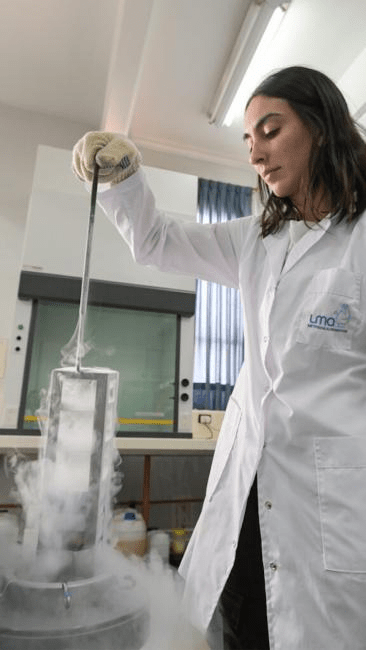
February 11 was International Day of Women and Girls in Science, a reminder that women play a critical role in science and that their participation should be strengthened. We are celebrating one of the women who help change science for the better by delivering humane science through the exploration of non-animal approaches; the winner of our grant to attend the European Commission’s Joint Research Centre (JRC) summer school.
Martina Benedetti is a PhD student working in the pioneering laboratory for alternative methods in Argentina.
Can you tell us more about yourself and your journey as a PhD student?
Our primary mission in the research group is to pioneer the introduction of validated methodologies, a significant first for Argentina. This initiative aims to provide non-animal testing services to the local industry. Beyond that, our focus extends to the development of new methodologies and the refinement of strategies, all geared towards gradually replacing the reliance on animal testing that regulatory bodies still mandate. Of course, being part of a pioneering laboratory in my country has been challenging but also very rewarding. Overall, I think my journey is led by a strong desire to contribute to the advancement of humane and effective scientific practices in Argentina. So far, it has been a very fulfilling experience!
What are the main goals of your research?
My research focuses on modelling the eye using in vitro techniques to assess the reversibility of potential damage when the eye is exposed to a toxic substance.
More into detail, my project consists of designing a model to help replace animal use on ocular toxicity testing implementing stem cells as well as 3D culture. We are studying the cornea architecture and function in vitro to test different chemicals and evaluate the damage they produce on the organ and its potential damage reversibility. This is important because the available alternative methods do not allow documenting the reversibility of the damage, let alone the time necessary for such reversibility to occur, as required by the UN GHS classifications.
Last year, you won the travel grant offered by Eurogroup for Animals and the RSPCA to attend the JRC Summer School. What are the main things you learned from this event?
As a participant in the JRC Summer School, I gained valuable insights into in vitro methods and computational modelling that were new to me. The program allowed me to gain a comprehensive understanding of innovative techniques through expert presentations, which was very valuable for me as there are no scientific activities in Argentina that deal with these topics. The debate sessions were also very interesting for me, as we focused on real issues that are being discussed today by the experts in the field (In our case, we had to argue that setting an annual cap on the number of animals used for research is the best way to reduce the use of animals in science).
I should also mention that the visit to the EURL-ECVAM laboratories was great! It provided a practical dimension that allowed me to experience first-hand the application of the methods available. I am particularly grateful that the summer school also provided me with an excellent platform for exploring career paths and building a professional network, which enhanced my overall understanding and connections in the field.
What inspires you to use your scientific expertise to advance non-animal science?
My inspiration stems from a commitment to ethical research practices and a desire to contribute to more sustainable and humane scientific advances. Ethically, I am motivated to contribute to research practices that meet modern standards of compassion and responsibility. Scientifically, I am driven by the prospect of developing and implementing methods that not only eliminate the need for animal testing, but also provide more accurate and relevant results for humans. In addition, I think it is particularly motivating to make progress in this area in Argentina, as in my country we are taking the first steps towards researching non-animal methods, which of course motivates my work even more.
On International Day of Women and Girls in Science, what message would you like to send to women who, like you, want to accelerate the transition to human-based, non-animal science?
I want to encourage and empower my fellow women. Let your passion for innovation guide you and bring your unique perspectives to the field. Seize the opportunities to collaborate, learn and lead, because our collective efforts can make a meaningful difference. I think we can all agree that advances in research should go hand in hand with compassion for all living beings. So, let’s strive together for ethical and sustainable scientific practices. Your commitment can make a significant contribution towards a more humane and effective scientific landscape.
Happy International Day of Women and Girls in Science!
Regards Mark

Limited progress: revision of Annexes III and IV of Directive 2010/63/EU restricted to a few species
7 February 2024
On 4 January 2024, the European Commission launched a public consultation to update Annexes III and IV of Directive 2010/63/EU on the protection of animals used for scientific purposes. Eurogroup for Animals welcomes the efforts to include standards for the care and accommodation of animals and acceptable methods of killing for species previously overlooked. However, we regret that the revision missed the opportunity to update existing provisions for other species.
In October 2023, the Scientific Committee on Health, Environmental and Emerging Risks (SCHEER) issued an opinion in support of a revision of Annexes III and IV of Directive 2010/63/EU, with Eurogroup for Animals contributing input in response to a call for information. Considering this opinion, the Commission launched a public consultation to revise Annexes I and III to VIII to ensure that they reflect the state of technical and scientific progress.
We particularly welcome the newly introduced provisions addressing appropriate housing and care standards for cephalopods, zebrafish and passerine birds, as well as appropriate methods of killing cephalopods. We also applaud the prohibition of using inert gases for killing rodents, a position that we have been advocating for several years. However, the revision failed to seize the opportunity to amend the provisions in these two annexes for other species, despite our repeated calls for an update in the light of recent technical and scientific advances.
In our response, we commented on the newly introduced provisions, while also emphasising the need to update other aspects of Annexes III and IV. In brief, we recommended the following:
For the revision of Annex III of Directive 2010/63/EU on the care and accommodation of animals used for scientific purposes:
Water quality parameters specific to each stage of development for commonly used fish species (other than zebrafish) should be included.
The minimum cage height for rats should be increased to 30 cm.
Nursing rabbits should have a nesting box with an entrance that they can close to isolate themselves from their young in order to minimise stress and aggressive behaviour.
Dogs should always be provided with access to an outdoor run, unless there is a scientific or veterinary justification for not doing so.
The minimum time after birth that macaques are allowed to be separated from their mothers should be revised, to not less than 10-14 months.
For the revision of Annex IV of Directive 2010/63/EU on the killing methods of animals used for scientific purposes:
Confirmation of death by rigor mortis is not appropriate and should be removed.
Methods of killing zebrafish at stages <16 days post-fertilisation should be addressed. Based on the literature, we recommend that the use of a mixture of lidocaine hydrochloride, sodium bicarbonate and ethanol be included as a suitable method of killing.
Birds can experience severe distress and suffering when killed by CO2 and decapitation. These methods should therefore be deleted.
The use of a percussive blow to the head to stun fish can cause unnecessary suffering. Consequently, this method should be deleted.
Rodents killed by decapitation may experience conscious pain before the onset of insensibility. As a result, this method should be deleted.
Read our full recommendations here.
Regards Mark

Tiny Georgia town in uproar at plans to build a huge $400 MILLION breeding farm for 30,000 long-tailed macaques that will be sold off for animal testing
A tiny Georgia town is in uproar amid plans for a huge $400million breeding farm for 30,000 monkeys who will be sold off for animal testing.
Safer Human Medicine sparked fury in Bainbridge, in the south west of the state, by proposing the sprawling site for the long-tailed macaques.
It filed plans earlier this month to erect huge sheds across a 200-acre estate near the town of 14,000 people, which will hold the doomed primates.
Read the ful article here:
Regards Mark

EU: What does the EU’s Transport Regulation proposal mean for animals used for scientific purposes?
19 January 2024
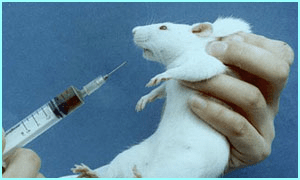
In December 2023, the European Commission published its proposal for a Regulation on the protection of animals during transport. The proposal explicitly recognises that animals transported for scientific purposes are covered by the Regulation. However, the lack of species-specific provisions addressing crucial factors such as fitness for transport and journey times raises deep concerns.
Since the implementation of Council Regulation (EC) No 1/2005, the European Commission has not taken specific actions concerning the welfare of animals transported for scientific purposes. Despite the stress, suffering, and elevated risk of injury that these animals may experience during transport, there has been a notable absence of measures to ensure their welfare.
Data on the transport of animals used for scientific purposes to and within the EU has been scarce, with only minimal information available in EC and Member State reports on statistics.
The Commission’s proposal now explicitly includes the transport of animals used for scientific purposes within the scope of the Transport Regulation. The proposal acknowledges that “while a distinction can be made with regard to the purpose for which these animals are transported, their welfare should be guaranteed”.
However, the Commission continues to leave these animals unprotected, arguing that “due to the strict requirements on the quality of animals needed for research and testing”, and because “scientific procedures may require the use of animals that can potentially be considered unfit for transport according to this Regulation”, “it would be neither coherent nor acceptable to include them completely in the scope of this Regulation”.
In particular, species-specific provisions relating to fitness for transport, watering and feeding intervals, journey times, temperatures and rest periods, and the assessment and recording of conditions of animals on arrival do not apply to the transport of animals used for scientific purposes. These exemptions are particularly alarming in the context of animals transported over long distances.
Regardless of the purpose for which animals are being transported, the needs and welfare concerns of a particular species remain the same. Whether they are categorised as farm animals, companion animals, or animals used for scientific purposes, individuals of the same species with comparable physiological conditions have common requirements in terms of journey times, resting periods, temperatures and access to water and food. The exception is made for vulnerable animals such as genetically altered animals, animals that have undergone surgery, animals that are disease ‘models’, pregnant animals, and lactating and newborn animals which require special provisions.
Proper assessment and recording of the condition of animals on arrival is also missing. These aspects include elements such as the number of animals that died and any health or physical problems, including injuries that occurred during the transport, which are crucial to increase the traceability and transparency of transport operations, and to enable the enforcement of the Regulation.

The proposal also lacks provisions addressing the air transport of animals, including non-human primates. Most non-human primates used for scientific purposes in the EU are born outside of the EU, mainly in Africa and Asia, and imported. These animals suffer long journey times by air and by road in small crates that leave little room for the animals to even turn around. Travel times of up to 58 hours are not uncommon, and in some cases may exceed 70 hours. Directive 2010/63/EU recognises that an increase in transport times may negatively impact on the welfare of animals used for scientific purposes bred outside the EU. Animals transported by air may face different challenges, including extended waiting periods with restricted access to water and food, exposure to high temperatures, stress-inducing loading and unloading, and the risk of incorrect handling by untrained staff.
While we recognise the positive step forward in bringing the transport of animals used for scientific purposes within the scope of the revised Transport Regulation, we are deeply concerned by the limited protection proposed.
Eurogroup for Animals calls for the following amendments:
- All provisions outlined in the Transport Regulation, including fitness for transport, watering and feeding intervals, journey times, temperatures, rest periods, and assessment and recording of conditions on arrival, must apply to the transport of animals used for scientific purposes, providing for certain exemptions where necessary;
- Species-specific provisions must be included in Annexe I;
- The needs of vulnerable animals must be addressed;
- Appropriate provisions for animals transported by air must be included.
Regards Mark


The Body Shop has teamed up with long-term partner Cruelty Free International to reignite its campaign against animal testing.
The UK banned animal testing for make-up and its ingredients in 1998, but the government says it has changed its policy to match rules in the EU where some animal testing is allowed.
To raise awareness of the changes and call for a reinstation of the full ban, The Body Shop and Cruelty Free International have launched a limited-edition version of their iconic heritage ‘Forever Against Animal Testing’ t-shirt. The shirt first appeared when the organisations campaigned on the issue in the early 1990s.
All profits from the sale of the products will go directly to Cruelty Free International to support its work.
Continue reading:
Mark

24 November 2023
The Court of Justice of the European Union has ruled against German chemicals company Symrise AG, who challenged a European Chemicals Agency request to perform animal testing on two cosmetic ingredients. This means additional animal testing may be demanded by regulators to assess the safety of cosmetic ingredients, despite the EU ban on animal testing for cosmetics in place since 2013.
In 2004, the EU responded to citizens’ long-standing concerns about animal testing for cosmetic products by introducing a ban to prohibit the testing of finished cosmetic products and cosmetic ingredients on animals. The testing ban was followed by another ban to prohibit the marketing of finished cosmetic products and ingredients in the EU which are tested on animals, which became fully effective in 2013.
Despite the bans, the European Chemicals Agency (ECHA) has established that in certain cases, widely used cosmetic ingredients with a long history of safe use must be tested on animals to comply with the Registration, Evaluation, Authorisation and Restriction of Chemicals (REACH) Regulation.
In 2018, the company Symrise AG challenged ECHA’s request to test two ingredients in its sunscreen product on 5,500 animals, refusing to carry out further animal testing that undermines the EU cosmetics bans. Following a legal battle between the two parties, the Court of Justice of the European Union has now delivered its official decision, dismissing the action brought by Symrise AG, and thus allowing ingredients used exclusively in cosmetics to be tested on animals under REACH to assess the safety risks of workers who may be exposed to the ingredients.
But the wishes of citizens are clear: animals must not suffer and die for the sake of cosmetics. The recent European Citizens Initiative (ECI) Save Cruelty Free Cosmetics – Commit to a Europe without animal testing gave clarity to EU citizens’ voices, calling on the Commission to protect and strengthen the cosmetics animal testing ban.
Following this ruling, it’s clearer than ever that we need a chemicals roadmap.
Eurogroup for Animals is deeply concerned by this decision, as it goes against the expectations and wishes of citizens and could lead to the demand of animal testing at the cost of thousands more animal lives. In its reply to the ECI Save Cruelty Free Cosmetics, the European Commission mentioned that its response might be affected by the Court’s ruling in the Symrise AG case. Now that the Court has ruled, we are regrettably witnessing a step backwards. This case will set a precedent that will pave the way for more animal testing of cosmetic ingredients to meet the requirement under REACH.
These loopholes in the cosmetics animal testing ban are indicative of a regulatory system that is, at the moment, unable to follow scientific progress on non-animal testing approaches. This is why it is imperative that the Commission delivers on the promise for a roadmap towards phasing out animal testing for chemical safety assessments. Eurogroup for Animals, together with fellow ECI organiser NGOs, aim to ensure that a concrete and actionable framework with specific milestones is delivered.
Regards Mark

Scientists report first live birth of ‘chimeric’ monkey
Scientists have reported the first live birth of a “chimeric” monkey with stem cells taken from two embryos.
The embryos come from the same species of monkey – a crab-eating macaque – but are genetically distinct, the researchers said.
Chimeras are animals which contain groups of cells from two or more organisms with distinct types of DNA.
The baby monkey was born with “a high proportion” of donor cells – an average of 67% across the 26 different types of tissue, the scientists said.
This work could help us to generate more precise monkey models for studying neurological diseases as well as for other biomedicine studies
Zhen Liu, Chinese Academy of Sciences
The team in China, which has reported its work in the journal Cell, said its work has vast implications – from understanding more about devastating conditions such as motor neurone disease to finding ways to help conserve threatened species.
Senior author Zhen Liu, of the Chinese Academy of Sciences, said: “This is a long-sought goal in the field.”
He added: “This work could help us to generate more precise monkey models for studying neurological diseases as well as for other biomedicine studies.”
Chimeras are important for studying embryonic development, but research has largely been restricted to mice.
While monkeys have previously been created in the lab using donor cells, the researchers said these creatures had a much lower contribution of cells from embryos “so you cannot really call them chimeric animals”.
Professor Mu-Ming Poo, scientific director of the Institute of Neuroscience at the Chinese Academy of Sciences, said: “Just having several cells (that) are partially distributed all over the monkey body with no real formation or clear structures – you cannot really say that is chimera, strictly speaking.
“So the difference here is that now we have a very high level of contribution, with the donor cells forming a big part of the tissues (and) complex structures all over the monkey body.”
Stem cells are the body’s raw materials from which all other cells with specialised functions are generated.
For the study, the researchers used stem cell lines – a group of cells grown in a lab from a single stem cell – taken from a seven-day-old embryo.
These cells were then injected into embryos that were four to five days old.
The embryos were implanted into female macaques, resulting in 12 pregnancies and six live births.
Of the six, one baby monkey was born alive and managed to survive for 10 days.
Analysis showed this male newborn had donor stem cells in 26 different types of tissue, ranging from 21% to up to 92%.
Meanwhile, a foetus that was miscarried was also “substantially chimeric”, the researchers said, with stem cell-derived cells observed in the brain, heart, kidney, liver, and parts of the digestive system.
The researchers said that their work complied with the national ethical regulations in China. (which mean nothing !)
The health of the monkey is still a problem. If we want to produce a monkey model, we have to have a better chimera that can live longer
Professor Mu-Ming Poo, Chinese Academy of Sciences
They said that as of next steps, they want to explore “mechanisms that underlie the survival of the embryos in the host animals”.
Prof Poo said: “The health of the monkey is still a problem.
“If we want to produce a monkey model, we have to have a better chimera that can live longer.”
WAV Comment – I (Mark) have had Multiple Sclerosis (MS) for the last 25 years, and it causes me now one hell of a lot of problems. MS is a ‘neurological illness’ that happens, but which cannot be explained as to why in only some.
Animals DO NOT get MS. As a sufferer I have always campaigned against the use of animals in MS research. You don’t test Boeing 777 engines on a Spitfire; so if animals do not get MS, then why artificially ‘create’ it in animals and then test on them in them in some pathetic attempt to find a cure ? – for me, proper research would be to find out why animals don’t, and we do – and then move on from there.
Why test on animals when there are hundreds of human MS suffers waiting in line to put themselves forward as research tools in understanding more about this ? – surely they are better for the purpose.
20 years ago, 5 years after my diagnosis; I was informed that within the next 5 years the MS issue would be solved with the wonder cure. 20 further years on I / we are still waiting.
The reality is that this all comes down to money and funding research, whatever that really is. Prof. Poo and his chums just want to exhaust the funding pot whilst never really achieving ‘that cure’; sufferers live in daily hope that a cure will be found for their illness. The problem is that universities and departments like the national ethical regulations in China; ie probably a back street wet market type thing (where did they read Covid from ?) just keep on trying to justify animal research models without ever really making much progress. I guess if animals die or are killed in ‘research’, they they can just chuck them in a bin and continue; probably a bit harder with proper human MS sufferers who really do have MS which is not artificially created in them as it is with non MS suffering with animals.
It really gets my goat that money is endlessly paid out for often pointless ‘research’ using animals. I want to see positive, NON ANIMAL research; research that will provide real answers and hope fully which will lead to real cures.
This is what I mean; something positive without animal cruelty:
Dr Hadwen Trust becomes Animal Free Research – Animal Free Research UK
Latest news – Animal Free Research UK
Always on the side of animals;
Regards Mark
Scientists report first live birth of ‘chimeric’ monkey (msn.com)
 World Animals Voice