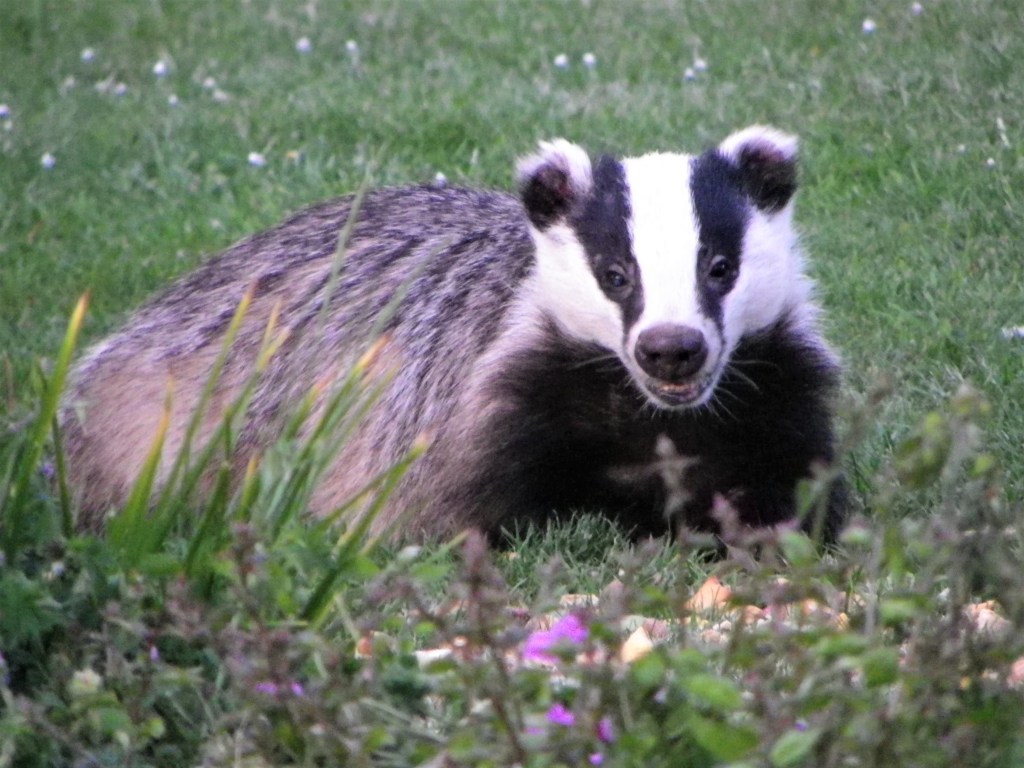
Callum Muir, 25, of Logan, Ayrshire, used his three dogs, terrier Pip, lurcher Bella and bull lurcher Mig to maul badgers and foxes.
After receiving intelligence that he was involved in this behaviour, Scottish SPCA Inspectors executed a warrant on his house, where they found evidence that Muir was self treating his dogs, who were badly injured.
They also found video evidence of the fights, which show Muir laughing while watching his dogs rip apart a fox.
An undercover cruelty investigator said: “The evidence we found at Muir’s home address was consistent with what you’d typically find when someone is heavily involved in animal fighting.
“All three of his dogs had significant injuries across their faces. Pip and Bella, the two older dogs, had injuries across their neck and legs.
“Both dogs had several missing teeth as a result of the fights they’d been in, and the lack of appropriate veterinary treatment would have made the suffering even worse.”
“Mig had some scarring to her muzzle and legs but as she was a much larger, stronger and younger dog it’s likely she’d been able to avoid serious injury up to this point.”
During the search of the property, several items associated with animal fighting were found, including locator collars which are used to track dogs when they are underground in badger setts.
Officers also discovered nets for catching wild animals when they bolt from their den.
This evidence was analysed at Science and Advice for Scottish Agriculture and fox and badger DNA was found.
Muir was sentenced to six months in prison at Ayr Sheriff Court on May 24, and has been banned from owning animals indefinitely.
The inspector added: “In my line of work you see a lot of stomach churning examples of animal cruelty, but the videos and images relating to this case are among the worst I’ve ever seen.”
“The complete disregard for the wellbeing of the dogs and wild animals in the videos is appalling. In many of them, Muir can be heard encouraging his dogs to attack wild animals as they scream in pain. In one clip, he laughs as a fox’s skin is torn away and they are ripped in half by dogs. In another, two of his dogs attack a fox whilst a man stamps on its head as Muir laughs.
“New legislation has now come into effect which means offenders can receive up to five year sentences for animal welfare crimes. We’ve been involved in thousands of criminal cases and this ranks up there as one of the worst.”
Farmers Stab Pregnant Horses With Huge Needles At “Blood Farms.” Iceland Must End This Practice Now!
Click ‘Watch on YouTube’ to see (disturbing) undercover footage:
More than 5,000 horses in Iceland are currently locked in any one of the nation’s 119 “blood farms.” In these facilities, farmers mine live pregnant horses for hormones inside their blood. Handlers extract the mares’ blood during summer months, turn it into powder, then sell and ship it internationally to other farmers. That includes to facilities in Europe and the UK, where farmers use the hormone to force their livestock, such as cows, pigs, and sheep, to reproduce more than is natural. Animals endure all this exploitation just so farmers can enjoy more profits.
One undercover video shows handlers hitting pregnant mares before shoving and imprisoning them inside “restraint boxes.” Once locked in place, handlers then push huge needles into the pregnant horses’ jugular veins — extracting frightening amounts of blood. Farmers in Iceland regularly extract around 4x the maximum amount advised by International standards, taking 5 liters (1.3 gallons) of life-giving liquid from each horse, every week, for 8 weeks in a row. These pregnant animals’ blood is necessary not just for their own survival, but also for providing their foals with vital nutrients. Icelanders are speaking out in opposition to the cruel practice, and the European Parliament is considering a ban on these blood-hormone imports. We must stand with them in order to help these defenseless horses.
A police dog known for having a “larger than life character” has died after chasing down two moped thieves, the Metropolitan Police said.
Six-year-old PD Xavier Charles, better known as “Stanley”, collapsed on Sunday morning while on duty.
The dog, who worked across London as a general purpose and firearms support animal, was described as “one of the very best police dogs” by the force.
The Met Police believe Stanley died from heart failure after collapsing on a job.
Stanley “loved to work”, the force said, and also competed in the national police dog trials in 2019.
In a post on Twitter, a spokesman for the Met Police said: “It is with the heaviest of hearts that we share the news of the sudden passing of one of our very own serving dogs whilst on duty.
“Six-year-old PD Xavier Charles, aka ‘Stanley’, was one of the very best police dogs who worked across London as a general purpose and firearms support dog alongside PD Stella, his best friend, & handler Pc Williams.
“A larger than life character, Stan loved to work and amassed over 280 results in his shorter than average career & making it to the national police dog trials in 2019.
“In the early hours of Sunday morning whilst chasing down two moped thieves, Stanley collapsed and sadly passed away, believed of heart failure.
“Whilst this is still very raw, we have been asked to share this sad news to not only remember this wonderful, faithful and loyal friend.”
Eurogroup for Animals welcomes two new member organisations
27 May 2022
IWNS
News
From Eurogroup for animals.
We are very pleased to welcome two new member organisations: Intimate With Nature Society (IWNS) Bulgaria and Shrimp Welfare Project based in the UK and Spain.
Intimate With Nature Society (IWNS) was founded in 2001 in Sofia, Bulgaria as an animal advocacy organisation while running campaigns to raise awareness about stray cats and dogs and animals used in entertainment and providing aid for stray animals in need. In the last couple of years IWNS has had two main objectives: control and reduction of stray companion animals’ population, and closure of illegally operating zoos.
Founded in 2021, the Shrimp Welfare Project aims to improve the lives of billions of farmed shrimps in India and Southeast Asia. 350 billion shrimps are farmed each year. This is more than 5x the total number of all farmed land animals put together. Shrimps are highly neglected and many of them suffer from conditions which can and should be addressed, such as: risk of disease, bad water quality, and eyestalk ablation. The Shrimp Welfare Project is the first organisation focusing exclusively on the welfare of these animals.
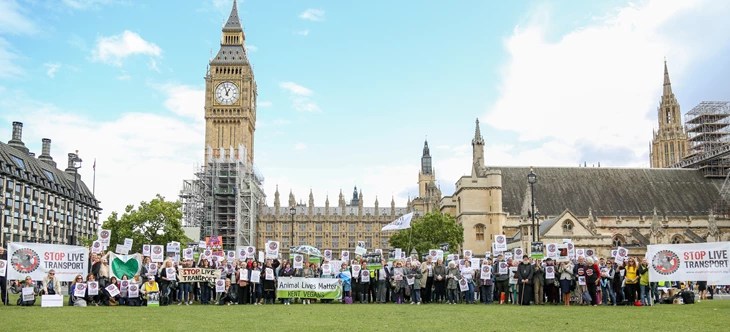
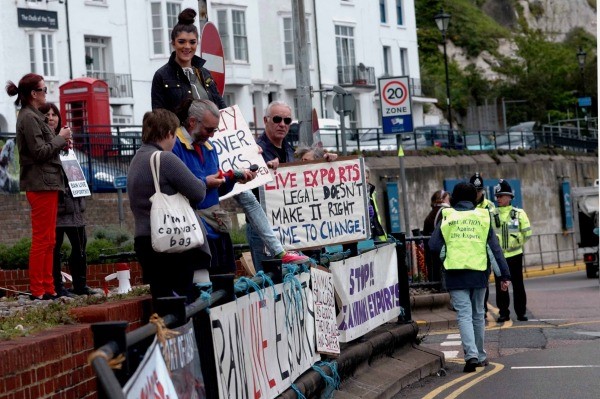
The UK government has recently (since Brexit and leaving the EU) undertaken a consultation on live animal transport which has been open to the British public and any for / against (live export) organisations wishing to submit comments on the subject of all categories associated with live animal transport (exports). We at WAV took a lot of time (several weeks) with precise submissions and evidence to argue our case on why we considered that long distance live animal transport is unnecessary and should be banned – or at the very most be a one off transport time of 8 hours maximum; which would basically stop all exports from the UK to mainland Europe.
Here is just one short clip of the response start:
Q1: Do you agree that livestock and horse export journeys for slaughter and fattening are unnecessary?
87% of respondents agreed that livestock and horse export journeys for slaughter and fattening are unnecessary. 11%4 disagreed and 2% did not express a definitive opinion. The majority of respondents who agreed that such journeys are unnecessary were members of the general public and animal welfare groups. The main reason respondents gave for agreeing was that they were concerned about welfare standards during the transportation of live animals. Many individual respondents and animal welfare organisations stated that live exports were cruel and degrading to the animals involved.
Great to see such a high figure of 87% of the British people and organisations basically agreed that live animal exports were unnecessary.
The full document which details the summary of responses to every section of the consultation:
Document title – UK Government: Improvements to animal welfare in transport Summary of responses and government response Date: August 2021
In this document – an Introduction by the UK government:
The welfare of all animals, including in transport, is a real priority for both the UK Government and the Welsh Government. The UK Government has a manifesto commitment to end excessively long journeys for slaughter and fattening, which we are taking forward through our Kept Animals Bill.
Now we have left the EU, we have the opportunity to look at alternative methods to better protect animal welfare during transport. The Farm Animal Welfare Committee (FAWC, now known as the Animal Welfare Committee) report in 2019 identified several aspects of transport that have a detrimental effect on animal welfare. They made a series of recommendations to the current regulations on animal welfare during transport. A Welsh Government response to this paper was published in 2020.
Following the findings in this report, we have looked at improvements to animal welfare in transport, including maximum journey times, thermal conditions and ventilation, space and headroom allowances and sea transport.
We have received a wide range of views to our consultation. We have listened to those views, and will continue to work with industry, NGOs and others to identify priorities where the evidence is clear and in other cases to explore some of the issues and evidence together in more detail. I want us to work together to develop practical solutions that generate the good welfare outcomes we all want to see.
This is a big step, but where the evidence is clear we must act. We want to work with industry to co-design solutions to achieve high welfare outcomes and help them make this transition.
The Rt Hon George Eustice MP Secretary of State for Environment, Food and Rural Affairs
Lesley Griffiths MS Minister for Rural Affairs and North Wales, and Trefnydd
As a result of the consultation, the following statement was issued by the UK government:
Live animal exports
Having considered the evidence available, including responses to this consultation, the government confirms it will proceed with a ban on the export of livestock (cattle, sheep, goats and pigs) and horses from England, Wales and Scotland for slaughter and fattening. Exports for slaughter and fattening from England, Wales and Scotland will be prohibited whether the animals originate from or are travelling through England, Wales and Scotland.
For the purposes of this consultation, exports for fattening were defined as exports where the animal is to be slaughtered within 6 months of arrival. A large proportion of respondents were critical of the proposed definition and considered a time limit to be unenforceable. Having taken account of this feedback, we propose to remove the reference to a 6-month time limit so that the prohibition will apply to all exports of livestock and horses where an animal is exported to the place of destination in order to be fattened for subsequent slaughter.
To further support our (WAV) welfare organisations call for a complete ban on live animal exports; I have decided to include here for you a series of undercover videos which were undertaken in years prior to the consultation relating to live export issues around Europe. I have included journey routes, times and animal species. So here we go:
CIWF live export investigations.
Below are undercover investigations undertaken by CIWF (London).
Video links for each are given; but if you wish to read additional information about the investigations, then head to:
Today, at the meeting of the Council of the European Union (Agriculture and Fisheries) a position paper was submitted by Cyprus and co-signed by Lithuania, Luxembourg and Malta, calling for the European Commission to explore the potential benefits of an EU wide positive list. The paper was supported by a vast majority of Member States, and demonstrates an understanding of the need to regulate the pet trade in a precautionary way across the EU.
An EU Positive List of allowed species is an instrument through which animals are objectively and scientifically assessed on their safety and suitability to be traded and kept as pets. If an animal is not found on the list, it would not be legal to keep it as a pet, as opposed to a negative list, which only includes prohibited animals.
Crucially, the Positive List represents a precautionary approach, as opposed to a reactive approach of the negative list, which lags behind trends in the (exotic) pet trade, leading to a false sense of acceptability, safety and welfare of species not on the list.
This comprehensive risk assessment can be done on the basis of various risk criteria, most notably those relating to animal welfare, biodiversity protection, public health and safety, and invasiveness risks:
Animal Welfare: many animal species are unsuitable to be kept as pets and, as a result, they suffer greatly at all stages of keeping. During capture, transport and eventual captivity, these animals’ complex behavioural and social needs cannot be met.
Biodiversity protection: animals taken from the wild can lead to population decline and endangerment of species. Keeping potentially invasive animals as pets, which can be released through escape or intentional release, poses an enormous threat to native wildlife.
Public health and safety: the threat of zoonotic disease transfer is well recognised due to the COVID Pandemic. Diseases that are harmful to humans can be passed from wild animals kept as pets, with the additional danger of stressed animals attacking or hurting their owners.
Currently, eight EU Member States (Belgium, Luxembourg, the Netherlands, Malta, Lithuania, Cyprus, France, Slovenia) have introduced positive lists legislation for distinct groups of animals, and eight more are discussing such measures.
Today Member States proved their strong support for the Positive List, recognising it as a fundamental tool to protect animals, human health and biodiversity. Now it is the turn of the European Commission to act and finally regulate the exotic pets trade. With the AGRIFISH Council and the EP supporting it, civil society’s requests can no longer be ignored. We celebrate today’s milestone but we want to see it through until the Positive List becomes an established practice in the EU. The perfect opportunity to do this is through the forthcoming Wildlife Trafficking Action Plan, due in the autumn, and also the new Animal Welfare proposals at the end of next year.
Reineke Hameleers, CEO, Eurogroup for Animals
We see today’s discussion on the EU Positive List in the AGRIFISH Council really as a watershed moment. It shows that EU Member States not only recognize the Positive List as the most effective and efficient way to regulate the exotic pet trade, but also see a clear need for EU-wide harmonisation. The current legislative framework is not equipped to prevent the animal suffering and cross-border risks to public health, public safety and biodiversity that are associated with this type of trade. We urgently need a solid, precautionary approach in the form of an EU Positive List. We expect the European Commission to take this call – now coming from both the European Parliament and Member States – very seriously.
David van Gennep, CEO, AAP Animal Advocacy and Protection
We share many things, but especially that of promoting veganism and also of stopping the transport of live animals all around the world – live exports.
Now we move from US investigations to the UK; and witness something you would never have seen in the UK until (very) recently; young calves being kept independently in plastic crate ‘calf hutches’. This system has probably been adopted by UK farms after the use and experiences of same in USA.
We have the pleasure of Animal Aid being based here in our (WAV) home county of Kent, England. They (AA) are one of the UK’s leading animal welfare / vegan organisations and are very well known in British animal rights for their undercover work. So here is the link to their website where you can read and learn lots. take action, and learn more about their work and campaigns:
Animal Aid recently investigated calf hutches at a Somerset dairy farm. These plastic crates ‘house’ individual calves – and sadly they are commonly used by around 40% of UK dairy farms.
Calves are usually taken away from their mothers within hours of birth, causing immense distress to both mother and infant. Housed alone, unable to feed naturally, they are instead given a timetabled ration of liquid milk.
These young calves spend their first few weeks of life in the isolating hutches, before either being sent directly for slaughter, or reared for their flesh. Females may be reared as a dairy cow – with around 30% of females kept as ‘herd replacers’. This involves repeated pregnancies, with every baby taken away, until the cow’s body is exhausted and spent – at which point she will also be killed for meat.
Our investigation found:
Calves living in tiny hutches, with their natural instincts to bond, socialise and feed restricted or completely denied.
Calves desperately trying to have full-body contact with one another, despite their confinement, as they naturally would.
Animal Aid documented a baby calf being physically abused and shouted at by a farm worker, whilst another simply laughed. This has been reported to the relevant authorities.
Animal Aid put the findings of our investigation to Dr. Helen Lambert, an internationally renowned animal welfare scientist and expert on animal sentience. Dr. Lambert’s work has shown that cows are intelligent and sensitive animals, with complex social lives.
In our film of the investigation, Dr. Lambert explains how the separation of cows from their mothers causes both mother and baby immense stress, and how the isolation of calves in these hutches has a terrible impact on their well-being. Calf hutches mean that these babies cannot interact with one another, feed as they naturally would, walk freely, run, jump or play.
“Cows are emotional, complex, intelligent and social beings with markedly different personalities. Research shows us that keeping calves in these small hutches with little room to move, and few opportunities to interact with one another, can have long-lasting and permanent effects on their well-being.” – Dr. Helen Lambert PhD
No mother, and no baby, deserves to go through this horrendous treatment for the sake of products we do not need. Animal Aid urges everyone who is shocked by these revelations to ditch dairy and adopt a plant-based diet.
Write to your local paper or radio station, encouraging people to have compassion for animals by going vegan. You can direct people to our website for friendly advice and amazing recipes.
Thank you!
The Animal Aid team
… and here are a few links to our super county – Kent; ‘The Garden of England’
If animal agriculture was so humane and ethical, the actual industry would be offering information and documentation of the slaughter “process”, not undercover investigators/employees; as it is, the industry execs and supporters relentlessly pursue ag-gag and attempt to criminalize the people who expose them.
Needing to continually update it’s PR, anag floats “organic”, “high welfare”, “certified humane”, etcetcetc., human-centric words to define animals’ required suffering and violent death, just so YOU can take their flesh and the calves’ naturally-intended milk instead … as an aging human with teeth…If being “humane” to animals is important, NOT killing/consuming/breastfeeding-from animals is MORE IMPORTANT.
Their repeated violations, fear, pain, and premature and infant violent death are what YOU PAY FOR. If you have to label a violent “process” as “humane” and that still requires violent death, that means it is inherently NOT, just like my plant-based food requires no HUMANE labels. This is an industry that values DEATH, which makes animal lives cost-prohibitive: animals are products, bred-to-be-dead, and as such, NO concern to their care/comfort/emotions/safety is regarded or even necessary as all are precluded by animals’ “worth” as mere products.
And no, animals aren’t treated like trash, they’re treated WORSE than trash since trash lacks the capacity for pain, suffering, fear, and misery. SL
Animal Recovery Mission’s (ARM) investigation at Natural Prairie Dairy stands as the first-ever cruelty investigation into an organic dairy farm in the United States, and the third installment of the largest dairy investigation of all time into Fairlife and Select Milk Producers, Inc.
The first two investigations released by ARM were Operation Fair Oaks Farms and Operation Fairlife. Natural Prairie Dairy is located in Channing, TX, and houses over 25,000 cows between its four locations. Over four months, an ARM investigator documented cows stabbed with screwdrivers, kicked and dragged when unable to stand due to illness and fatigue.
Cows were repeatedly and violently inseminated and mother cows were witnessed being chased while giving birth, and the babies immediately ripped away from their mothers. The following video footage was compiled by the ARM investigative team between March and July 2019.
The farm is still open for business today.
People concerned with buying organic dairy products are being deceived by the animal agriculture industry about the realities of how their food is being produced and the companies they support, which ARM documented and exposed during its latest four-month investigation. Organic dairies, such as Natural Prairie Dairy, are often viewed by consumers and the public as naturally more humane and ethical than non-organic farms. But just because a farm calls itself “organic” does not mean it’s cruelty-free. In most cases, the term “organic” serves a very different purpose, one that has nothing to do with the humane and ethical treatment of animals.
Consumers pay top dollar for organic milk and dairy products, compared to conventional products, and they justify making such expensive purchases because the products are supposedly better for their health, the environment, and for the animals. On organic milk labels, dairy companies reinforce this message, showing images of cows smiling and grazing in green pastures. That could not be further from the truth.
Do these cows look happy to you? The following evidence was compiled by undercover ARM investigators at Natural Prairie Dairy over four months. Investigators who return to the farm – or any farm like it – will witness similar acts of cruelty.
Cows are removed from their holding barns every eight hours to be milked, day and night. It is important to note that Natural Prairie Dairy is equipped with camera surveillance and that the actions of employees are recorded and overseen by management. As the company states on its website, all Natural Prairie Dairy employees receive training in “animal welfare and handling before they begin work on the farm.” “Unfortunately, [Natural Prairie] failed to deter and/or stop the systemic cruelty, torment, and squalid living conditions suffered by the cows,” ARM stated in the Operation Natural Prairie report.
Natural Prairie Dairy promises to “take care of the cow” on its website. “A sustainable farm ecosystem means giving our cows the very best care.” In light of the farm’s commitment to animal welfare, the ARM investigator witnessed extreme and violent animal cruelty within the first few hours of employment.
Daily, cows were tormented, kicked, hit with shovels, and stabbed with screwdrivers by the farm’s so-called animal caregivers. During its grueling investigation, ARM concluded with the same abhorrent conditions – abuse and cruelty towards the dairy cows – that was evident in ARM’s conventional dairy farm investigations. Amongst these criminal acts upon animals, the investigator documented dairy cows being tormented. Downer cows were repeatedly beaten to get up. Cows that couldn’t prop themselves back up were stabbed with screwdrivers, pulled by the head by front loaders, dragged, picked up by the bucket and driven to a holding area where they awaited transport to be sold for slaughter.
Other cows were left to die slowly in barns, some cows taking a whole day or longer to die, all under the supervision of management. Cows were seen falling into cesspools and almost drowning. Many of the cows suffer from infection and lameness and were reluctant to eat, so they were force-fed with metal tubes by untrained employees. The ARM investigator also documented dead calves and cows in a dumpsite. In 2008, Organic Valley terminated its contract with Natural Prairie Dairy for suspected violations of the USDA’s Guidelines for Organic Certification of Dairy Livestock, among other organic labeling standards.
The average size Organic Valley member farm has approximately 65-70 cows, according to an investigation conducted by the Cornucopia Institute at Natural Prairie Dairy in 2008. Satellite imagery indicated that unlike legitimate organic farms, that commonly have one cow per acre, Natural Prairie had as many as 7.2 cows per acre.
Natural Prairie’s website states: “During the warmer months, we graze our cows on acres and acres of beautiful green pastures. When it gets cold, they stay in spacious, open-air, free-stall barns that protect them from the elements.” This could not be further from the truth. According to the ARM investigator, if a cow isn’t being milked, they spend their lives in illegally overcrowded barns where they are forced to lay on cement covered in feces.
Many develop footrot and cannot walk. The farm’s gross violations of the USDA’s organic dairy certification guidelines is a crucial component of this investigation. According to the guidelines, continuous total confinement of any ruminant animal over six months of age indoors is strictly prohibited. Throughout his time on the farm, the ARM investigator found that Natural Prairie Dairy cows well enough and willing to graze only did so for about an hour a day during the grazing months.
Many others never left the barn. Animal Recovery Mission Donald DeJong is the owner and CEO of Natural Prairie Dairy. Soon after ARM began this investigation, it also discovered that DeJong is the vice chairman of Select Milk Producers, and a Board of Directors member of Fairlife and he has strong personal and business associations with Mike McCloskey of Fair Oaks Farms and Fairlife. Natural Prairie Dairy currently supplies raw dairy to Kroger, Costco, and Publix through Aurora Organic Dairy’s bottling plant in Denver, Colorado. The company is in the process of expanding its operations with construction underway in Newton County, Indiana, that will supply dairy to Meijer Grocer, the Midwest, and East Coast.
The undercover investigator was fired after management found photos of animal abuse on his cell phone. They quickly deleted the photos – to no avail. ARM investigators submitted a substantial body of evidence to the Hartley County Sheriff’s Office for review. “Consumer power is the most effective vehicle towards creating change by raising awareness of these criminal findings,” ARM said in a statement. “Leave dairy products out of your cart.”
Download Your FREE Vegan PDFHERE Order a FREE vegan kit HERE Dairy-Free Info HERE Take the Dairy-Free Challenge HERE Click HERE for more Dairy-FreeFish alternatives can be foundHERE Learn about eggsHERE Find bacon alternativesHERE and HERE Take PETA’s Cruelty-Free Shopping Guide along with you next time you head to the store! The handy guide will help you find humane products at a glance.
Order a FREE copyHERE Searching for Cruelty-Free Cosmetics, Personal-Care Products, Vegan Products, or more? Click HERE to search.Free PDF of Vegan & Cruelty-Free Products/Companies HERE Click HERE to find outHow to Wear Vegan! Want to do more than go vegan? Help others to do so! Click below for nominal, or no, fees to vegan literature that you can use to convince others that veganism is the only compassionate route to being an animal friend: PETA HERE Vegan Outreach HERE Get your FREE Activist Kit from PETA, including stickers, leaflets, and guideHERE Have questions? ClickHERE
Zouma, 27, apologised for his actions after graphic footage was filmed and shared by his younger brother Yoan, 24, on social media.
He admitted two counts of causing unnecessary suffering to a protected animal, namely a cat.
Yoan, who was accused of aiding, abetting, counselling or procuring his Zouma to commit an offence, admitted one offence during the hearing.
Two further counts against the men were dismissed.
Zouma arrived at court accompanied by several security guards who emerged from a vehicle holding umbrellas to form a protective shield around him.
In the video, which was widely condemned, Zouma can be seen kicking the Bengal cat across his kitchen, before throwing a pair of shoes at it and slapping its head.
Prosecutor Hazel Stevens said the 40-second clip appeared to be carried out after the cats were deemed responsible for damaging a chair in the home.
She said: “Kurt Zouma is determined to chastise or carry out some sort of retribution for the damage caused.”
Ms Stevens told the court Zouma could be heard saying: “I swear I’ll kill it, I swear I’ll kill it.”
Experts said the cat would have likely suffered soft tissue damage to the head, as well as mental and physical suffering.
Concerns over the cat’s welfare were raised by a woman who saw the footage which was also shared on snapchat.
The woman was so appalled that she cancelled a date with Yoan, saying: “I don’t think hitting a cat like that is OK – don’t bother coming today.”
The court hearing comes following an investigation led by the RSPCA, which has brought the prosecution against the Zouma brothers.
The animal welfare charity seized two cats belonging to Zouma after the video was circulated online. The cats remain in the care of the RSPCA.
Zouma has agreed for the two male Bengal cats to be rehomed, the court heard.
Personally, I feel that he should be given a community sentence, working at a cat shelter for 6 months, say 15 hours week; cleaning out cat poo; as a financial fine for his actions is not enough. He gets tens of thousands £ a week for being a footballer; he needs to give his bit to animal welfare and the community; and working free of payment at a cat shelter is one way to this.
Lets see what the sentencing on June 1st brings; we will report it.
What can be learned from this ? – in the UK, when you abuse animals, you face the consequences of your actions; and sometimes they are not nice. Brits don’t like animal abusers. Alternatively, we will pay for him to have a one way flight ticket back to France, on the guarantee he remains there.