Cambodia: Petition: END CRUEL ORANGUTAN BOXING MATCHES AT CAMBODIAN ZOO.

SIGN: END CRUEL ORANGUTAN BOXING MATCHES AT CAMBODIAN ZOO

Posted by Katie Valentine

SIGN: End Cruel Orangutan Boxing Matches at Cambodian Zoo
Image Credit: Aaron Gekosi/Born Free

PETITION TARGET: Cambodian Ambassador to the United States Chum Sounry

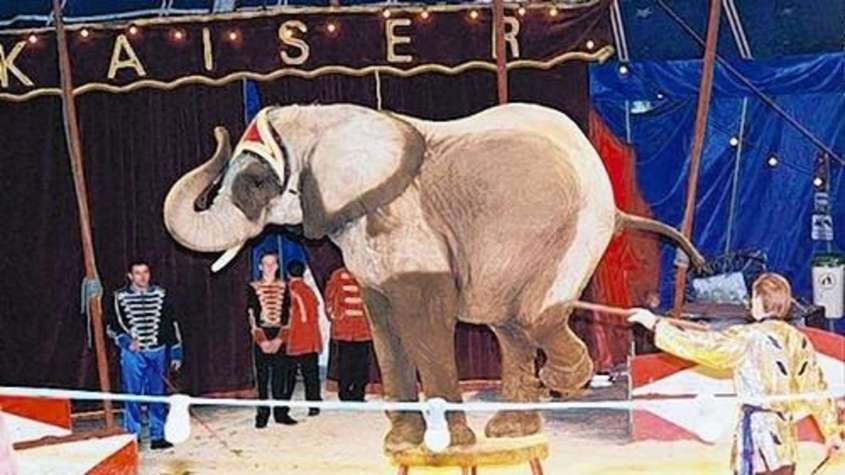
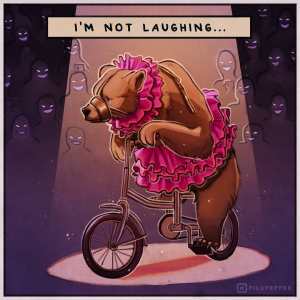
The Phnom Penh Safari zoo in Cambodia showcases disturbing orangutan boxing matches, forcing innocent apes to fight each other in a boxing ring. The animals are also made to ride bikes, hula-hoop, and wear degrading outfits, as shown in numerous TripAdvisor photos.

Orangutans aren’t the only animals abused at this zoo: tigers jump through flaming hoops and cower in fear of trainers’ electric prods; crocodiles are hit with sticks and have their mouths taped shut for selfie opportunities; and elephants are controlled with bullhooks.

The animals appear neglected, too. The tigers are declawed and extremely thinaccording to EARS Asia. And the drinking water is filthy, according to a Khmer Times article that has since been deleted.

Animals do not exist for human amusement. They deserve natural habitats and loving caretakers, not cruel zoos where they’re forced to perform for park-goers.

The abuse must stop. Sign this petition urging Cambodian Ambassador to the United States Chum Sounry to call for an end to all cruel animal performances at the zoo and push for a thorough investigation into the animals’ treatment.

Please support the campaign – sign the petition at:

Mali: UPDATE: 20 FORMER DOG MEAT TRADERS RECEIVE FARMING EQUIPMENT TO START NEW LIVES.

UPDATE: 20 Former Dog Meat Traders Receive Farming Equipment To Start New Lives

UPDATE: 20 FORMER DOG MEAT TRADERS RECEIVE FARMING EQUIPMENT TO START NEW LIVES

Posted by Colleen Jaskot 

With funding from Lady Freethinker (LFT), local partner and nonprofit ARAF-Plateau Dogon gifted 20 former dog meat traders life-changing farming equipment to start their new livelihoods growing crops. These are the first of 37 more dog meat dealers transitioning to a cruelty-free means of sustenance.

This transformation was officially marked and celebrated in a ceremony chaired by the Sébougou mayor. The celebration included local village chiefs and other officials, according to ARAF-Plateau Dogon.

The switch will save thousands of lives, as former dog meat sellers in Mali give up the trade and turn to plant farming for their livelihoods. The former traders are now speaking out against selling and eating dogs, too.

“Lady Freethinker applauds the courage and determination of these former dog meat traders for turning to a more compassionate livelihood,” said LFT President Nina Jackel.

LFT funding is going toward a quarter of a hectare of land for each farmer. It also helps provide supplies to grow the crops, which will include tubers, vegetables, and small fruit trees with short cycles.

Most dog meat sellers are eager to give up the trade and only take part to feed their families. By growing crops, they’ll have a sustainable means of income. The initiative benefits the entire community, where some people live on less than $1 per day and urgently need resources.

This is part of a larger effort between LFT and ARAF-Plateau Dogon to help raise awareness of animal cruelty in the Ségou region of Mali, where more than 300 dogs are killed each day for meat.

Dogs are rounded up from villages — either taken off the street or sold by guardians who no longer want them — forced to walk for days without food or water, bludgeoned with sticks, and roasted over a fire.

In addition to encouraging dog meat traders to give up the trade, activists are traveling to villages to raise awareness of the campaign and encourage humane treatment of dogs.

The dog meat trade has grown in recent years there, with Mali’s growing population and lack of adequate food sources (partly due to climate change-related effects), according to ARAF-Plateau Dogon.

Lady Freethinker is proud to be a part of this initiative and take this big step toward ending the dog meat trade in Mali.


Denmark; Major Breaking News 13/11/20 – Kopenhagen Fur to Close.

Kopenhagen Fur to close

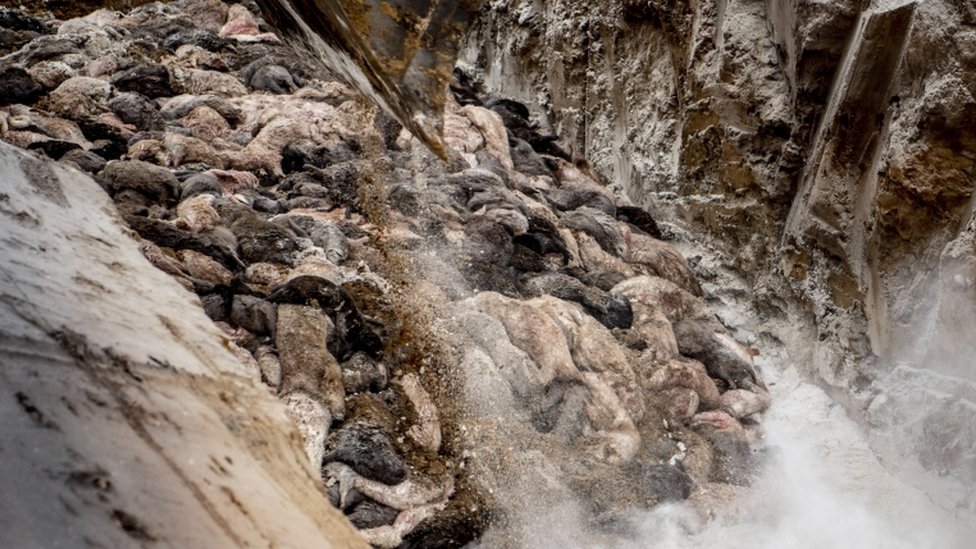
Kopenhagen Fur, the world’s largest fur auction house and owned by Danish fur breeders, has announced plans to close.  This follows the news last week that Denmark announced plans to cull all its mink – as many as 17 million – after a mutated form of coronavirus that can spread to humans and threatens the efficacy of potential vaccines was found on mink factory farms.
 

Jesper Lauge, CEO at Kopenhagen Fur said: “the loss of the Danish mink production means that the ownership base disappears and therefore, the company’s management has decided to gradually downsize the company and make a controlled shutdown over a period of 2-3 years, “

The devastating impact of fur factory farming is now exposed as unsustainable, unprofitable and cruel. The coronavirus mink outbreaks have made news around the world. It is upsetting to see so many innocent animals killed in such high numbers and worrying to contemplate the potential threat to human health.

Fur farming is a disaster for animal welfare and a risk to human health. It is now important for governments to ban this cruelty once and for all.

A number of outrageous failings in the animal welfare of mink have been reported in Denmark over recent days, including:

  • A viral video showing a still alive mink surrounded by dead carcasses in a killing box. The animal, which is half gassed, is struggling to breath through an open gap in the box as workers attempt to roughly push the animal’s head back inside.
  • Numerous accounts report that thousands of mink bodies have been strewn across a motorway in Denmark.
  • Denmark’s animal welfare group, Dyrenes Beskyttelse, has reported the Danish state to the police amid accusations of cruelty.

The bombshell announcement from Kopenhagen Fur comes as the European Centre for Disease Prevention and Control said on Thursday, 12 November, that the virus mutation found in Danish mink “could potentially affect the level of overall vaccine effectiveness of vaccines under development.”

England: Respect for Animals Campaign’s Director, Mark Glover, said:

“I have devoted decades of my life to campaigning against the fur industry.  The amount of animal cruelty I have seen during these years has stayed with me. The fur trade is a morally repugnant industry, relying on terrible animal suffering for a product no one really needs.

We have come a long way in the 20 years since the UK fur farming ban passed into law, which was a bitter fight.

The demise of Kopenhagen Fur is welcome but we should not forget the countless millions of suffering animals this company has profited from for around 90 years.

We now need to shut down the morally bankrupt fur industry everywhere. We won’t stop until we succeed.”

——————————————————–

Kopenhagen Fur, the world’s largest fur auction house and owned by Danish fur breeders, has announced plans to close.  This follows the news last week that Denmark announced plans to cull all its mink – as many as 17 million – after a mutated form of coronavirus that can spread to humans and threatens the efficacy of potential vaccines was found on mink factory farms.

The 90-year-old company says it has enough pelts to hold auctions next year and possibly further into the future, but will start liquidating the business after that, according to a statement on its website.

Jesper Lauge, CEO at Kopenhagen Fur said: “the loss of the Danish mink production means that the ownership base disappears and therefore, the company’s management has decided to gradually downsize the company and make a controlled shutdown over a period of 2-3 years, “

The devastating impact of fur factory farming is now exposed as unsustainable, unprofitable and cruel. The coronavirus mink outbreaks have made news around the world. It is upsetting to see so many innocent animals killed in such high numbers and worrying to contemplate the potential threat to human health.

Fur farming is a disaster for animal welfare and a risk to human health. It is now important for governments to ban this cruelty once and for all.

A number of outrageous failings in the animal welfare of mink have been reported in Denmark over recent days, including:

  • A viral video showing a still alive mink surrounded by dead carcasses in a killing box. The animal, which is half gassed, is struggling to breath through an open gap in the box as workers attempt to roughly push the animal’s head back inside.
  • Numerous accounts report that thousands of mink bodies have been strewn across a motorway in Denmark.
  • Denmark’s animal welfare group, Dyrenes Beskyttelse, has reported the Danish state to the police amid accusations of cruelty.

The bombshell announcement from Kopenhagen Fur comes as the European Centre for Disease Prevention and Control said on Thursday, 12 November, that the virus mutation found in Danish mink “could potentially affect the level of overall vaccine effectiveness of vaccines under development.”

The UK has imposed an immediate ban on all visitors from Denmark amid concerns about the new strain.

The political fallout in Denmark has been complicated. The PM’s decision to wipe out Denmark’s entire mink population lacked a legal mandate, forcing the government to regroup and draft an emergency bill. That failed to win the three-quarters parliamentary support needed to pass, and the legislative process is now in limbo.

The government currently expects a standard bill to pass with a simple majority of more than 50%, and wants all Danish mink farming to be banned until 2022. That means breeding animals will be wiped out, meaning the scale of Denmark’s mink industry will be unrecognisable for the foreseeable future and may never recover.

WAV Posts:

Read them all here:

https://worldanimalsvoice.com/?s=denmark

New Zealand: Great News ! – Today we have heard that we have made history for mother pigs.

Today we have heard that we have made history for mother pigs.
 

In June this year, SAFE partnered with our friends at the New Zealand Animal Law Association to challenge the use of cruel farrowing crates in the High Court. This was the first time in New Zealand history that such a challenge had taken place.
 
The High Court has ruled this morning that the minimum standards and regulations for the use of farrowing crates are unlawful.

Simply put – the High Court agrees that using farrowing crates to house mother pigs is a violation of the Animal Welfare Act.

As I write this, our hardworking legal team from the New Zealand Animal Law Association are working together with the team here at SAFE to go through the judgment in detail and plan the next steps. I will be in touch next week when we have more information to share.

The High Court has ruled that the use of farrowing crates is unlawful.
This is a historic judgment for mother pigs.

From every generous donation, every petition signature, every contact with an MP, every letter to the editor and every share on social media – your support of mother pigs and your belief in justice has had a real, life-changing impact on the way we treat animals in New Zealand.

Debra Ashton
Chief Executive Officer

SAFE for animals – New Zealand.

WAV Comment – Brilliant News – well done to all the team for getting justice for pigs.

England: Ramp It Up ! – E Mail Tesco’s New CEO and Tell Him to Stop Destroying the Beautiful Amazon for Meat Products In His Stores.

WAV Comment:

This is mainly for UK supporters; but we guess international e mails are also accepted – which strengthens the case.

As our many UK supporters will know; Tesco, a major food store and supplier, have a saying that ‘Every Little Helps’.

How about that is changed to ‘Every E mail Helps’.  Click on the link below and send a clear message about Amazon rain forest destruction to the new Tesco CEO Ken Murphy.

Tell him; we don’t want the beautiful Amazon forests destroyed for the production of cheap meat that is sold in your stores – simple as that !

Regards Mark

(sent to us by Liza in London – animal campaigner buddy)

Last month Tesco announced that they’re going to increase their sales of plant-based meat alternatives by 300%. [1]

But unless they also reduce the amount of industrial meat on their shelves, forests like the Amazon will continue to burn. For the first time in six years Tesco now has a new CEO, and we have a real opportunity to make sure he does the right thing.

Will you email Tesco’s new CEO, Ken Murphy and ask him to stop supporting deforestation?

Opportunities like this don’t come around very often and a new CEO could mean a fresh start. Ken Murphy has the chance to do something positive with his time in charge, but he needs to act fast.

As you’re reading this email South American forests like the Amazon continue to be destroyed to produce industrial meat, and the situation is getting worse. [2] As the UK’s biggest supermarket, Tesco is directly involved in this destruction by selling unsustainable amounts of meat, and by doing business with forest-destroying companies.

Earlier this year over 60,000 of you emailed Tesco’s former CEO, which helped lead to their announcement on plant-based meat alternatives. Now there’s a new CEO in charge, we need to keep up the pressure to make sure Tesco doesn’t stop there.

Please email Ken Murphy now and tell him personally about why we need to protect our forests.

With a new CEO in charge, this is a unique opportunity to make our voices heard. And the more of us who get in touch, the louder the message will be – Tesco should lead by example and stand up to deforestation.

I’ve drafted an email to new CEO Ken Murphy that you can send or edit. It asks him to cut ties with forest-destroying meat companies and halve the amount of meat that Tesco sells.

Adding a line at the start of the email to express why you care about deforestation will have an even bigger impact on Ken Murphy. You can also edit the subject line.

Thanks again for all you do,

Jack

Greenpeace

Notes

[1] Tesco sets 300% sales target for plant-based alternatives to meat

[2] Exclusive: Brazil Amazon fires likely worst in 10 years

EU: European Commission Will Invest 2 Million Euro in Research to Hopefully Move Away from the Inhumane Procedure of Pig CO2 Killing.

Footage of pigs being killed by CO2 stunning method | Daily Mail Online

Photo – Eyes on Animals (NL).

WAV Comment:

The killing of pigs using CO2 is barbaric, as you can read and see in the video below.  We are not friends of the EU; but we do welcome the new Parliament approval of funding to move away from the cruel and disgusting practice.

Information:

Pigs are stunned using a 70% to 90% carbon dioxide concentrate. … Once the animals have been stunned, they should be bled within 15 seconds to avoid the risk of them regaining consciousness.

The slaughter method in question involves lowering pigs into a gas chamber containing CO2, causing them to gasp for breath and hyperventilate, causing pain and panic amongst the terrified animals. This often goes on for 30-60 seconds or more.

UK – Now, at least half of Britain’s pigs are killed this way.

Instead of being discarded as some terrible anachronism, CO2 stunning has instead become industry standard. The convenient way of killing pigs. Yet, it’s not only major supermarkets and industry assurance schemes like Red Tractor that are allowing it: even some organic pigs can be killed this way.

As it stands, consumers have no way of knowing whether meat comes from pigs gassed or stunned by any other method. There’s nothing on the label. There’s no obvious way of choosing one supermarket over another, in this case, as most if not all have gone down this route. You can’t even tell by choosing higher welfare labels like ‘outdoor bred’, ‘outdoor reared’ or ‘organic’. Consumers are left with the very real assumption that if you’re buying pork or bacon, then it may well be from an animal killed in a gas chamber.

Video –

Video – https://videos.dailymail.co.uk/video/1418450360/2015/02/1418450360_4035912888001_pig-1-1423219569329.mp4

Read all about it at:

Scandal of Supermarket Gassing of Pigs

High-concentration CO2 stunning of pigs: the European Parliament approves funding to move away from the cruel practice

12 November 2020

Press Release

Research project to find alternatives to high-concentration CO2 stunning or killing of pigs receives budget approval from the EP. Now the European Commission will invest 2 million euro in applied research in an effort to move away from the inhumane procedure.

For immediate release: Brussels 12/11/2020

On November 12, the European Parliament (EP) voted in favour of a preparatory action, initially tabled by MEP Fredrick Federley (RE, SE), aimed at finding alternatives to high-concentration CO2 stunning or killing of pigs. The EC will then invest in applied research to move away from this method, which, in spite of being inherently inhumane, is the most frequently used in all major EU pig slaughterhouses. 

Already in 2019, Eurogroup for Animals published a position paper urging the European Commission to fund research into alternatives, with a view to phasing out this method by 1 January 2025. The use of high-concentration CO2 for the stunning or killing of pigs is allowed by EU Regulation 1099/2009 (the Slaughter Regulation). However, exposure to CO2 is highly aversive for the animals and causes acute pain and severe distress from first exposure to the gas to loss of consciousness.  

This was recently confirmed by the latest EFSA opinion on the welfare of pigs at slaughter, which concluded that “There are no preventive or corrective measures to the pain, fear and respiratory distress caused by the exposure to high CO2 concentrations as this is inherent to the stunning method. The only way to prevent the hazard related to exposure to high CO2  concentrations is to use other gas mixtures like inert gasses or mixture of inert gases containing low CO2  concentrations”.

By voting in favour of this research project, the European Parliament sent a strong signal on the importance of EU-funded research into animal welfare friendly alternatives to CO2 stunning of pigs. For the first time, a substantial sum will be invested by the EC in an applied research project to find painless alternatives for pig stunning. The outcome of the study should lead to a prohibition of CO2 stunning of pigs through the updating of the legislation

Reineke hameleers, CEO, Eurogroup for Animals 

The EU is currently the first exporter of pig meat in the world, with 5.5. million tonnes of selected pig products exported in 2019 and a stable demand driven by the Chinese market. It is imperative that these animals are stunned painlessly. 

The European Commission is going to propose a revision of the current animal welfare acquis as part of the EU Farm to Fork strategy, and the rules on slaughter will be updated in the light of the latest scientific evidence. It is expected that the findings of this preparatory action will contribute to guiding this revision process. 

ENDS

Australia: the crocodile mafia expands

A French fashion house has teamed up with Northern Territorian (NT) Mick Burns to buy a former garden farm near Darwin that will be building Australia’s largest crocodile farm.

The Northern Territory’s crocodile farming industry (NT) will be given a major boost with the finalization of a land deal outside Darwin where a $40 million development is planned.

Important points:

-The proposed farm will house up to 50,000 saltwater crocodiles and was purchased for $ 7.25 million
-During full production, 30 people will be employed on the farm
-Hermès and Louis Vuitton control most of the NT crocodile farms and prefer Australian saltwater crocodiles

PRI Farming – ultimately controlled by French high fashion label Hermès – has bought The Sweet Life, a former melon and banana farm in Lambells Lagoon, for $ 7.25 million.

The Lambells Lagoon fruit and vegetable farm.

A veteran of the NT crocodile farming industry, Mick Burns, is the director of PRI Farming along with three French nationals who are also directors of Hermès.

The company plans to build a facility for 50,000 saltwater crocodiles to be raised for skin and meat products.
The stated development costs amount to around 40 million US dollars.
The proposed crocodile farm is said to be Australia’s largest crocodile farm.

If Burns’ plan is carried out, it will increase the number of crocodiles bred in the NT by 50 percent.

Hermès’ crocodile leather handbags can sell for over $ 30,000. (Supplied: Mario Anzuoni / REUTERS)


French fashion labels Hermès and Louis Vuitton own or control the vast majority of crocodile farms in the NT.

“They look for the crocodile eggs in the Northern Territory, raise them on their own farms – according to their own standards – and these standards are very high because the skin of the animals must not be damaged so that a very high-quality product can be made from it,” explains Geoff McClure, a crocodile farm advisor, to “ABC”.

Both Hermès and Louis Vuitton tend not to put their crocodile farm holdings in the spotlight – none of their websites mention they are in the industry.

“ABC” Rural believes that crocodile farmers who have been bought up by luxury brands often do not need to talk about sales through nondisclosure agreements.

According to McClure, Hermès, and Louis Vuitton like Australian saltwater crocodiles because they have “more scales per unit area on their stomach” (!!!)

“The NT was traditionally the home of crocodile breeding due to climatic factors – it’s warmer there,” he said.

“In the NT the egg harvest is well established … and the number of eggs that can be removed under license is increasing. Hence, there is some certainty about the consistency of egg supply that you will not get in Queensland or Western Australia.

In 2018/2019, over 24,600 crocodile skins were exported from the NT, according to the Ministry of the Environment and Natural Resources (DENR), with the industry valued at $ 26.7 million for the NT economy.

This means high income for the Australian region, as it is a growing industry that is also interesting for tourists, the report said.

Mick Burns, the director of PRI Farming declined ABC Rural’s request for comment.

https://www.afr.com/property/commercial/hermes-link-to-planned-nt-crocodile-farm-20200918-p55x0z


And I mean…That the human species completely disrupts the natural order is undeniable – the depth and scope of our crimes are unpredictable and incalculable.

We would therefore like to thank the pandemics for intervening and perhaps achieving what we are currently unable to do – namely, weakening or even stopping the crimes of the most dangerous and vicious predators.

My best regards to all, Venus

UK Poultry Giant Suspended After Undercover Footage Shows Birds Being Violently Abused.

Video shows ducks sold by Tesco, Asda and Waitrose ‘brutally shackled on electric waterbath lines and dragged by wings’

Co-op suspends poultry giant after footage shows workers rammed birds with force during heated arguments

See the undercover video footage here:

https://www.independent.co.uk/news/uk/home-news/ducks-supermarkets-tesco-waitrose-sainsbury-asda-animal-cruelty-b1721209.html

Ducks sold by Sainsbury’s, Waitrose and Tesco by were brutally hung from shackle lines and dragged by their heads, necks, and wings while still alive in a series of violent breaches of guidelines caught on camera.

Workers were filmed rough-handling ducks, ramming them with force into the shackles.

Staff at the Red Tractor-endorsed Gressingham Duck – which also supplies the Co-op, Asda and Morrisons – even used live ducks to hit torn-off birds’ feet from the shackles, investigators claim.

Several workers were seen yelling heatedly at one another, which experts say led to their aggressively manhandling the ducks – many of which are thought to be destined for freezing ahead of Christmas dinners.

The Co-op suspended Gressingham as a supplier after seeing the footage, and others said they were launching investigations.

Food standards chiefs are to investigate the allegations against the company, which is the UK’s largest duck producer, killing around eight million birds a year.

Undercover footage reveals ducks being grabbed roughly by workers from crates, hung upside down and sent along shackle lines into an electrical waterbath, according to the Animal Justice Project (AJP) group, which filmed inside the slaughterhouse.

Use of shackles is legal, but government farm animal welfare advisers called in 2009 for live shackling to be phased out, saying it “may cause considerable pain and distress”.

But rough handling, causing birds distress and pulling them by their body parts all break codes on animal welfare at slaughter – which is illegal.

The investigators claim they saw “a staggering” 15 breaches of EU, UK government and Red Tractor guidelines in just one day at the Suffolk-based abatare poultry processing plant” with “no clear evidence of abuse or neglect”.

Sales of duck and geese had been predicted to rise this Christmas with the “rule of six” meaning smaller family gatherings.

AJP claims ducks arrived at the slaughterhouse with huge sores and in filthy crates.

“Workers were caught on camera brutalising and rough-handling ducks, ramming them with force into shackles, which is likely to cause extra pain and injury to their delicate legs. Ducks were also filmed being grabbed and dragged by their heads or necks, one leg and wings across crates. Another breach of guidelines,” said spokeswoman Claire Palmer.

The birds are seen in the video sometimes still flapping as they are sent to an electrical waterbath – practices the group says are condemned by UK and European authorities. “Shackling and involuntary inversion appeared to cause the ducks significant distress,” said Ms Palmer.

Once on the shackles, video footage showed some birds were left hanging for two periods well over the legal time limit of two minutes: once for at least 14 minutes and once for almost 12 minutes, investigators say.

The European Food Safety Authority, as well as the Farm Animal Welfare Council, has urged that live shackling and waterbath stunning be replaced as soon as possible “to spare birds from severe welfare consequences”.

The Food Standards Agency said it would seize Gressingham’s CCTV to inspect it.

Guidelines say people must not drag animals by the head, ears, tail or handle them in a way that would cause pain or suffering; birds being shackled must be relaxed and not touch each other or be distressed, and poultry must not get a shock before touching a waterbath.

Alick Simmons, former UK government deputy chief vet and former Food Standards Agency veterinary director, said: “The video shows a cramped hanging-on bay and a slaughter line being run too quickly for the available space, resulting in the ducks being frequently handled inhumanely and without due care.

“Operatives argue with each other; they are distracted and hence take poor care.

“Shackled birds are allowed to touch each other meaning that birds further up the line will receive pre-stun non-lethal shocks.”

Read more on Sht 2

Continue reading “UK Poultry Giant Suspended After Undercover Footage Shows Birds Being Violently Abused.”

New Zealand turns off the lights to help seabirds!

💙 A great campaign to protect sea birds!

The New Zealand town of Punakaiki has decided to turn off the lights in the next few weeks. The aim is to help save an endangered seabird whose only known breeding site is in the immediate vicinity of the small community. 🐦

Specifically, the street lights on a 3.4-kilometer stretch on the South Island will remain switched off at night until the New Year, the authorities said on Wednesday.

The reason: juveniles of the Westland petrel, classified as endangered, could lose their orientation due to the lights.
Especially bright lights could cause the animals to crash land, said Bruce Stuart-Menteath, spokesman for the Westland Petrel Conservation Trust, which is committed to protecting birds.
Some of them were seriously injured or were run over by cars.

Spotting the lanterns is a “fantastic” initiative for the birds, who normally can’t get off the level ground, said Stuart-Menteath.

The breeding season lasts from April to December. The birds are only active on land at night.

https://twnews.at/at-news/neuseeland-dreht-zum-vogelschutz-die-lichter-ab

And I mean…The good news gave us a warm light!
We should all learn from such examples.
And a lot of energy is saved too.

A great action, THANK YOU New Zealand! 🐦💙

My best regards to all

Venus

EU: All Talk and Paperwork, But NO Action. Welfarm to Release 3 Shocking Videos to Call for a (Very) Long-Overdue End to the Export of Live Animals.

WAV comment – having argued the case for animals in transport for over 30 years whilst also calling for a ban on live exports; we have always declared that the EU is utterly useless at enforcing (its own) legislation when it comes to live animal transports. The video here; the first of 3; shows this.

EU = junk = animal abuse.

Welfarm to release three shocking videos to call for a long-overdue end to the export of live animals

12 November 2020

WELFARM

It only takes three videos for Welfarm, Animals International and Animal Welfare Foundation to show the French government the horrifying state of play of what exporters and livestock breeders do to animals they export to North Africa and the Middle East.

From European ports to Lebanese slaughterhouses to Moroccan cattle markets – four NGOs captured the dreadful fate of the thousands of French cows shipped across the Mediterranean every week. These investigations will be released by Welfarm over the next three weeks.

In a petition to the French government, Welfarm calls for the suspension of live animal exports to third countries. “The Ministry of Agriculture, exporters, breeders and the port of Sète are aware of these violations, yet they continue to export animals” states Adeline Colonat from Welfarm. And for good reason as cattle exports generated nearly 1.5 billion euros in 2018, of which 118 million went to third countries.

“France cannot even detect and solve problems in its own slaughterhouses, so how can we imagine that we can have the slightest influence on what happens on the other side of the Mediterranean? The truth is that France no longer has any control as soon as the animals leave our soil. The only way to avoid their suffering is not to send them there alive. ” 

Eurogroup for Animals and its members urge the EU to stop live transport especially to Third Countries and to prepare a strategy to shift to a meat and carcasses and genetic material only trade.

Video 1: Death before boarding the boat

The first video of the investigation series is from July 2020 and sets the scene in Port of Cartagena, Spain, which calls itself a “pioneer in animal welfare”: A cattle with fractured legs is dragging itself along the foot of a ship. Born in the Puy-de-Dôme, exported to Spain for fattening, it is to be shipped to Libya.

A tractor will have to drag the paralysed and screaming animal into a lorry. Heading for the slaughterhouse. By law, it should have been euthanised on the spot, but in this case, it would be impossible to profit from his meat… Like this cattle, 425,000 French cattle are exported every year to Spain for fattening. How many then embark in Cartagena? “It’s impossible to say since they disappear from French statistics”, explains Adeline Colonat, head of the project team on transport in Welfarm, “but we are the leading supplier of cattle to Spain, which in turn is the leading exporting country in Europe.” 

Maria Boada (Animal Welfare Foundation), who captured these images alongside Animals International and Welfarm explains further: “In European ports as well as in Third Countries, the lack of controls, infrastructures and sanctions is disastrous for animals. The presence of a veterinarian is not even compulsory on board of ships leaving the EU. Thousands of animals are deprived of care for days or even weeks”

Read more at source

Action Transports