From the Facebook page of “Committee against Bird Murder e.V.
Back to the Stone Age – bird catchers threaten hikers: In Malta, catching birds was allowed again – yesterday’s animal tormented became “scientists” overnight.
They are supposed to “only” catch the birds that they have otherwise locked in small cages and sold on the black market for a lot of money, check for any known bird rings and immediately release them again.
Effective control is not provided and with thousands of approved fishing facilities not even possible. The video of a team from the “Committee Against Bird Murder”, recorded on Malta’s neighboring island of Gozo, shows how the new “scientists” behave in the field.
The bird-catcher threatens a walker with a stone because she comes too close to his trap!!
And I mean…When Malta joined the EU in 2004, the state was given five years to phase out the practice of bird trapping, which is illegal under the Birds Directive.
But the Maltese government, including hunters and poachers, was apparently trained enough in corruption and fraud to outsmart the EU and its laws, and that is why illegal trapping has continued unabated since 2009.
And that happens in the “civilized” EU …
And then we blame the Africans for not respecting their tigers and for corrupting trophies.
And we ask the Indians to save their elephants and stop hunting them.
Although we ourselves are not able to clean up our own stable of “scientists” type Malta.
“Can you imagine if the day of your execution was planned the moment you were born?
This is a reality for every animal killed in the meat, dairy, and egg industries”.
Speaker: Gary Yourofsky
And I mean…Meat is a big business.
More precisely, a very big business.
Wherever we look, meat is practically everywhere.
Obviously you need a lot of animals to produce as much meat as is bought, sold, and consumed in our society.
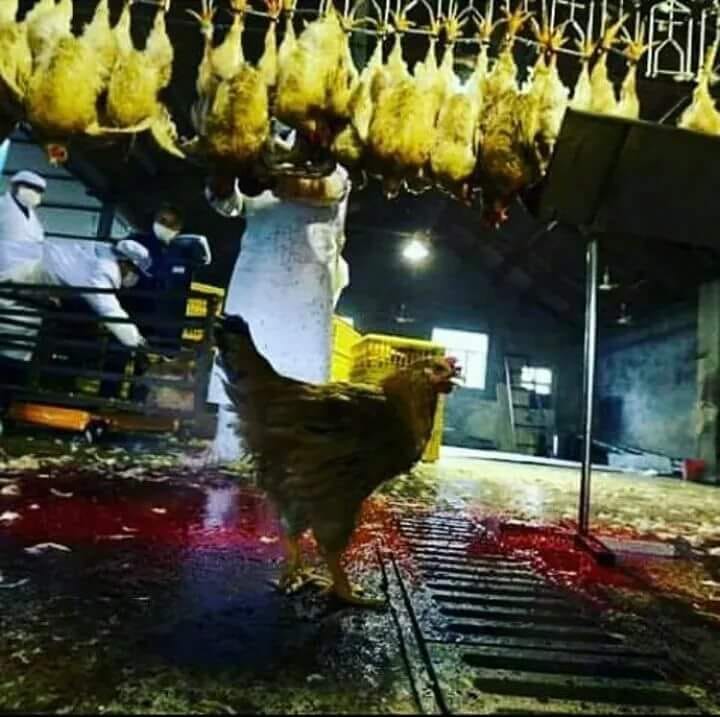
In 2003, ten billion animals were killed in slaughterhouses in the United States alone. That is more than 27 million animals a day, today there are many more.
The situation worldwide is that more than 50 billion animals – mainly chickens, but of course also cattle, pigs, sheep, goats, ducks, geese, and turkeys – are slaughtered for their meat every year. That is more than five times the human population on earth.
But nobody cares about which animals this meat comes from.
The meat mafia has long been aware of the disgust it would cause consumers to learn how animals are kept, abused, and slaughtered.
Therefore, the meat industry invests a lot of money to keep the system of animal exploitation secret, or to fake it.
The organic farms with the happy cows in the pasture, the humanely slaughtered animals, the animal-friendly farm next door… these are all myths that help us to remain either uninformed or misinformed.
Myths are the meat industry’s tools to make meat-eaters think of what they are going to eat, and not the suffering of the animals they eat.
We never tire of saying: Eating meat is not normal, not natural, and not necessary. Eating meat is murder.
And everyone who eats meat is complicit in this murder.
Well, the EU Parliament has this time at least seen part sense. It has been decided that us / you are intelligent enough to know the difference – that a beef burger comes from a dead cow, and that a veggie burger does not. Celebrate with a Vegan ‘Burger’. Now the term ‘milk’ seems more confusing to everyone in industry and the EU Parliament – milk comes from long suffering cows, but ‘milk alternatives’ such as soya milk must not be called such ! – I can sense my Litmus paper coming out later when I have a cup of tea to check if my ‘milk’ is non cow, or from a suffering cow. And to think these people are paid vast sums of Euros to decide for you because they do not think that you, a humble citizen, are intelligent enough to know where your ‘white liquid’ comes from.
Friday 23/10/20 – European farmers lose attempt to ban terms such as ‘veggie burger’
Meat-related words can be used to describe plant-based foods, decides European parliament
Plant-based products that do not contain meat can continue to be labelled “sausages” or “burgers”, European politicians have said, after they rejected a proposal backed by the meat industry to ban the terms.
In votes on issues relating to agricultural products, the European parliament said that so-called veggie burgers, soy steaks and vegan sausages can continue to be sold as such in restaurants and shops across the union.
Europe’s largest farmers’ association, Copa-Cogeca, had supported a ban, arguing that labelling vegetarian substitutes with designations bringing meat to mind was misleading for consumers.
On the opposite side of the debate, a group of 13 organisations including Greenpeace and WWF urged lawmakers to reject the proposed amendments, arguing that a ban would have not only exposed the EU “to ridicule”, but also damaged its environmental credibility.
They said promoting a shift toward a more plant-based diet is in line with the European Commission’s ambition to tackle global warming. Losing the ability to use the terms steak or sausage might make those plant-based products more obscure for consumers.
After the vote, the European Consumer Organization, an umbrella group bringing together consumers’ associations, praised the MEPs for their “common sense”.
“Consumers are in no way confused by a soy steak or chickpea-based sausage, so long as it is clearly labelled as vegetarian or vegan,” the group said in a statement. “Terms such as ‘burger’ or ‘steak’ on plant-based items simply make it much easier for consumers to know how to integrate these products within a meal.”
Together with Greenpeace, the group regretted that lawmakers accepted further restrictions on the naming of alternative products containing no dairy. Terms like “almond milk” and “soy yogurt” are already banned in Europe after the bloc’s top court ruled in 2017 that purely plant-based products cannot be marketed using terms such as milk, butter or cheese, which are reserved for animal products.
E.U. Says ‘Veggie Burgers’ Can Keep Their Name
The European Parliament voted on Friday on proposals that would have banned products without meat from being labelled burgers or sausages.
LONDON — When is a burger not a burger? When it contains no meat. At least according to a divisive proposal that was in front of the European Parliament this week, part of a set of measures that would have banned the use of terms like “steak,” “sausage,” “escallop” or “burger” on labels for plant-based alternative products.
But after a decisive vote against the measure on Friday, it seems veggie burgers will still be on the menu.
“Reason prevailed, and climate sinners lost,” Nikolaj Villumsen, a member of the European Parliament from Denmark posted on Twitter. “It’s worth celebrating with a veggie burger.”
A proposal to expand a ban on descriptions such as “yogurt-style” or “cream imitation” for nondairy replacements did pass, extending previous limitations on the use of words like “milk” and “butter” on nondairy alternatives.
The proposed changes — a small part of a package of agricultural measures — received more attention than perhaps desired either by their proponents among meat and livestock groups, who said they would prefer to focus on helping farmers work sustainably, or the environmentalists and food manufacturers opposing it, for whom it is a distraction from climate-change policy.
Jasmijn de Boo, vice president of ProVeg International, a group aimed at reducing meat consumption, said that the proposal was not in the interest of consumers or manufacturers, and that shoppers were not confused by the labels currently on store shelves.
“Why change something to a ‘veggie disc’ or ‘tube’ instead of a sausage?” she said. “It’s ridiculous.”
Those in favor of the change said that labeling plant-based products with meat terms were misleading and could open the door for other confusing labels.
“We simply call for the work of millions of European farmers and livestock sector workers to be acknowledged and respected,” Jean-Pierre Fleury, the chairman of Copa-Cogeca, Europe’s largest farming lobby group, said in a statement this month. He described the use of meatlike names for plant-based products as “cultural hijacking.”
The decision is a victory for environmental advocates over an E.U. farming lobby that is one of the strongest voices in the bloc and plays an outsize role in policymaking, considering that the sector has been shrinking for years.
Camille Perrin, the senior food policy officer at the European Consumer Organization, called decision “great news” and a “common sense” vote.
“Consumers are in no way confused by a soy steak or chickpea-based sausage, so long as it is clearly labeled as vegetarian or vegan,” she said in a statement after the vote. “Terms such as ‘burger’ or ‘steak’ on plant-based items simply make it much easier for consumers to know how to integrate these products within a meal.”
It is not the first debate over plant-based foods as that sector has exploded in recent years.
Labels for plant-based dairy alternatives like “soy milk” or “tofu butter” are illegal in the bloc after dairy producers won a 2017 ruling backed by the European Court of Justice.
In 2018, France banned the use of meat terms to describe vegetarian products. In dozens of states in the United States, advocates of vegetarian food have clashed with farmers and lobbyists over legislation that makes it illegal for plant-based products to be called meat.
Several parties in the European Parliament had also submitted proposals with different caveats since the initial amendment was introduced, and those are still to be voted on. Manufacturers like Beyond Meat, Unilever and Ikea, along with the European Medical Association, have opposed the changes, which they described in an open letter as “disproportionate and out of step with the current climate.”
Many said that approving the amendment would be counter to a goal set by the European Parliament this month to reduce carbon emissions 60 percent by 2030.
And shoppers seem to like the names. In a 2020 survey from the European Consumer Organization, about 42 percent of respondents said they believed “meaty” names for plant-based products should be permitted if products were clearly labeled vegetarian or vegan. Twenty-five percent said that such names should be banned.
A spokesman for Copa-Cogeca said the organization did not believe that shoppers could not tell the difference between meat and plant-based products, and said that farmers were not against vegetable alternatives. But he said that differentiating the markets — much like those of butter and margarine — was among a host of initiatives that would support struggling farmers who are trying to adapt to a world more focused on sustainability.
Some said the proposal would provide more fodder for what critics call the European Union’s penchant for overregulation. Alexander Stubb, a former prime minister of Finland, said the bloc should legislate only “where there are impediments to the free movement of goods, services, money and people.”
He described the amendment as “overkill” that would bolster the arguments of those who campaigned for Britain’s exit from the bloc: “This is one of these symbolic sad cases — a bit likelegislating on the curve of cucumbers.”
EU lawmakers vote for ‘veggie burgers,’ take hard line on dairy labels
(CNN)Restaurants and shops in the European Union should be allowed to label products as “veggie burgers” or “vegan sausages,” the European Parliament said on Friday, while calling for tighter curbs on labelling of plant-based dairy substitutes.
EU lawmakers voted to reject proposals, backed by farmers, to ban plant-based products from using terms such as steak, sausage or burger.
“I’m going to celebrate with a vegan burger,” Swedish EU lawmaker Jytte Guteland said after the result was announced.
Farmers had argued that the using words like burger or sausage for non-meat products could mislead consumers. European farmers association Copa Cogeca said allowing such terms would open a “Pandora’s box” of confusing wording.
But medical groups, environmentalists and companies that make vegetarian products have said that banning these terms would discourage consumers from shifting to more plant-based diets, undermining the EU’s environmental and health goals.
A majority of EU lawmakers also voted on Friday for stricter rules on labelling of dairy substitutes, backing a ban on terms such as “milk-like” or “cheese-style” for plant-based products that contain no dairy ingredients.
The European Court of Justice already banned terms like “soy milk” and “vegan cheese” three years ago, ruling that words such as milk, butter, cheese and yoghurt cannot be used for non-dairy products.
The labelling rules are part of a bigger EU farming policy package for 2021-2027, and are not final. Parliament must strike a compromise with EU member states on the final policy.
Elena Walden, policy manager at the non-profit Good Food Institute Europe, called on EU countries to “clear up this mess and reject confusing and unnecessary restrictions on plant-based dairy products.”
Lawmakers approved their position on the farming policy package on Friday despite calls from Green lawmakers and campaigners, including Swedish activist Greta Thunberg, to reject the proposal. They say it does not do enough to curb the sector’s emissions or protect nature from the effects of intensive factory farming.
We are sending this out in advance – so please make a note of the date.
It is ‘World Vegan Day’ on November 1st.
Veganism was once dismissed as just another short lived trend, but with plant-based diets surging in popularity over the past few years, vegan food has hit the mainstream. 51% of people questioned are happy to see vegan food in shops and restaurants.
Israel touts itself as the world leading vegan country with 5.2% of the population relying on a plant-based diet
People who eat vegan and vegetarian diets have a lower risk of heart disease, but will require supplements of B12; which is stored in the liver. Researchers found that those who didn’t eat meat had 10 fewer cases of heart disease and three more strokes per 1,000 people compared with the meat-eaters This B12 issue is more than easy to resolve:
To get the full benefit of a vegan diet, vegans should do one of the following:
Eat fortified foods (see below) two or three times a day to get at least three micrograms (mcg or µg) of B12 a day.
OR Take one B12 supplement daily providing at least 10 micrograms.
OR Take a weekly B12 supplement providing at least 2000 micrograms.
Fortified foods are those that have nutrients added to them that don’t naturally occur in the food. These foods are meant to improve nutrition and add health benefits. For example, calcium may be added to fruit juices.
Here are some leads from the Vegan society in the UK which may make you think a bit:
If the world went vegan, it could save 8 million human lives by 2050, reduce greenhouse gas emissions by two thirds and lead to healthcare-related savings and avoided climate damages of $1.5 trillion.
Staggering ! – If the UK population was killed at the same rate farmed animals are killed around the world, it (UK population) would be ended in just 11 hours.
Over a billion farmed animals in Britain are killed each year in slaughterhouses.
UK – Over 10 million pigs, 15 million sheep, 14 million turkeys, 15 million ducks and geese, 982 million broiler chickens, 50 million ‘spent hens’, 2.6 million cattle, 4.5 billion fish and 2.6 billion shellfish are killed in the UK each year – over 8 billion animals.
Interest in ‘veganism’ increased seven fold in the five years between 2014 and 2019, according to Google trends. It now gets almost four times more interest than vegetarian and gluten free searches.
With WAV being part based in the UK (also in Germany); lets check out some UK information:
Demand for meat-free food in the UK increased by a massive 987% in 2017 and going vegan was predicted to be the biggest food trend in 2018. Sources:[1], [2]
The UK plant-based market was worth £443 million in 2018. Source
Meat substitute sales grew by 451% in the European market in the four years to February 2018. Source
The number of vegans in the UK quadrupled between 2014 and 2019. In 2019 there were 600,000 vegans, or 1.16% of the population.
Vegans and vegetarians look set to make up a quarter of the British population in 2025, and flexitarians just under half of all UK consumers.Source
Why ?
Cruelty Free – Over half (56%) of Brits adopt vegan buying behaviours such as buying vegan products and checking to see if their toiletries are cruelty-free. 50% of Brits questioned said they know someone who is vegan, and 1 in 5 Brits (19%) would consider going vegan. Source: Research carried out by Opinion Matters for The Vegan Society between 14 and 16 July 2017 involving a sample of 2,011 UK adults
Europe:
Meat substitute sales grew by 451% in the European market in the four years to February 2018.Source
USA:
The number of vegans in America grew by 600% from nearly 4 million in 2014 to 19.6 million in 2017. Source
Consumption of plant milk increased by 61% while consumption of cow’s milk decreased by 22%. Sources: [1], [2]
Plant milks make up 13% of the entire milk category. Their sale grew by 6% in 2019, while cow’s milk sales declined by 3%. Source
41% of US households purchase plant-based milks.Source
Get this – Agriculture is responsible for 80-90% of all US water consumption.Source
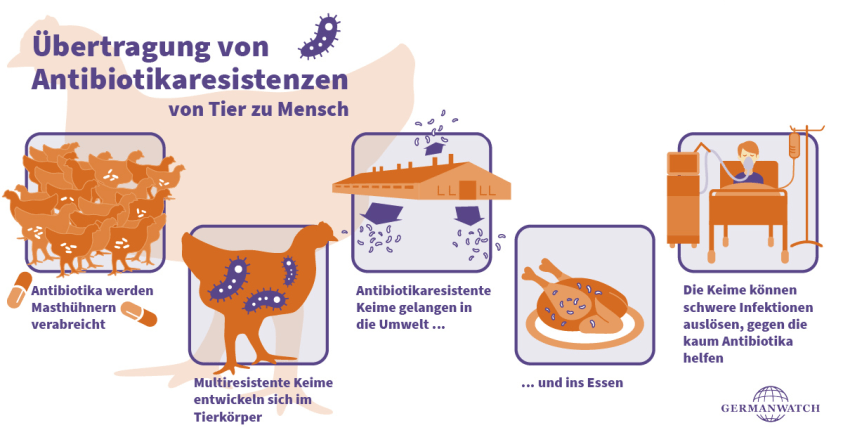
80% of all antibiotics sold in the US are for farmed animals – not to treat illness but to promote growth and preventatively due to the stressful conditions the animals are raised in.Sources: [1], [2], [3]
There were as many people searching for vegan Thanksgiving recipes as there were people searching for turkey Thanksgiving recipes in November 2018. Source
A farm with 2,500 dairy cows produces the same amount of waste as a city of 411,000 people.Source
72% Americans oppose testing cosmetics products on animals.Source
The are a few basic reasons why people often choose to undertake a vegan diet. Two of the main issues are the health benefits associated with and also animal welfare. There is no doubt that changing to vegan can be good for your health.
Many people go plant based because they have big concerns about the animal welfare; intensive farming and what it is doing to the planet.
80% of all antibiotics sold in the US are for farmed animals – not to treat illness but to promote growth and preventatively due to the stressful conditions the animals are raised in. Agriculture is responsible for 80-90% of all US water consumption. A farm with 2,500 dairy cows produces the same amount of waste as a city of 411,000 people.
Intensive farming and the transport and slaughter of the animals in the system is of major concern to many – they don’t like it and want to break free from supporting it.
On the left of the page there is a ‘SEARCH’ box; type in any subject relating to a specific issue (live export, intensive farming etc) and you will be taken to all posts on the site relating to that issue. Search out what you want to obtain more on.
Veganism is here to stay; there is no doubt about that.
…Elephants are born in the wild for living free.
The circus owners enslave them very early, as children, they separate them from their mother and for a lifetime they turn them into stupid clowns,
who have to do stupid shows
for stupid parents
who drag their children to the circus,
so that both sides have stupid fun with the suffering of the animals.
That keeps this business going, they have the greatest responsibility.
In chains,
trained with heels or whips so that they obey,
transported back and forth …
animals are the slaves of the circus industry.
Boycott all circuses that work at the expense of animals
Educate your children properly and explain to them why they never have to go to a circus,
where animals are kept captive.
Finally, an important blow was made against the bullfighting lobby!
In the context of the EU agricultural reform (which is not a reform at all) the animal rights activists prevailed and achieved a narrow majority for the cancellation of the bullfighting subsidies!
This is a sensation because up to now there has been a majority in favor of maintaining all attempts to stop these EU subsidies.
Leading Spanish politicians are family members themselves with bullfighting breeders.
The amendment was approved by 335 votes in favor, 297 against, and 60 abstentions, thanks mainly to the European left.
With 335 to 297 votes, the EU parliamentarians have now for the first time in the history of Europe effectively decided against this animal cruelty, which in some countries has even been celebrated.
But the image of bullfighting has deteriorated over the past few years thanks to the efforts of tens of thousands of animal rights activists and the public’s pity for the bulls has steadily increased.
Anja Hazekamp from the Dutch Animal Welfare Party fought against bullfighting for years together with the Spanish Animal Welfare Party. This time, Francisco Guerreiro, who was elected to the European Parliament for the Portuguese Animal Welfare Party, tried it – and it worked!
At least for now, because the topic is not yet through. The Spanish government is expected to do everything possible to circumvent this decision.
And the bullfighters association has already announced that it will file a lawsuit against it.
Hopefully, in the end, morality and common sense will prevail in Europe!
And I mean…For the first time, we get a positive surprise from the EU front!
Parliament has noticed that it is backward when animals continue to be tortured for fun in the 21st century and that this is also financed with public money.
With this cruelty to animals, Spain brings up the rear in Europe when it comes to animal welfare.
We are proud and grateful to Anja Hazekamp and her fighters from the Animal Welfare Party of Holland, and thanks to the Spanish Animal Welfare Party and of course to Francisco Guerreiro from the Animal Welfare Party of Portugal.
We get confirmation that if we unite we can achieve something.
Bullfights like in Spain will not last long for animal welfare reasons.
The corrida is not just a spectacle, but archaic cruelty to animals, the corrida is death.
And a spectacle that drains the cultural reputation of an entire country into the mud.
The province of Guadalajara has experienced a traumatic episode.
The Nature Protection Service of the Civil Guard is investigating the appearance of numerous canine corpses in an area of the Montezarzuela urbanization in the town of El Casar.
The bodies of at least 20 animals have been thrown into the sewer inside sacks,some decapitated to prevent their identification through the microchip.
As detailed in a press release by the Civil Guard, it is urbanization whose construction was paralyzed, leaving only the roads and the sewage system built and where everything indicates that it has been used by many people as a place to dispose of dead domestic animals.
The proceedings began after a complaint filed by the Association ‘Amores Peludos’ whose collaboration with Seprona has been essential for the successful completion of the proceedings.
Los cadáveres de los animales habrían sido arrojados al alcantarillado en el interior de sacos, algunos decapitados para impedir su identificación a través del microchip. pic.twitter.com/I5AVkjajbq
Once the skeletal remains had been collected, some put in sacks, others scattered inside the sewer and even several decapitated corpses, Seprona specialists have carried out the obtaining of the data of the animals and their owners through the identification system individual of CLM animals (SIIA-CLM) to file the appropriate administrative complaints.
Legislation on animal health and municipal ordinances require the owners of domestic animals to notify the competent administration of the deaths of the animals for their corresponding discharge, as well as to proceed to the disposal of the carcasses in an established manner, usually in a licensed incinerator.
Two agents of the Civil Guard examining the animal remains found. CIVIL GUARD
In addition, dead animals can pose a risk to animal health, public health, or the environment. In this case, the fines can amount to 3,000 euros.
From the Civil Guard, they stressed that “society needs to evolve and develop and one of the characteristics that make this difference compared to the most primitive societies is to protect animals more”.
“Dead animals should be treated with respect, they should never be abandoned. Let your advice, vet, or Seprona know and they will tell you how to behave,” they advised.
And I mean..It is not certain that the dogs have been disposed of as dead.
But even in the case of an illegal cemetery, there are two fundamental problems to be considered.
The one problem is the judiciary, which is usually criminal-friendly, and most perpetrators get away with a fine of a few hundred euros.
The other problem is the silence of the population in the case of animal abuse, people are intimidated not to testify as a witness, or they will not endanger the “good” relationship with the neighbor.
A population that is passive against animal suffering, that is permanently divided and kept in fear, is the enemy of animals.
And we cannot expect that people will change their moral principles of themselves.
Only severe punishment can change it.
And the civil courage of courageous citizens of society.
WAV Comment: We hope that by their actions against the call for change by humble EU citizens; as well as causing a death sentence for nature with their ‘extinction machine’ approach; MEPs are directing themselves very well into making ‘their place’ another ‘extinction machine’. ‘Normal’ people (such as EU citizens) will only take so much, and like the fellow (ex EU) citizens of the UK; it will not be long before other EU nations see sense and decide that they can do better by going it alone and walking away from the useless calamity named Members of the European Parliament (MEP). Like the UK having left; this will mean that there are no longer MEPs representing their member state. By its own internal actions, the EU is destroying itself due to sucking up to the lobbyists whilst ignoring the people; many (not all) gutless MEPs who wish to hide behind the EU ‘system’ and the untold damage it is doing to nature and the environment as a result.
Quote from the following article – “Earlier this year, 3,600 scientists called for an overhaul of the CAP, warning that it was a central driver of the biodiversity and climate emergencies as it funded practices that cause significant biodiversity loss, climate change, and soil, land and water degradation.
The new CAP document deletes “the need for farmers to have a tool for more sustainable use of nutrients”, Ms Bradley said, pointing out that agriculture is the biggest source of nitrate pollution in EU waters, responsible for dead zones and toxic algae”.
Members of the European Parliament have been accused signing “a death sentence” on nature, the climate and small farms after they rejected a series of eco-friendly reforms.
MEPs voted against proposals to cut subsidies for factory farming and to protect grasslands and peatlands – a major storage reservoir of greenhouse gases.
One critic said the vote on the EU agriculture reform package would bring extinction closer for many species after it failed to offer incentives for farmers to reduce their environmental impact.
Above – Here today – EU gone tomorrow
BirdLife Europe said the politicians voted to make the policy “an extinction machine”, adding: “Nature has lost this battle.”
Now environmentalists are pressuring MEPs before a final vote by the full parliament tomorrow (Friday).
The votes on the Common Agricultural Policy (CAP), funded by nearly €400bn (£350bn), will shape farming in the block for the next seven years.
A deal by the largest groups in the European Parliament – the European People’s Party (EPP), Socialists & Democrats (S&D) and Renew Europe – involved lowering environmental conditions attached to the policy. And MEPs voted against an emissions-reduction target for agriculture of 30 per cent.
Harriet Bradley, an agriculture policy expert at BirdLife Europe, said the decisions meant the world was “one step closer to extinction for many species”.
She said perhaps “one of the most shocking and spiteful” votes to environment was that “in the unlikely event that agri ministries are queuing up to fund environmental schemes, they shall be prevented [from doing so] by maximum spends on environmental measures”.
A ban on converting grasslands in biodiversity-rich nature-protected areas was lifted, so more could be turned into maize fields, she reported.
The intensification of agriculture, including pesticide use, fuels carbon dioxide emissions and pollution, a key factor in nature destruction, including the decline of farmland birds and pollinators.
Earlier this year, 3,600 scientists called for an overhaul of the CAP, warning that it was a central driver of the biodiversity and climate emergencies as it funded practices that cause significant biodiversity loss, climate change, and soil, land and water degradation.
The new CAP document deletes “the need for farmers to have a tool for more sustainable use of nutrients”, Ms Bradley said, pointing out that agriculture is the biggest source of nitrate pollution in EU waters, responsible for dead zones and toxic algae.
Ecoschemes will fund new spraying machines that could potentially cause damage if used to kill insects and weeds, she added.
“This is about how400bn of taxpayers money is going to be spentin the make-or-break decade for #climate and #biodiversity,” she tweeted.
Greenpeace’s EU agriculture policy director Marco Contiero said: “MEPs have signed a death sentence for nature, climate and small farms, which will keep disappearing at an alarming rate. For over 60 years, European farm policy has been blind to farming’s impact on nature, rewarding farmers for producing more or expanding their farms.
“The EU Parliament is wilfully continuing that destruction while scientists warn that farming must change to tackle the climate crisis and protect nature.”
Ecologist Carola Rackete tweeted: “There are no reasons at all to spend a third of the EU budget on industrial agriculture which drives biodiversity loss on land and worsens the climate crisis.”
A report earlier this week by the EU environment agency said unsustainable farming, forestry and the sprawl of urbanisation were degrading the health of Europe’s animals and natural habitats.
The report showed more than half of pollution pressure on biodiversity came from agricultural practices, stating the current CAP did not provide enough funding.
Climate activist Greta Thunberg tweeted: “No matter what the EU climate target for 2030 will be, reaching it with a business-as-usual common agricultural policy will be basically impossible. So the MEPs voting in favour of #FutureofCAP final vote tomorrow will be responsible for surrendering on our future.”
WWF accused politicians of being “in a state of complete denial about the biodiversity and climate crises”.
A European Parliament spokesman said: “There are nearly 2,000 votes on CAP reform this week to three separate reports addressing common market rules, national strategic plans and future financing.
“As with many issues, there are political forces pulling in both directions, so the end result is inevitably a compromise. But this would represent a greener CAP than we currently have as it provides a number of incentives for farmers to produce more sustainably.”
A third of the budget would be for “green” initiatives, assistance to smaller farms and capping payments to large agri-businesses, he said.
Negotiations will take place over the coming weeks to hammer out a deal between the parliament and the European Council.
The EU Council said ministers had voted for financial support for eco-friendly farming; to increase rewards for farmers more committed to greening and to help smaller farmers embrace the green transition.