Migratory bird hunting season starts: In most EU countries the hunting season for migratory birds starts these days.
The stalking has already started in Malta and Cyprus, in France 1.2 million hunters stand for the start of the season on September 13th. Gun at your feet, the 700,000 Italian hunting license holders lay down on September 20. Come on!!
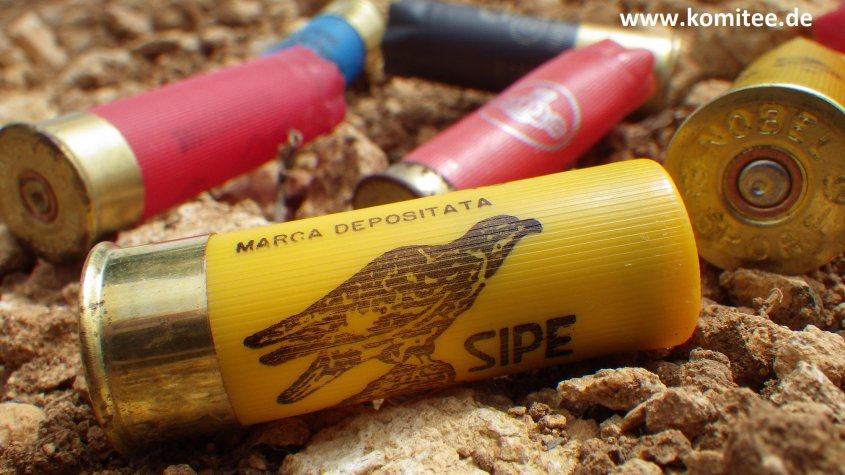
Depending on the country, up to 50 species are approved for shooting. In addition to ducks, pigeons, and chicken birds, various songbirds and waders can also be killed in most southern European countries.
The annual hunting range is around 50 million birds, including around 10 million song thrushes, over 1.3 million skylarks, and around 100,000 lapwings.
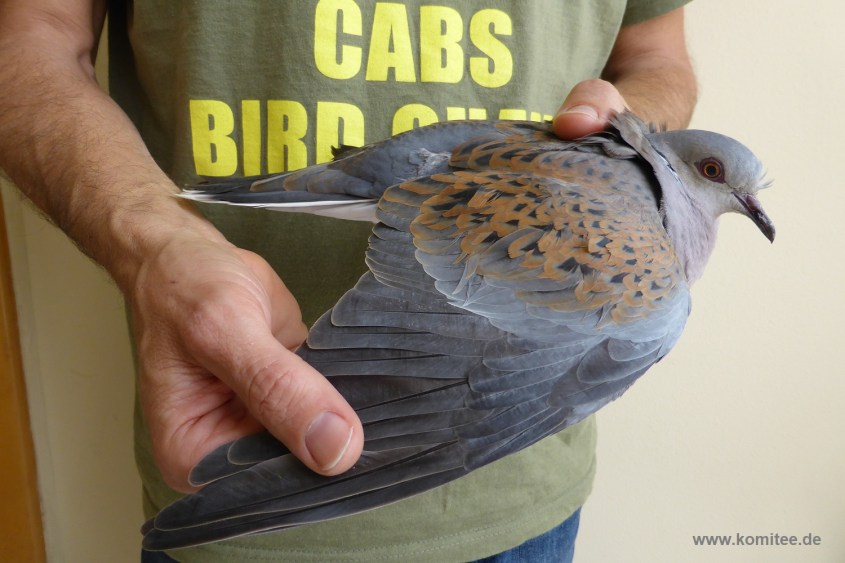
Lovebirds (photo) are also very popular with hunters – although the bird of the year 2020 is endangered throughout Europe, between 2 and 3 million lovebirds are shot legally every year!
And I mean…And that happens in the EU!!!
In the EU, whose countries call themselves civilized
And the EU calls this mass murder legal hunting.
And that’s not mentioned anywhere in the media!!
The hunting lobby extends to the highest levels of government many politicians are hunters … The lobby goes up to the highest levels of government ..That’s why everyone wants to keep the fun of shooting everything around! and therefore it is difficult to change anything.
Add to that the whole shit like tradition, you can also see the same crimes in other areas like bullfighting, whaling etc.
What criminal politicians are we governed by …
what criminal journalism are we being informed about …
and let us become a society without empathy, without conscience, without action…
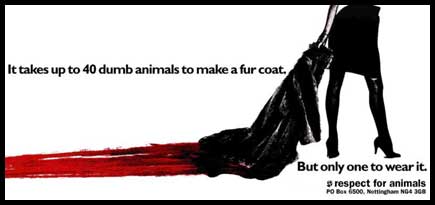
It has to be remembered that, Mike Moser was the former CEO of the British Fur Trade Association and worked in the fur industry for over ten years. No doubt, as the voice for the animal abusing fur industry, Moser spoke out about the actions of animal rights activists against the trade, telling everyone ‘how good’ the fur trade was for animal welfare at every opportunity that came his way.
We now kind of welcome (but still have real doubts) that he has finally seen the light and has (especially with his past personal involvement in the business) decided to do a complete U turn and allegedly speak out about the abuses suffered by animals the world over on fur farms. If you need any proof of this, we can supply dozens of links; but here is literally one we posted only yesterday:
But we are extremely cautious about this change; Moser was in the highest position in the BFTA and in the past would deny the terrible conditions for the suffering animakls, and also speak out against expose by the animal rights activists whenever he could. No doubt as CEO of the BFTA he was also paid a half decent salary !
Can a leopard change its spots ? – we would like to think so but as stated, we are very cautious about it all.
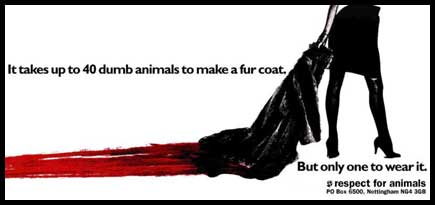
This morning (9/9/20) Mark (WAV) and Mark Glover at ‘Respect for Animals’ (Nottingham, England) – http://www.respectforanimals.org/about/ has a good talk about this particular issue especially. Mark Glover originally founded ‘Respect’ and is a totally seasoned campaigner and has dedicated his entire life to exposing and speaking out against the fur trade. We very mmuch admire his professionalism and dedication to the cause. We worked with ‘Respect’ by providing lots of evidence regarding the fur farms in Serbia, which have now all been closed by the recent Serbian fur ban. Much of the work at the Serbian end must be attributed to Slavica; who we sadly lost recently.
Mark (Glover) also provided some very encouraging news regarding Poland – see the video on the first link above. He forwarded on to us some information which is hot news today which we wish to share with you –
Poland – Ruling party plans to ban fur farming, use of animals for entertainment
Poland’s ruling party Law and Justice (PiS) plans to file a bill banning fur farming and the use of animals for entertainment purposes. The legislation is to go to the Sejm (lower house) still this week.
Earlier on Tuesday, PiS leader Jarosław Kaczyński said Poland needs new animal protection legislation, and voiced hope for the bill’s support above political divisions. He added that the proposed laws were motivated by humanitarian considerations, and strove to raise animal protection in Poland to western-European standards.
The new laws ban fur farming with the exception of rabbits, and all use of animals for entertainment, including their use in circuses. Also foreseen is the stricter control of animal shelters and the establishment of a council for animal affairs under the agriculture minister.
Mark Glover was involved with UK live exports for a while; and so Mark (WAV) gave him some information on the current situation and the continued use of the ‘Joline’ vessel by Dutchman Onderwater out of Ramsgate.
It was a great chat and I closed by wishing Mark continued success with Respect and being a huge voice for animals suffering in the fur trade.
Regards Mark (WAV)
———————————————————-
‘I saw animals in cages, stressed and suffering’: Former fur trade boss calls for UK sales ban
Mike Moser, who has visited fur farms across the globe, said sales of fur have “no place in modern society”.
The former CEO of the British Fur Trade Association has called on the prime minister to ban fur sales in the UK.
Mike Moser, who worked in the fur industry for a decade, described it as “anachronistic, barbaric and unnecessary”.
In an exclusive broadcast interview with Sky News, he said: “I visited fur farms across the globe. I saw animals in cages, stressed and suffering…prime minister I’m calling upon you to stop this inconsistency, to stop this cruel practice and to ban the sale of fur – now.”
Fur farming was banned in the UK in 2000 after a consultation found overwhelming public support for the move.
However, the UK still imports foreign-farmed fur including fox, rabbit, mink, racoon and chinchilla, which Mr Moser believes is “inconsistent, ambiguous, and hypocritical”.
He told Sky News: “Fur is not a necessity. It’s for vanity. In 2020, there is no justification for fur – full stop. That an animal is caged for its entire life is wrong.”
He says the fur trade “has no place in modern society” and “is out of place and out of time”.
He claims it was coming home to his pet labrador after visiting fur farms overseas that made him increasingly question the ethics of keeping foxes and raccoon dogs in wire cages for their entire lives.
He added: “It’s a big U-turn for me, but it’s OK to change your mind and I would implore people who are considering buying fur to change their minds.”
Mr Moser resigned from his role as chief executive of the British Fur Trade Association after he gave evidence at a parliamentary inquiry launched due to a Sky News investigation into the mis-selling of real fur as fake.
We found major high street stores were advertising products as “faux” fur when in reality they were rabbit, mink, fox, raccoon dog, and most consistent with cat.
After Sky News presented the findings in parliament, the select committee concluded retailers were failing consumers and recommended a public consultation on a fur ban should take place.
Mr Moser told Sky News: “As soon as the committee report was published, I resigned. I resigned from the fur trade because I could no longer in all good faith, and with a good conscience, defend what I believe to be indefensible.
“I no longer believed it possible to raise animals in cages and maintain good welfare. I no longer believe in the right of the industry to exist when its product, the fur is produced solely for vanity.”
During his 10 years working for the fur industry, Mr Moser visited farms on five continents and found the confined conditions “upsetting”.
He told Sky News: “The animals on the fur farms are born in cages, and they lead their short lives in the cages. They never know what it’s like to run free. The cages are mesh cages.
“They have to be so that the faeces of the animals can fall through the floor. So in the case of the mink and young fox cubs…their feet are too small to walk on the mesh and quite often they fall through the floor.
“Both these animals, particularly the mink, have padded feet, walking on these metal grids causes sores. It must be immensely uncomfortable.”
He was also distressed by what he felt were high density farm conditions.
“If you take foxes in particular, the cages are barely larger than the animal,” he said. “Now the welfare regulations in Europe, which are held to be gold standard by the industry were published in 1999, they haven’t changed for 21 years.
“In that time selective breeding by fur farmers has increased the size of animals. So simply by that measure alone, those cages are too small.”
When challenged by Sky News over whether it should be left to consumers to decide whether they purchase fur, an argument Mr Moser had himself regularly used, he responded that “there’s lots of decisions governments take for the greater good”.
In his decade working in the fur industry, footage sometimes emerged of alleged animal cruelty at farms.
“Farmers would come back and explain that these were out of context or not on regulated farms or have been set up by the animal rights extremists,” Mr Moser said.
“If you can’t stop these practices, even on one or two farms, then it’s the system itself that’s wrong. There’s no doubt from the footage that we’ve seen over the years that there are many animals in great distress on many fur farms.”
Mr Moser is now working alongside the Humane Society International charity to campaign for a ban on fur.
Claire Bass, HSI executive director, told Sky News: “Mike spent 10 years on the inside of the fur trade, so his verdict that this is an inherently and unacceptably cruel business is a pretty damning indictment.
“I fully respect Mike’s change of heart, and he now has an important and powerful message for the UK government – if someone like him with a decade’s experience inside the fur industry says it’s right to ban fur sales, then it’s time to take action and end the suffering.”
Responding to a written parliamentary question, environment minister Victoria Prentis said last week: “During the transition period, it is not possible to introduce restrictions relating to the fur trade.
“Once our future relationship with the EU has been established there will be an opportunity for the government to consider further steps it could take in relation to fur sales”.
Mr Moser’s high profile U-turn follows that of multiple designers – who have pledged fur-free policies including Prada, Gucci, Armani, Versace, Michael Kors, Jimmy Choo, DKNY, and Burberry.
Want the proof ?
Then watch the video of an undercover investigation by a person who worked at one of the worlds largest mink facilities in Poland.
Terrible animal suffering revealed on huge Polish fur farm
“This is a shocking investigation. The suffering of these animals can scarcely be imagined.
I personally know what impact seeing these atrocities first hand and close up can have.
As the undercover activist says in the video, some of the things he has seen will live with him forever.
I still live with some of what I saw in UK fur farms more than 20 years ago and it is not easy, but is certainly one of the things that has driven me on to work to end this disgusting industry.”
Mark Glover, Respect for Animals
Respect for Animals’ colleagues at the Fur Free Alliance, Otwarte Klatki, have today released the results of a two-month long investigation using an activist as an undercover farm employee.
The farm in Goreczki is potentially the biggest mink farm in the world, with around 500,000 animals kept in small cages.
The worker documented shocking cases of cannibalism, open wounds and untreated sick animals. He also recorded the reality of working conditions on fur farms: low wages, little training and lack of employment rights. This is of real importance because the fur trade is currently trying to reimage itself as sustainable and ethical. These claims are lies and this investigation is further evidence of the moral bankruptcy of the fur industry.
The undercover activist, called Yevhen, used a phone and hidden camera to document the distressing conditions on the mink farm.
Yevhen agreed to openly speak on camera about his experiences. The activist describes dead mink found every day in cages, and the shocking “hospital” – supposedly for sick animals, but where they did not receive veterinary help, instead simply killed by gassing or dying untreated and in agony.
This is the reality of industrial fur factory farming. This is why fur farming must be banned.
Take action! Add your name to this letter to the Polish Embassy, calling for fur farming to be banned:
Every single animal you have ever eaten had feelings, hopes, dreams, and a unique personality.
Every single animal brought into this world for the sole purpose of exploitation has a story.
Like male chicks ground alive on the day they are born, their story can be very brief.
Or like dairy cows that are repeatedly and forcibly impregnated and milked to the point where they can no longer bear calves to be taken from them on the day they are born, where their bodies can no longer produce milk efficiently.
Their stories are longer.
What they all have in common, however, is that their stories are very tragic stories.
Made by the fascist law of the stronger species
Don’t get involved in the daily animal holocaust.
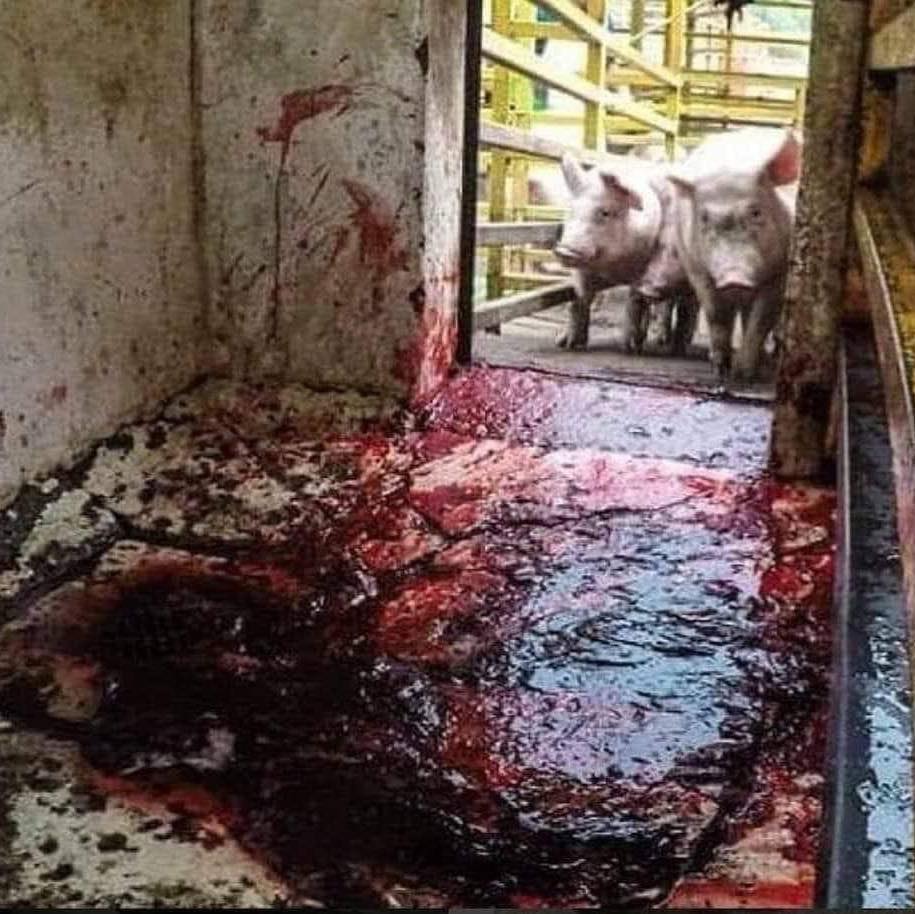
Nothing humane even happens inside of slaughterhouses
Slaughterhouses are the incubators of human fascism.
Terrible animal suffering revealed on huge Polish fur farm
“This is a shocking investigation. The suffering of these animals can scarcely be imagined.
I personally know what impact seeing these atrocities first hand and close up can have.
As the undercover activist says in the video, some of the things he has seen will live with him forever.
I still live with some of what I saw in UK fur farms more than 20 years ago and it is not easy, but is certainly one of the things that has driven me on to work to end this disgusting industry.”
Mark Glover, Respect for Animals
Respect for Animals’ colleagues at the Fur Free Alliance, Otwarte Klatki, have today released the results of a two-month long investigation using an activist as an undercover farm employee.
The farm in Goreczki is potentially the biggest mink farm in the world, with around 500,000 animals kept in small cages.
The worker documented shocking cases of cannibalism, open wounds and untreated sick animals. He also recorded the reality of working conditions on fur farms: low wages, little training and lack of employment rights. This is of real importance because the fur trade is currently trying to reimage itself as sustainable and ethical. These claims are lies and this investigation is further evidence of the moral bankruptcy of the fur industry.
The undercover activist, called Yevhen, used a phone and hidden camera to document the distressing conditions on the mink farm.
Yevhen agreed to openly speak on camera about his experiences. The activist describes dead mink found every day in cages, and the shocking “hospital” – supposedly for sick animals, but where they did not receive veterinary help, instead simply killed by gassing or dying untreated and in agony.
This is the reality of industrial fur factory farming. This is why fur farming must be banned.
Take action!
Add your name to this letter to the Polish Embassy, calling for fur farming to be banned:
The African elephants in the Wuppertal Zoo are abused for commercial purposes.
In order to generate additional income, Wuppertal Zoo offers guided tours behind the scenes and interactions with the elephants.
The elephants are forced to take part in photoshoots, elephant rides, weddings, and other events.
They are made compliant with the elephant hook. The elephants only obey because they are afraid of punishment.
Zoo director Arne Lawrenz announced in January 2019 that he would end the use of the elephant hook and switch elephant husbandry to “protected contact” after renovation work, but without giving a specific schedule.
So far, however, the elephants are still exposed to violence and defenseless. Since then, three more baby elephants have been born. Gus, Tsavo, and Kimana now expect the same fate as their fellows.
Tsavo-Wuppertal
Facit: The Wuppertal Zoo abuses elephants for special events such as weddings and guided tours behind the scenes. Among other things, the animals are forcibly forced to pose for photos with visitors or to carry visitors on their backs.
Please appeal to the mayor, the members of the city council, and the zoo to work for an end to elephant abuse.
I don’t mean that getting to know gorillas or orangutans requires an encounter with a living specimen.
Every documentary film conveys more knowledge and arouses more empathy than a visit to the zoo ever could.
Zoos are and will remain prisons where animals are locked up for life and displayed for the pleasure of a paying public.
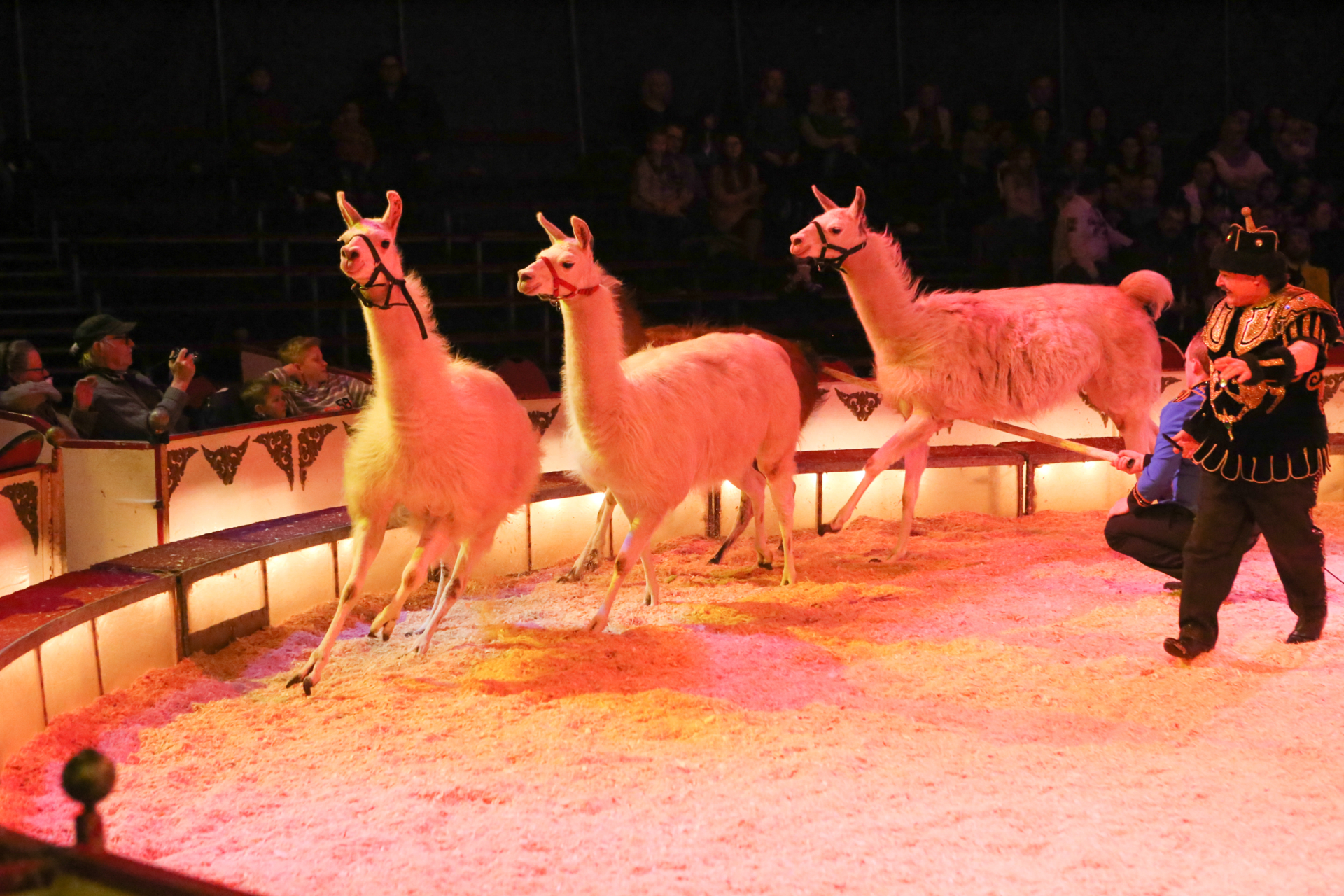
Since April the “Circus Belly” has been stuck in Friesoythe (a small town in Lower Saxony) because of the corona pandemic. Local residents donate and help.
But instead of pity, the long-established circus family is now getting a lot of trouble with the judiciary!
There are more problems: The circus boss, his son, and his grandson are in custody.
Accusation: commercial and gang-like theft.
At the beginning of September, family members of the circus asked for donations for their 50 animals.
At this time, the circus director, his son, and his grandson are said to have already been in custody. They are said to have belonged to the well-organized gang that stole tons of grain worth at least 2.79 million from a grain dealer over the years.
Monkey Robby in the torture ring of the Belly Circus.
Police officers arrested 6 men between the ages of 26 and 72 in Friesoythe on the night of August 26th, apparently including members of the circus family. The investigators accuse the 6 suspects of commercial and gang-like theft of well over 10,000 tons of grain.
Value of the stolen property: at least 2.79 million euros.Since 2013, the gang is said to have repeatedly stolen grain by truck.
The damaged company had called the police after the theft on a large scale according to internal calculations.
The investigators were finally able to collect clues about the perpetrators over a period of weeks and observe their actions.
During the subsequent arrests, the officers seized 150,000 euros in cash, 3 sharp guns, and documents.
According to the police, the documents provide specific information on the quantities of grain diverted and the gang’s income.
And I mean...When I think about the massive donations from local residents in the past few weeks, I get sick of anger.
We heard that the situation was critical and that animals had to be sold.
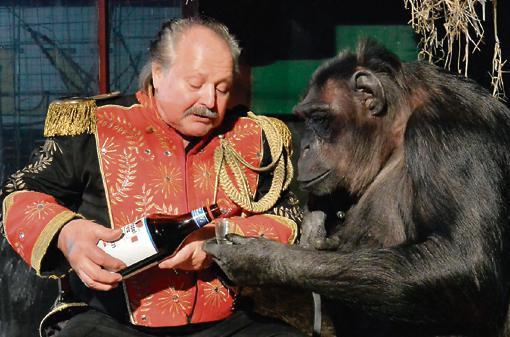
Circus Belly director Klaus Köhler and his slave, the monkey Robby
Only now, it seems very likely that the circus could only survive through illegal acts before.
But the burning question is, why does such a company need edged firearms?
Then we come to the conclusion that circus operators are not only violent when animal rights activists demonstrate in front of their “company”. Circus operators are not only animal abusers and exploiters.
Obviously, they are thieves and gangsters too.
Why the UK government’s badger cull infringes the Bern Convention
Bovine TB is a major problem for the UK dairy and beef livestock industries. Since 2010, approximately 300,000 test-positive cattle and their direct contacts have been removed in England under the statutory test-and-slaughter scheme introduced in 1950. The cost to the taxpayer was estimated at £44 million for 2017-18, and the financial and emotional impacts on affected farmers are very significant, write the Badger Trust, Bornfree Foundation and Eurogroup for Animals.
In December 2011, the UK government published its controversial policy on Bovine TB and Badger Control in England. The policy laid out conditions under which farmer-led culling of badgers would take place under licence, as part of the UK government’s strategy for controlling bovine TB in cattle. Culling began in the first two zones to be licenced in September 2013. By the end of 2019, more than 100,000 badgers were reported to have been killed across 43 licenced zones in England. According to leaked information believed to have emerged from the licencing authority Natural England, the government intends to grant four-year licences for an additional 11 new culling zones in 2020, bringing the total to 54 zones across 15 counties, covering an area in the order of 8,000 square kilometres. This could see in excess of 60,000 additional badgers being targeted by the end of 2020.
Badgers are a protected species under UK law, and are listed on Appendix III of the Bern Convention (a binding international legal instrument in the field of nature conservation). Under Article 7, Parties to the Convention are therefore committed to taking appropriate and necessary legislative and administrative measures to ensure their protection, and to regulate any exploitation in order to keep badger populations out of danger. Article 9 permits contracting parties to make exceptions to the requirements in Article 7 to, inter alia , “prevent serious damage to livestock”, albeit only when there is no other satisfactory solution and where the action will not be detrimental to the survival of the population.
The UK government has thus far relied on this exception in Article 9 to justify its policy of badger culling.
Food safety in Malta’s abattoir hampered by lack of Maltese-speaking staff
Staff shortages weakening controls on animal slaughter bolsters need for international staff and better wages for vets
Several animal carcasses with faecal contamination were accepted for cutting in a slaughterhouse in which veterinary officials failed to “correct the deficiency”, an audit by the European Commission’s Food Veterinary Directorate on the meat industry revealed.
Members of the audit team who witnessed the event had to intervene, requesting the trimming of the affected areas, with the task being swiftly carried out by the available personnel.
In their reply to the audit, the Maltese authorities informed the EC that their veterinary support officers had been trained to check and identify, and remove faecal contamination from carcasses.
The audit on abattoirs, carried out between February and March, found that Maltese veterinary authorities at all levels were “seriously understaffed”. This weakened the effectiveness of official controls on matters like traceability of red meat and poultry meat, the verification of cleanliness in establishments, and microbiological testing of carcasses at slaughterhouses.
In documents dating to 2006, government officials predicted that a pandemic would threaten critical businesses and warned them to prepare. Meatpacking companies largely ignored them, and now nearly every one of the predictions has come true.
At the end of June, with hundreds of his workers already infected with COVID-19 and several dead, Kenneth Sullivan, the CEO of Smithfield Foods, the world’s largest pork producer, sent a pointed letter to two U.S. senators who had launched an investigation into outbreaks in meatpacking plants and industry warnings of an impending food shortage.
In blunt, unapologetic terms, Sullivan chastised critics for suggesting Smithfield had acted too slowly to prevent the disease from spreading among its workers and surrounding communities. These “revisionist historians,” he wrote, refused to be “bound to reality” by saying meatpackers could have spaced workers out, slowed processing lines or stockpiled face masks.



 Tsavo-Wuppertal