Tag: animal welfare

Working Animal Programme, Afghanistan

https://www.nowzad.com/our-work/working-animal-programme
Improving welfare

Working donkeys and horses are the life blood of the local communities in Afghanistan and Kabul is by no means an exception.

Where old meets new in the city; many families will have access to motor transportation (so much so that Kabul was recently compared to Delhi as the most polluted city on earth) whilst many more, particularly those who inhabit the surrounding mountains, do not.

The working donkey or horse is vital to carry supplies (water, food and building materials) to the steep hillside communities; which make up most of Kabul’s surrounding urban areas nestled precariously on the side of the unforgiving mountain terrain.

The brick kilns of Kabul are literally ‘hell-holes’ for working animals as they are more often than not, over-worked and completely neglected. The poor animals are worked to death.
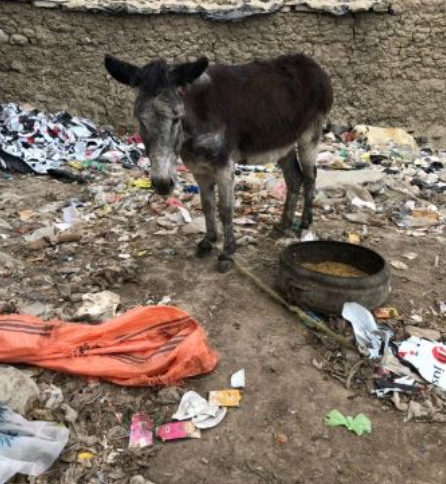
With little to no education, their owners have limited knowledge on the fundamental needs of their working animals which would lead to improving working conditions and improve their overall welfare.

Nowzad promotes healthy Afghan donkey ownership through an effective campaign targeting donkey and horse owners and muleteers (especially at the brick kilns of Kabul) explaining and teaching the importance of basic health checks for their animals along with feeding requirements and required vaccinations.

We employ a farrier to relieve animals of painful and uncomfortable hooves, a small gesture that makes a big difference to the working animals quality of life and where required hospitalise any donkey or horse as needed to allow them to recover from injury and illness. Importantly too, we employ a harness maker so that we can replace ill-fitting and injury causing harnesses.

We just cannot post some of the injuries we are sadly seeing. They are just too graphic. It breaks our heart but also makes us more determined with you by our side to be the difference for these working animals who have no choice but to be there.

All donkeys that we treat are recorded so that we can follow their progress. Our veterinarians are experienced in tending to any donkey or horse that is sick or injured and we often offer ‘roadside assistance’ or outpatient treatment to animals in distress. 

In November 2023, Nowzad was thrilled to join the global Working Animal Alliance working group, working with other NGOs such as World Horse Welfare, academics, the private sector and international bodies across the sector to create a stronger voice for working animals, and recognise the role donkeys and horses have in achieving the global sustainable development goals.

In 2017 Nowzad opened the FIRST EVER donkey/horse sanctuary in Afghanistan, a refuge for former working donkeys and horses who have been discarded like rubbish onto the streets when they are no longer able to carry the heavy loads demanded of them by their owners. 

Please help us to continue making a difference for the working animals of Afghanistan by clicking here. You can watch Pen take on the ‘Walk a mile in a donkey’s shoes’ challenge here where he explains our work direct from the streets of Kabul.

We cannot carry the loads for them but we are going to do what we can to make their lives somewhat easier. Be the difference today please!

https://www.nowzad.com/supportus

***************
https://www.animalaidabroad.org/news/2023/11/9/nowzad-donkey-sanctuary-annual-report-2023

****************

Please also read ..

Wild animal suffering video course

This course provides an introduction to the problem of wild animal suffering. It covers the situation of animals in the wild as individuals, including the many harms they suffer, and ways of improving their situation, including some of the ways this is already being done.

This is the opening video for the course. It gives an overview of the topics that will be addressed in the  videos of the course.

Wild animal suffering: an overview of the course

Concern about the suffering of wild animals and the ways we can help them has increased a lot in the past decade.  A growing number of people are now aware that the lives of animals in the wild are not idyllic, and that they face threats that dramatically impair their wellbeing. There is more awareness now that this affects not just a few animals, but large numbers of them. While in the past, concern for wild animals was mostly focused on their ecological roles or their  conservation status, many people now are concerned about what happens to them as individuals, as sentient beings.

Some people may think that it is unfortunate that wild animal suffering occurs, but be unsure about how widespread or how serious it is. Others may think this is an important issue, but not know how tractable it is, or what we can do to address it.

This course sheds some light on these questions and helps give a more clear understanding of the reality of wild animal suffering and, what is more important, of what can be done about it. It is intended to provide an introduction to this question for anyone interested in it, and to be especially useful to those involved in animal advocacy who want to know what can be done to help wild animals. The course will also benefit people working in natural sciences with an interest in learning how their work can help animals.

The course will include three parts.

Part I has been completely published already. It explains the ways that wild animals suffer and how we can help them. Part II details the arguments about the moral consideration of animals, and Part III explores the scientific study of the situation of animals from the point of view of their wellbeing. This new field of study has been called welfare biology.

Each part will consist of a set of videos, around 10 minutes each, focused on some specific problems. The entire course contains 28 videos including this one, which you’ll see listed in the course table of contents.

The first part begins with a general presentation summarizing the question of wild animal suffering. Following this, we will clarify in more detail what the concept of “wild animal suffering” entails. The following videos will then explain the different ways in which animals suffer in the wild. We will see the impacts of harmful weather conditions, natural disasters, diseases, parasitism, hunger, psychological stress, conflicts between animals, and accidents. We will also see how the prevalent reproductive strategies significantly increase the proportion of suffering among wild animals. Then, we will see some of the ways to provide help to these animals, including rescues and vaccination programs. Finally, we will see the kinds of things that each of us can do to make a difference for wild animals.

Some people think that we shouldn’t worry about wild animals because we shouldn’t be concerned about what happens to animals at all. We will believe this if we think, for instance, that only humans matter. In order to asess this concern, and to understand better how we can argue for the moral consideration of animals, the second part of the course presents an overview of contemporary debates about ethics and animals. The part will begin by explaining the concepts of speciesism, as well as related concepts like moral consideration. We will next examine the main defenses of the idea that human interests matter more than equally strong interests of other animals. We will then see the main arguments against this view. After that, we’ll cover how the moral consideration of animals relates to different ethical theories. We will then examine the differences between the views defending the moral consideration of animals and those defending other criteria, such as the ones held by some positions in environmental ethics.  In the last part of this part, we will see what sentience is, and consider some indicators of its presence in different animals, especially invertebrates.

Finally, the third part of the course will examine the ways to promote research in academia about how to best help wild animals. In the videos of this part, we will examine the concepts of wellbeing, animal welfare, and wild animal welfare. We will also discuss welfare biology, the study of the situation of animals with regard to their wellbeing. We will see how it is different from other fields that currently exist. We will then see reasons to promote academic research in welfare biology, and what some promising lines of research for this field are. We will see how welfare biology can benefit from work in other cross-disciplinary fields. In light of the work welfare biology could carry out, we will see responses to objections to helping wild animals.. Finally, we will share some ideas concerning the advance of this new field of research, and its importance, especially in the long term.

We hope this course will be interesting to you. Our intention is to help you become familiar with the issues discussed in it, and to share some tools that enable you to do further research on them. We provide information about how to take action in defense of wild animals and to help you make informed decisions about which efforts to support or promote.

If you want to learn more, you can visit our website, where you’ll find much more detailed information about many of the issues addressed in the course.

EU – Regulations Risk Face Leaving Millions Of Cats and Dogs UNPROTECTED.

Firstly, we wish to welcome all our international visitors to the site https://clustrmaps.com/site/1a9kn – we hope that you find our posts interesting and informative; and trust you can use the data to act as a supplement to your personal campaigning. Regards, Diana and Mark.

As MEP’s, or Members of the European Parliament, prepare to vote on the landmark regulations for the welfare of both dogs and cats, animal protection organisations are sounding the alarm – proposed amendments and exemptions could undermine the regulation, thus leaving millions of cats and dogs unprotected.

In December 2023 the European Commission (EC) unveiled the first ever regulation on the welfare of dogs and cats – a move which was greatly applauded by welfare organisations and EU citizens alike.

It is now concerning however that a solid proposal from the commission; strengthened by the EU Council, is now at risk of being significantly weakener by some political groups with the European Parliament. MEPs now have a chance to step up their reputation and their game by upholding a regulation that delivers for all companion animals.

Welfare organisations are particularly concerned about:

The possibility for cats to be exempted from identification and registration (I and R) and breeding requirements. Without mandatory I and R authorities cannot trace ownership, fight illegal breeding or manage disease outbreaks. In addition to protecting cat welfare, mandatory I and R could reduce costs to public authorities by up to 25 billion Euros EU wide.

A proposed amendment to exempt small and household breeders from registration and other responsibilities. One unregulated household breeder can be responsible for up to 100 pups or kittens in an animals lifetime. Without controls, this could lead to breeding in areas which are both unsanitary and unethical (puppy mills), an exponential increase in the number of strays, which in turn leads to an increase in pressure on the numbers of excellent shelters which ARE ALREADY OPERATING AT MAXIMUM CAPACITY around the EU.

Leaving out Hunting and Military dogs, despite them having the same behavioral and health needs of any other dog. Allowing mutilations and other painful practices under the guise of ‘preserving health’ is known to cause significant suffering and trauma to these types of dogs.

Watering down of breeding practices, with a possibility of lowering the breeding age of female dogs to 12 months, and allowing for artificial insemination in most cases. Breeding from animals which are unable to mate naturally often perpetulates hereditary problema and poor welfare outcomes.

Other companion animals left unprotected. Animal welfare organisations call for the proposal to offer a legislative opening to the future for other companion animals to be protected, through the production of an EU wide positive list which would be a tool stipulating which animals would be allowed as pets. This will address the current inconsistent Member State rules, enforcement gaps and loopholes which are currently undermining international welfare.

Crazy ? – NO – ASK EU POLITICIANS FOR THEIR VIEWS.

EASTER .. the Fate of Lambs

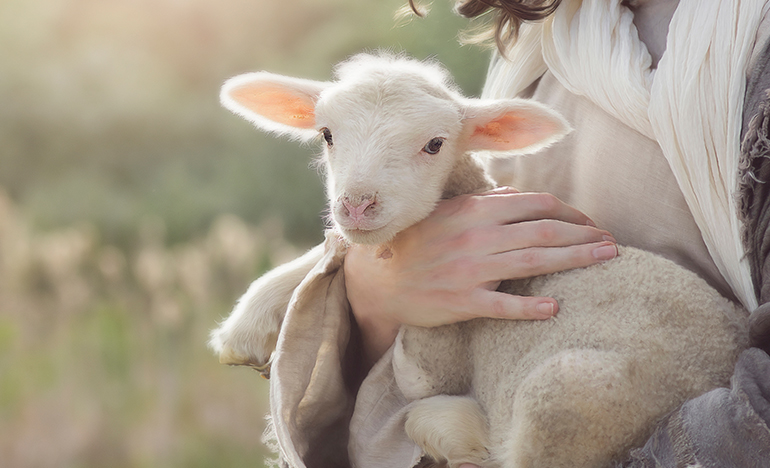
Every year again we witness the impossible, in Christian countries, the result of a Faith gone utterly wrong. The lamb, the very symbol of Innocence and of Jesus Christ, being subjected to a level of cruelty, and in huge numbers, that defies understanding.

So much for wishful thinking, and quite possibly the Lord’s own thoughts on the issue, and man’s relationship with these defenceless creatures, and indeed all of the Animal Kingdom.

2014 - La sofferenza degli agnelli e capretti allo scoperto

https://animalequality.org/news/2019/11/04/investigation-sheep-brutally-killed-in-uk-slaughterhouse/

Investigation documents cruelty at UK sheep slaughterhouse

November 4, 2019 Updated: January 20, 2025

Animal Equality UK has released a new investigation filmed inside a sheep slaughterhouse. The disturbing recordings, filmed during July and August 2019 at Farmers Fresh Wales slaughterhouse in Wrexham, North Wales, detail unimaginable cruelty and immense suffering. Farmers Fresh Wales supplies customers in London and across the Midlands, as well as continental Europe. …..

https://animalequality.org/blog/the-long-road-to-the-slaughterhouse/

The Long Road to the Slaughterhouse

January 28, 2022 Updated: February 1, 2022

Instead of sitting down to a family dinner over the holidays, Animal Equality investigators were on the road, documenting the suffering of lambs transported from Eastern Europe to Italy for slaughter.

Every Christmas and Easter, Animal Equality documents the long and difficult journeys that lambs undergo from Eastern Europe to Italian slaughterhouses. These lambs, many only weeks old, end up on the tables of millions of Italians during the holidays.

Transport: The Investigators’ Daily Journal

Although the transport trucks tend to follow predictable routes, it’s not always easy to map their movements. We located and followed some trucks, being careful not to lose them while we gathered as much information as possible.

Day 1 ….

https://animalequality.org/news/2015/03/23/shocking-cruelty-in-lamb-industry-revealed-once-again/

Shocking cruelty in lamb industry revealed once again

Animal Equality launches it’s ‘Save a Lamb’ campaign with a video that shows the cruelty lambs suffer in modern farms and slaughterhouses.

March 23, 2015 Updated: February 24, 2025

International – Through the release of a new video showing the life of a lamb in 60 seconds, Animal Equality launched on Saturday, March 22nd it’s 2015 ‘Save a Lamb’ campaign.

The video was filmed entirely by Animal Equality undercover investigators in farms and slaughterhouses in Italy. The practices shown in the footage are standard and common practice in the meat industry. ….

***************************

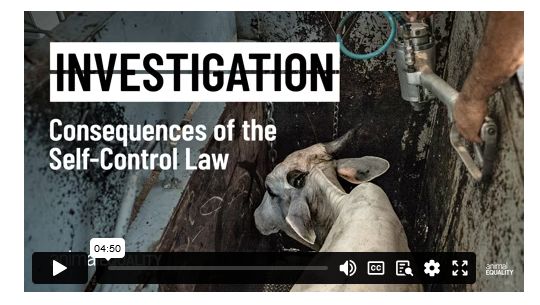
(Brazil) New investigation reveals dangers of Brazil’s Self-Control Law

https://animalequality.org/news/dangers-of-brazils-self-control-law/

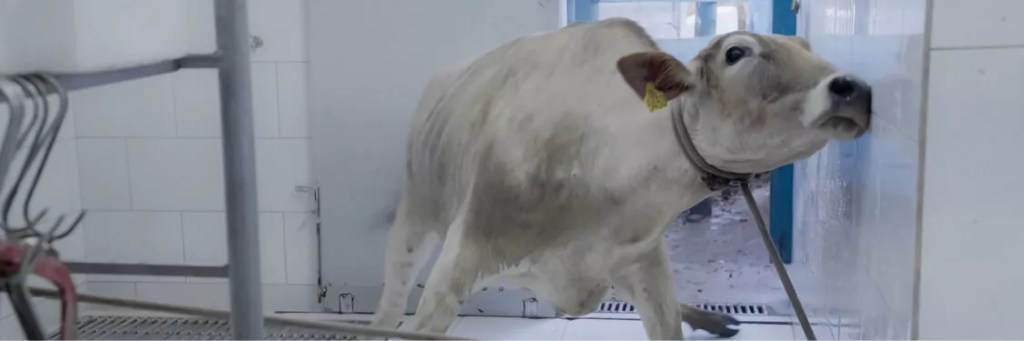
  • In 2024, Animal Equality found major violations in São Paulo slaughterhouses, where cows and chickens were mistreated under Brazil’s Self-Control Law.
  • In 2022, an earlier investigation revealed cruelty at pig and cow slaughterhouses in Minas Gerais and Pará, warning about the dangers of the Self-Control Bill.
  • Workers were seen twisting animals’ tails, kicking them, and using electric shocks on sensitive areas like the head and genitals.
  • Some animals were skinned and dismembered while still alive.
  • These findings point to a global problem as U.S. slaughterhouses speed up production lines, increasing risks for animal cruelty.

Animal Equality’s investigation reveals the impact of Brazil’s 2022 Self-Control Law, which reduced government oversight of slaughterhouses. The findings uncover rampant cruelty and violations, with profits prioritized over animals, public health, and transparency.

Video on page or VIMEO Link: https://vimeo.com/1047226914

2024 investigation: São Paulo slaughterhouses

The latest investigation, featuring never-before-seen footage, uncovers significant failures in cow and chicken slaughterhouses in rural São Paulo. 

These facilities were already following a state-level version of the Self-Control Law before it was implemented across the country. Investigators found widespread violations of handling and slaughter rules set by Brazil’s Ministry of Agriculture and Livestock.

2022 investigation: Early warnings ignored

In 2022, Animal Equality issued an urgent warning about the risks of the Self-Control Bill. Investigating pig and cow slaughterhouses in the states of Minas Gerais and Pará, the team uncovered a critical shortage of government inspectors. 

Without proper oversight, workers were left to enforce safety and animal protection rules on their own, resulting in widespread violations. Despite these findings, the bill became law.

Between the 2022 and 2024 investigations, Animal Equality documented:

Intentional cruelty: 

  • Tail twisting and kicking animals in the face.
  • Use of high-frequency electric shocks on prohibited areas, including the head, tail, genitals, and anus.

Stunning failures: 

  • Animals were tied with ropes instead of being secured in proper stunning boxes, making effective stunning nearly impossible.
  • Captive bolt pistols were used incorrectly, leading to failed attempts to stun animals.
  • Broken stunning tools were not fixed, forcing some animals to endure up to seven failed stunning attempts.
  • No staff were assigned to ensure stunning was effective. When animals showed signs of consciousness–such as eye movement or lifting their heads–workers often did not repeat the stunning unless the animal became too agitated to manage.

Delayed slaughter: 

  • Stunned animals were left for over two minutes before slaughter, exceeding legal limits meant to prevent them from regaining consciousness:
    • Non-penetrating captive bolt pistols deliver a blunt impact to the head, causing a concussion without breaking the skull. Animals must be slaughtered within 30 seconds, as this method loses effectiveness quickly.
    • Penetrating captive bolt pistols use a bolt to penetrate the skull, causing deeper and longer-lasting unconsciousness. This method allows up to 60 seconds before slaughter must take place.
  • Delays beyond these limits caused animals to regain consciousness, leading to extreme suffering.

Mutilations while conscious: 

  • Workers did not wait the required three minutes after slaughter to ensure animals were dead before mutilating them. This resulted in animals being skinned and dismembered while alive. 

Poor facility conditions:

  • Overcrowded pens with more animals than recommended.
  • Animals left in extreme heat without shade or water.
  • Slippery floors causing frequent slips and falls.

(DE – TR) Turkey: Heifers in advanced stages of pregnancy held at Turkish border for four weeks during transport

https://www.animals-angels.de/en/news/news-detail/turkey-heifers-in-advanced-stages-of-pregnancy-held-at-turkish-border-for-four-weeks-during-transport.html

17-10-2024 News Animal Transports

Two transport vehicles carrying heavily pregnant heifers left Germany on September 12 and reached the Turkish border at Kapikule four days later, on September 16, where they were held for a month. The German authorities were aware of the acute emergency situation since September 23 but did not intervene. Between September 23 and October 2, the animals were briefly unloaded, provided with water and feed, and housed in a makeshift shelter. On October 2, they were loaded back onto the transport vehicles. The exact reasons for this decision remain unclear. However, there are rumors that unsanitary conditions, intense odors, and a fly infestation prompted this action. The German authorities took action when the animals were reloaded onto the trucks, but the measures taken were completely inadequate.

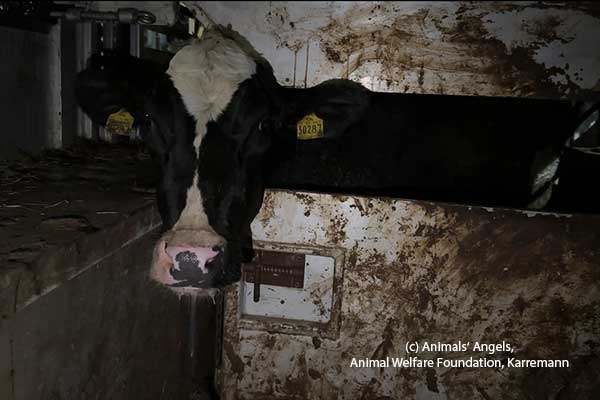
The conditions for the animals on the transports deteriorated with each passing day. Although they were fed and watered, the care provided was insufficient due to their advanced stages of pregnancy. Moreover, the transport vehicles were not cleaned, causing the cows to stand ankle-deep in their own excrement. During this time, and under these appalling conditions, several calves were born, none of which had a chance of survival. The first report of a dead animal was received on October 6.

On October 11, the state of Brandenburg, from which the animals originally came, issued a euthanasia order that mandated the slaughter of the cows by October 13. On the evening of October 14, the animals were transported to a slaughterhouse near the border in Edirne. Many heifers and newborn calves had already died on the transport vehicles. On October 15, the animals were slaughtered without anesthesia. The calves suffocated painfully inside their dying mothers. There is a much more humane method of euthanasia called placentally accessible euthanasia, which allows the unborn calves to be euthanized alongside their mothers.

The bodies of those animals that had already died before arriving at the slaughterhouse were left on the trucks to be dumped in a landfill later. As the teams from Animals’ Angels and Animal Welfare Foundation left the slaughterhouse, they were alerted by the loud mooing of an animal that had been left alive on the truck, which was now to be unloaded alongside the dead animals. We were able to arrange for an emergency slaughter of the animal on-site.

Urgent Call for a Transport Ban

Since 2010, Animals’ Angels and the Animal Welfare Foundation have called for an immediate end to animal transports to Turkey. The conditions at the Turkish border of Kapikule and the cruel death of the animals once again demonstrate that these transports are incompatible with animal welfare requirements, as stated in Article 3 of Regulation (EC) No. 1/2005: “No one shall carry out or arrange for the transport of animals if it is likely to cause them injury or unnecessary suffering.”

This case starkly highlights the urgent need for an immediate halt to such exports.

We will continue to remain on-site and work with a Turkish lawyer to initiate legal action. We demand clear and enforceable measures from the German government and the European Union to end the suffering of these animals.

VIDEO in German (from German TV Programme, “37 Grad”)

https://www.zdf.de/dokumentation/37-grad/37-schutzlos-ausgeliefert-100.html