RSPCA rescue animal, Spotty, is one of hundreds of pets under the Darwin shelter’s care. (ABC News: Jayden O’Neill)
Bernadette Relos and husband, Nathan Calverley, are self-described animal lovers who live in a bustling house in Darwin’s outskirts suburb of Berrimah.
They have two cats and a one-year-old puppy, which they recently adopted from a shelter.
The South Australian couple who moved to the Top End for work said their “fur babies” brought chaos and destruction, but much-needed colour to their lives.
“They bring life to the household … you can be lonely, and one of the cats will jump on you, and then you’re not lonely anymore,” Mr Calverley said.
“You could walk in the front door, and everyone doesn’t say a word, but the dog will come running … and start licking you and saying hello.”
Ms Relos said they decided to adopt because they wanted pets that would grow up with their young family.
But as some are choosing to bring furry friends into their forever homes, animal shelters are seeing the opposite.
Shelters being pushed to breaking point
Charles Giliam, the Northern Territory’s RSPCA operations manager, said there had been an increasing number of surrendered pets due to people experiencing financial difficulties.
He said most pets being dropped on shelter doorsteps were mixed breeds, weighing around 20 to 30 kilograms, with backyard breeding worsening the situation.
“[People] bring pets to us that are often in need of veterinary treatment … and say, ‘We just don’t have the money’,” he said.
The RSPCA estimates most dog owners spend an average of $25,000 on their pet during its lifetime, while cat owners spend $21,000 on average.
The charity says that within the first year of cat ownership, people could face up to $3,500 of expenses on food, desexing, grooming, bedding, toys and treats.
Mr Giliam said the influx of surrendered pets was creating significant challenges for shelters.
“We probably got about 15 to 20 people on our waiting list who are wanting to surrender … but we are chock-a-block full,” he said.
RSPCA national data showed around 81,000 pets were surrendered in the 2023/2024 financial year, with only 27,000 finding new homes.
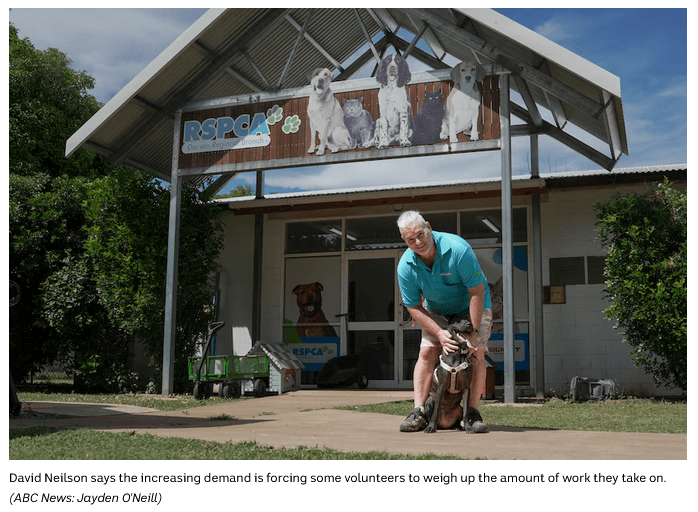
David Neilson, a volunteer at the Darwin RSPCA shelter, said the increasing demand was leaving some volunteers “overwhelmed”.
“There are so many volunteers that are here through the week to walk the dogs and sit with the cats and we are not getting through everything … it makes it difficult,” he said.
Industry voices want to see change
While many in the rescue sector are worried about the growing crisis, there are also concerns the NT’s animal rights laws are ineffective.
Unlike most other Australian jurisdictions, the NT does not have a formal dog breeder licensing scheme, however breeders are still expected to meet standards of care under the Animal Protection Act.
Melissa Purick, a licensed dachshund breeder, said it was “frustrating” to see people buy pets from unlicensed backyard breeders without considering the animal’s welfare.
“I would like to see that stopped to start with, where you can’t sell puppies at the markets or the side of the road,” she said.
Hannah Bohlin, an animal advocate, believes growing use of social media is glamorising pet ownership without highlighting its challenges.
She said if people adopted pets that were incompatible with their lifestyle, cost of living could become a “scapegoat” to surrender animals that were no longer valued.
She wants the NT to look at what other states and countries are doing to manage pet breeding and ownership.
“I would like to see a discussion around the possibility of introducing some kind of licence system [to own a pet],” she said.
“Some European countries do operate this kind of system to get a dog in the first place.”
The NT’s Agriculture and Fisheries Department, which oversees animal welfare, said a review of the Animal Protection Act was currently underway.
“The NT government takes animal welfare seriously and is committed to strengthening animal welfare laws,” a department spokesperson said.
One of 500 abandoned dogs at AID – SHIN in Mijas, ready for adoption. Credit: EWN
being of pets across the country but has ended up, in the eyes of many, worsening an already bad situation. Since its introduction, animal abandonment has only increased, and animal rights are worse than ever.
Local management challenges, lack of consultation with professionals, and a perceived ideological bent: with more than 30 million pets in Spain, it was inevitable that a one-size-fits-all approach wasn’t going to work for everyone. One in three households owns at least one companion animal, and not everyone can afford the changes. In Spain, an estimated 6 million pets remain unregistered, posing potential public health risks. In 2023, 285,000 dogs and cats were abandoned, highlighting the need for stricter regulations. But at what financial cost?
The new law sets standards for pet ownership and treatment, including a ban on leaving pets alone for more than 72 hours (24 hours for dogs) and prohibiting their habitual confinement in spaces like terraces, balconies, storage rooms, or vehicles. Sales of dogs, cats, and ferrets are now restricted to authorised, licensed breeders, excluding some intermediaries and private individuals.
Breeds classified as potentially dangerous, such as Rottweilers, remain subject to strict handling rules, including licences, short leashes, and muzzles. Notably, exemptions exist for working animals, like the Spanish Legion’s goat, which can still parade on October 12, or mules and oxen in living nativity scenes, unless their owners register them as pets in the new mandatory pet registry.
Despite its intentions, the law faces hurdles that hurt. Councils are tasked with collecting stray and abandoned animals and providing 24-hour veterinary services, but many lack the funds and resources to comply. As well, local governments must manage feral cat colonies, requiring trained volunteers or staff to capture, vaccinate, deworm, sterilise, and return the cats – a costly mandate that many areas struggle to meet.
If a pet owner now wants help, they have to go to a vet. For many who already owned a pet from before the introduction of the law, vet prices are not an option. According to Fabienne Paques of AID – SHIN, an animal rescue in the Malaga Region with 500 abandoned dogs and 150 cats, ‘A dog needs a chip, and it needs a rabies shot. Before you could go to a hardware shop for that. Now, it costs a lot to go to a vet. Before it was €20, and now it’s €80. To get some dogs castrated or sterilised (as per the new law), it can cost up to €500. The new law considered pets things, items, not animals.’ The shelter has recently had an inordinate amount of pets abandoned at their gates. ‘People don’t know what to do with them. The new law brought a lot of negativity. They say it’s not true, but it’s an absolute disaster.’
Dilemma under new animal rights law of what to do with existing pets?
A few kilometres away in the Miralmonte urbanisation, neighbours are up in arms about one of their neighbours who has several macaws and dogs which appear to be breeding amongst themselves. According to the neighbours, the animals make a terrible noise, and their droppings are attracting rats. The owner at the centre of the situation used to have a pet shop in nearby Coín but has been stopped from selling animals from the store she inherited from her parents. So, now, unable to afford to put them down, she keeps the animals at home. She cannot sell the animals by law, and the local police are reluctant to do anything as they can see both sides of the argument.
Critics of the law, including Professor Christian Gortázar, argue the law lacks scientific grounding and was driven by ideological motives, potentially threatening livestock industries by overly humanising pets. They also claim that there in no provision for pet owners with less resources to cope with the new rules.
José Luis López-Schümmer, president of the Artemisan Foundation, notes the law’s inconsistency with European legislation, which excludes wildlife from welfare regulations. The law also exempts animals raised for food, scientific experiments, bullfighting, or hunting, countering claims that it severely impacts the economy.
A year and a half after its enactment, the law’s limited consensus, even among its proposing parties, and incomplete framework have hindered its full application. Its true long-term impact – positive or negative – remains to be seen, as further data and regulatory clarity are needed to assess this polarising legislation. What is certain, in 2025, is that the situation with the welfare of animals is nowhere near being improved.
Now, unable to buy a dog from a pet shop, ACE – SHIN have a broad selection just looking for a home. Check out their website as they can arrange adoptions in may countries around Europe.
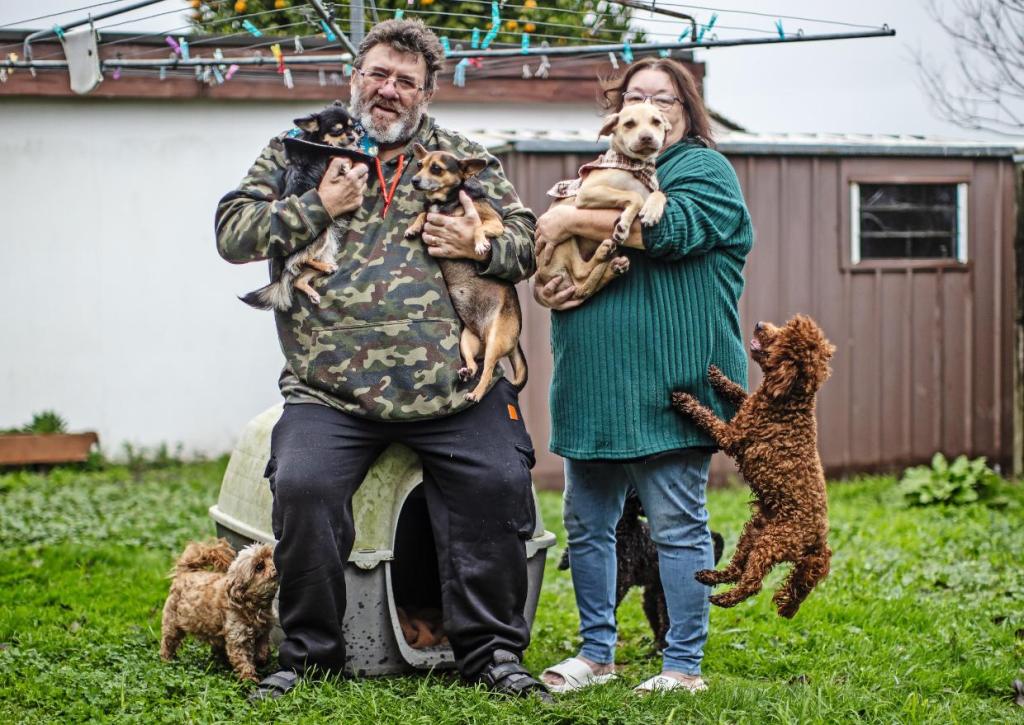
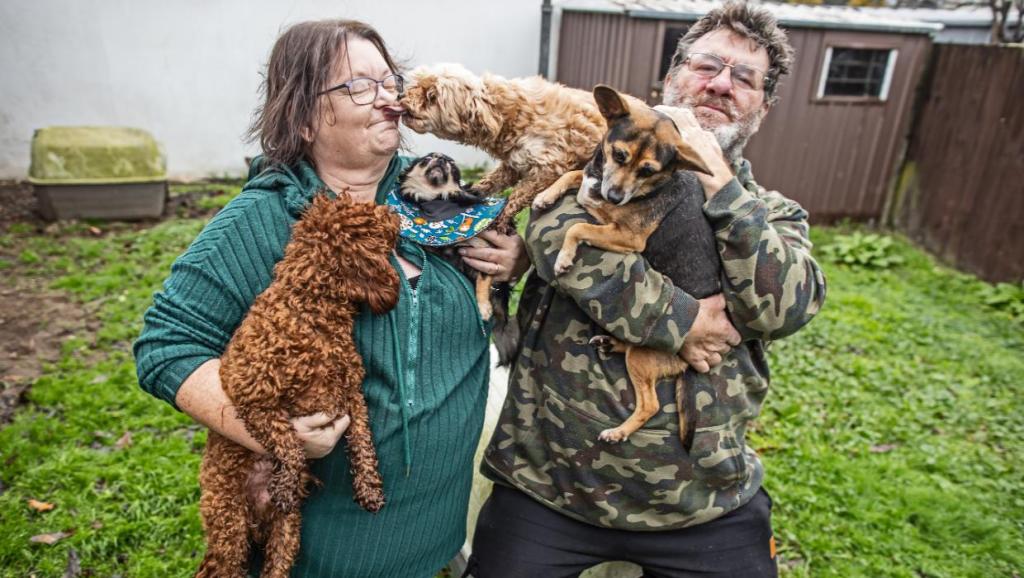
Yvonne Packer and her husband Chris are overwhelmed with rescues at their animal charity in South Auckland. LAWRENCE SMITH / Sunday Star-Times
nday Star-Times
The pair behind a small South Auckland animal charity are frustrated with abuse from the public, and say the SPCA needs to be doing more to help with a surge in roaming animals. Stewart Sowman-Lund reports.
unday Star-Times
The pair behind a small South Auckland animal charity are frustrated with abuse from the public, and say the SPCA needs to be doing more to help with a surge in roaming animals. Stewart Sowman-Lund reports.
The calls can come at any time of the day or night.
Whether it be a dog on the loose, a litter of unhoused kittens, or (on one occasion) some goats – Yvonne Packer will answer the phone.
But after two decades running the South Auckland Animal Rescue, at least half of that time as a registered charity, Yvonne and her husband Chris are growing increasingly frustrated by the level of abuse directed at them by disgruntled members of the public, and want the SPCA to start “doing their job”.
“It’s shocking,” says Yvonne of Auckland’s problem with roaming dogs.
“The amount of phone calls we get daily, and messages daily, asking us to take dogs because people can’t take them to their rentals, or they’re moving, or they’re going overseas, or somebody’s died, or it’s had puppies because they haven’t de-sexed.”
Yvonne Packer says Auckland’s roaming dog problem is out of control. LAWRENCE SMITH / Sunday Star-Times
South Auckland Animal Rescue is just one of a number of smaller outfits dealing with a growing problem. As Yvonne explains, anyone can start a rescue centre and you don’t have to be a registered charity.
The Sunday Star-Times has previously looked at Auckland’s out-of-control problem with roaming dogs and spent time with the team dealing with it on the frontline, the council’s animal management squad. They described how things got worse during Covid-19, as people stuck indoors decided they wanted a pet only to realise after lockdown lifted it was too much.
Yvonne agrees, and says there has been a boom in roaming animals, welfare issues and attacks since the pandemic. This week, a pair of dogs were seized in Glen Innes after eight cats were killed. Roaming dogs killed two of Yvonne’s cats during a spate of attacks last year.
As The Post reported, there were close to 600 dog attacks on people and animals in Auckland in 2024. A clampdown on unregistered dogs saw 5500 infringement notices issued earlier this year.
The surge in welfare issues and roaming animals has also resulted in more abuse directed at Yvonne and her small team of volunteers. People have dumped animals on her doorstep, or yelled at her down the phone. On another occasion, a dog was left tied up to her front gate. The police have even delivered animals to her house.
People think that since Yvonne and Chris run an animal rescue service, they can take in an unlimited number. What they might not realise is that their charity is run from a South Auckland home and relies on fosters willing to take in animals and get them ready for a new life.
“We can only do what we can do, and each rescue is doing their best,” says Yvonne.
Last month, a post was made on South Auckland Animal Rescue’s Facebook page that put it bluntly.
“The abuse being thrown at us is unbelievable,” the post read. “We are not the SPCA and receive no government funding like they do.”
It continued: “To get abuse hurled … threats made because people can’t or won’t take accountability for their own pets is getting beyond a joke.”
Yvonne says it was a volunteer that made the post, but with her consent. It was a bad day, she confesses, but the message needed to be heard.
While some rescues “take and take and take”, adds Chris, that’s not always possible for them – or the right thing to do for the animals.
Yvonne and Chris Packer want the SPCA to step up and help. LAWRENCE SMITH / Sunday Star-Times
“They’re just too full that they end up being an animal hoarder rather than a rescue. And the animals aren’t being helped,” he says.
“And we get abused because we don’t take animals – because if we can’t look after them, the dogs are no better off.”
Yvonne says she’s “disgruntled” with the SPCA and that the charity – which she describes as “the big name” in animal rescue – needs to “up their game”.
“You know, the amount of calls we get, ‘Oh, we rung the SPCA, they won’t help us.’ [Or] ‘We’ve rung the SPCA, they’re closed’,” says Yvonne.
“They’re just a corporate business now, gaining the revenue. But what are they doing with it? Because we’re doing their job.”
An impounded puppy rescued from a property in Wiri during a Sunday Star-Times outing in March. Stewart Sowman-Lund / Sunday Star-Times
In a statement, the SPCA’s general manager of animal services, Dr Corey Regnerus-Kell, rejects that criticism, telling the Star-Times that SPCA centres around the country are “fully funded” by donations, including through adoption fees, pet insurance and the network of op-shops.
An additional funding agreement covers approximately 80% of the operational costs for the SPCA Inspectorate Service.
Yvonne says if it’s a matter of resources, then the SPCA needs to get more staff on the ground and in the community.
“They have to pick up … they need to go back to the way they used to be, and actually do their job.”
But Regnerus-Kell says the SPCA does not have any powers under the Dog Control Act.
“As such, while roaming and stray dogs in communities are overtly managed by councils, SPCA support the proactive measures of providing community desexing opportunities as a reduced or free service for dogs to address the population issues,” he says.
Yvonne would like to see the SPCA share funding with smaller players. Providers like her charity are desperate for extra help.
At the moment, she has between 40 and 60 animals fostered out, and she’s always on the lookout for more people willing to take on an animal, short-term, so it can be rehomed.
“They might do a few [ads] on the TV with that grey kitten,” says Yvonne of the SPCA. “That cat must be just about dead by now. I mean, seriously, it’s been on there for years. ‘Sylvie, the cat. We feed it on Purina’ – yeah, have they not had any more cats since?”
Yvonne Packer says people need to take responsibility for their pets, and can’t rely on rescue centres for help. LAWRENCE SMITH / Sunday Star-Times
Regnerus-Kell says the SPCA does not provide any financial support to other animal welfare groups for operational needs, but offers access to funding to support desexing initiatives.
“We have now pulled this process back in-house, and charitable status will no longer be a requirement. We will restart the SPCA Desexing Grant process later this year.”
A new partnership with Auckland Council will help provide free desexing services in communities across the supercity. “We hope to develop more relationships like this with councils going forward,” says Regnerus-Kell.
Yvonne’s charity entirely relies on public donations, but even that’s not enough. She admits she regularly has to dip into her own pockets to keep the service afloat.
day Star-Times
Regnerus-Kell says the SPCA does not provide any financial support to other animal welfare groups for operational needs, but offers access to funding to support desexing initiatives.
“We have now pulled this process back in-house, and charitable status will no longer be a requirement. We will restart the SPCA Desexing Grant process later this year.”
A new partnership with Auckland Council will help provide free desexing services in communities across the supercity. “We hope to develop more relationships like this with councils going forward,” says Regnerus-Kell.
Yvonne’s charity entirely relies on public donations, but even that’s not enough. She admits she regularly has to dip into her own pockets to keep the service afloat.
“Our average vet bill a month is between $9,000 and 12,000,” she says.
No dog will leave the South Auckland Animal Rescue without being desexed, registered, microchipped and vaccinated – something she believes not all rescues are consistent with. It all adds up.
“We cover all their costs, vet bills, worming, flea treatment, anything they need,” she says.
“We’ve just had 11 pups desexed on Sunday, we had one go in yesterday. Last week, there were four that went in. So we’ve done a heap in this last sort of week. And that’s not cheap.”
And they go the extra mile. At the moment, she’s spending most nights on the North Shore helping to track down a dog that’s been on the run for six weeks.
Her message is simple, and it’s not just a call for more money. It’s to pet owners.
“Take responsibility for the animals that you have in your care,” she says.
“If you cannot afford to feed them, give them medical care, get them desexed: don’t get them. Get a stuffed toy.”
Firstly, we wish to welcome all our international visitors to the site https://clustrmaps.com/site/1a9kn – we hope that you find our posts interesting and informative; and trust you can use the data to act as a supplement to your personal campaigning. Regards, Diana and Mark.
As MEP’s, or Members of the European Parliament, prepare to vote on the landmark regulations for the welfare of both dogs and cats, animal protection organisations are sounding the alarm – proposed amendments and exemptions could undermine the regulation, thus leaving millions of cats and dogs unprotected.
In December 2023 the European Commission (EC) unveiled the first ever regulation on the welfare of dogs and cats – a move which was greatly applauded by welfare organisations and EU citizens alike.
It is now concerning however that a solid proposal from the commission; strengthened by the EU Council, is now at risk of being significantly weakener by some political groups with the European Parliament. MEPs now have a chance to step up their reputation and their game by upholding a regulation that delivers for all companion animals.
Welfare organisations are particularly concerned about:
The possibility for cats to be exempted from identification and registration (I and R) and breeding requirements. Without mandatory I and R authorities cannot trace ownership, fight illegal breeding or manage disease outbreaks. In addition to protecting cat welfare, mandatory I and R could reduce costs to public authorities by up to 25 billion Euros EU wide.
A proposed amendment to exempt small and household breeders from registration and other responsibilities. One unregulated household breeder can be responsible for up to 100 pups or kittens in an animals lifetime. Without controls, this could lead to breeding in areas which are both unsanitary and unethical (puppy mills), an exponential increase in the number of strays, which in turn leads to an increase in pressure on the numbers of excellent shelters which ARE ALREADY OPERATING AT MAXIMUM CAPACITY around the EU.
Leaving out Hunting and Military dogs, despite them having the same behavioral and health needs of any other dog. Allowing mutilations and other painful practices under the guise of ‘preserving health’ is known to cause significant suffering and trauma to these types of dogs.
Watering down of breeding practices, with a possibility of lowering the breeding age of female dogs to 12 months, and allowing for artificial insemination in most cases. Breeding from animals which are unable to mate naturally often perpetulates hereditary problema and poor welfare outcomes.
Other companion animals left unprotected. Animal welfare organisations call for the proposal to offer a legislative opening to the future for other companion animals to be protected, through the production of an EU wide positive list which would be a tool stipulating which animals would be allowed as pets. This will address the current inconsistent Member State rules, enforcement gaps and loopholes which are currently undermining international welfare.
Crazy ? – NO – ASK EU POLITICIANS FOR THEIR VIEWS.
Wehave several posts on the issue here on the site – the kill shelter at San Antonio has exceptionally high numbers – today, Tuesday, 48 dogs are listed for “euthanasia” …
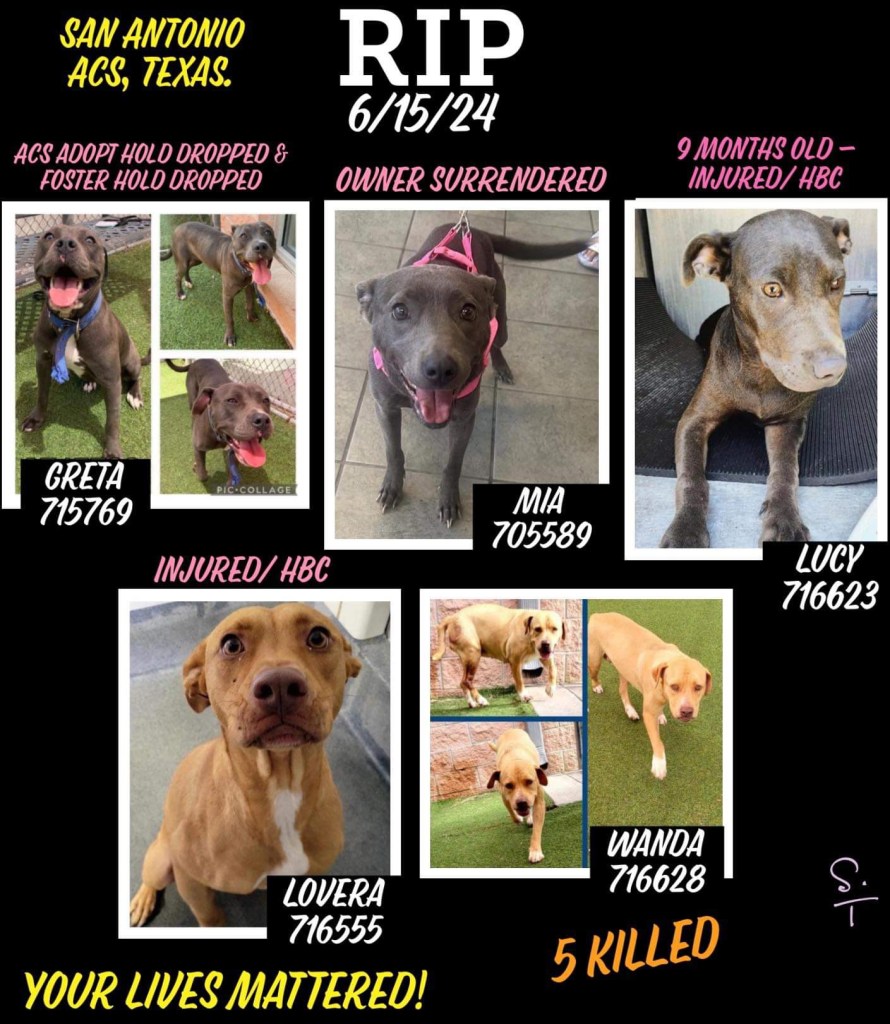
Please stop the killing of loving healthy and loveable dogs! And they kill owner surrenders first. Mia in the photo here was 4–her owners said very sweet. She was wagging her tail happily in her pink harness as she entered the shelter. Then, terrified, despite the best efforts of volunteers, she was killed three days later. Her life was short—and precious. She deserved better.
In 2024 , six days a week, animal rescue nonprofit and kind individuals have less than two hours to rescue dogs that are released to be euthanized. They were on target to kill more than 4000 dogs and cats in 2023–and it’s as bad this year.
It would be worse without the army of volunteers and kind rescues who step up to save these sweet adoptable pets. In March 13 2023 they even killed a service dog despite efforts to save him including an adoption bid.
ACS euthanizes healthy adoptable dogs three days after intake—a Director stated in an interview he wished he could do this quicker. There are usually 20 plus dogs killed at a time, including sweet friendly and highly adoptable puppies. Over 20% of dogs are killed—the figure for cats is worse.
They euthanize puppies, nursing mothers, young dogs, dogs that are confiscated because of cruelty and seniors. They euthanize gentle loving dogs.
Let’s stop this killing together. Let the mayor Ron Nirenberg, city manager Eric Walsh and governor Greg Abbott and the director of Animal Services in San Antonio feel your outrage at these unnecessary deaths by signing. Let them know they need to pay attention to the dogs and you—and stop this! Networking and more funding—with a change of policy and perhaps personnel at administration level—would be a good start. Other cities manage this.
The policy of high kill isn’t helping San Antonio’s problem with strays and the dumping of dogs. They need an aggressive spay and neuter campaign.
Up to 508 puppies can be born from one unspayed female dog and her offspring in seven years.
Up to 4,948 kittens can be born from one unspayed female cat and her offspring in seven years.
The more they kill the more are produced, and spaying and neutering—and limiting breeding in the city—would be a cheaper solution than slaughter.
And without your help thousands more dogs will be quietly killed. Please sign—and share and promote if you can. Their lives are sacred—it’s the only one they get.
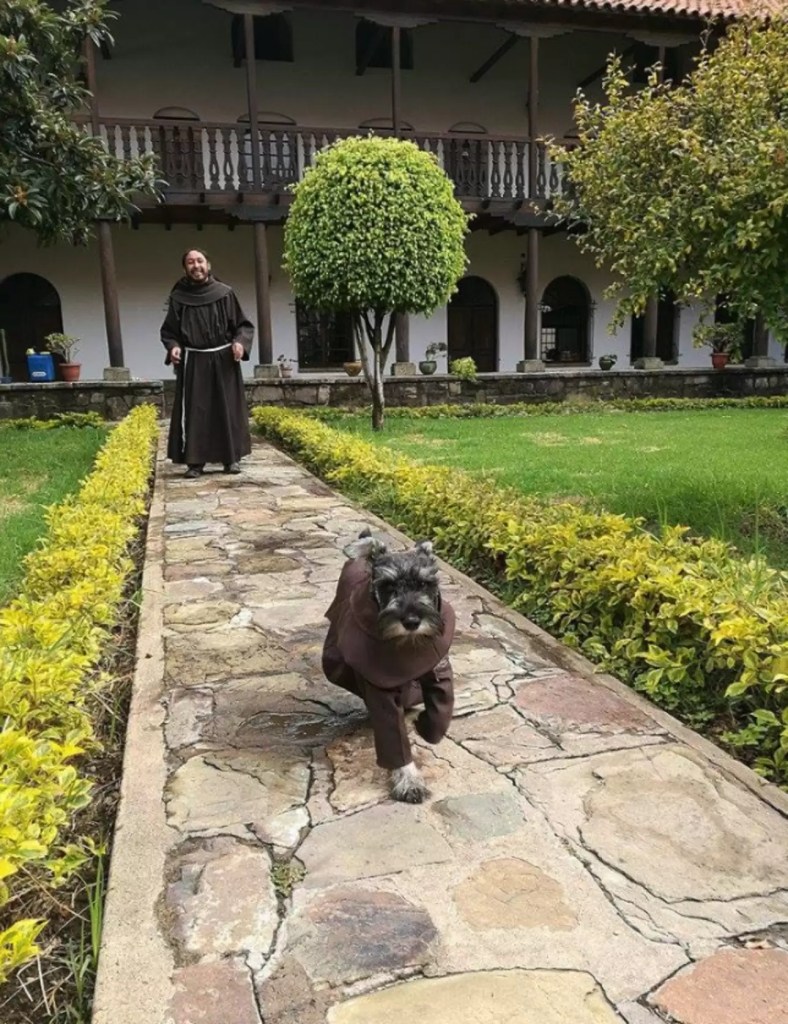
Little Dog Is Welcomed As Monastery’s Cutest New Friar
“All of the brothers love him very much.”
In Catholic tradition, St. Francis of Assisi is the patron saint of animals — so perhaps it’s only fitting that one of the newest followers to join his order is quite literally a dog.
The Franciscan monastery of Cochabamba, Bolivia, recently announced that a furry pup, named Carmelo, had joined its sacred fold, where he quickly distinguished himself as its cutest member.
In honor of his new position, the dog even earned a more formal title: Friar Bigotón (that’s Spanish for “mustache”).
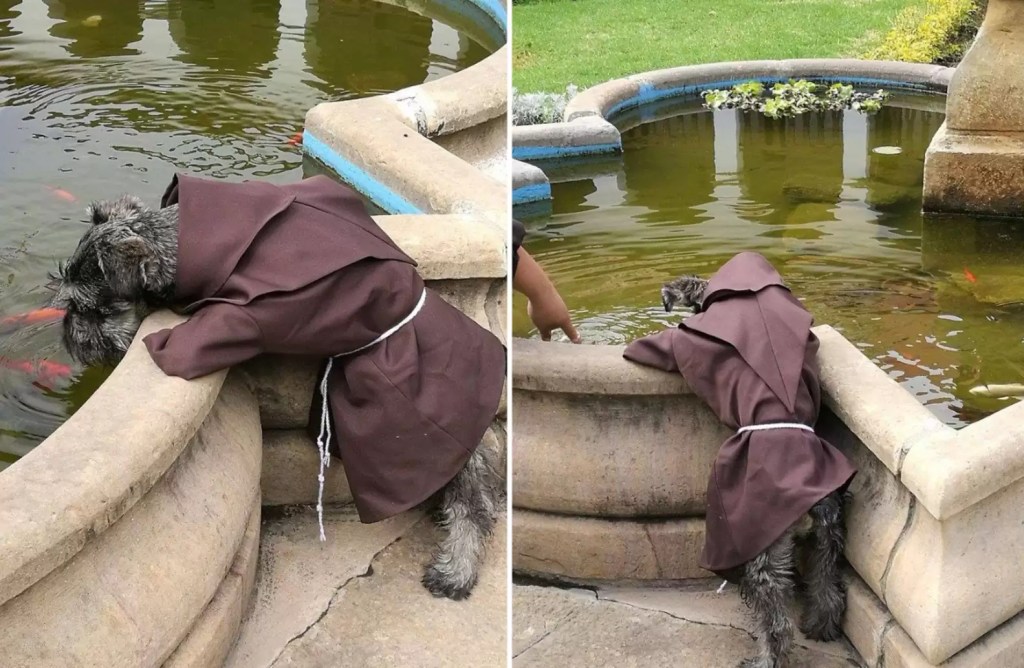
He also got a tiny Franciscan habit to wear around his new home.
Prior to being adopted, Friar Bigotón lived as a stray. But now, as the monastery’s resident pet, things couldn’t be better.
“His life is all about playing and running,” Jorge Fernandez, a fellow friar, told The Dodo. “Here, all of the brothers love him very much. He is a creature of God.”
Apparently, running and playing aren’t the dog’s only duties.
Most importantly, though, Friar Bigotón’s biggest role is in helping other pups like him.
Carmelo’s adoption was made possible by a local animal rescue group, Proyecto Narices Frías (Cold Nose Project), which hopes his story will serve as an inspiration for more monasteries to open their doors to needy pets.
Image credits: Kasper Mariusz Kaproń Ofm
“If only all the churches of our country adopt a dog and care for him like Friar Bigotón,” the group wrote in a post on Facebook, “we are sure that the parishioners would follow his example.”
(The Franciscan Order, founded by S. Francis of Assisi, to this day, takes a keen interest in environmental issues – attends the COP Climate Change Conferences – and animal welfare, in accordance with the teachings of their founder)
ALBANY, N.Y. (NEWS10) — Two people involved in a harsh animal cruelty case were arraigned in Albany City Court Friday morning. Both Christopher Maxwell, 32, from the Bronx, and Latisha Ellis, 32, from Albany, pleaded not guilty to animal cruelty charges. The courtroom was filled with animal rights advocates, who arrived at the hearing early to stand in support of the dog that died.
The pair allegedly tortured and killed their one-year old female pit bull in a parking lot in the area of 4th Avenue and Franklin Street in February. Investigators said the two left the dog Inside a crate at a home for several days with no food or water. Police said Maxwell and Ellis then took the dog, while still inside the crate, to the parking lot, poured lighter fluid over her, and set her on fire.
The pair came to court both wearing face masks, which, to one activist, Jeanette McLean, shows their guilt.
“They know they did this,” McLean said. “They hid themselves behind masks to come to court. Yes, they did walk right through us this morning and tried to get us to not know who they were.”
Before the hearing, the crowd held signs calling for change.
“Unfortunately, the justice system isn’t strong enough for the dogs, McLean said. “That’s really what it comes down to, animals, dogs in general. We need stricter laws for people who do animal cruelty. They hurt a poor, defenseless animal. She had no choice but to burn.”
The prosecutor told the judge a grand jury is expected to meet next Friday regarding the case, which could result in an upgrade in charges.
Petition demands maximum penalties in Albany dog killing
Kumi Tucker WNYT Updated: March 25, 2025 – 5:51 PM Published: March 12, 2025 – 11:54 PM
Ring camera video shows a man dragging a covered crate near Fourth Avenue and Franklin Street in Albany last month, then walking casually away, with the crate in flames.
Albany police say they found a one-year-old female pitbull dead inside.
“When I first saw the video I cried,” said Sidney Scacchetti, vice president of the animal group Bark, Brew & Tattoo. “I could not stop thinking about that poor baby that was stuck in that crate and had to unfortunately go out of this world like that. I could not help but think about my own pitbull at home and how sweet, beautiful, and joyful, and the unconditional love that they give. I can’t fathom how somebody can take a soul like that.”
Police say 34-year-old Christopher Maxwell of the Bronx left the crated dog at home for several days without food or water before heading to the parking lot, pouring lighter fluid, and setting the crate and the dog on fire.
“We’re looking for the full penalty for this man,” said Monica Willette, founder and event coordinator of Bark, Brew & Tattoo. “I think that we had the perfect opportunity as a country to make Michael Vick a prime example of why we don’t treat animals this way. And instead we gave him a slap on the wrist and public community service.”
Bark, Brew & Tattoo raises money and awareness for bully breeds. It fights the negative stigma attached to those dogs. The group began a petition demanding Maxwell be held accountable to the fullest extent.
Animal advocates say things like pitbull rings still exist.
“I think we like to turn a blind eye to it, but it’s something that we definitely need to wake up and realize that it’s still happening in our area,” said Willette.
Maxwell is charged with aggravated cruelty to animals, arson and criminal mischief.
“When I first saw the video, I did cry to think about how this animal was brought into a public space, confined, and then lit on fire. I can’t imagine a worse way of having to suffer and die,” said Bark, Brew & Tattoo President Amanda Wolf. “There are a lot of reasons a person doesn’t want to have an animal. There are a lot of resources available to people that want to surrender their animals and this should never be a solution to that problem.”
Maxwell is scheduled to appear in Albany City Court on March 21.
Albany, New York – In the early morning hours of February 23, Christopher Maxwell,34, dragged his year-old puppy to a church parking lot in a cage. He doused the pup and cage with an accelerant and set it on fire – killing the confined young dog in one of the most horrific ways possible.
According to the Albany Police, before setting his pup on fire, he had starved her for days – leaving her crated without food or water.
In a news release, the authorities said:
Upon further investigation by our Special Operations Unit, it was discovered that Maxwell, the dog’s owner had left the dog inside a crate in his residence for several days without food or water. Upon Maxwell’s return, he took the dog, still in the crate, to a parking lot in the area of Fourth Avenue and Franklin Street, poured lighter fluid over the crate and the dog, and set it on fire.
The video captures the horrifying moments before and after the pup is set on fire.
Animal Victory wants to ensure that Christopher Maxwell faces the maximum consequences for his abhorrent actions. Please add your name to the petition and help us get justice for the young dog who suffered a horrific death at Maxwell’s hands.
Update 3/25/2025: Animal Victory sent petition to the DA.
Update 3/25/2025: This case has now been moved to the Albany County Criminal Court. It is very high profile and the case number will be changing. It is our understanding that the Grand Jury is in session this week – Wednesday, Thursday, and Friday. The D.A. will be presenting the case to the Grand Jury (they are unsure which date specifically).
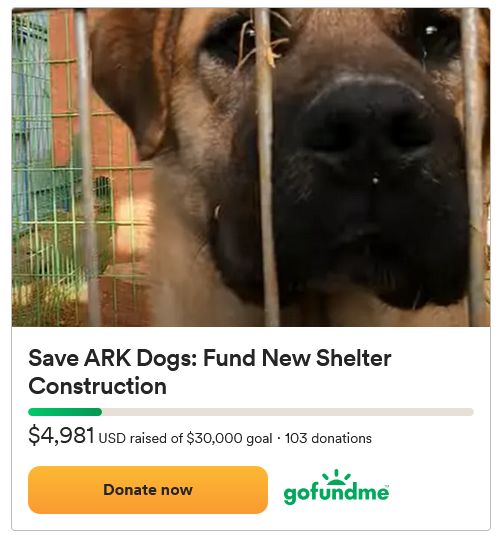
A New Home for Hope: Help Us Relocate Our Dog Shelter
For years, our shelter has been a safe haven for rescued dogs, giving them love, care, and a second chance. But now, Incheon has ordered us to leave, and time is running out. Click HERE to learn more.
ARK dogs have suffered so much. Many were trapped in tiny floating cages, starving and abused, waiting for a cruel fate – death. They never knew kindness—only fear and pain. We saved them, gave them warmth and care, and helped them start new lives. Now, they need a safe place to heal.
Our current facility is unsafe—overcrowded and falling apart. We found the perfect new location with more space and better conditions, but it comes at a high cost.
We need your help. Your donation will secure the new shelter, improve kennels, cover veterinary care, and transport our dogs safely. Every dollar counts.
By supporting us, you become a hero for these dogs. Whether donating or sharing our story, your help changes lives. These dogs deserve a future filled with love. Could you help us make this dream a reality? Please donate today and give them the home they’ve been waiting for.
Note from KoreanDogs.org: To donate to Animal Rights Korea (ARK) Shelter, the best option is to contribute directly to them. However, we have set up a GoFundMe page for those who prefer an alternative where you can donate and share with your friends and family. Rest assured, 100% of the funds raised on GoFundMe will be donated to ARK Shelter. (South Korea is not on the list of Countries supported on GoFundMe, so KoreanDogs.org is raising money for ARK instead.) GoFundMe Link: https://gofund.me/dc86edd4
Photo: A small gesture can make a huge difference in the lives of these dogs. No dog should be treated as food. ARK Shelter.
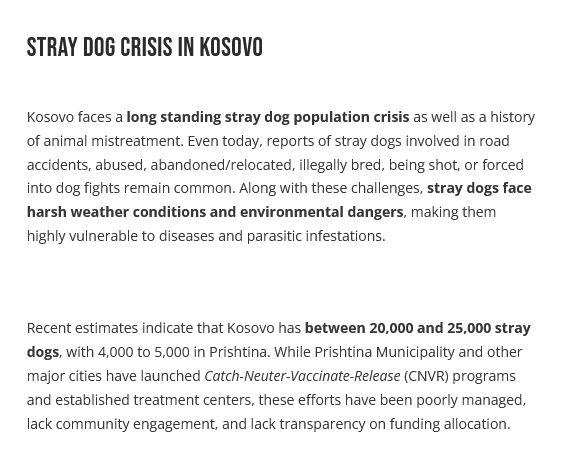
Despite government programs, in Kosovo, in cities like Prishtina, stray populations have remained unchanged. Our member league Stray Angels Kosova Foundation reported to us cases of disappearing sterilized dogs and suspected underground culling. They need sustainable and humane solutions to manage stray dogs. With our support they can provide for vaccinations, sterilizations and adoption initiatives.
WHAT ANIMAL RESCUERS DO IN KOSOVO
For years, independent rescuers and local groups have provided free services to their community, often lacking in funds themselves. Their initiatives include:
Providing temporary shelter and medical care to vulnerable or injured animals.
Facilitating adoptions and fostering: Coordinating with local fosters and adopters, completing vaccination and EU-required Titer tests, and organizing animal travel.
Sterilizing and vaccinating dogs to prevent overpopulation and disease.
Raising awareness: Educating communities about animal welfare, responsible pet ownership, and how to support stray dogs.
De-escalating neighborhood complaints: Handling conflicts like threats to poison, relocate, or kill dogs.
Supporting CNVR operations: Identifying pockets of unsterilized dogs and collaborating with veterinarians to address the issue.
Establishing feeding points for sterilized strays as well as monitoring the health and situation of stray dogs, as well as their movements.
STRAY ANGELS KOSOVA FOUNDATION activities
Stray Angels Kosova’s mission is to empower animal welfare organizations, rescuers, and volunteers to care for and protect stray animals across Kosovo. Especially, they provide:
Medical treatment and rehabilitation for injured or ill dogs;
Sterilization and vaccination programs;
Fostering and adoption initiatives;
Education and advocacy campaigns for communities.
STRAY ANGELS KOSOVA FOUNDATION DREAMS
To make a lasting impact, Stray Angels Kosova aims to:
Establish stable funding for rescuers and Catch-Neuter-Vaccinate-Release (CNVR) programs;
Launch a nationwide education program to teach all age groups about responsible pet ownership and purchasing, sterilization, how to safely interact with stray animals, and ways to mitigate animal abandonment.
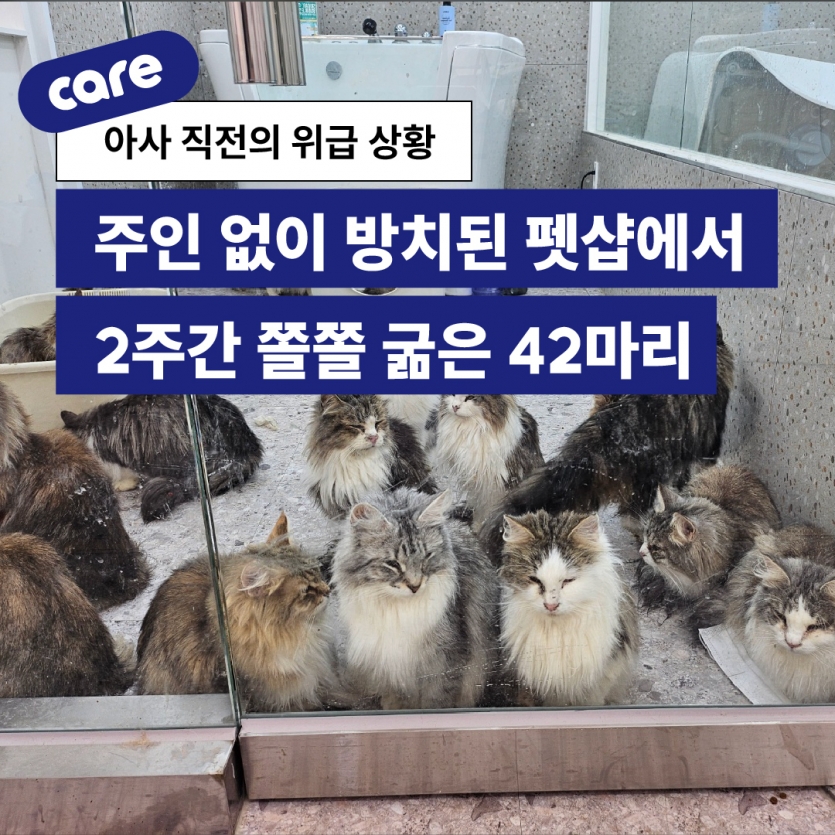
In a harrowing incident in Suwon, South Korea, on December 23rd, CARE received an urgent tip about over 50 dogs and cats that had been abandoned in a closed pet shop for more than six months. These animals had been left to starve for two weeks, with no intervention from local authorities despite numerous complaints from residents. Upon arriving at the scene, CARE found 32 cats and 10 dogs, severely malnourished and covered in feces, barely clinging to life. The heartbreaking sight of the animals, some of them so emaciated their bones protruded, underscored the urgent need for action. The shop owner, currently imprisoned for fraud, had abandoned the animals, and the local government failed to take immediate steps to rescue them.
After a tense standoff and following public pressure, all 42 animals were finally rescued by CARE. However, the journey doesn’t end there. Many of the animals are still receiving medical treatment, and the costs for their recovery are significant. Despite the rescue’s success, the failure of local authorities to act sooner serves as a stark reminder of the gaps in animal welfare enforcement.
This tragic event calls for immediate action to hold those responsible accountable. We demand that the City of Suwon launch a comprehensive investigation into the mishandling of this case, enforce stronger animal welfare regulations, and ensure such neglect never happens again. Join us in supporting these rescued animals by donating for their medical treatment and helping raise awareness. Your contribution can make a difference in giving these animals the chance they deserve at a healthy, safe life. Together, we can push for stricter oversight and work to prevent such cruelty from happening again in the future.
👉 Click HERE to learn more about the actions you can take.
PETITION
Hold Suwon Accountable: Justice for Animals Abandoned at Pet Shop – Investigate & Reform!





















 World Animals Voice