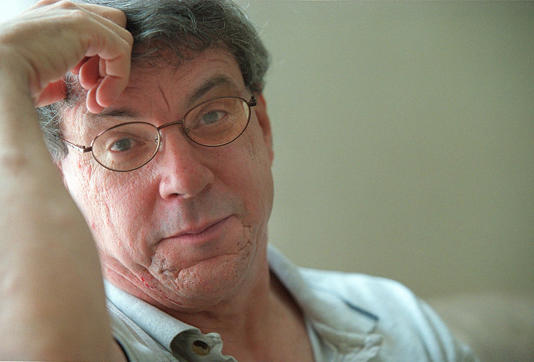
Steven M. Wise was a few years into his personal injury and criminal defense law practice when Peter Singer’s groundbreaking book “Animal Liberation” changed the course of his career.
A graduate of Boston University’s School of Law, he was shaken by the bioethics professor’s accounts of how animals were treated in factory farms and by companies testing products.
“I hadn’t realized how factory farming worked, how meat comes to our plates,” Mr. Wise told the Globe in 2002.
The way “nonhuman animals were tormented in biomedical research” was also news to Mr. Wise, who told a friend: “I don’t know how to go back to not knowing this.”
So he didn’t. Mr. Wise, who spent the rest of his life arguing in courts, articles, and books that chimpanzees, elephants, whales, and other highly intelligent creatures have a fundamental right to liberty, no less than the humans who often confined or killed them, died Feb. 15 in his Coral Springs, Fla., home. He was 73.
His wife, Gail Price-Wise, told The Washington Post that the cause was glioblastoma, a form of brain cancer. He was diagnosed almost three years ago, she said, and continued to work with his Washington-based nonprofit, the Nonhuman Rights Project, through three brain surgeries and two rounds of chemotherapy.
The little-known demand for donkey skins, used in the production of ejiao (a traditional Chinese remedy), is driving a global trade that is opportunistic, brutal and unsustainable.
The Donkey Sanctuary’s new report reveals how donkeys are suffering in their millions, and animal dependent communities are severely impacted.
The Donkey Sanctuary (England) has released the Donkeys in Global Trade briefing report, which delves into the profound impact that the donkey skin trade has on donkeys across the globe and the communities that depend on them.
The report sheds light on the often overlooked but devastating consequences of the donkey skin trade, including exploitation, cruelty, and population decline.
The donkey skins are used for the production of ejiao, a traditional Chinese remedy. Production has seen an estimated 160% increase over the past 5 years, meaning that around 6 million donkeys, and potentially many more, are being killed each year to fuel the trade.
This trade places pressure on donkey populations globally. This is particularly true in Africa where many people rely on donkeys for their livelihoods, transport, agricultural operations and to access essential resources such as food and water.
Donkeys in Global Trade briefing report, The Donkey Sanctuary
The trade has become so profitable that donkey populations have dramatically declined in many animal dependent areas; for example in Kenya, it is estimated that around half the country’s donkey population was slaughtered between 2016 and 2019 in order to sell skins.
To meet the relentless demand for skins, donkeys are bought, captured or stolen, including from donkey-dependent communities. In many cases donkeys are walked for days, often across national borders; they are transported and held with scant regard for their suffering; and they are slaughtered, often in the most horrific ways.
Donkeys in Global Trade briefing report, The Donkey Sanctuary
The impacts of the trade are severe and varied, with the top concerns being:
Donkey welfare;
Wildlife crime convergence;
Biosecurity risks;
The impact on women and communities;
Implications for the Sustainable Development Goals.
Following the report’s publication, African state leaders approveda continent-wide ban on the donkey skin trade at the conclusion of the African Union summit in Ethiopia on 18 February.
“The ‘stray’ ones are not the dogs, but the leaders who have burdened Turkey for years, polarizing society with hate politics; those who turn killing and rape into a country’s culture. Enough is enough! We will not vote for politicians who make our friends enemies, who undermine the culture of living together by promising to lock them in death camps under the name of ‘natural habitat.’ We will not bow to regressive and fascist hostility policies. Living is a right. We will not submit to the reactionary and fascist hostility policies. Living is a right. Freedom for animals, humans, and the earth!” (TY/VK)
SAV – In 2005 we formed ‘Serbian Animals Voice’ (SAV) to try and be vocal for the stray cats and dogs of Serbia. The site is archived now, but is still open for anyone wishing to have a look at all our campaign work.
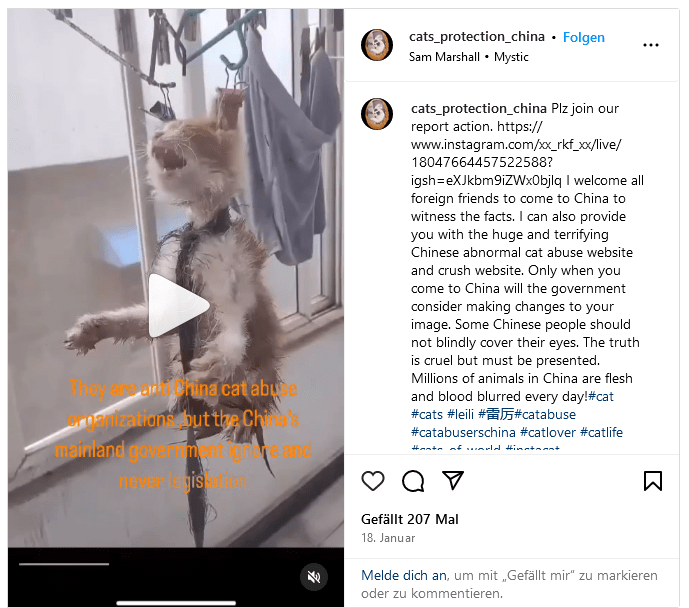
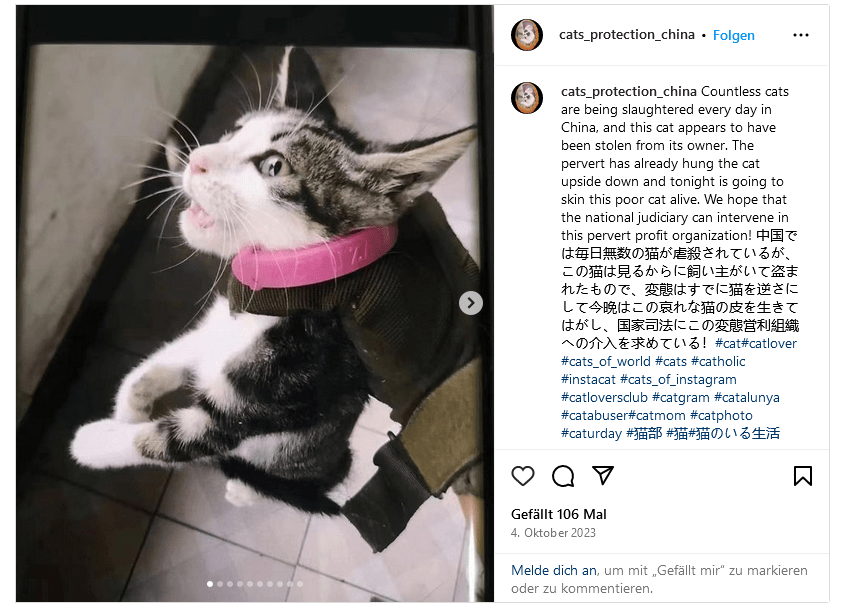
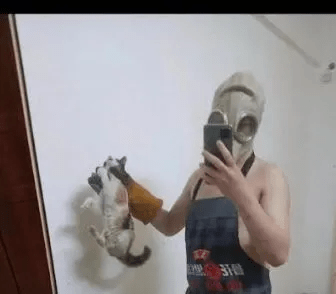
We are proud to be part of this effort by “Feline Guardians” to bring the monsters to justice who torture and kill cats in China, as previously reported on.
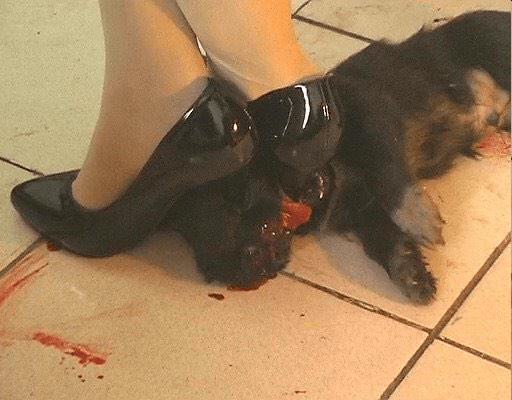
Cat abuse is a serious issue in China that requires urgent attention. Since the “Cat in Blender” incident, Telegram communities that deliberately torture animals for fun have been operating “legally” within China, evading justice and promoting young people to harm animals.
The absence of effective measures and prolonged inaction by the authorities have allowed cat abuse to become rampant, to the extent that in recent days, stray cats in internet-face stations have been seen being abused on livestreams, causing shock and distress to animal lovers worldwide. This situation is unacceptable and must be stopped immediately!
Please join us for an X demo on Friday, February 23.
– New York: 5-6pm – Los Angeles: 2-3pm – London: 10-11pm – Paris: 11-12am – Rio de Janeiro: 7-8pm – Tokyo: 6-7am (next day) – Beijing: 5-6am (next day)
Use the hashtag #StopChinaCatTorture and #CatAbusersChina to express our collective disdain and demand immediate intervention. Every tweet can drive change!
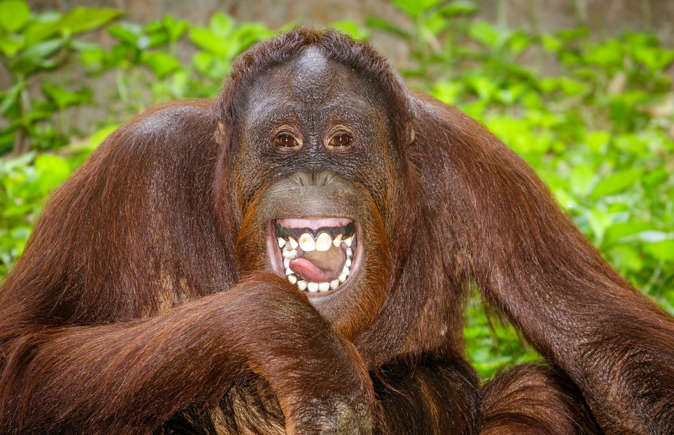
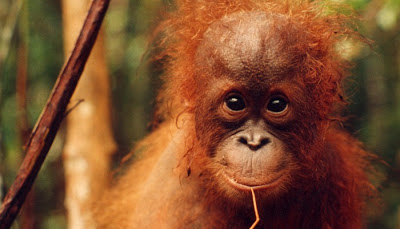
Orangutans are solitary creatures but like to laugh at a joke. They can learn to use tools and communicate with sign language, and are strong but gentle. Yes, there’s lots to celebrate on August 19, which is designated International Orangutan Day (#OrangutanDay). The day is not only designed to raise awareness of these large tree dwellers so fond of fruit and swinging on branches, but to raise awareness of their plight as a species threatened with extinction because of disappearing jungle habitat. So here are 20 things worth knowing about these orange-furred apes.
In Malay, “orangutan” means “man of the forest,” since the animal lives a solitary existence in lowland forests, as they “feast on wild fruits like lychees, mangosteens, and figs, and slurp water from holes in trees.” The two main types of these apes, Bornean and Sumatran orangutans, are much alike in how they look and behave. They both have shaggy reddish fur, but Sumatran orangutans boast longer facial hair. The Tapanuli orangutan is a third species of orangutan, described as distinct since 2017. Only about 800 of these animals live in the wild, making it the most endangered of the orangutans.
While orangutans have short legs, they have proportionately long arms, in fact the longest of the great apes (their arms stretch to the ankles when they are standing). With a span reaching lengths of 2.2 metres, or seven feet, the arms end in hook-like hands with long fingers and short thumbs. Orangutans can swing through the trees using their arms alone.
Orangutans have a lot of heft. They are the largest and heaviest tree-dwelling mammals. On average males weigh 83 kilograms (183 pounds) and are about 1.5 metres (five feet) tall. Females are usually smaller and lighter, averaging 37 kg (82 lb.). They tend to build nests in trees, although adult males sometimes make themselves comfortable sleeping on the ground.
Apparently orangutans like to laugh. Research has shown that during play these apes will tickle each other, punch playfully, and when one does a gaping grin—their version of laughter—their playmate will often respond in kind, demonstrating they possess empathy. “It shows how important this form of emotional communication is,” says researcher Marina Davila Ross. “Empathy helps one communicate with social partners … It helps form social bonds and it’s supportive in terms of cooperation.”
Chantek was one smart cookie. The male orangutan, who lived at Zoo Atlanta, learned to communicate with American Sign Language under the care of an anthropologist. He was also able to clean his room, use a regular toilet, and haggle for his favourite treats—particularly cheeseburgers. Sadly, he died in 2017, at the ripe old orangutan age of 39, despite being placed on a low-sodium diet and regularly monitored with cardiac ultrasounds, blood pressure tests and blood work.
In the jungle, orangutans swing from branch to branch. But if there’s a gap too big for a youngster to negotiate, the mother will often make “a living bridge for the baby to scamper across.” If adult males can’t swing across the gap between trees, because their weight is too much for a branch, they will quite sensibly descend to the ground and walk to the next tree.
PETITION TARGET: Onondaga County District Attorney William J. Fitzpatrick
A black cat named Milo was ruthlessly stomped on and beaten using fists and other objects in Syracuse, New York. He was beaten so horrifically that he could not be saved.
A 24-year-old man has since been arrested.
According to the Syracuse Police Animal Cruelty Unit, the person who beat Milo first tried to get a dog to attack Milo.Milo appears to have attempted to scratch the individual out of fear and self-defense. That’s when Milo was violently attacked.
Cornell University’s autopsy found that Milo suffered a brutal and painful beating. His right eye was displaced, his eye socket fractured, and he suffered an open rib fracture, which made it difficult to breathe.
Veterinary staff ultimately determined the most humane response was euthanasia.
The arrested man has been charged with aggravated cruelty to animals, which is a felony. He has been released awaiting his day in court.
No innocent cat deserves such a gruesome and painful demise.
Sign our petition to get justice for Milo by holding the perpetrator of this senseless violence accountable to the fullest extent of the law and forbidding the person responsible from ever having animals in the future.
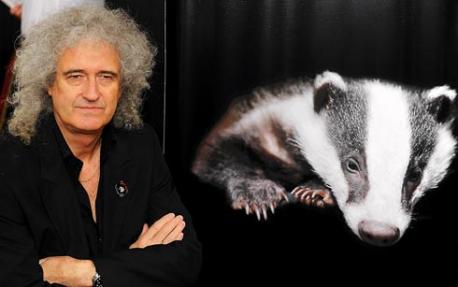
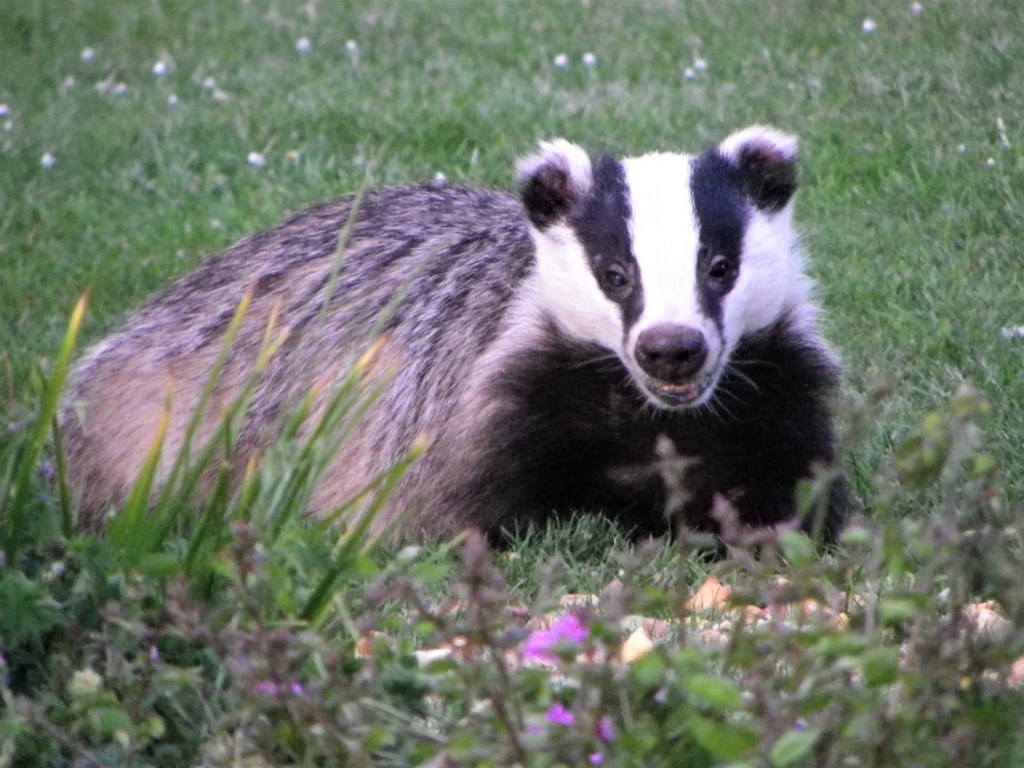
Thousands more badgers than planned could be killed if the government gives the go-ahead next week to raising the target number of animals in certain areas, experts say.
Until now, official policy has been that culls aimed to reduce badger numbers by 70 per cent within in each cull area and across most of southwest England.
But The Independent understands that ministers are preparing to allow that target to be raised to 100 per cent in “exceptional” circumstances, subject to a consultation.
The announcement could be made as early as next week – during the National Farmers’ Union annual conference.
The permission would be similar to that granted to sugar-beet farmers to use bee-killing pesticides – which has been given four years running.
The change to the 100 per cent target would begin after January 2026, if it is approved after a consultation.
More than 260,000 badgers in England – over half the population – are thought to have been killed since culling began in 2013, as the government has sought to eradicate tuberculosis in cattle, which is costly for farmers.
The spread of the disease is blamed on badgers but wildlife defenders dispute this, saying cattle are 800 times more likely to spread the disease than badgers are.
One expert said “exceptional circumstances” was poorly defined so feared the policy could become standard practice.
Tom Langton, an ecologist who has challenged culling in the courts, said the toll of extra badgers killed would depend on how many areas got the go-ahead, but if it was the entire “edge area” – that is medium-risk – up to 20,000 or more a year could be killed.
He said: “If the exception is just a badger with bovine TB is found or trapped within say 1km of a farm, it could just become the new normal to cull every year over wide areas. So this risks being the cull anywhere, for ever moment.”
Especially with a General Election on the horizon this year.
The government had promised the culls would end next year and be replaced by increasing vaccinations, but last year landowners and farmers were given the go-ahead to kill tens of thousands more badgers.
Mr Langton said 100 per cent culling was tried in 2018 around Penrith in Cumbria in cattle imported from Northern Ireland.
“They went in and shot 1,115 badgers – all of them – but could not then attribute change in TB rates to culling as seven farms were quite clearly reinfecting themselves because of the failed testing regime,” he said.
A spokesperson for the Department for Environment, Food and Rural Affairs said: “Our approach to disease control continues to be informed by science (WAV – What !!) and deploys all tools at our disposal.
“We are moving to the next phase of our strategy which will focus on wider scale badger vaccination – but as we clearly set out in the 2020 Godfray Review response and subsequent consultation and response in 2021, culling remains an option where epidemiological assessment indicates that it is needed, alongside other measures in our bovine TB eradication strategy.”
Lady Freethinker and Action for Primates welcome action taken by West Kalimantan Police in Indonesia in the arrest and subsequent charging of an individual suspected of torturing and killing baby monkeys on camera and selling the videos to buyers in the U.S. and abroad for $50-$100 USD per video.
The person has now been charged under Article 91 of the Law on Animal Husbandry and Health; and/or Article 302 of the Criminal Code concerning Mistreatment of Animals. He faces a prison sentence of 9 months.
Police reportedly found a dead, mutilated monkey wrapped in plastic outside the suspect’s home; torture apparatus inside the home, including a gas stove, soldering iron, hammer and slingshot; and 58 videos depicting sadistic torture of baby, long-tailed macaques on his mobile device. The suspect’s name has not yet been released publicly.
Lady Freethinker and Action for Primates, together with other animal groups such as Jakarta Animal Aid Network (JAAN), have been investigating the disturbing world of online monkey torture rings for over two years to end the horrifying violence inflicted upon baby monkeys for online circulation.
The collaboration began with an investigation in 2021 that uncovered the disturbing escalation of private online groups on platforms like Telegram, in which people in Indonesia created custom monkey torture videos for an audience of monkey “haters” in the U.S., U.K., and elsewhere. Members of the group paid for and dictated what method of torture they wanted inflicted on the monkeys.
These underground rings were the topic of the recent BBC documentary “The Monkey Haters,” for which Lady Freethinker, Action for Primates and JAAN provided information and intelligence.
In the last 18 months, two other individuals in Indonesia have been convicted and imprisoned for their part in torturing and killing baby monkeys; one individual in the U.S. has been jailed with two others charged for their roles in online monkey torture gangs, and there have been several arrests in the UK.
Shockingly, many of these graphic videos – depicting mutilation, burning, beating, and more – have also been posted on Facebook and YouTube, making them easily available for others, including children, to access and view. Lady Freethinker and Action for Primates are calling on social media and video sharing platforms to take immediate action to stop the proliferation of animal torture content that is being posted online.
“I’m thankful to West Kalimantan Police for arresting the person thought to be responsible for horrific violence against dozens of innocent monkeys for profit,” said Lady Freethinker founder Nina Jackel. “Such crimes must be taken seriously, especially as evidence shows time and time again the link between animal cruelty and violence against humans.”
“We welcome the action taken by the Indonesian Police,” said Action for Primates Co-Founder Sarah Kite. “Filming the torture and killing of baby monkeys for ‘entertainment’ is abhorrent and must never be tolerated. We hope the arrest and subsequent charging of this individual will deter other people from becoming involved in these perverted and sadistic activities.”
Today, we at WAV, join many in the world in mourning for
Alexei Anatoljewitsch Nawalny
murdered in a Russian State prison. There is nothing, in what news there is coming from Russia, and the way Mr. Navalny has been treated by the Russian regime, to suggest otherwise.
He was a man of exceptional courage, integrity, humour – a beacon of humanity in a darkening world.
While our focus on WAV is and remains with the animals of this world, we recognise the link between Human and Animal oppression, Human and Animal torture, and Mr. Navalny was a champion of Freedom, Democracy, and Truth – for all that is right, and must remain so, and against all who would trample those values, and subject those they are taken from to Imprisonment, Torture and Death.
Evil must never prevail, not in Russia, nor anywhere else in the world. Where Evil is allowed to thrive no being can live in Peace and Freedom.
For us personally, and our continued struggle for the welfare and rights of non-Humans worldwide, Mr. Navalny, as a voice of Compassion, Justice and Truth, and above all, an example of singular courage, will be a source of inspiration. We may not be fighting the same fight – although Human Freedom and Human Rights are as important to us as those of Non-Humans, as issues clearly linked – and Russia’s political landscape was Mr. Navalny’s chosen ground of battle, where he, for his people and his country, sought to bring about much-needed change. We seek to see the principles of humanity applied to all species sharing our world with, worldwide. In the end, it is our common struggle for a better world, and all that makes us – positively – human, that unites us.
One light has gone out, millions of others will burn the brighter now.
This connects to : CHINA: “Cat Torture Ring”, “Crush Videos”
England – On Friday 2nd February, two young teenagers – a boy and a girl, were given 22 years and 20 year prison sentences respectively for the murder of another innocent teenager.
From what is being said, the two murderers did a lot of communication – including the planning of the murder, in which this poor girl was stabbed no less than 28 times ! – which was undertaken using the “Dark Web or DARK NET’. Through our work relating to Chinese cat torture/abuse/killings and the production and distribution of “Crush Videos“, we know that this is also, in the main, done using the Dark Web – given that these activities are, in many countries, illegal and subject to criminal investigation and punishment.
So what exactly is the Dark Web; what is special to it and how does it operate when compared to the ‘normal’ web ? Hopefully we can give you an oversight of what it is about; and why it is so very difficult to track the perpetrators of these terrible crimes or other illegal activity associated with it.
Murder and gross abuse of Human and non-Human alike – the Dark Web seems to be a place where both can thrive undetected.
So, what is it ?
By the definition given on “www.pcmag.com” the Dark Web is ..
A file sharing network used to illegally distribute copyrighted music and videos, as well as nefarious documents.
The Dark Web is the World Wide Web content that exists on darknets: overlay networks which use the Internet but which require specific software, configurations, or authorization to access. Through the Dark Web, private computer networks can communicate and conduct business anonymously without divulging identifying information, such as a user’s location, i.e. IP (IP: see below).
We all use URLs, or a Uniform Resource Locator during our daily computer work to visit webpages and other resources on the web. The URL is an address that sends users to a specific resource online, such as a webpage, video or other document or resource. When you search on Google, for example, the search results will display the URL of the resources that match your search query. The title in search results is simply a hyperlink to the URL of the resource.
“Although we use a “Clustrmap” on our site, which you can view at https://clustrmaps.com/site/1a9kn – you will see that there is no specific detail for any visitor; other than the country of origin, as the flags show. For us, the “Clustrmap” is used solely as a resource for identifying where visitors (to the site) are from, and to potentially see, by the absence of visitors from certain countries, which areas, in terms of “Animal Welfare/Rights” news, are under-represented on the site.
Hence it is for us a very useful identifier of where the current site visitors are located – UK, USA, Italy, Netherlands etc.
The IP Address
The Dark Web forms a small part of the deep web, the part of the web not indexed by web search engines, although sometimes the term ‘deep web’ is mistakenly used to refer specifically to the Dark Web.
An Internet Protocol address (an ‘IP’ address) is a numerical label such as 192.0.2.1 that is assigned to a device connected to a computer network that uses the Internet Protocol for communication. IP addresses serve two main functions: network interface identification, and location addressing.
As a word of warning, your own IP address is something you should guard. Many of these Dark Web sites use applications such as “IP loggers”, which record your IP upon visiting, and so disclose to the potentially criminal users of these services your personal data, such as your exact location, etc. So please be mindful, ideally DO NOT visit such sites/networks – even if, as in the case of the Crush Video/Cat Torture groups, you wish to assist in bringing these “people” to justice.
The Deep Web
The Deep Web, also referred to as the ‘invisible web‘[, or ‘hidden web‘ are parts of the World Wide Web (www) whose contents are not indexed by standard web search-engine programs. This is in contrast to the “surface web“, which is accessible to anyone using the Internet.
Deep Web sites can be accessed by a direct URL or IP address, but may require entering a password or other security information to access actual content. Uses of Deep Web sites include web mail, online banking, cloud storage, restricted-access social-media pages and profiles, and web forums that require registration for viewing content. It also includes paywalled services such as video on demand and some online magazines and newspapers.
The Dark Nets which constitute the Dark Web include small, friend-to-friend networks, as well as large, popular networks such as Tor, Freenet, I2P, and Riffle operated by public organizations. Individuals users of the Dark Web refer to the regular web as Clearnet due to its unencrypted nature.
So all data on the net is either unencrypted (not converted into a code), or encrypted (convertedinto a code), for a variety of reasons. Usually encryption is used to protect data from access by unauthorized persons, or indeed to conceal potentially illegal activity, as in the case of the Dark Web. Encryption is also used to conceal/hide data itself by converting it to (often nonsensical) “code”, altering its entire appearance, and so masquerading as something it is not.
Another way of making it hard for outsiders to access “sensitive” or forbidden data is the hiding of data in a layered construct, much like, and so called, an onion – the TOR Dark Web, or otherwise known as “onionland]” uses this technique. It is a traffic anonymization technique of onion routing under the network’s top-level domain suffix .onion.
Onion routing refers to the fact that Tor encapsulates your internet traffic in layers of encryption, which are nested like the layers of an onion. Onion routing is the reason why, when you access a site through Tor, it takes a very long time to load – your internet traffic is being routed through many different Tor “nodes” (volunteers on the network who are helping run it on their devices).
We cannot, here, go into more detail – “World Animals Voice” is not a site devoted to technical issues. It was, however, our intention to give you some idea why pursuing the perpetrators committing the terrible crimes we have highlighted so far – and will continue to do so – is difficult.
However, once again: we will renew our commitment, together with all the cooperating parties, and our supporters, to this cause, and the animals concerned.
To those hiding in the shadows, feeling safe and sneering at those who pursue them, we will say this:
YOU WILL BE FOUND, AND YOU WILL FACE THE CONSEQUENCES. MAKE NO MISTAKE
Mark & Diana
Here are past links to our work associated with Cat Torture, Crush, and animal liings by perverted supporters who use the above to cover their tracks and identities.















 World Animals Voice