Day: May 11, 2025

(US) And this is what “Humane Euthanasia” looks like in US Shelters / Numbers of Kill – No Kill / “Redemption”

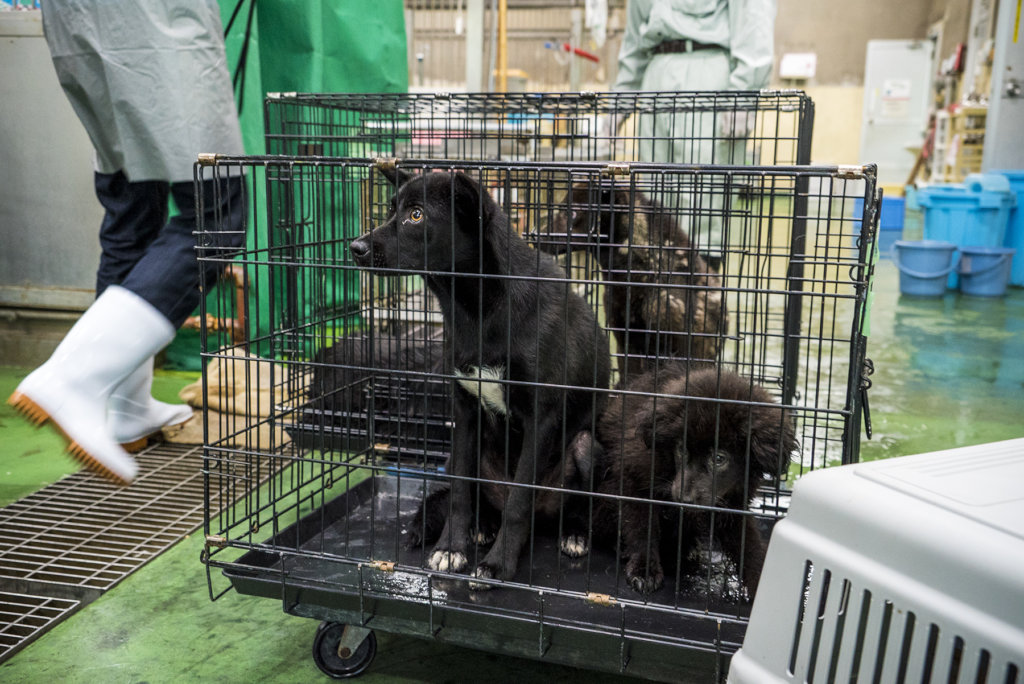
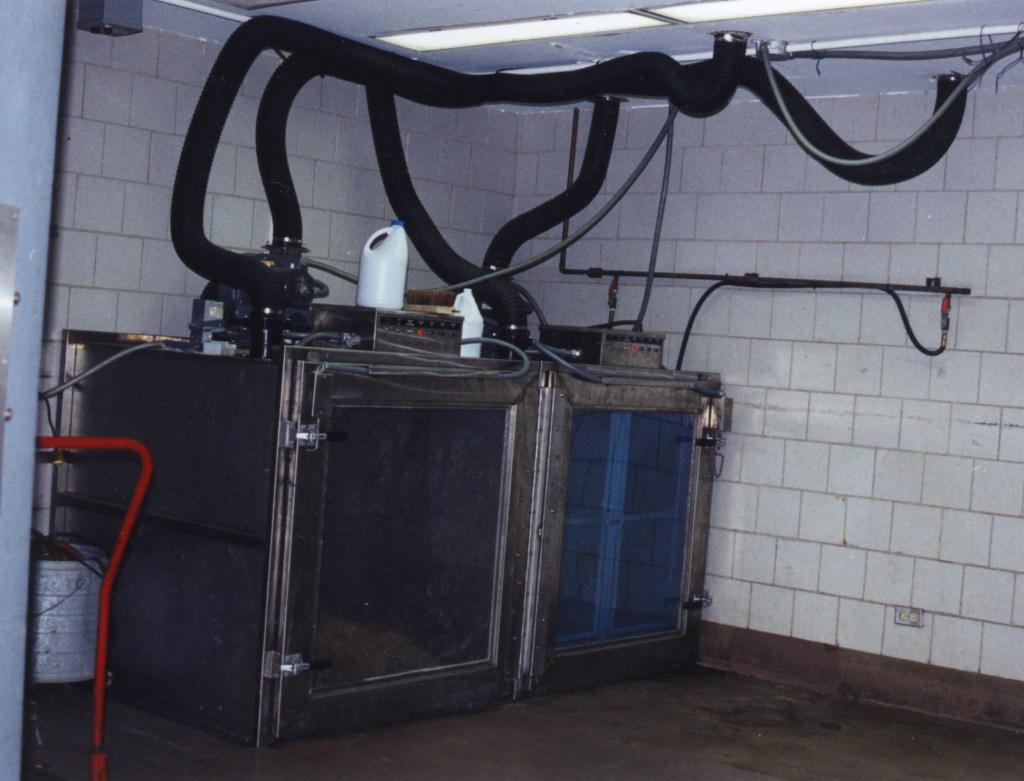
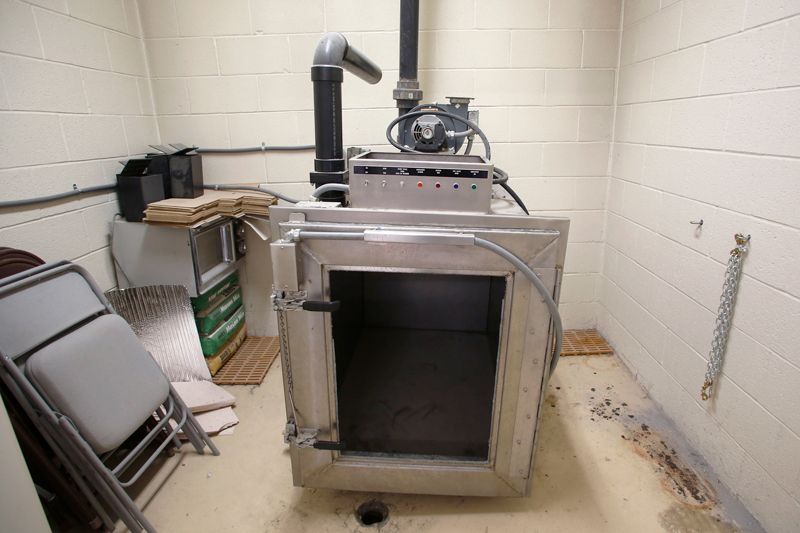
This gross video is not recent, granted – but this is still the situation in many US States. And many also still use gas. As here.

The Comments below say it all really …
Author, Unknown:

Yes, I Gas Dogs and Cats for a Living. I’m an Animal Control officer in a very small town in central North Carolina. I’m in my mid thirties, and have been working for the town in different positions since high school.
There is not much work here, and working for the county provides good pay and benefits for a person like me without a higher education. I’m the person you all write about how horrible I am.

I’m the one that gasses the dogs and cats and makes them suffer. I’m the one that pulls their dead corpses out smelling of Carbon Monoxide and throws them into green plastic bags. But I’m also the one that hates my job and hates what I have to do.


First off, all you people out there that judge me, don’t. God is judging me, and I know I’m going to Hell. Yes, I’m going to hell. I wont lie, it’s despicable, cold, cruel and I feel like a serial killer. I’m not all to blame, if the law would mandate spay and neuter, lots of these dogs and cats wouldn’t be here for me to gas. I’m the devil, I know it, but I want you people to see that there is another side to me, the devil Gas Chamber man. The shelter usually gasses on Friday morning.

Friday’s are the day that most people look forward to, this is the day that I hate, and wish that time will stand still on Thursday night. Thursday night, late, after nobody’s around, my friend and I go through a fast food line, and buy 50 dollars worth of cheeseburgers and fries, and chicken. I’m not allowed to feed the dogs on Thursday, for I’m told that they will make a mess in the gas chamber, and why waste the food.

So, Thursday night, with the lights still closed, I go into the saddest room that anyone can every imagine, and let all the doomed dogs out out their cages.


I have never been bit, and in all my years doing this, the dogs have never fought over the food. My buddy and I, open each wrapper of cheeseburger and chicken sandwich, and feed them to the skinny, starving dogs.

They swallow the food so fast, that I don’t believe they even taste it. There tails are wagging, and some don’t even go for the food, they roll on their backs wanting a scratch on their bellies. They start running, jumping and kissing me and my buddy.

They go back to their food, and come back to us. All their eyes are on us with such trust and hope, and their tails wag so fast, that I have come out with black and blues on my thighs.. They devour the food, then it’s time for them to devour some love and peace. My buddy and I sit down on the dirty, pee stained concrete floor, and we let the dogs jump on us. They lick us, they put their butts in the air to play, and they play with each other. Some lick each other, but most are glued on me and my buddy.


I look into the eyes of each dog. I give each dog a name. They will not die without a name. I give each dog 5 minutes of unconditional love and touch. I talk to them, and tell them that I’m so sorry that tomorrow they will die a gruesome, long, torturous death at the hands of me in the gas chamber. Some tilt their heads to try to understand. I tell them, that they will be in a better place, and I beg them not to hate me. I tell them that I know I’m going to hell, but they will all be playing with all the dogs and cats in heaven.

After about 30 minutes, I take each dog individually, into their feces filled concrete jail cell, and pet them and scratch them under their chins. Some give me their paw, and I just want to die. I just want to die. I close the jail cell on each dog, and ask them to forgive me. As my buddy and I are walking out, we watch as every dog is smiling at us and them don’t even move their heads. They will sleep, with a full belly, and a false sense of security.


As we walk out of the doomed dog room, my buddy and I go to the cat room.
We take our box, and put the very friendly kittens and pregnant cats in our box. The shelter does not keep tabs on the cats, like they do the dogs.
As I hand pick which cats are going to make it out, I feel like I’m playing God, deciding whose going to live and die.

We take the cats into my truck, and put them on blankets in the back.

Usually, as soon as we start to drive away, there are purring cats sitting on our necks or rubbing against us.


My buddy and I take our one way two hour trip to a county that is very wealthy and they use injection to kill animals.

We go to exclusive neighborhoods, and let one or two cats out at a time.

They don’t want to run, they want to stay with us. We shoo them away, which makes me feel sad.

I tell them that these rich people will adopt them, and if worse comes to worse and they do get put down, they will be put down with a painless needle being cradled by a loving veterinarian. After the last cat is free, we drive back to our town.

It’s about 5 in the morning now, about two hours until I have to gas my best friends.

I go home, take a shower, take my 4 anti-anxiety pills and drive to work.. I don’t eat, I can’t eat. It’s now time, to put these animals in the gas chamber. I put my ear plugs in, and when I go to the collect the dogs, the dogs are so excited to see me, that they jump up to kiss me and think they are going to play.

I put them in the rolling cage and take them to the gas chamber. They know. They just know.
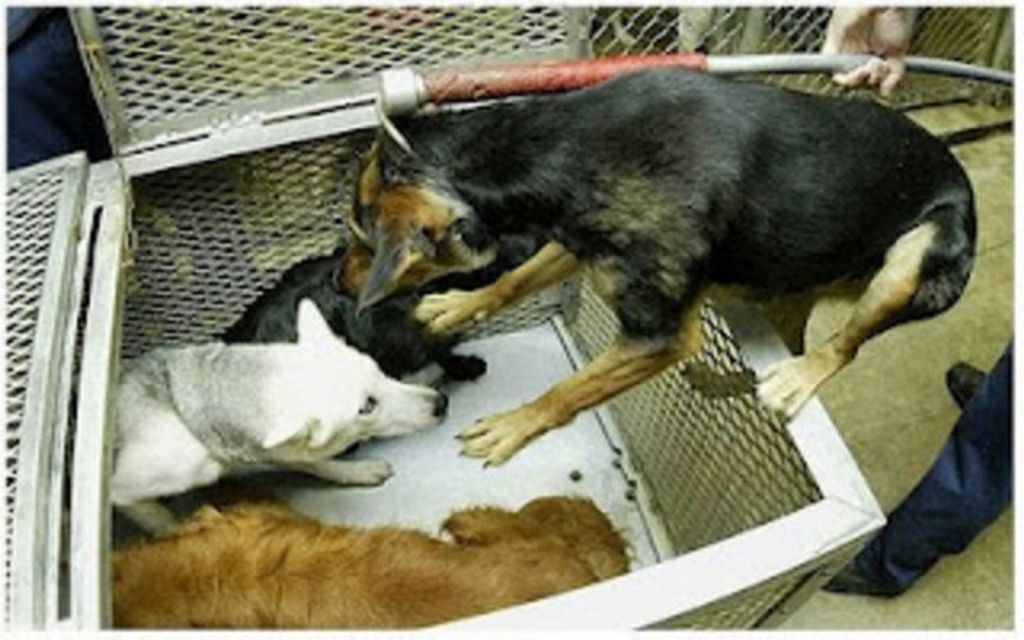
They can smell the death. They can smell the fear. They start whimpering, the second I put them in the
box. The boss tells me to squeeze in as many as I can to save on gas. He watches. He knows I hate him, he knows I hate my job. I do as I’m told. He watches until all the dogs, and cats (thrown in together) are fighting and screaming. The sounds is very muffled to me because of my ear plugs. He walks out, I turn the gas on, and walk out.
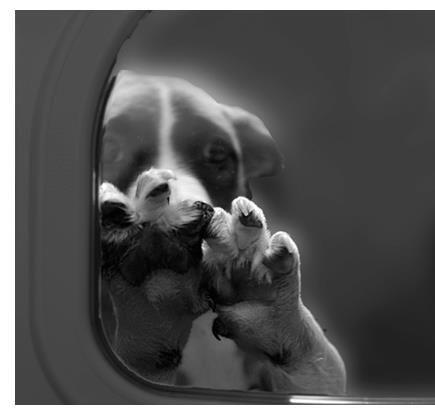
I walk out as fast as I can. I walk into the bathroom, and I take a pin and draw blood from my hand. Why? The pain and blood takes my brain off of what I just did. In 40 minutes, I have to go back and unload the dead animals. I pray that none survived, which happens when I overstuff the chamber. I pull them out with thick gloves, and the smell of carbon monoxide makes me sick. So does the vomit and blood, and all the bowel movements. I pull them out, put them in plastic bags.

They are in heaven now, I tell myself. I then start cleaning up the mess, the mess, that YOU PEOPLE are creating by not spay or neutering your animals. The mess that YOU PEOPLE are creating by not demanding that a vet come in and do this humanely. You ARE THE TAXPAYERS, DEMAND that this practice STOP!

So, don’t call me the monster, the devil, the gasser, call the politicians, the shelter directors, and the county people the devil. Heck, call the governor, tell him to make it stop.

As usual, I will take sleeping pills tonight to drown out the screams I heard in the past, before I discovered the ear plugs. I will jump and twitch in my sleep, and I believe I’m starting to hallucinate.

This is my life. Don’t judge me. Believe me, I judge myself enough.

******************

This is the current situation:

U.S. States With Highest And Lowest Shelter Kill Rates

https://greatergood.com/blogs/news/us-shelter-kill-rates

June 4, 2024
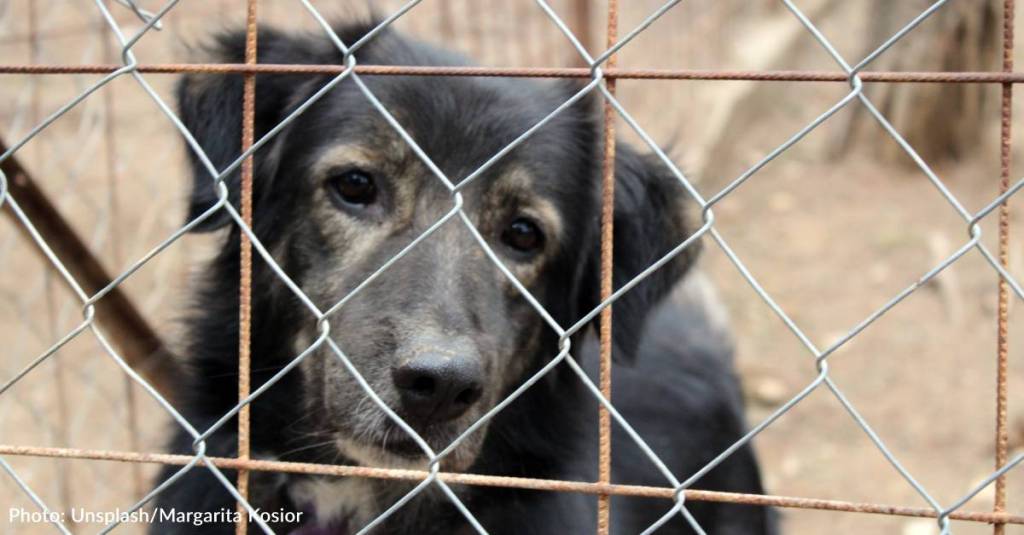
Shelters across the country are full and many over capacity with adoptable dogs and cats. While each shelter does their best to find a loving home for each animal, hundreds of thousands (355,000) are euthanized each year due to lack of space and resources.

There are more homeless pets than adopters and it forces numerous shelters to make tough choices. Veterinarians.org published a study that analyzed the intake and outcome data from U.S. animal shelters and ranked the highest and lowest shelter kill rates.

They examined 3,261 shelters which covers roughly 93.5% of the total sheltered animals in the country. They found some heartbreaking results but also some states who are completely no-kill and inspiring others to do the same.

The bad news…

Mississippi has the highest kill rate of 18.3%, which is 3 times the nation-wide average. North Carolina and Alabama come next with high kill rates (over 14%). Less than half of the shelters in these states are no-kill.

However, when it comes to actual numbers Texas comes in with highest number of animals killed in a year – over 61,000. California comes next followed by North Carolina, Florida and Alabama.
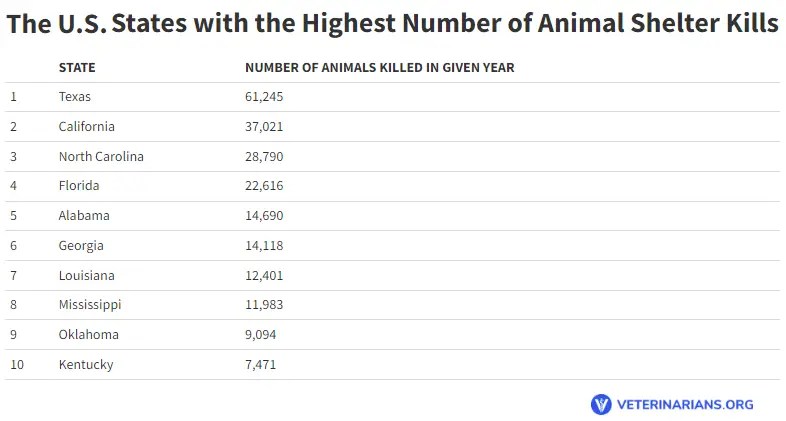
The study found, “Five states account for half of all cats and dogs killed in U.S. animal shelters: California, Texas, Florida, North Carolina, and Alabama.”

The solution to this heartbreaking problem is to encourage more people to adopt and give shelters the support and assistance they need to transform into a no-kill shelter.

The good news…

52% of U.S. animal shelters are no-kill, which has doubled since 2016. Best Friends Animal Society has a goal of making all shelters no-kill by 2025. They want to ensure that all dogs and cats get the chance to find a loving home – no matter how long it takes.

But shelters cannot do it alone. Best Friends shared, “For far too long, the burden has been placed on shelters themselves to save the lives of the animals in their care. It is imperative that the community and local government provide their shelters with the support they need to succeed.”

They help guide shelters toward no-kill status by giving them the tools they need to succeed.

According to Best Friends, “The most effective path to no-kill includes a combination of (1) collaborative partnerships and coalitions among animal shelters, animal rescue groups and community members working toward a collective goal; (2) proven programs and best practices designed to save the most lives possible; and (3) data-driven decision-making for each individual community.”

The only two no-kill states are Delaware and New Hampshire. Rhode Island, North Dakota, and Maine round out the top five with under 1% kill rate.

You can check and see if your local shelter is a no-kill shelter through the pet lifesaving dashboard. If not, see how you can help.

Best Friends reminds people, “Saving the lives of dogs and cats in animal shelters is the responsibility of each community. Animal shelters and the staff who work there can only create and sustain lifesaving programs if they have community support and participation. Working together thoughtfully, honestly and collaboratively is what makes true no-kill possible.”

*******************

(Google)

**************

30 Jul 2019

Shelter killing is the leading cause of death for homeless dogs and cats in the United States. It doesn’t have to be.
This is the story of animal sheltering, which was born of compassion and then lost its way. It is the story of the No Kill movement, which says we can and must stop the killing. It is about heroes and villains, betrayal and redemption. And it is about a social movement as noble and just as those that have come before.
But most of all, it is a story about believing in the community and trusting in the power of compassion.
(AU) Live sheep export ban secured in Australia’s 2025 Federal Election

https://animalsaustralia.org/our-work/live-export/live-sheep-export-ban-secured-with-labor-government-win/

The Federal election campaign is over – and for sheep, the outcome could not be more significant.

With the re-election of the Albanese government in the 2025 Federal Election, one of the most important animal welfare reforms in our nation’s history is now secure: the legislated phase-out of live sheep export by sea.

Thanks to the incredible efforts of supporters who helped amplify this issue – through donations, by fuelling our ad blitz in battleground seats, and via direct engagement with candidates – a candidate who backs the phase-out was elected in nearly every seat we campaigned in.
This is a powerful reminder that while animals cannot vote, caring Australians will do so on their behalf.

We are so grateful to everyone who donated to our billboards declaring Australian sheep have suffered enough, and to the hundreds of our supporters who helped lobby candidates in battleground seats.

The Coalition ran on a platform of keeping this unpopular trade alive. The landslide outcome – especially in Western Australia where the live export lobby campaigned fiercely against the ban – can only be seen as a definitive rejection of policies that promote animal cruelty. This moment solidifies the turning of the tide.

There are other policies that the Albanese government committed to, which will ensure animals are a key priority for the new parliament, including:

  • Full implementation of the national Animal Welfare Strategy to improve standards and review outdated systems that entrench suffering for pigs, chickens and other farmed animals.
  • Inclusion of animal welfare protections in international trade agreements.
  • Expansion of the trophy hunting import ban to cover more protected species.

We are eager to work with the re-elected government – and the overwhelmingly animal-friendly crossbench – to ensure these and other much-needed reforms for animals are realised.

We are so grateful to our friends at the Australian Alliance for Animals and Stop Live Exports for uniting with us to ensure as many people as possible understood what was at stake for animals this election. While in many ways, the ‘real’ work starts now, we could not have a stronger foundation upon which to build the reforms that animals need and deserve.

the day no animal is forced onto a live export ship. But today, we celebrate one of the most significant animal welfare reforms ever achieved globally.

Today, we celebrate a victory for compassion thanks to our supporters and everyone who kept animals front of mind at the ballot box.

We can now count down to 1 May 2028 with certainty – knowing from that day onwards not a single Australian sheep will set foot on a live export ship. While of course we wish this end date was much sooner, we also recognise the need to consider all who may be affected by this historic decision.

As the trade winds down, fewer Australian sheep will suffer at its hands. Since our very first investigation, the number of sheep exported live by sea each year has dropped by the millions – from 6 million annually, to less than 500,000.

Now, we can safely say that within three years, this number will be zero.

WATCH: No Mercy Shown for Mothers in Animal Farming

https://www.idausa.org/campaign/farmed-animal/latest-news/watch-no-mercy-shown-for-mothers-in-animal-farming/

May 9, 2025 – Posted by Lia Wilbourn

Animal farming rips apart the sacred bond between mother and baby; there’s nothing “humane” about it. Mother hens, cows, goats, turkeys, pigs, and sheep all care for their young and are fiercely protective of them, each in their own way. In animal farming, the mother’s desire and ability to protect and nurture her babies is robbed from her.

Mother birds exploited in the food industry—whether hens, turkeys, ducks, or geese—along with their babies, are all killed. In the wild, they stay in the nest to incubate their eggs, keeping them warm, and rarely leaving. Once hatched, the mother guides her chicks to food, alerts them of threats, and shields them from harm with her wings.

Whether in “free-range” or “cage-free” warehouses—marketing lies to keep consumers buying—or in cages, male chicks in the egg industry are killed because they don’t produce eggs, often by maceration. Their mothers are slaughtered too, while still young. Sexual violation, forcible impregnation, and the stealing of babies are done to virtually all female farmed animals, including birds, pigs, cows, goats, and sheep. 

In nature, before giving birth, mother pigs also build nests to create a safe environment for their piglets and will often defend them aggressively. Yet pregnant mother pigs in animal farming are confined to tiny metal cages—called gestation or farrowing crates—barely larger than their bodies, often forcing them to lie in their own waste. After months of this torture, her piglets are taken from her shortly after birth. Then she’s forcibly impregnated again. 

Cows, just like human mothers, carry their babies for nine months. When they give birth, they will lick and nuzzle their calves clean, stimulating circulation and bonding. The calves receive essential colostrum from their mother’s milk which helps strengthen their fragile immune systems.

But in the dairy industry, baby cows, goats, and sheep are taken from their mothers within a day or two so that humans can steal, consume, and profit from their milk. From the searing pain of branding and disbudding (burning off tender horns without painkillers) to the heartbreak of mother-baby separation, mothers are left physically wounded, exhausted, and grief-stricken. 

Female calves are kept alone in tiny hutches for months, often in extreme weather, only to be forced into the same cycle—sometimes before they’re a year old. Male calves, deemed worthless because they don’t produce milk, are slaughtered. 

It’s common to see mothers chasing after their stolen babies, left bellowing in desperation and anguish, often for days. This cruelty repeats until she collapses or stops producing enough milk for the ranchers. Then she’s frequently beaten or shocked to force her onto a truck to the slaughterhouse. Many animals are slaughtered, even skinned alive, while still conscious. 

All this torment and killing repeats endlessly for unnecessary products we’re better off without. Better treatment or painless death doesn’t make exploitation ethical. We have no right to their bodies. Using and killing mothers, babies, or any animal for culture, taste, profit, or convenience is the opposite of compassion; no animal farming is humane.

We must speak up for all mothers and their babies—including those who are the most ignored, oppressed, and killed on the planet. Every one of them was once someone’s baby, and every mother loved them. Neither these babies nor their mothers deserved what was done to them.

To defend all animals, live vegan.

Sign our alert urging Congress to redirect subsidies from the mass slaughter of mothers and babies to a plant-based food system.

Small animal farms and “grass-fed” ranching are not humane or sustainable — focusing only on factory farms is damaging and limits true reform.

*****************

Tell Congress to End the Killing of Mothers & Their Babies in Animal Farming

https://www.idausa.org/campaign/farmed-animal/latest-news/tell-congress-to-end-the-killing-of-mothers-and-their-babies-in-animal-farming/

In Defense of Animals

In the dairy and egg industries, all male babies and their mothers are killed. Many people don’t realize that most animals slaughtered for food products are infants. Yet, Congress and the United States Department of Agriculture continue funneling billions in taxpayer dollars to support animal agribusiness. Demand that the U.S. government redirect subsidies away from this industry of cruelty and mass slaughter of mothers and their babies.


In the United States alone, over 2 million sheep are slaughtered annually, with the vast majority being lambs—babies. This number spikes during Easter, and the average age at slaughter is 6-8 month

Male calves in the dairy industry have little to no value to dairy farmers, as they don’t produce milk, and so they are killed. They’re either shot shortly after birth or sold to veal “farms,” where they’re confined alone in tiny crates for up to 16 weeks—essentially tortured—to prevent muscle development and keep their flesh tender. Some are used for “breeding” or eventually slaughtered to be turned into meat products.

Male baby goats, called “kids,”, and male lambs are also slaughtered in the goat and sheep milk industries. So are all their mothers. Male baby chicks in the egg industry are killed immediately after hatching, most often either tossed like garbage into giant blenders, shredded alive, or suffocated.

In Defense of Animals

Though animal farming uses sanitized terms like “artificial insemination” and “breeding,” the young females are tightly restrained, and in dairy, the device used on female cows is often referred to as a “rape rack.” Forcible impregnation is done manually with a catheter, pipette, or, in the dairy industry, an entire arm—an extremely stressful and often painful experience. Farmers collect sperm from bulls, male goats, and male sheep through manual stimulation or using an electroejaculator.

Pregnant mother pigs are caged in “farrowing crates,” often so small they can’t turn around for months on end. After her newborn piglets are taken away, the mother is forcibly impregnated again, trapped in an unrelenting cycle of solitary confinement and suffering. Though pigs can live up to 20 years, they are killed at just six months old. Like all farmed animals, they’re trucked without food or water for several days—often in extreme cold or heat—to the slaughterhouse, where they suffer even more in a terrifying death.

Animal agribusiness claims that “stunning” makes animals insensible to pain, but its actual purpose is to immobilize them so they can’t fight back. The most common method to “stun” pigs is in CO₂ gas chambers, where they feel everything, often screaming in agony and desperately fighting to escape. The industry calls this “controlled atmosphere stunning” and deems it “humane.” Many animals are still conscious while being slaughtered.

When mother cows can no longer produce enough milk to be profitable, they are slaughtered at around five years old. Their natural lifespan is up to 25 years.

Mother hens in the egg industry and mother turkeys in the poultry industry are killed at 1-2 years old. Their natural lifespans are up to ten years. Regardless, even if they were allowed longer lives before being forced into slaughterhouses, using and killing animals for unnecessary products—for tradition, taste, habit, or profit—is the epitome of unjust, cruel, and violent.

Despite evidence linking animal products to increased risks of heart disease, cancer, diabetes, and Alzheimer’s, the United States Department of Agriculture (USDA) continues to promote them in its dietary guidelines, while research shows that eliminating animal products can reduce these disease risks. Yet, in March 2025, the USDA allocated an additional $10 billion to bolster animal agribusiness. Where is government cost-cutting when it’s truly needed?

It’s time to end speciesism and for those in charge of our food system to stop the monstrous torment and killing of sensitive, feeling, defenseless animals. Call on Congress and the USDA to stop funding the horrors of animal agribusiness and redirect subsidies to support a slaughter-free, plant-based food system.

What YOU Can Do — TODAY:

… on page …

UK – Killing Our Countryside – It’s Time To Ban Shooting.

Chris Packham; known to all of us in the UK for his environmental knowledge and especially as a television wildlife campaigner; narrates a video for ‘Animal Aid’, of which he is a Patron, called ‘Killing Our Countryside’.

The film reveals the damage done to the British countryside and wildlife by the shooting industry’s mass release of tens of millions of pheasants and partridges for shooting ever year.

The film, and accompanying campaign, make the argument for a ban on the production and release of birds for shooting.

The film also reveals what many people have not seen; the method of raising these birds which are bred to die – simple as that !

Animal Aid website – https://www.animalaid.org.uk/

About Us – https://www.animalaid.org.uk/about-us/

Further to .. (US – San Antonio ACS/TX) – Call for Action

Sunday, May 11th. The week is over.

This has to stop!

Please write to/call the above contacts. They full well know what they are doing, and the social media backlash directed at them has been blocked (by them) on FB.

https://www.thefire.org/news/victory-san-antonio-agrees-stop-hiding-comments-government-run-animal-shelters-facebook-page

VICTORY: San Antonio agrees to stop hiding comments on government-run animal shelter’s Facebook page

From a report done after a site visit in 2022 – there were numerous issues even then:

Dog euthanasia area

Pre-euthanasia holding kennels.

The incinerator is situated next to a series of euthanasia holding kennels. Though I did not get to observe the entire euthanasia process, what I observed and learned from numerous staff members is that the dogs are driven in a Kubota or walked on a catch pole to the euthanasia holding kennels and once all are gathered for euthanasia, they are walked through the door into the euthanasia area
where they are euthanised and then disposed of in the incinerator. I heard from multiple staff members that the dogs express anxiety and fear behaviours once in the pre-euthanasia kennels due to the smell of death from the euthanasia room that is just a few feet from the kennels.


Euthanasia room and process.

The euthanasia room itself was clean, though it did smell like dead bodies, likely from the cooler where some bodies are stored. The dogs are lifted onto a metal table and euthanized. When I asked a euthanasia supervisor why they are lifted up onto a table rather than the staff getting on the floor with them, he stated it’s hard for the staff to bend over that much so it’s easier on their bodies to euthanise them on the table. The table was steel with nothing on top of it.

Previous Post