Category: Environmental

There is nothing sweet about honey!

Although there were 3,500 native bee species of bees pollinating the flowers and food crops of North America when European settlers landed on its shores in the 17th century, the colonists were interested only in their Old World honeybees’ wax and honey.
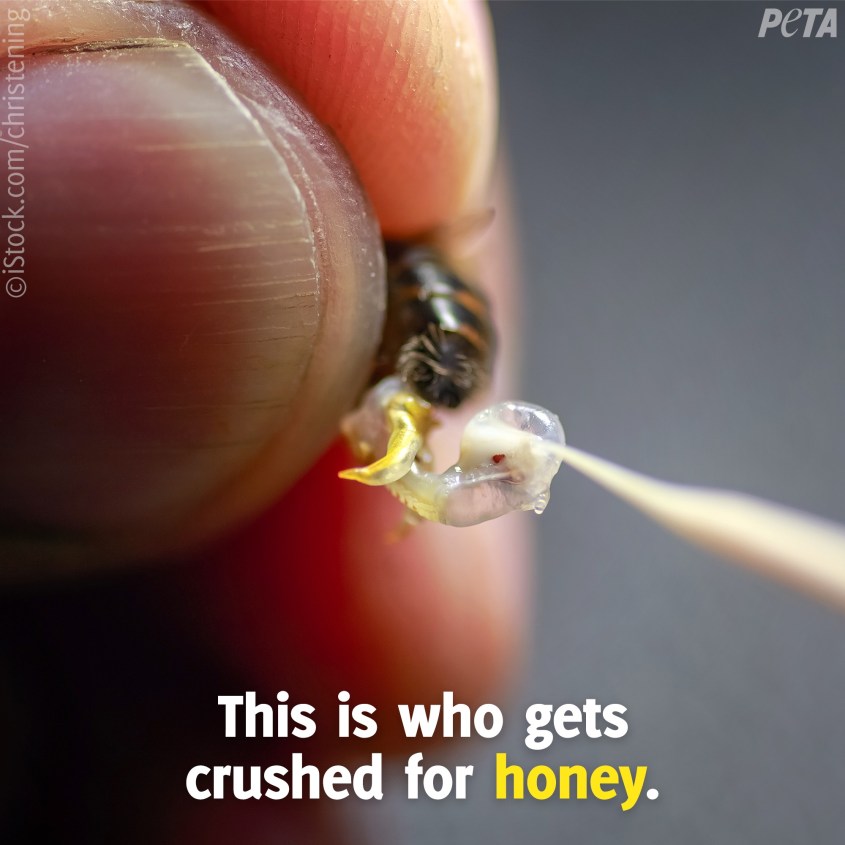
bienen und HonigBees heads are CRUSHED so workers can steal their semen and use it to forcibly impregnate queen bees.


They imported the insects, and by the mid-1800s, both feral and domesticated colonies of honeybees were scattered all over the United States. As a result of disease, pesticides, and climate changes, the honeybee population has been nearly decimated, but since the demand for the bees’ honey and other products remains high, these tiny animals are raised by industries, much like chickens, pigs, and cows are.

The Complex Lives of Bees

bienen-auf blumejpg

A honeybee hive consists of tens of thousands of bees, each with his or her own mission that is determined by the bee’s sex and age as well as by the time of year. Each hive usually has one queen, hundreds of drones, and thousands of workers. Queens can live for as long as five years, while other bees have life spans ranging from a few weeks to six months.

Worker bees are responsible for feeding the brood, caring for the queen, building comb, foraging for nectar and pollen, and cleaning, ventilating, and guarding the hive. The drones serve the queen, who is responsible for reproduction.

bienenköniginpg

She lays about 250,000 eggs each year—and as many as 1 million over the course of her lifetime.

When a new queen is about to be born, the old queen and half the hive leave their old home and set up in a new place that scouting worker bees have found.

As the temperature drops in the winter, the bees cluster around the queen and the young, using their body heat to keep the temperature inside the hive steady at around 93 degrees F.

A language all their own
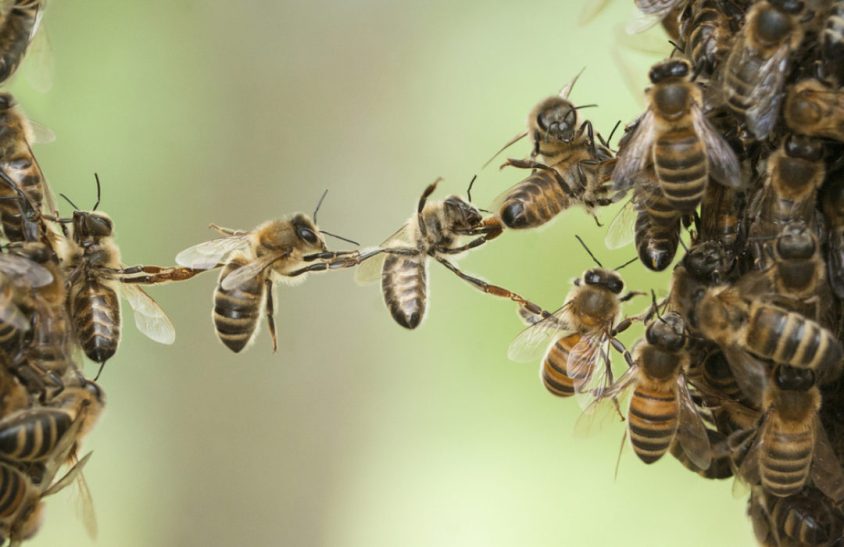
bienenschwarm-1080x700

Bees have a unique and complex form of communication-based on sight, motion, and scent that scientists and scholars are working to understand. Bees alert other members of their hive to food, new hive locations, and conditions within their hive (such as nectar supply) through intricate “dance” movements.

Studies have shown that bees are capable of abstract thinking as well as distinguishing their family members from other bees in the hive, using visual cues to map their travels, and finding a previously used food supply, even when their home has been moved.

And similar to the way that smells can invoke powerful memories in for humans, they can also trigger memories in bees, such as memories of where the best food can be found.
bienen-auf Blumen

Why Bees Need to Keep Their Honey
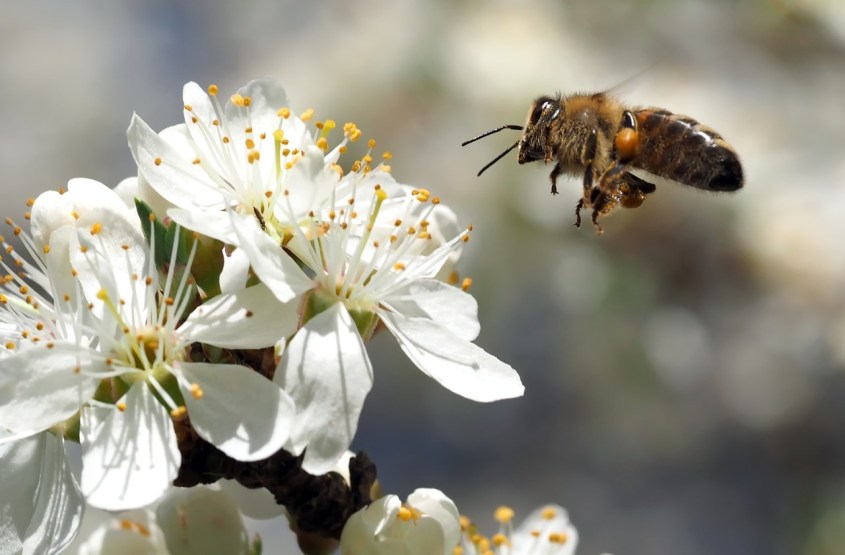
Plants produce nectar to attract pollinators (bees, butterflies, bats, and other mammals), who are necessary for successful plant reproduction.

Bees collect and use nectar to make honey, which provides vital nourishment for them, especially during the winter. Since nectar contains a lot of water, bees have to work to dry it out, and they add enzymes from their own bodies to convert it into food and prevent it from going bad.

A single worker bee may visit up to 10,000 flowers in one day and, in her lifetime, produce only a teaspoonful of honey.

Bienen volkpg

Honeybees do not pollinate as well as native bees
Approximately one out of every four mouthfuls of food or drink that humans consume is made possible by pollinators—insects, birds, and mammals pollinate about 75 percent of all food crops.

Industrial beekeepers want consumers to believe that honey is just a byproduct of the necessary pollination provided by honeybees, but honeybees are not as good at pollinating as many truly wild bees, such as bumblebees and carpenter and digger bees.

Native bees are active earlier in the spring, both males and females pollinate, and they are not affected by stressors such as colony collapse disorder. But because most species of native bees hibernate for as many as 11 months out of the year and do not live in large colonies, they do not produce massive amounts of honey, and the little that they do produce is not worth the effort required to steal it from them.
Bienen

So although native bees are more effective pollinators, farmers continue to rely on honeybees for pollination so that the honey industry can take in more than 152 million pounds of honey every year, at a value of more than $333 million.

Manipulating Nature
Profiting from honey requires the manipulation and exploitation of the insects’ desire to live and protect their hive. Like other factory-farmed animals, honeybees are victims of unnatural living conditions, genetic manipulation, and stressful transportation.

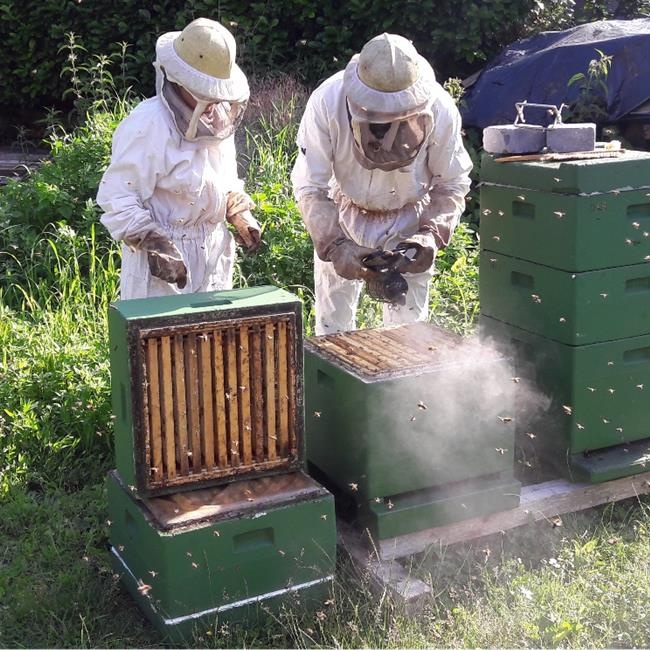
The familiar white box that serves as a beehive has been around since the mid-1850s and was created so that beekeepers could move the hives from place to place. The New York Times reported that bees have been “moved from shapes that accommodated their own geometry to flat-topped tenements, sentenced to life in file cabinets.”

Bienen Hauspg

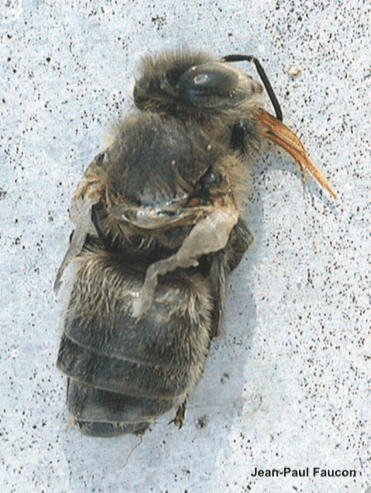
Since “swarming” (the division of the hive upon the birth of a new queen) can cause a decline in honey production, beekeepers do what they can to prevent it, including clipping the wings of a queen. Queens are artificially inseminated using drones, who are killed in the process.
königin ohne Flügel bienenpng

Commercial beekeepers also “trick” queens into laying more eggs by adding wax cells to the hive that are larger than those that worker bees would normally build.
Avoid honey, beeswax, propolis, royal jelly, and other products that come from bees. Vegan lip balms and candles are readily available.

Visit CaringConsumer.com for a list of companies that don’t use animal products.

Agave nectar, rice syrup, molasses, sorghum, barley malt, maple syrup, and dried fruit or fruit concentrates can be used to replace honey in recipes.

https://www.peta.org/issues/animals-used-for-food/animals-used-food-factsheets/honey-factory-farmed-bees


And I mean…As a food, honey can easily be identified on supermarket shelves.
But many cosmetic companies- that claim to be vegan- use beeswax for their products, which we often overlook or fail to declare.

So be careful when buying cosmetics too.

The same applies to palm oil, which is used massively in food, but also in cosmetic products, and it is therefore very difficult to find some companies that do not use it.

Nowadays you have to train your eyes very well.

bienen Majapg

My best regards to all, Venus

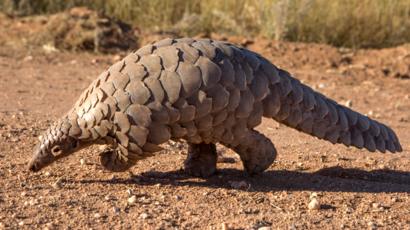
China: Pangolins Now Removed From Official (Chinese) List of Traditional Medicines. Will It Be Enforced ? – We Hope So.

china-flag-


Hope for pangolins as protection boosted in China - BBC News

Picture – BBC


WAV Comment – we did a post about the Pangolin a few months ago – you can read it here:

https://worldanimalsvoice.com/2020/02/16/15-2-is-world-pangolin-day-learn-more-about-these-wonderful-animals-now-critically-endangered-due-to-man/


https://ladyfreethinker.org/endangered-pangolins-finally-removed-from-chinas-traditional-medicine-list/?utm_source=Newsletter&utm_medium=Email


In a hopeful step toward protecting wild animals and public health, China has removed the endangered pangolin from its official list of traditional medicines. The decision comes days after the country’s State Forestry and Grassland Administration (SFGA) increased the pangolin’s protection status to the highest possible level because of the creatures’ dwindling population.

Pangolins are the world’s most heavily-trafficked animal with around 200,000 poached annually. Their scales are extremely valuable in China’s lucrative black market due to their supposed medicinal qualities, despite scientists affirming that there is currently no known medical benefit.

Holding pangolins captive could be dangerous to human health, as well. Some researchers think the coronavirus may have transmitted to its first human host via a pangolin. More generally, the ongoing global COVID-19 crisis is thought to have originated at a ‘wet market’ in Wuhan, China, drawing widespread attention to the dangers of the live animal trade, which unavoidably brings humans and animals within unnaturally close proximity.


China’s decision to upgrade pangolins’ protection status and remove them from its list of traditional medicines is the latest in a series of legislative moves responding to the current pandemic, including a nationwide ban on the wild animal trade and the government offering to buy out wild animal farmers and transition to plant-based farming.


This is a monumental step in a more humane direction, but truly ending the cruel pangolin trade, which continues despite the ban, remains an uphill battle. Lady Freethinker applauds China’s efforts, but more must be done to protect these innocent creatures.


England (London): SPANA – Providing Free Veterinary Care To Working Animals Around The World.

England


SPANA is a wonderful animal organisation as you can see from the links below. I am pleased to be a SPANA supporter knowing that my monthly donation goes towards assisting animals in so much need around the world.

Take a trip here and see how working animals are being supported without cost to the owners; all from donations and funds provided by supporters.

Regards Mark.


SPANA; or the Society for the Protection of Animals Abroad; is based in London, England. It also has an office n Australia:

https://spana.org/contact-us/


https://spana.org/about-us/   – Established in 1923, SPANA’s goal is simple: to improve the welfare of working animals in the world’s poorest communities. Through three key areas – treating, training and teaching – we’re inspiring others to act in the best interests of working animals while also providing practical, professional and sustainable solutions today. We recognise that the fortunes of working animals and people go hand in hand: in the developing world, just one working animal can support an extended family of up to 30 people. SPANA’s work improves the lives of working animals while supporting the communities that depend on them. We rely entirely on our loyal supporters to help us in our huge but vital task.


Our History

In 1923, Kate Hosali and her daughter Nina set off for North Africa as tourists; it was a journey that would last a lifetime. As they travelled through the countryside, passing bustling souks, remote communities and rural farms, they were inspired by much of what they saw. But they were also struck by the awful sight of donkeys, mules and camels – malnourished, weak, buckling under the weight of huge loads; suffering with wounds inflicted by poorly fitting harnesses.


Nations in which they currently work include:


Tanzania – https://spana.org/about-us/our-work/tanzania/

Somaliland – https://spana.org/about-us/our-work/somaliland/

South Africa – https://spana.org/about-us/our-work/south-africa/

Sierra Leone – https://spana.org/about-us/our-work/sierra-leone/

Peru – https://spana.org/about-us/our-work/peru/

Namibia – https://spana.org/about-us/our-work/namibia/

Mongolia – https://spana.org/about-us/our-work/mongolia/

Liberia – https://spana.org/about-us/our-work/liberia/

Kenya – https://spana.org/about-us/our-work/kenya/

India – https://spana.org/about-us/our-work/india/

Ghana – https://spana.org/about-us/our-work/ghana/

Cameroon – https://spana.org/about-us/our-work/cameroon/

Jordan – https://spana.org/about-us/our-work/jordan/

Morocco – https://spana.org/about-us/our-work/morocco/

Myanmar – https://spana.org/about-us/our-work/myanmar/

Botswana – https://spana.org/about-us/our-work/botswana/

Zimbabwe – https://spana.org/about-us/our-work/zimbabwe/

Mali – https://spana.org/about-us/our-work/mali/

Tunisia – https://spana.org/about-us/our-work/tunisia/

Mauritania – https://spana.org/about-us/our-work/mauritania/

Etheopia – https://spana.org/about-us/our-work/ethiopia/


Click on the following link to see all the areas of the world where SPANA is helping to make the lives of working animals so much better:

https://spana.org/about-us/our-work/


Via this link you can make donations and also sign up to the SPANA Newsletter.


USA: Trump’s Unjust Executive Order–We’re Fighting Back.

american-flag-120402148


CBD Logo


https://www.biologicaldiversity.org/ 


Hi Mark,

Just minutes ago we launched a lawsuit against President Trump for illegally ordering federal agencies to waive laws like the Endangered Species Act in order to ram through oil pipelines, mines and other pet projects.

For Trump it’s an “emergency” to make sure polluters get what they want. For wildlife and people — all of us depending on clean air and water and a safe place to live — it’s an invitation to disaster, a recipe for more death and extinction.

We’re not going to stand for it. Please support our effort with a gift to the Saving Life on Earth Fund.

Trump’s executive order last week was the latest escalation in his drive to wipe out wildlife, including some of the rarest, to clear the way for corporate profits and reward his rich, powerful friends.

One of his earliest acts as president was to open up Alaska’s wildlife refuges for wolf pups to be gassed in their dens.

Then last summer he took an axe to the Endangered Species Act.

Now he’s directing agencies to ignore the most fundamental environmental laws protecting wildlife from extinction.

We see this for what it is. Our action today is directed at Trump for violating the Endangered Species Act by ordering the government to fast track bulldozing, clearcutting, mining and drilling projects anywhere and everywhere.

The Trump administration is doubling down on authoritarianism designed to dominate nature at all costs.

It comes from the same dangerous place that also allows kids to be put in cages, white supremacy to flourish, women to be abused, climate agreements to be ripped up, science to be ignored and citizens to be tear-gassed while protesting peacefully on city streets.

The status quo is not just toxic, but dangerous, hateful, cruel and fatal.

It won’t stand, and we’re fighting it with all we’ve got.

Please consider a gift to the Saving Life on Earth Fund to help.

For the wild,

Kierán Suckling
Executive Director
Center for Biological Diversity


England: Bee Hotels and Dormouse Boxes.

England


At the moment I am doing a few things in relation to wildlife issues at ‘Jeskyns’; a huge wildlife park very near with masses of tress, ponds and dog walking areas which is owned and protected by Forestry England.

Over the past years, I made a lot of Dormouse boxes (for Jeskyns) in order that we try to encourage / set up a breeding colony in the woodland. The breeding programme has been a real success and I think we are now in the top 10 sites in England for dormouse colonies and breeding.

You can see a bit more here – https://serbiananimalsvoice.com/about-us/   – scroll down a long way until you come to the pictures of all the apples from Jeskyns. Then you will see pictures of some of the dormouse boxes and our first little arrival from 2017; when we first discovered that the boxes were starting to be used for nesting / breeding.


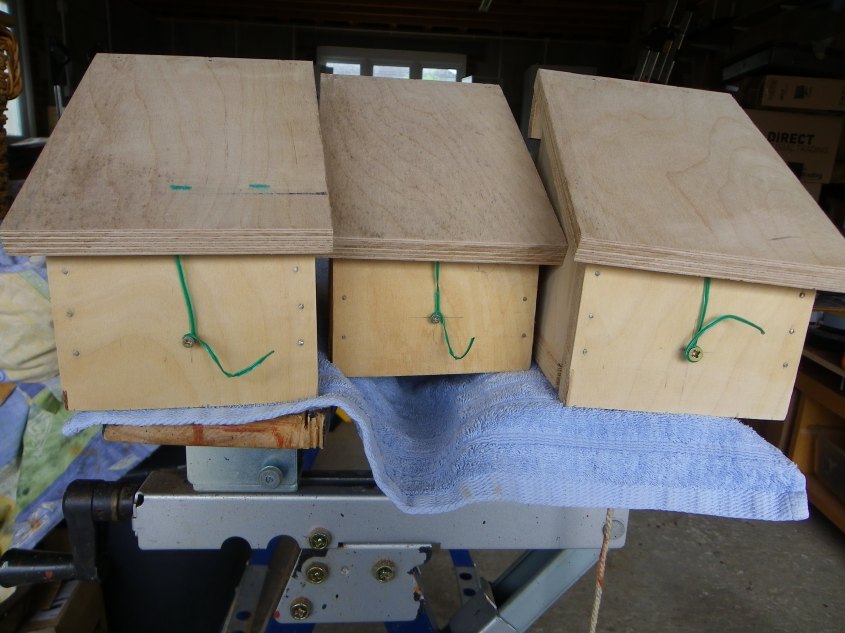
Here are the final 3 boxes which I finished this week, and which have hung around for years unfinished !


IMGP0566

Box fronts – the green twine secures the roof – which you unwind and slide the roof horizontally to check if a nest has been made,  Slide back roof into position and re secure.


IMGP0569


Entrance holes to box are located at the rear – mouse climbs up the tree trunk and enters through the hole to make its nest


dormouse-nest-in-box

dormouse-sleeping

Asleep in a constructed nest fitted within a box


August 2017 – Its a Boy ! – our first dormouse on site.


There are several other pictures of Jeskyns also; including one of the rangers with our Hedgehog houses, which was another construction project.


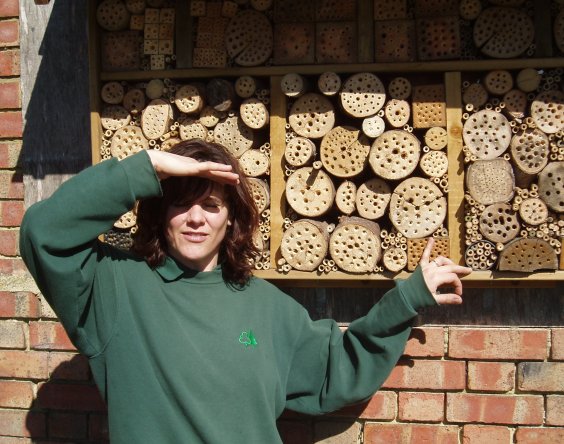
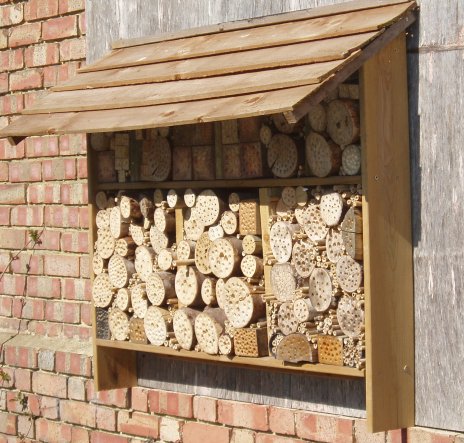
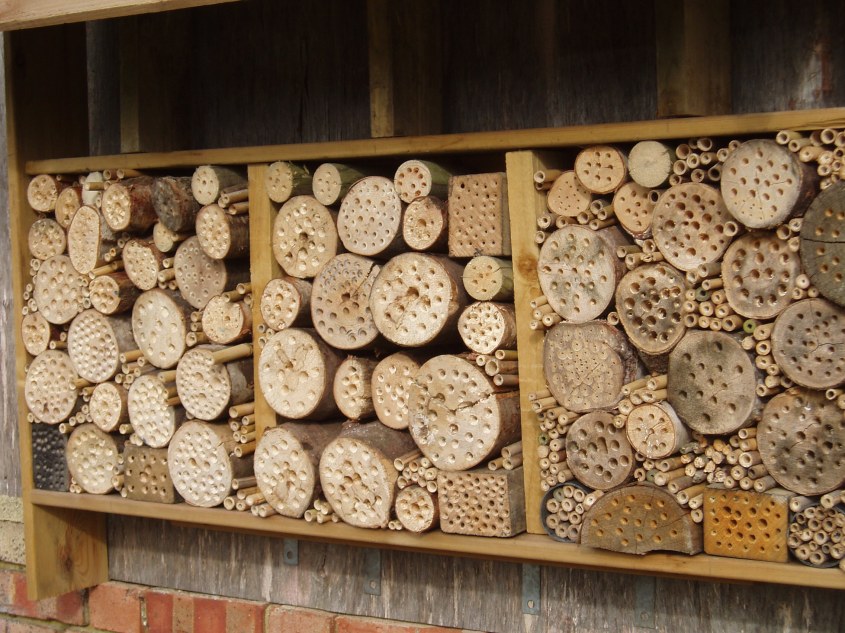
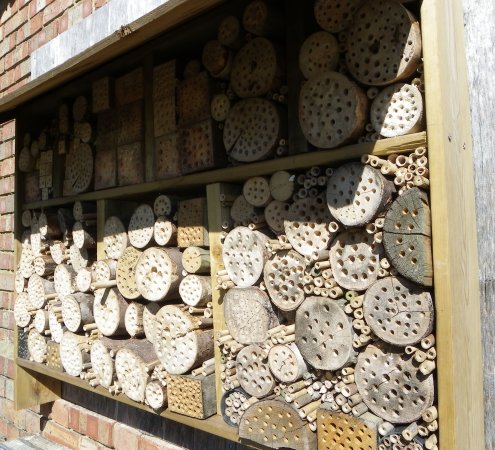
We are constantly working to do replacement logs for our bee hotel which we constructed several years ago.  Here we are with the first finished hotel.


19-mar-13-resize

19-mar-12-resize


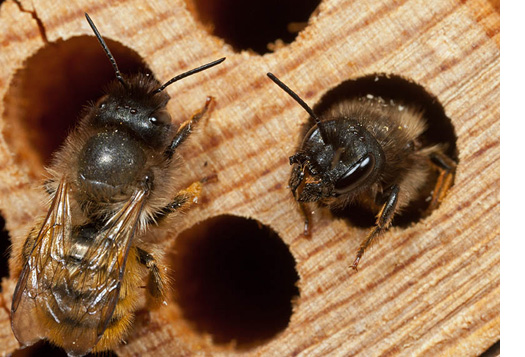
A pollen covered solitary bee – and new and old logs – note many chambers sealed up with mud – see below.


Bee hotels are easy to make, and you can place them anywhere – places such as Jeskyns; with large orchards; or even in your own back yard for flower pollination. It is primarily ‘solitary bees’ who use the hotel. They are much better pollinators than the traditional honey bees which we all think of. Around 7 solitary bees can pollinate a tree, which would require around 600-700 honey bees to do the same job !

sol bee 1

A solitary bee


The bee hotel is made up of logs which have been drilled out to produce a series of chambers, or long tunnels. These must vary in width up to about quarter inch (or around 1cm) in diameter. The smallest can be about 2-3mm in diameter. Ideally each chamber or tunnel should be up to about 6 inches or 15cm long; although they can be about 4 inches / 10cm long for narrower chambers.


sol bee 5

sol bee 3


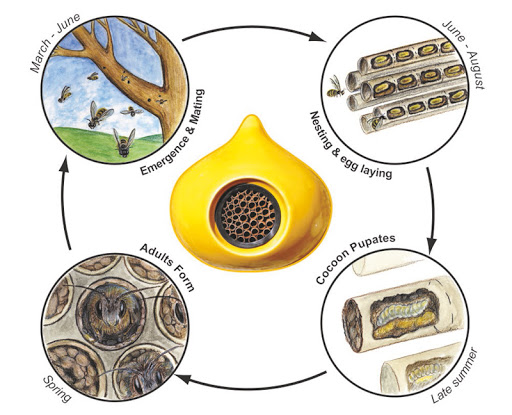
The solitary bee works from the rear of the chamber forward. At the back; a female egg is laid; along with some pollen for the youngster to feed on when it hatches. Once the egg has been laid, the female bee then blocks up the chamber with some wet mud. It then moves forward towards the front of the log and lays another egg ( also leaving pollen). This time the egg is for a male bee; again the chamber is sealed with mud. The bee then moves further forward and repeats the process; only now; all male eggs are laid.


When they are developed, the male bees work from the front of the log. They break through the mud barrier and fly off. The second bee in the chamber then does the same; followed in turn by all the other males. Eventually, it gets to the female at the back of the chamber. She breaks through her mud wall; goes down the tube until she is free to fly away. All the males that left earlier; wait for her to arrive; then she is impregnated by the males and the whole process starts again; with the female looking for chambers in which to lay her eggs.


sol bee 6


Is that not amazing !


Here is a picture of our bee hotel at Jeskyns – you can see the different diameter holes in the logs for the different sized solitary bees.  It has since been made much larger and given a new rain proof roof.


19-mar-15-resize


Above is a picture which may help you with understanding the life cycle process.

Give bees a helping hand – go construct a littyle bee hotel for your garden.


Regards Mark


bee 1


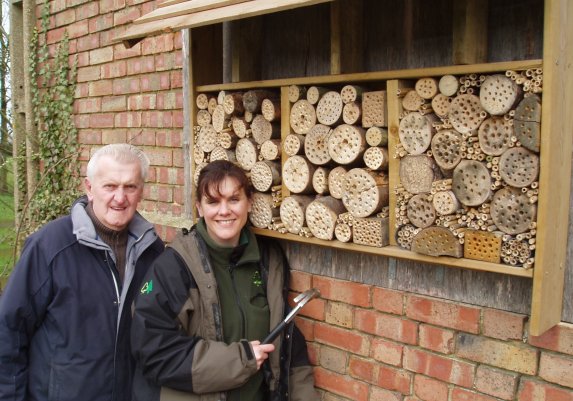
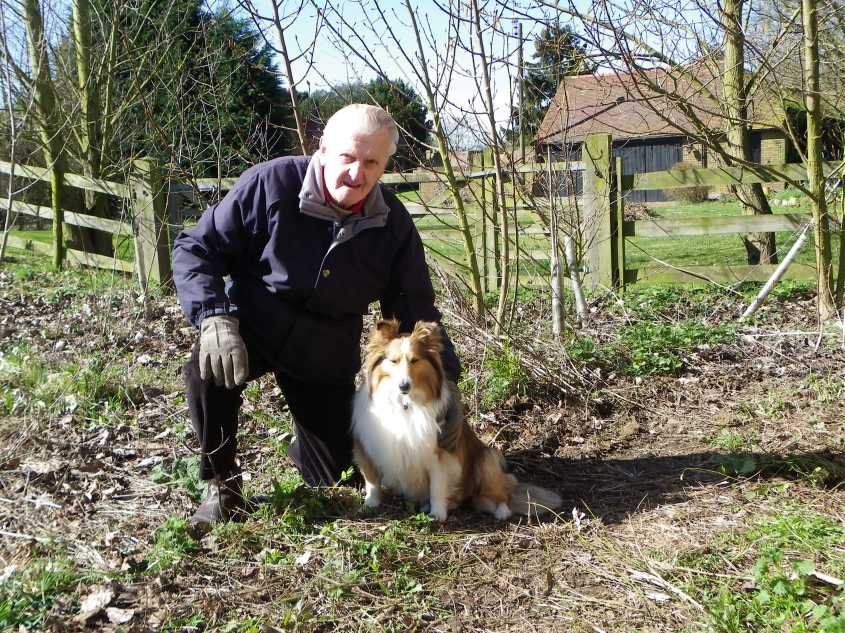
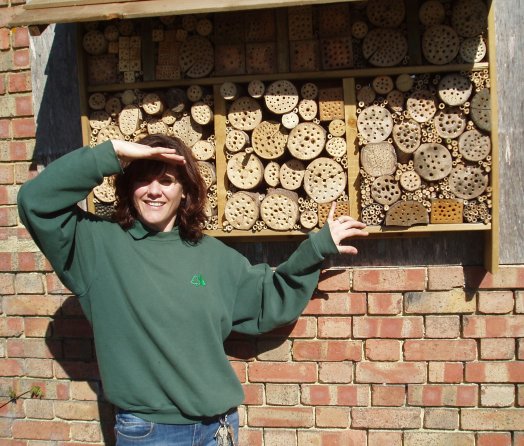
My dad was involved with the construction – he is at the hotel – but beware of lovely girl with a hammer in her hand !!:


15.Feb.6 Resize


OLYMPUS DIGITAL CAMERA

Honey.Hotel.4 Resize


IMGP0034

IMGP0024

19 Mar 2 resize

19 Mar 11 resize

Canada: Dead black bear dumped in ditch; hunter ticketed for littering.

Canada


WAV Comment – with shit like that; really sad that they are part of the British Commonwealth.  Brits try to protect animals, not be assholes like this deadbeat hunter.


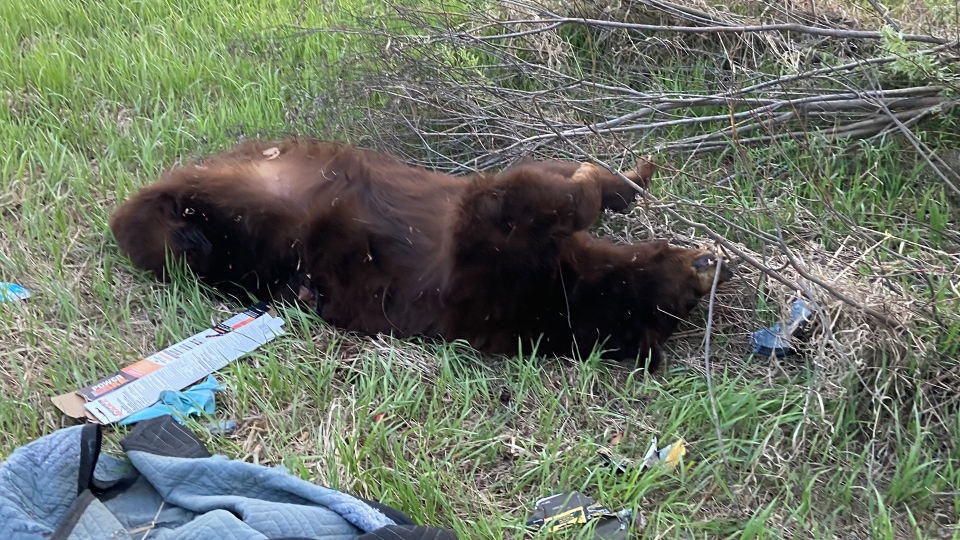
Bear carcass


https://edmonton.ctvnews.ca/dead-black-bear-dumped-in-ditch-hunter-ticketed-for-littering-1.4968342#_gus&_gucid=&_gup=twitter&_gsc=sKmC4jB


Dead black bear dumped in ditch; hunter ticketed for littering


EDMONTON — The body of a black bear was dumped illegally in a ditch near Lloydminster on Sunday, Alberta Fish and Wildlife said.

Officers determined the bear had been shot legally on private land, but that the carcass was improperly disposed of.

The person who shot the bear was ticketed for littering, Fish and Wildlife said.

“Owners or occupants of privately owned land or any person authorized to keep livestock on public land may, without a licence, hunt (but not trap) black bear on such lands, at all times of the year,” a Government of Alberta spokesperson said.

The woman who reported the carcass, Angie Atkinson, says bears are a common sight in the area.

“We’re not that far from the North Saskatchewan River, so there’s lots of ravines,” said Atikinson. “Once in a while, I’ll see scat along the road but they’re just trotting down the road and don’t seem to be much of a problem.”

Officials say animal carcasses should be disposed of at a waste management facility or on private land.


India: Pregnant elephant dies standing in river after consuming firecracker-laden pineapple.

INDA0001


WAV Comment

A really tragic story – man kills pregnant elephant and her calf with a firecracker laden pineapple.

We cannot reproduce the article but can direct you to the link which gives the full story.

Regards Mark


NEW DELHI: A pregnant wild elephant in Keral ..

Read more at:

http://timesofindia.indiatimes.com/articleshow/76160910.cms?utm_source=twitter.com&utm_source=contentofinterest&utm_medium=social&utm_medium=text&utm_campaign=toimobile&utm_campaign=cppst&utm_source=contentofinterest&utm_medium=text&utm_campaign=cppst

England: New Life – Live Nesting Bird Webcam Links Here – Enjoy !

England


I hope this works ok for our overseas supporters.

Here in England; there are many sites around the country where webcams have been installed to enable us, the public. To watch live the daily activities of a wide range of birds who have nested in many different places.

The links are below – I hope they work ‘abroad’; I see no reason why they don’t.

Enjoy the new life; a little break from all the bad things that we have to publish every day !

Regards Mark


https://www.salisburycathedral.org.uk/visit-what-see/peregrine-falcons-live-stream?gclid=EAIaIQobChMI9cHL2Irh6QIVzbTtCh21dwOqEAAYASAAEgKwAfD_BwE


We are delighted that peregrine falcons make our tower their home in their breeding season – there have been records of them nesting here between 1864 and 1953, after which there was a long period of absence caused by persecution and the use of organophosphates.

In 2014 a mated pair nested, producing and fledging four chicks successfully in a nestbox built by the Works Yard team. Since then peregrines have hatched and fledged from the Tower every year except for 2018, when a territorial battle between two females prevented laying.

Our resident peregrines are so popular they even have their own YouTube channel live stream and all our chicks are ringed so that we can follow their progress. One of our peregrines, Sally (an adult female), is fitted with a satellite tracker.

This year an unringed peregrine had four chicks. Don’t be alarmed if you can’t see all of them on the camera. As they’ve grown in size and confidence they have started to explore their surroundings.


Watch the Wild in Action


Ospreys, puffins, peregrines, owls…and more! Watch wildlife on webcams provided by Wildlife Trusts across the British Isles. Webcams allow an unrivaled view of intriguing behaviours: from courtship, nesting, and hatching to a peep into the first few weeks of a chick’s life. Be warned – it’s addictive viewing!

Please be aware that webcams may not be live year-round.

Want more ways to connect with wildlife? Sign up for 30 Days Wild! We’re challenging everyone to do one wild thing every day during June!

https://www.wildlifetrusts.org/webcams


Filthy ‘Wet Markets’ Still Peddling Animals and Flesh Despite COVID-19 – WHO and World Governments Do Nothing to Resolve A World Issue !


Hi Mark,

After releasing footage taken inside “wet markets” in Indonesia and Thailand in early April – months after the COVID-19 outbreak began – PETA Asia investigators observed more filth, misery, and death at nearly a dozen other animal markets elsewhere in Asia.

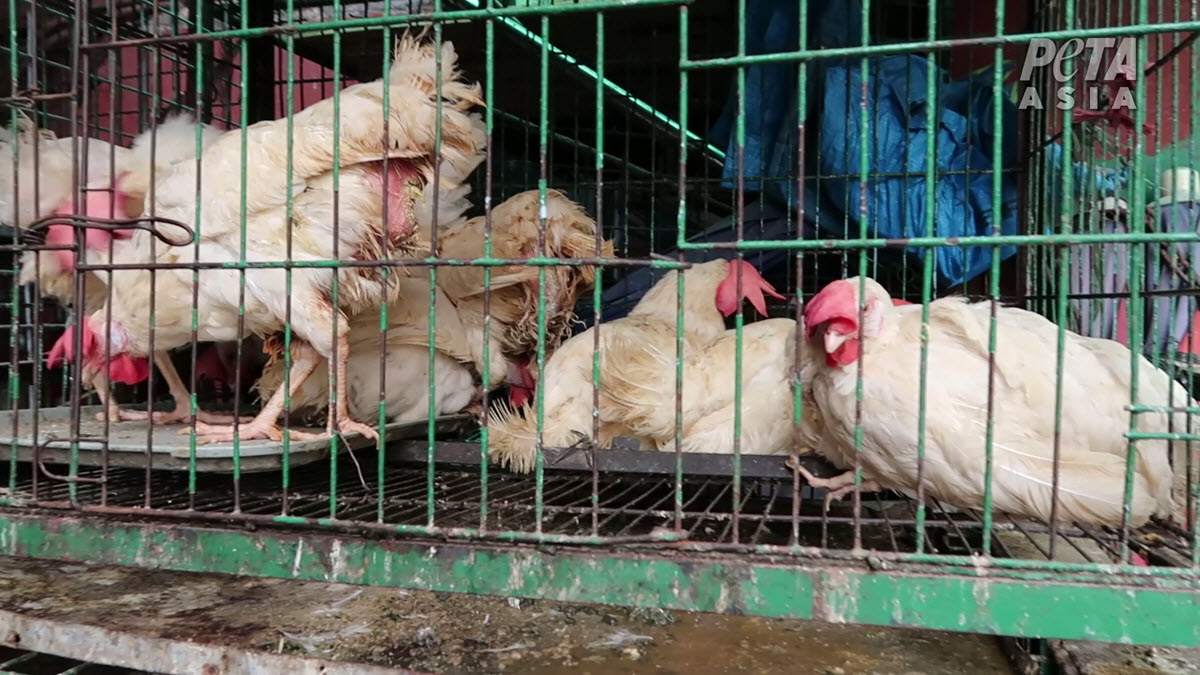
At one market, the flesh of wild boars, snakes, dogs, and rats was sold openly, and even cats were slated for slaughter – huddled together, terrified and exhausted, in a crowded, dirty cage.

Since PETA released the initial footage in April, more than 200,000 people have joined PETA and our affiliates in urging the World Health Organization (WHO) to call for an end to deadly live-animal markets around the globe. More than 60 bipartisan congressional lawmakers followed in our footsteps, too, writing their own, similar letter to WHO urging the agency to request the closure of all such markets immediately. And as hundreds of thousands of human lives have already been claimed by COVID-19, it’s more critical than ever that we all take action.

Please join us in urging the World Health Organization to call for an end to live-animal meat markets.

Thanks for all you do for animals.

Sincerely,

Simon P-H
PETA UK


After releasing footage taken inside “wet markets” (also called “live-animal markets”) in Indonesia and Thailand in early April—months after the COVID-19 outbreak began—PETA Asia investigators observed more filth, misery, and death at nearly a dozen other animal markets elsewhere in Asia. Despite a growing death toll, calls by world leaders for a ban on such markets, and the continued importance of flattening the curve, they and others like them are still conducting business as usual.

These Live-Animal Markets Could Be Where the Next Pandemic Originates

This new footage, shot just days ago, takes viewers inside live-animal markets in Cambodia, China, Indonesia, the Philippines, Thailand, and Vietnam, where chickens, ducks, fish, and dogs as well as bats, monkeys, and other exotic animals are sold. 

Terrified live animals, bloody carcasses, and rotting flesh were all being peddled for human consumption. At multiple sites, investigators observed marketgoers walking around in flip-flops on floors covered with bodily fluids and handling raw flesh and touching blood-streaked countertops with their bare hands. At two other markets, civet cats and bats were sold for food—even though they’re a reservoir species for severe acute respiratory syndrome (commonly known as SARS), another deadly coronavirus.

Blood and Rotting Flesh Everywhere

Weeks before, PETA Asia investigators had visited wet markets in Indonesia and Thailand and were shocked even back then that any were still operating. At the Tomohon Market in Indonesia, the flesh of wild boars, snakes, dogs, and rats (whose babies like to put their arms around their mother’s neck while being bathed) were openly sold at the market. Gloveless workers and customers were seen handling the body parts of animals who had been killed on site. A mutilated snake was curled up on a table, blood staining the white tiles red. Chickens with open wounds were bound to other birds slated for slaughter.


Enough Is Enough

All wet markets are potential breeding grounds for zoonotic diseases, such as COVID-19, SARS, and MERS. At such markets, feces and other bodily fluids can easily get on traders’ and customers’ shoes and be tracked into restaurants and homes. The workers who handle the animals often don’t wear gloves (as seen in the video footage) and can also spread bacteria. Flies swarm around the bodies of dead pigs and other animals, and the countertops and floors are streaked red with the blood of gutted fish and slaughtered animals.

PETA Asia has written to health officials in Cambodia, China, Indonesia, the Philippines, Thailand, and Vietnam to call for an end to deadly live-animal markets.

Shutting down foreign wet markets isn’t good enough. To prevent more diseases like COVID-19, we must do more than crack down on these markets only in certain areas of the world. All live-animal markets must go.

Live Birds Caged With Their Dead Companions

Live ducks and chickens (who have their own unique language, with more than 30 different sounds) were kept in cramped, filthy cages, sometimes with the bodies of birds who’d already been purchased and killed. Live turtles (some of whom can hold their breath under water for over 100 days) and other “exotic” sea animals were also available for purchase. Like all animals, they just want to be left in peace, not killed for food.


Suffering and Death in a Thai ‘Wet Market’

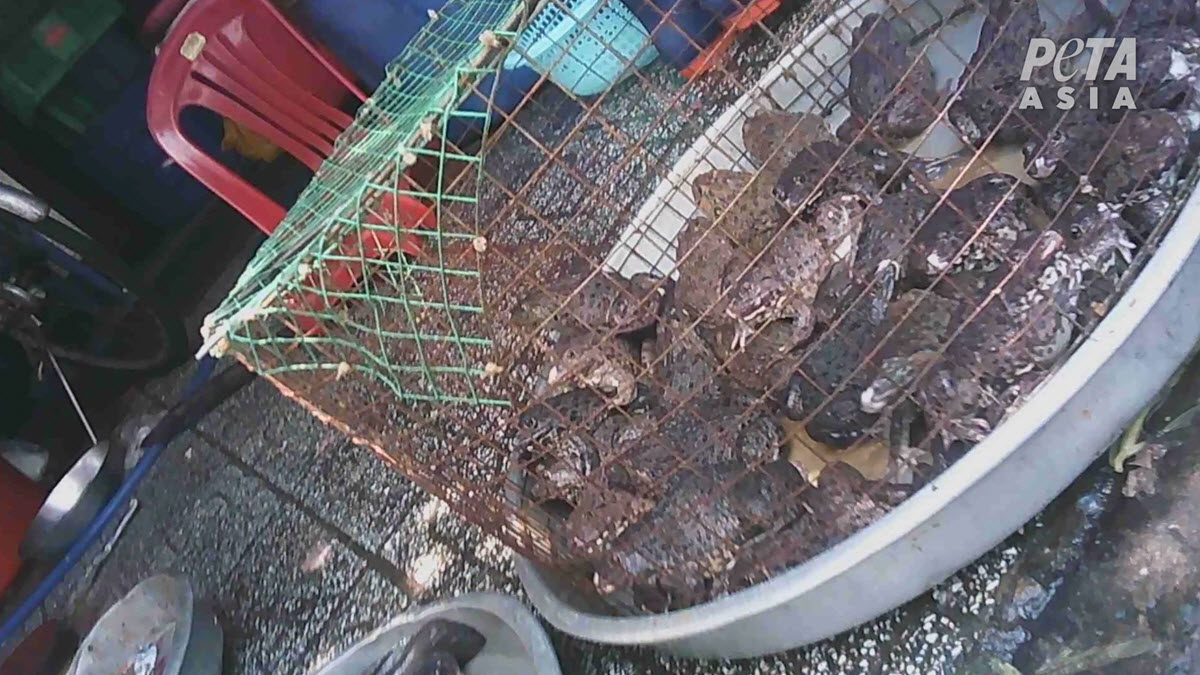
At Bangkok’s Khlong Toei Market, PETA Asia’s investigator saw mesh bags jam-packed with live, frightened frogs (some of whom use trees as “drums” to send messages to one another) being plunked down next to the mutilated bodies of other slaughtered frogs.

Cats Are Caged and Sold for Meat, Too

Terrified, exhausted cats—sensitive and intelligent, just like the cats we share our hearts and homes with—were kept in a crowded, dirty cage without food or water until they were purchased for their flesh.


TAKE ACTION:


Help Prevent the Next Global Pandemic: Take Action Now!

Take Action Link:

https://secure.peta.org.uk/page/60272/action/1?utm_source=PETA%20UK::E-Mail&utm_medium=Alert&utm_campaign=0520::veg::PETA%20UK::E-Mail::Asian%20Wet%20Markets::::aa%20em&ea.url.id=4740277&forwarded=true#action


Amazon Frontlines – A Voice for The Indigenous People of the Amazon Saving Ecosystems.


https://www.amazonfrontlines.org/oilspill/#audios 


Dear Mark,

Today is an important day in the fight for justice in the Ecuadorian Amazon.

Victims of a major oil spill, which occurred last month and has wreaked havoc on local ecosystems and the health of indigenous communities, will testify in a virtual hearing before a judge.

This hearing will give the Amazon Frontlines team and our partners an official venue to make a strong case in our lawsuit against the government and oil companies. Although we can’t pack an actual courtroom today in solidarity, we want to make sure the voices of indigenous communities harmed by this disaster resonate across the world.

We have recorded their “virtual testimonies” for you, and now we need your help amplifying their stories.

Please listen and share these audio testimonies to ensure that justice is served!


Around 120,000 people living along the Coca and Napo Rivers have been impacted by the spill, a tragedy that could have been avoided if the State and oil companies had heeded warnings from experts months before the pipelines broke.
In Kichwa indigenous communities along the river, mothers and fathers have been documenting mysterious rashes and irritation on their children’s skin since the spill. Massive flooding has sent the oil into creeks and gardens where families grow food, making it nearly impossible to avoid contact with the contamination. Emergency supplies dropped off by the oil companies have been woefully insufficient, so we have been organizing alongside our indigenous partners to deliver humanitarian aid.

Share these first-hand accounts from the plaintiffs to hold the government and oil companies accountable today.

Hear plaintiff Carlos Jipa, President of the regional Kichwa peoples’ indigenous federation, FCUNAE, describe the impact of the oil spill on the river and his people, as well as Monsignor Adalberto Jímenez, a Catholic bishop who joined the lawsuit to defend the rights of affected indigenous peoples and rural communities.

You will also hear Amazon Frontlines’ head lawyer for the case, Maria Espinosa, describe our simple and clear demands: that the government conduct environmental remediation, provide relief to impacted communities, and take steps to ensure this never happens again.

Please stand with indigenous communities today in their fight for justice.

Thank you,

Brian Parker
Senior Attorney, Rights Defenders
Amazon Frontlines