Category: Environmental

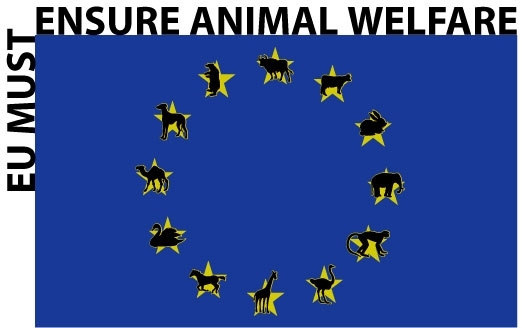
EU’s Long Term Budget Must Support Farmers In The Transition Towards Better Animal Welfare.

I sadly accept that there will always be some folk who enjoy eating dead animals as part of their diet. Saying that, a reduction in meat consumption and the associated reduction in animal murders (slaughter houses) can only be seen as a positive from my corner.

But I am a realist also, accepting that everyone on the planet will never move to plant based. Thus as welfare campaigners, we have a responsibility to ensure that we get the best for animals that we can. The global tide is rather rapidly moving towards plant based diets – and that can only be positive; very positive. In other ways, a negative global tide is surrounding us in the form of global warming and the ‘master human’ who knows best – no, ask the whales !

The more posts I can write about on this site re the ‘killing factories’ (they are SLAUGHTER HOUSES, not abattoirs – a place where animals are killed for their meat) BEING CLOSED DOWN; then the better.

We all saw that the recent closure of Arley ritual slaughterhouse; a closure really attributed to their own non conformances with national UK laws which are supposed to give animals the maximum protection ?? at the times of their deaths. Does frightening the shit out of a sheep about to be slaughtered by playing a recording of a howling Wolf in the background constitute UK laws regarding slaughter legislation? – no, they do it for kicks which really shows the types they are.

They failed in many areas, they were closed down – end of. WONDERFUL.

So, as the EU Parliament now commences votes on its priorities for the next long term EU budget, all of us in the welfare camp are calling for higher funding in the transition to better animal welfare practices in accordance with the vast majority of EU citizens demands.

The ‘Multiannual Financial Framework’; or MFF, is a seven year framework regulating the EU’s annual budget. The current long term budget runs until the end of 2027; so now we have to start work !

Ahead of the proposals in the next long term budget; expected in July; the Budget Committee of the European Parliament; has set out its priorities in an own-initiative report. It emphasises the need to meet more ambition to meet citizens expectations in the context of the US retreating from its global role; Russia’s war on the Ukraine; economic and social challenges, EU competitiveness and the worsening climate and biodiversity crisis.

The report implies that the budget should finance public goods, support the resilience and competitiveness of EU small scale farms and better help protect the environment. It highlights that the ‘Common Agriculture Policy’, or CAP, is crucial for food security, and that spending must persue EU objectives.

The Eurogroup for Animals call for the long term spending on the CAP to consider the expectations that EU citizens have on improved animal welfare. These expectations are not yet fully met, and the importance of animal welfare as a public good has been repeatedly demonstrated by the European Citizens’ Initiative ‘End The Cage Age, as well as the latest barometer on animal welfare. More than 9 out of 10 Europeans state that it is important to protect the welfare of farmed animals; with an absolute majority deem it as very important. More than 8 out of 10 believe that farmed animals in their countries should be given more protection than they are at present.

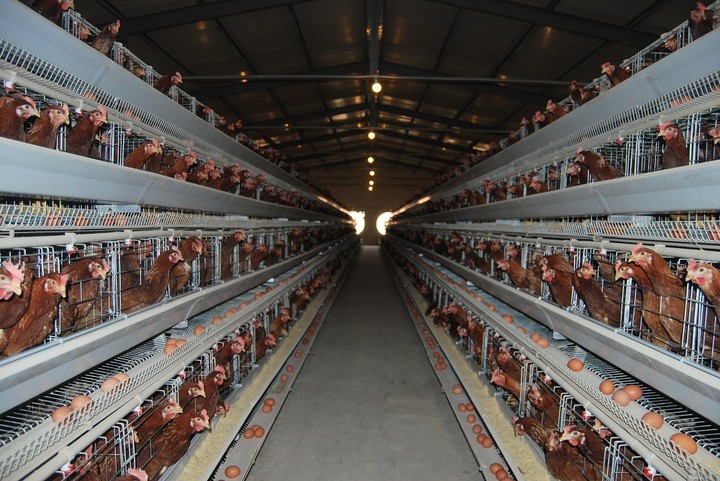
There is a crucial need for adequate funding from the long term budget for the transition to new animal welfare rules and regulations. The proposal for a review of the EU farm animal directive is envisaged in 2026.reduce production costs;

Financing better animal welfare in the EU is not just an ethical priority, it is a financial security for the EU’s future. Improved animal welfare can and would reduce production costs, enhance the product quality, drive innovation and strengthen the EU’s global market postioning.

Adequate funding from the MFF for the CAP is crucial to support farmers in transitioning to the new animal welfare rules. There needs to be higher funding for farmers to transition to higher animal welfare standards; and the need to support early transitioners is a vital element.

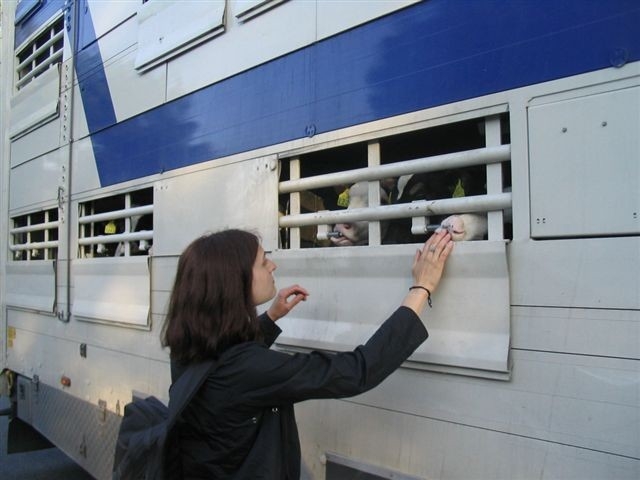
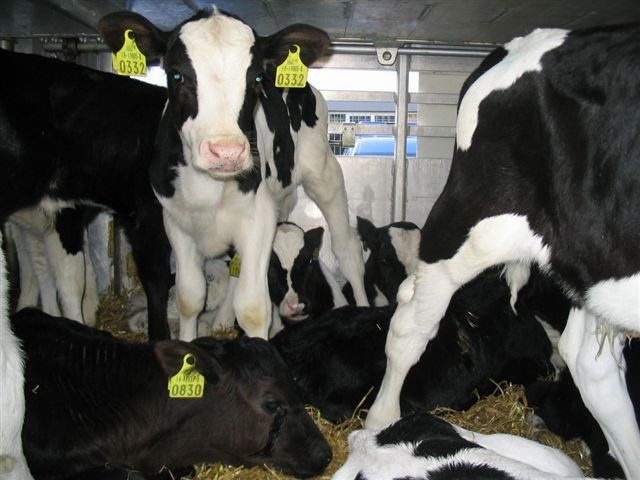
As someone with a special interest in campaigning for, and stopping long distance live animal transports; enough evidence has been supplied over decades by investigators to show the abuses with the ‘EU system’.

It is now time for them to step up to the plate; ACCEPT THE MASSIVE ABUSES UNCOVERED, and DO SOMETHING ABOUT IT !!

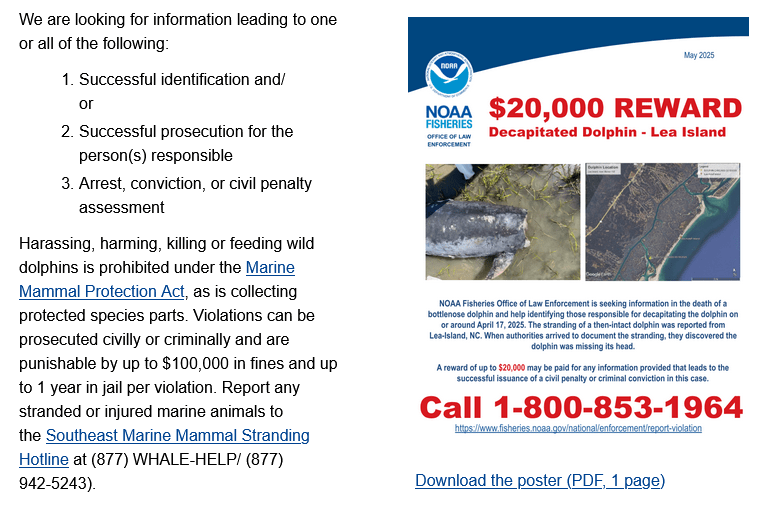
(US) North Carolina Dolphin Found With Head Missing (+ Petition)

https://www.fisheries.noaa.gov/feature-story/north-carolina-dolphin-found-head-missing

May 12, 2025

NOAA’s Office of Law Enforcement offering a reward of up to $20,000 for information.

Stranded bottlenose dolphin in North Carolina marsh. Credit: UNCW

NOAA Fisheries Office of Law Enforcement is investigating the death and decapitation of a dead bottlenose dolphin on Lea-Hutaff Island. We are asking the public for any information about who may have been involved. We are offering a reward of up to $20,000 for information leading to a criminal conviction or the assessment of a civil penalty. 

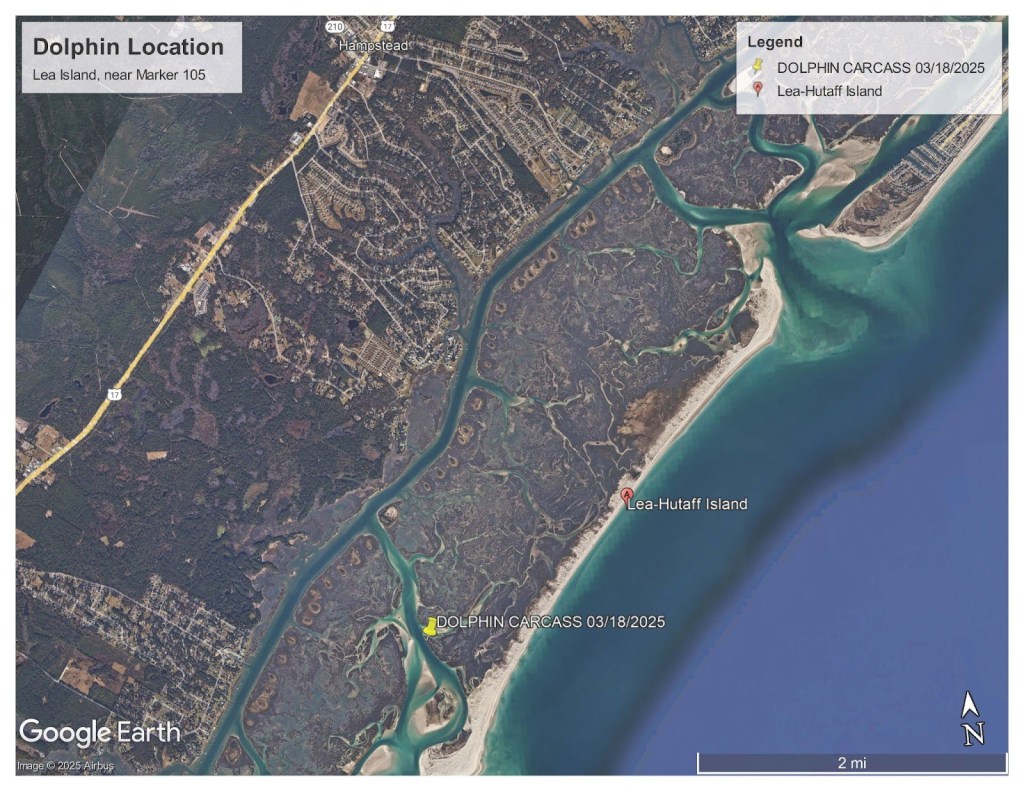
A member of the public originally reported the stranding of a dead dolphin on Lea Island, near marker 105, to the Southeast Marine Mammal Stranding Hotline on April 15. The area is a remote, undeveloped barrier island north of Wilmington, North Carolina, only accessible by boat. When our stranding network partner, University of North Carolina at Wilmington, went to the reported location, the 8-foot dolphin had been intentionally mutilated and its head removed. They determined that someone intentionally removed its head between April 16 and April 18, after they received the initial stranding report. 

Based on their initial health assessment of the dolphin, the University suspects the animal is carrying Brucella, a bacteria that causes the infectious bacterial disease brucellosis. The disease can be transferred to humans through direct contact. Our stranding network partner performed a necropsy (animal autopsy) and complete results and cause of death are pending.

Approximate location of dolphin carcass, Lea-Hutaff Island, North Carolina.

This animal was intentionally decapitated, a violation of the Marine Mammal Protection Act. The remote location where the dolphin was found adds to the difficulty of investigating this incident and cause of death. We are calling on your help to find those responsible.

Anyone with information about this incident should call the NOAA Enforcement Hotline at (800) 853-1964. You can leave tips anonymously, but to be eligible for the reward you must include your name and contact information.

**********

https://www.thepetitionsite.com/966/553/593/

Demand Justice for This Decapitated Dolphin

Introducing ‘Our Compass’ – Exposing The Suffering Of All Animals Due To Human Exploitation. A Site Dedicated To Going Vegan / Veganism.

We would like to introduce you to an excellent site; named ‘Our Compass’ https://our-compass.org/about/ which is run by friend Stacey in the United States.

OC, as will now refer to it, is a ‘vegan abolitionist community focused on nonhuman animals, the harm inflicted on them due to human exploitation and speciesism, and the necessity of veganism as the only meaningful and humane response to support animals and their liberation from humans’.

As you will see by clicking on the above link, OC provides an insight into many major animal abuse / suffering issues, as well as photos, videos, and sample letters which you can use as a baseline for taking your own campaigning further.

For example:

OC has many different resources and subjects. I (Mark) know that Stacey (OC) will agree with myself and Diana when I say that like this WAV site, it is often harder; no, impossible; to give every subject animal around the world the coverage that they deserve for their individual cases – by trying to cover everything, you simply touch on a host of activities – Fur; Live transport; Intensive farming; Donkeys in the brick brick industry; Vivisection and big pharma; Hunting; The environment; Saving the Whales; Veganism; Cruelty free; AND Human Rights when coverage is necessary; human traffiking; or in our case, being a voice for the wonderful Tibetan people and their suffering under Chinese rule; – we become an information / reference source on so many issues rather than the ‘specialist’ covering just one.

Whatever; both OC and ourselves are more than happy to push for the day when ALL the cages are opened and the occupants liberated; when you do not cover your body with the skin of an animal that has lived and died under the barbaric fur production industry; when the hunts no loger hunt or animals are spared from the suffering of live transport / live exports.

If you have not visited OC yet; we know that you will find an endless resource the of information and links:

Enjoy this amazing site – we do !

https://our-compass.org/

Regards Mark, Diana and Stacey (OC).

(UK) Chris Packham is no saint. He’s an environmental extremist to us country folk

https://www.telegraph.co.uk/news/2025/05/16/chris-packham-is-an-environmental-extremist/

The Springwatch host saw no issue being likened to St Francis of Assisi, making his holier-than-thou attitude worse than ever this week

Vanity is a bewitching drug for some of the BBC’s biggest stars. Jostling for most luminous position in the media firmament this week, next to Gary Lineker (who completely by mistake, and in the knowledge that the media watches his every social media move, managed to post to Instagram the suggestion that Jews were rats) was Chris Packham. …..

Please ref. to previous post:

EU: The EU Could Save Member States Billions Of Euros With Mandatory Registration Of ALL Cats And Dogs Throughout ALL Member States – Here Is Our Evidence For MEP’s.

Microchipping and registering animals is not only essential for improving the welfare of cats and dogs; as well as ensuring public health; it could also save EU stated up to 25 BILLION euros per year.

As the European Commission’s proposal on the welfare of dogs and cats; including their traceability; makes its way though Parliament; the mandatory identification and registration of all companion animals remains a crucial element of the legislation.

Under current legislation proposals, certain animals are at risk of being excluded from the mandate to microchip and register pets. Leaving gaps in the legislation will allow the illegal pet trade to continue unabated, resulting in lost revenues for tax authorities and a continued burden on the public sector related to the maintenance of unwanted and abandoned animals.

With almost 6 MILLION dogs in demand across the EU each year; a staggering 79% come from unverified sources. With a conservative purchase price of around 800 Euros per puppy, dogs coming from un verified sources constitute up to 3.8 BILLIONG in lost revenues and VAT annually. With around 78 million cats in EU households, and some purebred prices reaching a disgusting 50,000 Euros; cats are a vital element of this proposal.

The uncontrolled trade and breeding of dogs and cats leads to striking costs of managing free roaming populations. Feral and abandoned pets constitute 30% of all cats and dogs worldwide, with the number of abandoned, homeless cats and dogs in EUROPE most likely underestimated to be 100 MILLION animals. In Italy alone it costs 180 – 200 million Euros of public funds to keep ABANDONED DOGS in shelters, If we look at the numbers throughout the EU, then the numbers and prices become staggering.

The lack of EU wide requirements could be costing EU member states, municipalities and EU citizens up to 25 BILLION Euros per year, an equivalent of 0.15% of total EU GDP. However, this money could be saved if the European Parliament acts responsibly when handling the current legislative proposals.

Currently, 24 EU member states require the mandatory of dogs; and 7 EU member states require it for cats; with more countries anticipated in coming years.

The obligation is especially important for stray and street animals – we campaigned for them when we were fighting the government in Serbia from 2005 onwards under ‘Serbian Animals Voice’ or SAV – – https://serbiananimalsvoice.com/about-serbian-animals/ and https://serbiananimalsvoice.com/about-us/

An EU wide system needs to be implemented to ensure that animals are traceable and that information on ownership, health and any disease history is fully recorded on an EU database.

The average annual ownership costs amount to approximately 1,129 Euros for cats and 1,305 Euros for a dog. THE ONE OFF COST OF MICROCHIPPING works out at around 40 Euros per animal – just 3-4 % of the annual ownership for a dog or a cat. Therefore making microchipping mandatory feasible for all EU animals throughout all EU member states. With adapted transition periods and local solutions in place; this highly practical solution is within reach.

In the development of a sound and reliable identification and registration system throughout ALL EU member states, the costs related to the acquisition of animals from unknown sources as well as the management of ‘unwanted animals’ will reduce over time; and thus leading to more responsible breeding and keeping of animals throughout ALL EU member states.

Thus this our evidence – we hope it is enough for EU citizens to this site to be able to ask their MEP’s to fully support this legislation.

Regards; Mark and Diana.

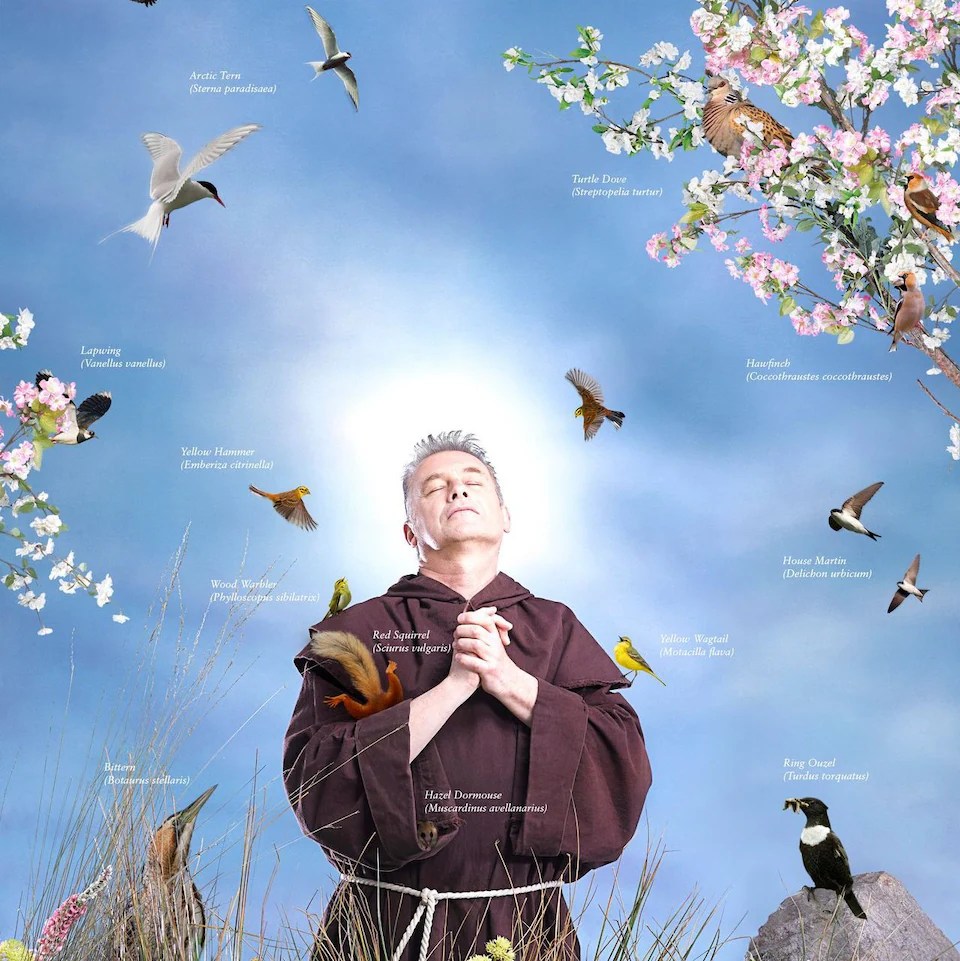
(UK) Chris Packham poses as St Francis of Assisi in new portrait

Well, novel certainly … not sure we may hope for Chris, CBE, being sainted by the Vatican any time soon … even with the link to S. Francis.

https://www.telegraph.co.uk/news/2025/05/14/chris-packham-poses-saint-francis-of-assisi-new-portrait/

14 May 2025 7:39pm BST

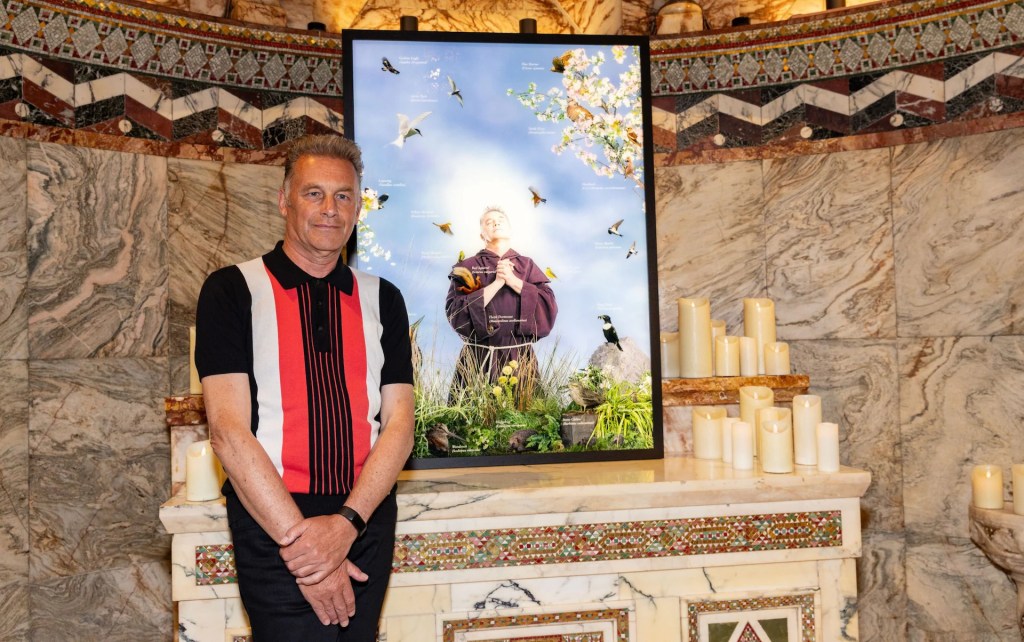
Chris Packham with his portrait, which it is said depicts him as “a living saint”, in the Fitzrovia Chapel Credit: Richard Ansett/Radio Times

Chris Packham has posed as St Francis of Assisi in a portrait celebrating him as a “living saint”.

The portrait of the presenter and environmental campaigner is now on show on the altar of the Fitzrovia Chapel, central London.

Originally commissioned by Radio Times magazine to mark Earth Day, it is the work of photographic artist Richard Ansett.

Packham is surrounded by images of some of the UK’s most endangered species. Mr Ansett said it also made reference to Packham’s neurodiversity – the presenter was diagnosed with autism in his 40s.

“I hope that every pixel of this portrait offers a safe space for anyone challenged by neurodiversity. Packham’s remarkable connection to the natural world drives him relentlessly to save us from ourselves,” Mr Ansett said.

The portrait of Packham is available to view until May 21 at the former chapel, where it is described as a work “elevating him to the status of living saint”.

Chris Packham is surrounded by some of the UK’s most endangered species in the artwork Credit: Richard Ansett/Radio Times

Packham said: “This photo is about a fundamental level of engagement, an engagement of equals. It conveys the importance of nature to heal us, provide us with a sanctuary in times of terrible trouble.

“But the species featured are also rare or declining so it serves to remind us that our one and only home, our Earth, is on a brink too many are refusing to see and act to protect and repair.

“This is a photograph about love, a love of life, all life.”

The featured species include the red squirrel, the house martin, the woodcock and the hedgehog.

Mr Ansett, an award-winning photographer whose previous works include Sir Grayson Perry in the style of the Madonna and Child, added that the Packham portrait “recognises the difficulties that he has prevailed over to become a success in his career and a positive light for so many people”.

It is “a personal tribute to Packham’s humanity in challenging the worst parts of ours, in our ambivalence to the destruction created in the wake of our own needs”, the photographer said.

Emerging Animal Rights and Their Anthropo-, Zoo- and Ecocentric Justifications

April 23, 2025

https://www.ejiltalk.org/emerging-animal-rights-and-their-anthropo-zoo-and-ecocentric-justifications/

Written by Saskia Stucki

Editor’s note: This post is part of the EJIL:Talk! Symposium on ‘Expanding Human Rights Protection to Non-Human Subjects? African, Inter-American and European Perspectives.’

The idea of expanding the normative framework of human rights to nonhuman entities is not quite new, but ever-so topical in the age of AI, corporate human rights, and the rise of the global Rights of Nature movement. Although animals may be paradigmatic (non)human rights aspirants, animal rights proper have not yet been adjudicated, let alone recognized, by the ‘sister regional human rights courts’ or international human rights bodies.

In recent years, however, animal rights have increasingly become an issue before domestic courts, even highest courts, such as the Supreme Court of India, the Constitutional Court of Ecuador, the Islamabad High Court, or a lower court in Mendoza (Argentina). It is interesting to note that the judicial recognition of animal rights is so far more or less exclusively driven not by European or North American courts, but by courts from the Global South, which seems to refute the charge of “cultural imperialism” or Eurocentrism that is sometimes attached to the idea of universal animal rights. Given these contemporary developments in domestic animal rights law, and following a “bottom-up” approach to the future formation of a global animal rights law, the question seems not if, but when animal rights will advance to the world stage and eventually enter the halls of international (non)human rights courts.

Emerging animal rights and their pluralistic drivers

Since its inception, the idea of animal rights has had a mostly theoretical existence. In the absence of any legally institutionalized rights, the concept of animal rights typically relates to potential fundamental rights that (nonhuman) animals should have and that ought to be recognized and respected by human laws. Only recently, but with accelerating pace, have courts around the world started to deliberate and recognize actual legal rights of animals (see here for an overview of global animal rights jurisprudence).

One noteworthy difference between the ideal animal rights conceived by theorists and the real animal rights recognized in legal practice is the justificatory pluralism driving the emergence of the latter (as opposed to the justificatory monism – mostly of the naturalistic variant – that tends to ground the former). That is, while animal rights in theory are typically justified with reference to some morally relevant rights-generative natural quality of animals, animal rights in practice seem to be grounded in a broader and more heterogenous mix of divergent yet mutually complementing rationales.

Elsewhere, I have argued that there are both principled and prudential reasons that warrant institutional recognition of animal rights. In short, the principled argument for animal rights is of an ethical nature (a matter of justice or morality) and operates with intrinsic criteria, such as animals’ sentience, dignity, vulnerability, exploitability, or experiences of injustice. By contrast, the prudential argument for animal rights is of an instrumental nature (animal rights as a means of promoting other ends, e.g. the protection of humans or the environment) and relies on extrinsic considerations, such as social and environmental benefits that may result from cultivating animal rights-respecting practices.

Here, I will chart a slightly adapted, tripartite typology, based on the anthropocentric, zoocentric, and ecocentric justifications underpinning the recognition of animal rights in practice.

Anthropocentric underpinnings of animal rights

From an anthropocentric point of view, animal rights are justified instrumentally with their utility or benefits for human individuals or societies. Here, the recognition of animal rights is primarily motivated by and derivative of human interests, and functions as an indirect way of protecting or promoting certain human goods, such as human rights or health. Commonly invoked anthropocentric reasons for recognizing animal rights relate to:

  • The linkages between human and animal (in)justice: a growing body of research (see here for an overview) suggests a correlation between discriminatory (e.g. sexist, racist, speciesist) and rights-affirming social attitudes as well as empathy towards human outgroups and animals. Similarly, important links seem to exist between violence against humans and animals, both on the level of interpersonal (e.g. domestic or sadistic) and collective violence (e.g. animalistic dehumanization). Recognizing – and respecting – animal rights may thus concomitantly contribute to the protection of (vulnerable and marginalized) humans.
  • Animal exploitation as a major driver of environmental human rights and public health threats: the need to establish animal rights as a bulwark against extractive exploitation is also increasingly debated in the context of protecting humans against existential environmental risks. This is because animal exploitation (notably industrial animal farming and wildlife trade) is a major driver of global health threats (such as the emergence of zoonotic diseases and antimicrobial resistance) and of ecological human rights threats (such as climate change and biodiversity loss).
  • Cultural and religious reasons: certain (beloved or revered) animals are more equal than others, and are afforded special legal protections for cultural or religious reasons. For example, some courts, notably in Latin America, have recognized rights of companion animals (such as a dog in Colombia) as part of the protection of multispecies families and the affective bonds that humans have with their nonhuman family members. Another relevant example is the 2024 He Whakaputanga Moana Treaty (Declaration for the Ocean) – an Indigenous treaty that recognizes whales as legal persons, inter alia, because whales are considered ancestral beings and an integral part of a healthy ecosystem.

Zoocentric constructions of animal rights

Within a zoocentric frame of reference, animal rights are justified with intrinsic qualities of animals, such as their dignity or inherent value, sentience, personhood or subjecthood, or vulnerability. Here, the recognition of animal rights is primarily motivated by and centred on a legal concern for animals and their interests per se, irrespective of any instrumental or utilitarian considerations. In the words of the Constitutional Court of Ecuador, “animals should not be protected only from an ecosystemic perspective or with a view to the needs of human beings, but mainly from a perspective that focuses on their individuality and intrinsic value”. Courts typically arrive at zoocentric animal rights through two different legal avenues:

  • Subjectification of animal welfare laws: some courts have derived animal rights from existing animal welfare laws, by extracting therefrom subjective animal rights as implicit correlatives of explicit human duties. For example, in a landmark judgment from 2014 (which has since been somewhat relativized and reversed), the Supreme Court of India recognized a range of animal rights, such as the right to life and security, protection against pain, suffering, and torture, to food and shelter, based on the Prevention of Cruelty to Animals Act. It further elevated these statutory rights to the status of fundamental rights by reading them alongside the constitutional provision on animal protection and compassion (the “magna carta of animal rights”).
  • Animalization of fundamental (human) rights: other courts, notably in the Americas, have probed the possibility of extending certain human rights to animals, such as the prohibition of slavery, or the procedural right of habeas corpus and the underlying substantive right to freedom. In the USA, courts have thus far declined to enlarge the protective scope of fundamental rights to animals other than humans (of course, corporations are a different story). By contrast, courts in Latin America (e.g. in Argentina and Colombia) have recognized animal rights based on a dynamic and extensive reading of constitutional rights (notably the right to habeas corpus).

Ecocentric foundations of animal rights

From an ecocentric perspective, animal rights are recognized in an eco-constitutional legal context (e.g. a “sociobiocentric” constitution) and as part of a holistic approach to environmental protection and rights. Against the backdrop of exacerbating ecological pressures in the Anthropocene, the environmental dimension of animal rights (as well as, conversely, the animal dimension of environmental rights) has become increasingly important in recent years. Courts, too, have been responsive to the human-animal-environment nexus, by converging or integrating the rights of humans, animals, and nature.

  • (Wild) animal rights as part of rights of nature: one form of ecocentric animal rights is the recognition of (wild) animal rights as an integral (individual) dimension of the rights of nature. The integration of animal rights into the rights of nature framework has been elaborated at length by the Constitutional Court of Ecuador. In this context, some commentators observe a convergence between (animalized) rights of nature and (naturalized) animal rights, drawing on the obvious overlap and synergies between the two species of rights.
  • Ecological interdependence of human and animal rights: lastly – and this might be the clearest example of the confluence of anthropocentric, zoocentric, and ecocentric motives that are conjoined in the configuration of emerging animal rights – animal rights can be justified on the grounds of their ecologically mediated interrelation with human rights. For example, the Islamabad High Court has noted the “interdependence of living beings” and recognized animal rights alongside, and as an integral part of, the human right to life and environmental protection.

A win-win-win for humans, animals, and the environment

As this overview has shown, the recognition of animal rights in practice is only partially motivated by (intrinsic, ethical) concern for animals, and concurrently catalysed by instrumental concern for a variety of human interests and environmental considerations. It is this interplay of anthropocentric, zoocentric, and ecocentric rationales that is driving the emergence of animal rights alongside human rights and environmental rights. Some commentators contend that the anthropocentric and ecocentric reasonings that co-constitute real animal rights provide for a merely “weak grounding for animal rights”. Others dispute that these ulterior motives work to constitute “genuine animal rights” altogether. I would however argue, on the contrary, that this justificatory pluralism makes for a more diverse and democratic, resilient, rhetorically powerful, and thus ultimately stronger legal footing for animal rights in the real world. The pluralistic foundations of emerging animal rights indicate that they can be plausibly and palatably framed as a win-win-win situation. Simply put, animal rights are good for humans, animals, and the precious – and precarious – planet we all share.

UK – Killing Our Countryside – It’s Time To Ban Shooting.

Chris Packham; known to all of us in the UK for his environmental knowledge and especially as a television wildlife campaigner; narrates a video for ‘Animal Aid’, of which he is a Patron, called ‘Killing Our Countryside’.

The film reveals the damage done to the British countryside and wildlife by the shooting industry’s mass release of tens of millions of pheasants and partridges for shooting ever year.

The film, and accompanying campaign, make the argument for a ban on the production and release of birds for shooting.

The film also reveals what many people have not seen; the method of raising these birds which are bred to die – simple as that !

Animal Aid website – https://www.animalaid.org.uk/

About Us – https://www.animalaid.org.uk/about-us/

Turkey – Animal Rights Fear Mass Euthanasia In Turkey After New Top Court Ruling.

Turkeys top court rejected a law on Wednesday to annul a contentious law which would remove millions of stray dogs from the streets.

Click here to see what Japan is doing – https://worldanimalsvoice.com/2025/05/09/jp-cruelty-of-the-tokyo-euthanasia-centre-for-stray-dogs-where-animals-suffer-for-fifteen-minutes-before-they-die-from-suffocation-in-canine-gas-chamber/

Critics are saying that the new legislation could lead to mass killings of the animals.

The main Opposition Party had sought to overturn legislation enacted last year, arguing the it violated animal rights and the right to life.

However, the Constitutional Court have ruled the legislation is legally valid and thus it can continue to be implemented.

Turkey has stated that it will put stray dogs up for adoption.

Dozens of activists gathered near the Constitutional Court to press the court to repeal the law. They held up posters which read ‘cancel the blood ridden law’; as well as shouting anti government slogans.

It is estimated by the government that around 4 MILLION STRAY dogs roam Turkish cities and the countryside.

Whilst many of the dogs are harmless, the government moved to tighten legislation on stray animals, following incidents of dog attacks, including some cases involving children.

The law requires municipalities to round up stray dogs and relocate them to shelters where they would be vaccinated, neutered and spayed before making them available for adoption.

Dogs that are in pain, terminally ill or pose a heath risk would be euthanised,

Animal lovers, strongly oppose the ruling, dubbing it the ‘massacre law’, as they fear it will lead to widespread culling or with dogs ending up in disease ridden, overcrowded shelters’.

They have also raised concerns about how financially strapped municipalities will secure the additional funding required to construct the additional shelters.

It is feared that rather than allocating resources to care for the stray dogs; some municipalities will resort to immediate euthanisation on the pretext of ‘illness’. This is something that we at WAV would fully agree with; where does the shelter funding suddenly appear from to provide ‘care’ to an additional 4 MILLION dogs ?

We at WAV fully agree with the activist campaigners that very many healthy dogs will end up being immediately destroyed rather than municipalities providing for their wellbeing. We at WAV do have a little experience on the issue of stray dogs and cats; in 2005 we established SAV in Serbia, the Balkans, to fight the government regarding their abuses of stray / street dogs and cats – have a look –

The latest court actions can only put additional pressure on authorities to enforce these hazy, misguided laws.

The Ankara Bar Association, an organisation for lawyers, claims that since its implementation, ‘hundreds of animals have died due to this law, which does not serve the public interest’.

Last year the very respected HSI criticised Turkeys approach to stray dog management.

England – Update – ‘Sycamore Gap’ Environmental Thugs Found To Be GUILTY By Jury After 2 Week Court Trial.

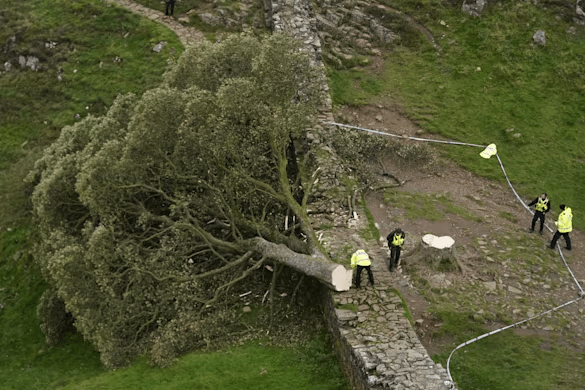
At a court trial in Northern England, which we have been following, like many other international environmentalists; two men have now now been found guilty of the felling of an iconic tree located along ‘Hadrians Wall’ https://en.wikipedia.org/wiki/Hadrian’s_Wall – the northern most frontier of the ancient Roman Empire.

The two environmental thugs, Daniel Graham – 39 years of age, and Adam Carruthers aged 32 years, both from Cumbria in Northern England; have been convicted in a trial at Newcastle Crown Court on two counts of criminal damage – and the two have been remanded in custody ‘for their own protection’ until they are sentenced on 15th July 2025.

The pair even filmed themselves on a mobile phone destroying this beautiful, iconic landmark – so the evidence was pretty clear for the jury, who reached a unanimous verdict after a short deliberation.

Mrs. Justice Lambert leading the trial informed the pair to be prepared for ‘lengthy’ custodial sentences.

The iconic tree, which had survived the harshness of life on the wall; and yes it can be very bleak there; for over 150 years, was destroyed by the pair within a matter of seconds.

Despite this mindless destruction, the base of the tree still exist and is being monitored and nurtured by specialists. The legacy is to grow 49 new trees from the remaining section of the tree.

This will be the positive shared with a global audience who were devastated by events.

Further links –

https://www.itv.com/news/tyne-tees/2025-05-09/sycamore-gap-daniel-graham-and-adam-carruthers-found-guilty-of-felling-tree

https://www.msn.com/en-gb/news/uknews/sycamore-gap-who-are-the-two-men-convicted-of-cutting-down-world-famous-tree/ar-AA1EsxOC?ocid=BingNewsSerp

https://www.independent.co.uk/news/uk/crime/sycamore-gap-tree-trial-guilty-graham-carruthers-b2746356.html

https://www.dailymail.co.uk/news/article-14695485/Sycamore-Gap-revenge-motive-planning-dispute.html

https://www.msn.com/en-gb/news/uknews/man-accused-of-cutting-down-sycamore-gap-tree-denies-revelling-in-media-coverage/ar-AA1Egpmj?ocid=BingNewsVerp