Dozens of animals, including pet cats, dogs, alpacas, horses and donkeys were chased and attacked during the most recent hunting season, anti hunt campaigners say.
In addition, they also harassed sheep, pheasants and reindeer according to a new analysis of reports by anti hunt organisation ‘Protect The Wild’.
In all, 89 animals were said to have been caused distress by hunt hounds over a 10 month period.
We have personally been familiar with the excellent work of Welfarm, under the leadership of Ghislain, since they were affiliated with CIWF back in the 90’s – see ‘History’ below for more:
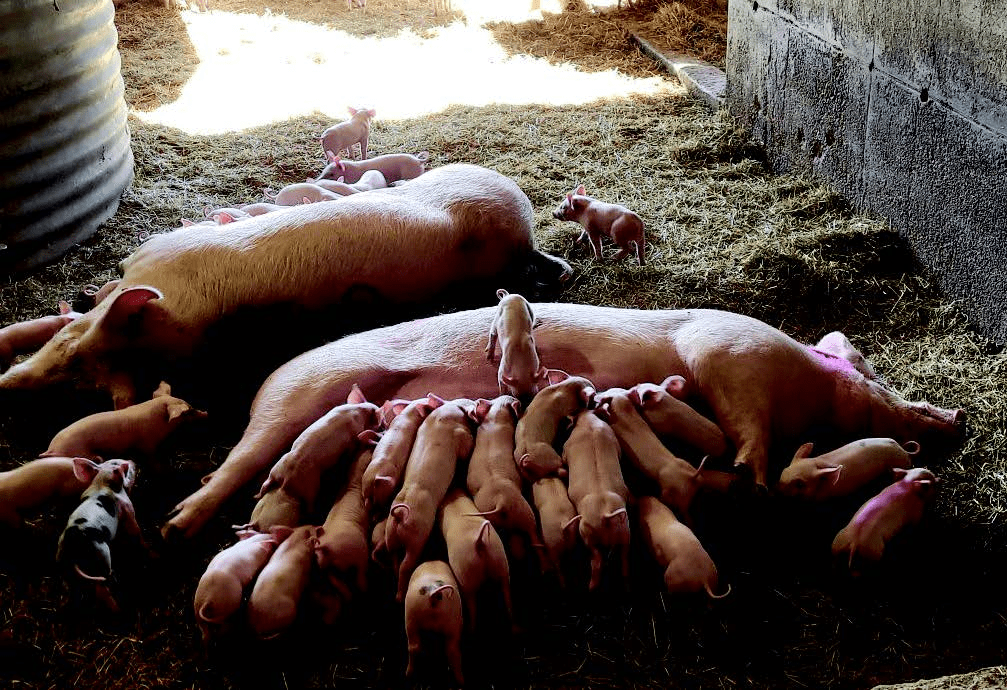
A year and a half after after turning away from the terrible intensive cage system; pig farmer Laurent Gugliemi has been amazed at the way his sows have now behaved after being given both their freedom and the ability to raise piglets in groups. Read the full article here:
They may appear to be in good condition, but a Hotel in China using red pandas to wake up guests for ‘that ultimate experience’ has been rapped by the local Forestry Commission over concerns about animal rights and hygiene concerns.
Guests can feed chunks of apple to the animals who visit them in their bedrooms for ‘that ultimate wake up experience’ – but there are also concerns about what could happen with children experiencing this encounter.
The Lehe Ledu Liangjiang Hotel offers Red Panda Themed Holidays for its guests; but experiences posted on social media attracted the attention of the Forestry Commission who have taken action by closing down all contact between guests and the very attractive animals.
The hotel is located in South West China.
Why the netting ? – are the animals as free as they declare ?
Children, the animals, and hygiene is of particular concern to the authorities.
Wake up to ‘that ultimate experience’.
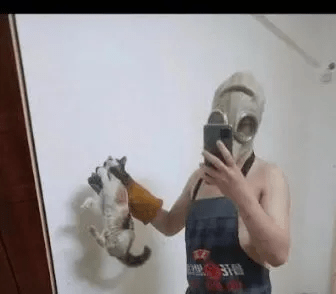
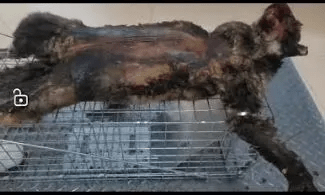
Whilst we support anything in China that works more to promoting the better treatment of animals; we are not sure that this is the way. Farm animals; for example, desperately need national legislation to be introduced for their protection, and as we have covered on this site especially; the abuse and torture of cats, using the dark web, is something that also really needs attention and action by the Government. We have provided information; so why no action ?
PETA used the Club World Cup in Philadelphia to call out the killing of homeless animals in Marocco.
2 pitch invaders held up signs saying ‘Morocco – Stop Shooting Dogs And Cats’.
PETA has been critical regarding Morocco’s government treatment of stray animals; with dogs being gunned down. set on fire, and killed in other terrible ways, just for the sake of a soccer match said a PETA executive, Tracy Reiman.
Morocco’s King Mohammed VI issued a royal order in 2019 to end the country’s policy of killing homeless animals; but PETA claim that authorities have not followed through with that pledge.
Morocco has over 3 MILLION stray dogs; and as we always say, but appear to be forever ignored by by authorities; you do not solve the issue by simply killing. A nationwide, government funded Trap, Neuter and then Release program is the only wat to reduce stray numbers over time. We argued this in the past with the Serbian Government when we were working to help strays out there; again, an authority which thinks it knows better and thus ignores friendly advice.
TORONTO, June 16, 2025 (GLOBE NEWSWIRE) — National animal protection organization Animal Alliance of Canada is calling on the government of Manitoba to order an immediate suspension of the current black bear hunt in light of continuing active wildfires.
At least 21 fires, including eight deemed to be out of control and scattered throughout the three hunting zones, are currently burning in the province. A province-wide state of emergency was declared on May 28.
While 21,000 residents have been evacuated and travelers asked to reconsider non-essential travel to free up hotel rooms for these evacuees, the province continues to allow foreign hunters in. The fire hazard presented by these hunters’ guns and all-terrain vehicles present unnecessary additional risks for new fires.
Black bears are the only large mammal species allowed to be hunted in the spring while cubs are reliant on their mothers for food and protection. As bears hide their cubs in trees before foraging and because their fur is too thick to be able to see if they are lactating, even bear biologists cannot reliably identify the sex of a bear. As a result, every spring, female bears are killed, leaving orphaned cubs, most of whom perish by starvation, dehydration or predation.
A newly released report (see below) commissioned by the Animal Alliance of Canada Fund, which draws upon published studies as well as the Manitoba government’s own data from seasonal bear hunts, indicates that in 2023 (the most recent year for which data is available) as many as 224 cubs were left orphanedby the spring bear hunt.
In addition, black bears are the only mammal species allowed to be baited for hunting. During the spring hunt, hungry black bears newly awakened from hibernation and restricted by limited food sources are drawn into established bait stations loaded with meat and sugary foods, where hunters wait for them. These stations, which are permitted just beyond 200 metres of a dwelling or 500 metres from a cottage subdivision or campground, may cause bears to become acclimated to finding human foods in close proximity to people. The allowance of such bait stations contradicts government instruction and legislation discouraging members of the public from feeding bears.
This year, these issues are compounded by the devastating forest fires and resulting habitat loss, altered food availability, and increased potential encounters with humans as the bears are forced to move into new territories.
“We are urging the government to order an immediate suspension of the hunt,” said Lia Laskaris, Chief Executive Officer of the Animal Alliance of Canada. “We are further calling for a moratorium on the spring bear hunt until a full survey and assessment of the damage can be conducted,” added Laskaris.
Sea Shepherd is cracking down on illegal fish-trapping devices off the coast of Sicily (Credit: Sea Shepherd)
Off the coast of Sicily, Sea Shepherd and its volunteers are hunting down illegal fish traps and working with Italian authorities to crack down on this environmental crime.
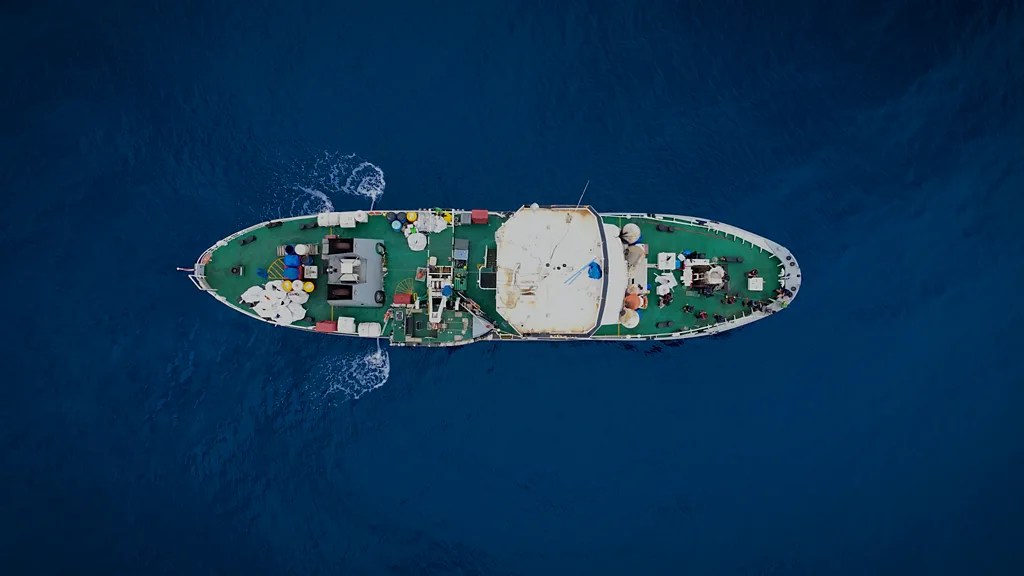
The flat water melts into the teal-coloured sky as a former pilot vessel, the Sea Eagle, sails through the calm Tyrrhenian Sea surrounding the Aeolian Archipelago of Sicily.
The ship is operated by Sea Shepherd, an international marine conservation non-profit. Today, the team is searching for fish aggregating devices (FADs), man-made plastic structures used to attract fish. They float in the water, anchored to the seafloor, with hanging nets to catch fish. FADs made from plastic, without GPS tracking devices attached, are illegal in Italy.
While listening to techno music, a group of volunteers uses a winch to detach one of the FADs from the seafloor. A large plastic container labelled “corrosive” emerges from the sea.
“The [techno] rhythm gives us the right energy,” says James* (the crew do not wish to use their full names for safety reasons), a young Canadian volunteer who is running the operation and whose arms are covered in ocean-inspired tattoos. The volunteers work tirelessly to extract the plastic FADs from the sea and pile the tangled trash heaps into big bags. The retrieved plastic will be turned into plastic crates for sea turtle rescue operations.
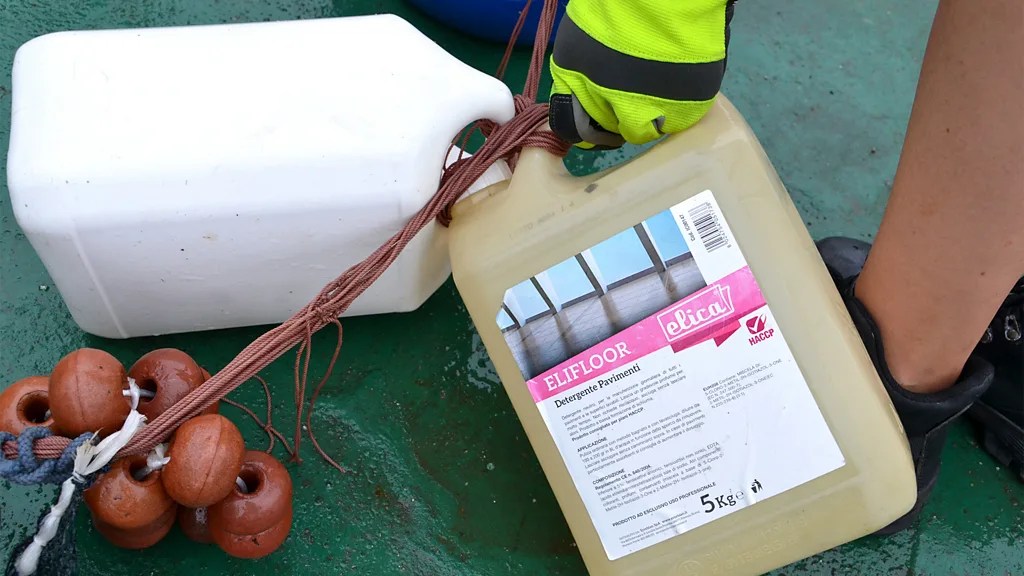
FADs are used worldwide by fishermen to attract pelagic fishes into surrounding nets. These fish-trapping devices are typically composed of used fuel, pharmaceutical and other chemical containers among other types of plastic waste, dark plastic nets and rocks, all of which is held together by a few miles of nylon thread. Marine wildlife is attracted to the shade provided by FADs.
FADs are typically composed of old plastic containers held together by nylon thread (Credit: Sea Shepherd)
The material the FADs are made of matters too. FADs are required by Italian law to be biodegradable. All the FADs removed by the Sea Shepherds from the South Tyrrhenian Sea are illegal and made of plastic, says Nicola Silvestri, frigate captain and head of the Fishing Control Centre area in Western Sicily. They also lack markings which allow them to be traced back to the fishing boat that used them, he says.
“Illegal FADs are very cheap to produce, but at the same time highly dangerous for ecosystems,” says Andrea Morello, president of Sea Shepherd Italy. “These devices are installed by fishers in the month of August, then they catch fish around them in summer. Eventually, winter storms remove the devices, creating tonnes of hazardous and plastic waste floating in the sea.”
In this stretch of sea around Sicily’s Aeolian Archipelago, the target fishing species in the summer are juvenile ricciola, bluefin tuna, juvenile swordfish and pilot fish. FADs can damage the entire population, by preventing juveniles from maturing and reproducing.
The Sea Shepherd mission is part of the organisation’s ongoing Siso operation in Sicily to combat these illegal fishing devices.
“We are witnessing the biggest marine environmental disaster ever,” says Morello. “The sea is like a minefield full of FAD lines in every direction, placed by fishers who split the sea surface among them, threatening biodiversity.”
The Sea Shepherd volunteers remove the long nylon threads attached to the FADs which can harm fish, turtles, humpback whales and dolphins by trapping and suffocating them. According to Sea Shepherd, there are more than 36,000 FADs, each one composed of almost 1.2 km (0.7 miles) of nylon lines in the South Tyrrhenian Sea, part of the Mediterranean Sea.
It takes the volunteers one hour to extract almost 2km (1.2 miles) of a FAD line, it’s the first out of seven removed that day. Not far away, a police coast guard boat is monitoring the work: later it will seize the illegal plastic materials. The use of FADs made from plastic waste, without GPS trackers, is an environmental crime in Italy.
Sarah, a young German volunteer, rings the bell installed on the deck of the vessel, to celebrate and notify the crew that another FAD has successfully been extracted from the seabed. In total, the volunteers haul seven FADs onto the deck that day – their combined mass is the same size as a small car.
The Sea Shepherd volunteers are collaborating with Italian maritime authorities to crack down on FADs (Credit: Sea Shepherd)
organisation maps the FADs using deep-sea radar technology and binoculars and removes them in collaboration with national maritime authorities.
Between 2017 and 2024, the organisation removed 676 FADs from the Mediterranean Sea, says Morello. “We define ourselves as FAD hunters: here to protect the sea. We are also carrying out the first census of FADs ever realised in the Mediterranean Sea,” he says.
The data collected during this mission will be analysed as part of a research project that Sea Shepherd runs with the National Biodiversity Future Centre of the University of Palermo in Sicily and the Cima Research Foundation, based in Liguria, Italy. Using statistical analysis, Sea Shepherd has been producing maps since 2017 to identify for the first time the extent of this ghost labyrinth created by FADs anchored to the seabed.
“With the information provided by Sea Shepherd, we were able to have a precise mapping of the location and composition of these devices,” says Alberto Sechi, a marine biologist at Cima Foundation. “Since 2017, the plastic lines (mostly polypropylene) used to anchor the FADs exceeds 2,500km (1,553 miles): that corresponds to the distance between Paris and Moscow.”
In a single night, Morello says the Sea Shepherds discovered around 912 FADs in the waters surrounding the Sicilian island of Alicudi, each one composed of more than 1km (0.6 miles) of nylon threads. “Multiplying the number of FADs we found by the medium length of each thread, the total length of lines used in this area is a staggering 43,200 km (26.284 miles) of nylon: this is more than the circumference of the entire planet Earth,” says Morello.
Sea Shepherd’s work involves removing as many FADs as possible, but then, the disposal problem arises. In 2022, the non-profit started collaborating with iMilani, an Italian company that specialises in building plastic crates from recycled materials. Together, they have created the Sea Turtle Crates project, which aims to transform the FADs into plastic crates for sea turtle rescue operations. After the entangled turtles have been freed from the FADs, they are put into the crates which Sea Shepherd uses to transport them to veterinarians. Six loggerhead turtles have been rescued to date and 100 turtle recovery boxes have been created from FADs, says Roberto Milani, founder of iMilani and a freediver.
The company is hoping to design other items with FADs waste in future, including pens and other gadgets, which can be sold to finance Sea Shepherd’s activities, says Milani.
Sea Shepherd is creating the first-ever census of FADs in the Mediterranean Sea (Credit: Sea Shepherd)
big bags full of plastic lines extracted from the FADs. In one day at sea, the crew removed seven FADs composed of 6.5km (4 miles) of nylon lines and plastic containers. Their labels reveal their previous lives: from hospital waste and corrosive liquids, to oil, gas and detergent jerrycans. Using radar, the Sea Shepherds map more than 100 FADs throughout the day.
The crew’s work begins early in the morning, and continues until sunset, with brief breaks for meals. Tuti, 23, an Israeli volunteer, prepares a vegan buffet each day. Today’s menu is inspired by Latin American foods, such as empanadas, chimichurri, black beans mole and corn tortillas, which Tuti learned to cook during a Sea Shepherd mission in the Gulf of California, where she worked to protect the last vaquita dolphins.
Onboard are 20 volunteers, from four continents with different ages and backgrounds: from Willie, a 20-year-old German student, to retired engineer and sea captain Gigi, 63, who joins Sea Shepherd’s missions several times a year.
“We are here because we want to be part of the solution. We are sort of part of it, by removing all those plastics from the seas,” says Zafar from Pakistan, who is in charge of measuring and cataloguing each FAD for the database. “I don’t understand people’s insensitivity towards the sea and its inhabitants,” he says.
Many FADs are anchored to the seafloor with stones or buckets full of cement, says Teresa Romeo, director of the Sicily Marine Centre at the Anton Dohrn Zoological Station in Naples, Italy. She has been studying FADs since the 1990s. “They modify the seabed environment and affect all the species living there,” she says.
Romeo says a mandatory recovery of all FADs should be implemented. “We need to establish a spatial management plan to define a specific area [for FADs] and replace floating materials with biodegradable ones, in order to have a more sustainable fishing practice in the Mediterranean Sea,” says Romeo.
Sea Shepherd makes “a great contribution to the mapping actions of FADs and their efforts are useful for monitoring impacts, but in my opinion the aim cannot be drastic removal, but to regulate their use,” she says.
The retrieved plastic FADs are turned into crates for sea turtle rescue operations (Credit: Sea Shepherd)
But creating biodegradable devices from materials such as hemp is difficult due to the high cost, according to Sechi. “Creating a completely biodegradable FAD is a significant challenge, and so far, no one has come up with a solution,” he says. “One alternative could be hemp, but kilometres of hemp thread are very expensive, and no angler would spend that much.”
Experts such as Romeo say that the transition to biodegradable and non-toxic materials would be an important part of the solution to reduce marine pollution from fisheries based on FADs. As well as breaking down in the ocean, biodegradable materials may contain fewer toxins and heavy metals, compared to plastic, says Romeo, though she agrees that cost is a major barrier for materials such as hemp.
In the meantime, the Sea Shepherds continue to sail the seas to map and remove illegal fish-trapping devices, collaborating closely with the local coastguard, researchers and private enterprises to crack down on this environmental crime.
“This alliance is a solution to protect the deep sea,” says Morello.
The Dover protest days; which lasted decades actually; along with many other protests at other ports in SE England at various times, united the British people; who turned out in massive force against this abhorrent business. We cried long and hard at what we were witnessing with every shipment; but despite the utter feeling of being so helpless; there were some good times – you have to have them sometimes; right ??
In the first video you can see us all being held by the police in order to get the livestock transporters down to Dover port as quickly as they can. But as the video also shows; if you cannot stop them near to the port; then you actually go to the port to take action.
As you can see; the trucks sped through as quickly as they could. Being England; weather conditions were often foggy, raining and just dangerous with 40 plus tonnes of livestock transporter rushing past. The police attempted to intimidate protestors by filming them anywhere and everywhere as you can see; but really they had ‘lost the plot’ and had no real control. I Mark was proud to be part of all this; if there were no live animals needing our support then we would have been at home with loved ones watching tv or something ?
It was risky given the trucks speeds and the weather conditions; to this day I an still amazed that nobody was killed; unlike our beautiful Jill who was killed by a truck whilst protesting against live calf exports out of Coventry Airport. She was too lovely a person to have had her life cut short by a calf carrying transporter.
Unfortunately; today, 2025, the export of live, sentient beings across the world is still a massive business. but, the reality and cruelties of the trade are being exposed more and more all the time; take a look:
Here are all of our site links to the live animal export business:
Phil; a personal friend, and Global CEO at London based Compassion In World Farming – https://www.ciwf.org/ often came to Dover to give us all his support.
Very recently, Phil wrote an article for ‘the Scotsman’; and asking the simple question – Why, after 100 years of refrigeration, are animals STILL being transported live ? I can only guess that money is involved a lot more than animal sentience. Here is a link to the article – a great read !
So; here we are today, June 2025; still fighting hard for a global ban on the live animal export issue. Like in the UK, it was a very long campaign; but in the end, 2024 saw all UK live exports STOP. And so may this result continue across the entire planet.
Regards Mark.
Things changed for me when i was a little boy aged 8 years:
My beautiful dog ‘Sheba’; given to me by my parents when I was five years; started me down the long road of having full respect FOR ALL living creatures.
In my personal opinion; this was, is, and forever will be; a good fight, worth fighting for 110%. Glad to have been involved !