Please remember this next time go to vote. Prime Minister Starmer could act IMMEDIATEY and stop this; but he does not.
Photo – Mark.
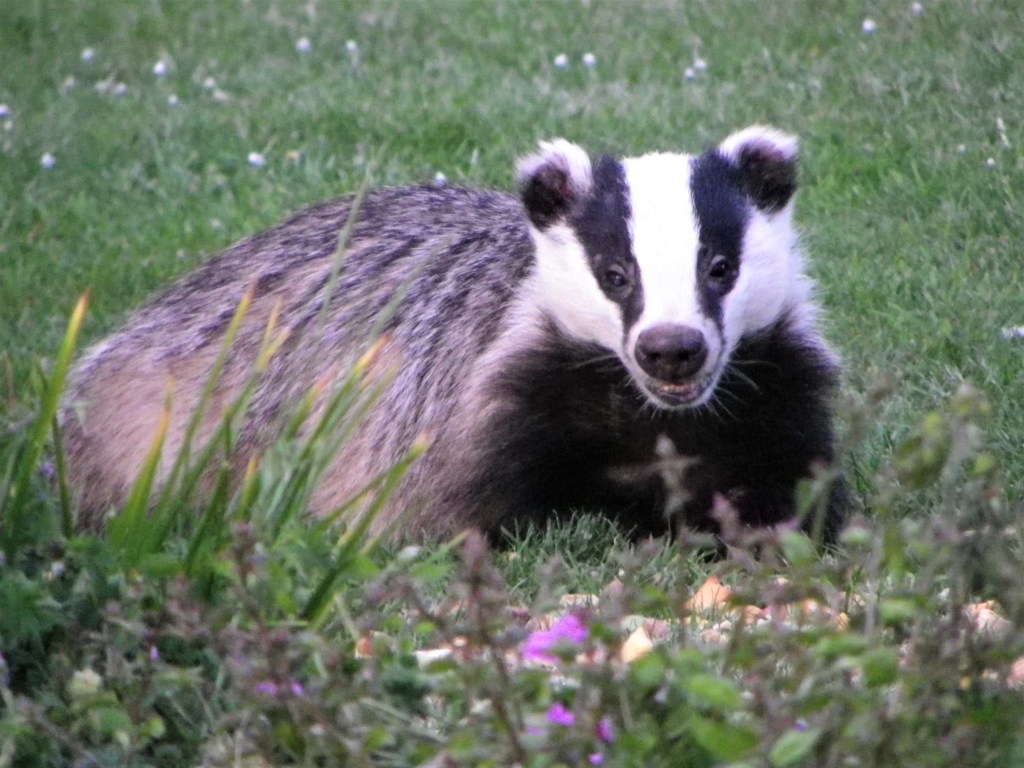
The UK Government has just released the 2024 Badger Cull figures – and they show that now, HALF of the UK Badger population has been murdered. And yet, despite this mass murder frenzy, the Labour Government is allowing yet more kill licenses to be issued in the form of 9 Supplementary Cull Zones:
Data just obtained from the excellent Badger Trust https://www.badgertrust.org.uk/ shows that a staggering 94% of Bovine TB, for which the Badgers are taking the blame, is actually spread by Bovine to Bovine transmission rather than Badger to Cattle. Who in their right mind ‘fixes a problem’ by ignoring 94% of it ?
Environmentalist Zac Goldsmith has raised concerns about a “troubling commitment” in the Prime Minister’s deal with the EU.
Zac Goldsmith has slammed Keir Starmer (Image: Getty)
ac Goldsmith has slammed Keir Starmer’s UK-EU reset for risking the Tories hard-fought Brexit wins on animal welfare. The environmentalist warned that a “troubling commitment” in the agreement means any UK deviation from EU food standards must not “negatively affect European Union animals and goods being placed on the market” in the UK.
The former MP said: “This seemingly technical clause has profound implications for animal welfare and our ability to raise our own standards, something that we fought so hard to achieve with Brexit. “Among other things it likely means the UK cannot restrict imports of animal products that fail to meet our welfare standards – even when we’ve banned those same practices domestically.
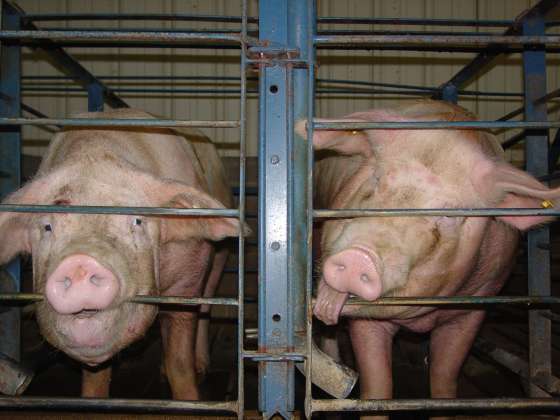
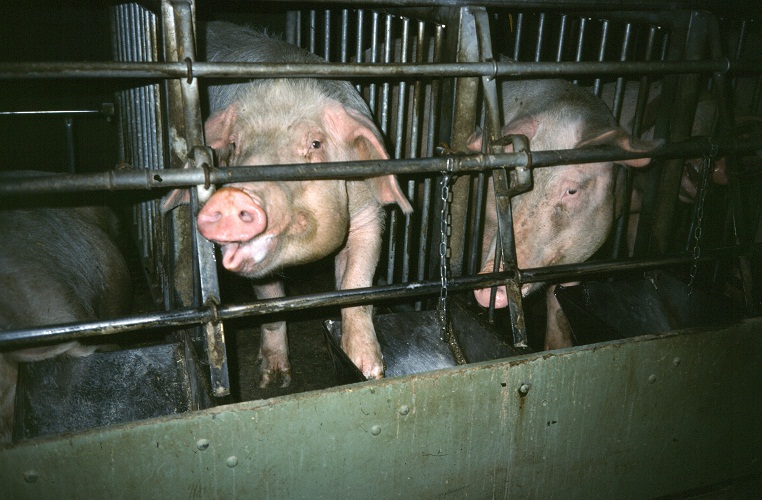
He said around 50% of UK pork imports come from EU countries still using sow stalls – narrow metal cages Britain banned in the 90s because they were considered to be cruel.
A new sanitary and phytosanitary (SPS) deal was agreed last month to reduce red tape currently needed to import and export food and drink between the UK and the EU.
ut campaigners want the Government to clarify whether animal welfare measures fall outside the SPS agreement’s scope, or to negotiate explicit exceptions for welfare-based restrictions.
here were concerns before the deal was struck that Britain could weaken its post-Brexit animal protection laws to get a reset deal with Brussels.
But following the concerns, the Prime Minister said: “We are not involved in, nor will we be involved in, a sort of race to the bottom on standards.
“I think that British people are proud of the high standards that we have, and we want to maintain those standards.”
Sir Keir has pledged to strengthen ties with the EU since coming into office on July 4 last year.
As part of the agreement he signed, there will be more targeted checks on the movement of animals, animal products, plants and other products.
This will stop animals being held for excessive periods at the borders and lower any detrimental impact on animal health and welfare, and reduce the burden on the veterinary workforce.
There was also a commitment made on shared disease surveillance and data sharing, which will secure UK biosecurity and risk of imported diseases.
Animal welfare groups also welcomed the introduction of pet passports to replace Animal Health Certificates (AHCs), which increased burden on the veterinary workforce and hiked costs for animal owners since they came into force.
A Government spokesman said: “This government will always act in the national interest to protect Britain’s farmers and secure our food security. We have said we will uphold the highest agricultural standards and that is exactly what this deal does.”
By Lord Zac Goldsmith
Brexit undoubtedly delivered meaningful wins for animals, enabling policy changes that were previously impossible. We were able for example to ban the cruel live export of animals for slaughter and even more far reaching, we could change the way we subsidised farming to incentivise higher animal welfare and environmental stewardship. Neither of these changes could have happened without Brexit, which is one of the reasons I supported our EU exit in 2016.
And although of course I wish we had done more, the last Conservative Government did deliver a wide range of animal welfare measures, from an expanded ivory ban and banning glue traps, to much bigger sentences for animal cruelty and recognising sentience in law. Now in Opposition the Party is calling for among other things raising zoo standards.
Last month’s UK-EU Summit produced a ‘Common Understanding’ agreement which has been hailed by the Prime Minister as a significant step towards mending post-Brexit relations, generating economic benefits and streamlining trade. However, buried in the details lies a troubling commitment: any UK deviation from EU food standards must not “negatively affect European Union animals and goods being placed on the market in the United Kingdom”.
This seemingly technical clause has profound implications for animal welfare and our ability to raise our own standards, something that we fought so hard to achieve with Brexit. Among other things it likely means the UK cannot restrict imports of animal products that fail to meet our welfare standards – even when we’ve banned those same practices domestically.
Consider the immediate threats. Around 50% of UK pork imports come from EU countries still using sow stalls – narrow metal cages we banned in the 90s because they were considered to be cruel. The last Labour government prohibited fur farming in the UK, yet we continue importing it from the EU. Under the new agreement, banning such imports may be impossible, despite the stated wishes of the Government to deliver the biggest boost to animal welfare in a generation.
The agreement links UK standards to EU animal welfare rules with opt outs limited to public health and biosecurity – assessed case by case basis. So while we might still be able to ban puppy imports, as these present a public health risk, the agreement could block us from banning EU fur or even foie gras on welfare grounds alone.
This not only undermines domestic animal welfare standards but also places British farmers, who adhere to stricter regulations, at a competitive disadvantage. The problem is more acute with EU imports, our largest trading partner for food imports, not just the usual suspects like the USA or Australia.
Brexit gave us the chance to lead the world on animal welfare – to show that an independent Britain could set gold standards that others would follow. This is also about democratic sovereignty; British voters consistently support higher animal welfare standards, with 84% backing restrictions on low-welfare imports.
There’s still time to put this right, but it will require government to clarify that animal welfare measures fall outside the SPS Agreement’s scope, or to negotiate explicit exceptions for welfare-based restrictions.
While its proponents say the UK-EU reset agreement offers economic and diplomatic benefits, it’s imperative that animal welfare remains a priority. By addressing these concerns proactively, the UK can position itself as a global leader in animal welfare and ensure that progress is not achieved at the expense of the most vulnerable and the voiceless.
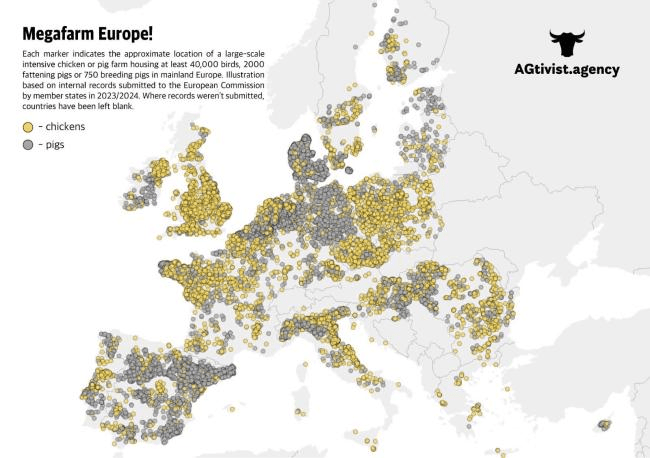
A new investigation has revealed that the EU is home to 22,263 industrial chicken and pig farms – housing more than 516 MILLION Animals in the worst factory farm conditions.
Despite this, the EU Commission, some producers, and even some Members of the European Parliament (MEPs) are advocating for a further increase in the number of farmed animals.
But what would this increase mean for animal welfare; human health, as well as impact on the environment ?
The AGtivist data led investigation has, for the fist time, identified, and mapped these industrial farm around Europe; showing that the EU has 10,862 chicken farms; each holding at LEAST 40,000 birds; raised for egg or meat production, and 8,854 pig farms, holding at least 2,000 pigs each; or 2,547 for breeding pigs.
During the past ten years, 2,746 mega farms have started operations with the EU; with the highest rate of development happening in Spain, where 1,385 new industrial farms started up in the past decade. 5,314 permits for such farms were applied for during the last decade.
Whilst mega farms are sweeping across the EU, small and medium ones are rapidly declining. Between 2005 and 2020 the EU lost 5.3 million farms; most of which were smallholdings. – whilst the total agricultural land area remained stable, thus indicating the change – consolidation – into larger operations.
This represents a decrease of 44% within 15 years.
Meanwhile, the number of mega farms GREW by 56% within the same period; with the top 8% of the highest producing farms controlling a staggering 63% of all livestock in the EU. Here is the proof if you question what we say.
France has the highest number of industrial chicken farms at 2,342 farms.
Spain has the highest number of industrial pig farms, with 2,580 for fattening pigs and 821 farms fot breeding pigs. It is also the country that saw the biggest expansion of new farms starting to operate in the last decade.
Italy is in the top five countries for both industrial pig and chicken farms – 2,146 combined.
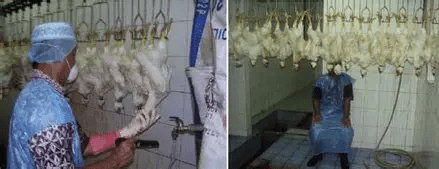
MEGA FARMS OPERATE INTENSVE FARMING SYSTEMS where chickens are densely packed into barns with INADEQUATE VENTILATION, INSANITARY CONDITIONS; ALONG WITTH NO ACCESS TO OUTDOOR SPACE OR NATURAL LIGHT.
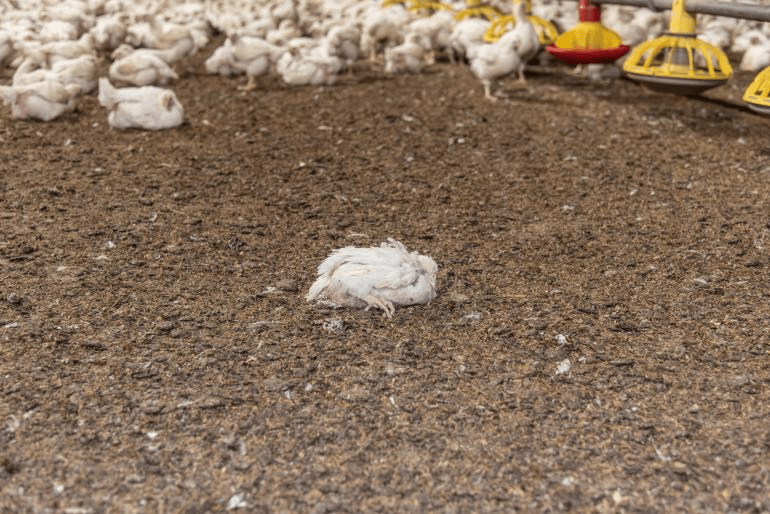
The AGtivist investigations in Italy with our colleagues Essere Animali; revealed the reality of animal welfare on the ground; with chickens at a farm in Bergamo living in their own excrement and unable to stand no their feet because of their unnatural growth.
Photo – Stefania – AGtivist / Essere Animali.
In Brescia, investigators witnessed hens cramped together, on top of each other; while carcasses were left to decompose for around 3 weeks.
Photo – Stefania – AGtivist / Essere Animali.
In Spain, local investigators highlight the concentration of pigs in intensive farms, with pigs confined in overcrowded, unsanitary conditions, suffering from both untreated injuries and disease. Sows are enclosed in metal crates of barely two metres squared; preventing natural movement and leading to severe physical repercussions.
Intensive livestock farms such as those found across the US are spreading across the continent, according to new data
There has been a rise in large intensive poultry units across Europe, which are a key driver of river pollution. Photograph: John Eveson FLPA/FLPA/Shutterstock
American-style intensive livestock farms are spreading across Europe, with new data revealing more than 24,000 megafarms across the continent.
In the UK alone, there are now 1,824 industrial-scale pig and poultry farms, according to the data obtained by AGtivist that relates to 2023.
The countries with the largest number of intensive poultry farm units are France, UK, Germany, Italy and Poland in that order. For poultry farming alone, the UK ranks as having the second-highest number of intensive farms at 1,553, behind France with 2,342.
European consumers quite rightly, are a fairy switched on bunch when it comes to knowing what goes into the food that they eat. Yes or no ?
But, as animal campaigners; we question what we consider to be ‘adequate’ information relating to certain issues re animals and the food chain.
Lets take the humble egg as an example. There are more than 350 million laying hens in the EU. All these hens combined produce close to 6.7 MILLION TONNES of eggs each and every year.
The EU is rather good when it comes to standards and labelling for eggs purchased withing the EU (and still including the UK even after Brexit); of course; the UK was once an EU member state; so labelling was a regulatory requirement.
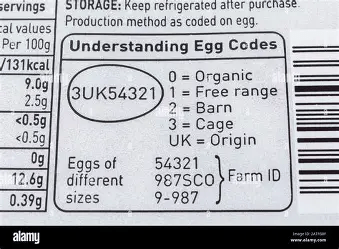
With EU / UK egg labelling; there is a Regulation – https://eur-lex.europa.eu/legal-content/EN/TXT/?uri=celex%3A32008R0589 which defines the regulations for standards in egg production. Organic production methods; Free Range; Barn or Cage – the labelling system clearly provides the consumer at the supermarket with full details of their eggs – what system was used in their production – so that THE CONSUMER IS FULLY INFORMED AND CAN MAKE A CLEAR CHOICE of whet they are purchasing.
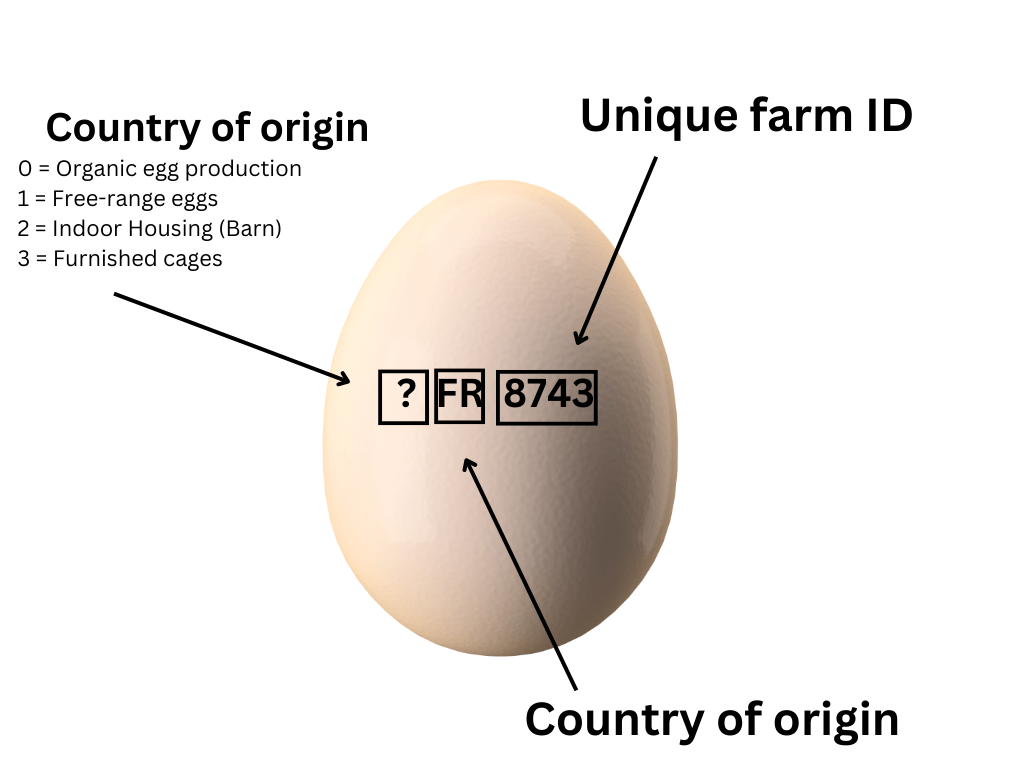
There is no confusion; to the point that every single egg is stamp marked as shown below to include the production method used; the country of origin; and a unique ‘farm ID’ in case of any specific issues relating to the production farm.
Pretty good well monitored and consumer informed system throughout the EU; which we as animal welfare campaigners fully support. The consumer is informed and they make their individual purchases accordingly.
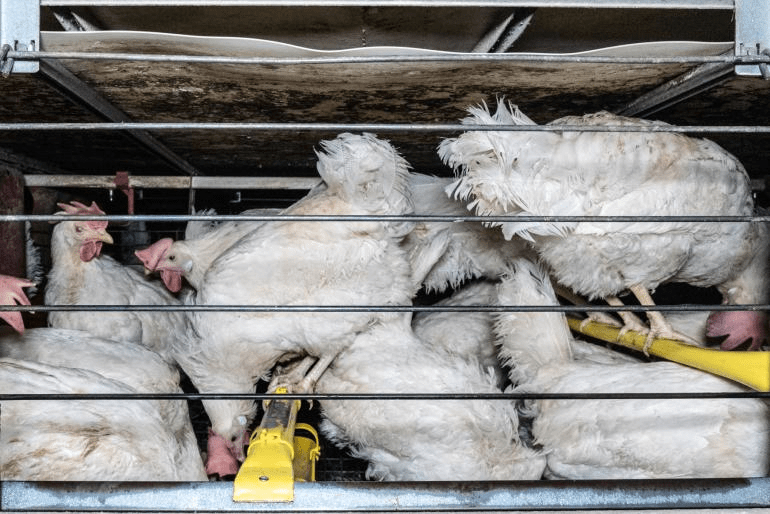
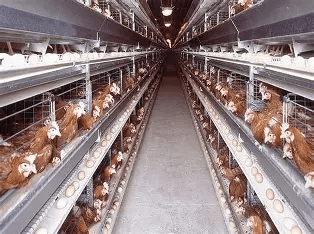
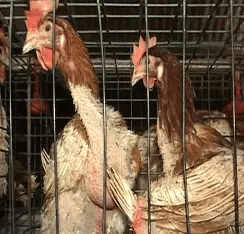
Above – Caged Hens – NO
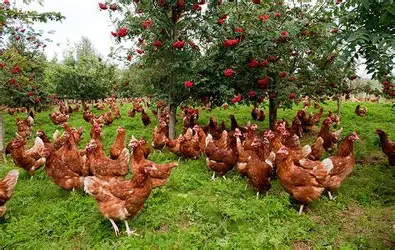
Below – Free Range – YES.
As welfare campaigners we say there is only one way for consumers to purchase their eggs – if they want to eat eggs – GO FREE RANGE. Compare the free range hens plumage above to that of battery hens below – is that image simply not enough alone to make egg eaters buy NON CAGED eggs.
So ok; there you basically have it – Consumer clear labelling relating to egg production, which allows them to make their independent clear choices.
So for this post; the heading basically says ‘when it comes to meat products, is the EU really telling the consumer what they would like to know?’. We don’t think so; if the labelling system is good for eggs; why the shortfalls for meat products in labelling ?
Cards on the table; I [Mark] have been a non-meat eater for 35+ years. Anything ‘that ever had a face’ is not part of my diet; but I accept there are still lots of carnivores out there. One question though I would ask them is simply; if EU legislation attempts to provide you with accurate labelling on your eggs, and how they were produced; then why not clear and precise labelling on how your meat was reared; AND ESPECIALLY HOW IT WAS KILLED !
Many EU and British citizens; when asked, simply abhor the thought of live animals being ritually slaughtered. But, unlike the ‘egg labelling system’; are EU consumers being led up the garden path when it comes to specific meat labelling?. There are two main methods of ritual slaughter which does not involve pre-stunning an animal before its death; – Shechita (Kosher) – the Jewish method; and Halal which is the Muslim method. Here is more reading from the UK Government about this:
EU law requires that all animals being slaughters for the food chain are stunned and made unconscious prior to killing so that death should be ‘painless’; – hmm; ‘painless’ ? – we say ask the animals going through the process !
But within the EU there are exceptions for religious slaughter as detailed above. Jews and Muslims represent around 6% of the EU population.
Data from Ireland; an EU Member State (MS) showed that around 2010, showed that with just a 1% Muslim population; 6% of cattle, and 34% of sheep were slaughter without stunning. In a 2006/7 survey, it was seen that in France, another MS; 40% of Calves; 25% of Bovine cattle; and no less than 54% of Sheep were slaughtered without stunning.
The EU market for Kosher meat was worth around 5 Billion Euros in 2008.
THE REAL EU MEAT LABELLING ISSUE.
The following is very informative reading for reasons why there is NO standard legislation throughout the entire EU member states when it comes to meat produced by pre-stunning or religious specific methods. We especially suggest looking at the the data on ANNEX 7 – The Practice of Religious Slaughter In Every EU Member State.
Then we can unfortunately understand the EU reluctance, or refusal, to publish concise EU consumer – wide labelling about meat and meat products. When you enter an EU supermarket and are opposed to ritual animal slaughter; does the ‘EU labelling system’ express YOUR animal welfare concerns as a consumer ? – WE WOULD SUGGEST A BIG ‘NO’ !!
But then after all; religion never caused any wars; did it ?
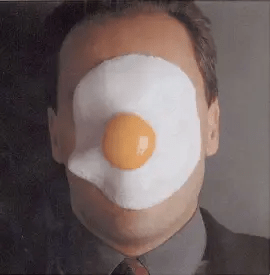
And who in their right mind would want the EU to end up with Egg on its face ?
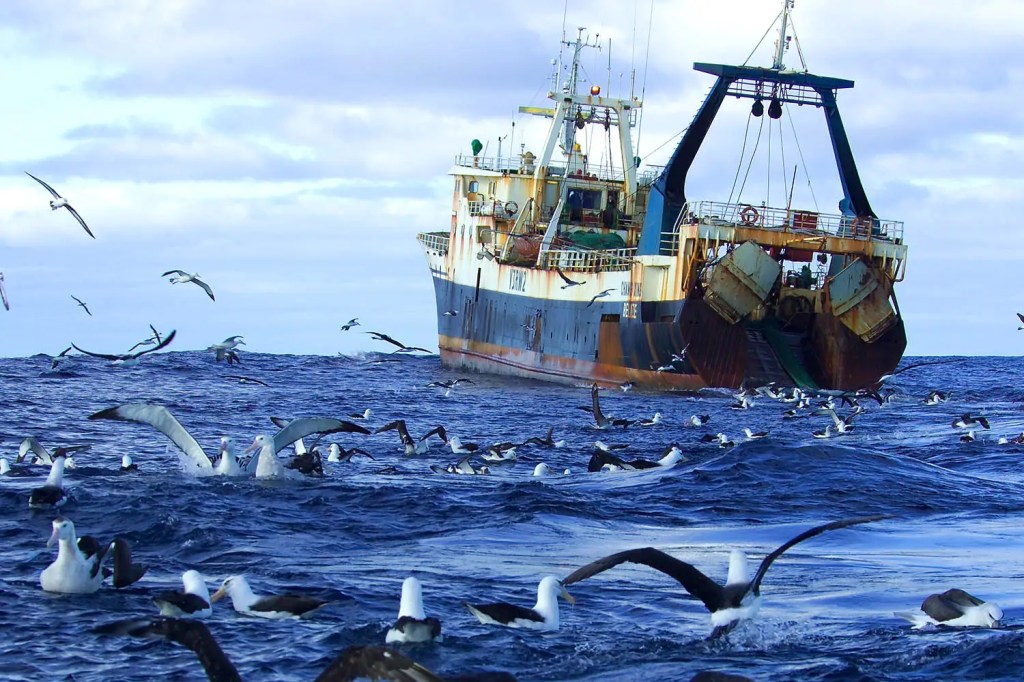
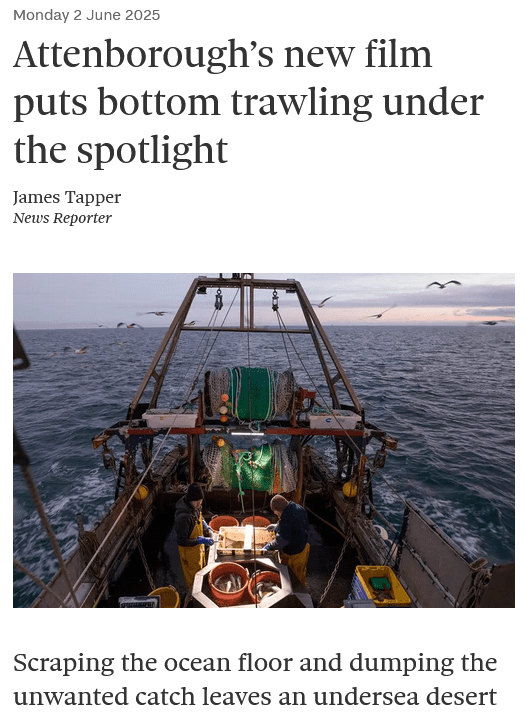
As David Attenborough warns of the damage being wreaked on the oceans by seabed trawling, the role of an army of mystery boats is in the spotlight.
The Ghanaian flag that droops from the mast of the Meng Xin 10 is one of the few African things about the fishing boat.
The deckhands are Ghanaian, and officially it is owned by a company in Accra. But the officers are Chinese, all the instruments and telemetry are in Mandarin, and the people who call the shots are based in the northeastern Chinese port city of Dalian.
For 10 years the blue-hulled vessel, one of at least 30 that investigators have linked to Dalian Mengxin Ocean Fishery, has meandered along Ghana’s coastline, dragging a heavy beam along the ocean floor about 200m below, bottom trawling for squid and cuttlefish.
A Pacific manta being photographed by tourists. Photograph: Johnny Friday
The Last Dive tells how a relationship with a giant Pacific manta ray turned a big game fish hunter into a conservationist
Located about 500km off the southern coast of Baja California lies a group of ancient volcanic islands known as the Revillagigedo Archipelago. Home to large pelagic species including whale sharks and scalloped hammerheads, the rugged volcanic peaks were also once the site of an unlikely friendship.
It began in December 1988 when Terry Kennedy, a now 83-year-old American sailor with a storied past, met a six-meter-wide giant Pacific manta ray off San Benedicto island’s rugged shore. He would go on to name him Willy.
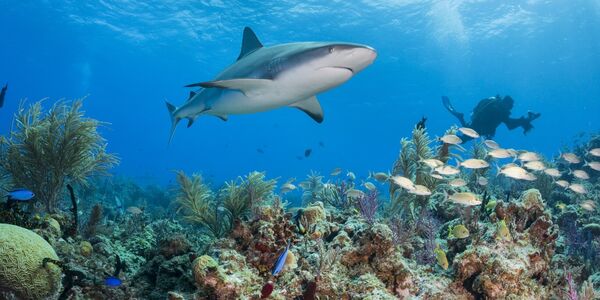
The smash-hit movie Jaws was filmed 50 years ago off the coast of New England, on the island of Martha’s Vineyard. It stirred up human fear of sharks, contributing to a popular misconception that sharks were supposedly villains and reckless human-eating monsters.
But of course, that is not true about sharks. In fact, humans are the real threat here. Every single day, we kill an average of 274,000 sharks. That amounts to approximately 100 million sharks each year. Today, many species – like the great white, sand tiger, great hammerhead, and others – are endangered or vulnerable to extinction.
That’s why famed athlete, 55-year-old swimmer Lewis Pugh, just completed a grueling 12-day swim around the island to help raise awareness about the importance of sharks.
Sign the petition to urge the U.S. government to protect sharks by expanding and creating more marine sanctuary areas!
The United Nations named Pugh a “patron of the oceans” due to his use of swimming as a way to raise awareness about marine wildlife and ocean conservation. He’s swum near volcanoes, near glaciers, and alongside polar bears, hippos, and crocodiles. He’s the first person ever recorded to have finished a long-distance swim in each one of the world’s 5 oceans, and to swim across the north pole itself.
And he’s worried about the future of sharks – just like we all should be.
Sharks help maintain a precious balance in marine ecosystems. Without them, the entire natural structure begins to deteriorate. They promote biodiversity and keep other species in check before they spiral out of control, and even keep the oceans healthy by scavenging injured, sick, or dead animals.
But today, humans target them for overfishing. They’re suffering from habitat loss and climate change. And, of course, being maligned by humans has only made their survival more difficult.
We must respect sharks – and we must demand more protections to keep sharks safe, alive, and healthy! One way to do that would be for the U.S. Congress to create and expand more shark sanctuaries. These are special areas or zones that would sharply curtail overfishing and destruction of habitats. Sign the petition to demand the U.S. protect sharks!
***********
‘A horror movie’: sharks and octopuses among 200 species killed by toxic algae off South Australia
Karenia mikimotoi algae can suffocate fish, cause haemorrhaging and act as a neurotoxin, one expert says
More than 200 marine species, including deepwater sharks, leafy sea dragons and octopuses, have been killed by a toxic algal bloom that has been affecting South Australia’s coastline since March.
Nearly half (47%) of the dead species were ray-finned fish and a quarter (26%) were sharks and rays, according to OzFish analysis of 1,400 citizen scientist reports.
Cephalopods – such as squid, cuttlefish and octopuses – accounted for 7%, while decapods – crabs, lobsters and prawns – made up 6% of species reported dead or washed up on beaches.
The first war-related environmental crime against a natural reserve has been formally brought before a court by Ukrainian Prosecutors. Kherson prosecutors have filed an indictment against the Russia-appointed head of the Askania-Nova Biosphere Reserve for the illegal transfer of rare and specially protected animals to Russia. A total of seven reserve-protected animals were removed from the Ukrainian territory as a result of the illegal transfer. This case sets a global precedent, demonstrating that crimes committed against the environment during war will not go unpunished.
The Specialised Environmental Prosecutor’s Unit of the Prosecutor General’s Office and Kherson Regional Prosecutor’s Office, with the support of Global Rights Compliance’s Environmental Mobile Justice Team, began conducting an investigation into the case. Following the Russian occupation of Askania-Nova, a UNESCO-protected biosphere reserve, the reserve was unlawfully re-registered under Russian law and the legitimate Ukrainian administration was replaced. On 1 December 2023, the new administration illegally transferred rare and endangered animals (which remain Ukrainian property despite the illegal re-registration) to Russian-controlled zoos without Ukraine’s consent. Among the animals at issue were Chapman’s zebras, American bison, Przewalski’s horses, and one David’s deer, the last of which died during the transfer.
Under international humanitarian law, Russia, as an occupying power, must respect Ukrainian legislation, including Askania-Nova’s protected status. Article 55 of the 1907 Hague Regulations allows an occupier to act only as a temporary administrator of property, not an owner. Additionally, Article 56 prohibits the destruction or seizure of institutions dedicated to the arts and sciences, granting Askania-Nova special protection.
“The war crime of pillage is not just about looting artefacts or property belonging to civilians—it extends to Ukraine’s natural treasures as well. The unlawful transfer of these protected animals is a direct violation of international humanitarian law and must be prosecuted,” said Nataliia Pavlovych, Legal Adviser and Deputy Team Lead of the Environment MJT at Global Rights Compliance.
The suspect in this case is Dmytro Mesheryakov, the Russia-appointed head of Askania-Nova, who is responsible for organising the transfer of protected animals in violation of international law.
While war crimes such as pillage and destruction of cultural heritage have been prosecuted before national courts and international tribunals, this is the first time criminal charges stemming solely from war-related environmental damage to a natural reserve have been brought to court. Ukraine’s legal action, supported by GRC’s legal team, sends a strong signal that environmental destruction will be treated with the same gravity as other war crimes.
“By initiating these proceedings, prosecutors are both beginning to fill this void and sending the message that harm committed to the environment during wartime will no longer go unpunished. They are at the forefront of developing precedent in this area of the law,” added Donna Cline, Lead of the Environment MJT, at Global Rights Compliance.
GRC’s Mobile Justice Team is a part of the Atrocity Crimes Advisory (ACA) Group for Ukraine. The ACA is a multilateral initiative established by the United States, the European Union, and the United Kingdom to support and assist Ukrainian law enforcement and prosecutors in investigating and prosecuting international crimes committed during the full-scale war.
The opposition stems from serious welfare and environmental concerns: the extreme cruelty of confining intelligent, solitary animals like octopuses in farming conditions, the lack of humane slaughter methods, and the damaging impact such farms would have on fragile marine ecosystems.
The Spanish association of law professionals, INTERCIDS, has presented a legislative proposal to national politicians that aims to establish a proactive ban on octopus farming across the country. The proposal responds to the growing chorus of scientists, animal and environmental protection organisations, and citizens who have spoken out against octopus farming.
Although no industrial octopus farms currently exist in Spain or elsewhere, seafood multinational Nueva Pescanova announced plans to establish the world’s first industrial-scale octopus farming in the Canary Islands.
Submitted to the Parliamentary Association for the Defence of Animal Rights (APDDA), the proposal seeks to amend Spain’s national Law 23/1984 on marine farming/aquaculture in order to prohibit the farming of octopuses for food and any other productive purpose. It would also ban the commercialisation of octopus products derived from such activities.
Octopuses consumed as food are currently caught in the wild, primarily by small-scale fisheries. There are no existing legal frameworks regulating octopus aquaculture in Spain. Therefore, INTERCIDS’ proposal aims to close that gap preemptively by enshrining a ban into law that addresses the grave risks associated with the farming of captive octopuses.
The next steps for the proposal will depend on national politicians, who must decide whether they will move forward with submitting it as a formal legislative proposal to be approved by the Parliament in the coming months.