Category: Environmental

(UK) Chris Packham poses as St Francis of Assisi in new portrait

Well, novel certainly … not sure we may hope for Chris, CBE, being sainted by the Vatican any time soon … even with the link to S. Francis.

https://www.telegraph.co.uk/news/2025/05/14/chris-packham-poses-saint-francis-of-assisi-new-portrait/

14 May 2025 7:39pm BST

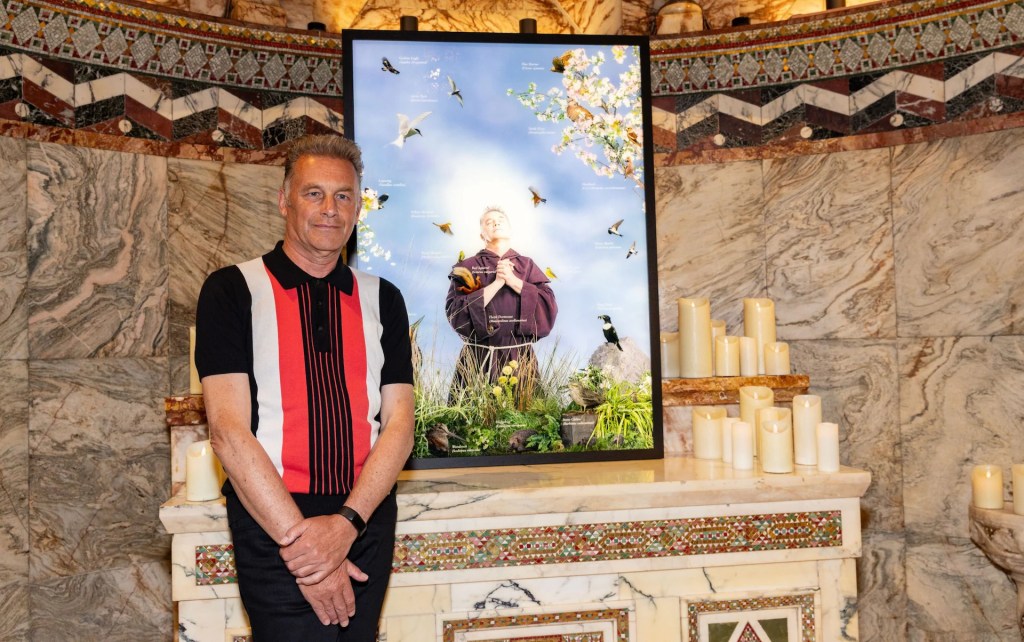
Chris Packham with his portrait, which it is said depicts him as “a living saint”, in the Fitzrovia Chapel Credit: Richard Ansett/Radio Times

Chris Packham has posed as St Francis of Assisi in a portrait celebrating him as a “living saint”.

The portrait of the presenter and environmental campaigner is now on show on the altar of the Fitzrovia Chapel, central London.

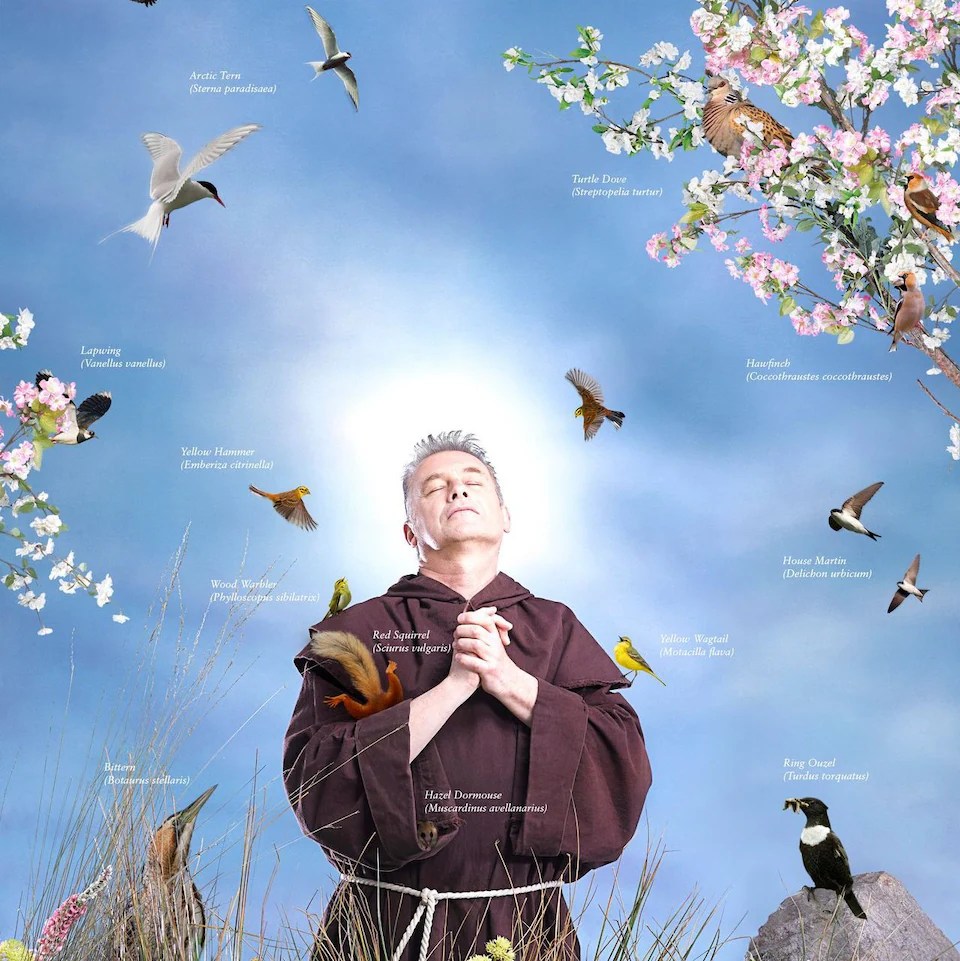
Originally commissioned by Radio Times magazine to mark Earth Day, it is the work of photographic artist Richard Ansett.

Packham is surrounded by images of some of the UK’s most endangered species. Mr Ansett said it also made reference to Packham’s neurodiversity – the presenter was diagnosed with autism in his 40s.

“I hope that every pixel of this portrait offers a safe space for anyone challenged by neurodiversity. Packham’s remarkable connection to the natural world drives him relentlessly to save us from ourselves,” Mr Ansett said.

The portrait of Packham is available to view until May 21 at the former chapel, where it is described as a work “elevating him to the status of living saint”.

Chris Packham is surrounded by some of the UK’s most endangered species in the artwork Credit: Richard Ansett/Radio Times

Packham said: “This photo is about a fundamental level of engagement, an engagement of equals. It conveys the importance of nature to heal us, provide us with a sanctuary in times of terrible trouble.

“But the species featured are also rare or declining so it serves to remind us that our one and only home, our Earth, is on a brink too many are refusing to see and act to protect and repair.

“This is a photograph about love, a love of life, all life.”

The featured species include the red squirrel, the house martin, the woodcock and the hedgehog.

Mr Ansett, an award-winning photographer whose previous works include Sir Grayson Perry in the style of the Madonna and Child, added that the Packham portrait “recognises the difficulties that he has prevailed over to become a success in his career and a positive light for so many people”.

It is “a personal tribute to Packham’s humanity in challenging the worst parts of ours, in our ambivalence to the destruction created in the wake of our own needs”, the photographer said.

Emerging Animal Rights and Their Anthropo-, Zoo- and Ecocentric Justifications

April 23, 2025

https://www.ejiltalk.org/emerging-animal-rights-and-their-anthropo-zoo-and-ecocentric-justifications/

Written by Saskia Stucki

Editor’s note: This post is part of the EJIL:Talk! Symposium on ‘Expanding Human Rights Protection to Non-Human Subjects? African, Inter-American and European Perspectives.’

The idea of expanding the normative framework of human rights to nonhuman entities is not quite new, but ever-so topical in the age of AI, corporate human rights, and the rise of the global Rights of Nature movement. Although animals may be paradigmatic (non)human rights aspirants, animal rights proper have not yet been adjudicated, let alone recognized, by the ‘sister regional human rights courts’ or international human rights bodies.

In recent years, however, animal rights have increasingly become an issue before domestic courts, even highest courts, such as the Supreme Court of India, the Constitutional Court of Ecuador, the Islamabad High Court, or a lower court in Mendoza (Argentina). It is interesting to note that the judicial recognition of animal rights is so far more or less exclusively driven not by European or North American courts, but by courts from the Global South, which seems to refute the charge of “cultural imperialism” or Eurocentrism that is sometimes attached to the idea of universal animal rights. Given these contemporary developments in domestic animal rights law, and following a “bottom-up” approach to the future formation of a global animal rights law, the question seems not if, but when animal rights will advance to the world stage and eventually enter the halls of international (non)human rights courts.

Emerging animal rights and their pluralistic drivers

Since its inception, the idea of animal rights has had a mostly theoretical existence. In the absence of any legally institutionalized rights, the concept of animal rights typically relates to potential fundamental rights that (nonhuman) animals should have and that ought to be recognized and respected by human laws. Only recently, but with accelerating pace, have courts around the world started to deliberate and recognize actual legal rights of animals (see here for an overview of global animal rights jurisprudence).

One noteworthy difference between the ideal animal rights conceived by theorists and the real animal rights recognized in legal practice is the justificatory pluralism driving the emergence of the latter (as opposed to the justificatory monism – mostly of the naturalistic variant – that tends to ground the former). That is, while animal rights in theory are typically justified with reference to some morally relevant rights-generative natural quality of animals, animal rights in practice seem to be grounded in a broader and more heterogenous mix of divergent yet mutually complementing rationales.

Elsewhere, I have argued that there are both principled and prudential reasons that warrant institutional recognition of animal rights. In short, the principled argument for animal rights is of an ethical nature (a matter of justice or morality) and operates with intrinsic criteria, such as animals’ sentience, dignity, vulnerability, exploitability, or experiences of injustice. By contrast, the prudential argument for animal rights is of an instrumental nature (animal rights as a means of promoting other ends, e.g. the protection of humans or the environment) and relies on extrinsic considerations, such as social and environmental benefits that may result from cultivating animal rights-respecting practices.

Here, I will chart a slightly adapted, tripartite typology, based on the anthropocentric, zoocentric, and ecocentric justifications underpinning the recognition of animal rights in practice.

Anthropocentric underpinnings of animal rights

From an anthropocentric point of view, animal rights are justified instrumentally with their utility or benefits for human individuals or societies. Here, the recognition of animal rights is primarily motivated by and derivative of human interests, and functions as an indirect way of protecting or promoting certain human goods, such as human rights or health. Commonly invoked anthropocentric reasons for recognizing animal rights relate to:

  • The linkages between human and animal (in)justice: a growing body of research (see here for an overview) suggests a correlation between discriminatory (e.g. sexist, racist, speciesist) and rights-affirming social attitudes as well as empathy towards human outgroups and animals. Similarly, important links seem to exist between violence against humans and animals, both on the level of interpersonal (e.g. domestic or sadistic) and collective violence (e.g. animalistic dehumanization). Recognizing – and respecting – animal rights may thus concomitantly contribute to the protection of (vulnerable and marginalized) humans.
  • Animal exploitation as a major driver of environmental human rights and public health threats: the need to establish animal rights as a bulwark against extractive exploitation is also increasingly debated in the context of protecting humans against existential environmental risks. This is because animal exploitation (notably industrial animal farming and wildlife trade) is a major driver of global health threats (such as the emergence of zoonotic diseases and antimicrobial resistance) and of ecological human rights threats (such as climate change and biodiversity loss).
  • Cultural and religious reasons: certain (beloved or revered) animals are more equal than others, and are afforded special legal protections for cultural or religious reasons. For example, some courts, notably in Latin America, have recognized rights of companion animals (such as a dog in Colombia) as part of the protection of multispecies families and the affective bonds that humans have with their nonhuman family members. Another relevant example is the 2024 He Whakaputanga Moana Treaty (Declaration for the Ocean) – an Indigenous treaty that recognizes whales as legal persons, inter alia, because whales are considered ancestral beings and an integral part of a healthy ecosystem.

Zoocentric constructions of animal rights

Within a zoocentric frame of reference, animal rights are justified with intrinsic qualities of animals, such as their dignity or inherent value, sentience, personhood or subjecthood, or vulnerability. Here, the recognition of animal rights is primarily motivated by and centred on a legal concern for animals and their interests per se, irrespective of any instrumental or utilitarian considerations. In the words of the Constitutional Court of Ecuador, “animals should not be protected only from an ecosystemic perspective or with a view to the needs of human beings, but mainly from a perspective that focuses on their individuality and intrinsic value”. Courts typically arrive at zoocentric animal rights through two different legal avenues:

  • Subjectification of animal welfare laws: some courts have derived animal rights from existing animal welfare laws, by extracting therefrom subjective animal rights as implicit correlatives of explicit human duties. For example, in a landmark judgment from 2014 (which has since been somewhat relativized and reversed), the Supreme Court of India recognized a range of animal rights, such as the right to life and security, protection against pain, suffering, and torture, to food and shelter, based on the Prevention of Cruelty to Animals Act. It further elevated these statutory rights to the status of fundamental rights by reading them alongside the constitutional provision on animal protection and compassion (the “magna carta of animal rights”).
  • Animalization of fundamental (human) rights: other courts, notably in the Americas, have probed the possibility of extending certain human rights to animals, such as the prohibition of slavery, or the procedural right of habeas corpus and the underlying substantive right to freedom. In the USA, courts have thus far declined to enlarge the protective scope of fundamental rights to animals other than humans (of course, corporations are a different story). By contrast, courts in Latin America (e.g. in Argentina and Colombia) have recognized animal rights based on a dynamic and extensive reading of constitutional rights (notably the right to habeas corpus).

Ecocentric foundations of animal rights

From an ecocentric perspective, animal rights are recognized in an eco-constitutional legal context (e.g. a “sociobiocentric” constitution) and as part of a holistic approach to environmental protection and rights. Against the backdrop of exacerbating ecological pressures in the Anthropocene, the environmental dimension of animal rights (as well as, conversely, the animal dimension of environmental rights) has become increasingly important in recent years. Courts, too, have been responsive to the human-animal-environment nexus, by converging or integrating the rights of humans, animals, and nature.

  • (Wild) animal rights as part of rights of nature: one form of ecocentric animal rights is the recognition of (wild) animal rights as an integral (individual) dimension of the rights of nature. The integration of animal rights into the rights of nature framework has been elaborated at length by the Constitutional Court of Ecuador. In this context, some commentators observe a convergence between (animalized) rights of nature and (naturalized) animal rights, drawing on the obvious overlap and synergies between the two species of rights.
  • Ecological interdependence of human and animal rights: lastly – and this might be the clearest example of the confluence of anthropocentric, zoocentric, and ecocentric motives that are conjoined in the configuration of emerging animal rights – animal rights can be justified on the grounds of their ecologically mediated interrelation with human rights. For example, the Islamabad High Court has noted the “interdependence of living beings” and recognized animal rights alongside, and as an integral part of, the human right to life and environmental protection.

A win-win-win for humans, animals, and the environment

As this overview has shown, the recognition of animal rights in practice is only partially motivated by (intrinsic, ethical) concern for animals, and concurrently catalysed by instrumental concern for a variety of human interests and environmental considerations. It is this interplay of anthropocentric, zoocentric, and ecocentric rationales that is driving the emergence of animal rights alongside human rights and environmental rights. Some commentators contend that the anthropocentric and ecocentric reasonings that co-constitute real animal rights provide for a merely “weak grounding for animal rights”. Others dispute that these ulterior motives work to constitute “genuine animal rights” altogether. I would however argue, on the contrary, that this justificatory pluralism makes for a more diverse and democratic, resilient, rhetorically powerful, and thus ultimately stronger legal footing for animal rights in the real world. The pluralistic foundations of emerging animal rights indicate that they can be plausibly and palatably framed as a win-win-win situation. Simply put, animal rights are good for humans, animals, and the precious – and precarious – planet we all share.

UK – Killing Our Countryside – It’s Time To Ban Shooting.

Chris Packham; known to all of us in the UK for his environmental knowledge and especially as a television wildlife campaigner; narrates a video for ‘Animal Aid’, of which he is a Patron, called ‘Killing Our Countryside’.

The film reveals the damage done to the British countryside and wildlife by the shooting industry’s mass release of tens of millions of pheasants and partridges for shooting ever year.

The film, and accompanying campaign, make the argument for a ban on the production and release of birds for shooting.

The film also reveals what many people have not seen; the method of raising these birds which are bred to die – simple as that !

Animal Aid website – https://www.animalaid.org.uk/

About Us – https://www.animalaid.org.uk/about-us/

Turkey – Animal Rights Fear Mass Euthanasia In Turkey After New Top Court Ruling.

Turkeys top court rejected a law on Wednesday to annul a contentious law which would remove millions of stray dogs from the streets.

Click here to see what Japan is doing – https://worldanimalsvoice.com/2025/05/09/jp-cruelty-of-the-tokyo-euthanasia-centre-for-stray-dogs-where-animals-suffer-for-fifteen-minutes-before-they-die-from-suffocation-in-canine-gas-chamber/

Critics are saying that the new legislation could lead to mass killings of the animals.

The main Opposition Party had sought to overturn legislation enacted last year, arguing the it violated animal rights and the right to life.

However, the Constitutional Court have ruled the legislation is legally valid and thus it can continue to be implemented.

Turkey has stated that it will put stray dogs up for adoption.

Dozens of activists gathered near the Constitutional Court to press the court to repeal the law. They held up posters which read ‘cancel the blood ridden law’; as well as shouting anti government slogans.

It is estimated by the government that around 4 MILLION STRAY dogs roam Turkish cities and the countryside.

Whilst many of the dogs are harmless, the government moved to tighten legislation on stray animals, following incidents of dog attacks, including some cases involving children.

The law requires municipalities to round up stray dogs and relocate them to shelters where they would be vaccinated, neutered and spayed before making them available for adoption.

Dogs that are in pain, terminally ill or pose a heath risk would be euthanised,

Animal lovers, strongly oppose the ruling, dubbing it the ‘massacre law’, as they fear it will lead to widespread culling or with dogs ending up in disease ridden, overcrowded shelters’.

They have also raised concerns about how financially strapped municipalities will secure the additional funding required to construct the additional shelters.

It is feared that rather than allocating resources to care for the stray dogs; some municipalities will resort to immediate euthanisation on the pretext of ‘illness’. This is something that we at WAV would fully agree with; where does the shelter funding suddenly appear from to provide ‘care’ to an additional 4 MILLION dogs ?

We at WAV fully agree with the activist campaigners that very many healthy dogs will end up being immediately destroyed rather than municipalities providing for their wellbeing. We at WAV do have a little experience on the issue of stray dogs and cats; in 2005 we established SAV in Serbia, the Balkans, to fight the government regarding their abuses of stray / street dogs and cats – have a look –

The latest court actions can only put additional pressure on authorities to enforce these hazy, misguided laws.

The Ankara Bar Association, an organisation for lawyers, claims that since its implementation, ‘hundreds of animals have died due to this law, which does not serve the public interest’.

Last year the very respected HSI criticised Turkeys approach to stray dog management.

England – Update – ‘Sycamore Gap’ Environmental Thugs Found To Be GUILTY By Jury After 2 Week Court Trial.

At a court trial in Northern England, which we have been following, like many other international environmentalists; two men have now now been found guilty of the felling of an iconic tree located along ‘Hadrians Wall’ https://en.wikipedia.org/wiki/Hadrian’s_Wall – the northern most frontier of the ancient Roman Empire.

The two environmental thugs, Daniel Graham – 39 years of age, and Adam Carruthers aged 32 years, both from Cumbria in Northern England; have been convicted in a trial at Newcastle Crown Court on two counts of criminal damage – and the two have been remanded in custody ‘for their own protection’ until they are sentenced on 15th July 2025.

The pair even filmed themselves on a mobile phone destroying this beautiful, iconic landmark – so the evidence was pretty clear for the jury, who reached a unanimous verdict after a short deliberation.

Mrs. Justice Lambert leading the trial informed the pair to be prepared for ‘lengthy’ custodial sentences.

The iconic tree, which had survived the harshness of life on the wall; and yes it can be very bleak there; for over 150 years, was destroyed by the pair within a matter of seconds.

Despite this mindless destruction, the base of the tree still exist and is being monitored and nurtured by specialists. The legacy is to grow 49 new trees from the remaining section of the tree.

This will be the positive shared with a global audience who were devastated by events.

Further links –

https://www.itv.com/news/tyne-tees/2025-05-09/sycamore-gap-daniel-graham-and-adam-carruthers-found-guilty-of-felling-tree

https://www.msn.com/en-gb/news/uknews/sycamore-gap-who-are-the-two-men-convicted-of-cutting-down-world-famous-tree/ar-AA1EsxOC?ocid=BingNewsSerp

https://www.independent.co.uk/news/uk/crime/sycamore-gap-tree-trial-guilty-graham-carruthers-b2746356.html

https://www.dailymail.co.uk/news/article-14695485/Sycamore-Gap-revenge-motive-planning-dispute.html

https://www.msn.com/en-gb/news/uknews/man-accused-of-cutting-down-sycamore-gap-tree-denies-revelling-in-media-coverage/ar-AA1Egpmj?ocid=BingNewsVerp

England – Kent Wildlife Trust. Appeal – Restore and Connect – Hoathly Farm.

WAV is based in Kent, England; as well as having Diana in Germany.

Kent is known as the ‘gateway to Europe’ due to its location. It is a short hop over [or under] the English Channel to start your euro journey from France. Kent is a very historic county with masses of beautiful buildings and locations to visit. It is located directly South East of ‘Ol London town’ but the reality is once you get there, for example, down into the Weald; https://en.wikipedia.org/wiki/Weald which still has 23% of its area covered by woodland; the world here is utterly different to the madness mayhem that is London. And to think central London borders with Kent and is a mere 23 miles away !

Have a look – https://www.google.co.uk/search?hl=en&site=imghp&source=hp&biw=1276&bih=543&q=kent+england&oq=kent+england&gs_l=img.3..0l7j0i5l3.5391.9629.0.15898.12.12.0.0.0.0.67.621.12.12.0….0…1ac.1.30.img..0.12.621.2HMLYuXgprU&udm=2

So, work done for the English Tourist Board; lets get back to the Kent Wildlife Trust

Main link – https://www.kentwildlifetrust.org.uk/

KWT have a unique opportunity to create a wildlife rich landscape; where missing species can be resored to former farmland.

In the borough of Tunbridge Wells lies over 205 ACRES of land where hedgerows have eroded and the woodland edges are disappearing. Bordering Furnace Farm, an existing KWT reserve, Hoathly Farm has been intensively farmed for decades and no longer yields the returns needed to be viable without flooding the land with pollutants.

KWT HAVE UNTIL THE 24TH MAY 2025 TO SECURE THIS LAND AND RESTORE IT TO A BEAUTIFUL HAVEN FORE WILDLIFE AND WALKERS.

Can you help with a donation; no matter the size ?

Please go to the following to help – https://www.kentwildlifetrust.org.uk/hoathly-farm-appeal

Please take a look at the video below to see what could be done for the animals, nature and people.

The Hoathly Farm Appeal. The biggest land purchase appeal ever.

https://www.kentwildlifetrust.org.uk/hoathly-farm-appeal

Thank you – WAV.

(US – New Jersey) Please send 2 letters to save Canada Geese

It’s getting closer to the time when the USDA comes into New Jersey to kill Canada geese. As we’ve mentioned in previous alerts, APLNJ has been reviewing USDA reports to see who contracts with them for geese management. This is the time of year when towns/businesses, etc. contract with the USDA, so writing NOW is critical.

We have reached out to all of them, sent information and visited the site with some. We’ve had success in steering some away from lethal towards nonlethal. But others are still hell-bent on allowing the killing (with a portable CO2 gas chamber).

The individuals you will be sending a letter to either allow the USDA, in partnership with Teterboro Airport in Bergen County, to come on their property, which lies in the flight path of airplanes, and round up and gas the geese OR have their own contract with USDA Wildlife Services to come in and kill.

Instead of allowing the USDA in year after year to kill, they all should be looking into habitat modification which is the clear winner when it comes to options for keeping geese out of a specific area. These methods are highly effective and provide better protection for air traffic areas. In fact, at best it’s irresponsible to not use the most effective methods, at worse, is can be dangerous, providing a false sense of security.

Please urge these entities to DENY THE USDA ACCESS to their property and schedule a site visit with Animal Protection League of New Jersey instead. Click here to send a letter.

And a second letter is going to those who have their own contract with USDA and we are asking them to CANCEL THE CONTRACT. Click here to send that letter.

Thank you.

Photo: David White/Can Geo Photo Club)

https://actionnetwork.org/letters/use-nonlethal-management-for-canada-geese-2

https://actionnetwork.org/letters/stop-gassing-the-geese-8

(Sth. Africa) Mass Kruger Park poisoning — 84 vultures saved in ‘shocking, gruesome’ incident

https://www.dailymaverick.co.za/article/2025-05-08-mass-kruger-poisoning-84-vultures-saved-in-shocking-incident/

  Kruger Park rangers on the poisoning scene. (Photo: EWT)

08 May 2025

Eighty-four vultures have been rescued after a mass poisoning event in the Kruger National Park, one of the largest incidents of its kind recorded in southern Africa.

An elephant carcass, laced with poison and surrounded by more than 100 dead vultures, marked one of the most devastating wildlife poisoning events yet seen in the Kruger National Park. Remote sensing triggered a scramble to save birds that were still alive. 

In a coordinated emergency operation spanning helicopters, ambulances and nearly 24 hours of intensive care, 84 poisoned vultures were pulled back from the brink.

The operation this week was undertaken by a combined team of South African National Parks rangers and Endangered Wildlife Trust (EWT) officials in the park’s Mahlangeni Section, where the elephant carcass was found.

According to Gareth Tate, head of EWT’s Birds of Prey Programme, the organisation’s wildlife poisoning detection system triggered an alarm, flagging suspicious activity.

“The following morning, SANParks rangers conducted surveillance and uncovered a mass poisoning event involving more than 120 dead birds,” Tate said. “It was a shocking, gruesome scene.”

By 8.20am the joint team had arrived on site. They discovered 122 dead vultures, including 102 white-backed vultures, 20 Cape vultures and one lappet-faced vulture – all species listed as endangered or critically endangered. Several vultures were found alive but severely affected.

Tate described the rescue as a “world-class operation” involving two ground teams, helicopters, 12 vehicles and the EWT’s specialised Vulture Ambulance. Emergency treatment was administered in the field, including atropine to reverse the effects of the poison on the birds’ nervous systems, activated charcoal to bind toxins, fluid therapy and a procedure to flush and milk the vultures’ crops to remove ingested poison.

“We’ve developed a strict protocol over the years and we’ve achieved about a 98% success rate for birds found alive,” Tate explained. “Those first 24 hours are critical. If we can get them through that, they have a good chance of survival.”

Vultures were being deliberately targeted both to conceal illegal activities and to harvest body parts for the illegal wildlife trade and traditional medicine markets.

A total of 84 vultures were rescued alive. Of these, 45 were transported in the EWT’s mobile vulture ambulance and 39 were taken by helicopter to care facilities. Five of the rescued birds died despite treatment, but 83 remained alive as of the following morning, representing a 96% survival rate.

SANParks Pilot Bradford Grafton with one of the rescued vultures. (Photo: SANParks)

Eighty-four vultures have been rescued by a joint team of SANParks rangers and Endangered Wildlife Trust (EWT) following a devastating poisoning incident in the Kruger National Park. (Photo: EWT)

Reinforcements were swiftly deployed. Support teams from the Moholoholo Wildlife Rehabilitation Centre, Briner Veterinary Services and Wildscapes Veterinary Services were mobilised within hours and worked through the night to stabilise each bird and keep them alive.

“This was one of the largest and most coordinated vulture rescues ever conducted in the region,” Tate said. “The collaboration between SANParks, vets, NGOs and rangers was remarkable.”

This is intentional genocide of vultures. It’s absolutely malicious and a silent killer.

The poisoning involved agricultural toxins placed on an elephant carcass, a method increasingly used by poachers to kill vultures that might otherwise alert rangers to poaching sites by circling overhead. Tate said vultures were being deliberately targeted both to conceal illegal activities and to harvest body parts for the illegal wildlife trade and traditional medicine markets.

“Vultures are being systematically removed from the landscape,” Tate warned. “This is intentional genocide of vultures. It’s absolutely malicious and a silent killer.”

He noted that vultures are also being poisoned to supply the traditional medicine, or muti, trade.

“They’re targeting vultures for their brains, heads and feet,” Tate said. “There’s even evidence that poisoned vulture parts are ending up in muti markets, meaning that toxic substances are being sold to unsuspecting users.”

Broader crisis

This incident forms part of a broader crisis facing vultures across southern Africa. The birds play a key role in ecosystems by consuming carcasses and reducing the spread of disease. Their absence leads to carcasses lingering longer in the environment, increasing the risk of disease transmission to other wildlife and humans. 

The decline of vultures has been linked to knock-on effects seen in other regions: in India, the collapse of vulture populations due to veterinary drug poisoning led to a boom in feral dog numbers and a corresponding rise in rabies cases.

Kruger hosts at least five regular vulture species: the white-backed vulture (Gyps africanus), the most common; the Cape vulture (Gyps coprotheres), mainly found in the park’s north; the lappet-faced vulture (Torgos tracheliotos); the hooded vulture (Necrosyrtes monachus) and the rarely seen white-headed vulture (Trigonoceps occipitalis). Each species occupies a niche at carcasses, forming an efficient clean-up system.

Each adult vulture killed is not just an immediate loss – it’s a loss of future generations.

However, their numbers are declining due to a number of pressures. Many species breed slowly, raising only one chick per year. Their nesting habitats are shrinking as large trees along rivers are lost, often from increased elephant activity. Without sufficient nesting sites, reproductive success drops. Poisoning events exacerbate these losses, wiping out breeding adults and chicks alike.

Poisoning incidents targeting vultures have increased. Poachers use pesticides like carbofuran, a highly toxic agricultural chemical, to lace carcasses. Vultures that feed on the poisoned remains are removed as natural sentinels from the ecosystem. Other scavengers, including jackals, lions, hyena and ground hornbills, also fall victim.

“Unlike targeted poaching of individual animals, poisoning takes out entire species indiscriminately,” Tate said. “Each adult vulture killed is not just an immediate loss – it’s a loss of future generations.”

Efforts to address the issue include increased patrols, training poison response teams and establishing artificial feeding sites to provide uncontaminated food. Conservationists stress that long-term solutions will require stronger regulation of agricultural poisons, improved enforcement against wildlife crime and engagement with communities living near protected areas.

Community outreach initiatives by the Kruger Park have begun, aiming to reduce demand for vulture parts in belief-based practices and build support for conservation. However, scaling these measures to meet the size of the problem remains a challenge.

Tate emphasised the need for stricter penalties for those responsible. “These individuals need to be caught and the penalties must reflect the seriousness of the crime – they’re killing critically endangered animals.”

Natural waste disposers

The rescued vultures continue to recover under veterinary care and will be released once they are fit to return to the wild. “Some of them are so strong that we’re planning to release them this Saturday,” Tate said.

Conservationists hope the surviving birds will resume their vital ecological role as natural waste disposers, limiting the spread of disease in the ecosystem. The poisoning incident highlights the vulnerability of vultures to deliberate targeting, the ecological consequences of their decline and the urgent need for interventions.

“Without vultures, carcasses take longer to decompose, leading to increased risks of disease,” Tate said. “Their loss disrupts a delicate balance. We need to act now to protect them.”

As the surviving vultures recover, conservationists warn that the battle to save these birds is ongoing. Preventing future poisonings, preserving nesting habitats and raising awareness about their ecological importance will be essential to ensure that vultures remain part of Kruger’s skies. Each circling silhouette is a sign that the clean-up crew is still at work, maintaining the health of the ecosystem for wildlife and humans alike.

DM

(US) Michigan? You really don’t want to know about bloody Michigan.

So – here we go. Found this truly wonderful publication serving the good people of Michigan, and their clearly totally derailed connection to nature and all that lives within her.
Calls itself the “Michigan Enjoyer” (?????). Your average nutcases’ daily publication.

Far be it from us to give this filth a forum here, we think we need to show what happens out there in remote uncivilised corners of the North-American continent – the better to understand why it is the US is such a great, internationally respected leader of the free world ….

https://enjoyer.com/category/man-v-nature/

And as if that wasn’t enough from lovely Michigan, here’s more:
(Nuisance???)

https://wkfr.com/nuisance-canada-geese-michigan/

A new lethal and legal way to deal with nuisance geese will be implemented in Michigan this year. As annoying and bullish as these Canada geese may be, I still don’t feel very good about this new method to remove them. Here’s what we know so far:

According to a report from MLive Michigan is moving forward with the new pilot goose removal program– despite pushback. While the state isn’t exactly encouraging the gassing of nuisance Canada geese it will be permitted in certain circumstances.

Canadian Geese v. Canada Geese

There is a difference. I, like many, have referred to the black and brown geese spotted all throughout Michigan as “Canadian geese” in the past however that’s not quite accurate. The term Canada goose refers to a particular species, Branta canadensis, while grammatically, the phrase Canadian goose could refer to any goose from Canada. Get it?

The Michigan DNR has long offered help and relocation services to private landowners and has even adapted hunting regulations when it comes to Canada geese in particular, but what are landowners, businesses, and golf courses supposed to do when they exhausted every option? DNR Wildlife Biologist and Acting Waterfowl Specialist Kaitlyn Barnes told MLive,

The Michigan DNR has long offered help and relocation services to private landowners and has even adapted hunting regulations when it comes to Canada geese in particular, but what are landowners, businesses, and golf courses supposed to do when they exhausted every option? DNR Wildlife Biologist and Acting Waterfowl Specialist Kaitlyn Barnes told MLive,

Why is This Necessary?

Not only is the highly contagious bird flu a factor but think about all the nuisance geese that pester children and families at parks, loiter outside nursing homes, and leave so many droppings that beaches are forced to close due to E.coli. I hadn’t even considered this, but MLive mentions goose feathers and feces can clog pipes at local wastewater treatment plants.

Again, I understand why this would all be necessary but I really don’t think it’s fair to the geese and their young. I’m not for the killing of innocent animals and that’s exactly what they are!


********************

Update: More Animals Added to Michigan’s Year-Round Hunting List

The Michigan DNR has added the following animals to the state’s year-round hunting list. Land owners may kill these animals on their property with no special permits required.

Gallery Credit: Lauren Gordon

FOX SQUIRREL

According to the Michigan DNR nearly 70% of the state’s Fox Squirrel population can be found in southern Lower Peninsula of Michigan. You’ll see them everywhere from forest to farmlands to city parks– and everywhere in between.

GRAY SQUIRREL

Also called the Eastern Gray Squirrel, these critters typically nest and live the majority of their life within a single nest tree and is the least social of Michigan’s six squirrel species.

BEAVER

The majestic beaver was added to Michigan’s year-round kill list as their dams can cause flooding and block culverts.

MUSKRAT

It’s hard to tell a beaver from a muskrat, but the difference is in the tail! The Michigan DNR warns that muskrat burrows can weaken shorelines, dikes, and riverbanks.

COTTONTAIL RABBIT

Poor, Peter Cottontail. Much like squirrels, these rabbits are known to chew through structure or equipment wires.

Animals You Can Hunt All Year in Michigan

Gallery Credit: Maitlynn Mossolle

RUSSIAN BOAR

Uh…yeah…did you know these even exist here in Michigan because we sure didn’t until we saw the DNR say you can freely hunt these all year! According to Michigan.gov these are a highly invasive species that were only introduced either by “Intentional release” or “escape from captivity.” They are particularly dangerous which is why you are welcome to hunt them and encouraged to report when you do see them.

OPPOSSUM

While some may think these critters are pretty cute, they are also commonly known to be pests. That’s why, though people may not actively hunt these for their meat or for the “thrill of the hunt” but if you happen to kill one that’s been rummaging your trash, harassing your pets, etc. you are welcome to kill them as well.

FERAL PIGEONS

Now we’re not entirely sure what the difference is between regular pigeons and “feral” ones but the Michigan DNR says you can hunt the feral ones as you please. We assume there are some people keep for pets for some reason?

RED SQUIRRELS

Now, regular squirrels are pretty cute and pretty harmless (for the most part) but RED SQUIRRELS…well, they were put on this Earth for one purpose: Chaos. They get into everything, chew on electrical wires and just really do not know their place other than to ruin everything. The Michigan DNR says you are welcome to kill them as much as the day is long.

WOODCHUCK
“How much wood could a woodchuck chuck if a woodchuck, could chuck…” Yeah, these critters may have inspired a fun little rhyme but at the end of the day, MSU Extension’s Fisheries and Wildlife division says you can kill them if they are causing damage to private property. And boy, can it be extensive.

HOUSE SPARROW

Now these birds may look all teeny and cute, but MLive reports they are known for displaying behavior that can threaten the survival of other birds. You can CLICK HERE to read more but long story, short, these little guys are actually kind of a**holes. You are welcome to shoot them all year, though, it may be easier to find some way to trap them instead.

PORCUPINES

We probably don’t have to go into too much detail about what is wrong with these animals and why you are able to hunt them year-round…however, a point we would like to make is that people had pet hedgehogs forever and they’re basically just mini porcupines, no?

GROUND SQUIRRELS

Am I missing something here, these are what we commonly refer to as “chipmunks” right? Has our entire lives been a lie? Should it really be “Alvin and the Ground Squirrels”? Anyways, here is yet another animal that probably needs no explanation as to why you can kill it year round with no interference from the Michigan DNR…just don’t get ridiculous with it…that could mean you have some deeper issues.

STARLING

Much like the house sparrows, Starlings also pose a threat to other native bird species. Michigan.gov says, “English sparrows, feral pigeons, and starlings may be taken by hunting statewide, year around except within state park and recreation areas from April 1 to September 14.”

WEASELS

While like other animals on this list, weasels are cute, but they are considered pests here in Michigan. Of course, with our state’s history in the fur trade it’s not all that surprising, yet it still somehow is. According to Michigan.gov, “Opossums, porcupines, weasels, red squirrels, skunks, ground squirrels, woodchucks, and feral swine may be harvested year-round, statewide with a valid Michigan hunting license. There is no bag limit for these species.”

SKUNKS

As mentioned with the previous critter, skunk is still part of Michigan’s fur trade which means you are open to kill them. However, I have to wonder, are they like stink bugs where if you kill them, it releases the stench? Someone please explain.

. and so forth …