On 26 March the Council of the EU endorsed the revised Environmental Crime Directive, strengthening penalties for behaviour negatively impacting the environment and wild animals. The Directive provides welcomed improvements to the current legal framework, but calls for stronger and more specific measures to be adopted by Member States when transposing the legislation.
Clarification of offences regarding animals
While the previous Directive addressed poaching and illegal trade of wild animals as offences, the new legislation provides additional information on their scope. Online trade is now expressly covered. The legislation also gives additional information on the species covered, detailing the lists of threatened species that should be considered. In line with the previous Directive, the law provides an exemption when the conduct concerns “a negligible quantity of specimens”. However, the new text specifies that elements must be taken into account when assessing this condition, including the conservation status of the species. We therefore ask Member States to enforce strict sanctions for offences concerning species threatened by wildlife trade or other circumstances affecting their populations, even when such offences concern only one or a few individuals.
Introduction of specific sanctions
The previous Directive provides minimal guidance on the penalties that should sanction the offences listed, providing that they must be “effective, proportionate and dissuasive”. The revised Directive is more specific, introducing sanctions for both natural and legal persons. In practice, Member States will have to ensure that the maximum sanctions for offences related to poaching and trading of animals are no less than three years imprisonment for natural persons and a fine corresponding to 3% of the total worldwide turnover for legal persons. These sanctions remain insufficient in light of the negative impact such behaviour has on biodiversity, conservation and animal welfare, but it is a significant step forward.
Management of confiscated animals
Although not legally binding, one recital of the legislation provides that Member States should ensure that frozen and confiscated proceeds and instrumentalities are appropriately managed, in line with their nature. In other words, Member States are encouraged to adopt further provisions to guarantee the welfare of confiscated animals. We call on Member States to further consider confiscated assets to cover the costs for the maintenance of these animals in appropriate conditions, at minimum during the proceedings.
Besides these improvements, we highlight the ambitions of the new Directive to tackle offences related to the environment as a whole. We hope that this revised framework will significantly deter harmful behaviour resulting in reduced degradation, improved environmental health and better living conditions for wild animals.
Despite a clear commitment from the European Commission in 2021 to deliver proposals to ban caged animal farming by the end of 2023, it has failed to deliver on its promise.
As a result, last week, the End the Cage Age Citizens’ Committee — a group of seven EU citizens who started the ECI — launched a ground-breaking legal action against the European Commission for failing to act.
Funded by Compassion in World Farming, this historic case could result in the Commission being compelled by the court to set out a clear timescale for the legislation.
It is the first legal action to hold the Commission to account over its failure to act on an ECI — an important test case for both animal welfare and democracy.
Despite overwhelming support, animals continue to suffer
Back in 2021, Compassion in World Farming, along with millions of European citizens, celebrated the news of the European Commission’s clear commitment.
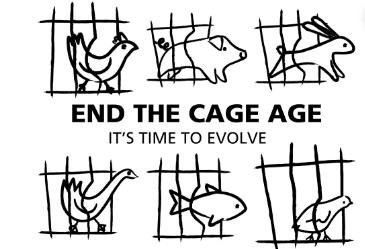
It followed the first ever successful European Citizens’ Initiative (ECI) to ‘End the Cage Age’, which was signed by an overwhelming 1.4 million EU citizens and supported by a coalition of 170 NGOs led by Compassion.
ECIs were introduced with the specific purpose of giving citizens more influence over EU decision making and the tool is described by the European Commission as “a way for you and other Europeans to take an active part in EU policy-making”.
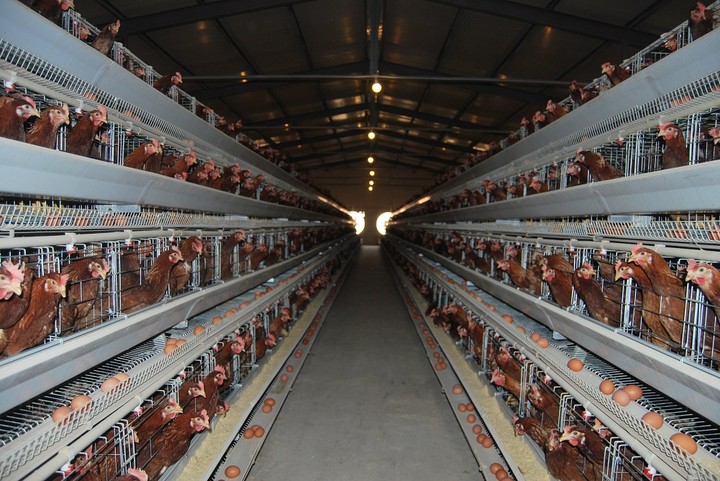
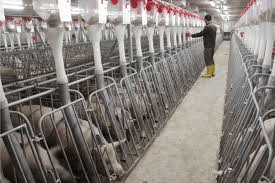
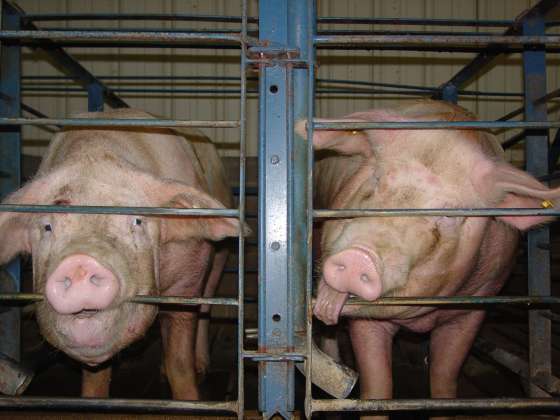
Pregnant sows are forced to nurse their piglets in crates so small they can’t even turn around; chickens can’t spread their wings, and along with countless rabbits and quail will spend all their lives in barren cages.
In October last year, the European Commission’s own Eurobarometer survey revealed that an overwhelming nine out of ten, or 89% of EU citizens — around 400 million people — believe animals should not be farmed in individual cages.
The Commission’s own scientific advisers, the European Food Safety Authority, have also backed the phasing out of cages on welfare grounds for pigs, dairy calves, laying hens, ducks, quail and rabbits.
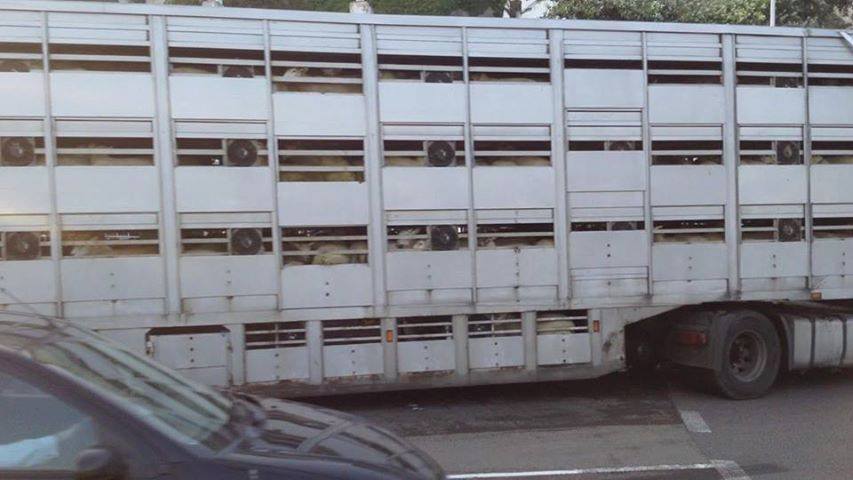
Meanwhile, more than 300 million pigs, hens, rabbits, ducks, quail and geese continue to suffer confinement and misery in cages across the EU each year.
Pregnant sows are forced to nurse their piglets in crates so small they can’t even turn around; chickens can’t spread their wings, and along with countless rabbits and quail will spend all their lives in barren cages.
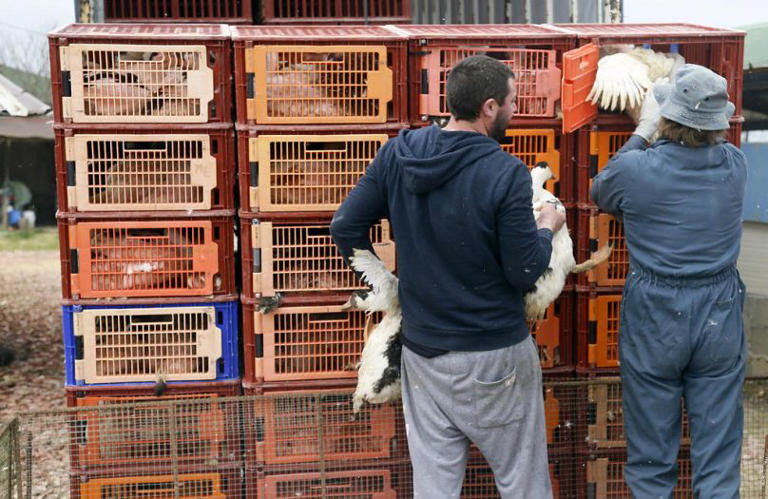
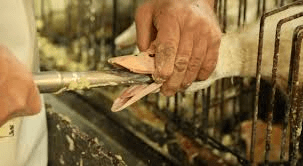
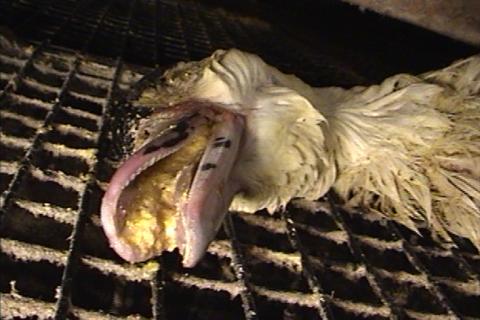
Ducks and geese are caged for force-feeding to produce foie gras.
How did the ban get derailed?
In September, we hoped to hear European Commission President Ursula von der Leyen set out the plans to deliver the ban in her State of the Union speech.
Instead, what we heard were words that echoed the letter she received from the farming federation Copa Cogeca. It seems she caved into pressure from the agriculture lobby to put the ban on hold.
Together with my colleagues in End the Cage Age Citizens’ Committee, we have made repeated requests to meet with the president on behalf of the millions of EU citizens who support the cages ban, without success.
The cages ban — part of the Commission’s excellent Farm to Fork strategy to meet climate and nature obligations — also has the chance to provide wider environmental and socio-economic benefits.
Yet, last October, an investigation from Lighthouse Reports revealed that “an increasingly assertive meat industry helped derail a historic democratic demand to improve animal welfare standards in the EU”.
We simply cannot allow the powerful farming lobby to have preferential access to decision-makers to influence them to backtrack on promises they have made to citizens.
This is particularly unjust when those citizens have followed the very process designed to give them more influence over EU decision-making. As a result of this injustice, both animal welfare and democracy are now at stake.
There is simply no justification for any further delay. All the appropriate preparation, assessments and consultations have already been carried out by Commission officials and the proposals make strong provision for financial support to help farmers transition to cage-free systems during a phase-out.
This measure is backed by the animal welfare movement who believe public subsidies should be redirected to reward farmers for transitioning to high welfare and nature-positive systems that benefit society.
Pursuing legal action is not a choice we have taken lightly, but we cannot allow the European Commission to break its promises to citizens, making a mockery of democracy in the process.
The cages ban — part of the Commission’s excellent Farm to Fork strategy to meet climate and nature obligations — also has the chance to provide wider environmental and socio-economic benefits.
A report from the Institute for European Environmental Policy found that the ban would have greater sustainability benefits.
In addition, it concluded that the current discrepancy between legislation in member states was leading to uneven market conditions across the EU, and that a level playing field should be created.
Democracy is not to be mocked
Pursuing legal action is not a choice we have taken lightly, but we cannot allow the European Commission to break its promises to citizens, making a mockery of democracy in the process.
Most importantly, we cannot stand by silently while millions of animals continue to suffer in cages. Caving into the big agriculture lobby and continuing to use taxpayer funds to prop up this damaging sector is not helping citizens, or the majority of small-to-medium-scale farmers.
The hope is that this ground-breaking legal action — launched on behalf of millions of supportive EU citizens as well as the voiceless 300 million animals still suffering every day in cages — will speed up the ban and ensure that every cage is an empty cage.
We will not rest until we end the Cage Age.
Olga Kikou is Head of Compassion in World Farming EU, the leading farm animal welfare organisation dedicated to ending factory farming and achieving humane and sustainable food production.
National parks are some of our country’s most beautiful landscapes, combining stunning scenery and beautiful wildlife.
Unfortunately, all is not as it seems. Hunters with packs of hounds maraud across the parks, chasing and killing wildlife, causing havoc to the public and the environment.
This fundamentally undermines the National Park Authorities’ aims to protect its land and preserve its flora, fauna, and wildlife for future generations.
In plenary today, Members of the European Parliament urged the European Commission (EC) to come forward with the outstanding legislative proposals on animal welfare, the future of which remains uncertain. They stressed that the delay is putting the credibility of European institutions in question, as citizens’ demands remain unanswered.
The EC had committed to publish four animal welfare proposals by the end of 2023, but backtracked from this promise by only publishing an unambitious Transport Regulation, and not putting forward the promised Kept Animals, Slaughter and Labelling regulations. The proposals were also set to include phasing out cages by 2027, in reply to the End the Cage Age ECI in which 1.4 million citizens asked for a transition to cage-free systems.
During the plenary today, a record number of MEPs (41) intervened in the oral question tabled by Neils Fuglsang (S&D, DK). 30 MEPs stressed that while the EC continues to delay action, millions of animals continue to suffer in horrible conditions across all stages of their lives; from farm to transport to slaughter. They criticised the EC for doing “very little”for animal welfare in the past legislative term, and questioned the democratic aspect of ECIs if policymakers do not react to the demands of the citizens. “You are letting down 3 million citizens,” many reiterated, making reference to the End the Cage Age and Fur Free Europe ECIs – both of which remain pending action by the EC.
They urged the EC to come forward with a concrete timeline and answer to the demands of millions of EU citizens.
Elisa Ferreira, Commissioner for Cohesion and Reforms, while admitting that more needs to be done for resilient food systems, said that work on these legislative files is “still ongoing”, and the EC “is analysing the best course of action”. She did not make any commitments on timeline.
In the run-up to the European Elections, Eurogroup for Animals has launched the Vote for Animals campaign which encourages candidate MEPs to take a pledge for animals, while informing citizens about the importance of these elections for progress on animal welfare.
The EC broke its promise on presenting the animal welfare legislation package. And while we wait for a clear timeline, millions of animals continue to live in cages, male chicks continue to be gassed at a day old, while chickens are bred to grow so fast their bodies cannot keep up. These animals deserve a legislative proposal, but there is none. We call on the EC to present a concrete timeline.
MEP Neils Fuglsang (S&D).
What has happened to the promised legislation?
What about the ban on cages?
We have been fighting for years.
How long will these animals have to wait? Not a day longer.
MEP Anja Hazekamp (The Left)
Not answering to the demands of ECIs would threaten the credibility of EU institutions – the animal welfare legislation should be a priority in the next mandate. We are disappointed – we need to see changes.
MEP Tilly Metz (Greens/efa)
The ECI is an excellent tool to improve democracy, but it only works if those who make the law react to what the citizens want. 1.4 million citizens asked for a ban on cages – more than four years have passed and 300 million animals continue to spend their lives in terrible conditions.
The omission of meat-eating reduction from proposals in a UN roadmap to tackle the climate crisis and end hunger is “bewildering”, according to academic experts.
The group also criticised the UN Food and Agriculture Organization’s report for “dismissing” the potential of alternative proteins, such as plant-based meat, to reduce the impact of livestock on the environment.
We say – Excellent ! – well done EasyJet for setting the standard we now want to see from other airlines also.
EasyJet has announced plans to change holidays, trips and excursions to make animal welfare a key priority of its business operations.
After consulting leading animal welfare charities including World Animal Protection, the tour operator has scrapped all tours that include animal-based attractions. This includes marine parks, zoos, animal performances, animal rides and sporting events involving animals.
There is a General Election on the horizon – almost certainly this year 2024.
Badgers have friends, and those friends have votes.
A new government plan to wipe out all badgers in certain areas has prompted a fresh row between officials and wildlife activists.
Badgers are blamed for carrying bovine tuberculosis (bTB), which forces dairy farmers to have infected herds culled.
The Department for Environment, Food and Rural Affairs (Defra) has back-tracked on earlier promises to end the badger cull, which began in 2013.
Instead, as revealed by The Independent last month, officials are proposing to allow 100 per cent of populations to be killed in “cluster” hot spots for the disease. Until now, the target was 70 per cent or above.
WAV Comment – I have enjoyed the majestic Sequoia on my travels around California in the past.. Back home here in England; there is a local park approx 2 miles from my house. Here they have a mighty Sequoia which must be 30. 40, 50 ? years old; it is huge. The following from the BBC relates to very recent info:
Giant sequoia trees, first imported to the UK 160 years ago, are flourishing despite the dramatically different climate to their native California, a new study has found.
The huge trees, which are declining in numbers in California due to increasing heat, are adapting well to the British climate and growing taller, according to a study conducted by UCL researchers.
As a new report stresses that Europe is not prepared for rapidly growing risks related to climate change, the EU action plan should include concrete policies that reduce the number of animals farmed for food, prioritising resilient farming practices with higher animal welfare and supporting a shift to plant-based diets.
In response to the publication of the first-ever European Climate Risk Assessment by the European Environment Agency (EEA), which analysed the risks of climate change in the EU and the areas which need to be imminently addressed, the European Commission (EC) has issued a Communication putting forward suggestions for actions in six impact clusters, among which are ecosystems and food.
Among the most severe risks that Europe is facing are the ones related to crop production: two-thirds of the EU’s agricultural land is used for animal production, of which most is for the production of crops for intensively farmed animals. Future-proof and nature based solutions can only be achieved by raising fewer animals with higher welfare conditions. This is supported by a Harvard Law School study, published today, that clearly states that emissions from livestock production should fall rapidly as of 2025.
While the EEA report clearly highlights that current EU policies fail to address climate risks effectively, the future of important EU legislative commitments that would improve resilience, such as the revision of the animal welfare legislation and the sustainable food systems framework, remain uncertain.
The EC Communication recognises that actions towards sustainable agriculture and fishing will not be enough to address climate risks, and there is a need for long-term policies that support dietary shifts, making healthy and sustainable food affordable and accessible. It is therefore disappointing that the recently published 2040 climate target does not sufficiently recognise the role of shifting diets, or the significant impact of agricultural emissions from animal farming.
With growing evidence that systematic shifts are required to address climate risks to food production, ecosystems and health, increased EU efforts and binding policies that can support this transition are imperative.
Repeatedly, science shows us that maintaining the status quo is not an option. Only by raising fewer animals with higher welfare conditions and creating food environments that support dietary shifts can the EU truly address imminent climate risks. Unfortunately the proposed derogations in the CAP’s environmental measures will lead us further away from climate change adaptation and resilience. To support the transition and investments in future-proof solutions, the EC must come forward with the promised legislative proposals on animal welfare and the framework for sustainable food systems, without further delays.
Camilla Björkbom, Food Policy Political Adviser, Eurogroup for Animals.
‘Persistent animal welfare violations’: Aquarium that housed Lolita the orca faces eviction
Freida Frisaro And David Fischer
Fri, 8 March 2024
The Miami Seaquarium, an old-Florida style tourist attraction that was home to Lolita, the beloved Orca that died last year, is being evicted from the waterfront property it leases from Miami-Dade County.
County Mayor Daniella Levine Cava cited a “long and troubling history of violations” in a lease termination notice sent on Thursday to the chief executive officer of The Dolphin Company, which owns the Seaquarium. The company was told to vacate the property by 21 April, according to the letter from the mayor’s office.
“They have been the subject of continuous violations, including decaying animal habitats, lack of veterinary staff and a lack of other experienced staff,” Levine Cava said during a news conference Thursday.
“Our number one priority continues to be the safety and wellbeing of the animals,” the mayor said.
Seaquarium deemed ‘unsustainable and unsafe’
Seaquarium officials sent a letter last month to Levine Cava, inviting her to visit the park so she could witness the animals’ wellbeing for herself. The county had advised the park in January that they were looking to terminate the park’s lease following a review from the US Department of Agriculture, which regulates the treatment and care of captive animals.
Eduardo Albor, CEO of The Dolphin Company, showed up at the news conference and told reporters he doesn’t understand why the mayor has refused invitations to the Seaquarium.
“How can she say that she’s concerned about the animals when she has never come to the Miami Seaquarium in two years?” he asked.
Levine Cava said during the news conference that representatives of the county’s parks department have made regular visits to the park over the past year and a half.
“The current state of the Miami Seaquarium is unsustainable and unsafe,” Levine Cava said.
The Seaquarium could fight the eviction
The Seaquarium could still fight the eviction. A judge would need to declare the park in compliance with their lease.
Albor said on Thursday that he plans to let his lawyers respond to the eviction notice.
“I will just let our lawyers defend our rights because it is offensive to speak about my people,” Albor said.
The action follows a series of federal inspections that found multiple problems at the Seaquarium, including unsafe and structurally deficient buildings.
“The US Department of Agriculture’s reports since 2022 also consistently identified that several structures have not been maintained properly, and that creates dangerous conditions and in many cases have resulted in injury,” the mayor said.
The Seaquarium was home to Lolita the orca
The Dolphin Company, based in Mexico, had agreed to help move Lolita to a natural sea pen in the Pacific Northwest when it took over ownership of the Seaquarium in 2022. Lolita, also known as Tokitae, or Toki, died on 18 August at age 57.
Animal rights activists had sought Lolita’s freedom for years. The orca spent much of her life in tank a that measures 24 meters by 11 meters and is six meters deep, and stopped performing in shows at the Seaquarium in 2022.
A coalition that included Indianapolis Colts owner Jim Irsay worked on the plan to move Lolita back to the Pacific Northwest.
A necropsy cited kidney failure as the cause of Lolita’s death. The necropsy also found Lolita suffered from acute and chronic bronchointerstitial pneumonia and renal degeneration, as well a chronic condition of the heart implying the degeneration of the cardiac valves.
At long last, authorities are taking action against the persistent animal welfare violations at Miami Seaquarium.
“At long last, authorities are taking action against the persistent animal welfare violations at Miami Seaquarium,” says Dr Naomi Rose, senior scientist in marine mammal biology for the Animal Welfare Institute’s Marine Life Program.
“This run-down facility has been a blight on Miami for too long. We hope the zoo and aquarium community steps up to the plate to ensure all of the animals – the mammals, birds, fish – find acceptable homes in US facilities.”
The Seaquarium opened in 1955 overlooking Biscayne Bay and was among the first theme parks devoted to marine life. It garnered international attention in the 1960s when the television series ‘Flipper’ was filmed there.



















 World Animals Voice