Category: Environmental

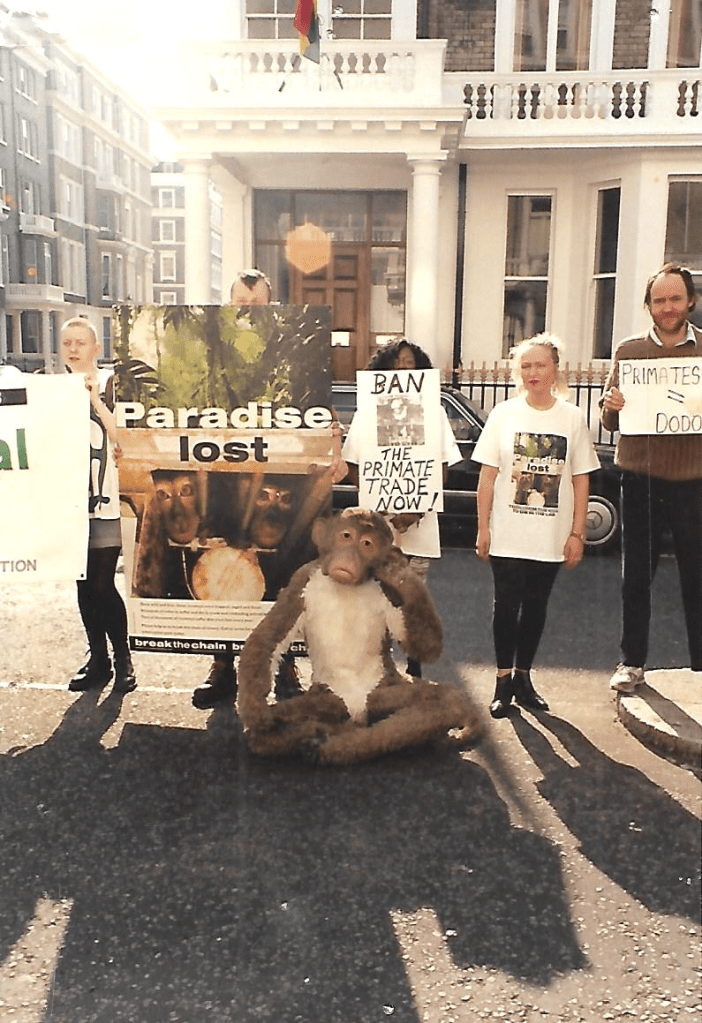
Still Paradise Lost.

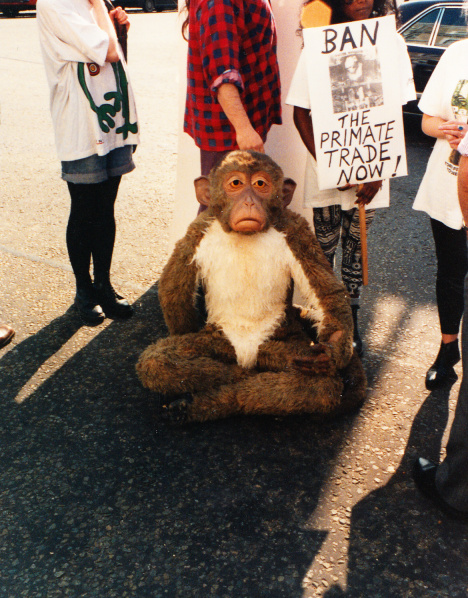
A lucrative underground trade risks undermining research, creating new pandemics and pushing a recently abundant species to the brinkIn 2019, Jonah Sacha, a researcher at Oregon Health and Science University, received a delivery of 20 monkeys from Mauritius. As part of his research into stem-cell transplants as an HIV treatment, he performs tests on long-tailed macaques.

Read full story at  $20,000 monkeys: inside the booming illicit trade for lab animals | Global development | The Guardian

Regards Mark

Angry  – just a bit; see:

UK / Mauritius: ‘Paradise Lost’ – 35 Years On (for us) and Mauritius Still Supplies Primates to the UK for Research. – World Animals Voice 

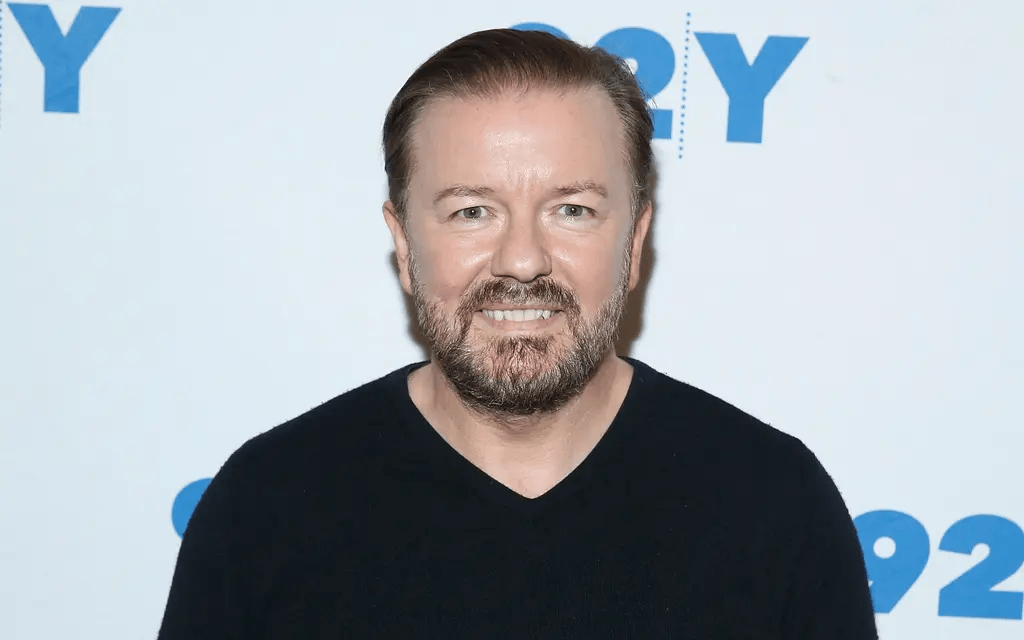
England: Ricky Gervais donates nearly £2 million to 11 animal charities worldwide from his latest tour !

Ricky Gervais donates nearly £2 million to animal charities

The comedian, who is vegan, has been a long-standing advocate for animal rights

Ricky Gervais donates nearly £2 million to animal charities | Evening Standard

Comedian Ricky Gervais has donated £1.9 million to animal charities across the globe. 

The stand-up and creator of television shows such as After Life and The Office, has donated a substantial sum raised from ticket sales from his latest Armageddon world tour

The money will be split equally between 11 worldwide animal charities that have been chosen by Gervais.

These include All Dogs Matter, Animal SOS Sri Lanka, Catastrophes Cat Rescue, Chaldon Animal Sanctuary, Dogs On The Streets, Helping Rhinos, Millions of Friends, Mira Dogs, Paws2Rescue, PDSA and Wild Futures. 

About the move, BAFTA, Emmy and Golden-Globe winning comic Gervais, 62, said: “I hope the dogs, cats, rhinos and monkeys invest this money wisely, because when my career goes tits up I’ll need it back.” 

In an effort to take action against ticket touts, Platinum Tickets for the Armageddon tour went on sale to guarantee premium seats at market rates, with the extra profits from these ticket sales going to Gervais’s animal charities.

Gervais, a vegan, is a long-standing supporter of animal rights and has put his name to various initiatives in the past. 

Earlier this year, he supported a campaign to end bear bile farming in Vietnam, where bears, trapped in small cages, are subjected to a painful method of extracting bile for use in traditional medicine.

Top man !

Regards Mark

EU: Survey: wolves should be strictly protected, majority of rural inhabitants say.

30 November 2023

Press Release

Large carnivores, including wolves, should remain strictly protected within the EU, and have a right to co-exist with humans, say an overwhelming majority of rural inhabitants across 10 EU Member States.

Wolves are currently at the risk of having their protection downgraded, as the European Commission is currently assessing ‘evidence’ generated by an irregular public consultation process initiated in September 2023, which could lead to a proposal to do so. This move would jeopardise efforts made in the last years for the recovery of wolves in Europe.

The survey, released today, highlights that many rural inhabitants are supportive of protecting wolves and other large carnivores, with 68% stating that they should be strictly protected and over two-thirds (72%) agreeing that they have a right to co-exist.

The farming and hunting lobby have consistently been pushing for the protection status of wolves to be downgraded. Yet a very low proportion of respondents indicated that they feel well-represented by hunting (12%) and farming (18%) interest groups. 

66% of respondents said that decision-makers, including EU institutions, should prioritise the conservation of large carnivores, with 65% saying that the killing of individual problematic large carnivores should only take place if it can be proved that adequate protection measures have been implemented and failed. Almost 7 in 10 respondents (69%) expressed that the benefits and functions of large carnivores should be considered in decisions related to their management. Wolves, as an example, play a crucial role in regulating prey populations, preventing overgrazing, and ultimately contributing to healthier ecosystems. The survey identified environmental protection for future generations (80%) and conservation of biodiversity (78%) as important priorities for the European Union.

While the risk of attacks by wolves and other large carnivores remains extremely low and can be further reduced by behaving appropriately in the event of such an encounter, the survey clearly highlights a need for greater awareness, with 62% of respondents saying that they would feel safer if they better understood how wolves and bears behave and how to scare them off if they had an encounter.

Tools to prevent and compensate for the economic damage caused by wolves to farmed animals are available, and in light of these results, we call on the European Commission and other EU institutions to listen to the voice of rural communities, as provided in the long-term Vision for the EU’s Rural Areas, maintain the strict protection status of wolf populations and continue to implement an ambitious Habitats Directive.

The return of the wolves in Europe is a cause of celebration, not of fear. Despite the narrative being presented by some, the results of this survey clearly highlight that the majority of those living in the proximity of wolves support their protection status and are willing to co-exist. Sound data, and the recognition of  the importance of conservation and biodiversity should drive the European Commission’s decisions and not the interest of a few.

Reineke Hameleers, CEO, Eurogroup for Animals

The loudest voices in the chorus calling for the removal of the protection status for wolves have thus far been the farming and hunting lobbies. They have positioned themselves as representing the interests of rural communities. Yet, the results of this survey strongly suggest that many EU citizens living in rural areas are keen to uphold legal protections for such large carnivores, and support peaceful coexistence with these animals. It is vital that these rural voices are also heard by the European Commission and that ecologically important species like wolves are not declared fair game due to a failure of some to accept that it is necessary to coexist with them.

Joanna Swabe, Senior Director of Public Affairs, Humane Society International/Europe.

Regards Mark

EU: NGOs demand action for sustainable food systems.

6 December 2023

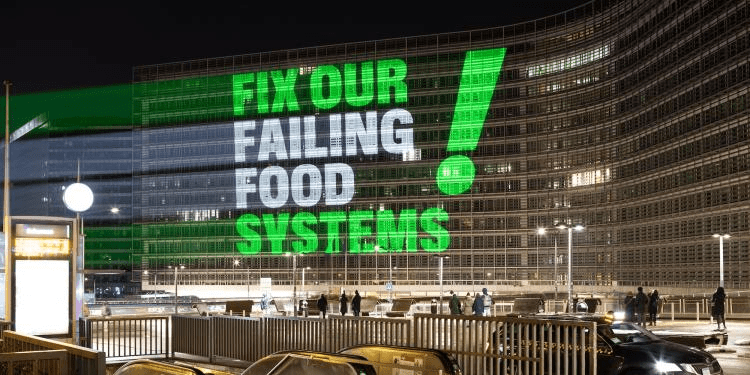
On Sunday night, the European Commission headquarters in Brussels were lit up with bright lights beaming a clear message to EU policymakers: fulfil your promises on the Farm to Fork Strategy and the urgent transition toward sustainable food systems.

Against the backdrop of the EU Agricultural Outlook conference, a major European Commission event on food and farming, some of Europe’s largest green NGOs and consumer associations joined forces to call out the European Commission on its failure to deliver both its promised proposal on the framework law for sustainable food systems (SFS) and its revision of the outdated animal welfare legislation. 

As a cornerstone of the EU Green Deal, the Farm to Fork Strategy included a series of vital policies and initiatives to address the growing overlapping crises surrounding the state of our environment, people’s health, and the welfare of animals.

The action’s name “Broken Promises” hints at the State of the Union speech Commission President Ursula von der Leyen delivered last September. The speech’s motto was “Promises kept”, which is only partly true. While the Commission has shown partial commitment to delivering on some policies, two major promises remain glaringly absent: the framework law for sustainable food systems (SFS Law) and the revision of the animal welfare legislation.
 

Intensive unsustainable farming systems are the cause of immense animal suffering. Chickens, fish, pigs, and many more species are being treated as commodities and products in order to produce cheap and unhealthy meat and dairy as quickly as possible. Evidence shows that this industrial system harms everyone: animals, the planet and humans. As showcased by many ECIs and polls, citizens want change. And the good news is that change is perfectly possible if policymakers dare to take the right decisions and challenge the harmful status quo. Frontrunners in animal farming are leading the way. The time is now for the European Commission to make a firm commitment and make progress on the legislation.

Reineke Hameleers, CEO, Eurogroup for Animals

A food system which is making unhealthy diets the norm is not only causing ill health for consumers across Europe, it is also harming our planet. This same system has allowed food waste in Europe to pile up to record levels, at a time when more and more Europeans are going to bed hungry. The EU must do everything it can to make the sustainable food choice the easy, attractive, and affordable one. And the SFS law is the first step to do so.

Monique Goyens, Director General, European Consumer Organisation (BEUC)

Instead of promoting the health of people and planet, our food systems contribute to a huge burden of ill health and early death, it massively increases the risk of anti-microbial resistance, and contributes to climate change and environmental degradation. The EU must urgently recraft its food systems so that human and planetary health are protected. Making healthy sustainable food choices the easy, default option IS an option.

Dr Milka Sokolovic, Director General, European Public Health Alliance

A key pillar of the European Commission’s Farm to Fork Strategy, the SFS Law is a unique opportunity for this European Commission to pave the way for a future where everyone has access to healthy and sustainable food, farmers are supported, ecosystems are protected, and animal rearing is not defined by suffering. The Commission must fulfil its duty to people and planet and deliver this vital proposal – as well as its promised revision of EU animal welfare legislation – before the end of its mandate.

Faustine Bas-Defossez, Director for Nature, Health and Environment at the European Environmental Bureau

Regards Mark
UK: Cop28 – ‘The Earth does not belong to us, we belong to the Earth.’ Kings Message To All.

The King issued a call to arms, warning dangers facing us are ‘no longer distant’ 

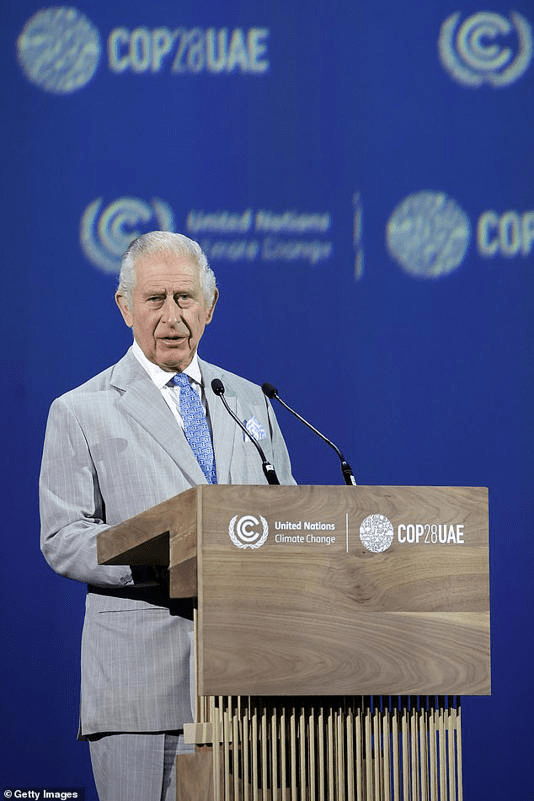
King Charles warned yesterday that man is carrying out a ‘vast, frightening experiment’ on the planet and our grandchildren ‘will be living with the consequences of what we did or didn’t do’.

In his opening speech to the Cop28 climate summit in Dubai, the monarch issued a call to arms, warning that the dangers facing us ‘are no longer distant risks’ and urging global leaders to commit to ‘transformational action’

Photo – Getty Images.

The King was the only head of state to be independently invited to address the gathering of world leaders in recognition of his lifelong environmental campaigning.

Once derided as a green eccentric, many of his beliefs such as organic farming and campaigning against plastics in the ocean have become mainstream policy.

Speaking to more than 60 prime ministers, politicians and presidents, Charles said: ‘I have spent a large proportion of my life trying to warn of the existential threats facing us over global warming, climate change and biodiversity loss.

Read on:

The King warns that man is carrying out a ‘vast, frightening experiment’ on the planet and our grandchildren ‘will be living with the consequences of what we did or didn’t do’ (msn.com)

Regards Mark

NO less than 57 animal rights organisations have for the first time made an official complaint to the European Ombudsman.

Animal rights organisations register European complaint (euroweeklynews.com) 

NO less than 57 animal rights organisations have for the first time made an official complaint to the European Ombudsman.

Basis of complaint

This complaint concerns the European Commission’s failure to fulfil its commitment to a European Citizens’ Initiative in which 1.4 million people demanded a ban on the cages used to house a number of different domestic animals.

In its response to the European Citizens’ Initiative published in June 2021, the European Commission confirmed that, by the end of 2023, it would present a legislative proposal to phase out and eventually ban the use of cages for chickens, calves, rabbits, ducks, breeding sows and other species.

The reason for this complaint is that the most recent agenda for the rest of the political legislature was missing the Regulation on Captive Animals, which the plan should have included.

According to one of the complainants, Spain’s AnimaNaturalis, before backtracking on its promise, the EC repeatedly confirmed that it was working towards the 2023 timeline, and Health and Food Safety Commissioner Stella Kyriakides made multiple public mentions of this date in EC responses to questions.

“ The EC has not acted in accordance with the rules governing European Citizens’ Initiatives after raising legitimate expectations among European citizens. These deficiencies present a case of maladministration, both in light of the EU Regulation and the very reason for being of the European Citizens’ Initiatives as an instrument of transnational democracy,” observed Cristina Ibáñez, lawyer and spokesperson for AnimaNaturalis .

Should fur be banned?

In addition to the cages, 1.5 million people also requested a ban on the fur industry and the marketing of fur products on the European market which legislation was expected to have been included in the Regulation on captive animals.

While regulation to phase out cages remains pending, an estimated 700 million farm animals continue to suffer in cages in Europe according to the complainants.

Regards Mark

“I’m a dickhead, put me into the trough with all the other ‘has beens”

WAV Comment – Get me out of here is just the most pathetic, animal abusive shows you could ever imagine.  Ant and Dec, the presenters; plus the dim wit producers think that it is a real laugh each week for past it has been celebs to eat bugs, sheep eyes and testicles; camel penis, etc etc.

There is nothing funny, or even tv worthy about this show; it just brings together all the dregs of tv under the control of dreg producers.  It should be taken off air.

I propose the programme should be re named “I’m a dickhead, put me into the trough with all the other ‘has beens’”

Take a look:

Real pathetic !!

Mark

The founder of a leading animal charity has shared that she has changed her will to leave her BUM to I’m a Celebrity… Get Me Out Here! producers.

The change comes from PETA founder Ingrid Newkirk who is in protest over the show’s treatment of animals.

Newkirk shared that she hopes to challenge the “cruel and tasteless stunts” on the ITV show that involve live and dead animals.

Discussing the act, the PETA founder said: “The camels, kangaroos, sheep, and other animals whose body parts are served up have more dignity than the moronic producers of this vile show, who think nothing of disrespecting, exploiting, or killing animals for a lark.”

It’s not the first time I’m a Celebrity has faced criticism for their use of animals, with reports that Ofcom has previously received 10,000 complaints over the ITV’s show use of animals. 

Read more:

Animal rights activist to give her bum to I’m a Celebrity producers (msn.com)

Regards Mark

Spain: Lots of (What Should Be Public) Info Being Held Back By Authorities? – NGOs Gather in Gran Canaria to Celebrate Octopuses and Protest Planned Farm.

20 November 2023

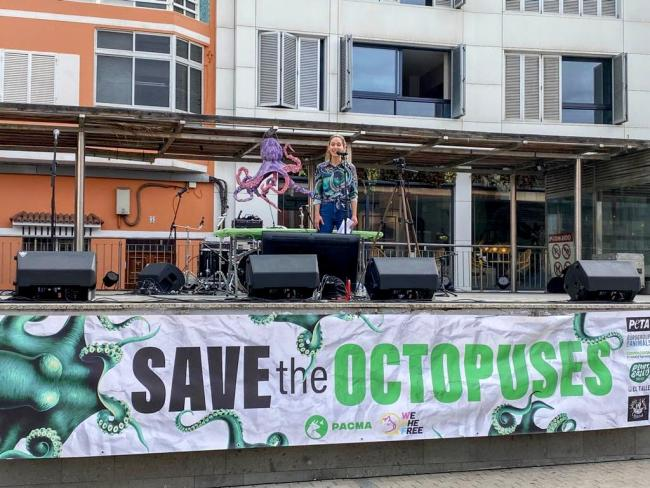
Animal welfare and environmental organisations came together on 4 November to spread awareness about the sentience of octopuses, and inhumane plans for the world’s first octopus farm.

Organised by PACMA and We The Free, the first annual International Save the Octopuses Fest was held in Las Palmas de Gran Canaria. The event took place close to the planned site of Nueva Pescanova’s octopus factory farm. 

Scientific experts and activists took to the stage to speak about magnificent, intelligent, and complex octopuses. Among these experts were Dr. Elena Lara from Compassion in World Farming and Keri Tietge from Eurogroup for Animals. This was in stark contrast to the repeated mentions of unethical farming practices, industrial-level suffering, and environmental destruction.

As summarised in our case study released earlier this year, there are numerous concerns around Nueva Pescanova’s farm. Notably, there is currently no effective method for reducing the amount of pain these animals will feel when they are killed for human consumption.

During a panel discussion with the experts, there was a lot of frustration related to one issue; why is there a lack of transparency with the local community?

The Canary Islands government has not updated the public regarding the status of Nueva Pescanova’s octopus farm

Before construction of an industrial aquaculture facility begins, there are several permit processes that must be adhered to. These processes relate to both EU and national legislation and, in theory, allow for public participation at several different stages.

In the case of Nueva Pescanova’s farm, everything has been kept quiet.

In September 2023, it was revealed that Nueva Pescanova’s simplified environmental impact assessment was denied. This means the autonomous body in charge of conducting the environmental evaluations concluded that there could be significant threats to the environment. Nueva Pescanova now must undergo the more exhaustive environmental impact assessment process.

Scientists and campaigners around the globe have already warned about the significant environmental damages that could come from this farm, but what is alarming is the lack of publicly available information about this process. The Canary Islands government is legally obligated to share notifications about such developments, which has still not happened. 

This lack of transparency may be related to the suspected usage of EU public funding for the farm,  which has not been disclosed by national authorities in Spain.

The EU parliamentary elections are just around the corner. It is critical for citizens to participate in order to bring voice to aquatic animals, including octopuses.

We know that farming octopuses simply cannot be done in a humane manner.

It is also clear that this new industry goes against the EU’s Strategic Aquaculture Guidelines and would exacerbate a wide range of sustainability issues. Now is the opportune time to ensure that the EU acknowledges the overwhelming scientific evidence and protects these fascinating and unique animals. 

—————————————————————————

Sounds as if they are doing all they can to stop NGO and the public from obtaining the truth – now the info is known we will have to see what happens next.

Regards Mark

South Africa: New Study Shows That Tourists Are Willing To Pay For A Total Ban On Trophy Hunting To Protect Wildlife In South Africa.

A joint team of UK and South African researchers carried out a survey on public opinion toward trophy hunting. The survey involved 1,000 people from countries that most frequently visit South Africa, both from within the African continent and overseas. It indicated universally strong opposition to the killing of South Africa’s lions for sport and revealed a desire to finance the protection of the nation’s iconic wildlife through paying a ‘lion protection fee.’

The key findings of the research revealed that 84.2% of those surveyed stated that being asked to pay an inbound tourist ‘lion protection fee’ was a ‘good’ or ‘great’ idea. The highest support was from overseas with the UK, U.S., and many European Countries in favor at 92.3%. Those who live in Mozambique were in favour at 88.9%.

Continue reading at:

New Study Shows That Tourists Are Willing To Pay For A Total Ban On Trophy Hunting To Protect Wildlife In South Africa – World Animal News

Regards Mark

Cool Cat !