Category: Environmental

South Africa: New Study Shows That Tourists Are Willing To Pay For A Total Ban On Trophy Hunting To Protect Wildlife In South Africa.

A joint team of UK and South African researchers carried out a survey on public opinion toward trophy hunting. The survey involved 1,000 people from countries that most frequently visit South Africa, both from within the African continent and overseas. It indicated universally strong opposition to the killing of South Africa’s lions for sport and revealed a desire to finance the protection of the nation’s iconic wildlife through paying a ‘lion protection fee.’

The key findings of the research revealed that 84.2% of those surveyed stated that being asked to pay an inbound tourist ‘lion protection fee’ was a ‘good’ or ‘great’ idea. The highest support was from overseas with the UK, U.S., and many European Countries in favor at 92.3%. Those who live in Mozambique were in favour at 88.9%.

Continue reading at:

New Study Shows That Tourists Are Willing To Pay For A Total Ban On Trophy Hunting To Protect Wildlife In South Africa – World Animal News

Regards Mark

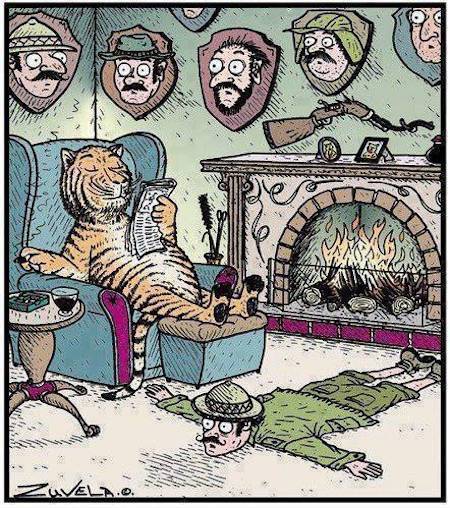
Cool Cat !

UK: Hopefully More Good News – An Official UK Ban On Live Animal Exports / Transport.

https://www.ciwf.org.uk/news/2023/11/bill-to-ban-live-exports-welcomed

Above Photos – Mark.

WAV Live exports links:

https://worldanimalsvoice.com/?s=live+animal+exports

https://worldanimalsvoice.com/2023/01/30/england-1-2-23-remembering-jill-a-brief-insight-the-live-exports-battles-of-se-england-to-be-a-voice-for-the-voiceless/

and dear friend John:

After years of campaigning by many animal welfare organizations, the announcement of a ban on live exports is a significant moment in the history of the animal welfare movement in the United Kingdom.

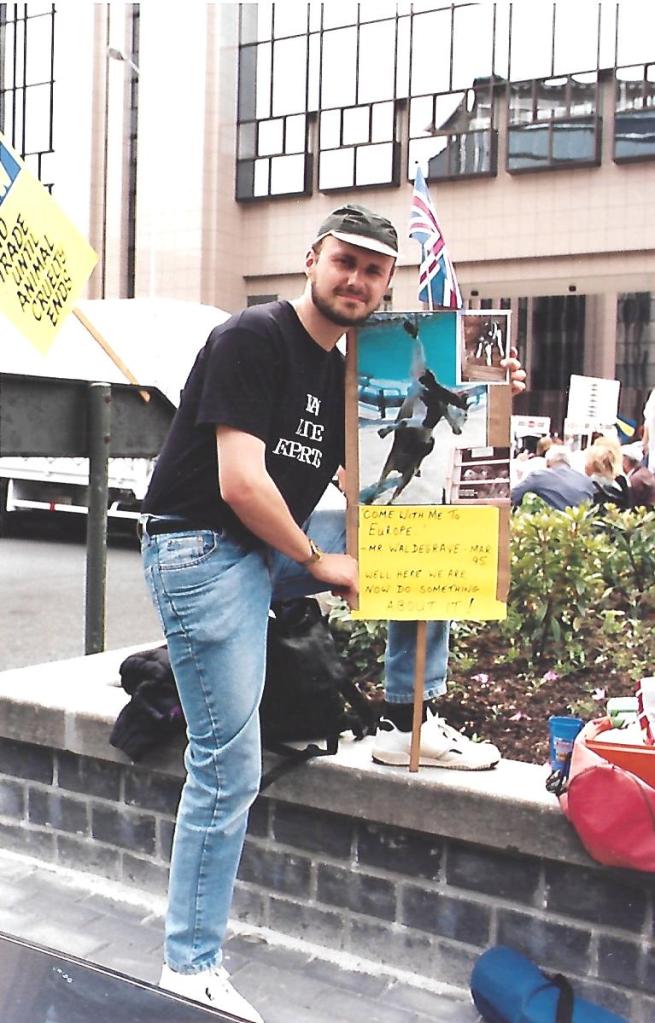
Above – more fighting at the EU, Brussels, Belgium.

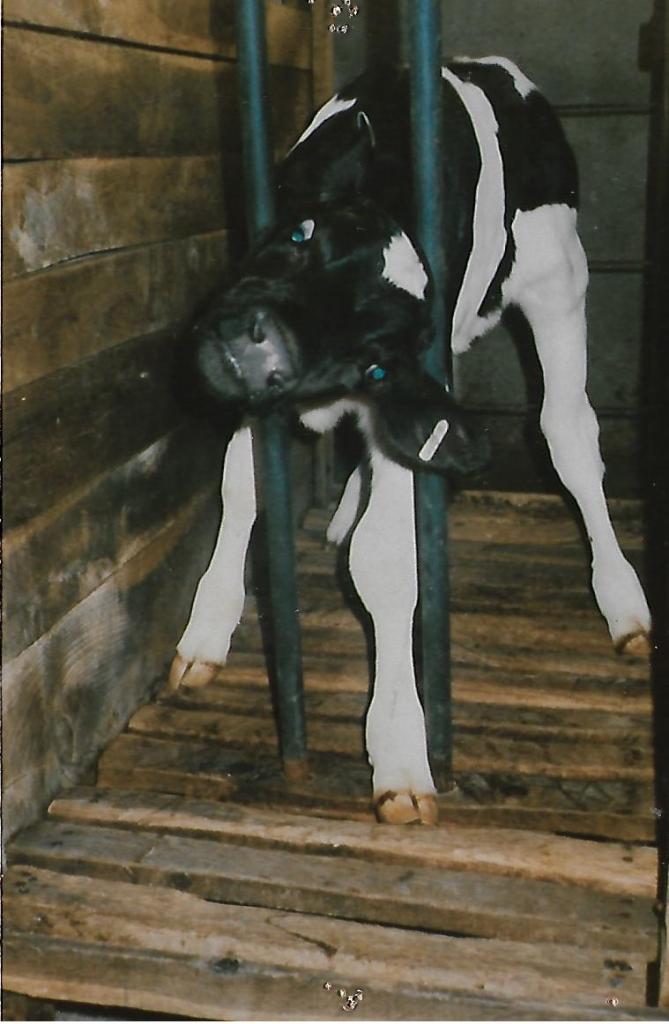
The Animal Welfare (Livestock Exports) Bill will prevent the horrendous shipment of calves and other farmed animals for days or even weeks on unsuitable transport vessels that have seen dreadful accidents in the past with thousands of animals dying.

Unweaned calves that were sent from the UK to Spain for fattening suffered from injury, stress, and exhaustion. Global animal welfare organization FOUR PAWS said that it would fortify its efforts to advocate in next year’s EU elections, where a revision of Animal Welfare legislation is more than overdue.

“The last few years have seen too many fatal accidents with farmed animals being transported alive with countless documented infringements against existing legislation that are not prosecuted. The suffering the animals have to endure due to excessive temperatures in cargo, nonexistent veterinary care, and a constant shortage of water and feed is unimaginable,” said Corinna Reinisch, Program Lead Farm Animal Welfare at FOUR PAWS.

“Therefore, this milestone announcement in the UK shines a light on the upcoming proposals for transport that the European Commission has announced for December of this year. Eventually, the EU Parliament and the Council of the EU have to take those proposals, which raise the significance of live animal transport forward in the upcoming EU elections in 2024,” continued Reinisch. “This strong signal shall be the door opener for an urgently needed improvement for billions of farmed animals that are transported outside the EU to third countries every year. FOUR PAWS keeps advocating for animal welfare worldwide.”

Every year, millions of cows, pigs, birds, and sheep are exported from the EU to non-EU countries. This year alone, there have been several fatal accidents with animals being transported. After a three-month ordeal through the Mediterranean Sea, around 1,600 young bulls were killed in Spain after the transport ship Elbeik was not allowed to enter the Middle East due to feared bluetongue cases among the bulls on board. Almost 900 young bulls from the transport vessel Karim Allah experienced the same fate some weeks earlier, and only recently, 14 sheep died after the Phoenix III was stuck off the Italian coast due to bad weather conditions.

Link:

King Charles Announces Ban On The Live Export Of Animals For Slaughter In The UK In New Legislation – World Animal News

Regards Mark

Words from the recent past:

I (Mark) have fought the export of live animal exports from the UK (via English ports) for around 35+ years.  A ‘been there; done it; got the T shirt’ type of scenario.  Over those 30 or so years the ‘fight’ has taken me into Europe investigating the trade; to the EU no good hierarchy in Brussels; and to many ports around England which, to their regret, got involved with the live export trade.

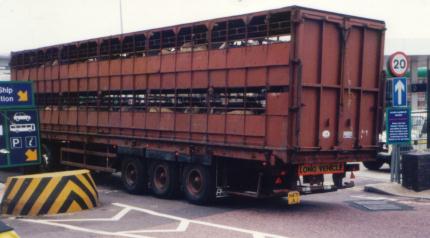
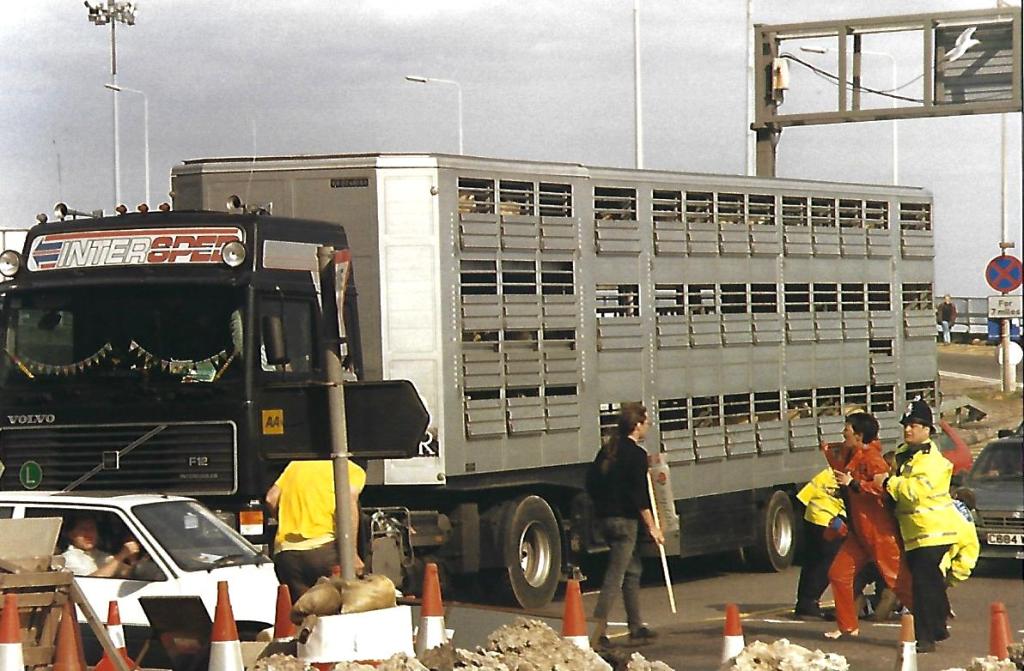
We have experienced the countless, wet; windy; cold and tearful nights at the docks; bearing witness to all the suffering – the noise of the calves having travelled from all over the UK; the smells of days old urine on the transporter floors; and the sights of helpless animals (pigs, sheep, calves and horses) through the slats on their way to meet barbaric deaths in the far corners of Europe and beyond.  Yes, despite Ministry promises; horses were exported to Europe under the guise of going for riding; when in fact they were going for slaughter.  How can I say this ? – one way or another I got the paperwork (export certificates) and we trailed the transporters into Europe.  The Ministry said one thing; and we had the evidence for another.  See more on it all at:

About Us. | Serbian Animals Voice (SAV)

The corruption of the system bummed me off enough; that one night; after witnessing the horses going out through an English port; I had to get something down to show what an utter sham it was – hence:

Microsoft Word – EXH6.doc (wordpress.com)

Sometimes you worked alone; for me also, sometimes with a female campaigner; sometimes more; and I cannot even start to count all the wonderful folk that have shared this journey of compassion with me – folks who; if you need it; would give you the shirt off their back to help you out. 

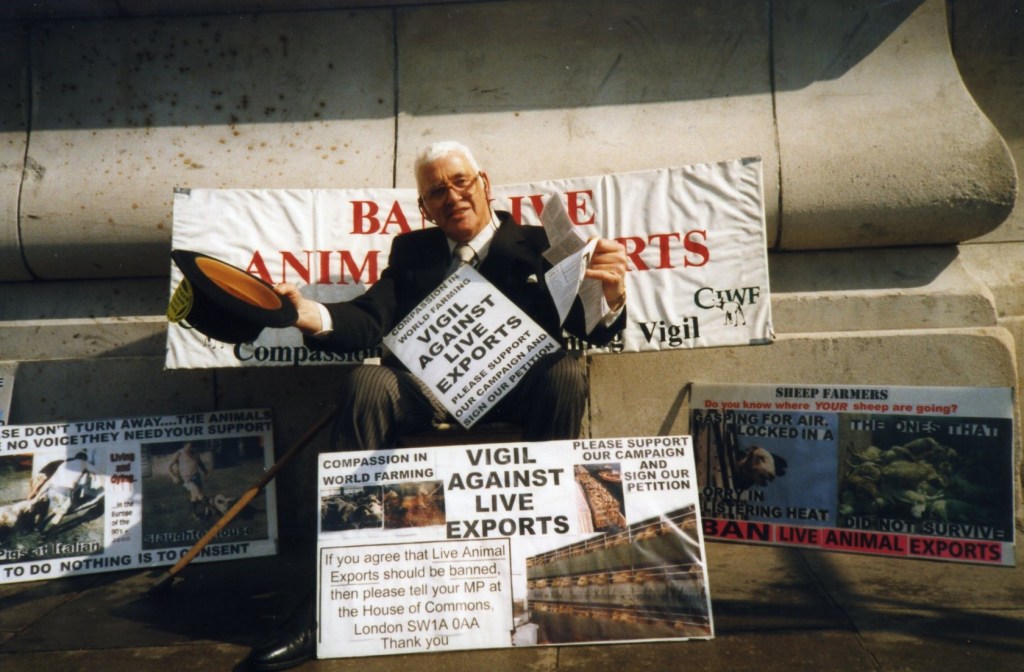
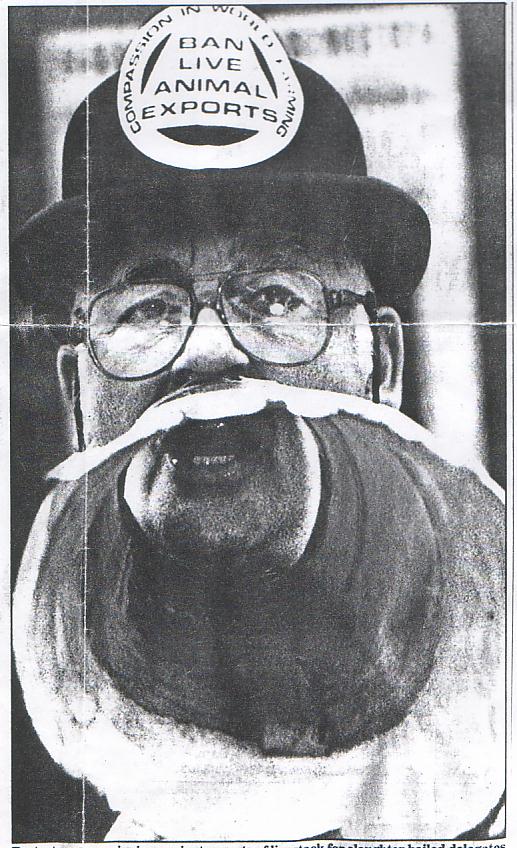
I lost a wonderful campaigner friend; Mike Tucker; see his photo – from London, a few years ago.  He was a stalwart in the fight for the ban on live animal exports.  Sadly he passed before this great news has broken today.  It would have been his dream to know that this issue has now reached UK government for action; with the very real prospect of a positive result soon.  Like me; the fight got deep into his veins; and the tenacity to be a voice for the suffering animals stayed with him until his final minute.  You don’t forget people like him.

I can remember meeting up with him many times in Ol’ London town over the years to fight this bloody, barbaric trade in sentient beings.  Despite his disability from an accident many years earlier, Mike would always dress ‘dapper’ in suit and bowler hat; and would take his bucket of water and a mop to wash the steps of the Agriculture Ministry (responsible for authorising the exports); telling them to ‘clean up’ their act and stop the trade regarding live animal transport.

The EU, for what little it is worth; has a policy of ‘member states’ never being allowed to stop the trade.  With the UK sensibly voting to leave a few years ago; and our relationship with the EU hopefully coming to an end this month in 2020; the UK, as an independent nation, can now take the action to stop the live export trade; re the action starting in Parliament tomorrow (3/12/20).  Things will not change overnight; we know that; but the UK government; unlike the EU; is listening to its citizens; and hopefully in the near future, will introduce legislation to stop the trade.  If other member states of the EU cannot go independent and enforce their own nation legislation; then it is a sad state of affairs; especially as so many citizens of the EU (who’s wishes are ignored) wish to see the business / trade stopped for good.

Mark

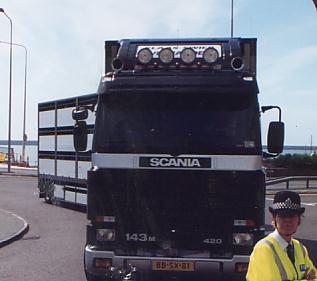
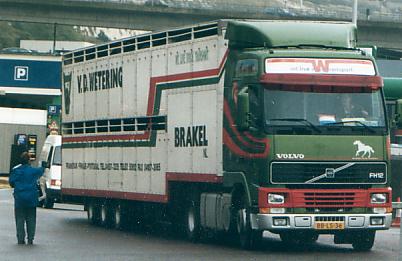
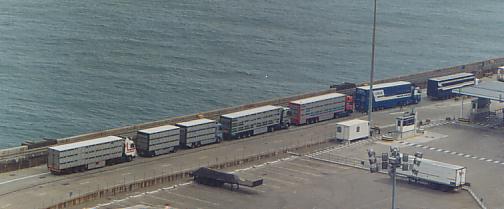
Above – Livestock transporters wait at Dover harbour.

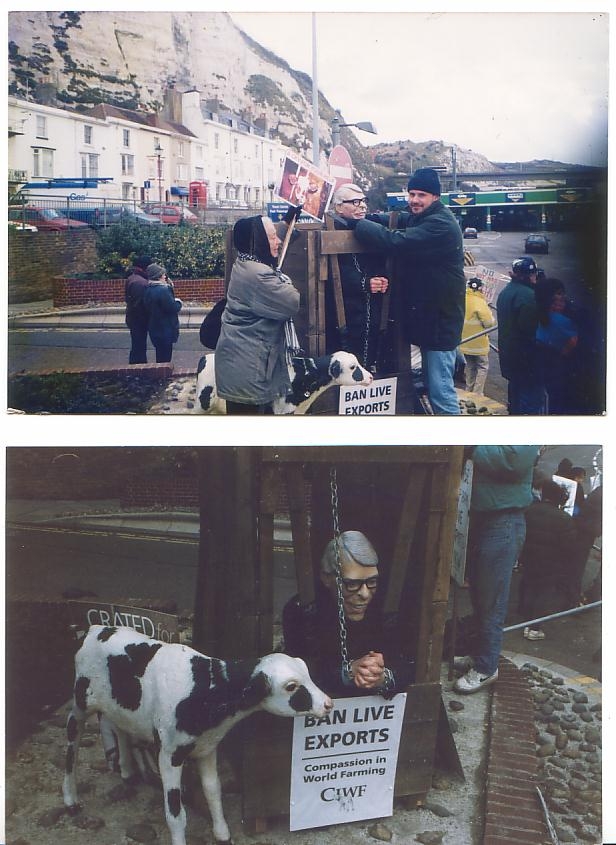
Fighting in Dover and Brussels, Belgium

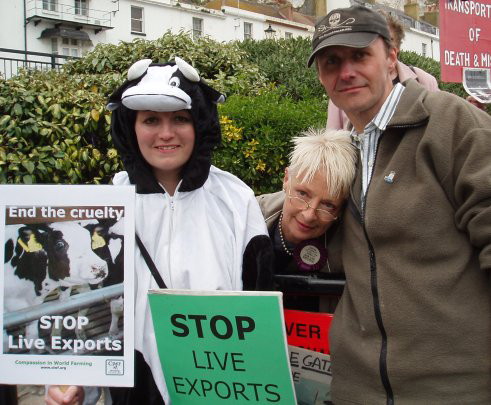
Above – in all the cruelty, we had some fun nights as well- you have to !!

EU: Conference celebrates first year of revised Action Plan against Wildlife Trafficking.

Conference celebrates first year of revised Action Plan against Wildlife Trafficking

17 November 2023

AAP

Animal Advocacy & Protection, or AAP, is working to put an end to the suffering of exotic animals in Europe. They tackle the problem preventively by advocating across Europe for better laws and regulations to prevent animal suffering, as well as practically by rescuing, rehabilitating and finding safe permanent homes for exotic animals in distress. Their areas of focus are exotic pets, animals in entertainment and wildlife trafficking.

On 16 November, a year after the publication of the Revised EU Action Plan against Wildlife Trafficking, representatives from Member States, the European Commission, the European Parliament, the private sector, and civil society gathered in Brussels to discuss the implementation of the Action Plan and solutions to end the illegal wildlife trade. The event was co-organised by Eurogroup for Animals, AAP, IFAW, Humane Society International and Pro Wildlife.

Wildlife trafficking is one of the largest international criminal activities. It contributes significantly to biodiversity loss, increases the risk of zoonotic diseases and has negative socio-economic impacts, particularly in countries where animals and wildlife products are sourced.

The EU is a hub for wildlife trafficking and therefore has a crucial role to play. The revised EU Action Plan against Wildlife Trafficking, published in 2022, provides improvements compared to the previous Action Plan and foresees ambitious actions to tackle the issue. Our conference, marking the first year of the release of the revised Action Plan, was opened by a video message from Virginijus Sinkevičius, European Commissioner for Environment, Oceans and Fisheries, who highlighted the role of illegal trafficking in loss of biodiversity and undermining peace and security,  followed by a message from César Luena MEP (Socialists and Democrats), who stressed that the success of the Action Plan depends on dedicated implementation by all actors.

The first panel discussed care for confiscated live animals. Representatives from rescue facilities across Europe emphasised the difficulties they are facing to accommodate seized animals and called for increased capacities and resources to offer proper care. Maria Pita Fernandez from the Spanish Ministry for Ecological Transition and Demographic Challenges detailed the actions taken by the country in this regard, especially to facilitate information-sharing and coordination. IFAW presented a new Online Learning Program for enforcement authorities on handling confiscated live animals. The panel stressed the challenges in setting adequate conditions for a wide range of species and called for dedicated funding for rescue centres in national Action Plans without impeding activities to address the root causes of wildlife trafficking.

Participants then heard the experiences of Member States regarding the implementation of the EU Action Plan and innovative solutions at the national level. Representatives from Spain and Czechia presented their plans to fight illegal wildlife trafficking, while Lithuania, the Netherlands, Cyprus and Belgium detailed their experience in implementing innovative measures such as the positive list of allowed pets, emphasising the importance for such lists to protect animal welfare, public health and biodiversity. This is relevant in the context of the upcoming study from the European Commission on the added value and feasibility of an EU Positive List for Pets. Panellists highlighted the added value of an EU positive list to better regulate intra-EU trade and the need to retain national lists that would be stricter than the EU list.

The third panel focused on enforcement challenges and consisted of French and Spanish law enforcement authorities, the representative of the German online platform DeineTierwelt, IFAW and the European Commission. The panellists discussed the state of play and opportunities to properly enforce the legislation in place to combat wildlife trafficking. They emphasised the need for ambitious and harmonised rules to regulate wildlife trade online. Training and awareness raising of enforcement officers on environmental crime, including cyber crime, is crucial to enforce these rules. Financial crimes closely linked to wildlife criminal activities can also facilitate prosecution and must be carefully considered by enforcement authorities.

The final panel exchanged on the loopholes in the current EU legislation which enable species that are illegally caught and smuggled in their origin countries to legally enter the EU market. The example of the Macedonian Grayling, an endangered nationally protected butterfly sold online across the EU was presented. Experts and enforcement authorities described the problem while lawyers and civil society proposed solutions, including a model legislation for the EU, in view of the upcoming Commission’s feasibility study on this issue. Panellists underlined that such legislation could complement an EU Positive List and is an important opportunity for the EU to protect biodiversity worldwide.

The event was closed by MEP Martin Hojsík (Renew) on a hopeful note, calling for the timely and proper implementation of this ambitious Action Plan, increased capacity to seriously tackle illegal wildlife trade and the need for new legislative tools at EU level including the positive list and the criminalisation of illegally sourced wildlife trade in the EU.

Illegal wildlife trafficking is not only a major threat to conservation, it also condemns millions of animals to a life of suffering. This event demonstrates that solutions exist! We hope that these fruitful discussions will lead to positive change in the legal framework, in particular the implementation of an EU positive list that is deeply needed to better regulate this trade.

Reineke Hameleers, CEO, Eurogroup for Animals

Wildlife traffickers are increasingly going online to reach a vast virtual marketplace. Dismantling wildlife cybercrime requires the acquisition of specific equipment and competencies by law enforcement and judicial authorities, but currently, there are huge disparities in the level of efficiency of detection and prosecution of wildlife cybercrime in different countries. New tools, training and collaboration are needed to fight criminal networks in and outside the EU.

Ilaria Di Silvestre, Head of EU Policy & Campaigns, IFAW

Today’s event has illustrated just how vital it is that the EU closes the loopholes in the current EU wildlife trade regulations. By failing to criminalise the import of nationally protected wildlife species that have been taken in violation of the laws of other countries and allowing this stolen wildlife to be traded legally in Member States, the EU continues to be complicit in the loss of biodiversity elsewhere in the world. This cannot and must not continue.

Dr Joanna Swabe, Senior Director of Public Affairs, Humane Society International/Europe

Many range states do not even know that their threatened and nationally protected species are stolen and smuggled to Europe to be marketed as exotic pets. Our event today confirmed that the European Union, with its responsibility as a main hub and destination, urgently needs to take action against this particular form of wildlife crime.

Dr Sandra Altherr, Pro Wildlife

Today multiple Member States who have implemented a Positive List shared their experiences and lessons learned. These are not only crucial for the EU to consider when conducting their feasibility study, but also other Member States who have yet to implement such an instrument. The message today is clear: a Positive List is a highly effective way to combat illegal wildlife trade, being one of the major risks the exotic pet industry confronts us with.

Laurens van de Noort, AAP

Regards Mark
England: German Analysis of 37 Studies Shows Meat and Dairy Out, But Changing to Whole Grains, Beans, Nuts and Olive Oil Significantly Reduces Cardiovascular Disease and Type 2 Diabetes. (Guardian London).

Plant-based swaps may cut diabetes and heart disease risk, major review finds

Analysis of 37 studies finds largest health benefits come from replacing processed meat, with 20% reduction in type 2 diabetes

Replacing meat and dairy with whole grains, beans, nuts and olive oil may significantly reduce cardiovascular disease and type 2 diabetes, according to a major review into the impact of diet on health.

Researchers in Germany analysed 37 published studies to assess the benefits of switching from red and processed meat, poultry, fish, eggs and dairy products to plant-based foods such as beans, nuts, whole grains, oils, fruit and vegetables.

Read in full at:

Plant-based swaps may cut diabetes and heart disease risk, major review finds | Health | The Guardian

Regards Mark

England: Note Date – London, Viva ! COP Demo On 25/11/23.

Dear Mark,

Viva! is demanding that the Government includes a shift to plant-based diets in their climate commitments. Take action with us ahead of COP28 by joining our London demonstration on the 25 November 2023.  

COP is a key point in the environment calendar, marking the annual United Nations Climate Change Conference where world leaders come together to discuss the supposed ‘solutions’ to tackling the climate crisis and its impacts. Demand for meat, dairy, fish and eggs is the number one driver of wildlife loss, is fuelling the climate crisis, and threatening humanity’s own existence. Yet given the devastating impact it has on the planet, there is no mention of dietary change in the UK Government’s environment and climate strategy. 

Our leaders are governing the death of humanity. Without a healthy planet, we have no future.  We need to take a stand against climate inaction, and we need you to join us this 25 November.  
Join Viva!’s demonstration at Parliament Square 
Where: Parliament Square, London When: 25 November 2023, 11am to 2pm

We’ll be bringing lots of placards to explain why we need to include the impacts of meat and dairy in environmental commitments. There will be plenty to hand around if you need one or bring your own!  This is a collaborative event where we will be joined by other groups to amplify this unified message. We will have speeches throughout the day. 

Our action on Parliament Square is just the beginning – we want to support you in taking action in your local area.  

COP28 will be a key event in the environment calendar, with rallies and demos across the country; allowing people to have their voices heard about the need for climate action now.  

COP28 is being held 30 November to 12 December 2023. Take action in your local area as part of a local COP28 rally or hold your own event or stall. 

At Viva! we will be updating our website regularly with details of national events. However, if there isn’t one already set up near you, why not hold your own outreach event or demo instead? Keep us updated on your climate action plans.

Click here to order your free climate demo pack –  https://viva.org.uk/planet/campaigns/cop28/?mc_cid=b61cb0cfc9&mc_eid=f1cc978ae5#pack

Regards Viva and Mark

EU / Australia: Last chance to embed animal welfare in the EU-Australia trade agreement.

25 October 2023

As negotiations for a free trade agreement (FTA) between the EU and Australia enter the final stage, Eurogroup for Animals, Australian Alliance for Animals and Animals Australia urge the two sides to include ambitious provisions on animal welfare in the agreement.

Improving animal welfare is strongly linked with the pursuit of sustainable food systems. However, current trade policies appear to be exacerbating rather than mitigating the adverse consequences of intensive livestock farming. This is the case with Australian beef exports, where 96% of exports to the EU originate from animals held in grain-fed feedlots; yarded areas that adversely impact animal health and welfare by causing respiratory and digestive issues, and contribute to increased water, soil and air pollution in Australia.

According to the EU’s own impact assessment, a trade agreement with Australia that grants expanded market access for Australian beef without attaching any animal welfare conditions would further incentivise beef production predominantly in feedlots. This would undermine the EU’s ongoing sustainable food systems transition. It is crucial for both parties to establish conditions for preferential tariffs on beef that originates from grass-fed systems, explicitly excluding beef produced within commercial feedlots, as the EU did with New Zealand.

Above – Conditions For Exported Australian Sheep.

Australia’s current rules on transporting live animals over long distances are minimal and virtually unenforceable, allowing animals to travel for up to 48 hours without food or water. Introducing a condition related to the protection of animals during transport in trade preferences related to ruminant meat would thus also have a positive impact. 

This trade agreement is also an opportunity to set up strong cooperation mechanisms to tackle other topics such as the lack of use of pain relief during procedures like sheep mulesing in Australia. 

Above — Mulesing.

It will be important to also use such a platform to share best practices and combine efforts to phase out live animal exports, especially since Australia has committed to phasing out its live sheep export trade and the EU is currently revising its legislation on the protection of animals during transport. 

The EU and Australia together represent 473 million citizens, many of whom believe more should be done to improve the life of farm and wild animals. According to a 2018 report, 9 out 10 Australians are concerned about the welfare of farmed animals, and nearly as much want a reform to address this.

In Europe, animal welfare is a great ethical concern. Seven out of the ten successful European Citizens Initiatives (ECI) have been dedicated to animal welfare issues. The recent support for the ECI End the Cage Age paves the way for both sides to cooperate as Australia has pledged to phase out the production of battery eggs by 2036.

We also urge the EU and Australia to address the large-scale, inhumane killing of kangaroos for commercial use. The EU is the main market for Australian kangaroo meat and leather, an industry which raises concerns about animal welfare, conservation and public health. Both parties must consider prohibiting the trade of kangaroo-based products primarily on ethical grounds. The EU and Australia both have a responsibility to solve this; in a recent survey, 67% of Australians stated that other countries should have a responsibility not to drive the commercial killing of kangaroos.

It is possible to strike a balance between economic interests and our shared commitment to ensuring the welfare of animals. We call upon political leaders of the EU and Australia to stand firm on their commitment to develop and safeguard high animal welfare standards.

Regards Mark

Australia: Australians believe kangaroos should be protected from commercial killing as EU remains one of the biggest importers.

24 October 2023

Press Release

A new poll has found out that Australians want to protect kangaroos against commercial killing as non-profit organisations urge the EU, one of the biggest importers of kangaroo products, to ban imports.

98% of Australians think it’s important to protect kangaroos as part of a strategy to safeguard Australian ecosystems, while 64% believe that Australians should take a stance against commercial killing of kangaroos, a poll has found. More than 75% think it’s both unacceptable and inhumane how an estimated 400,000 of joeys are killed annually as part of this commercial killing.

Every year, approximately two million kangaroos fall victim to commercial slaughter for their skins and meat, with Europe wielding immense influence over what has become the largest commercial terrestrial wildlife slaughter on the planet. Kangaroo leather is used to produce football shoes, motorbike suits and other luxury fashion products while kangaroo meat is sold in European supermarkets, served in restaurants and used in pet food. 

Big businesses are however moving away from using kangaroo products, including Nike and Puma, who both announced that they will move on to synthetic materials instead.

67.3% of Australians agree that other nations should refrain from driving the commercial slaughter of Australian wildlife if it entails cruelty or ecological threats, akin to the EU’s ban on seal products. In addition, 64.2% believe that the trading of kangaroo body parts should stop. 

The EU has a key role to play to stop the massacre of millions of kangaroos, including dependent joeys. Just like the EU banned the import of seal products in 2009 because of cruel hunting methods, it is now time to act to end the suffering of these national Australian icons. This survey is a clear reminder that EU policy has an impact on animals and people beyond its borders and can champion a compassionate and sustainable movement.

Reineke Hameleers, CEO, Eurogroup for Animals

The Eurobarometer results that were published last week are unequivocal: Europeans want the EU to protect animals and their welfare. On behalf of all Europeans, we ask for ambitious animal welfare legislation now. This also means the end of kangaroo products imports. This cruel hunt does not align with the values of Europeans, nor Australians, and it is time for the EU to act.

Manuela Ripa, MEP (Greens/Efa)

This wildlife trade is poorly regulated, jeopardising kangaroo populations, and the brutal fate of countless healthy joeys is nothing short of barbaric. The Australian government is failing to protect our kangaroos from the legalised commercial wildlife trade, but this new national survey demonstrates that Australians genuinely care.

Mick McIntyre, Founder, Kangaroos Alive

The EU and Australia are nearing the end of negotiations for a free trade agreement, with both sides expecting talks to conclude soon. It is therefore critical that the partners take the opportunity of these final stages to achieve ambitious provisions on animal welfare in the agreement and put an end to cruel trade.

Nine out of 10 Australians said kangaroos should remain part of the Australian landscape and believe that co-existence is key, compared to a mere 9.7% that considers kangaroos to be a pest, mostly due to road hazards.

The survey was commissioned by Kangaroos Alive, a non-profit organisation committed to  campaigning nationally and globally for a moratorium on the killing of kangaroos. The organisation has been part of an ongoing campaign in Europe lobbying to stop kangaroo imports into the EU. 

Regards Mark

EU: The rules of the game: will the views of EU citizens make the Commission finally deliver the new animal welfare legislation?

23 October 2023

WAV Comment – In addition to making things a lot better, lets have EU wide legislation that gives stray (homeless) dogs and cats much more rights – they are homeless; not wild !

  • I could show you dozens more photos I have on file re EU strays, but I dont want photos, I want legislation.
  • Pack EU Commissioners in a livestock transporter for 2 days, urinating over each other – then see how quickly EU animal transport rules will change !

Opinion

Written by Reineke Hameleers

The past few weeks have been among the hardest in my position as the CEO of Eurogroup for Animals but also, in some respects, the most surreal. In the ten years I have proudly spent leading this organisation, I experienced many political hurdles. Together with my team and our member organisations, we went through long years of lobbying and campaigning that were met with political inaction on the part of the European Commission.

After hitting the rubber wall so many times, we were thrilled by the prospect of new and updated animal welfare legislation, which the European Commission promised to deliver in line with the aims of the EU Green Deal and in the wake of our incredibly successful citizens’ mobilisations. It was refreshing for us to finally collect all the science, prepare our concrete asks, and talk about change for billions of kept animals. 

This week it became clear that, at least for this political term, the European Commission does not intend to deliver all of the promised and much-needed reforms of animal welfare legislation. There are reasons why this is happening and I won’t analyse them in detail here. All I can say is that none of them holds water in a healthy democracy because this backtracking represents a betrayal of the trust millions of European citizens had put in the European Commission to take action for farmed animals. 

Today, the disconnect between civil society and European politics has become even more evident. For one, the plenary debate at the European Parliament in Strasbourg on the European Citizens’ Initiative “Fur Free Europe” demonstrated that there is incredible cross-party parliamentary support for a ban on fur farming. Secondly, the results of the latest special Eurobarometer on animal welfare, only just published, show once again and without a shadow of a doubt that European citizens deeply care for farmed (and domestic) animals and want their policymakers to act.  We know, however, that the pressure from the industrial agriculture lobby is immense and that the stakes are high due to the impending European elections in 2024. 

We had anticipated that any attempt at passing legislation to reform animal farming would encounter fierce opposition from our opponents. I do not think we were wearing rosy glasses. After engaging for years with all stakeholders in countless meetings and occasions, and with all the scientific and field evidence on our side, we thought there were solid bases on which to build a revised farmed animal welfare legislation. 

But then the pandemic hit, then war, causing international instability and an ongoing economic crisis. The promises of a greener, more sustainable food and farming system and good lives for animals became controversial in light of the events. As elections approach, one must be “realistic”. What was promised to millions does not count anymore when there’s a re-election on the line. These are the rules of the game. 

Now that European citizens have spoken again, loud and clear, directly and through their elected representatives, what will the European Commission do? I believe the European Commission still can (and should) do the decent thing and put forward all the planned legislative proposals on animal welfare. When it does, we will be there to ensure that the new laws really make a difference in the lives of billions of non-human animals. 

Regards Mark

Younger days planning something ! – probably involving live animal exports.

EU: European Parliament supports plant-based food production but misses crucial need to reduce animal numbers.

WAV Comment – When you are behind rose tinted spectacles, and think that you are faultless in every way, it must be very easy to miss seeing the need to reduce animal numbers in food production !! – how very ‘Euro politics’; missing the ‘bleeding obvious’ ! – Mark

20 October 2023

In the vote on its own-initiative report on the European Protein Strategy, MEPs recognised the need to increase plant-based production for human consumption, but failed to address the crucial need to reduce animal numbers, particularly in intensive farming.

Eurogroup for Animals regrets that the Parliament rejected the amendment tabled by a large number of MEPs from different political groups, calling on the Parliament to recognise the need to reduce the production and consumption of animal-sourced protein from intensive farming in the report on the European Protein Strategy.

Around two-thirds of EU agricultural land is used for animal production, and a large proportion goes to producing feed for animals in intensive farming. Moreover, European animal farms have intensified in the last decade. 

Russia’s invasion of Ukraine sparked a discussion about EU food security, with the European Commission reviewing its report on the development of plant proteins to improve EU food security, reducing dependence on feed imports and reducing environmental and climate impacts. The biggest threat to long-term food security in Europe is the overconsumption of animal protein, which exceeds national dietary guidelines, planetary boundaries and negatively impacts animal welfare. The science is clear that in order to ensure long-term food security, we need to grow more food for people and less feed for animals on arable land.

We welcome the Parliament’s consideration of animal welfare when it comes to insect farming for food and feed, but are concerned that insect farming is mainly a feed industry with questionable sustainability credentials and that risks sustaining intensive animal farming. We are also concerned about the positive view on methane reducing feed-additives, which are understudied and risk leading to poor animal welfare.
Eurogroup for Animals encourages the European Commission to focus on plant-based protein production for food, not feed, when reviewing its report on the development of plant proteins and to recognise the need to reduce animal numbers in intensive farming. This would support real long-term food security and strengthen Europe’s ability to produce enough food for everyone.

Regards Mark