Category: Environmental

England: Here We Go Again – Government Bullshit Promises On Actions ALREADY Making Their Way Through Parliament Which Would Have Given Animals More Protection.

I had this through the other day (9/8) from the Conservative Animal Welfare Group; the Conservatives currently being in government here in the UK.

When Boris was the Prime Minister; he appeared to be pushing forward more on animal welfare issues; probably because he was also being driven by wife Carrie; an activist in her own right.

Since Rishi ousted Boris and became PM himself, there has been no real movement on both animal welfare or environmental issues.  See below.

Rishi Sunak’s approval rating on environment falls to record low | The Independent

The 52 signatories to the letter, dated July 28, include Friends of the Earth, Greenpeace UK, the National Trust, RPSCA and RSPB. They say they represent 20 million people.

After referencing recent wildfires across the globe, and flash flooding in India, they write that the environment “remains a central concern for voters” and there is “no public mandate for a delay”.

The letter concludes: “We will not stand by whilst politicians use the environment as a political football.

Environmental groups warn Rishi Sunak over green pledges – BBC News

Now the CAWF are banging out mails as follows below.  Personally I have been fighting for a live export bn for 35 years.  In my view, the Conservatives have never had, and currently do not have, any real idea of what a big vote winner both positive animal welfare and environmental action can be; see the poll results in the CAWF actions below.  Yet still, right now, both issues appear to have been put on the back burner by the current Rishi government,

How long does tis go on ? – I personally predict that in the next General Election, which will probably be within the next 12 months, the Conservatives are due to be annihilated by other parties who claim to be better at animal and environmental issues.  I don’t really have faith in any of them; they all make false promises to get votes and when elected into power on those issues, the British public are just given a kick in the teeth.  I have over 60 years experience of being bullshitted to and being kicked in the teeth by past and current governments.  The big problem is that in reality, there does not appear to be any UK political party which acts for animals, and will act for animals and the environment in the future.  Now I read from the CAWF of their policy recommendations for the Conservative Party to adopt in their next Manifesto.

They say; We have been disappointed by moves to drop the long-promised Consultation on animal welfare labelling, and the discontinuation of the Kept Animals Bill (which included an end to live exports for fattening and slaughter). While we remain supportive of the Government’s approach to deliver these measures through alternative legislative vehicles, we fear not all of these can become law before the next General Election.

The Kept Animals Bill was already working its way through Parliament; this would have included a ban on the live export of animals for both slaughter and further fattening.  Along with New Zealand, the UK would have been pivotal in halting live animal exports.  Now. Rishi has done a U turn and scrapped the entire Bill.

Tories accuse Sunak of breaking pledge after animal welfare U-turn | Animal welfare | The Guardian

Ban on puppy smuggling and live exports dropped by Rishi Sunak’s government | The Independent

I can do U turns as well; and steering well clear of Conservative Manifesto bullshit for the next General election will be at least one of the.  They have betrayed so amny of us, the voting public; maybe soon it will be time for revenge !

From the CAWF:

Dear Friend,

We hope you are enjoying a relaxing summer. From briefing officials at 10 Downing Street, to launching our new report on perceptions of farm animal welfare, it’s certainly been a busy few months since our last update in April.

With a General Election now on the horizon, CAWF launched its 2024 Manifesto ‘Leading the Way for Animals’ in July which set out key policy recommendations for the Conservative Party to adopt in their next Manifesto. This coincided with some brand new polling we commissioned through Opinium, which showed two thirds of people (64%) would feel more positively about a political party if they included a strong commitment to animal protection.

Last month we also launched a new report ‘Farm Animal Welfare in the UK: What Does the British Public Want?’ which reveals the significant gap between what the British public demands as citizens and consumers, and the realities of what they receive via standard UK farming industry methods of production and practices.

Meanwhile last week our Co-Founder Chris Platt delivered a speech at the 2023 Animal and Vegan Advocacy (AVA) Summit in Los Angeles, United States. We were delighted with this opportunity to expand our international presence and advise other countries on building genuine, Conservative animal welfare advocacy. 

Of course, all of this has taken place against the backdrop of major legislative changes on animal welfare. We have been disappointed by moves to drop the long-promised Consultation on animal welfare labelling, and the discontinuation of the Kept Animals Bill (which included an end to live exports for fattening and slaughter). While we remain supportive of the Government’s approach to deliver these measures through alternative legislative vehicles, we fear not all of these can become law before the next General Election. We are calling for a specific Government-led Bill on live exports, to ensure this vital policy and key Manifesto commitment for farmed animals is honoured.

We are also urging our supporters to ask their local MP to write to the Prime Minister and ensure time is set aside for a Government Live Exports Bill.

Read on for more information about all of this and much more. We hope you have a restful summer, and look forward to continuing to keep you up to date with our latest work.

Thank you for your support and best wishes,

Chris and Lorraine Platt
Co-Founders

Finally, on a lighter cringe note, I guess he should have should have stuck to guitar

At least he got a clap.  How do they all sit there with such straight faces ? – I would be howling with laughter !

Regards Mark

England: Finally, Goldfinches !

With a bit of perseverance, at long last I have now managed to get Goldfinches into the garden continually; I have put out a lot of Sunflower hearts for them, and this is really doing the trick to attract them.

https://www.rspb.org.uk/birds-and-wildlife/wildlife-guides/bird-a-z/goldfinch/

As well as Goldfinches, Blue Tits, Sparrows, and long tailed Tits are also enjoying all the food.

For me, a little but very worthwhile victory.

Regards Mark

USA: ‘Project Coyote’ Latest – Summer 2023.

Dear Mark, 

I am pleased to share our Summer 2023 edition of Coyote Chronicles, our quarterly newsletter. 

In this update, we share progress toward ending wildlife killing contests in New York and Illinois, growth of our #CaptureCoexistence campaign, headway in wildlife governance reform in Wisconsin, and a collaborative victory in Pasadena, CA whose city council chose coyote coexistence instead of killing. 

Read Coyote chronicles here:

We hope you’ll enjoy reading these updates and accomplishments, learning a seasonal coexistence tip, and joining us in welcoming new staff and advisory board members to our pack. 

Whether you take action through our action alerts, engage with us on social media, or financially invest in Project Coyote’s mission, YOU make a difference and your steadfast support is directly reflected in the accomplishments shared in our seasonal Coyote Chronicles newsletter.

Thank you for supporting compassionate carnivore coexistence and we hope you enjoy reading about our latest work! As always, please share this e-newsletter with other wildlife lovers. We are grassroots and need your help in growing our community of support!

Take action:

Donate Now – Project Coyote

For The Wild, 

Camilla Fox

Founder & Executive Director

Regards Mark

EU: Beware of “sustainable aquaculture” labels.

Beware of “sustainable aquaculture” labels

26 July 2023

Essere Animali

When consumers look to purchase more animal and planet-friendy products, many turn to labelling schemes for guidance. Little do they realise, the majority of sustainable aquaculture certification schemes fail to consider animal welfare at all. Essere Animali has launched a new campaign against misleading labelling in aquaculture.

According to the EU’s Common market for fisheries & aquaculture Regulation, sustainable aquaculture activities include environmental protection, animal health and animal welfare. Similarly, the World Organisation for Animal Health (WOAH) recognised fish as sentient beings capable of experiencing feelings such as fear and pain, and their welfare is explicitly mentioned in all official documents dealing with sustainability in aquaculture, from the European Commission’s Strategic Aquaculture Guidelines to the guidelines for companies developed by the Global Reporting Initiative. In other words, animal welfare is intrinsic to sustainability. 

Certification schemes that fail to protect fish welfare will do nothing to relieve the unnecessary pain and suffering that farmed fish undergo in aquaculture. Practices such as high stocking densities, lack of environmental enrichment, poor water quality, painful procedures (egg/semen collection, vaccinations, catching for transport) and unstunned slaughter are highly stressful and lead to poor welfare outcomes for fish. 

poll carried out by Compassion in World Farming and YouGov in May 2020 found that 63% of participants were not clear on whether existing certification schemes protect fish welfare, but that 78% think that they should. Indeed, a recent study found that fish welfare is an important factor for consumers, and they were more likely to pay for an organic label if they knew that it addressed fish welfare. 

With Essere Animali’s new campaign, UNsustainable aquaculture, the organisation is calling out an Italian certification scheme developed by the Italian Ministry of Agriculture together with the Italian fish producer association API for failing to address welfare. The scheme allows fish products to be labelled as “sustainable aquaculture”, without any specific animal welfare improvement, which Essere Animali claims misleads consumers. Essere Animali have four main requests for the scheme: to include a clear definition of animal welfare, an effective stunning requirement, and maximum densities and water quality requirements. Citizens are invited to participate in an email campaign to join the call for improved welfare standards.

Well-known global fish certification schemes also fall short on welfare. The Aquaculture Stewardship Council (ASC) is currently developing new fish welfare indicators that include stunning requirements, but ignore welfare standards during the farming phase. A public consultation of these indicators is foreseen by the end of the year.

Read more at source

UNsustainable Aquaculture

Regards Mark

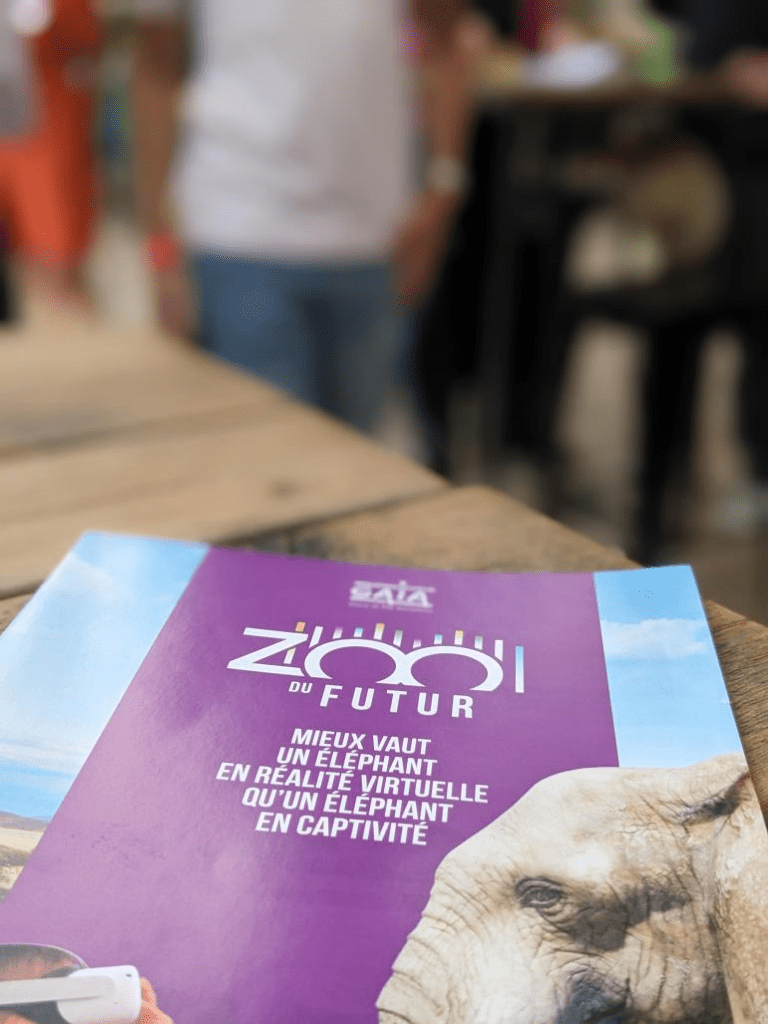
Belgium: Keep Wildlife In the Wild – GAIA and The Launch of Europe’s First Virtual Zoo.

Launch of Europe’s first virtual zoo

24 July 2023

GAIA – https://www.gaia.be/en

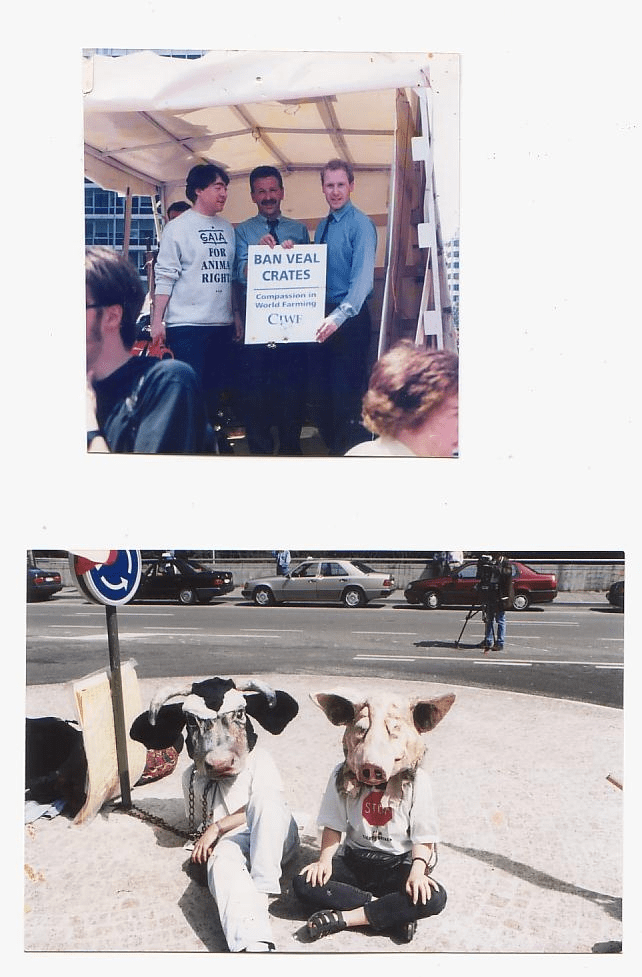
WAV comment – I (Mark) want to personally thank GAIA President Michel Vandenbosch for all his wonderful work and a life completely devoted to the welfare of animals. I first encountered a young Michel back in the 80’s when we were campaigning at EU headquarters, Brussels, for ban on veal crates.

Michel has over the years led GAIA to become a real primary voice for the voiceless in Europe, and he deserves credit for all the work he has undertaken for deacades relating to his devotion to animal welfare.

Here is the photo (below) I took back in the 80’s at that Brussels veal crate demo – you can see Michel on the left.

This virtual zoo is yet another of Micel’s wonderful contributions to the bettering of welfare for animals, Thank you Michel.

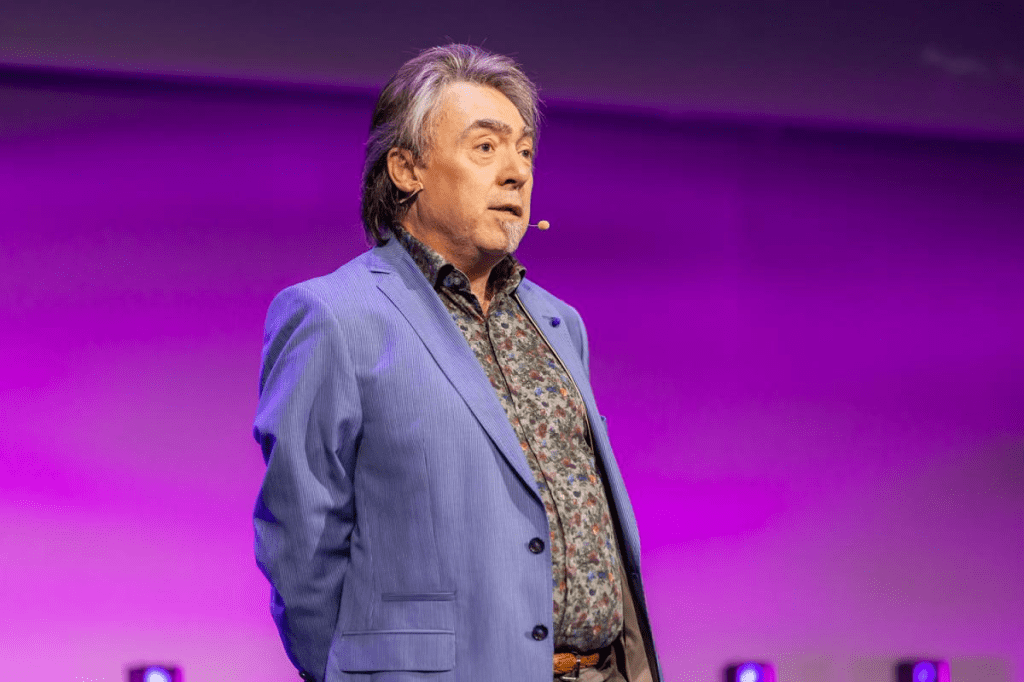
Above – GAIA President Michel Vandenbosch

Related:

On Wednesday 19 July, GAIA inaugurated the first virtual reality zoo alongside Prince Laurent of Belgium and Bernard Clerfayt, Brussels Minister for Animal Welfare. This zoo of the future immerses visitors in wild habitats in virtual reality, allowing them to observe all kinds of animals, from tigers and penguins to giraffes and elephants.

Several million wild animals are kept in captivity in the 10,000 zoos currently counted around the world. Locked up in enclosures infinitely smaller than their natural habitat, in artificial environments that have little to do with their original savannah or forest, the animals suffer. 

Many of them develop stereotypies (abnormal repetitive behaviour, a sign of psychological suffering). Boredom and frustration drive animals to incessant pacing, constant rocking, compulsive grooming and self-mutilation.

GAIA’s idea is simple: rather than observing polar bears pacing on a fake concrete ice floe, or bored monkeys in a glass enclosure, it would be better to get to know them while respecting their freedom.

In GAIA’s new virtual zoo, we will be able to admire wild animals evolving freely in their environment without being disturbed by visitors. This initiative could significantly reduce the number of animals kept in zoos, especially where minimum welfare standards cannot be met.

The value of this initiative also outweighs the educational benefits of zoos, where visitors cannot learn the natural behaviours of wild animals. Besides exotic animals, there are thousands of wild animals that can be observed, with patience and precaution, close to your home.

If you’re in Belgium, GAIA’s virtual zoo will be travelling to a number of major cities this summer. Here are the tour dates:

25/07 Brussels (Place de la Monnaie)

26/07 Antwerp (Wapper)

28/07 Leuven (Place de l’ange)

01/08 Charleroi (Place verte)

02/08 Hasselt (Molenpoortplein)

03/08 Bruges (Grote Markt)

04/08 Blankenberge (Zeedijk)

08/08 Gent (E. Braunplein)

09/08 Mons (location to be confirmed)

10/08 Liège (location to be confirmed)

11/08 Eupen (Marktplatz)


Regards Mark

Injecting animal welfare in renewed EU-Latin American trade relationships.

Injecting animal welfare in renewed EU-Latin American trade relationships

18 July 2023

As leaders from the EU and from the Community of Latin American and Caribbean States (CELAC) gather in Brussels for the third EU-CELAC summit, willingness to accelerate the conclusion of controversial trade agreements is on the agenda. What’s at stake for animals?

During the EU-CELAC Summit on 17-18 July, the Executive Vice-President of the European Commission and Ministers of Foreign Affairs of Mercosur countries reiterated their “determination to work towards the conclusion of the Agreement between the EU and MERCOSUR by the end of 2023”. 

Instead of pushing forward an unsustainable and harmful trade policy, the EU should redesign  its trade deals to be compatible with the EU Green Deal and the Farm-to-Fork Strategy.  These deals, as exemplified by the EU-Mercosur FTA, grant further unconditional market access to animal based products, leading to an increase in the trade and further fuelling the intensification of farming both in the EU and abroad. This trend not only implies poor animal welfare conditions, but also raises public health concerns in terms of zoonoses and antimicrobial resistance (AMR). Intensification of animal production also generates high levels of deforestation, impacting the welfare of millions of wild animals.

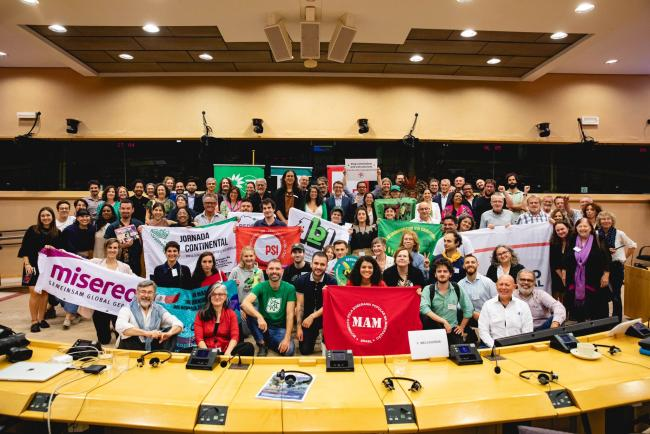
For all these reasons, Eurogroup for Animals, together with 50 civil society organisations from South America and Europe, and with the support of MEPs from the Greens/EFA, the Left and S&D, organised an international conference calling for ‘A new EU-Latin America trade relationship for the 21st Century’

The Left in the EP

During the conference, a wide range of speakers from the EU and South America agreed that the EU-Mercosur deal is toxic for indigenous people, workers, the environment and animals, and that the proposed additional protocol offers nothing more than cosmetic, unenforceable adjustments. Furthermore, the risks of the deal aggravating deforestation cannot be restrained by the recent EU legislation on imported deforestation, given that the legislation ignores many products that contribute to deforestation and other biomes destroyed by intensive agriculture. For example, soy-fed animals such as poultry are not covered by the legislation. 

Other speakers echoed Eurogroup for Animals’ criticism of the EU-Mexico and EU-Chile agreements. These deals have had devastating consequences for local communities, including pollution and destruction of natural habitats, and  their “modernised”  versions are likely to have further negative impacts on animal welfare, human rights, deforestation, the climate crisis and biodiversity. While the agreements do include some animal welfare provisions – including on animal sentience and growth promoters and, in the case of Mexico, a standalone chapter on animal welfare and antimicrobial resistance – the language is weak and will do nothing to offset the negative impacts unconditional trade liberalisation will have on animals, people and the planet.

All eyes are now on the European Commission, the European Parliament and the Council to avoid fast-tracking the EU-Chile and the EU-Mexico FTAs by side-stepping national and regional parliaments and removing Member States’ veto right. This is critical given the range of negative impacts the agreements will have on animal welfare, human rights, the climate crisis and biodiversity. Concerning the EU-Mercosur FTA, Eurogroup for Animals calls for a full renegotiation of the deal, including conditioning all trade preferences granted in the agreement to EU-equivalent animal welfare standards.

Regards Mark

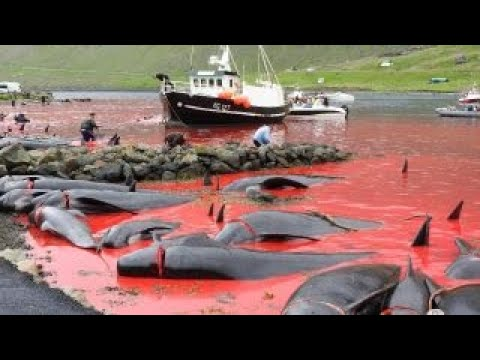
Denmark: Cruise line apologises after passengers witness dozens of pilot whales being slaughtered.

Cruise line apologises after passengers witness dozens of pilot whales being slaughtered

We have campaigned against this along with thousands of others for decades – at least the uninformed may know a bit more about the abuse that takes place every year.

Search Results for “faroe islands” – World Animals Voice

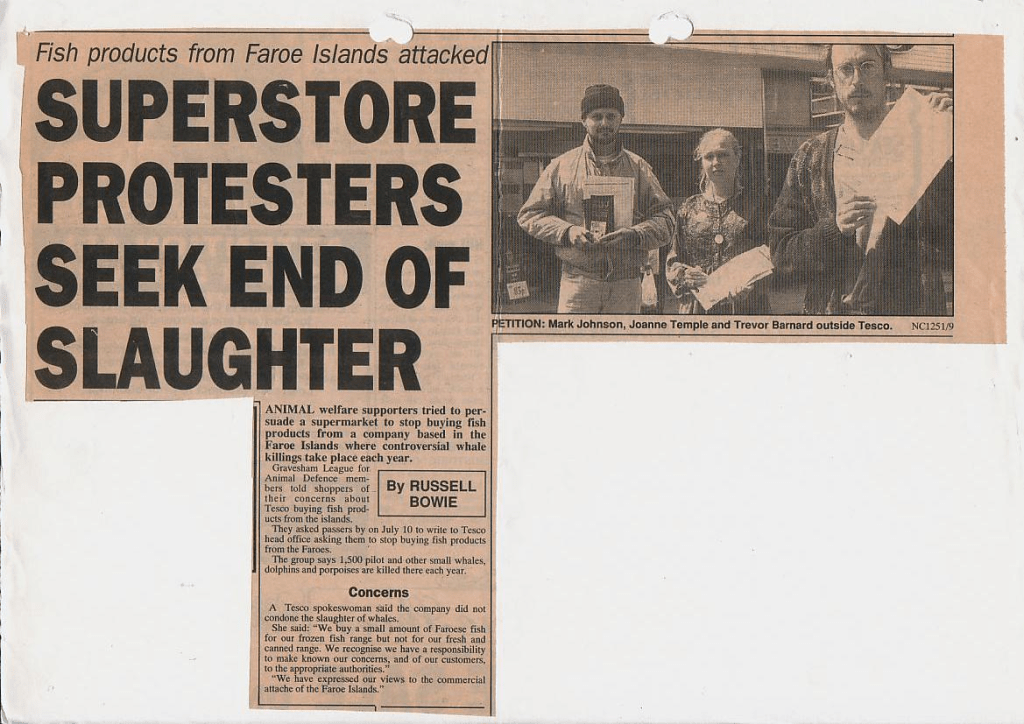
Myself, Joanne and Trev fight to get Faroese fish stopped in our local supermarket – when was this ? late 80’ s ? To see more pictures please click on https://serbiananimalsvoice.com/about-us/

Read the full story at:

Cruise line apologises after passengers witness dozens of pilot whales being slaughtered (msn.com)

Others have called on cruise ship companies to boycott the Faroe Islands in order to end the killing of whales in the area. “Cruise companies need to take a stand in support of ocean wildlife and remove the Faroe Islands from itineraries,” Rob Read, the chief operations officer at Captain Paul Watson Foundation UK, told Yahoo News Australia. “Their continued visits to the Faroe Islands inadvertently supports the abhorrent practice that is the Grindadráp.”

Regards Mark

CIWF England: Industrial animal farming can continue polluting as the European Parliament waters down emissions directive.

Industrial animal farming can continue polluting as the European Parliament waters down emissions directive

12 July 2023

CIWF

The European Parliament has voted to exclude emissions from industrial cattle farms from the Industrial Emissions Directive. The Parliament also voted for scrapping the Commission’s proposal for updated thresholds for pig and poultry farms. Thereby the proposal from the European Commission, that could reduce emissions from the largest polluters that keep animals in cramped conditions, is substantially weakened and puts the EU off track on its climate commitments.

The Industrial Emissions Directive controls emissions from the largest industrial installations in the EU, including a small number of the largest pig and poultry farms. Any installation controlled by the IED is forced to reduce emissions into air, water and soil and needs a permit to operate. With the European Commission proposal, the Directive would increase the coverage from 18% to 60% of emissions of ammonia from cattle, pigs and poultry, and extend the coverage from 3% to 43% of methane emissions. 

The Parliament voted for going back to the current insufficient thresholds of 750 Livestock Units that only cover farms with 40,000 poultry, 2,000 pigs and 750 sows or more, with cattle farms entirely excluded. This stands in stark contrast to the Commission’s proposal of 150 Livestock Units which would cover all large farms, including cattle as it is the main emitter. In numbers this would mean that farms with example 500 pigs, or 150 dairy cows, or 10,700 laying hens or 21,400 broiler chickens would be included while the Directive would not affect small and medium sized farms.

In addition, the result of the Parliament’s vote shows a declining ambition even below the current Industrial Emissions Directive by further reducing the obligations for the industrial poultry and pigs farms with 750 Livestock Units and that will be covered by the Directive.

Animal farming is responsible for 67% of EU ammonia emissions and more than 50% of EU methane emissions. Cattle farming is by far the biggest source of methane emissions from agriculture. Failure to reduce these emissions puts the EU on track to break its commitment under the Global Methane Pledge (pledging to reduce methane emissions by 30% by 2030) as well as failing on its Zero Pollution Action Plan. In order to reduce emissions it will be necessary to address more of the large livestock farms. In addition to the negative impact the intensification of animal farming has had on animals, a strong Industrial Emissions Directive would bring significant health and environmental benefits for citizens.

Overall, the Parliament’s vote points to an even lower climate ambition than the agreed position by the Council. Earlier in spring, the Environmental Ministers agreed to include cattle in the scope but increase the thresholds as compared to the Commission’s proposal. The revision of the Industrial Emissions Directive will now go to interinstitutional negotiations (trilogues) between the Council, Parliament and the Commission. The results of the negotiations can potentially mean that the IED will continue to exempt the majority of the largest polluters.

The debate around the Industrial Emissions Directive has pinpointed how EU animal farms have intensified during the last years, with detrimental impact on animal welfare and with the EU potentially failing to address their emissions if this is not rectified in trilogues. 

For more information, please see the briefing by Eurogroup for Animals’ members Compassion in World Farming and FOUR PAWS.

Regards Mark