Category: Environmental

Sweden: Djurens Rätt exposes troublesome links between mink farms and factory farming.

Djurens Rätt exposes troublesome links between mink farms and factory farming

29 May 2023

Djurens Rätt

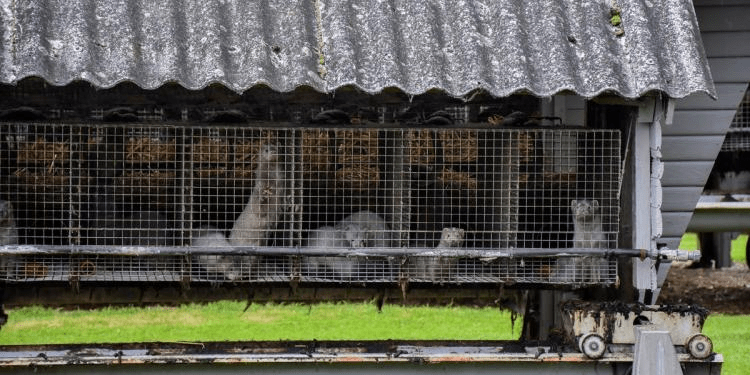
In a new report, Djurens Rätt has revealed that the mink farms in Sweden directly contribute to the death of a minimum of 30 million fish per year, in addition to the hundreds of thousands of minks killed for their fur. Through feed production, with links to depleted seas and chicken factory farming, the report shows economic incentives between mink farms and other factory farms.

Public opinion has already turned against mink farming for fur in Sweden due to the poor living conditions for animals and cruel killing methods, as proven by the European Citizens’ Initiative Fur Free Europe which calls for an EU-wide ban on fur farming and the sale of farmed fur products. 

The new report reveals a lesser known problem; that Swedish mink farms also contribute to extensive suffering in other species and the loss of at least 30 million individual lives per year. Mink farming was also found to contribute to funding chicken factory farming, which has created economical motivation for farmers to protect the existence of fur farms. Djurens Rätt wants to see a ban on mink farms to combat the problem.

Animal welfare is evidently a part of sustainability, and it is not sustainable to breed carnivores in small wire cages in a system that also contributes to suffering in other industries. The report Djurens Rätt published is more proof that mink farms are unsustainable and need to be phased out immediately

Camilla Bergvall – President, Djurens Rätt

Key conclusions

There would be positive effects for sustainability and Sweden’s biodiversity if mink farms closed.

There are intimate economic links between mink farms and other factory farms, especially within the chicken industry and in fisheries. 

Slaughterhouse waste in Sweden is increasing with rising animal production. It is currently not used in a sustainable way.

Read the report “The troublesome links between mink farms and factory farming”.

Regards Mark

USA: Victory !: Historic New Law Passes to Protect Wild Horses in Colorado!


Victory: Historic New Law Passes to Protect Wild Horses in Colorado!

In a stunning bi-partisan victory for wild horses, the Colorado General Assembly passed unprecedented and groundbreaking legislation known as the Colorado Wild Horse Project that was signed into law by Colorado Gov. Jared Polis during a special ceremony on May 20, 2023. The bill was created when legislators, advocates, and other stakeholders came together to provide protections from brutal roundups and removals for Colorado’s wild horses. LEARN MORE IDA - FacebookIDA - Twitter  

The bill’s primary sponsors were Sens. Joann Ginal (D) and Perry Will (R), House Majority Leader Rep. Monica Duran (D), and House Minority Leader Rep. Mike Lynch (R). These sponsors secured bipartisan support in both chambers of the General Assembly, where the bill was passed by an overwhelming majority after expert testimonies by advocates, including In Defense of Animals’ Senior Campaigner for Wild Horses and Burros, Ginger Fedak.

This new state law is necessary because nationally, the US Congress has struggled to pass laws favorable to America’s wild horses and burros for years. No wild horse and burro-friendly progress has been made on the national front since the 1971 Wild Free-Roaming Horses and Burros Act was passed!

Gov. Polis and First Gentleman Marlon Reis have been staunch supporters of America’s wild horses and burros and have spoken out to halt the roundups in the state. However, the national government is solely responsible for “managing” wild equids, so there was little that could be done at the state level. The new law is the culmination of several years of work to allow the state to be part of the stewardship process.

The bill signing ceremony occurred in the Little Book Cliffs Herd Management Area (HMA) in the western part of the state near Grand Junction. Gov. Polis said they could see nine wild horses from where they stood. Before signing, Gov. Polis delivered some encouraging remarks. With the new law, he said, “We can ensure that our wild horse herds have a humane and sustainable future in western Colorado. We also want to highlight that this will set a national example. It’s a first-of-its-kind partnership for how the state, ranchers, advocates, local communities, conservationists, and federal land managers can come together to achieve the best outcome to successfully manage these majestic animals that are synonymous with the American West.”

State Senator Perry Will, one of the bill’s four original bipartisan sponsors, was also at the signing ceremony. He said, “I’m real excited about this bill. It’s a collaborative effort, and I think it’s really going to set the stage for management of our wild horses into the future. I see this as a win/win for everyone involved, and the big win is for the wild horses because that’s the whole purpose.”

SB23-275 prioritizes retaining healthy wild horse herds in Colorado’s four HMAs, thereby reducing costly and destructive roundups that have proven ineffective in the national plan. Thank you, Colorado!

For more on how to get involved in supporting efforts like this, visit our Wild Horses campaign.

Regards Mark

Spain: Animal rights activists in Madrid protest against plans for a large-scale octopus farm.

Animal rights activists in Madrid protest against plans for a large-scale octopus farm

The Spanish activists said there are no regulations to guarantee the welfare of the captivated octopuses

Animal rights activists gathered Sunday in Madrid to protest plans for the construction of an octopus farm in Spain, saying there are no respective laws in the country and the European Union to guarantee the welfare of the animals in captivity.

The proposed farm, which aims to breed octopuses on a large scale in captivity, is scheduled to be built next year in the Canary Islands, a Spanish archipelago located in the Atlantic Ocean.

A few dozen people showed up to express their concerns regarding a project that plans to confine 3 million octopuses in pools, despite these creatures being solitary predators in their natural habitat.

“It is similar to imprisoning tigers together. They will prey on one another and will also attempt to escape due to their high intelligence and adeptness,” said Jaime Posada, a spokesperson for the protest called by various animal welfare organizations.

Octopuses grown in captivity will behave differently from those in the wild, said Nova Pescanova, the seafood company promoting this farm. Since 2018, the company has run a pilot project in a research facility in northern Spain, where they have succeeded in breeding five captivity-born generations of the cephalopod.

“It is not possible to grow any (animal) species in the European Union without respecting their welfare conditions. It is the standard, and our group does nothing but comply with guidelines and legislations,” said Roberto Romero, the multinational’s aquaculture director.

Since the demand for octopus consumption has been on the rise, farming octopuses is being regarded as a first step towards ensuring sustainable food production.

Octopus is a staple in the Mediterranean diet, particularly popular in Spain and Italy, although both of them import most of the octopus they consume. Recently, the global demand for this delicacy has expanded, with countries like the United States witnessing a 23% increase in imports and China experiencing a 73% surge between 2016 and 2018, according to the U.N. Food and Agriculture Organization.

Animal rights activists in Madrid protest against plans for a large-scale octopus farm | Fox News

Regards Mark

UK: The (UK) Government Plans to Extend the Ivory Act 2018 to Include Bans On Imports From Several More Species. Positive News.

UK ivory ban list to be extended to include five more species including hippos

Trading ivory from a hippopotamus, walrus, narwhal, killer whale and sperm whale will soon be made illegal, the Government has said.

The Ivory Act 2018 came into force last June to protect elephants and ban the import, export and dealing of their tusks.

But it will now be extended to cover five more species after it was revealed they are most at risk of ivory exploitation.

Hippos, walruses and sperm whales are all classed as vulnerable on the International Union for the Conservation of Nature’s red list.

Read more:

UK ivory ban list to be extended to include five more species | UK News | Metro News

Hippos and killer whales among five more species to be added to ivory ban list | UK News | Sky News

The sale of ivory from the tusks and teeth of five more species will be banned under government plans.

The import, export and dealing of elephant ivory was banned in the UK last year. The animals that could join the list are killer whales, hippos, walruses, narwhals, and sperm whales.

The creatures are hunted and killed for their ivory which is often used in decorative carvings.

The government plans to extend the Ivory Act 2018 to include them.

People found to be breaking the law can be given unlimited fines or be jailed for five years.

Parliament must vote on the extension of the Act before it can come into force.

Ivory ban to extend to hippos and killer whales – BBC News

Ivory ban to be extended to five new species (msn.com)

Regards Mark

Wales UK: HISTORIC VOTE TO BAN SNARES IN WALES.

From the League Against Cruel Sports:

Historic vote to ban snares in Wales (league.org.uk)

HISTORIC VOTE TO BAN SNARES IN WALES

Posted 16th May 2023

Leading animal welfare charity the League Against Cruel Sports has praised politicians in Wales following a crucial vote on snaring.

A vote in the Senedd tonight [TUESDAY] has paved the way for a complete ban in Wales on cruel traps known as snares, the first country in the UK to take this big step forward for animal welfare.

The vote to ban snares was part of the stage three debate on the Agriculture (Wales) Bill, during which amendments designed to water down the snares ban were defeated.

The legislative process now moves on to the fourth and final stage in which the Senedd is expected to ratify the bill as early as next week, subject to King’s consent.

It follows over five years of campaigning by animal welfare charity the League Against Cruel Sports.

Will Morton, head of public affairs at the League Against Cruel Sports, said: “Wales is leading the way in animal welfare by being the first country to ban these cruel and indiscriminate traps.

“We thank the thousands of campaigners who are backing the ban in Wales and the MSs who gave cross party support to make it become a reality.”

The debate tonight saw the defeat of amendments to allow so-called humane cable restraints, a term used by the shooting industry lobby to try and mask the cruelty of these devices.

Snares are cruel wire traps – nearly quarter of a million lie hidden in the British countryside at any one time – and are used by shooting industry gamekeepers on ‘game’ bird shoots to trap wildlife.

They tighten around the neck, torso or legs of the animal and cause immense pain and suffering to their trapped victims for hours or days before the animal is either shot or faces a lingering death.

They trap indiscriminately and government figures from Defra show nearly three quarters of the animals caught are not the intended target species.

Polling carried out by YouGov in January 2021 showed 78 per cent of the Welsh public wanted snares to be made illegal.

Once the Agriculture (Wales) Bill is passed – something that is all but inevitable – it will then come into force two months after receiving royal assent.

Will added: “The ban on the use of snares will protect wild, farmed and domestic animals from falling victim to these brutal devices, a move that will be welcomed by the vast majority of the Welsh people.

“The next step is to lobby the UK and Scottish governments to follow the precedence set in Wales and to ban these barbaric devices.”

Ends

Regards Mark

Photo credit: Wild Moors

Animal Welfare Ambition Needed in EU-Australia Agreement.

Animal Welfare Ambition Needed in EU-Australia Agreement

18 May 2023

As negotiations for a trade agreement between the EU and Australia enter the final stage, Eurogroup For Animals urges both sides to seek ambitious measures on animal welfare.

The EU and Australia are nearing the end of negotiations for a free trade agreement, with both sides expecting talks to conclude this summer. It is therefore critical that the partners take the opportunity of these final stages to achieve ambitious provisions on animal welfare in the agreement, including the recommendations outlined in our EU-Australia fact-sheets.

The EU and Australia together represent 473 million citizens, many of whom believe more should be done to improve the lives of animals. According to a 2019 report commissioned by the federal Department of Agriculture and Water Resources, 9 out 10 Australians are concerned about farming, and nearly as many want a reform to address this.

In Europe, animal welfare is a great ethical concern. The consultation on the Future of Europe found one out of seven EU citizens consider animal welfare a priority issue, 89% of EU citizens want the EU to do more to promote animal welfare at a global level, and 93% consider that imports of animal products should comply with the same animal welfare standards as those applied in the EU. 

While animal welfare is linked to sustainable food systems, unconditional trade policies fuel the negative impacts of intensive livestock farming by prioritising profits above all. Notably, 96% of Australian beef exports to the EU are finished in feedlots, which are detrimental to animal welfare, particularly in terms of health and nutrition.

According to the EU’s own impact assessment, a Free Trade Agreement with Australia granting further market access to Australian beef without any animal welfare condition would fuel beef production on feedlots, increasing water, soil and air pollution in Australia. Eurogroup for Animals calls on the EU and Australia to condition the beef quota to meat derived from animals fed with grass, hence explicitly excluding feedlots.

It is also critical that animal welfare be prioritised in the negotiations in relation to the handling (in particular introducing pain relief for all painful procedures and mutilations, including mulesing),  transport and slaughter of bovines and sheep.

Other topics less relevant to current trade flows must also be discussed, such as conditioning the lowering of tariffs on broiler-related products to the respect of the coming revised EU rules on broilers, which should to be aligned with the “Better Chicken Commitment” – already endorsed by Australian companies such as HelloFresh, My Food Bag, Marley Spoon and Domino’s – and laying hens with a conditionality on cage-free which would support the Australian government’s pledge to phase out battery cages by 2036.

File

2023_05_efa_EU_Australia_factsheets_en.pdf2.51 MB

Regards Mark

EU: Debate about the Industrial Emissions Directive puts the intensification of animal farming in the spotlight.

Debate about the Industrial Emissions Directive puts the intensification of animal farming in the spotlight

17 May 2023

Next week the European Parliament’s Committee on Environment, Public Health and Food Safety (ENVI) votes on the proposal for the revised Industrial Emissions Directive (2010/75/EU), commonly called ‘IED’. The debate around the revision shows that EU animal farms have intensified during the past decade to bigger farms and more intensive rearing of animals.

The IED controls emissions from the largest industrial installations in the EU, including large pig and poultry farms. Any installation controlled by the IED is forced to reduce emissions and needs a permit to operate. The EU agricultural sector is responsible for half of the methane emissions, a powerful greenhouse gas, and for ⅔ of the pollution from ammonia emissions. The EU is currently not on track with reducing its emissions and it is necessary to address more of the large livestock farms. 

The European Commission’s proposal for a revision of the Directive seeks to bring the IED in line with EU’s climate targets, the Zero Pollution Action Plan and the Global Methane Pledge (pledging to reduce methane emissions by 30% by 2030). In addition to large pig and poultry farms, the Commission proposes that the IED should also cover cattle and lower the threshold to cover farms with 150 or more Livestock units (LSU). 150 LSU corresponds to, for example, a large farm with 500 pigs, or 150 dairy cows, or 10,700 laying hens or 21,400 broiler chickens. 

A threshold of 150 LSU would cover the largest commercial cattle farms in the EU, and increase the coverage of intensive pig and poultry farms. The new proposal will increase the IED’s coverage from 18% to 60% of emissions of ammonia from cattle, pigs and poultry, and extend the coverage from 3% to 43% of methane emissions. This would help the EU achieve its climate commitments and help improve air and water quality.

The proposal has been criticised for affecting a larger proportion of farms than initially foreseen. 

The debate surrounding the proposal is illustrative of another important issue affecting the EU: the intensification of animal farming. In fact, even though the proposal will affect significantly fewer farms than originally planned, the relative number of farms (i.e. the percentage) is higher, as farms have become larger with more intensive breeding and the smaller farms have declined.

The debate also reflects how the animal industry does not bear the true costs of its production. For example, the new threshold of 150 LSU would cover 135.000 farms (according to data from 2020). The cost for the farms is estimated to be around 2.400 euro on average per farm per year while the emissions reduction will come with human health benefits of 5.5 billion euros per year, according to Commission figures. Given the large ‘hidden’ costs that intensive animal agriculture has for the environment, public health and animal welfare, the sector should not be exempted from the ‘polluter pays’ principle. 

The Commission’s proposal runs the risk of being watered down by the European Parliament and the Council by increasing the threshold or removing cattle from the scope. As the Parliament’s Committee on Environment, Public Health and Food Safety votes on the proposal next week, Eurogroup for Animals calls on the Members of the European Parliament to honour the EU’s commitments to the climate targets, the Zero Pollution Plan and the Global Methane Pledge and uphold the proposed threshold of 150 LSU for cattle, pig and poultry.

Regards Mark

International Conference on Human-Wildlife Conflict and Coexistence.

International Conference on Human-Wildlife Conflict and Coexistence

2 May 2023

Written by Nick Clark

Wandering through the ancient streets of Oxford on the morning of a long awaited conference, I was enamoured by the beauty that human settlements and cities can create. Upon entering the conference, which brought together over 600 experts from all over the world in the iconic halls of Oxford University, my expectations hosted a chance to learn from examples of successful good practices, where humans had learned to adapt to the challenges of living along wild animals.

On my way out of the conference, my optimism had fractured, and was replaced by a deeper understanding of the challenges we face to work towards coexistence, but with newly established relationships which showed a tumultuous, but possible path to improve the outcomes of conflicts for wild animals.

To sum up an extremely well organised, well run, welcoming and highly enjoyable three day conference, filled to the brim with knowledge and expertise; human-wildlife conflict is hard to manage. In essence, and for the record, I agree completely: coexistence will not be achieved without making sure that all stakeholders involved feel their voice has been heard, and that decisions are not made on people’s behalf without their participation. Compromise is key, on all sides. Of course, each situation is different and the challenge of this conference was to mix high level discussions with cases from all over the world, involving humans with their own cultures, beliefs and problems, and animal species with their own unique life history, behaviour and ecology.

The forgotten stakeholder in much of the discussion were the wild animals themselves; voiceless, vulnerable, magnificent, and impressively miss-understood. There was a distinct human-centric approach throughout. I missed recognition of the sentience of the animals being discussed; instead conversations focussed on the benefits generated by animals for people, and how benefits can be shared with different human stakeholders, rather than the intrinsic value of animals, alive, in nature. Alas, few voices raised that it is humans that unsustainably encroach on the habitats of wild creatures, leaving fragmented landscapes with unavoidable boundaries where people and animals compete for the same resources. Lamentably, local communities often suffer the biggest losses from wild animals that have the least to do with the underlying causes of conflict. Yet we expect these people to change their behaviour to accommodate animals? That is a tough one! 

In my opinion, clear and honest communication about wild animals is the first step that is often lacking. Imagine the continued misguided and sometimes manipulative messaging of the “big bad wolf” that permeates our society and much discourse in rural places. Wouldn’t attitudes change if there were more honest brokers in the media?

So let’s briefly touch on the sessions. I felt the need to be in two or three places at once, as the topics of discussions were tantalising. However, I was dismayed to find that the first high level panel What future for large carnivores in Europe? Chasing the elusive state of coexistence included representation of a Hunting Association, without the voice of groups who do not take the lives of animals for entertainment. In general the discussion was nuanced and recognised the growth of wolf populations due to important and successful policies, but called for flexibility in management in areas where populations are rising very quickly. I hoped to raise the point that the Habitats Directive and other conservation tools include built-in flexibility, so long as all other preventative means have been tried and failed. Listening to arguments to use lethal control as a first resort, rather than the last one, without the chance to respond left a jadedness going into the rest of the conference.

My spirits were lifted in the Bridging the gap between science and stakeholders session. In fact, it was stated that there is limited evidence for the effectiveness of both lethal, and non-lethal methods, deepening my conviction that more research into alternatives and their effectiveness is paramount as a first step, before resorting to any lethal decisions. The encouraging projects from the Wolf Fencing Team Belgium sees hundreds of volunteers helping to increase wolf acceptance among farmers by facilitating their shift to wolf-proof fences, reducing the chance for conflict. The session heard, for the first time in the conference, a description of how human society can change to reduce conflict, via reducing our overall consumption habits and our need to alter landscapes. We were also graced with the wisdom of Susan Stone, Founder/Director of the International Wildlife Coexistence Network and Co-Founder at Wood River Wolf Project. She provided compelling evidence that non-lethal methods can cost less money and result in fewer lost sheep than lethal ones, with the importance of using varied methods, temporally mixing them, and understanding when to use guarding dogs effectively. This panel greatly sparked my interest.

Friday saw a flurry of activity, where large carnivores and elephants were once again top of the agenda. I would have appreciated a larger overall range of animal taxa discussed, such as rodents, ungulates, birds or badgers, but this day did see the discussion turn to new conceptual frameworks and fertility control, broadening the scope of the conference. A fantastic session from Adam Grogan of the RSPCA saw the presentation of the International Consensus Principle of Ethical Wildlife Control. These principles are at the core value of how Eurogroup for Animals believes wild animals should be humanely managed, and were all the more pertinent given the strong lack of evidence that lethal management of animals is any better than non-lethal alternatives. In support of this, we published a position paper on seeking alternatives to lethal management.

A highly informative session on the new IUCN SSC Guidelines on human wildlife conflict provided compelling animal welfare reasons why translocation of animals is not always the best option in conflict scenarios, since animals need to re-learn their landscape, and in many cases suffer and die in their new location; or they attempt to travel home to their original habitat, or cause conflict in their relocated territory. Further chapters on livelihoods, poverty and wellbeing were discussed; planning across landscapes; and the importance of designing social research thoroughly. We were treated to a refreshing reminder for scientists to ‘KISS’ (Keep It Simple Stupid), while talking to journalists, though I was left with the question. If we keep it simple, how can we get across nuanced information, as it is often because information is so simplified in the media that can lead to negative, emotional and sometimes incorrect. Just take the idea that at least if you kill a wolf, that wolf can no longer take any more sheep; which ignores the social disruption for the wolf pack and what that might mean for wolf behaviour, or that if the conditions that caused the wolf to venture into that area remain the same, then other wolves are likely to fill the void.

The highlight for me came from the final keynote speech from Gabriela Lichtenstein, IUCN SSC Regional Vice Chair for Latin and MesoAmerica. The spuriously named presentation “A sustainable use perspective turned my frown upside down, when a story of the vicuna (a previously endangered, and smallest camelid species in the world) was recognised as far more valuable alive, than dead, in a project where locals would benefit from protecting the species, and using the wool in an animal welfare conscious and sustainable way. This talk brought together all the elements that the conference was about: participation, local voices and decisions, management plans and benefits sharing. The welfare of the animals was mentioned multiple times, and it even gave me a chance to ask a question and highlight this as a great example of the International consensus Principles of Ethical Wildlife Control in action! Tragically, lobbyists promoting the killing of animals fought hard enough to actually change the policy in the area to actually include the killing again of these lovely animals. It hit me then, that our work is only just beginning, and that animal protection organisations need, and deserve, a seat at this table, and at this conference

All in all, this conference was an eye opening, learning experience, which lived up to expectations, and to the grand location which hosted it. I truly believe that placing the welfare of individual animals at the heart of decision making, while allowing the participation of everyone affected, can lead to better decision making, human attitude and behaviour change, and more successful coexistence strategies. Thank you to the organisers!

Videos from this important conference will be made available here.

EU: No Animal Left Behind: why do laying hens need specific laws to protect their welfare?

No Animal Left Behind: why do laying hens need specific laws to protect their welfare?

17 April 2023

Did you know millions of laying hens in Europe never get to see daylight? Trapped in so-called ‘enriched’ cages, these innocent birds spend their days confined, depressed, injured and sick. They’re often deliberately mutilated, too, as their beaks are trimmed – a cruel practice that causes them chronic pain. The European Commission has the power to change their lives completely when revising the animal welfare legislation, by including specific laws for laying hens that protect them from harm and honour their unique natures.

Laying hens are extremely intelligent animals. Not only can they dream and remember people, places and things, they also understand geometry and can solve puzzles!

Able to feel everything from joy and curiosity to pain, laying hens are sentient beings with striking personalities, who deserve to feel safe in the world – just as every other animal does.

Sadly, laying hens are far from being taken care of in Europe’s farming systems. Trapped in uncomfortable cages with wire floors – without access to daylight and enduring injuries, frustration and boredom – their one constant is suffering.

What do laying hens experience on EU factory farms?

Among other things, laying hens are forced to endure: 

A stifling lack of room: In the ‘enriched cages’ millions of laying hens are trapped within, they have only 600cm² of usable space – when evidence shows they need around 2,500cm² to behave naturally. Due to these extreme limitations on their movement, these poor birds can get no respite from each other, flap their wings or turn comfortably. 

Beak trimming: In their confinement, laying hens often get stressed and aggressive with one another. To stop them from pecking their peers and causing them injury, their beaks are often trimmed, putting them in a state of constant pain. Of course, this ‘injurious pecking’ would not even be an issue if these innocent beings were not housed in such horrible conditions to begin with. It’s brutally unfair that they are mutilated as a result of their poor housing conditions. 

The inability to be themselves: In nature, hens will spend about 50% of their time foraging and scratching at the ground, and are also highly motivated to dustbathe. Enriched cages completely fail to satisfy these needs, as birds are fed from a feeder, and any litter that is provided is quickly depleted (so the benefits are short-lived).

Uncomfortable and harmful habitats: Caged hens have reduced bone strength, more fractures and bone deformities due to their suffocating lives behind bars. The wire floors on which they exist not only cause them pain, but are often filthy too, as they are not sanitised sufficiently.

Learn more about these issues on pages 20 – 30 of our No Animal Left Behind report.

Europe’s laying hens could – and should – have much better lives

Many of the problems laying hens encounter exist due to shortfalls in the European Union’s animal welfare legislation – which policymakers are now due to revise. They must not miss this opportunity to include strong, precise, and  targeted rules for the welfare of laying hens based on our Hens’ Asks, which include:

The complete and unambiguous banning of cages for laying hens and other species – which is also what European citizen’s want, as shown clearly by the huge response to the ‘End the Cage Age’ ECI

A smaller number of hens being housed in the same spaces – to decrease aggression, stress, and injurious pecking among birds, as well as make them more comfortable in general

Access to the outdoors and natural light – as well as an uninterrupted period of darkness for at least eight hours a day (to facilitate comfortable sleeping patterns).

Along with addressing these needs, the Commission must honour their commitment to properly eliminate cages in Europe as soon as possible. The recommendations in our new report, ‘Phasing out cages in the EU: the road to a smooth transition’ explains how to achieve this crucial change in a sustainable, pragmatic way. 

It’s time we turn the page for Europe’s laying hens – beginning a new chapter that puts their welfare first. Are you with us?

We’re trying to change history for farm animals this year through phase two of the No Animal Left Behind campaign. Add your voice to our movement!

Regards Mark